Oracle Database 19c is a long-term support release that addresses many challenges faced by modern database administrators. As data volumes grow and organizations adopt multitenant architectures or hybrid cloud environments, backup and recovery become more complex. Recovery Manager (RMAN), Oracle’s built-in tool for backup and recovery, has evolved in version 19c to meet these demands with new features designed for speed, safety, automation, and flexibility.
This article explores the most important new features of Oracle 19c RMAN, explains their operational impact step by step and shows how you can take advantage of them in your environment.
What Is RMAN in Oracle Database
RMAN stands for Recovery Manager. It is Oracle’s native utility for backing up, restoring, and recovering databases without relying on external scripts or manual intervention. By automating routine tasks such as full or incremental backups, archivelog management, block-level recovery, and validation checks, RMAN reduces human error while ensuring data consistency during backup operations.
Because it is tightly integrated with the core database engine including awareness of tablespaces, pluggable databases (PDBs), control files, redo logs, and more. RMAN can perform sophisticated operations like point-in-time recovery or block media recovery that would be difficult or impossible with generic file-based tools.
Oracle 19c RMAN New Features Overview
Oracle Database 19c introduces several enhancements to RMAN that improve performance, security, manageability, and adaptability especially in multitenant environments or when migrating workloads across platforms.
Let’s break down these new features into two main categories so you can see how they address both day-to-day efficiency needs and long-term architectural goals.
Operational Efficiency and Automation
Many DBAs spend too much time managing storage space or running manual cleanup jobs after backups complete. Others struggle to keep incremental backups fast as databases grow larger or become more active. Here are some ways Oracle 19c RMAN helps:
Automatic Deletion of Flashback Logs:
Previously flashback logs were deleted only when the Fast Recovery Area (FRA) ran out of space. It is a reactive approach that could lead to sudden storage shortages if not monitored closely. In Oracle 19c RMAN now proactively deletes flashback logs older than your defined retention period (set via DB_FLASHBACK_RETENTION_TARGET). This frees up disk space automatically during backup operations or when you run DELETE OBSOLETE from within RMAN. You no longer need regular manual cleanup scripts just to keep FRA healthy.
Enhanced Block Change Tracking:
Block Change Tracking (BCT) lets RMAN record which blocks have changed since the last backup so incremental backups can skip unchanged data, saving time on large databases with frequent updates. In version 19c BCT becomes even more efficient. It uses less overhead when tracking changes under heavy workload conditions and also manages its own tracking file size better so you don’t have to intervene as often if your database grows quickly.
AutoUpgrade Integration:
Upgrading an enterprise database used to mean hours spent planning pre-upgrade backups then reconfiguring everything afterward, but things changed. With AutoUpgrade in Oracle Database 19c you get seamless integration between upgrade steps and your existing RMAN configuration including automatic pre-upgrade backups based on best practices. This reduces risk during upgrades by ensuring all critical data is protected before any changes are made.
Architectural Flexibility and Security
Modern IT environments demand flexible architectures—think multitenant containers (CDB/PDB), cross-platform migrations for cloud adoption—or robust encryption options for compliance requirements like GDPR or HIPAA.
Recovery Catalog Support for Pluggable Databases (PDBs):
In earlier versions only root container administrators could register PDBs in a central recovery catalog, now individual PDB administrators can connect directly as targets from within their own PDB context using CONNECT TARGET, then register those PDBs independently inside the catalog. This gives delegated control over backup visibility/reporting at the PDB level. This is a big win for service providers hosting multiple tenants on one CDB instance.
Note:
Full restore/recovery still requires connecting through the root CDB but catalog registration enables granular reporting per-PDB without extra scripting.
Improved Integration with Data Guard:
Data Guard provides high availability by maintaining synchronized standby copies of production databases but what happens if you need a flashback operation? In previous releases this was tricky because primary/standby states could drift apart after flashbacks were performed manually on one side only, but now in Oracle Database 19c both DML redirection (for transparent failover) AND automatic flashback synchronization between primary/standby are supported natively through Data Guard Broker commands. That means less downtime during disaster recovery drills and fewer surprises when switching roles.
RMAN Backup Encryption Enhancements:
Security teams want encrypted backups but also need flexibility around key management strategies, especially if migrating workloads between datacenters/cloud providers who use different keystores/wallets/TDE configurations over time. With Oracle Database 19c you can now configure both Transparent Data Encryption (TDE) wallets AND external keystores simultaneously. This allows seamless migration between internal/external key managers without having to decrypt/re-encrypt every old backup set first. Use CONFIGURE ENCRYPTION FOR DATABASE ON plus CONFIGURE ENCRYPTION ALGORITHM 'AES256' commands inside RMAN prompt as needed.
Cross-Platform Backup Improvements:
Moving large datasets across operating systems/platforms used to require complex export/import workflows, but things also changed. With enhanced cross-platform transport capabilities in Oracle Database 19c you can create portable backup sets at either tablespace OR pluggable database granularity using familiar BACKUP AS COMPRESSED BACKUPSET DATABASE FORMAT ... syntax then restore them directly onto target systems. Even if source/target OS types differ. This streamlines cloud migrations/disaster recoveries where hardware refreshes are common.
Deprecated Features
Some legacy diagnostic commands such as LIST FAILURE, ADVISE FAILURE, and REPAIR FAILURE have been deprecated from within the RMAN> prompt starting in version 19c. Instead use Data Recovery Advisor via SQL*Plus (SQL> LIST FAILURE, etc.) which offers improved diagnostics plus guided repair plans and all integrated into standard DBA workflows going forward.
These improvements make daily administration easier while supporting advanced scenarios like multi-cloud deployments or regulatory audits.
Why Upgrade to Oracle 19c RMAN
Upgrading isn’t just about shiny new features—it’s about future-proofing your entire data protection strategy against evolving threats/opportunities alike!
According to Oracle Lifetime Support Policy documentation Premier Support runs through April 2024. Extended Support continues until April 2027 at minimum, which means ongoing patches/security fixes well beyond most competing solutions’ lifecycles.
Everything under Operational Efficiency above translates directly into saved time/storage costs. For example proactive flashback log deletion keeps FRA leaner while enhanced BCT accelerates incremental jobs even as workloads scale up over time.
Architectural Flexibility matters more than ever thanks not just to multitenancy but also regulatory mandates around encryption/cross-border data movement. It is able migrate encrypted sets seamlessly between TDE/external keystore models removes friction from compliance projects entirely.
Integrated upgrade/data guard workflows reduce risk during major transitions whether planned/unplanned outages occur along way. you’re always covered thanks tight coupling between core engine + native tooling throughout lifecycle events big/small alike!
In summary upgrading ensures safer/faster/more compliant operations today…while keeping doors open tomorrow should business needs change unexpectedly down road!
Simplify Enterprise‑Grade Backups with Vinchin Backup & Recovery
To further streamline enterprise-grade protection beyond native tools like RMAN, Vinchin Backup & Recovery delivers a professional solution tailored for modern environments.
As an enterprise-level platform supporting mainstream databases such as Oracle 10g, 11g/11g R2, 12c, 18c, 19c, 21c, Oracle RAC, MySQL, SQL Server, MariaDB, PostgreSQL, PostgresPro, and TiDB, it meets varied organizational needs efficiently.
Key features include advanced source-side compression, multiple levels of data compression, incremental backup, batch database backup, scheduling for large-scale deployments, robust retention policies including GFS retention policy, integrity check mechanisms, and ransomware protection.
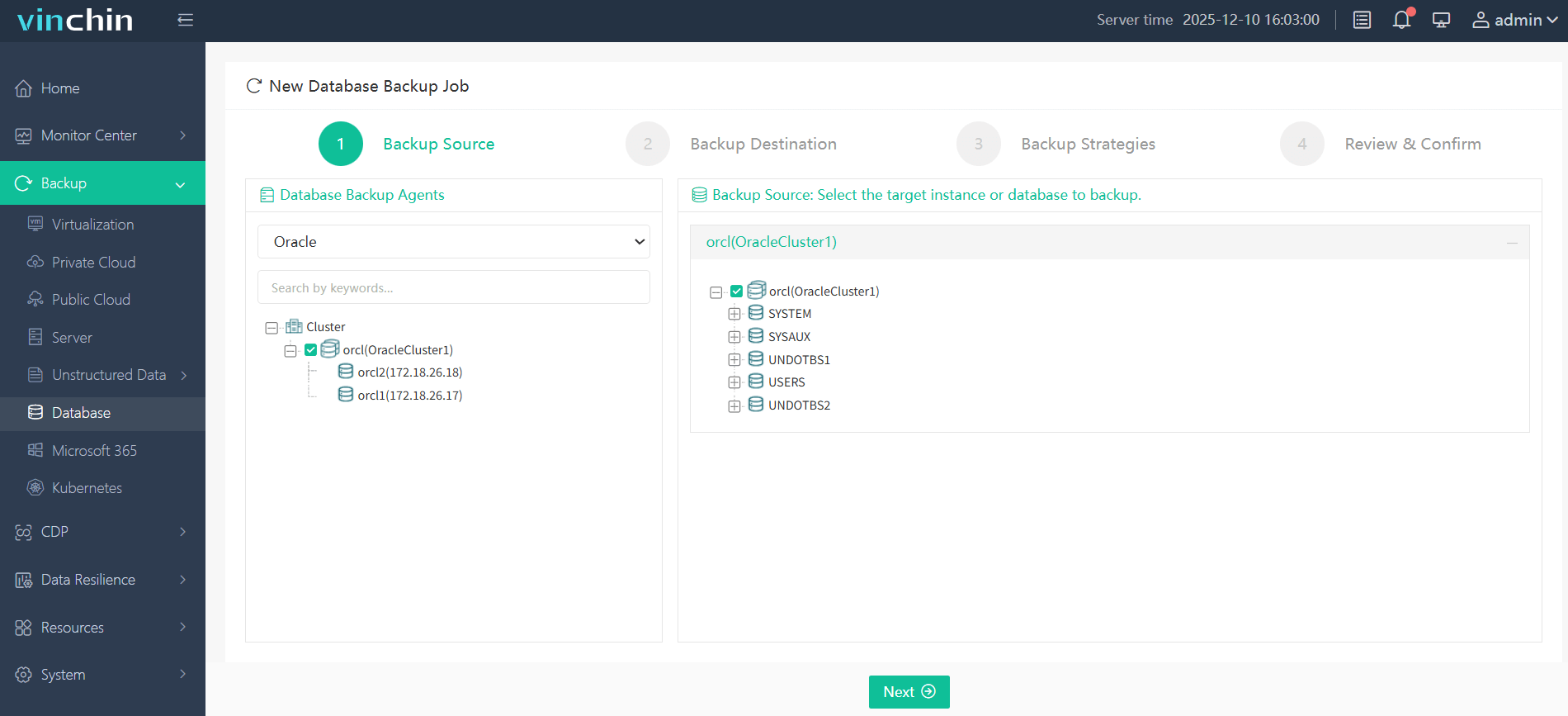
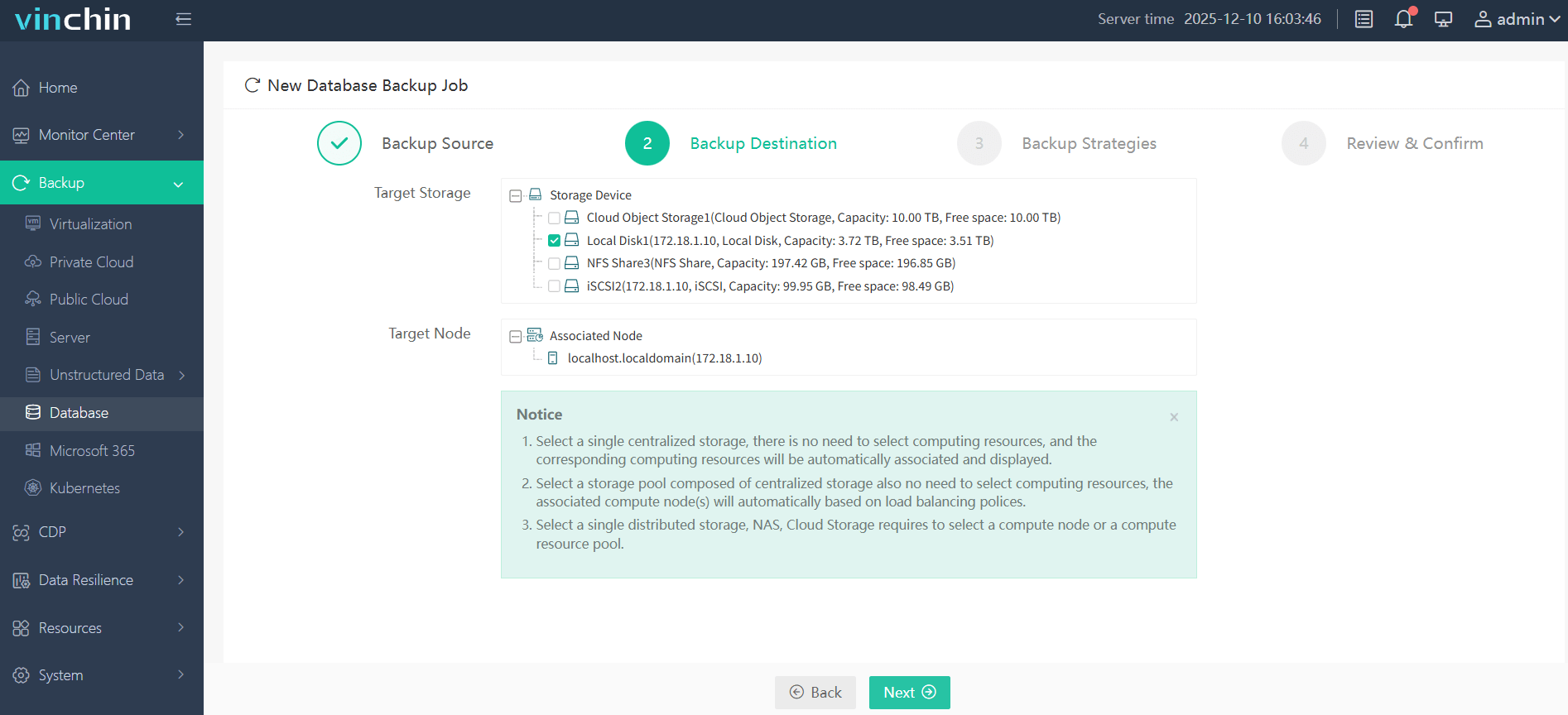
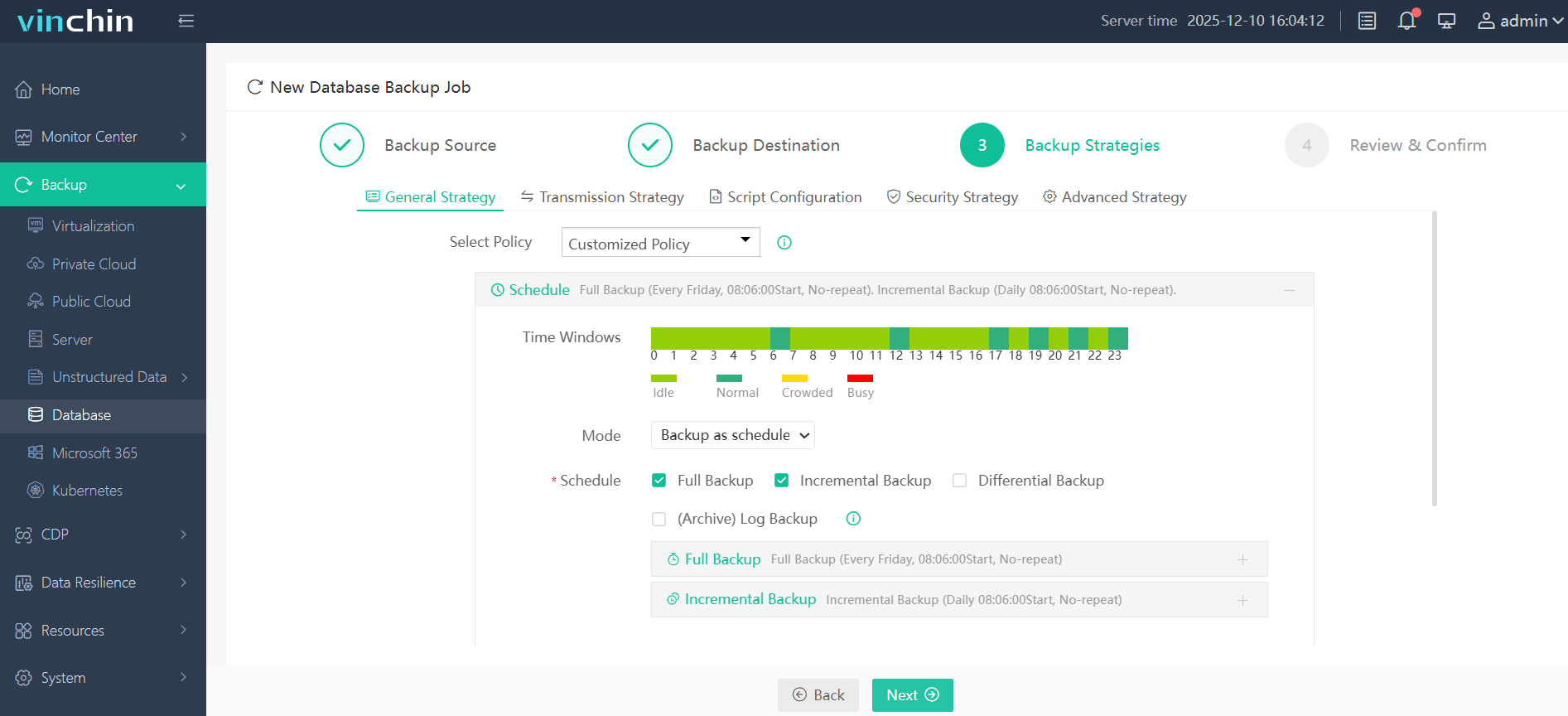
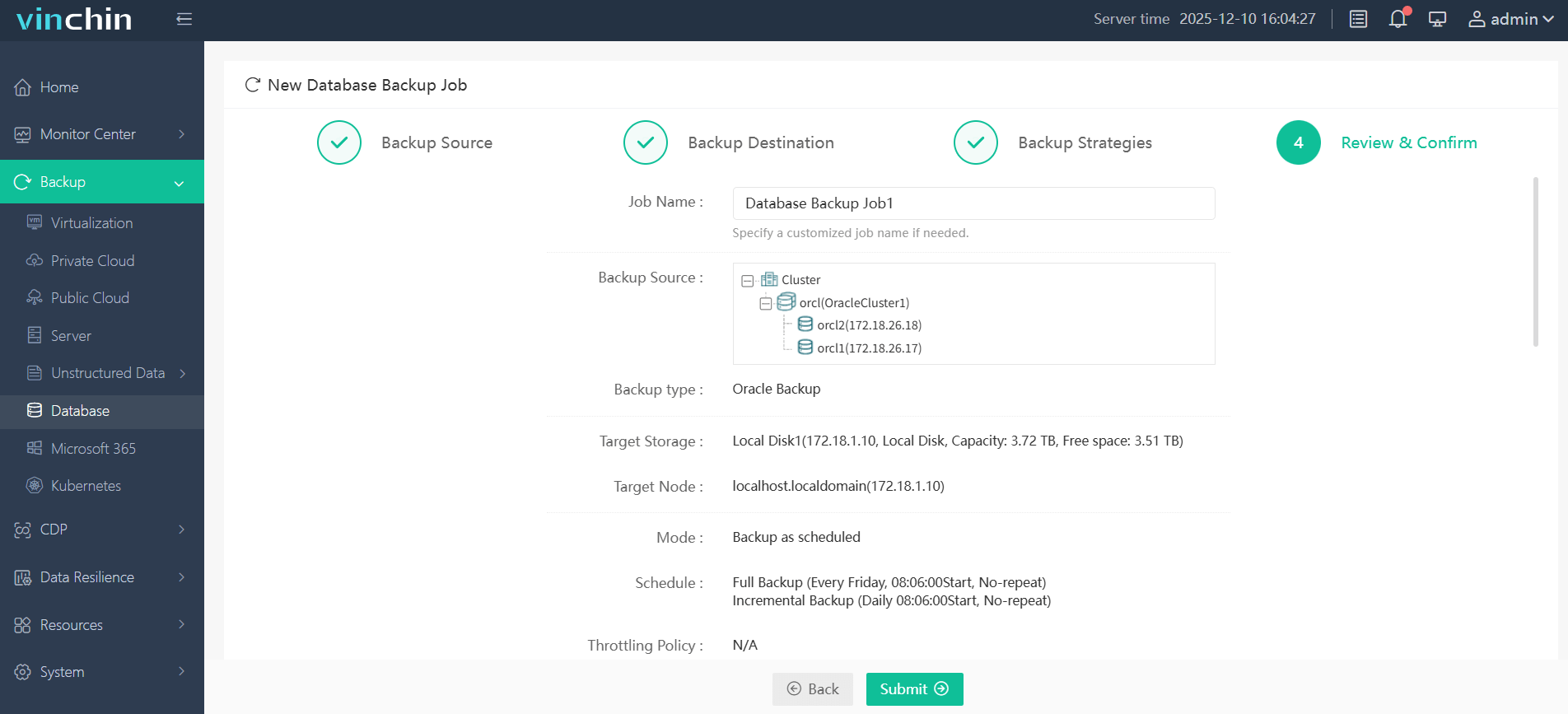
The intuitive web console makes protecting your Oracle database straightforward:
Step 1. Select the Oracle database to backup
Step 2. Choose the backup storage
Step 3. Define the backup strategy
Step 4. Submit the job
Recognized globally with top ratings among enterprise users worldwide,Vinchin Backup & Recovery offers a fully featured free trial valid for 60 days. Click below to experience industry-leading simplicity firsthand.
Oracle 19c RMAN New Features FAQs
Q1: Can I back up an individual pluggable database directly using RMAN in a multitenant setup?
Yes. You can connect directly within a specific PDB context using CONNECT TARGET then register/back up that PDB independently via recovery catalog support introduced in version 19c.
Q2: How do I enable automatic deletion of obsolete flashback logs?
Set DB_FLASHBACK_RETENTION_TARGET parameter appropriately then run DELETE OBSOLETE command inside an active FRA-enabled environment. Logs older than retention window will be purged automatically thereafter.
Q3: Does enabling block change tracking affect my existing full/incremental backup schedules?
No. It simply speeds up incremental jobs by skipping unchanged blocks; enable it anytime using ALTER DATABASE ENABLE BLOCK CHANGE TRACKING command without disrupting current routines.
Conclusion
Oracle Database 19c brings powerful new features to Recovery Manager that boost automation speed security and make life easier whether managing single instances or complex multi-cloud deployments! To maximize these benefits consider pairing native tools with Vinchin’s unified platform for effortless enterprise-grade protection today.