Protecting your Oracle database is essential for business continuity. Oracle Recovery Manager (RMAN) is the built-in tool for backup and recovery. But how do you use RMAN to back up your Oracle database step by step? This guide will walk you through the process, from understanding RMAN to running both manual and automated backups. Ready to make your Oracle backups reliable and efficient?
What Is RMAN in Oracle Backup?
RMAN stands for Recovery Manager. It is Oracle’s native utility for backing up, restoring, and recovering Oracle databases. RMAN works directly with the Oracle database engine, giving you a powerful and flexible way to protect your data. Unlike user-managed backups that rely on file copies at the OS level, RMAN tracks detailed metadata about every backup it creates.
This tracking allows you to manage full or partial restores without guessing which files are needed. RMAN supports incremental backups—saving only changed blocks—and can validate your backups for integrity before disaster strikes. Its integration means fewer manual steps compared to traditional scripts.
Why Use RMAN for Database Backup?
RMAN is the preferred tool for Oracle backups because it is tightly integrated with the database itself. It can perform full or incremental backups of databases, tablespaces, or individual datafiles. Features like compression help save storage space while managing archived redo logs ensures point-in-time recovery.
Automation options reduce human error and save time by handling routine tasks such as deleting obsolete files or verifying backup health. With RMAN’s point-in-time recovery capability, you can restore your system after accidental deletions or corruption—critical in any enterprise environment. Compared to manual OS-level file copies, using oracle backup using rman gives you more reliability and flexibility.
Pre-Backup Checklist and Best Practices
Before starting any oracle backup using rman procedure, take a few moments to prepare your environment. These checks help avoid common problems during critical operations.
First, confirm that your database runs in ARCHIVELOG mode if you want point-in-time recovery; otherwise only full restores are possible. Check available disk space where you plan to store backups—running out of space mid-backup can cause failures.
If using Fast Recovery Area (FRA), ensure it has enough free space based on retention policies set in RMAN. Always verify that directories specified in CONFIGURE CHANNEL DEVICE TYPE DISK FORMAT exist and have write permissions granted to the Oracle software owner.
Finally, test restore procedures regularly—not just backup jobs—to confirm that all components work together when needed most.
Method 1. Manual Oracle Backup Using RMAN
Manual backups with RMAN give you full control over every detail of the process. You can run commands interactively or script them for repeat use across environments large or small.
Start by opening a terminal window on your server where Oracle is installed. Launch RMAN by typing rman at the command prompt.
To connect locally using operating system authentication:
RMAN> CONNECT TARGET /
For remote connections or when OS authentication isn’t configured:
RMAN> CONNECT TARGET sys@yourdb AS SYSDBA
Replace yourdb with your network service name; enter credentials when prompted.
Once connected, review current settings:
RMAN> SHOW ALL;
This displays configuration details such as retention policy (how long old backups are kept) and default storage locations.
To change where new disk-based backups are stored:
RMAN> CONFIGURE CHANNEL DEVICE TYPE DISK FORMAT '/your/backup/location/%U';
Make sure /your/backup/location/ exists beforehand with proper write access; otherwise jobs may fail unexpectedly.
Set how long completed backups should be retained:
RMAN> CONFIGURE RETENTION POLICY TO RECOVERY WINDOW OF 7 DAYS;
Now create a full database backup:
RMAN> BACKUP AS BACKUPSET DATABASE;
Want maximum recoverability? Include archived redo logs so point-in-time restores remain possible:
RMAN> BACKUP AS BACKUPSET DATABASE PLUS ARCHIVELOG;
Need only certain tablespaces or datafiles? Specify them directly:
RMAN> BACKUP TABLESPACE users;
RMAN> BACKUP DATAFILE 4;
Incremental Backups Explained
Incremental backups capture only changes since a previous baseline (level 0). This saves time and storage but requires careful planning between levels 0 (full) and level 1 (incremental).
Create an initial level 0 baseline first:
RMAN> BACKUP INCREMENTAL LEVEL 0 DATABASE;
Subsequent runs can be either differential (changes since last level 1) or cumulative (changes since last level 0):
Differential Level 1:
RMAN> BACKUP INCREMENTAL LEVEL 1 DATABASE;
Cumulative Level 1:
RMAN> BACKUP INCREMENTAL LEVEL 1 CUMULATIVE DATABASE;
Choose cumulative if you want simpler restores at some cost in extra storage; choose differential if minimizing daily size matters most.
You may assign tags for easier identification later:
RMAN> BACKUP AS BACKUPSET TAG 'WEEKLY_FULL' DATABASE;
Compressing saves disk space but uses more CPU during processing:
RMAN> BACKUP AS COMPRESSED BACKUPSET DATABASE;
# Saves storage space at higher CPU usage
After finishing any job list all available backup sets quickly:
RMAN> LIST BACKUP SUMMARY;
# Shows what has been backed up recently
This hands-on approach offers flexibility but requires discipline—you must remember each step every time unless scripted!
Method 2 Automated Oracle Backup Using RMAN Scripts
Automating oracle backup using rman reduces risk of missed jobs due to human error while ensuring regular protection even outside business hours.
Begin by creating a plain text file containing desired commands—for example oracle_backup.rman might include lines like these:
BACKUP AS COMPRESSED BACKUPSET DATABASE PLUS ARCHIVELOG;
DELETE NOPROMPT OBSOLETE;
The first line performs a compressed full plus archivelog backup; second deletes expired files per retention policy so disks don’t fill up over time.
Run this script from shell/batch file as follows—replace /path/to/ with actual locations used in production:
rman TARGET / @/path/to/oracle_backup.rman LOG=/path/to/backup.log
On Linux systems schedule this command via cron so it runs automatically each night at say 2:00 AM:
0 2 * * * $ORACLE_HOME/bin/rman TARGET / @/home/oracle/oracle_backup.rman LOG=/home/oracle/backup.log
Always secure script files containing sensitive paths—set permissions so only authorized users may read/write them (chmod 600 oracle_backup.rman). Test scripts manually before relying on schedules!
Advanced scripts might add logic such as emailing alerts upon failure or rotating log files weekly so troubleshooting remains easy later on.
Vinchin Backup & Recovery: Enterprise-Grade Protection for Your Oracle Database
Beyond native tools like RMAN, organizations seeking streamlined management should consider Vinchin Backup & Recovery—a professional enterprise-level solution supporting today’s mainstream databases including Oracle, MySQL, SQL Server, MariaDB, PostgreSQL, PostgresPro, and TiDB. For those focused on protecting their Oracle environments specifically, Vinchin Backup & Recovery delivers robust features such as batch database backup capabilities, advanced source-side compression options tailored for efficiency on supported platforms like Oracle itself, incremental backup strategies designed to minimize resource consumption during routine operations, comprehensive log backup support enabling precise any-point-in-time recovery scenarios, and strong storage protection mechanisms against ransomware threats—all managed under clear retention policies that simplify compliance requirements while maximizing operational resilience.
The intuitive web console makes safeguarding your data straightforward:
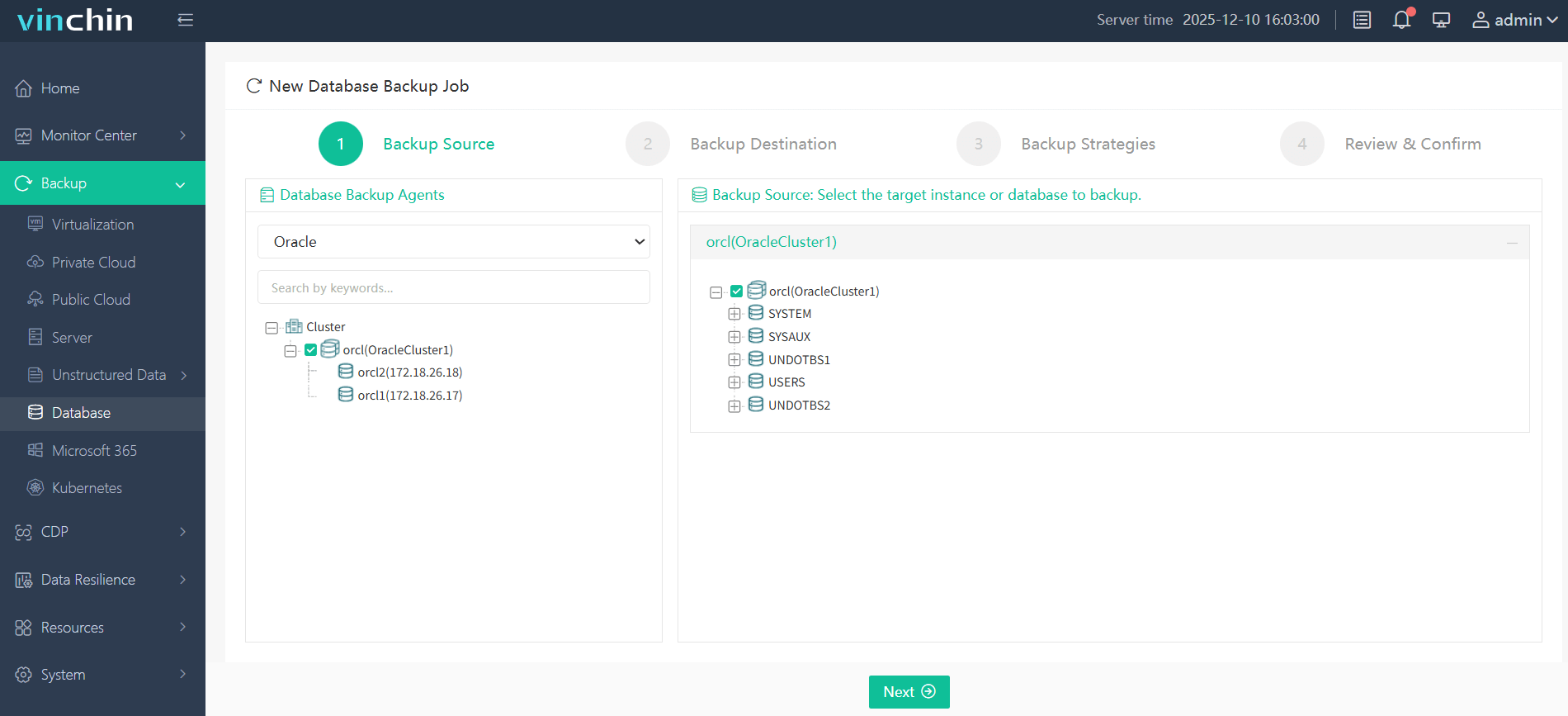
Step 1. Select the Oracle database to back up
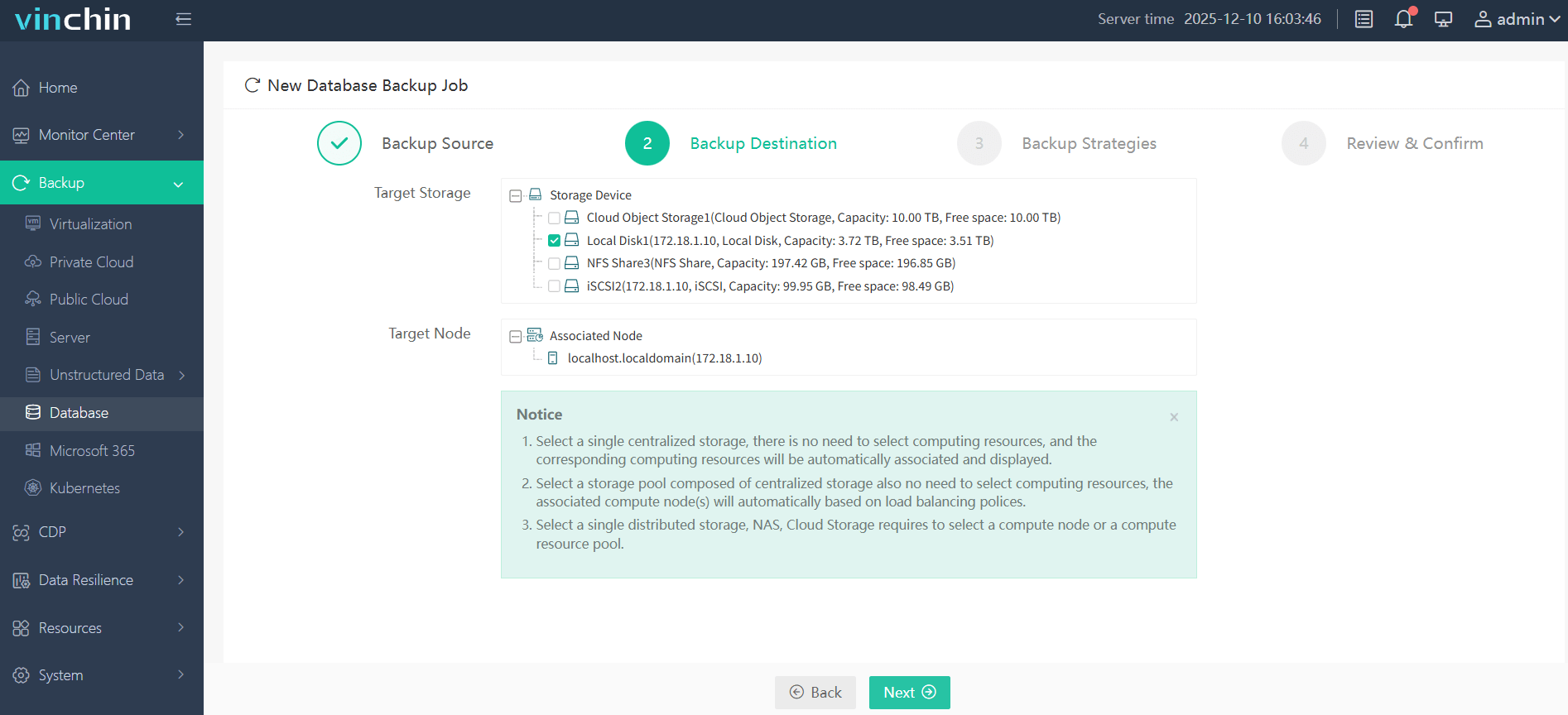
Step 2. Choose the backup storage
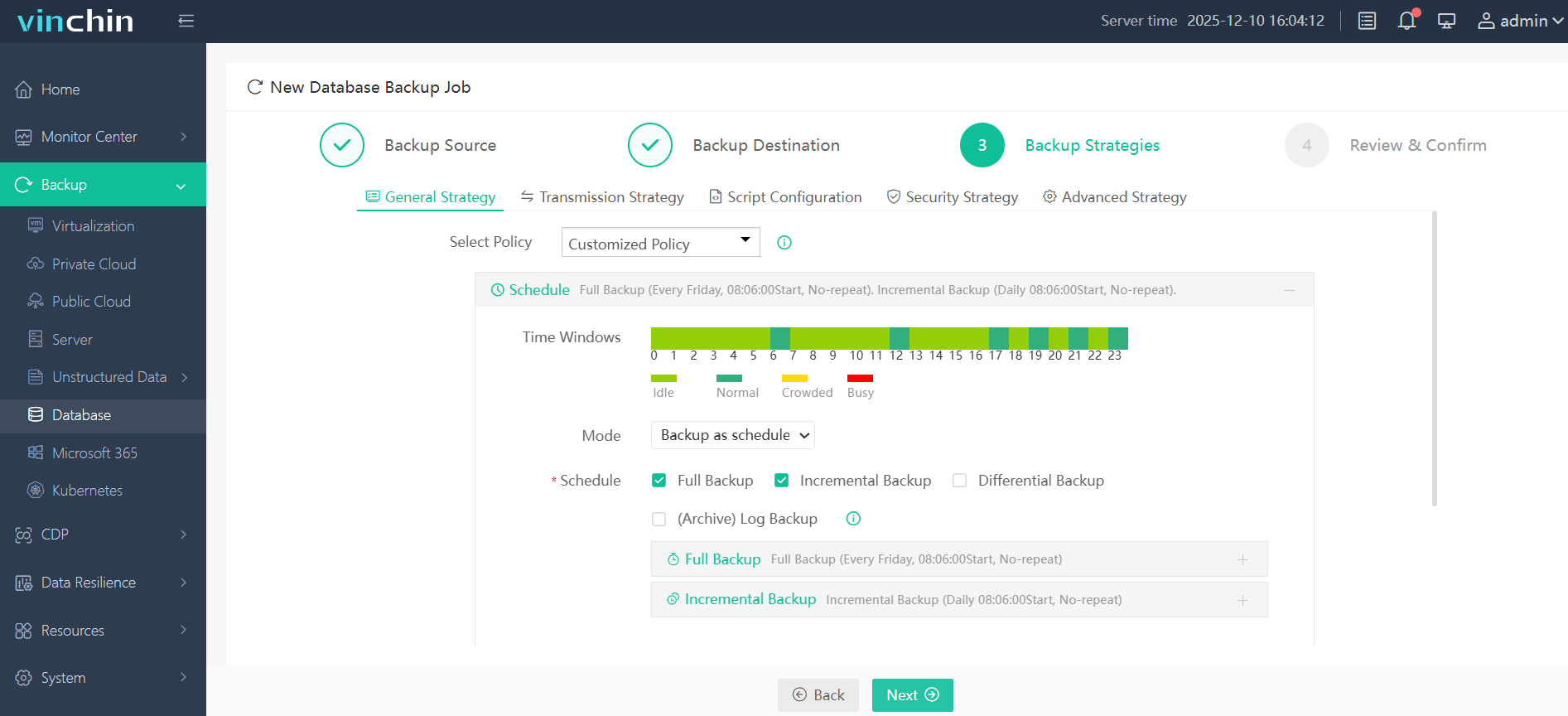
Step 3. Define the backup strategy
Step 4. Submit the job
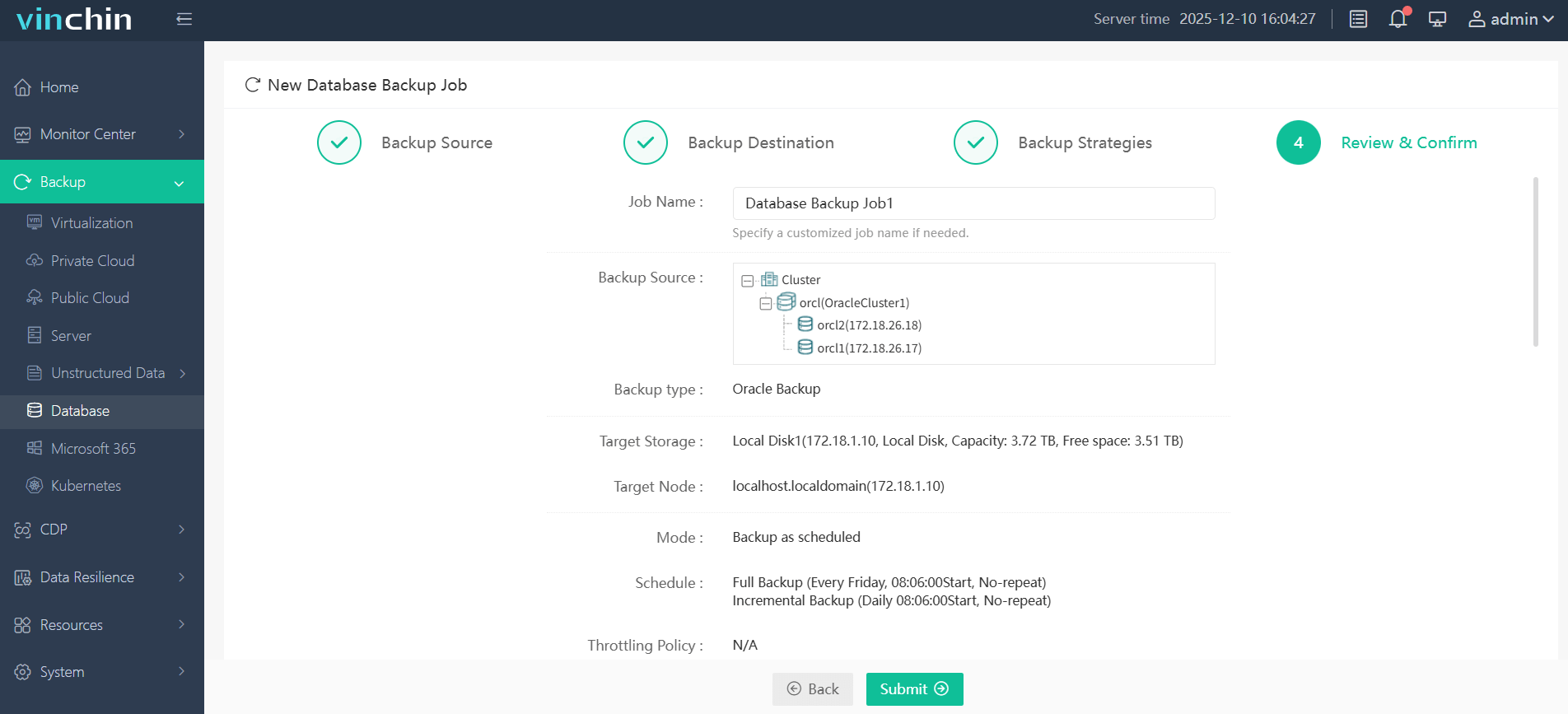
Vinchin Backup & Recovery enjoys global recognition among enterprises thanks to its reliability and high customer satisfaction ratings worldwide. Experience its power yourself with a free fully-featured trial valid for sixty days—click below to get started.
Oracle Backup Using RMAN FAQs
Q1: How do I enable ARCHIVELOG mode before running my first online hot oracle backup using rman?
A1: Connect as SYSDBA then run SHUTDOWN IMMEDIATE, STARTUP MOUNT, ALTER DATABASE ARCHIVELOG, then ALTER DATABASE OPEN in SQL*Plus before starting any online hot backups.
Q2: What should I do if my scheduled automated oracle rman job fails overnight?
A2: Check your backup.log file immediately after failure then rerun failed commands manually once issues are fixed—always investigate root causes before resuming automation!
Q3: Can I encrypt my oracle rman disk-based backups natively?
A3: Yes—use CONFIGURE ENCRYPTION FOR DATABASE ON followed by adding BACKUP AS ENCRYPTED option within relevant commands.
Conclusion
Using oracle backup using rman gives administrators robust tools—from simple manual steps through advanced automation—to safeguard mission-critical databases efficiently every day. For streamlined management across platforms try Vinchin’s intuitive web console today—it makes protecting complex environments much easier than ever before!