







 China / MySQL

Blog
Comprehensive Guide to MySQL Enterprise Backup
READ MORE


MySQL databases support critical business applications where data is constantly created, updated, and deleted. Protecting them is not simply about copying database files. Backup operations must maintain transaction consistency, minimize the impact on running services, and provide reliable recovery when data corruption, accidental deletion, or system failures occur. A modern MySQL protection strategy therefore needs to address three critical challenges:

Backups must capture MySQL data in a consistent state so that databases remain usable after restoration, even when transactions are actively running.

Database protection should reduce the performance and resource impact of backup operations, allowing critical MySQL services to remain available.

From a single database to a specific point before an error or data loss event, recovery needs to be flexible and precise to avoid data loss and downtime.

Ensure backups capture MySQL data in a consistent state, even when transactions are actively running, so databases can be safely restored and brought back online.

Regularly validate backup integrity and recovery readiness to ensure backup data is actually usable when a real failure occurs; not just successfully completed.

Optimize backup operations to reduce the consumption of database, storage, and network resources, helping critical MySQL services remain available during protection tasks.

Allow individual databases, tables, or other required data to be recovered without restoring the entire MySQL environment, reducing recovery time and operational impact.

Restore MySQL databases to a specific point before accidental deletion, corruption, or other failures, minimizing data loss beyond the last backup.

Support full, incremental, and other efficient backup approaches to reduce backup windows and avoid repeatedly processing unchanged data.
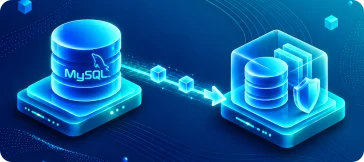
Vinchin Backup & Recovery uses a visual configuration wizard that allows you to complete MySQL database backup configuration through simple steps. Combined with features such as SMS/email alerts, it essentially ensures unattended backup operations. This effectively solves the problems of difficult management, high barriers to entry, and low recovery success rates faced by traditional manual backup solutions.
Vinchin uses a streaming backup architecture to send MySQL backup data directly to the backup server without relying on local caching.
Vinchin supports source-side compression to reduce the volume of backup data before it is transferred and stored. This helps lower storage consumption while improving the efficiency of backup data transmission.
Vinchin supports restoring MySQL data to the original instance, a redirected directory, or a different machine, providing greater flexibility when handling different failure scenarios or infrastructure changes.
Vinchin protects MySQL databases through application-aware backup technology, using MySQL native interfaces to capture database data and maintain consistency during backup operations.
Vinchin supports multiple MySQL versions, including MySQL 5.5.62, 5.6.51, 5.7.37, 8.0.11, 8.0.20, and 8.0.26.
Vinchin allows MySQL databases to be restored to a specific point in time, helping organizations roll back to a state before accidental deletion, corruption, or other data-related incidents.

Vinchin streams MySQL backup data directly to the backup system, skipping local caching. This cuts extra storage I/O and production resource use, shortening backup windows with less impact on running databases.

Vinchin supports restoring MySQL to the original instance, a redirected directory, or another machine. Combined with point-in-time recovery, admins can quickly bring databases back to the state they need after any type of failure.

Vinchin manages MySQL backups alongside virtual machines, physical servers, and other workloads from one platform, simplifying management and enabling a consistent data protection strategy across environments.
Every minute without MySQL protection increases your risk of data loss. Start your free trial today!