For database administrators managing Oracle environments, the oracle rman log file is much more than a simple record of backup activity—it’s your primary tool for diagnostics, automation checks, and compliance reporting. When something goes wrong or you need proof that backups ran as planned, these logs are your first stop. Let’s explore how to find them, read them effectively at every skill level, set up best practices for management, troubleshoot issues quickly—and ensure your backup operations remain reliable.
What Is an Oracle RMAN Log File?
An oracle rman log file is a plain text file that captures everything happening during an Oracle Recovery Manager (RMAN) session. Each time you run an RMAN command—whether it’s backing up datafiles or restoring from disaster—the output gets recorded here: commands issued, results returned by the database engine, warnings about potential problems or missing files, error messages with codes like “RMAN-” or “ORA-”, timestamps marking each operation’s start and finish.
Why does this matter?
First off: verification. You can’t always trust that a scheduled backup completed just because no alert popped up; reviewing the log confirms success or failure in detail.
Second: auditing and compliance demands often require proof of regular backups—these logs serve as evidence during reviews or regulatory checks.
Finally: automation relies on parsing these files for keywords (“error”, “failed”) so scripts can trigger alerts if something goes wrong overnight when no one is watching.
How to Find Oracle RMAN Log Files?
Locating your oracle rman log file depends on how you launch your jobs:
If you start RMAN interactively from the command line without extra options, output appears directly on screen—but isn’t saved unless you redirect it yourself.
For production use (and any automated script), always save output using the LOG parameter:
rman target / LOG='/u01/rman_bkp.log'
This writes all session details into /u01/rman_bkp.log. To keep adding new entries instead of overwriting old ones each time you run a job? Add append:
rman target / LOG='/u01/rman_bkp.log' append
If your scripts use internal SPOOL commands within an RMAN block:
SPOOL LOG TO '/u01/custom_script_output.log';
-- Your commands here
SPOOL LOG OFF;
This also creates a separate text file capturing script output.
Check your shell scripts or scheduler definitions (like cron jobs) for where they specify LOG= parameters—or look inside custom wrapper scripts used by job schedulers such as OEM Cloud Control or third-party tools.
Common default locations include /tmp, $ORACLE_HOME/rdbms/log, or directories defined by environment variables specific to your organization’s standards.
When running jobs through Oracle Enterprise Manager (OEM), navigate via the web console: select Availability, then choose Backup & Recovery, followed by clicking on View RMAN Log next to each job entry.
For best practice: standardize where logs are stored across all servers—for example /u01/app/oracle/rman_logs/<DB_NAME>/—and make sure only authorized users have write access there.
How to Read Oracle RMAN Log File?
Once you’ve found your desired oracle rman log file, open it using any text editor familiar to you—such as vi on Linux/Unix systems or Notepad++ on Windows workstations. Since these are plain text files without formatting codes or encryption layers involved—they’re easy to search through using built-in editor functions (/error, /warning) or command-line tools like grep:
grep -i "error" /u01/rman_bkp.log
grep -E "RMAN-|ORA-" /u01/rman_bkp.log
Looking at live sessions? Querying views inside SQL*Plus helps:
SELECT * FROM V$RMAN_OUTPUT;
But remember: V$RMAN_OUTPUT holds recent lines only in memory—a circular buffer that may not persist after session ends. Always capture critical information onto disk via LOG parameter if long-term review is needed!
To check status/history of completed jobs:
SELECT operation,
       status,
       start_time,
       end_time
  FROM V$RMAN_STATUS
 WHERE start_time > SYSDATE - 1
 ORDER BY start_time DESC;
This gives quick insight into what ran recently—including whether tasks finished successfully (“COMPLETED”) or failed (“FAILED”).
Full disk-based logs remain most detailed; they show exact commands executed before errors occurred—which helps when reconstructing events during troubleshooting sessions later.
How to Troubleshoot Using Oracle RMAN Log File?
When things go wrong during backup/restoration tasks—the right approach saves hours:
Start by searching recent entries in your main oracle rman log file for obvious red flags (“error”, “failed”). Look closely at lines containing error patterns such as:
Likely cause: A gap exists in archivelog sequence; check archive destinations via SQL query against V$ARCHIVED_LOG.
Likely cause: Disk space exhausted at destination; verify available storage under /u01, NFS mounts etc., plus OS-level system messages (dmesg, /var/log/messages).
Likely cause: Permissions issue preventing writes; confirm correct ownership/group settings on target directories/filesystems used by both database instance AND operating system user running backups.
If archiving errors appear frequently? Check Flash Recovery Area capacity (V$RECOVERY_FILE_DEST). For permission-related failures? Ensure oracle user has full rights over both source datafiles AND destination folders specified in scripts/configs—not just temporary working directories!
Suspect corruption? Use VALIDATE command within an interactive session:
RMAN> VALIDATE BACKUPSET <backupset_number>;
Need deeper debugging info beyond normal verbosity?
rman target / debug trace=/tmp/rman_debug.log
This generates detailed trace output showing internal logic flows—but beware large file sizes if left enabled too long!
Catalog/controlfile mismatches sometimes occur after manual deletions outside normal workflows; fix these inconsistencies using CROSSCHECK:
RMAN> CROSSCHECK BACKUP;
And summarize overall health/status quickly with REPORT OBSOLETE:
RMAN> REPORT OBSOLETE;
Combining careful review of these outputs—with structured search strategies above—lets even junior DBAs resolve most incidents efficiently before escalation becomes necessary!
Vinchin Backup & Recovery for Oracle Database Protection
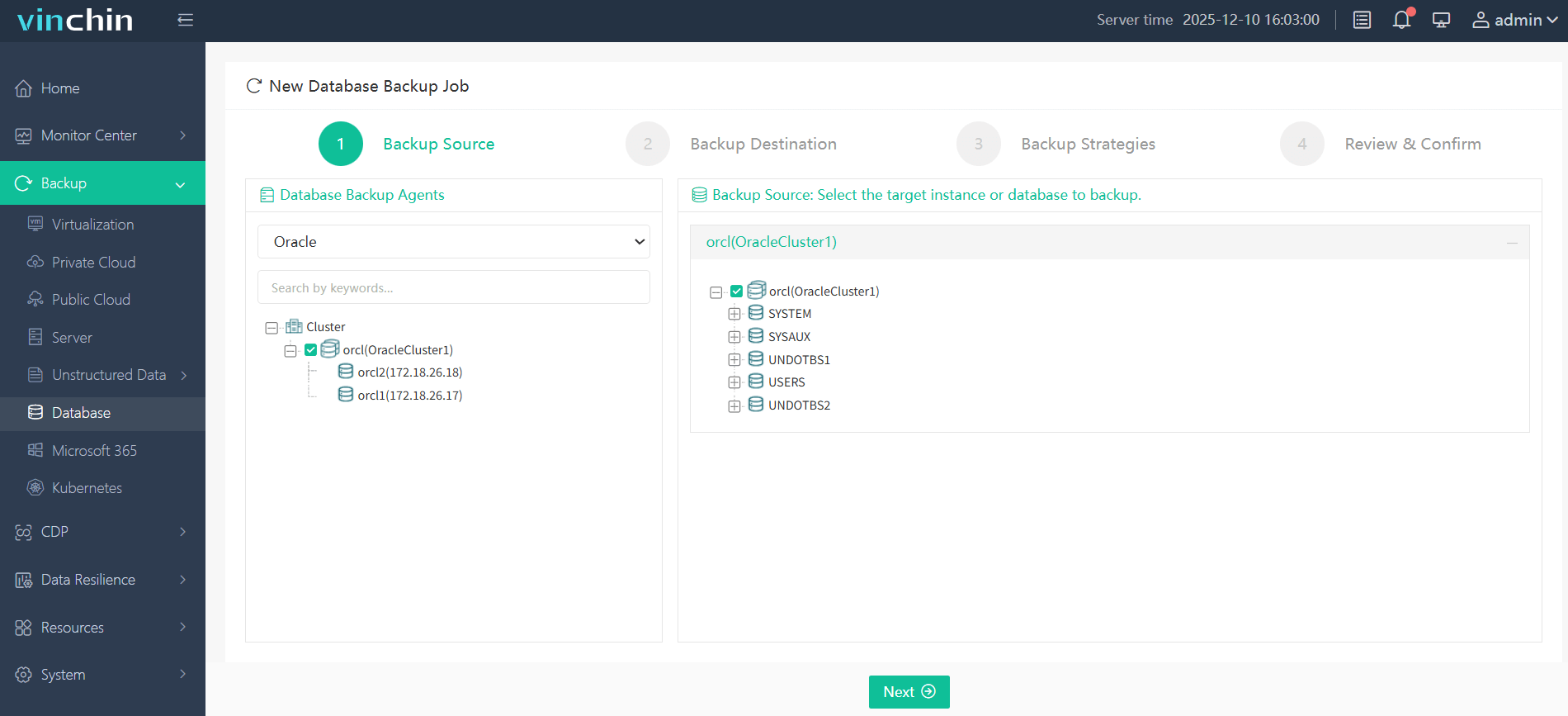
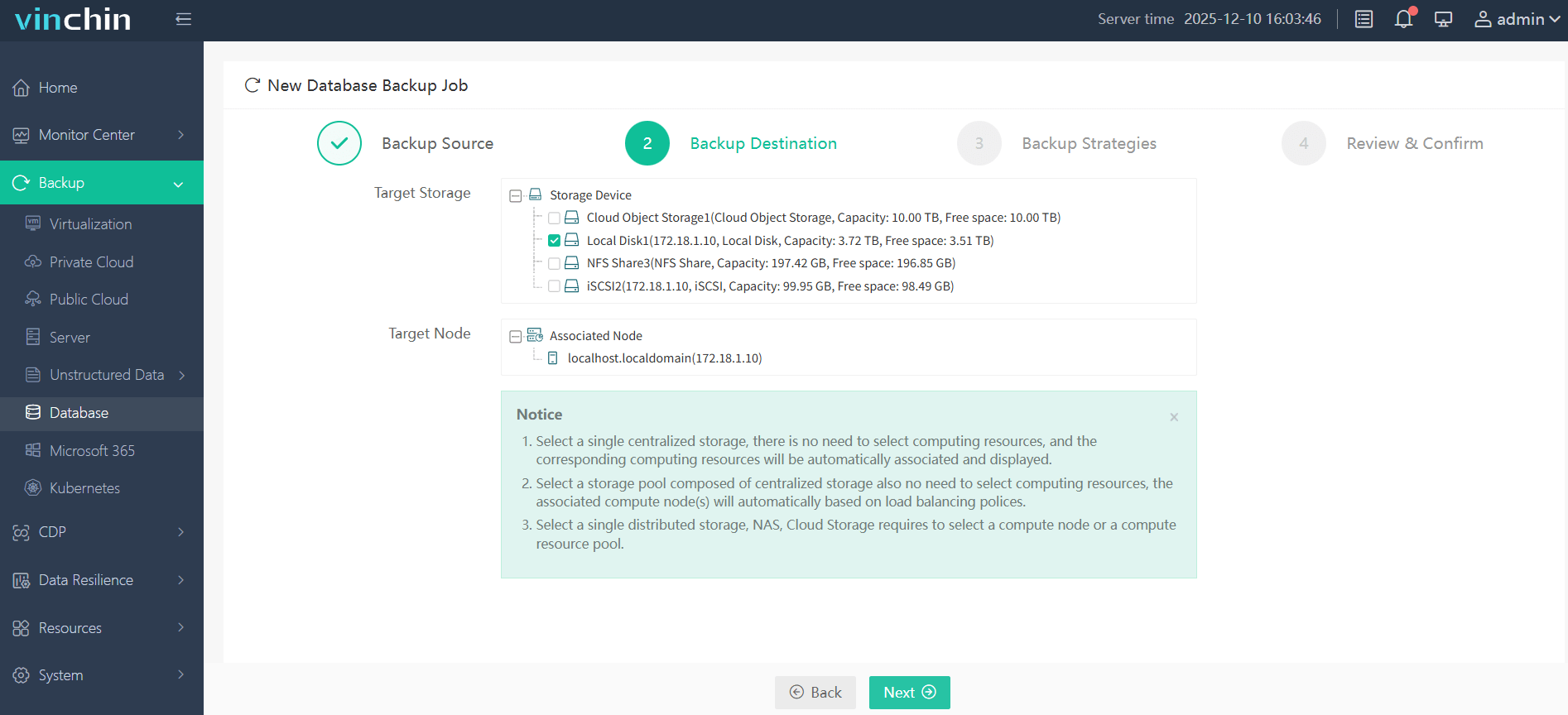
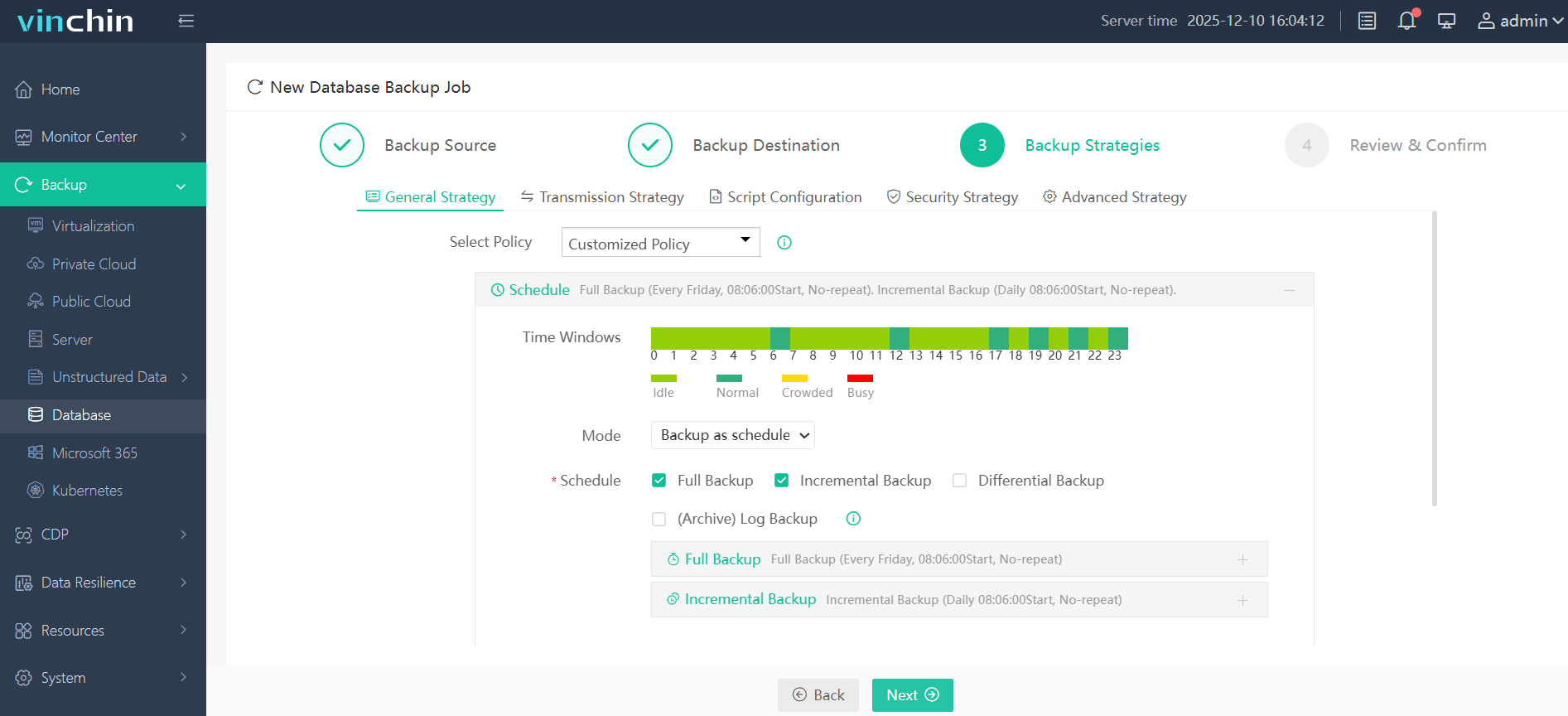
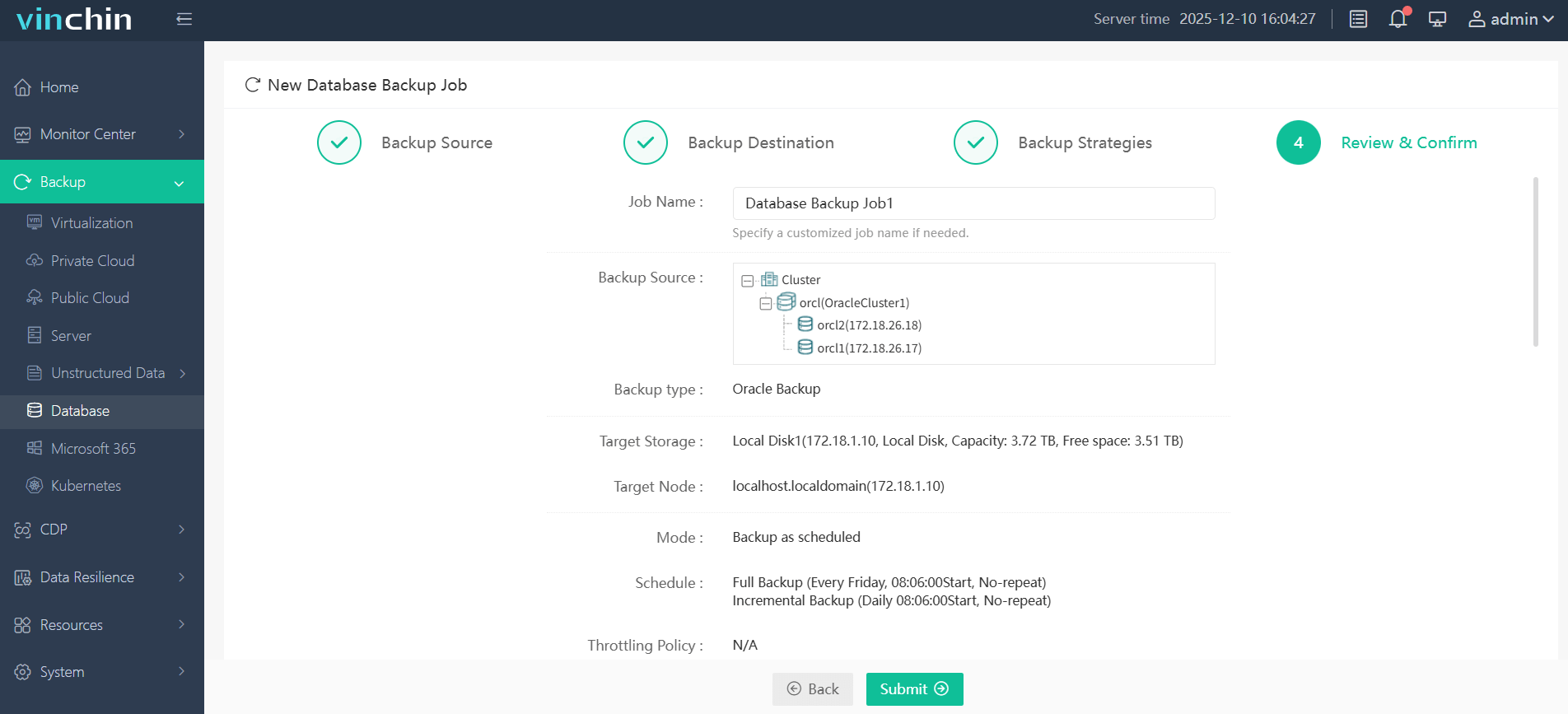
To further streamline Oracle database protection and simplify management of RMAN logs, consider leveraging Vinchin Backup & Recovery—a professional enterprise-grade solution supporting today’s leading databases including Oracle, MySQL, SQL Server, MariaDB, PostgreSQL, PostgresPro, and TiDB. For Oracle environments specifically, Vinchin Backup & Recovery delivers essential features such as incremental backup support, advanced source-side compression capabilities, batch database backup across multiple instances simultaneously, flexible data retention policies including GFS retention options, and robust integrity checking routines—all designed to enhance efficiency while ensuring security and compliance readiness. The intuitive web console makes safeguarding Oracle databases straightforward in four steps:
Step 1. Select the Oracle database to back up;
Step 2. Choose the backup storage location;
Step 3. Define a tailored backup strategy aligned with business needs;
Step 4. Submit the job configuration for execution.
Recognized globally with top ratings and trusted by thousands of enterprises worldwide, Vinchin Backup & Recovery offers a fully featured 60-day free trial—click below to experience comprehensive enterprise data protection firsthand!
Oracle RMAN Log File FAQs
Q1: How can I get notified immediately if my oracle rman log file contains errors?
A1: Set up a script that scans new logs for "ERROR" or "FAILED" then sends email/SMS alerts automatically upon detection.
Q2: What steps ensure old oracle rman log files do not fill my server's disk?
A2: Schedule regular cleanup jobs after verifying successful backups—delete/archive any logs older than required retention period based on policy.
Q3: Why might no oracle rman log file be created even though my script runs?
A3: Confirm correct usage/spelling/capitalization of LOG parameter in script plus valid path permissions/environment variables set properly before execution begins.
Conclusion
Mastering the oracle rman log file turns it from passive recordkeeping into an active tool ensuring reliable backups and rapid recovery readiness across all environments. By following best practices outlined above—and leveraging solutions like Vinchin—you streamline secure management while boosting operational confidence day-to-day!