Managing Oracle databases means keeping an eye on storage. Archive logs can quickly fill up disk space, leading to performance issues or even outages. If you use Oracle RMAN for backups, you need a clear, safe process for deleting old archivelogs. In this article, we’ll walk through what archivelogs are, why you should delete them, and how to use Oracle RMAN to delete them—both manually and automatically. We’ll also show how Vinchin can help you manage Oracle archive logs with ease.
What Are Oracle RMAN Archivelogs?
Archivelogs are copies of redo log files that Oracle creates when running in ARCHIVELOG mode. These logs record every change made to the database. Oracle writes redo entries to online redo logs; when a log fills up or switches out, it’s archived as an archivelog file.
RMAN (Recovery Manager) is Oracle’s tool for backing up and managing these logs. When you run a DELETE command in RMAN targeting archivelogs, it removes both the physical file from disk and its record from the RMAN repository catalog. This dual action ensures your backup records match reality.
Archivelogs are essential for point-in-time recovery because they let you restore your database to any moment after a failure or data corruption event. But as they accumulate over time—especially in busy systems—they can consume large amounts of disk space if not managed properly.
Why Delete Archivelogs in Oracle RMAN?
Deleting archivelogs is not just about saving space—it’s about keeping your database healthy and recoverable at all times. If your archive log destination fills up completely, Oracle cannot write new logs; this may cause your database to hang or crash unexpectedly.
Regularly deleting old archivelogs ensures there is always enough room for new ones while keeping your backup-and-recovery process efficient. It also prevents unnecessary alerts or downtime caused by full disks.
Before deleting any archivelog files using RMAN or other methods:
Always make sure you have backed up the necessary archivelogs needed for recovery.
Deleting unbacked-up logs can make point-in-time recovery impossible.
Use only safe deletion methods provided by RMAN so that both physical files and catalog records stay synchronized.
Oracle provides several ways to safely remove only those logs that are no longer needed according to your retention policy or backup status.
Pre-Deletion Checklist and Safety Considerations
Before running any oracle rman archivelog delete operation—manual or automated—it’s vital to follow some safety steps:
First: Verify that all critical archivelogs have been backed up successfully using LIST ARCHIVELOG ALL in RMAN or by querying V$ARCHIVED_LOG in SQL*Plus; check the BACKED UP column for confirmation.
Second: If you use Data Guard or another standby solution, confirm that all required logs have been shipped/applied before deletion; removing needed logs could break replication or leave standbys out-of-sync.
Third: Monitor available disk space at each archive destination using OS tools like df (Linux) or dir (Windows). Knowing how much free space remains helps prioritize urgent deletions versus routine maintenance tasks.
Fourth: Align deletion timeframes with your organization’s Recovery Point Objective (RPO). Document which period of recoverability must be maintained—for example “keep 7 days’ worth of archives”—and set policies accordingly.
Finally: Review recent error messages in alert logs related to archive destinations filling up; address root causes before proceeding with mass deletions.
By following this checklist every time before deleting oracle rman archivelog files, you reduce risk of accidental data loss while ensuring compliance with business requirements.
How to Delete Archivelogs Manually Using Oracle RMAN?
Manual deletion gives you full control over which oracle rman archivelog files get removed—a useful approach when freeing up space urgently or troubleshooting specific issues like stuck backups.
Start by checking current status:
1. Start RMAN and connect to your target database.
2. Run CROSSCHECK ARCHIVELOG ALL—this compares what’s listed in the catalog against actual files on disk/FRA (Fast Recovery Area). Any missing files get marked as EXPIRED, signaling they’re gone from storage but still recorded in metadata.
3. To see which archives would be affected by deletion criteria without actually removing anything yet:
LIST ARCHIVELOG UNTIL TIME 'SYSDATE-7';
This lists all archives older than 7 days.
4. To remove old archives based on age:
DELETE ARCHIVELOG UNTIL TIME 'SYSDATE-10';
This deletes all archived redo log files created more than 10 days ago.
5. For more precise control based on completion timestamp:
DELETE ARCHIVELOG ALL COMPLETED BEFORE 'SYSDATE-7';
Here 'SYSDATE-7' means “seven days ago.” You can adjust time granularity using expressions like 'SYSDATE-1/24' (one hour ago).
6. To skip confirmation prompts during batch jobs:
DELETE NOPROMPT ARCHIVELOG ALL COMPLETED BEFORE 'SYSDATE-7';
7. Remove expired records left behind after crosschecking:
DELETE NOPROMPT EXPIRED ARCHIVELOG ALL;
How to Automate Oracle RMAN Archivelog Delete Operations?
Manual cleanup works well occasionally—but automating oracle rman archivelog delete tasks saves time while reducing human error risk over months of operation.
Most DBAs rely on shell scripts plus scheduling tools like cron (Linux) or Task Scheduler (Windows) for regular cleanup routines:
A robust Linux script might look like this:
#!/bin/bash
export ORACLE_SID=YOURDB
export ORACLE_HOME=/path/to/oracle
export PATH=$ORACLE_HOME/bin:$PATH

rman target / LOG /var/log/rman_archive_clean.log <<EOF
CROSSCHECK ARCHIVELOG ALL;
DELETE NOPROMPT EXPIRED ARCHIVELOG ALL;
DELETE NOPROMPT ARCHIVELOG ALL COMPLETED BEFORE 'SYSDATE-7';
EXIT;
EOF

if [ $? -ne 0 ]; then echo "RMAN job failed" >> /var/log/rman_archive_clean.log; fi
This script does three things each run: synchronizes catalog-to-disk state (CROSSCHECK), cleans out missing file references (DELETE EXPIRED), then deletes genuinely obsolete archives (COMPLETED BEFORE) older than seven days—all while logging output for auditing purposes via the LOG parameter.
Schedule daily execution via cron:
0 2 * * * /path/to/your_script.sh > /tmp/rman_arch_delete.log 2>&1
On Windows servers use Task Scheduler paired with a batch file containing similar logic—just adapt environment variable syntax accordingly!
For even tighter integration between backup-and-delete workflows consider combining actions within one command:
BACKUP ARCHIVELOG ALL DELETE INPUT;
This backs up all current archived redo log files then deletes only those just successfully copied—not previously backed-up ones unless specified otherwise! Add clauses such as ALL or NOT BACKED UP n TIMES if needed depending on retention strategy complexity.
You may also configure an automatic retention policy inside RMAN itself:
CONFIGURE RETENTION POLICY TO RECOVERY WINDOW OF 7 DAYS;
Then periodically run:
DELETE OBSOLETE;
This removes backups—including associated archived redo log files—that fall outside your defined recovery window based on actual backup history rather than simple age alone—a powerful way to automate compliance!
Always test scripts thoroughly outside production environments before deploying widely—and monitor results regularly via dedicated logfiles so problems don’t go unnoticed until too late!
Introducing Vinchin Backup & Recovery for Enterprise Database Protection
Beyond manual scripting and native automation, organizations seeking streamlined management of their Oracle environments can benefit from specialized solutions such as Vinchin Backup & Recovery—a professional enterprise-level platform supporting today’s mainstream databases including Oracle, MySQL, SQL Server, MariaDB, PostgreSQL, PostgresPro, and TiDB. For users focused on oracle rman archivelog delete operations specifically, Vinchin Backup & Recovery offers robust compatibility with advanced features tailored for operational efficiency and data safety across mixed environments.
Key capabilities include incremental backup support for Oracle databases; comprehensive batch database backup management; flexible data retention policies including GFS retention schemes; cloud/tape archiving options; plus integrity checks ensuring recoverability at any point-in-time—all designed to optimize storage usage while maintaining strict protection standards throughout the lifecycle of archive logs and backups alike.
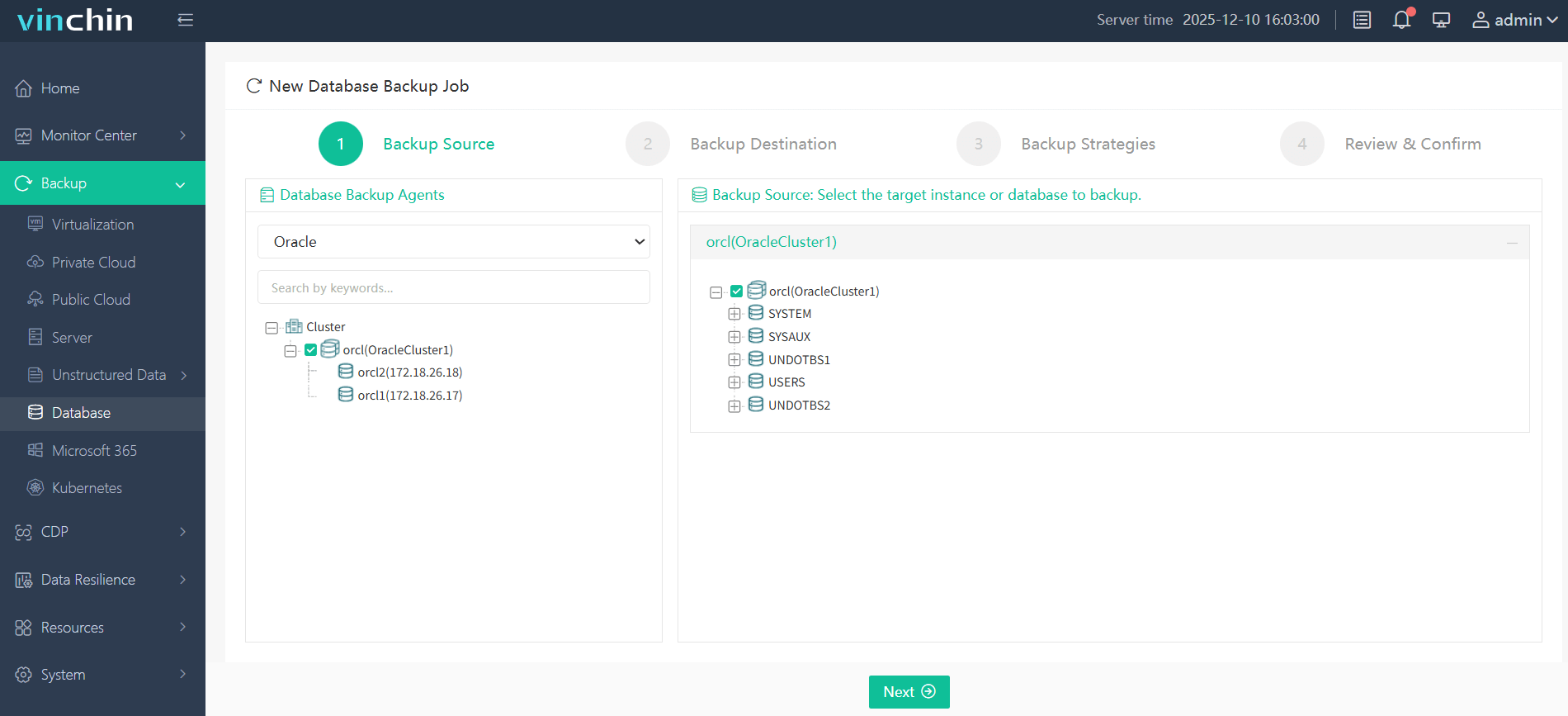
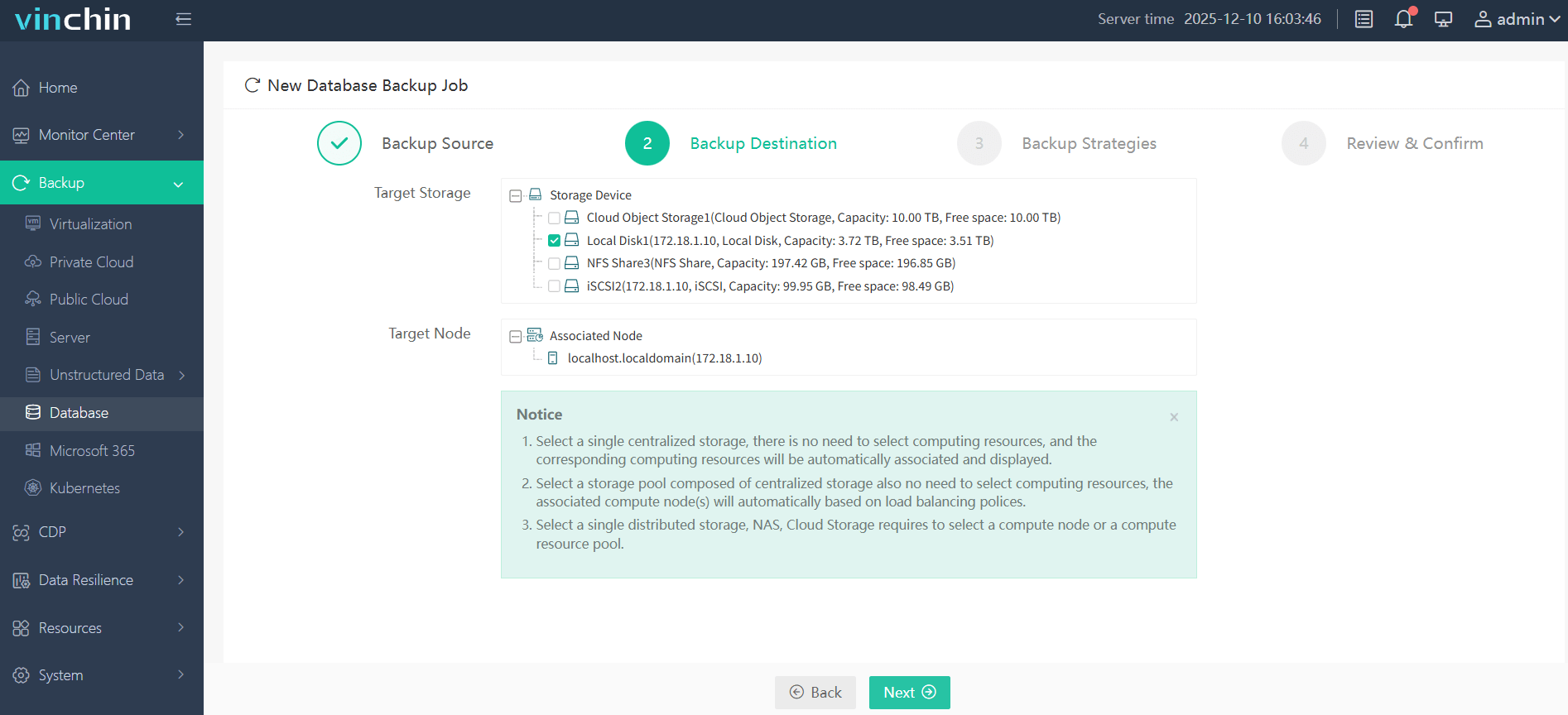
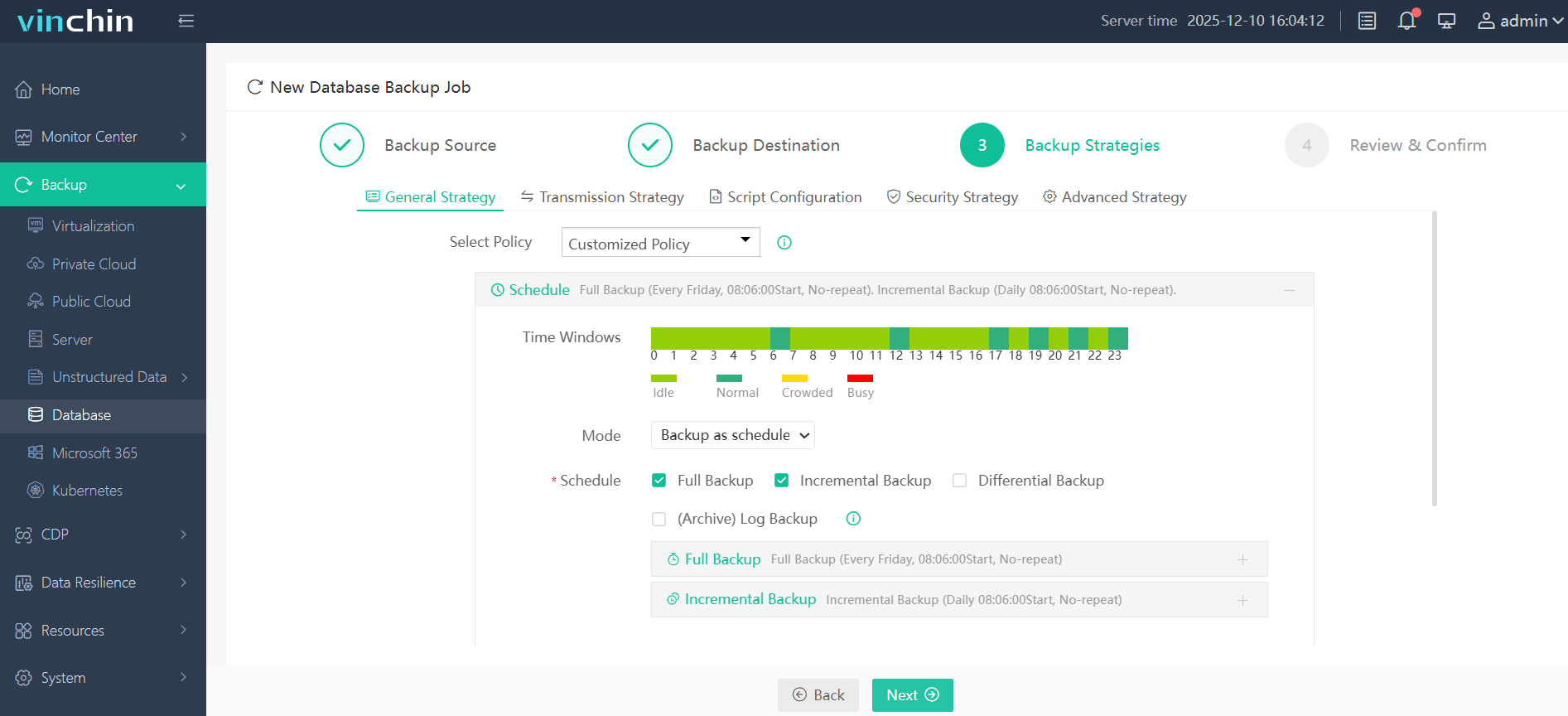
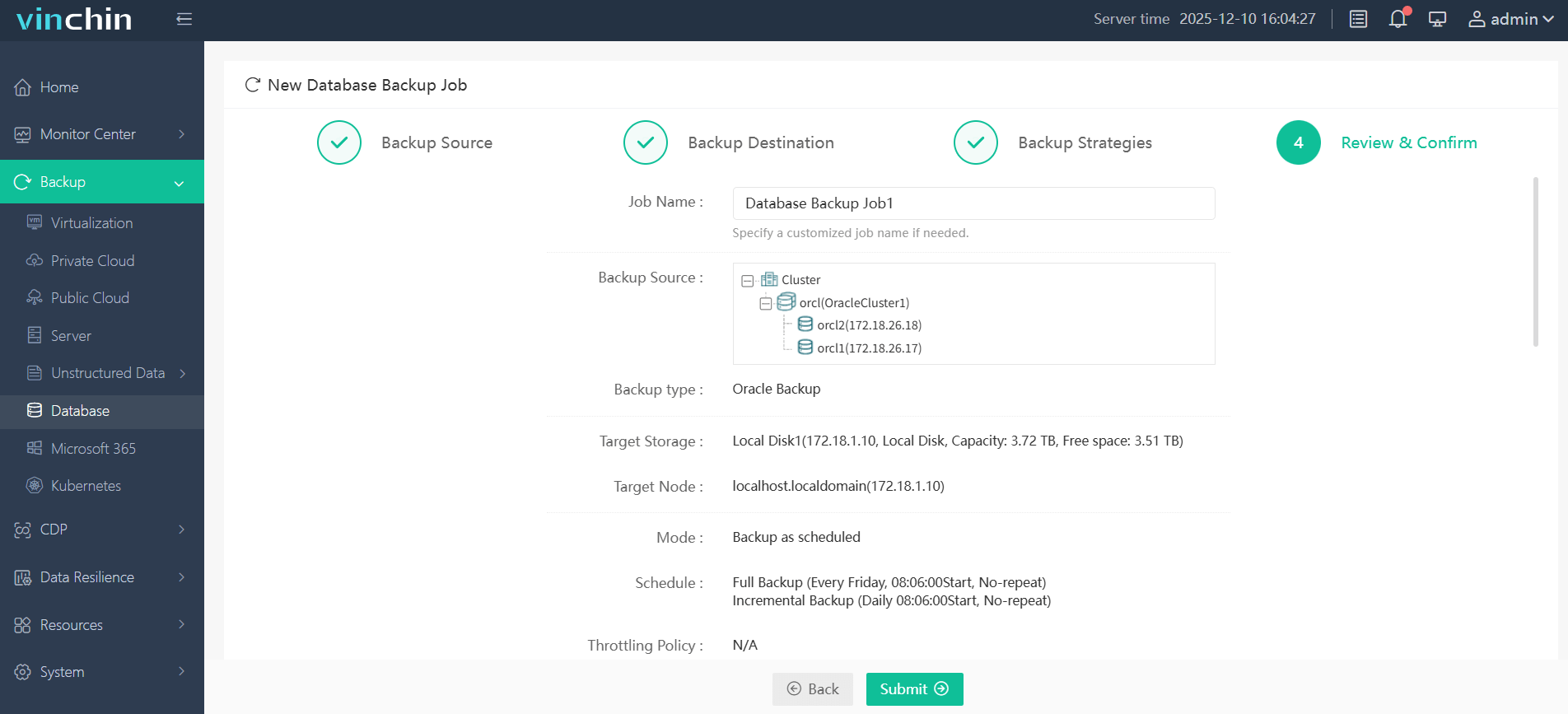
The intuitive web console makes safeguarding critical data straightforward—in just four steps:
Step 1. Select the Oracle database to back up
Step 2. Choose the backup storage
Step 3. Define the backup strategy
Step 4. Submit the job
Recognized globally among enterprise users—with top ratings for reliability—Vinchin Backup & Recovery offers a fully featured free trial valid for 60 days so you can experience its benefits firsthand; click below to download now!
Oracle RMAN Archivelog Delete FAQs
Q1: Is it safe to delete unbacked-up oracle rman archivelog files?
A1: No—always back them up first using proper procedures before deletion so recovery stays possible if disaster strikes later!
Q2: How do I cleanly remove only those archive logs older than X days?
A2: Use DELETE NOPROMPT ARCHIVELOG ALL COMPLETED BEFORE 'SYSDATE-X' replacing X with number of desired days’ retention coverage—for example ‘SYSDATE–14’ keeps two weeks’ worth intact!
Q3: What should I do if some archive deletions fail repeatedly?
A3: Run CROSSCHECK ARCHIVELOG ALL, then follow immediately with DELETE NOPROMPT EXPIRED ARCHIVELOG ALL—this clears stale metadata blocking further progress without harming valid backups elsewhere!
Conclusion
Managing oracle rman archivelog delete operations is crucial for healthy databases—whether done manually step-by-step or fully automated through scripts tied into retention policies! With advanced features plus easy interface Vinchin makes managing these tasks safer faster more reliable than ever—try their free trial today!