Managing Oracle database backups is one of the most important jobs for an operations administrator. If you rely only on control files to track backup metadata, you face risks like limited retention history or even losing all backup records if a control file is lost or corrupted. This is where the RMAN catalog comes in—a tool that centralizes your backup metadata and makes recovery much safer.
Have you ever needed to recover from a disaster only to find your backup information missing? Or maybe you manage several Oracle databases and want one place to oversee all their backups? In this article, we’ll explain what an RMAN catalog is, why it matters, how to set it up step by step, how to register databases with it, and how to keep it healthy over time. We’ll also show how Vinchin can make Oracle database protection even easier.
What Is an RMAN Catalog?
An RMAN catalog is a schema stored in a separate Oracle database that keeps detailed metadata about your backups, archived logs, and database structures for one or more Oracle databases. Think of it as a centralized ledger for all your backup activities—separate from each individual database’s own internal record (the control file).
Unlike the local control file—which stores metadata only for its own database—the RMAN catalog acts as a central repository across multiple systems. It holds historical data about every backup operation far beyond what any single control file can retain due to space limits or configuration settings.
The RMAN catalog also stores scripts used for automated tasks and configuration details specific to each registered database. This makes managing complex environments much simpler because you have one place where everything related to backup and recovery lives.
Why Use an RMAN Catalog?
Relying solely on the control file (sometimes called “NOCATALOG” mode) might seem easier at first—especially if you manage just one small database—but this approach has serious limitations:
Redundancy: If you lose your control file due to hardware failure or corruption, all local backup metadata disappears with it. With an RMAN catalog stored elsewhere, you still have access.
Long-Term Retention: Control files are limited by parameters like CONTROL_FILE_RECORD_KEEP_TIME; they overwrite old records as space runs out. The RMAN catalog keeps historical data much longer.
Centralized Management: For teams managing many databases, having all backup information in one place saves time and reduces errors.
Advanced Features: Some powerful features—like stored scripts for automation or Data Guard integration—require using an RMAN catalog.
Reporting: Generating reports across multiple databases becomes straightforward when everything points back to a single source.
While NOCATALOG mode works fine for simple setups or short-term needs, most production environments benefit greatly from using an RMAN catalog.
How to Create an RMAN Catalog?
Setting up an RMAN catalog involves creating a dedicated schema inside a separate Oracle database—not inside any production system you plan to back up! This separation protects your metadata against accidental loss during disasters affecting primary systems.
Before starting:
Make sure you have access rights on another Oracle instance (let’s call it CATDB).
Confirm network connectivity between CATDB and any target databases.
Plan secure credentials; examples below use plain text passwords only for clarity—use secure methods like Oracle Wallet in production environments.
Here’s how you create the necessary components:
1. Create a tablespace for the catalog schema
Log into CATDB as a privileged user:
   CREATE TABLESPACE rec_catalog
   DATAFILE '/path/to/rec_catalog.dbf' SIZE 10M AUTOEXTEND ON
   EXTENT MANAGEMENT LOCAL UNIFORM SIZE 1M;
Using a dedicated tablespace helps isolate growth from other schemas so maintenance stays simple.
2. Create the user account that will own the recovery catalog
   CREATE USER rcat IDENTIFIED BY password
   DEFAULT TABLESPACE rec_catalog
   QUOTA UNLIMITED ON rec_catalog;
   GRANT RECOVERY_CATALOG_OWNER TO rcat;
Granting RECOVERY_CATALOG_OWNER gives just enough privilege without exposing unnecessary risk.
3. Create the actual recovery catalog using RMAN
rman CATALOG rcat/password@CATDB
At the RMAN> prompt:
CREATE CATALOG TABLESPACE rec_catalog;
Once complete (“recovery catalog created” message appears), verify success by connecting again with rman CATALOG rcat/password@CATDB then running REPORT SCHEMA;. You should see output confirming access—even before registering any target databases.
How to Register Databases with RMAN Catalog?
After setting up your recovery catalog schema in CATDB, each target Oracle database must be registered so its metadata gets tracked centrally rather than just locally:
1. Connect simultaneously to both target (production) DB and recovery catalog
rman TARGET sys/password@TARGETDB CATALOG rcat/password@CATDB
2. Register this target with the central repository
At RMAN> prompt:
REGISTER DATABASE;
This command copies current control file metadata into the recovery catalog so future operations get tracked there too.
After registration completes successfully:
Run at least one full backup right away (BACKUP DATABASE;) so initial records populate fully.
For ongoing accuracy after structural changes (like adding tablespaces), run RESYNC CATALOG; if automatic resync does not occur during regular backups.
Repeat these steps for every additional Oracle instance needing centralized tracking through this same recovery repository.
Now all new backups—and their associated logs—will be recorded both locally (in each control file) and centrally (in CATDB’s recovery schema).
Vinchin Backup & Recovery: Enterprise-Level Database Protection Made Simple
Given that maintaining external repositories like an RMAN catalog introduces extra administrative overhead—from patching servers to monitoring health—it’s worth considering solutions designed specifically for modern enterprise needs. Vinchin Backup & Recovery stands out as a professional-grade platform supporting today’s mainstream databases including Oracle (as well as MySQL, SQL Server, MariaDB, PostgreSQL, PostgresPro, and TiDB).
Vinchin Backup & Recovery delivers robust protection through features such as incremental backup support for Oracle workloads; advanced source-side compression; batch scheduling capabilities; flexible GFS/data retention policies; plus built-in storage safeguards against ransomware threats—all helping organizations streamline compliance while minimizing risk and resource consumption overall.
The intuitive web console makes safeguarding your Oracle environment straightforward:
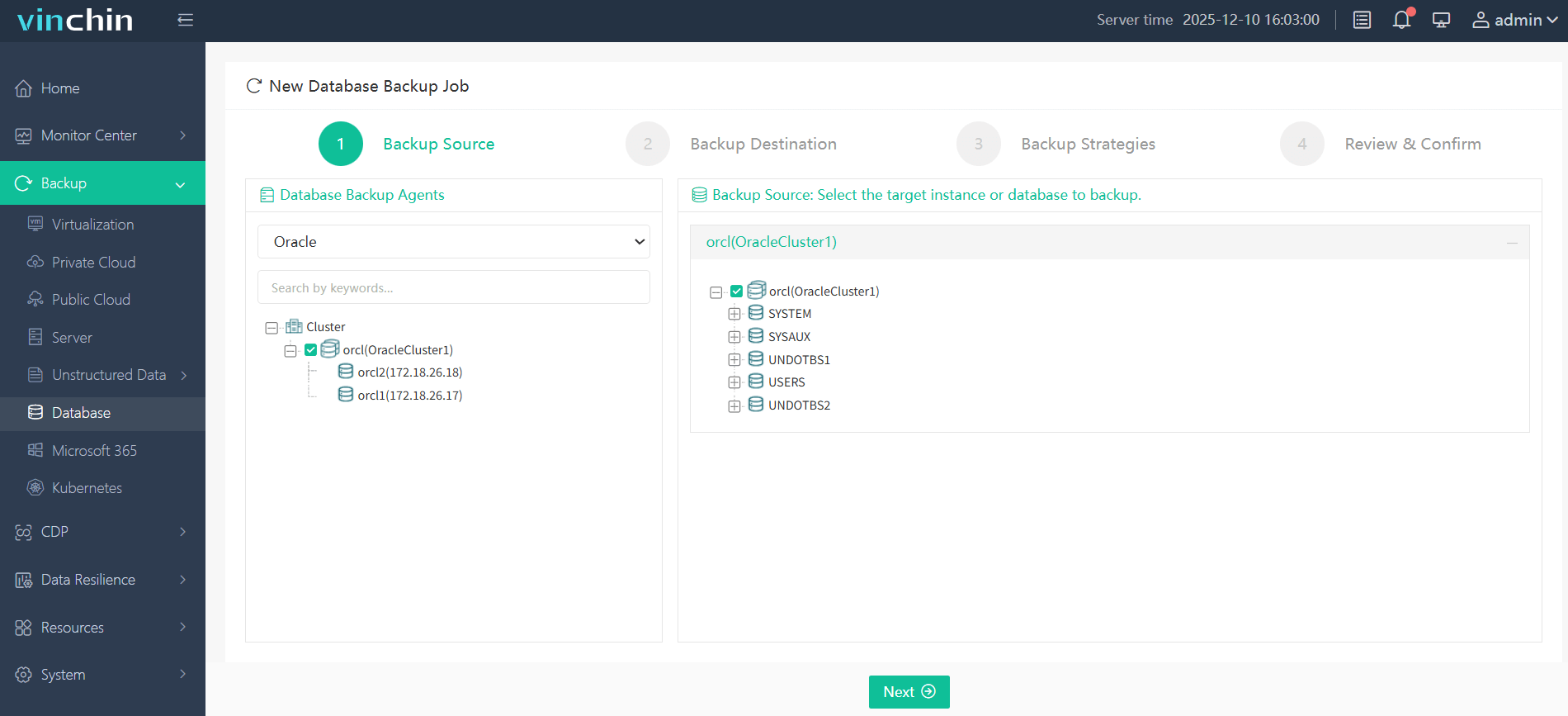
Step 1: Select the Oracle database to back up;
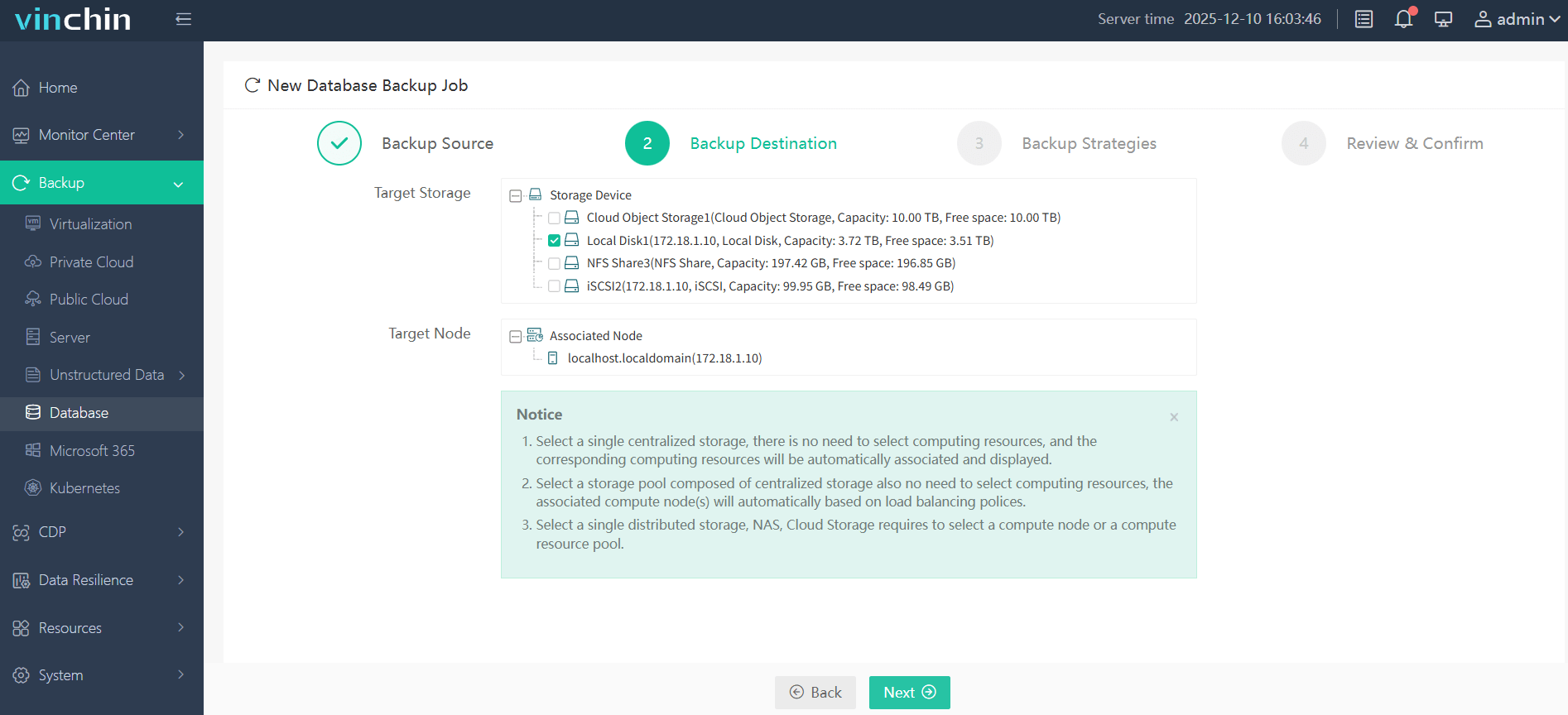
Step 2: Choose preferred storage location(s);
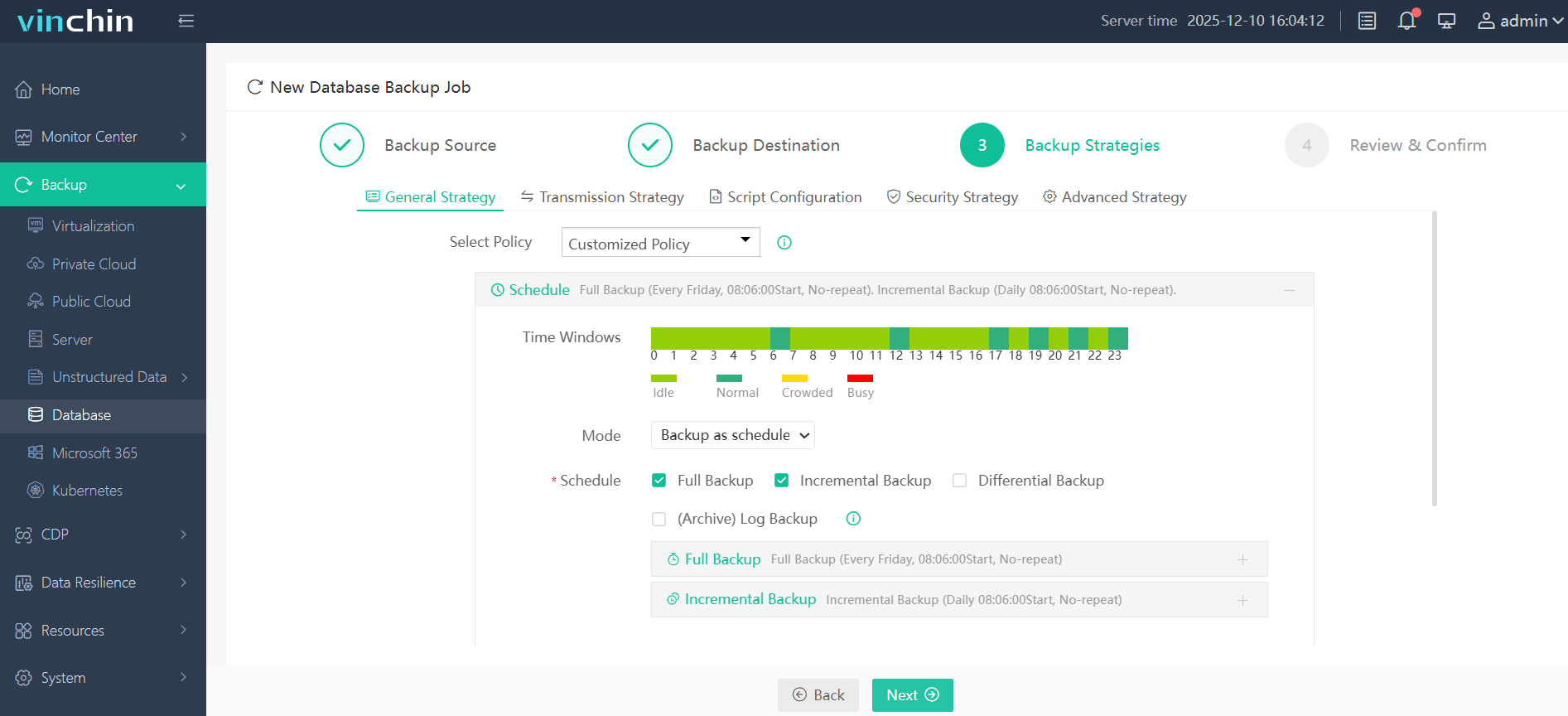
Step 3: Define custom strategy rules tailored for business needs;
Step 4: Submit job directly.
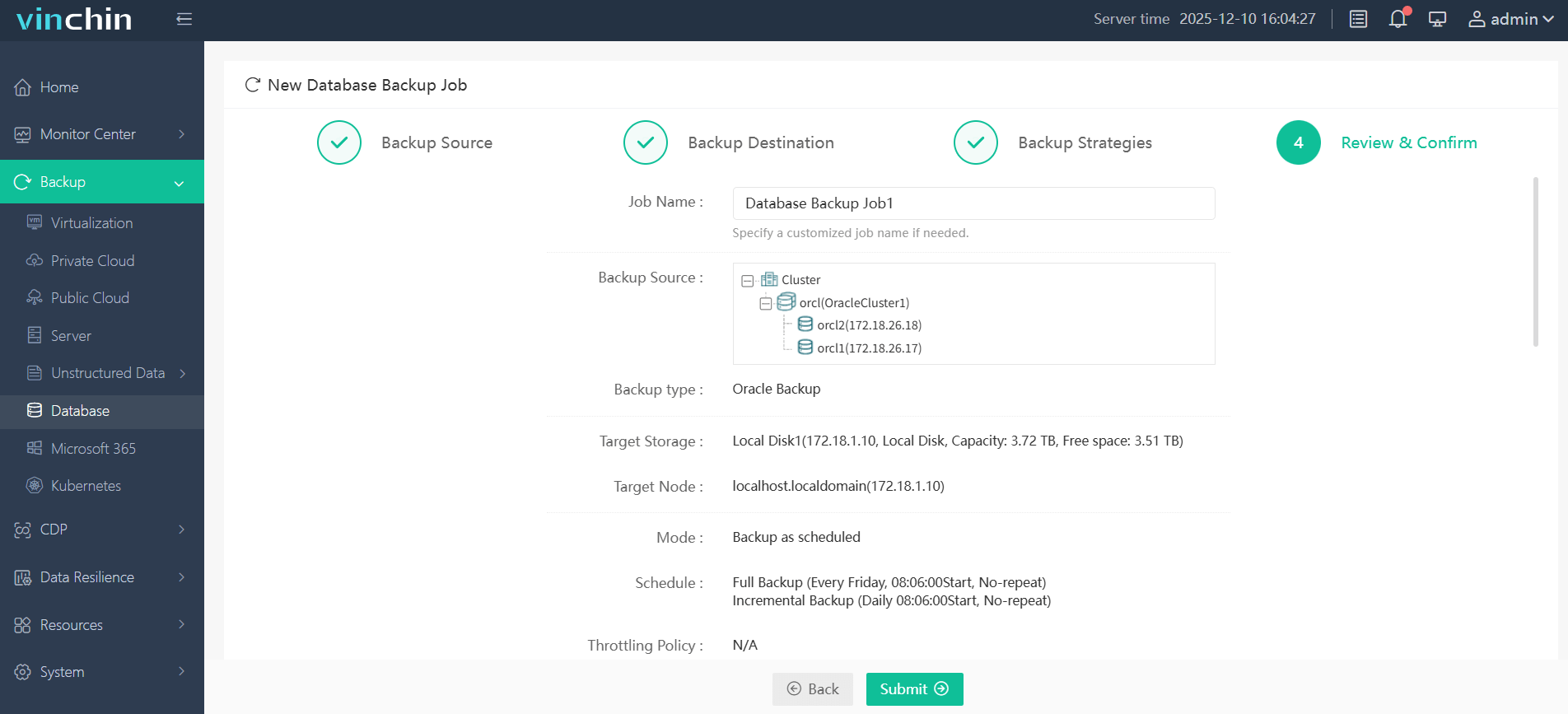
Recognized globally by thousands of enterprises with top ratings in independent reviews, Vinchin Backup & Recovery offers everyone a free 60-day trial with full functionality—click Download now to experience next-generation enterprise data protection firsthand!
RMAN Catalog FAQs
Q1: Can I use my existing recovery repository across dozens of different production servers?
Yes—a single properly sized recovery schema can track hundreds of registered instances simultaneously if sized appropriately per official guidelines.
Q2: What happens if someone accidentally deletes my entire CATDB server?
You must restore from recent physical/database-level backups; always treat this system as mission-critical alongside core application servers!
Q3: How do I clean out old/unneeded entries after retiring certain applications?
Connect via rman, select appropriate targets under CATALOG connection string then run UNREGISTER DATABASE followed by DELETE OBSOLETE commands as needed
Conclusion
The RMAN catalog provides strong centralized management and long-term retention capabilities vital for safe enterprise-grade Oracle deployments. Setting up proper routines ensures smooth operation year-round—for even greater simplicity plus advanced features across multiple platforms consider trying Vinchin free today!