Backing up or restoring an Oracle database is not just about running a command—it’s about control. The oracle rman allocate channel command gives you that control. With it, you decide how data moves between your database and storage. This means you can tune backup speed, manage resources wisely, avoid bottlenecks, and direct backups where you want them. But what exactly does this command do? Why should operations administrators care about channels? In this guide, we’ll walk from beginner basics to advanced techniques so you can optimize performance, resource use, and reliability in your Oracle backup environment.
What Is an RMAN Channel?
An RMAN channel is more than just a connection; it’s a dedicated server process within your Oracle instance that handles physical input/output (I/O) during backup or recovery jobs. When you allocate a channel in RMAN, Oracle creates a separate operating system process (often seen as ora_* in system tools) tied directly to your session. Each channel acts like a worker moving data between Oracle storage—whether disk or tape—and your backup destination.
You can allocate one or several channels at once. Assigning multiple channels lets you run tasks in parallel across different disks or directories. This increases throughput but also requires careful planning so hardware isn’t overloaded. Channels are visible in dynamic performance views such as v$session or v$process, which helps with monitoring during large jobs.
Why Use Oracle RMAN Allocate Channel
Allocating channels gives you hands-on control over how backups run—something every operations administrator values when uptime matters. By specifying channels yourself:
You boost backup speed by running several tasks at once across available hardware.
You choose exactly where each backup file lands by setting unique paths per channel—balancing I/O load across disks or directories.
You set limits on file size (MAXPIECESIZE) or bandwidth (RATE) per channel to match infrastructure constraints.
You customize file naming formats for easier management later.
Parallelism speeds things up but has limits: it depends on available CPU cores (PARALLEL_MAX_SERVERS), disk bandwidth, network capacity (for remote storage), and even tape drive count if using tapes. Too many channels can cause contention—slowing everything down instead of speeding it up.
Directing specific channels to different filesystems prevents any single volume from becoming overloaded—a common cause of slowdowns during big backups. Manual allocation also makes troubleshooting easier: if one path fails while others succeed, unique FORMAT paths help pinpoint which stream had trouble fast.
How to Manually Allocate Channels in Oracle RMAN?
Manual allocation puts you firmly in charge of how RMAN interacts with storage during backups or restores. Here’s how it works step by step.
First: decide how many channels fit your hardware setup—a good starting point is matching the number of physical disks used for backups (or CPU cores). Never exceed what your system can handle without testing first; too much parallelism leads to resource contention.
Suppose you want two separate disk channels writing into different directories for better performance:
RUN {
  ALLOCATE CHANNEL ch_disk01 DEVICE TYPE DISK FORMAT '/backup1/%U';
  ALLOCATE CHANNEL ch_disk02 DEVICE TYPE DISK FORMAT '/backup2/%U';
  BACKUP DATABASE;
}
Each ALLOCATE CHANNEL line creates a named server process (ch_disk01, ch_disk02) that writes files using its own FORMAT path—the %U variable ensures unique filenames every time.
The RUN block groups these steps into one atomic operation: all allocated channels are created together at the start of the block and released automatically at its end unless otherwise scripted.
Fine-tune each channel’s behavior using options like MAXPIECESIZE (to limit individual file size) or RATE (to throttle write speed):
ALLOCATE CHANNEL ch_disk01 DEVICE TYPE DISK FORMAT '/backup1/%U' MAXPIECESIZE 10G RATE 50M;
Use MAXPIECESIZE if your filesystem has size limits—or if copying files offsite later requires smaller chunks. Use RATE if production workloads share storage with backups; throttling avoids saturating shared resources during business hours.
Remember: manually allocated channels always override automatic ones within their RUN block scope—giving you full control when needed most.
For advanced users: monitor active sessions via v$session, link them to OS processes through v$process, then track I/O activity using tools like iostat. This helps diagnose bottlenecks quickly when running high-concurrency jobs.
How to Automatically Allocate Channels in Oracle RMAN?
If manual setup feels too complex—or consistency matters more than customization—you can let RMAN handle channel allocation automatically using persistent configuration commands.
To configure automatic parallelism for disk-based jobs:
CONFIGURE DEVICE TYPE DISK PARALLELISM 2;
CONFIGURE CHANNEL DEVICE TYPE DISK FORMAT '/backup/%U';
This tells RMAN always to use two parallel disk channels by default—and write all output files into /backup/ with unique names generated by %U.
Now when you run:
BACKUP DATABASE;
RMAN allocates two default-named channels (ORA_DISK_1, ORA_DISK_2) behind the scenes—no need for a RUN block unless overriding defaults temporarily.
Check current settings anytime with:
SHOW DEVICE TYPE;
SHOW CHANNEL;
Want to reset everything back to factory defaults? Use:
CONFIGURE DEVICE TYPE DISK CLEAR;
CONFIGURE CHANNEL DEVICE TYPE DISK CLEAR;
Automatic allocation is ideal for routine scheduled jobs where simplicity matters most—and consistent results reduce risk of human error over time. For single-job overrides without changing global config settings permanently, specify parallelism directly inside a RUN block as shown earlier; this increases concurrency only for that job—a handy trick after missed runs or unusually large data volumes without changing baseline policies long-term.
Monitor ongoing activity through views like v$rman_status, v$rman_output, or check progress via v$session_longops. These give insight into which operations are running on which allocated server processes right now—a must-have toolset when managing enterprise-scale environments.
Vinchin Backup & Recovery: Enterprise-Level Database Protection Made Simple
For organizations seeking streamlined protection beyond native tools, Vinchin Backup & Recovery delivers professional-grade database backup tailored for today’s major platforms—including Oracle, MySQL, SQL Server, MariaDB, PostgreSQL, PostgresPro, and TiDB—with special emphasis on robust support for Oracle environments. Key features include batch database backup capabilities, GFS retention policy management for compliance needs, WORM protection against tampering threats, recovery verification via SQL scripts ensuring reliable restores, and flexible multi-level data compression strategies that optimize storage usage while maintaining performance—all designed to simplify administration and strengthen data resilience across diverse infrastructures.
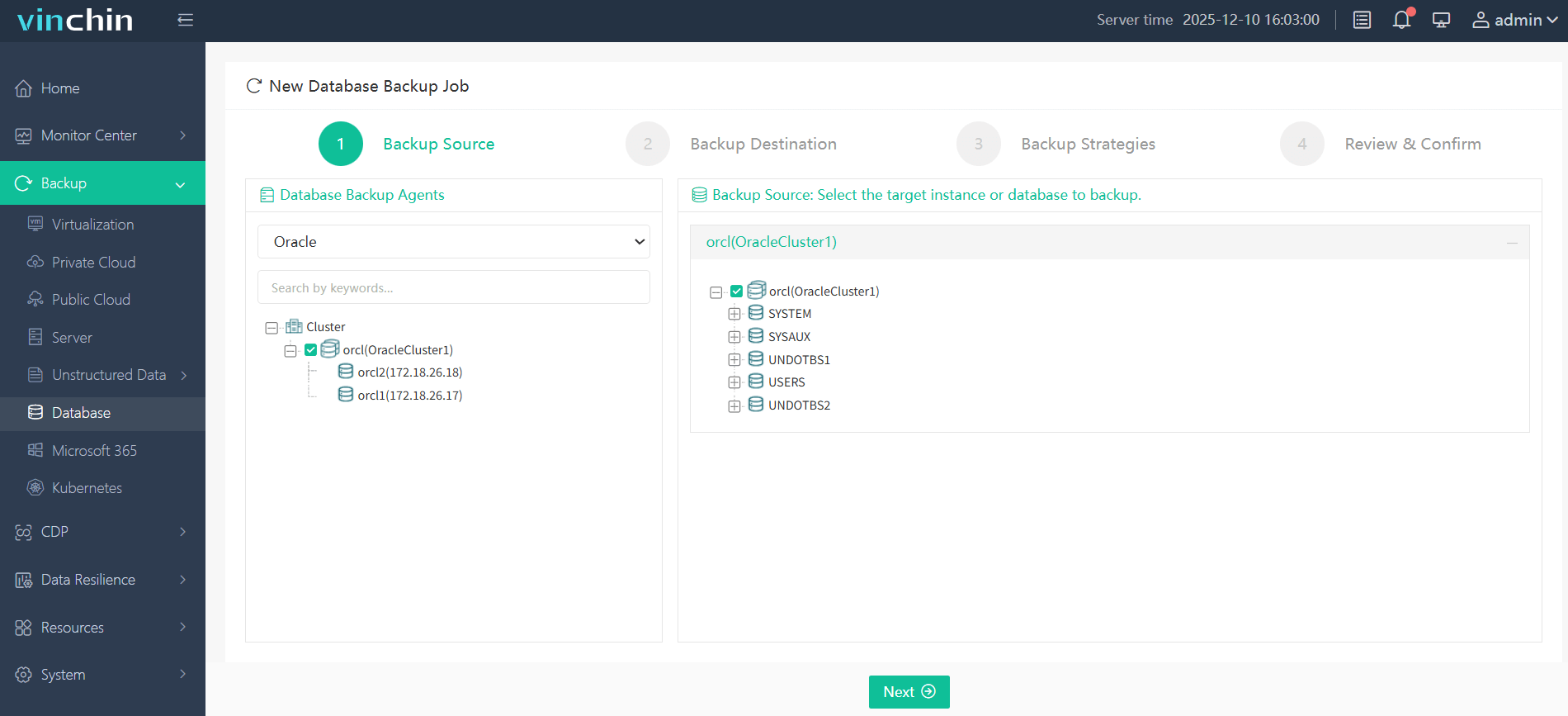
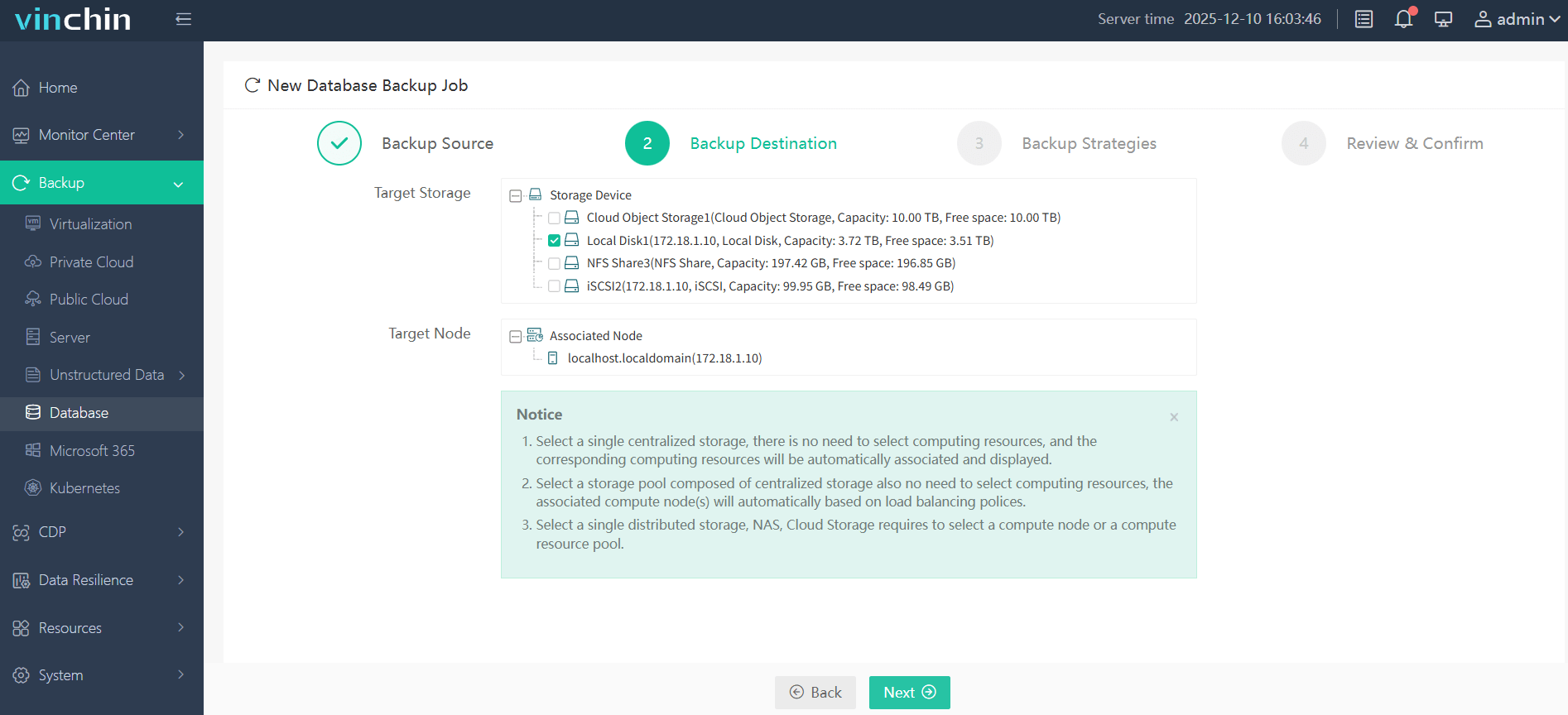
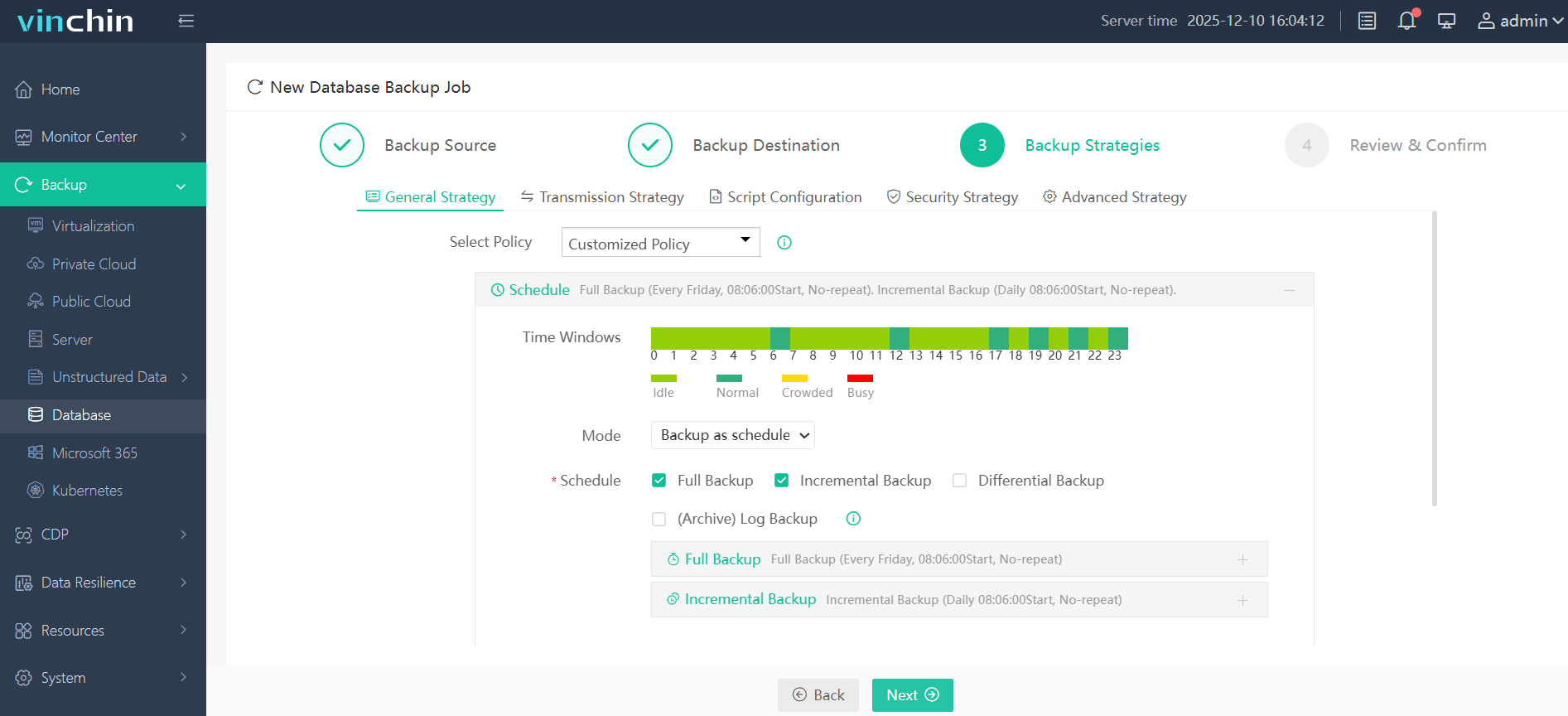
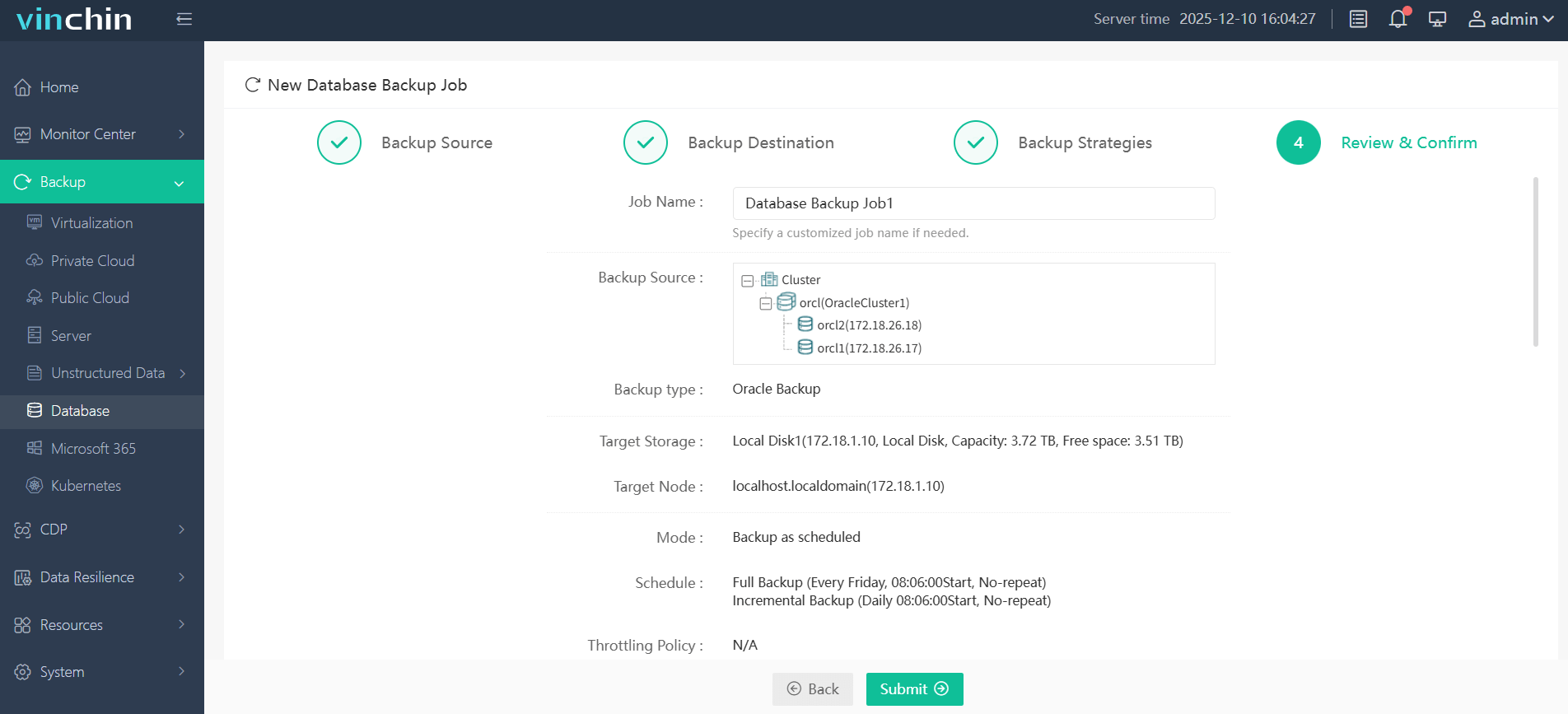
The intuitive web console makes safeguarding your Oracle databases straightforward:
Step 1. Select the Oracle database to back up
Step 2. Choose the backup storage
Step 3. Define the backup strategy
Step 4. Submit the job
Vinchin Backup & Recovery is trusted globally by enterprises seeking top-rated data protection solutions—experience every feature free for 60 days; click download now!
Oracle RMAN Allocate Channel FAQs
Q1: Can I reallocate an RMAN channel mid-backup?
No; stop the current job first then restart it after adjusting allocation settings as needed.
Q2: How do I trace which OS process matches my allocated RMAN channel?
Query V$SESSION/V$PROCESS views together then match SPID column value against operating system process list using tools like ps/top/iostat/dtrace as appropriate.
Q3: What should I check if my manually allocated disk channel fails immediately?
Verify free space exists at target location confirm oracle user has write permissions double-check directory path spelling before rerunning job.
Conclusion
Mastering oracle rman allocate channel lets administrators fine-tune speed resource usage reliability—and solve problems faster when they arise! Whether scripting custom allocations or relying on automation smartly applied controls mean safer data every time—for streamlined protection try Vinchin’s enterprise solution today!