Cloning an Oracle database across servers is a routine task for many operations administrators. Whether you want to refresh test environments, migrate workloads between data centers, or set up disaster recovery systems, you need reliable methods that minimize risk and downtime. Oracle's Recovery Manager (RMAN) offers robust tools for duplicating databases—even between different servers—making these tasks more predictable and efficient. In this guide, we’ll explore how to clone an Oracle database using RMAN Duplicate step by step. We’ll also discuss common challenges and advanced considerations so you can approach your next clone operation with confidence.
What Is Cloning Oracle Database?
Cloning an Oracle database means creating a complete copy of your existing database—including all its data files, structure, configuration settings, and internal identifiers—on another server or location. This cloned database operates independently from the source; changes made in one do not affect the other. Cloning is essential when you need safe testing environments or want to develop new features without risking production data.
Oracle provides several ways to clone databases: physical copies using backup tools like RMAN Duplicate or logical exports using Data Pump utilities. For cross-server operations where you need an exact replica—including all internal objects—RMAN Duplicate stands out as the most comprehensive solution.
Why Use RMAN Duplicate Across Servers
RMAN Duplicate is built into every modern version of Oracle Database (11gR2 onward). It allows you to create full clones on different servers without manual copying of files or extended downtime on your source system. With RMAN Duplicate:
You can duplicate directly from active databases over the network.
The process assigns a unique DBID (database identifier) to prevent conflicts.
Both same-name (identical DB_NAME) and different-name clones are supported.
You avoid human error often found in manual copy-and-paste approaches.
You can use either live data transfer (“from active database”) or work from existing backups if bandwidth is limited.
This method saves time and reduces risk compared with older techniques.
How to Clone Oracle Database Using RMAN Duplicate Command?
Cloning with RMAN Duplicate involves careful preparation of both source and target servers followed by running specific commands in sequence. Let’s walk through each stage so nothing gets missed.
Before starting: Confirm that both servers run compatible versions of Oracle Database software (the target must have the same version as—or newer than—the source). Make sure both machines have enough disk space for all data files plus logs.
Preparation Steps:
First things first: Ensure your source database runs in ARCHIVELOG mode so all changes are captured during duplication. Both servers must communicate over the network reliably; test basic connectivity before proceeding.
The target server should have only the Oracle RDBMS software installed—not an existing database under your intended SID yet.
1. Configure Listener and TNS Entries
On the target server:
Edit listener.ora so it includes a static entry for your new SID under SID_LIST_LISTENER:
SID_LIST_LISTENER =
  (SID_LIST =
    (SID_DESC =
      (GLOBAL_DBNAME = <TARGET_SID>)
      (ORACLE_HOME = /path/to/oracle_home)
      (SID_NAME = <TARGET_SID>)
    )
  )
Start or reload the listener using lsnrctl start or lsnrctl reload as needed.
On the source server:
Add a TNS entry in tnsnames.ora pointing at your target server’s hostname/IP address with correct port/SID values:
<TARGET_TNS> =
  (DESCRIPTION =
    (ADDRESS = (PROTOCOL = TCP)(HOST = <target_host>)(PORT = 1521))
    (CONNECT_DATA =
      (SERVER = DEDICATED)
      (SERVICE_NAME = <TARGET_SID>)
    )
  )
Test connectivity from source by running tnsping <TARGET_TNS> until it succeeds.
2. Prepare Parameter File and Password File
On your source server:
Create a parameter file (PFILE) from current SPFILE:
SQL> create pfile from spfile;
Copy both PFILE and password file (orapw<SOURCE_SID>) over to matching locations on target:
scp $ORACLE_HOME/dbs/init<SOURCE_SID>.ora oracle@<target_host>:$ORACLE_HOME/dbs/init<TARGET_SID>.ora
scp $ORACLE_HOME/dbs/orapw<SOURCE_SID> oracle@<target_host>:$ORACLE_HOME/dbs/orapw<TARGET_SID>
If no password file exists yet on either side—or if SYS passwords differ—you should generate one freshly on target using orapwd FILE=orapw<TARGET_SID> PASSWORD=<sys_password> ENTRIES=5 FORCE=Y so authentication will succeed during duplication.
3. Edit PFILE Settings on Target Server
Open init<TARGET_SID>.ora on target server:
Change DB_NAME value if making a different-name clone.
Update any directory/file paths that differ between servers.
Add these lines if directory structures are not identical:
*.db_file_name_convert='<source_path>','<target_path>'
*.log_file_name_convert='<source_path>','<target_path>'
Create required directories ahead of time so no errors occur when files are written out during duplication—for example: mkdir -p /u01/app/oracle/oradata/<TARGET_SID> as needed.
4. Start Auxiliary Instance in NOMOUNT Mode
Set environment variables appropriately (export ORACLE_SID=<TARGET_SID>), then launch SQL*Plus:
sqlplus / as sysdba
SQL> startup nomount pfile='$ORACLE_HOME/dbs/init<TARGET_SID>.ora';
SQL> exit;
Leave this session running while performing subsequent steps elsewhere if desired; only one instance per SID should be open at once per machine.
5. Run RMAN DUPLICATE Command
From any host with access—including either source or target—you can now connect via RMAN:
rman TARGET sys@<SOURCE_TNS> AUXILIARY sys@<TARGET_TNS>
You will be prompted for passwords unless OS authentication is used locally (rman TARGET / AUXILIARY sys/password@<TARGET_TNS>).
Now issue this command at the prompt:
DUPLICATE TARGET DATABASE TO '<DB_NAME>' FROM ACTIVE DATABASE NOFILENAMECHECK;
Replace <DB_NAME> with what appears in DB_NAME parameter inside PFILE—not necessarily ORACLE_SID itself!
Use NOFILENAMECHECK if file names overlap but reside on separate hosts/disks; omit it otherwise for stricter checks against accidental overwrites.
For very large databases or slow networks consider adding parallelism options such as SECTION SIZE or PARALLEL parameters within DUPLICATE command syntax—see Performance Considerations below for details!
If errors occur here check logs immediately; most failures relate back to misconfigured listeners/TNS entries/password mismatches/insufficient permissions/missing archive logs/etc.—address these before retrying!
Validating Your Clone After Completion
Once duplication finishes successfully:
1. Log onto cloned instance via SQL*Plus (sqlplus / as sysdba)
2. Check status:
SELECT name, open_mode FROM v$database;
If open/read-write state appears under correct name/SID everything worked!
3. Verify all datafiles online:
SELECT name,status FROM v$datafile;
4. Confirm new DBID assigned uniquely:
SELECT dbid FROM v$database;
5. Review application schemas/tablespaces/users/permissions match expectations.
6. Examine alert log (alert_<SID>.log) for warnings/errors not shown onscreen during duplication process.
7. Optionally run health checks/scripts against business-critical tables/functions before releasing clone into production/test/dev workflow!
If anything looks off consult detailed error messages/logs generated during earlier steps—they usually point straight toward root cause needing correction!
How to Clone Oracle Database Using Data Pump Export/Import?
Sometimes you don’t need an exact physical copy but just want selected schemas/tables moved elsewhere—for example migrating development-only objects without carrying over system-level metadata/jobs/internal objects tied specifically into original environment’s architecture/configuration/security model etc...
That’s where Data Pump comes in handy! It creates logical exports/imports allowing fine-grained selection/filtering/transformation along way—but does NOT produce true byte-for-byte replicas nor preserve hidden/system-owned artifacts behind scenes like triggers/jobs/audit trails etc...
Here’s how typical workflow unfolds:
1) Install fresh empty instance/database at destination using standard tools (Database Configuration Assistant, scripts etc).
2) On original/source run export utility capturing desired contents into dump file(s):
expdp system/password@<SOURCE_SID> full=y directory=DATA_PUMP_DIR dumpfile=fulldb.dmp logfile=expdp.log
3) Transfer resulting dump files securely onto destination host/storage area ready for import phase!
4) On destination invoke import utility restoring contents into blank schema/environment prepared earlier:
impdp system/password@<TARGET_SID> full=y directory=DATA_PUMP_DIR dumpfile=fulldb.dmp logfile=impdp.log
5) Post-import review/recompile invalid objects/check user accounts/grant roles/fix permissions etc until everything works smoothly again!
Remember though: Data Pump skips certain low-level settings/internal jobs/scheduler tasks/AQ queues/etc which only full physical clones capture reliably...for those scenarios stick with RMAN-based approach described above instead!
Enterprise-Level Backup & Migration With Vinchin Backup & Recovery
After completing your cloning or migration project, securing ongoing protection is crucial—and that's where Vinchin Backup & Recovery excels as an enterprise-grade solution tailored for today's leading databases including Oracle, MySQL, SQL Server, MariaDB, PostgreSQL, PostgresPro, and TiDB—with special emphasis here on robust support for Oracle environments across platforms and workloads alike.
Vinchin Backup & Recovery delivers key features such as incremental backup capabilities tailored specifically for Oracle databases; batch backup management; flexible GFS retention policies; cloud backup integration alongside tape archiving options; plus any-point-in-time recovery—all designed to streamline automation while optimizing storage efficiency and ensuring rapid restoration even after ransomware attacks or operational failures.
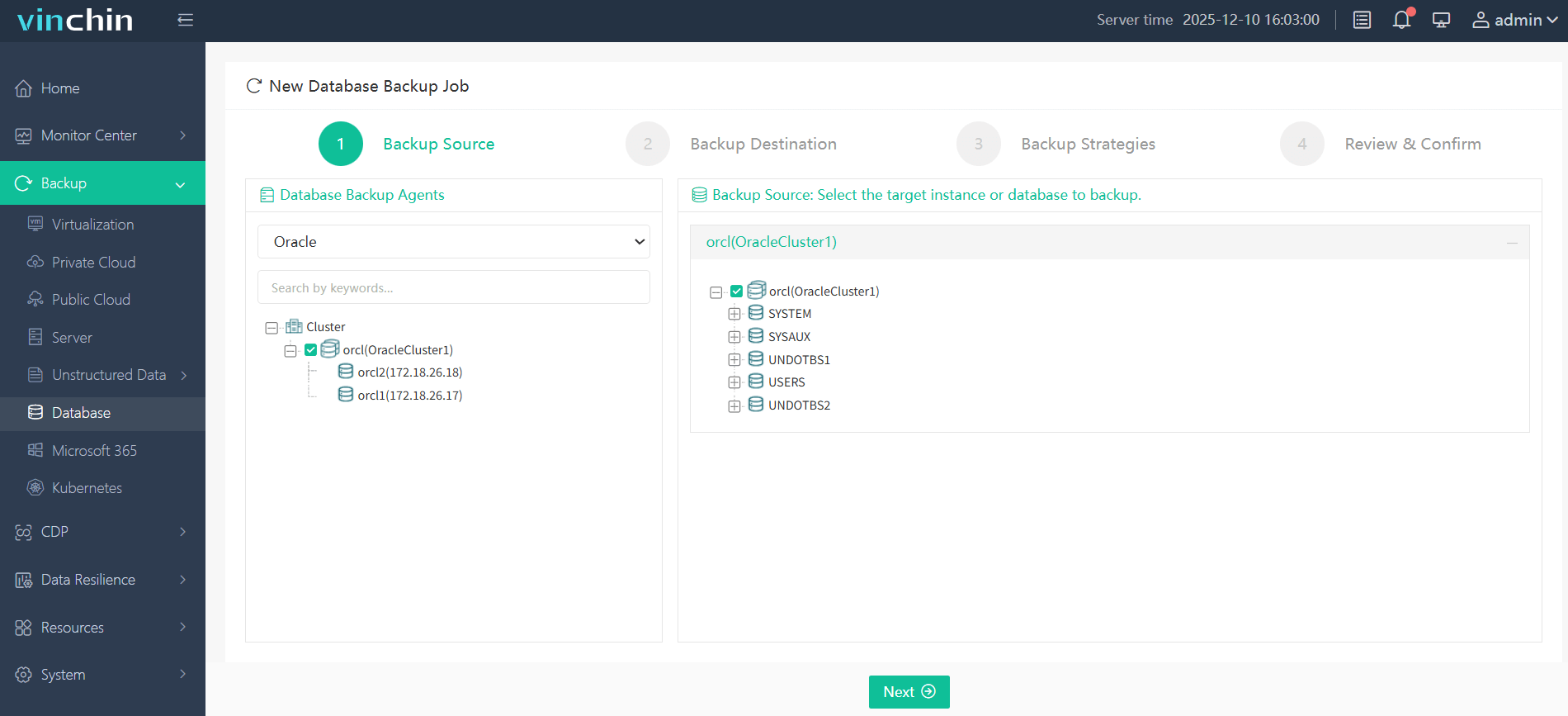
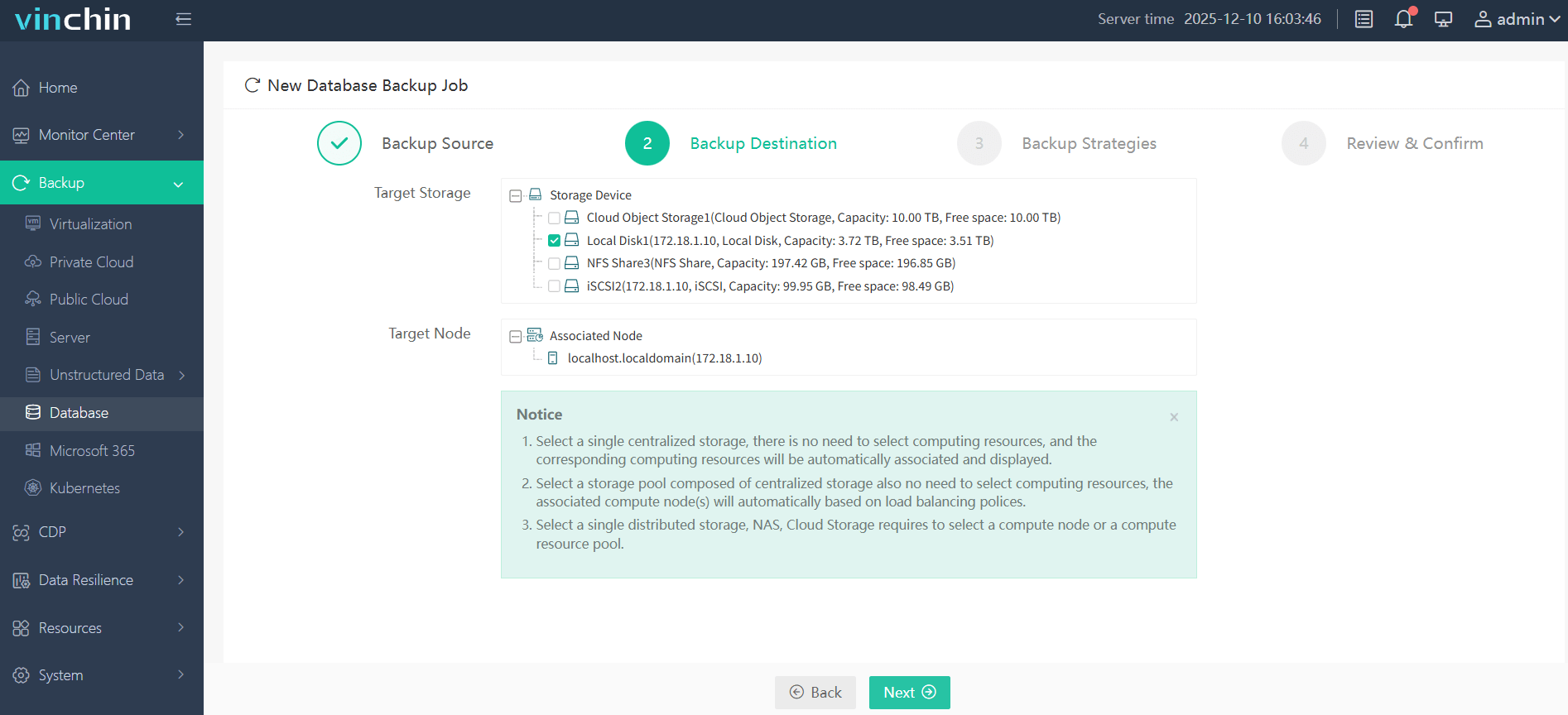
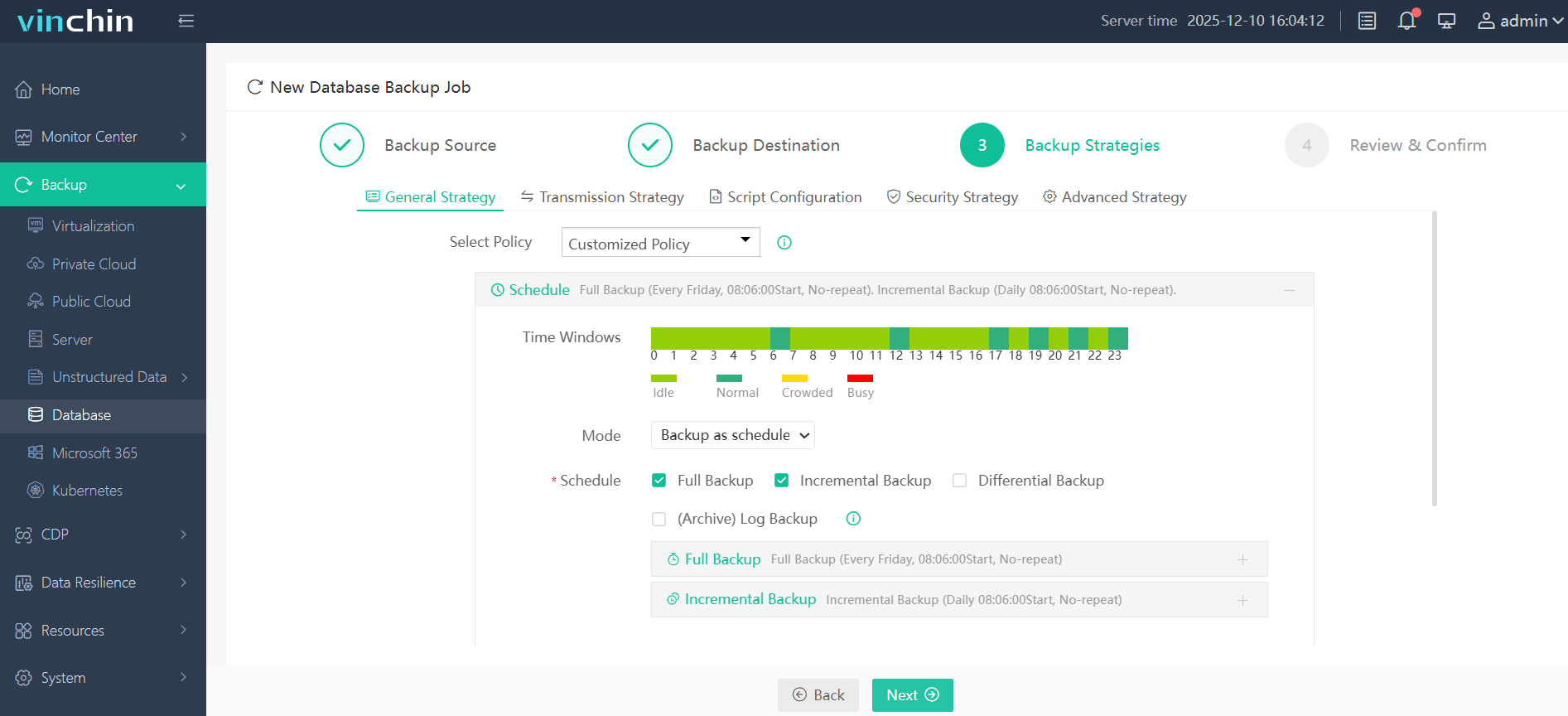
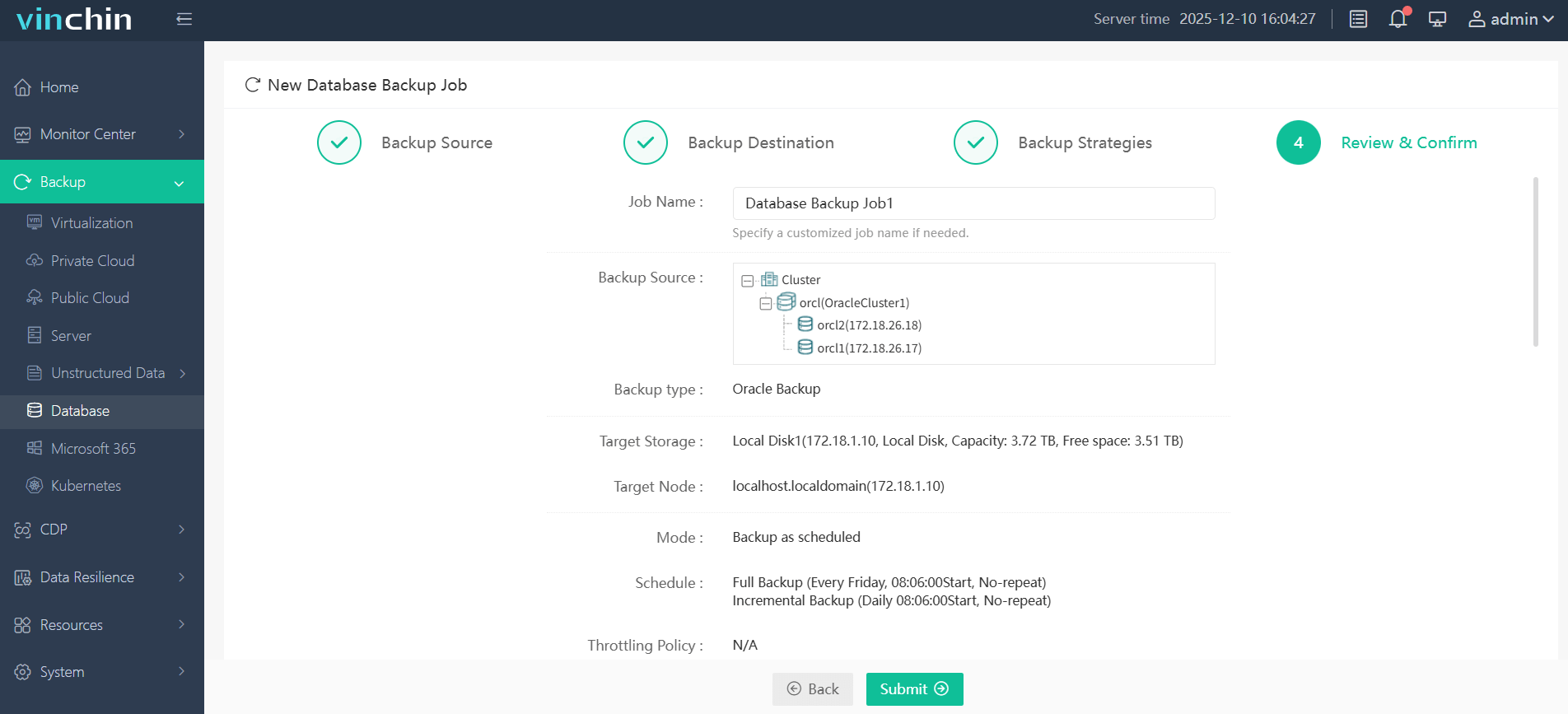
Managing backups through Vinchin Backup & Recovery's intuitive web console requires just four straightforward steps:
Step 1: Select the Oracle database to back up
Step 2: Choose backup storage
Step 3: Define your backup strategy
Step 4: Submit the job
Recognized globally by thousands of organizations—with top industry ratings—you can experience every feature free for 60 days by clicking download below.
Cloning Oracle Database Using RMAN Duplicate FAQs
Q1: Can I change both DB_NAME and ORACLE_SID when cloning?
Yes; update both values in PFILE/password filenames before starting duplication so they match intended identity on target server.
Q2: Do I need identical SYS passwords on both servers?
Yes; ensure password files match SYS credentials exactly else authentication will fail during duplicate operation.
Q3: The duplicate job fails with "RMAN-05501: aborting duplication of target database." What should I check?
Check alert log (alert_<SID>.log) on target plus preceding error messages in RMAN output—they reveal root cause needing attention.
Conclusion
Cloning an Oracle database across servers becomes straightforward once you master each step—from preparing listeners/PFILES/passwords through validating final results after completion.RMAN delivers fast, reliable physical clones while alternatives like Data Pump suit logical migrations. For ongoing protection, Vinchin provides enterprise-grade backup trusted worldwide. Try their free trial today!