Keeping your Oracle database safe means more than just running backups. You need to know if those backups are working as planned. That’s where checking the RMAN backup status comes in. In this guide, we’ll explain what RMAN backup status means, why it matters, and how to check it using several proven methods. Whether you’re new to Oracle or a seasoned admin, you’ll find practical steps for every skill level.
What is RMAN Backup Status?
RMAN backup status tells you the current state of your Oracle database backup jobs. It shows if a backup is running, completed successfully, failed outright, or finished with warnings that may need review. You can also see when each backup started and ended, how long it took to run, which files were included in the job, and if any errors occurred along the way.
This information lives inside Oracle’s control file or an external recovery catalog—both are key sources for tracking your data protection history. You can view RMAN backup status using command-line tools like RMAN itself or SQL*Plus queries against special data dictionary views. Log files also provide details for deeper analysis.
Understanding these statuses helps you spot problems early before they threaten your business continuity.
Why Monitor RMAN Backup Status?
Regularly checking RMAN backup status is vital for database safety—and peace of mind! If scheduled jobs fail silently without anyone noticing, you risk losing critical business data when disaster strikes unexpectedly.
By monitoring regularly you can:
Spot problems early—fixing them before they become emergencies.
Confirm all required databases/files/logs are protected according to business needs.
Satisfy compliance requirements demanding proof of successful recoverable copies exist at all times.
Plan restores confidently knowing exactly which sets are valid/recent enough.
Avoid surprises during high-pressure recovery events when every second counts!
Monitoring also reveals trends over weeks/months—for example slowdowns caused by overloaded storage arrays/network bottlenecks—that let teams improve performance proactively rather than waiting until something breaks.
Method 1: Checking RMAN Backup Status with Commands
The RMAN command line is a direct way to check backup status at any time. Many DBAs prefer this method because it’s fast and gives clear answers right from the source.
To get started:
Once connected:
To list all available backups along with their current state:
RMAN> LIST BACKUP;
This command displays each backup set or image copy you have made so far. Look for states like AVAILABLE, EXPIRED, or OBSOLETE next to each entry.
If you want to focus only on failed or outdated backups that might need cleanup:
RMAN> REPORT OBSOLETE;
This shows backups that do not meet your retention policy anymore—they could be deleted soon unless needed for compliance reasons.
For a quick summary of recent jobs—including start times, end times, duration in hours/minutes/seconds:
RMAN> LIST BACKUP SUMMARY;
You get an overview of all recent activity at a glance—a great way to confirm everything ran overnight as expected.
Method 2: Viewing RMAN Backup Status in Data Dictionary
Oracle provides special internal views called data dictionary views that track every detail about past backups—even after jobs finish running. These views help both beginners who want quick answers and experts who need deep dives into historical records.
The most important view is V$RMAN_BACKUP_JOB_DETAILS:
To see recent job statuses:
SELECT SESSION_KEY,
       INPUT_TYPE,
       STATUS,
       TO_CHAR(START_TIME,'mm/dd/yy hh24:mi') AS START_TIME,
       TO_CHAR(END_TIME,'mm/dd/yy hh24:mi') AS END_TIME,
       ELAPSED_SECONDS/3600 AS HOURS
FROM V$RMAN_BACKUP_JOB_DETAILS
ORDER BY SESSION_KEY DESC;
Each row lists one job’s unique session key (for further lookup), type (DB FULL, ARCHIVELOG, etc.), final status (RUNNING, COMPLETED, FAILED, sometimes even COMPLETED WITH WARNINGS), plus timing details down to the minute.
If you use only control file metadata instead of an external recovery catalog (RCAT), remember that older records may age out based on retention settings. For long-term audit trails beyond default retention periods (typically seven days), set up an external catalog whenever possible.
Want more detail about what happened during one specific job? Use its session key from above:
SELECT * FROM V$BACKUP_SET_DETAILS WHERE SESSION_KEY = <your_session_key>;
Here you'll find which files were included (datafiles vs archived logs), device types used (disk/tape/cloud), compression settings applied—and other technical facts useful when auditing compliance or troubleshooting slow performance.
To read actual log output generated during execution—which often includes error codes like ORA-xxxx—you can run:
SELECT OUTPUT FROM GV$RMAN_OUTPUT WHERE SESSION_RECID = <your_session_recid>
      AND SESSION_STAMP = <your_session_stamp>
ORDER BY RECID;
Replace <your_session_recid> and <your_session_stamp> with values from previous queries matching your target job.
Method 3: Automating RMAN Backup Status Reports
Automating regular checks saves time—and reduces risk by catching problems before users notice them!
Most organizations schedule scripts after each nightly backup completes:
1. Connect automatically via shell script/batch file using OS authentication (rman target /)
2. Run SQL queries against V$RMAN_BACKUP_JOB_DETAILS, filtering out successful runs
3. Parse results looking for anything except "COMPLETED"
4. Send alerts via email/webhook/SMS if issues found
Here’s an example SQL snippet suitable for automation pipelines:
SELECT SESSION_KEY,
       STATUS,
       TO_CHAR(END_TIME,'mm/dd/yy hh24:mi') AS END_TIME
FROM V$RMAN_BACKUP_JOB_DETAILS
WHERE STATUS NOT IN ('COMPLETED')
      AND END_TIME > SYSDATE - 1;
Consider capturing "COMPLETED WITH WARNINGS" too—not just outright failures—as these may indicate partial success needing manual review later.
Building Robust Automation Scripts
Let’s walk through building a basic shell script workflow:
1. Use cron (Linux) or Task Scheduler (Windows) for scheduling
2. Script connects via sqlplus/rman CLI
3. Runs above SQL query
4. Checks output lines count; if greater than zero then triggers alert logic
5. Sends formatted message including session keys/statuses/errors via mailx/mutt/sendmail/powershell/email API
Always log script output somewhere safe so admins can audit past alerts easily!
In larger environments consider integrating these checks into centralized dashboards using REST APIs/webhooks feeding monitoring platforms like Grafana/Zabbix/Nagios—or native solutions such as Oracle Enterprise Manager Cloud Control.
How to Protect Oracle Database with Vinchin?
Beyond manual checks and scripts, organizations seeking robust enterprise-level protection should consider Vinchin Backup & Recovery—a professional solution supporting today’s leading databases including Oracle, MySQL, SQL Server, MariaDB, PostgreSQL, PostgresPro, and TiDB—with advanced features tailored especially well for Oracle environments. Among its capabilities are advanced source-side compression and incremental backup options designed specifically for Oracle workloads alongside batch database backup management, flexible GFS-based retention policies, and comprehensive integrity checks—all working together seamlessly so administrators maximize efficiency while ensuring reliable recoverability across complex infrastructures.
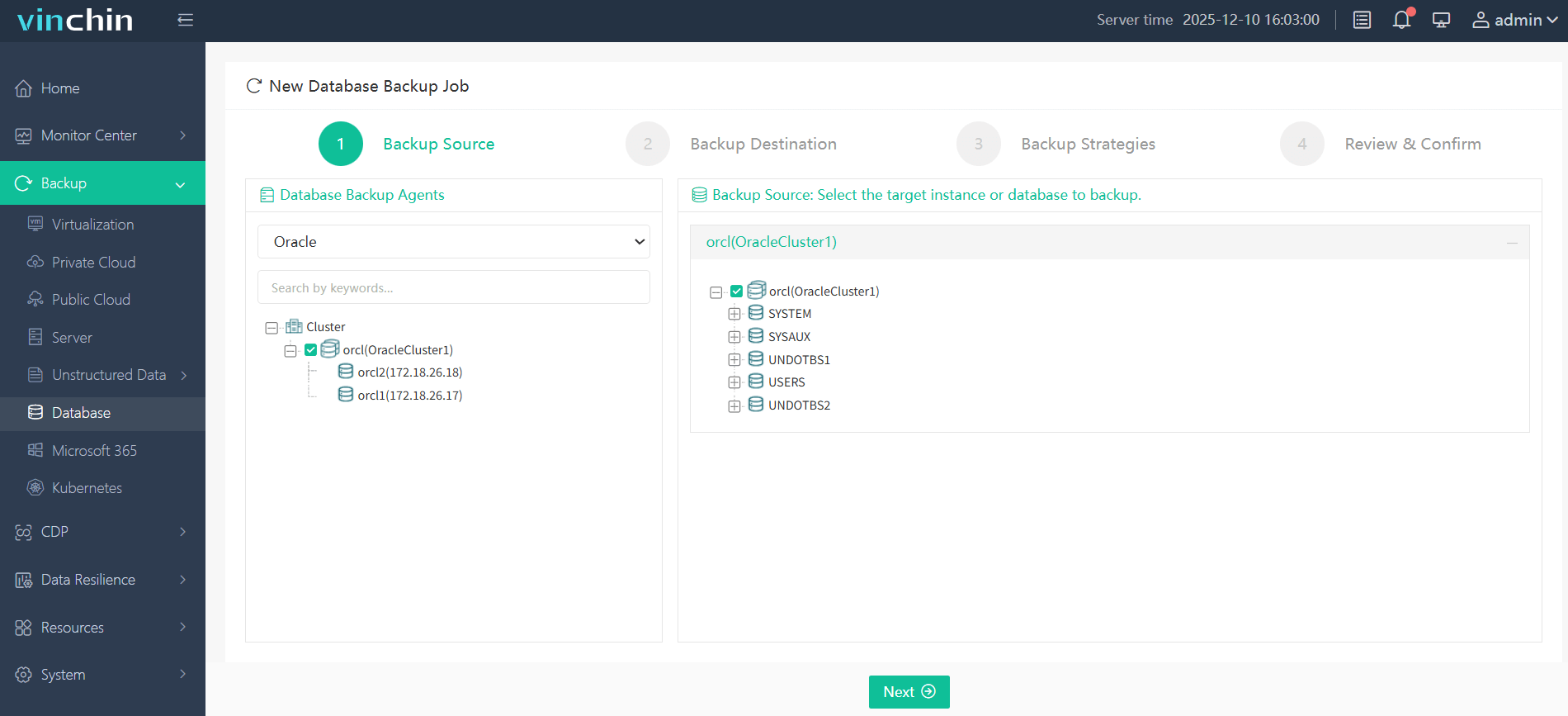
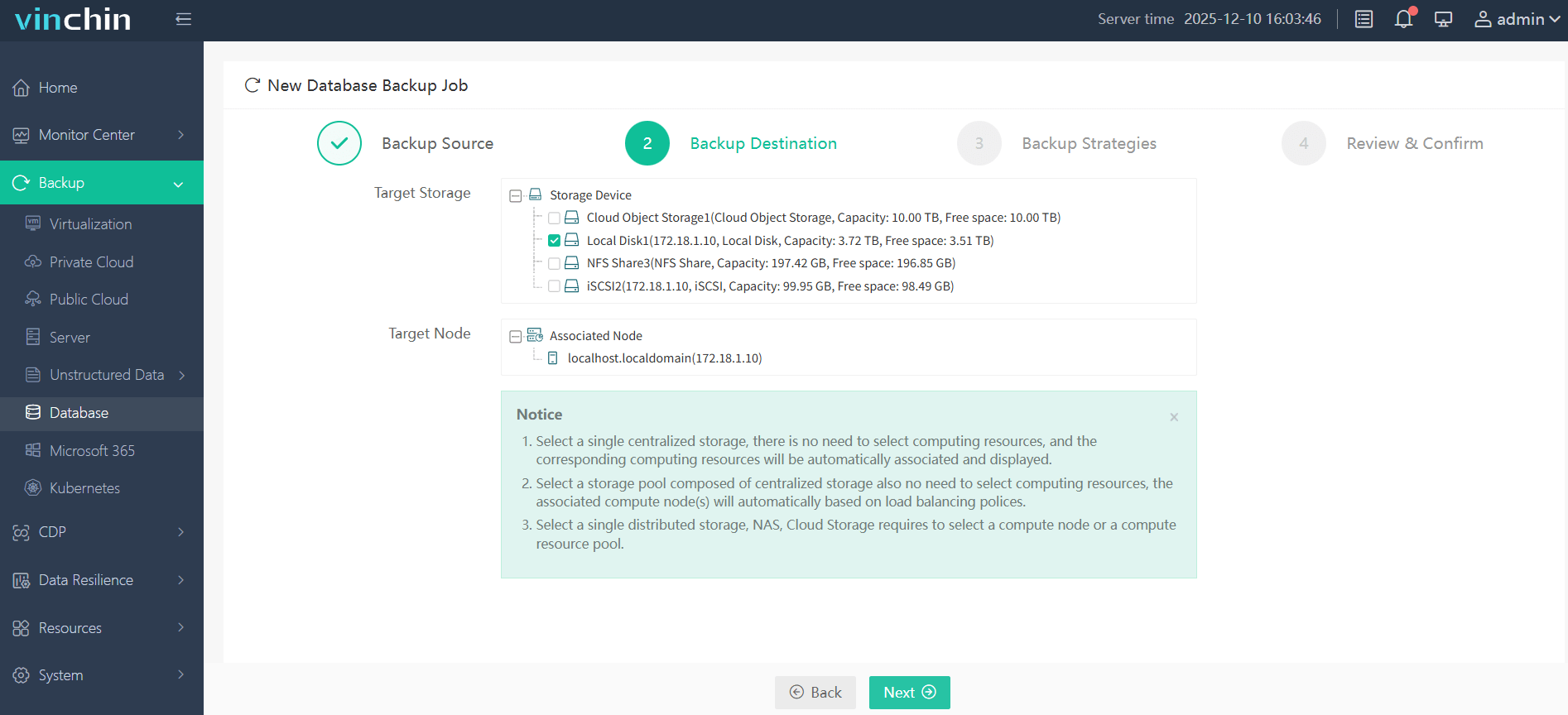
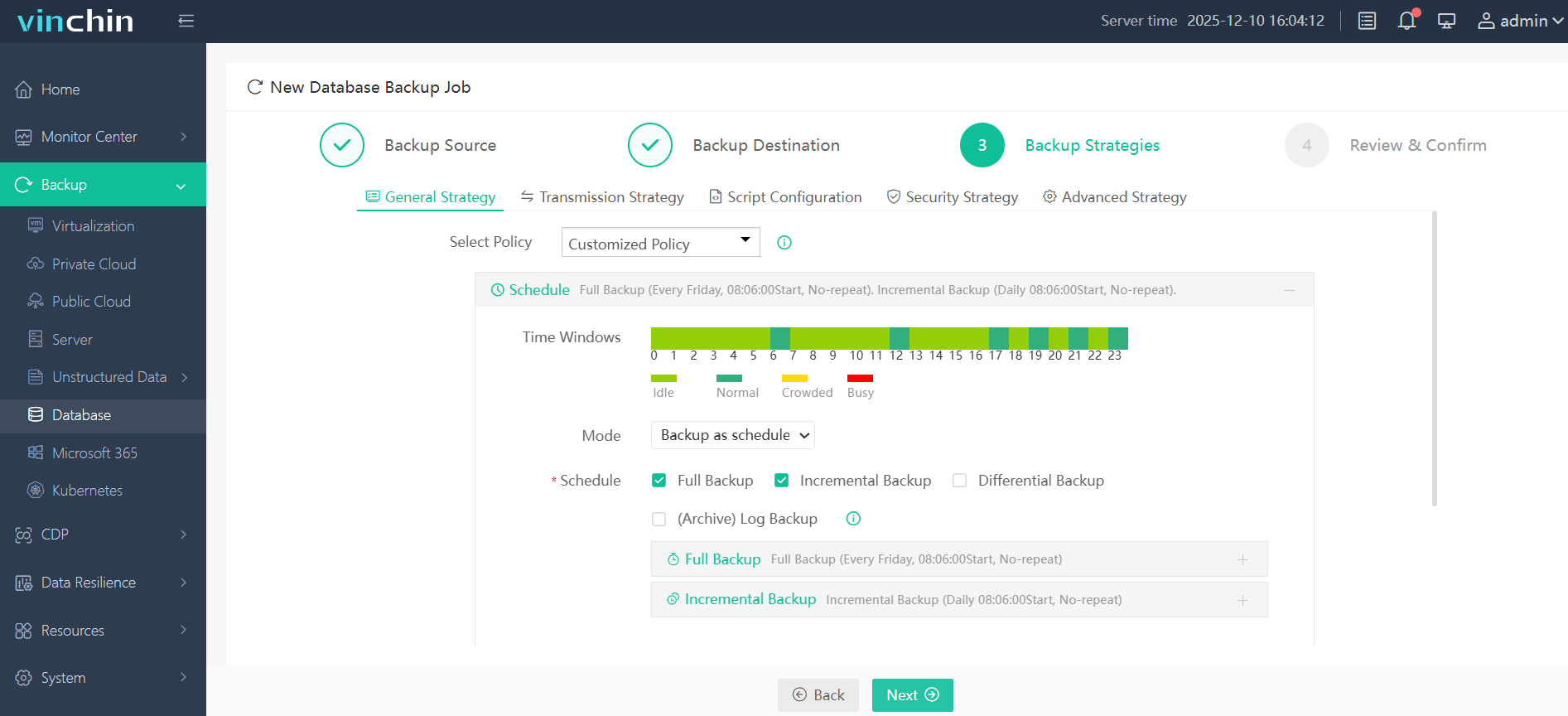
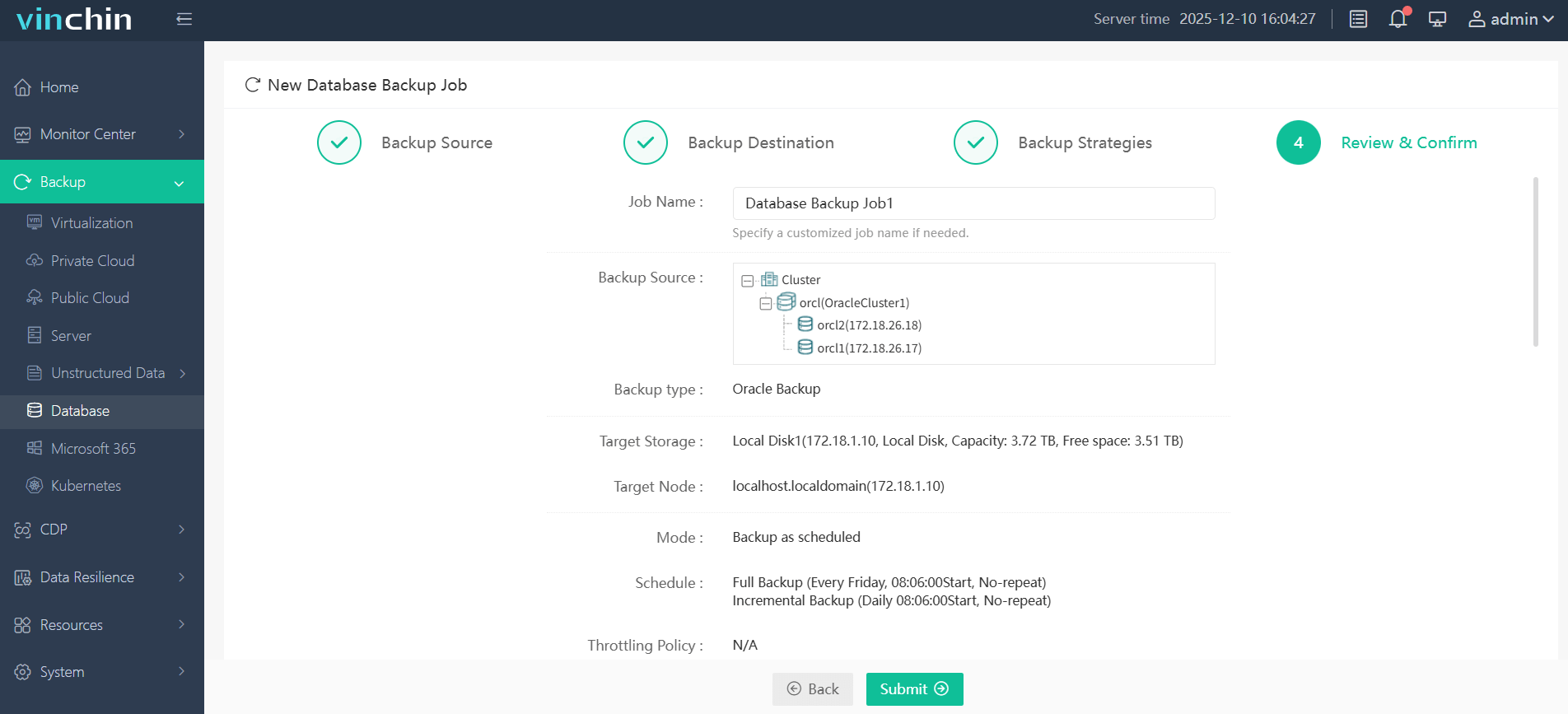
With Vinchin Backup & Recovery's intuitive web console interface protecting an Oracle database typically involves four straightforward steps:
Step 1 – Select the Oracle database to back up;
Step 2 – Choose the desired storage location;
Step 3 – Define custom strategies such as schedules or retention rules;
Step 4 – Submit the job.
Recognized globally among enterprise IT professionals—with thousands of satisfied customers worldwide—Vinchin Backup & Recovery consistently earns top industry ratings. Experience complete peace of mind risk-free with their 60-day full-featured free trial—just click download below!
RMAN Backup Status FAQs
Q1: How do I handle partial failures where some files succeed but others fail?
A1: Review detailed logs from GV$RMAN_OUTPUT; rerun failed parts only after resolving root causes such as storage issues or permission errors.
Q2: Can I automate daily health reports summarizing all recent successes/warnings/failures?
A2: Yes—schedule scripts querying V$RMAN_BACKUP_JOB_DETAILS then format results into emails/dashboards highlighting any non-COMPLETED statuses per day/week/month window.
Q3: What does "COMPLETED WITH WARNINGS" mean compared with "FAILED"?
A3: "COMPLETED WITH WARNINGS" signals minor recoverable issues occurred but main task finished; "FAILED" means core operation did not complete successfully so immediate attention required.
Conclusion
Knowing your RMAN backup status keeps databases safe from unexpected loss or downtime—use commands/data dictionary/views/scripts together for best results! Vinchin makes protecting enterprise databases simple yet powerful—try it today risk-free!