Oracle RMAN (Recovery Manager) is the standard tool for backing up and restoring Oracle databases. If you manage Oracle environments—especially single-instance setups—you need to automate backup and recovery tasks to avoid mistakes under pressure. The best way to do this is by using RMAN scripts that follow proven examples from real-world operations.
In this article, we walk through practical oracle rman script examples for full backup, restore, incremental backup, and more advanced topics like error handling and validation. Each example follows Oracle’s official documentation and best practices so you can build a reliable backup routine step by step.
What is an Oracle RMAN Script?
An Oracle RMAN script is a set of commands saved in a text file or stored in the recovery catalog. These scripts automate backup, restore, and recovery operations for your database environment. You can run them from the command line or schedule them with tools such as cron on Linux or Task Scheduler on Windows.
By using scripts instead of manual entry at every step, you reduce human error risk—especially during stressful situations—and ensure consistency across your team’s routines. Scripts range from simple one-liners to complex workflows that cover full backups with retention policies.
Why Use RMAN Scripts?
RMAN scripts offer several key advantages for database administrators:
First, they save time by automating repetitive tasks like nightly backups or weekly maintenance jobs. Second, they help standardize procedures across teams so everyone follows the same process every time—a must for compliance audits or disaster recovery drills.
Third, scripts make it easy to schedule jobs at regular intervals while keeping logs for later review or troubleshooting. Finally—and perhaps most important—they reduce the chance of costly mistakes when you need fast action during an outage or data loss event.
Would you want to type out every command by hand during a crisis? Most DBAs would not take that risk.
Prerequisites and Common Configuration
Before running any oracle rman script example in production environments, check these prerequisites:
Your database should be in ARCHIVELOG mode so all changes are captured between backups; otherwise point-in-time recovery will not work. Enable automatic control file backups with CONFIGURE CONTROLFILE AUTOBACKUP ON;—this protects critical metadata if disaster strikes.
Set up disk channels according to your storage layout; adjust allocate channel parameters if needed for tape devices or cloud storage targets. Consider configuring a retention policy with CONFIGURE RETENTION POLICY TO RECOVERY WINDOW OF 7 DAYS; so obsolete backups are cleaned up automatically.
You may store scripts as plain text files on your server or inside the Recovery Catalog database itself using CREATE SCRIPT. Catalog-stored scripts offer versioning benefits but require extra setup.
Method 1: Full Database Backup Oracle RMAN Script Example
A full database backup forms the backbone of any Oracle protection plan—it captures all datafiles, control files, archived redo logs (if specified), plus configuration files like SPFILEs. Run full backups regularly based on your business needs—often weekly—with retention matching compliance requirements.
Here’s a basic oracle rman script example for a full database backup; save it as full_backup.rmn:
run {
  allocate channel ch1 type disk;
  allocate channel ch2 type disk;
  -- Compressed full backup including archivelogs
  backup as compressed backupset database plus archivelog delete input;
  -- Backup current controlfile separately
  backup current controlfile;
  -- Backup server parameter file
  backup spfile;
  release channel ch1;
  release channel ch2;
}
To execute this script:
rman target / @full_backup.rmn log=full_backup.log
rman target sys/password@ORCL @full_backup.rmn log=full_backup.log
This script allocates two disk channels for parallelism (adjust number per hardware), creates a compressed copy of your entire database plus all archived logs (deleting them after successful copy), then backs up both control file and SPFILE separately—a best practice recommended by Oracle. The log file records output for later review; always check it after each run!
Best Practice Enhancements:
    crosscheck archivelog all;
    crosscheck backup;
    delete expired archivelog all;
    delete expired backup;
Set unique identifiers with set command id 'FULL_BACKUP_202406'; at start of block for easier tracing in logs.
Integrate with retention policy (CONFIGURE RETENTION POLICY) so old backups are purged automatically without manual intervention.
Store this script in Recovery Catalog if available using CREATE SCRIPT.
Method 2: Restore Database Script Example
Restoring from a recent valid backup is crucial when disaster strikes—whether due to hardware failure or accidental data loss. Using an oracle rman script example makes restores repeatable under pressure.
Here’s how you might restore your entire database back to a specific point-in-time using RMAN; save as restore_db.rmn:
run {
  -- Set desired restore point
  set until time "to_date('2024-06-01 02:00:00','yyyy-mm-dd hh24:mi:ss')";
  -- Restore controlfile from known good location
  restore controlfile from '/backup/cntrl_18_1_2384554';
  sql 'alter database mount';
  -- Restore all datafiles
  restore database;
  -- Apply archived redo logs up to chosen time
  recover database;
  sql 'alter database open resetlogs';
}
Run this via:
Adjust paths (restore controlfile from ...) as needed based on where your actual control file resides after last good full/incremental backup.
Validation Steps Before Production Use:
After restoring test systems—or before opening production databases—validate integrity:
validate database;
This checks that restored files are healthy before users reconnect.
Advanced Tips:
If using Recovery Catalogs instead of just local metadata (control_file_record_keep_time), restores become more flexible across servers since catalog tracks history even if local files are lost.
Always test restores regularly on non-production systems! This ensures both skills and scripts remain sharp—and avoids surprises during real incidents.
Method 3: Incremental Backup Script Example
Incremental backups only capture changed blocks since last level zero (full) or previous incremental run—saving space/time compared to repeated fulls alone. Many DBAs combine daily incrementals with weekly fulls for robust coverage while minimizing impact on storage resources.
Here’s an oracle rman script example performing level one incremental plus archivelogs; save as incr_backup.rmn:
run {
  allocate channel ch1 type disk;
  allocate channel ch2 type disk;
  -- Level one incremental since last level zero/full
  backup incremental level=1 database plus archivelog delete input;
  release channel ch1;
  release channel ch2;
}
Execute via:
This approach uses two channels again (tune per system). It includes all changed blocks since last baseline along with archived logs—which get deleted post-backup if successful—to keep storage tidy without risking gaps needed during future recoveries.
How to Back Up Oracle Databases with Vinchin Backup & Recovery
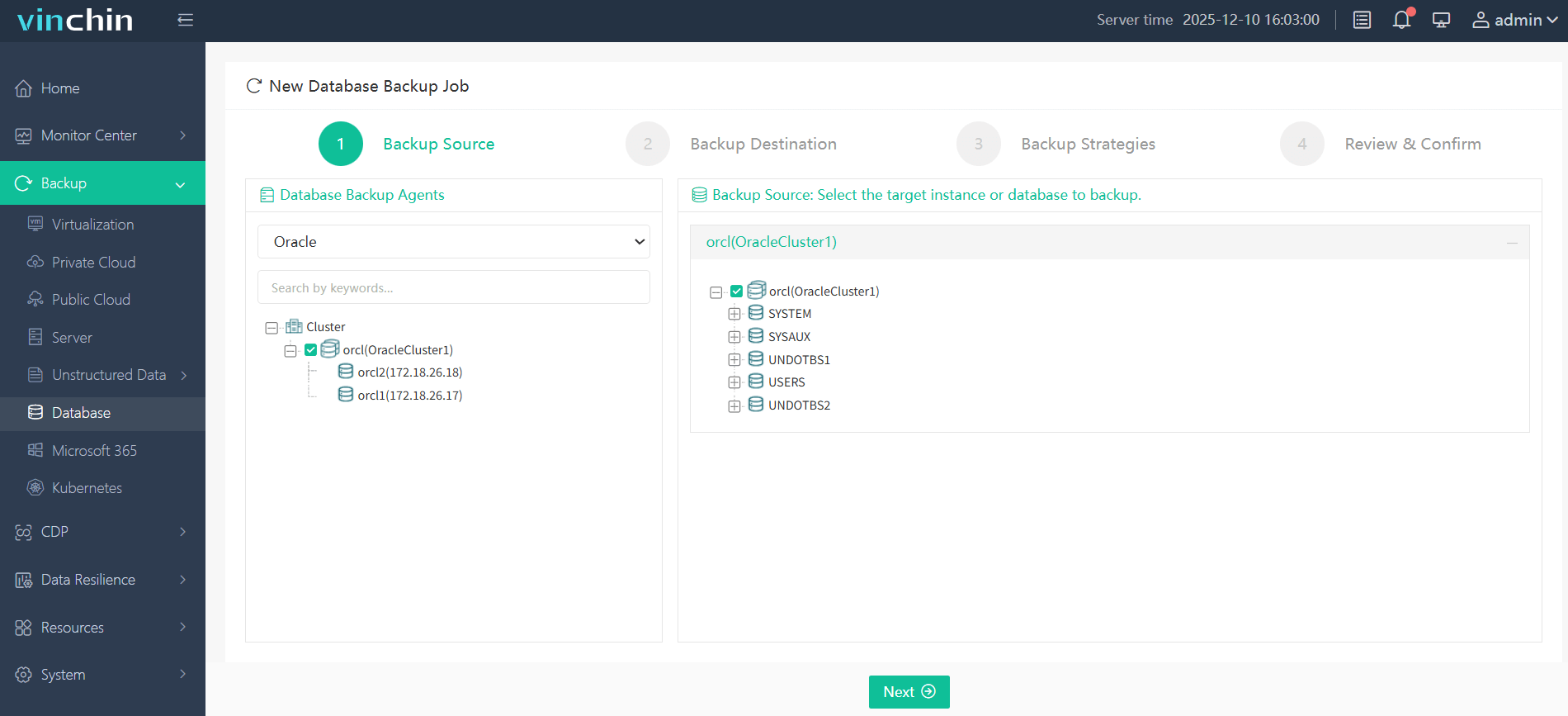
For organizations seeking streamlined enterprise-level protection beyond native scripting, Vinchin Backup & Recovery provides comprehensive support for today’s mainstream databases—including Oracle first among its peers such as MySQL, SQL Server, MariaDB, PostgreSQL, PostgresPro, and TiDB. As an advanced solution tailored for professional environments, Vinchin Backup & Recovery delivers features like batch database backup management, granular data retention policies including GFS options, cloud/tape archiving integration, robust integrity checks through automated verification routines via SQL scripts, and secure storage protection against ransomware threats—all designed to simplify compliance while ensuring rapid recoverability even at scale.
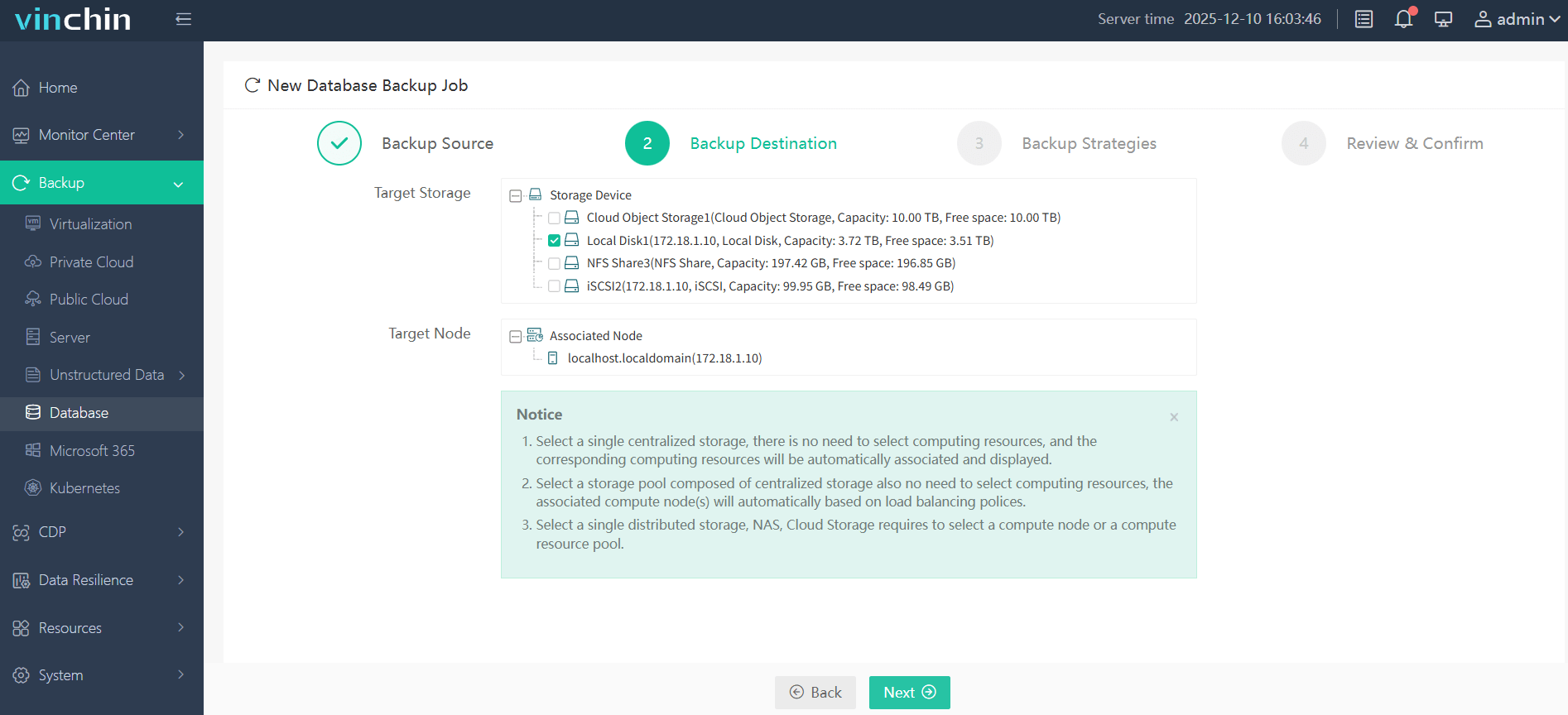
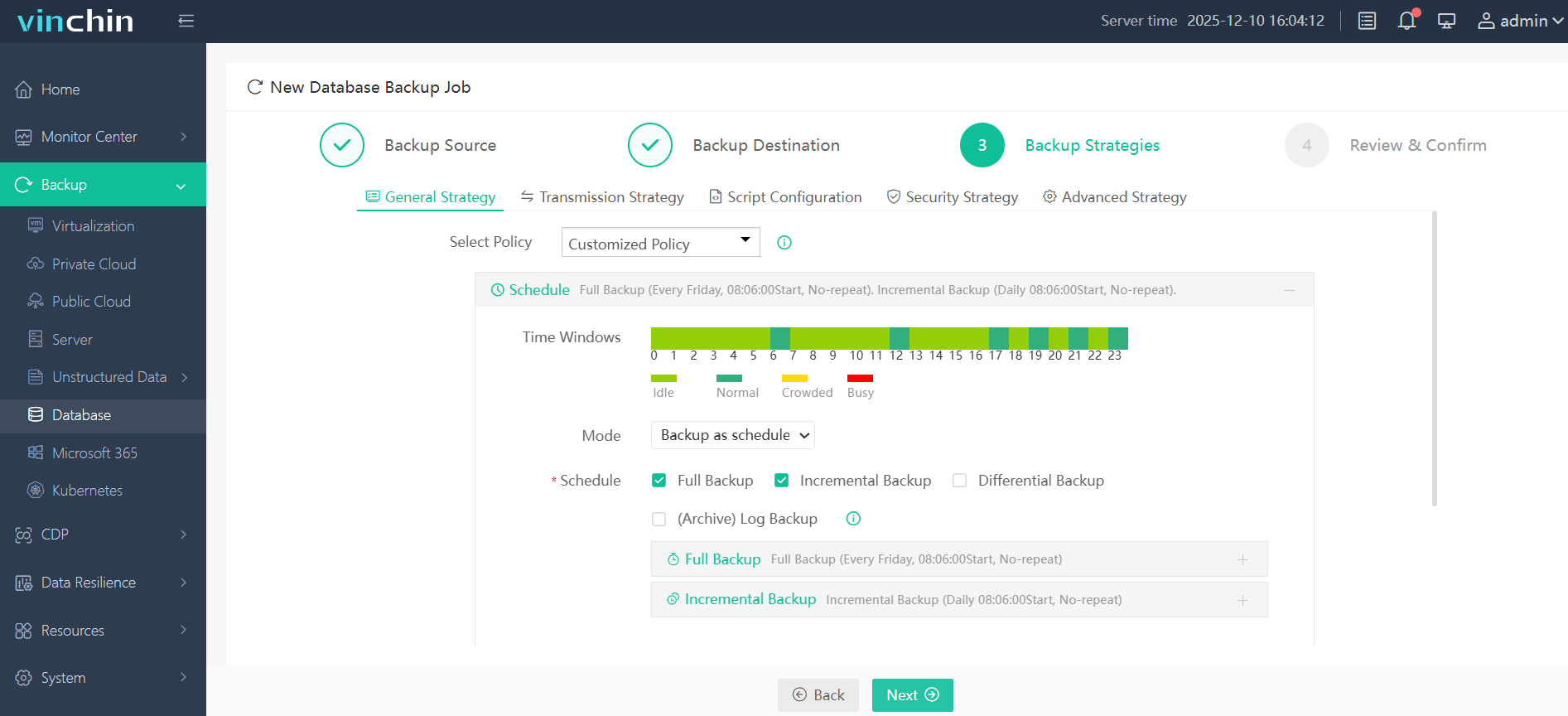
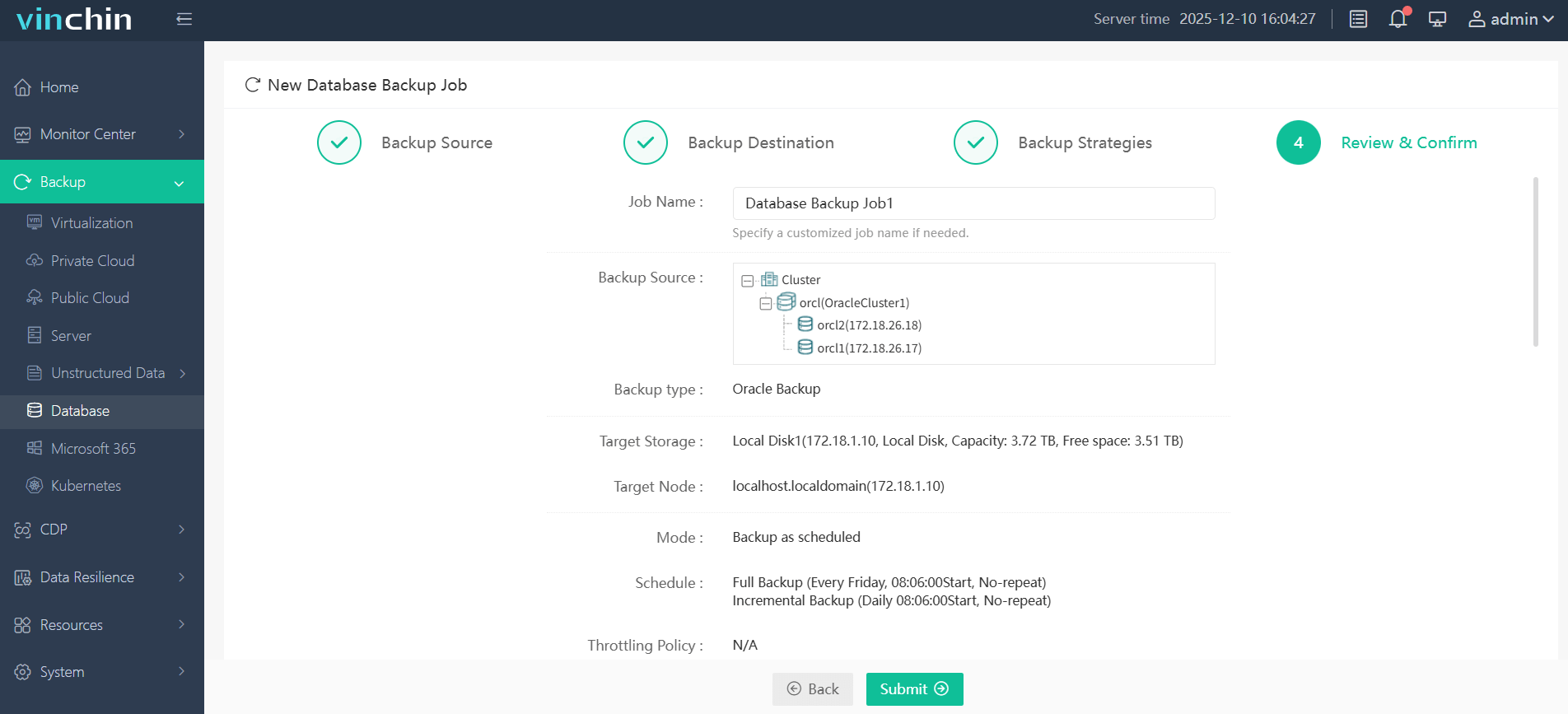
The intuitive web console makes safeguarding your Oracle environment straightforward:
Step 1. Select the Oracle database to back up
Step 2. Choose the desired storage destination
Step 3. Define your preferred strategy (schedule/frequency/compression)
Step 4. Submit the job
Vinchin Backup & Recovery is trusted globally by enterprises large and small—with top ratings for reliability and usability. Experience its capabilities risk-free through a fully featured free trial lasting up to sixty days—click download now to get started.
Oracle RMAN Script Example FAQs
Q1: Can I schedule an oracle rman script example to run automatically every night?
Yes; use cron jobs on Linux or Task Scheduler on Windows to trigger your RMAN shell call at fixed times each day/night.
Q2: How do I check if my RMAN backup completed successfully?
Review generated log files after each run—or connect via RMAN prompt then issue LIST BACKUP SUMMARY.
Q3: Can I use an oracle rman script example to back up only specific tablespaces?
Yes; replace BACKUP DATABASE line with BACKUP TABLESPACE tablespace_name targeting only those areas.
Q4: How can I exclude read-only tablespaces from my full backup?
Add SKIP TABLESPACE tablespace_name clause within your BACKUP DATABASE command.
Q5: My incremental backups seem too large—is there any way to optimize them?
Enable Block Change Tracking feature which lets RMAN skip unchanged blocks speeding up runs reducing size.
Q6: How do I integrate these scripts into my enterprise scheduler platform?
Wrap calls inside shell/batch wrappers checking return codes/logs then register wrapper job inside scheduler tool workflow.
Conclusion
Automated scripting makes reliable Oracle protection possible—but don’t stop at writing code alone! Test both backups restores often so there are no surprises when downtime hits unexpectedly. Vinchin takes automation further letting teams focus less on routine tasks more on strategic growth—try it today risk-free!