Backing up Oracle databases on Windows often raises questions about which tools to use. Many administrators hear about Oracle VSS Writer and RMAN but may not know how they fit together or if they can be used side by side. In this article, we’ll explain what each tool does, how they interact in real-world environments, and how you can combine them to protect your Oracle data effectively. By the end, you’ll see why both are important parts of a strong backup strategy.
What Is Oracle VSS Writer?
Oracle VSS Writer is a Windows service that helps coordinate Oracle database backups using Microsoft’s Volume Shadow Copy Service (VSS). VSS is built into Windows and allows applications to create consistent snapshots—called shadow copies—of data on disk even when files are open or in use.
The main job of Oracle VSS Writer is to act as a bridge between your Oracle Database instance and any backup software that supports VSS. When a backup starts, the VSS Writer makes sure all database files are safe for snapshotting by working with both the database engine and Windows storage providers. It coordinates with three roles: VSS requesters (backup applications), VSS writers (like itself), and VSS providers (storage managers).
When you trigger a backup through a compatible application, the process becomes automatic: there’s no need to shut down your database or stop user activity. This makes it ideal for “hot” backups on live systems where downtime isn’t an option.
For beginners just starting out with Oracle on Windows, knowing that VSS Writer enables safe snapshots without stopping your database is key. As you gain experience, you’ll see how it fits into larger enterprise workflows.
What Is RMAN in Oracle Backup?
RMAN stands for Recovery Manager—it’s Oracle’s built-in command-line tool for managing backups and restores. Unlike file-based copy methods or third-party scripts, RMAN talks directly with the database engine using internal APIs designed by Oracle engineers.
With RMAN you can perform full backups (all datafiles), incremental backups (only changed blocks), differential backups (changes since last full), manage archived redo logs automatically, schedule jobs, compress backup sets at source-side or destination-side—and much more.
One big advantage of RMAN is its catalog feature: every backup operation gets tracked in either the control file or an external recovery catalog database. This tracking makes restores easier because you always know what backups exist and where they’re stored.
RMAN works whether your database is open (in ARCHIVELOG mode) or closed; it also supports advanced features like block-level incremental backups for faster recovery times. For anyone managing mission-critical databases at scale—or planning disaster recovery—learning RMAN basics is essential before moving onto more complex strategies.
How Oracle VSS Writer and RMAN Work Together
You might wonder: do these two tools compete? Or do they cooperate? The answer depends on your environment—but most often they complement each other.
When using a VSS-enabled backup application on Windows, here’s what happens behind the scenes:
First, when a snapshot request comes in from your backup software (the requester), the Oracle VSS Writer prepares all relevant datafiles by placing them into “backup mode.” This ensures no partial writes occur during snapshot creation—a critical step for consistency.
Next comes coordination with storage hardware (the provider) so that all disks involved get snapped at exactly the same point in time—even if users are still connected to the system.
Afterward, once files have been copied safely via shadow copy technology—the database exits “backup mode” automatically so normal operations resume instantly without interruption.
But what about restore scenarios? Here’s where RMAN steps up: after restoring files from a shadow copy created by VSS Writer (for example after disk failure), those files may need further recovery before being usable again—especially if transactions occurred after the snapshot was taken but before failure happened.
In such cases:
You use RMAN RECOVER DATABASE commands to apply archived redo logs.
If needed, you can also use CATALOG START WITH 'file_path' NOPROMPT; within RMAN to register restored datafiles so they become part of future managed recoveries.
Only then does your restored database reach transactional consistency suitable for production workloads.
It’s important to note that while both tools handle different aspects of protection—VSS focuses on OS-level consistency while RMAN manages logical integrity—they work best when combined thoughtfully rather than used interchangeably.
A Typical Hybrid Backup Workflow
Many organizations want both fast image-level snapshots and granular point-in-time recovery options. Here’s how combining these technologies looks step-by-step:
First: Your backup application triggers creation of a new shadow copy using Microsoft Volume Shadow Copy Service.
The Oracle VSS Writer receives this request.
It signals all active instances related to that disk volume.
Each instance places affected tablespaces into “backup mode,” freezing writes temporarily only long enough for snapshot completion.
Storage hardware creates an instant-on clone (“shadow copy”) reflecting exact state at one moment—even if users remain logged in throughout!
Second: Once snapshot completes,
Database exits “backup mode.”
Normal read/write resumes immediately—users rarely notice any impact unless system resources are heavily taxed during large-scale operations.
At this stage you have an image-level copy suitable for rapid restore—but it isn’t yet registered within RMAN catalogs nor validated as logically consistent until further steps occur!
Third: For maximum safety,
Use RMAN CATALOG START WITH 'snapshot_path' NOPROMPT;
This command tells Recovery Manager about new copies available outside its usual repository.
Now those files appear as valid candidates during future restore/recover operations.
You can run validation checks directly from within RMAN interface too!
Fourth: If disaster strikes,
1. Restore required datafiles from latest shadow copy
2. Start up instance in mount mode
3. Run RECOVER DATABASE inside RMAN shell
4. Open database normally once recovery finishes
This workflow gives you speed and reliability—the best of both worlds.
Vinchin Backup & Recovery for Enterprise Database Protection
To streamline complex hybrid workflows while ensuring robust protection across leading platforms such as Oracle databases, many organizations turn to professional solutions like Vinchin Backup & Recovery. As an enterprise-grade product supporting mainstream databases—including Oracle, MySQL, SQL Server, MariaDB, PostgreSQL, PostgresPro, and TiDB—it delivers comprehensive coverage tailored to diverse IT environments. For example, when backing up Oracle databases specifically, Vinchin Backup & Recovery offers features such as advanced source-side compression, incremental backup capabilities, batch processing support across multiple instances simultaneously, flexible retention policies including GFS retention policy options, and reliable cloud/tape archiving integration—all designed to optimize performance while minimizing risk and storage costs overall.
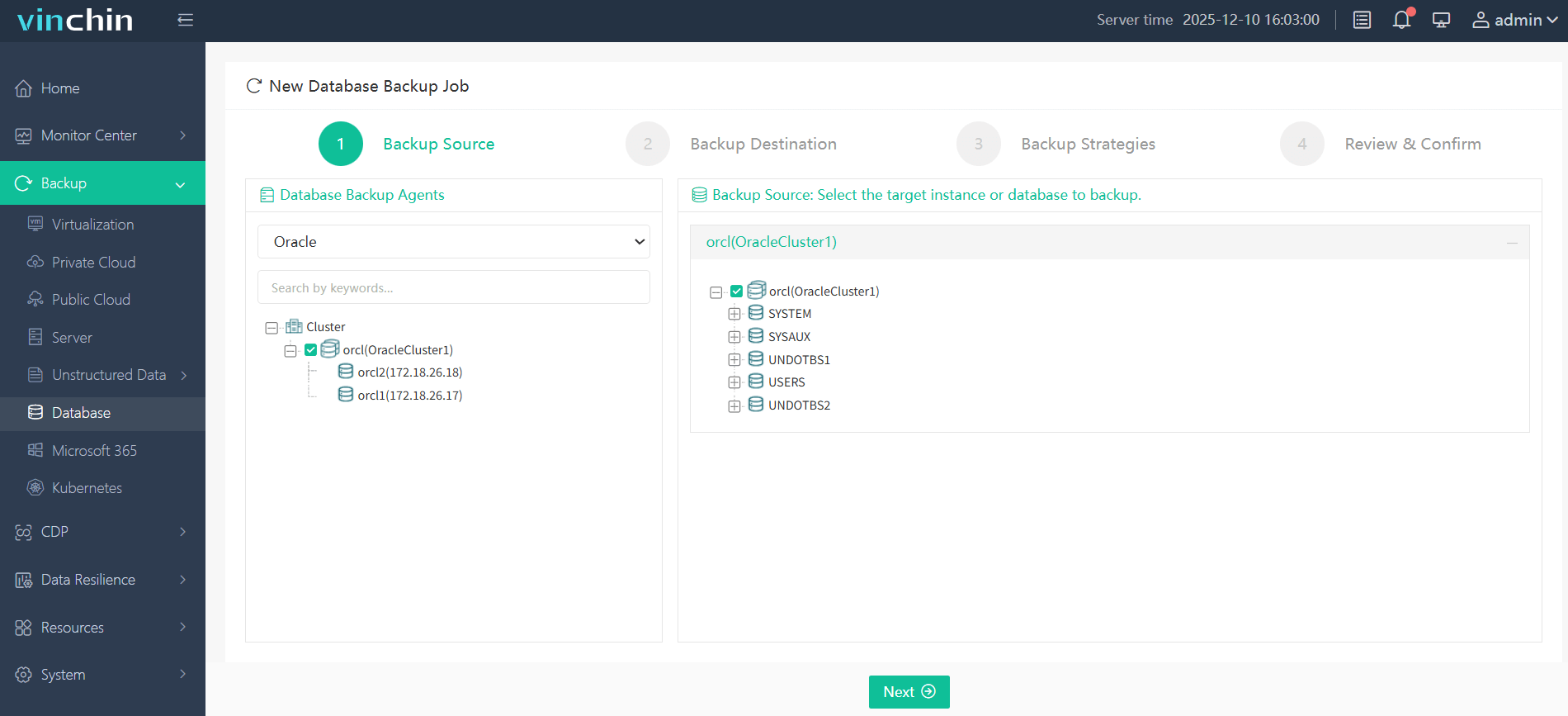
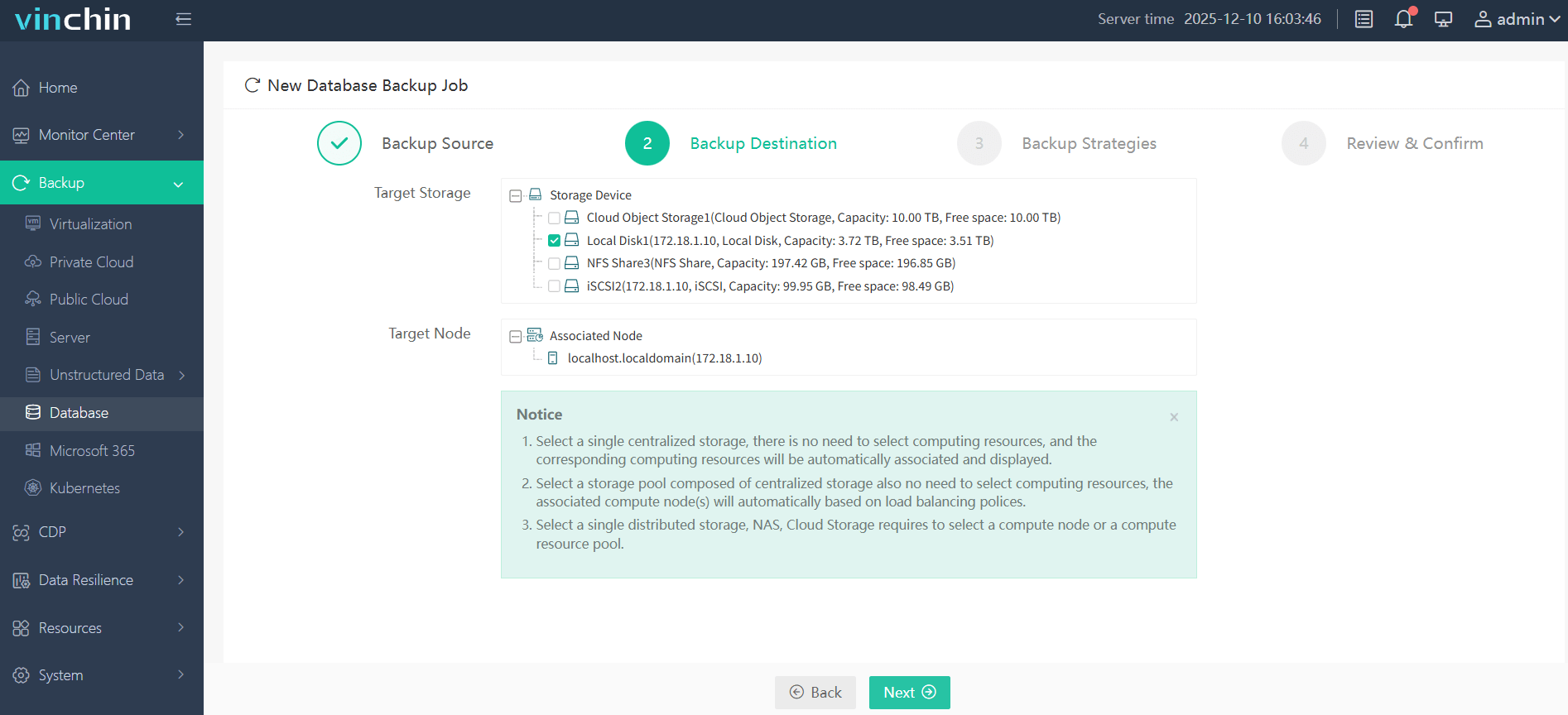
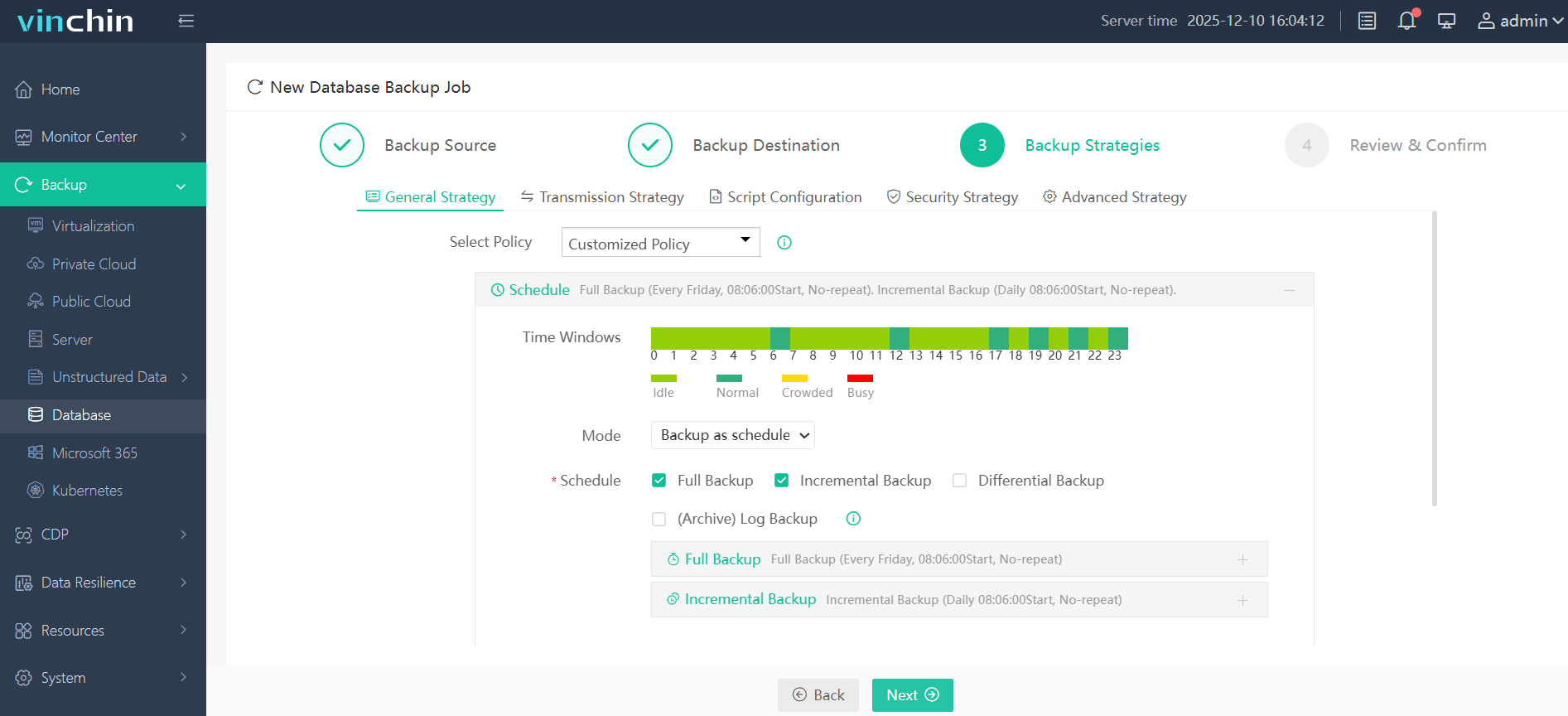
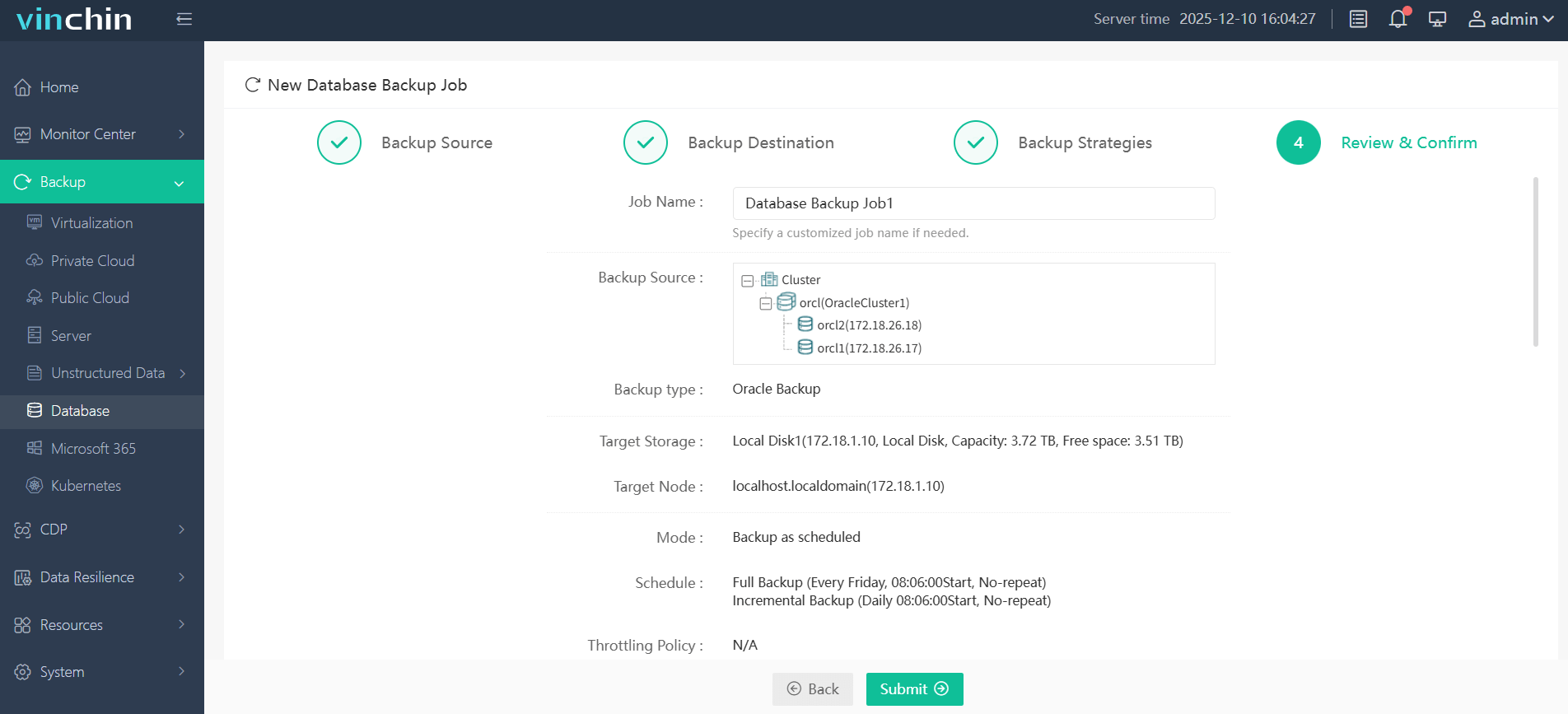
The intuitive web console simplifies every task:
Step 1. Select the Oracle database to back up
Step 2. Choose desired storage location
Step 3. Define custom strategy settings
Step 4. Submit job—all monitored through clear dashboards
Recognized globally among enterprise customers—with top ratings earned through reliability—you can try every feature free for 60 days by clicking Download now!
Oracle VSS Writer RMAN FAQs
Q1: Can I use both tools together without conflict?
Yes—but stagger schedules so image-level snapshots don’t overlap ongoing logical exports; otherwise resource contention may slow performance or cause incomplete results.
Q2: How do I check status quickly from command line?
Run vssadmin list writers as administrator; look specifically next "OracleVssWriter" entry confirming state reads "Stable".
Q3: Where should I look first if something goes wrong?
Check Event Viewer Application/System logs plus $ORACLE_BASE\diag\vss traces alongside standard alert.log entries—all provide vital troubleshooting clues.
Conclusion
Both Oracle VSS Writer and RMAN play crucial roles backing up databases safely under demanding conditions—one ensures operating system consistency while other guarantees transactional integrity after restores complete successfully. For unified management packed advanced features consider trying Vinchin today—it brings simplicity power together seamlessly!