If you manage Oracle databases, you have likely used Recovery Manager (RMAN) for backup and recovery. But have you ever wondered which RMAN version you are running—or why it matters? Using an incompatible RMAN version during a critical recovery operation can lead to failures, extended downtime, or even data loss. Understanding your Oracle RMAN version is key for compatibility, support, and using the latest features. In this article, we’ll walk through what the RMAN version is, how to check it at different levels of expertise, why it’s important for safe operations, common pitfalls to avoid—and how to ensure your backups are protected no matter which version you use.
What Is Oracle RMAN Version?
Oracle RMAN (Recovery Manager) is the built-in tool for backing up, restoring, and recovering Oracle databases. The RMAN version refers to the release number of both the client utility and its associated components in your environment. Each major Oracle Database release comes bundled with a matching RMAN client; typically their versions match exactly—for example: Oracle Database 19c uses RMAN 19.x.
The full RMAN environment includes several parts:
RMAN client (the command-line tool)
Target database (the database being backed up or restored)
Recovery catalog database
Recovery catalog schema
Each has its own internal version number. Most daily tasks focus on the client and target database versions because these determine what features are available during backup or restore jobs.
Since Oracle Database 12c, all main components—the client executable (rman), target database instance, and any auxiliary databases—must run exactly the same major version for full feature support. This rule helps prevent subtle bugs or failed commands due to mismatched capabilities.
How to Check Your Oracle RMAN Version?
Knowing your exact RMAN version is simple if you use the right method—but there are several ways depending on your needs.
Before jumping into steps: always make sure you’re running rman from the correct $ORACLE_HOME/bin directory that matches your target database installation. This avoids confusion if multiple versions exist on one server.
Let’s look at three methods:
Method 1. Checking Within an Active RMAN Session
For precise results—especially when working with complex environments—you can check both client and connected database versions directly inside an open RMAN session:
1. Start RMAN by typing rman target / in your terminal.
2. At the RMAN> prompt enter:
SELECT * FROM v$version WHERE banner LIKE '%Oracle%';
3. Review output lines such as:
Oracle Database 19c Enterprise Edition Release 19.0.0.0.0 - Production
This confirms not only which database engine you're connected to but also verifies that you're using the intended binary executable.
Method 2. Using the Command-Line Interface
A quick way is simply launching rman from your shell:
1. Open a terminal window.
2. Type rman then press Enter.
3. The very first line displayed shows something like:
Recovery Manager: Release 19.0.0.0.0 - Production on Wed Jun 5 10:00:00 2024
This tells you which client binary was launched based on your current PATH settings—a crucial detail if multiple installations exist.
Tip: On Unix/Linux systems run which rman before starting; this shows exactly which file path will execute when you type rman.
Method 3: Querying Recovery Catalog Schema Version via SQL*Plus
If you use a central recovery catalog (often required in large enterprises), it's important that its schema matches or exceeds all registered databases’ versions:
1. Connect as owner of recovery catalog schema using SQL*Plus.
2. Run:
SELECT * FROM rcver;
3. Look at output rows; usually only one row exists unless you've upgraded over time—in that case take note of the last row as current.
Keeping this schema updated ensures smooth registration of new databases after upgrades or migrations.
Major Changes Across Oracle RMAN Versions
Oracle regularly enhances Recovery Manager with every major release—adding new features while sometimes changing compatibility requirements along the way.
Here’s how things evolved over time:
Oracle8i/9i: Introduced core backup/restore functions plus block-level corruption checks integrated with control files.
Oracle10g: Added backup set compression options; introduced Fast Recovery Area; improved incremental backups.
Oracle11g: Enhanced parallelism; added Data Recovery Advisor; streamlined catalog management tools.
Oracle12c: Required strict matching between client/tool/database versions; introduced multitenant container/pluggable DB support; enabled cross-platform transport improvements.
Oracle18c/19c/21c: Brought automatic backup validation routines; deeper cloud integration hooks; more automation around scheduling/restoration tasks.
Each upgrade brings valuable capabilities—but also stricter rules about what works together safely.
For example: If you try running an older client against a newer target DB (say using an 11g tool against a 19c instance), many modern commands won’t work—and some may fail silently without clear errors!
Why Choose the Right Oracle RMAN Version
Why does matching versions matter so much? In short—it’s about avoiding failed backups or restores due to hidden incompatibilities.
Here’s what every DBA should remember:
Compatibility Rule: For full functionality—including all new features—the RMAN client must be equal to (or lower than) its target database version but never higher! A lower-versioned client lacks access to newer commands/features introduced later; trying to back up a newer DB with an old tool often fails outright or skips critical options without warning.
For example: Suppose you've just upgraded production from Oracle Database 12c to 19c but forgot to update scripts still calling /u01/app/oracle/product/12/bin/rman. Now any attempt at backing up pluggable databases using those scripts will fail because older clients don’t recognize modern syntax like BACKUP PLUGGABLE DATABASE.
Similarly—the recovery catalog schema must always be kept at least as recent as any registered DBs’ highest supported level—or else attempts at registration/upgrades may throw errors such as “specification does not match any archived log.”
In practice? Always launch rman from within each specific $ORACLE_HOME/bin directory tied directly to that instance—and upgrade both tools/catalogs promptly after patching production environments!
Protecting Any Oracle Environment With Vinchin Backup & Recovery
After confirming your exact Oracle RMAN version, ensuring robust protection becomes essential regardless of release age or complexity level involved in daily operations today’s enterprises demand reliability across platforms like MySQL, SQL Server, MariaDB, PostgreSQL, PostgresPro, TiDB—and especially for mission-critical workloads on Oracle itself—Vinchin Backup & Recovery delivers enterprise-grade coverage tailored for these environments.
With Vinchin Backup & Recovery supporting advanced features such as incremental backup, log backup/archive log backup capability, scheduled backup routines, storage protection against ransomware alteration attempts and restore-to-new-server flexibility—all managed through policy-driven automation—you gain minimized risk exposure while streamlining administration overhead across diverse infrastructures without sacrificing performance or compliance standards.
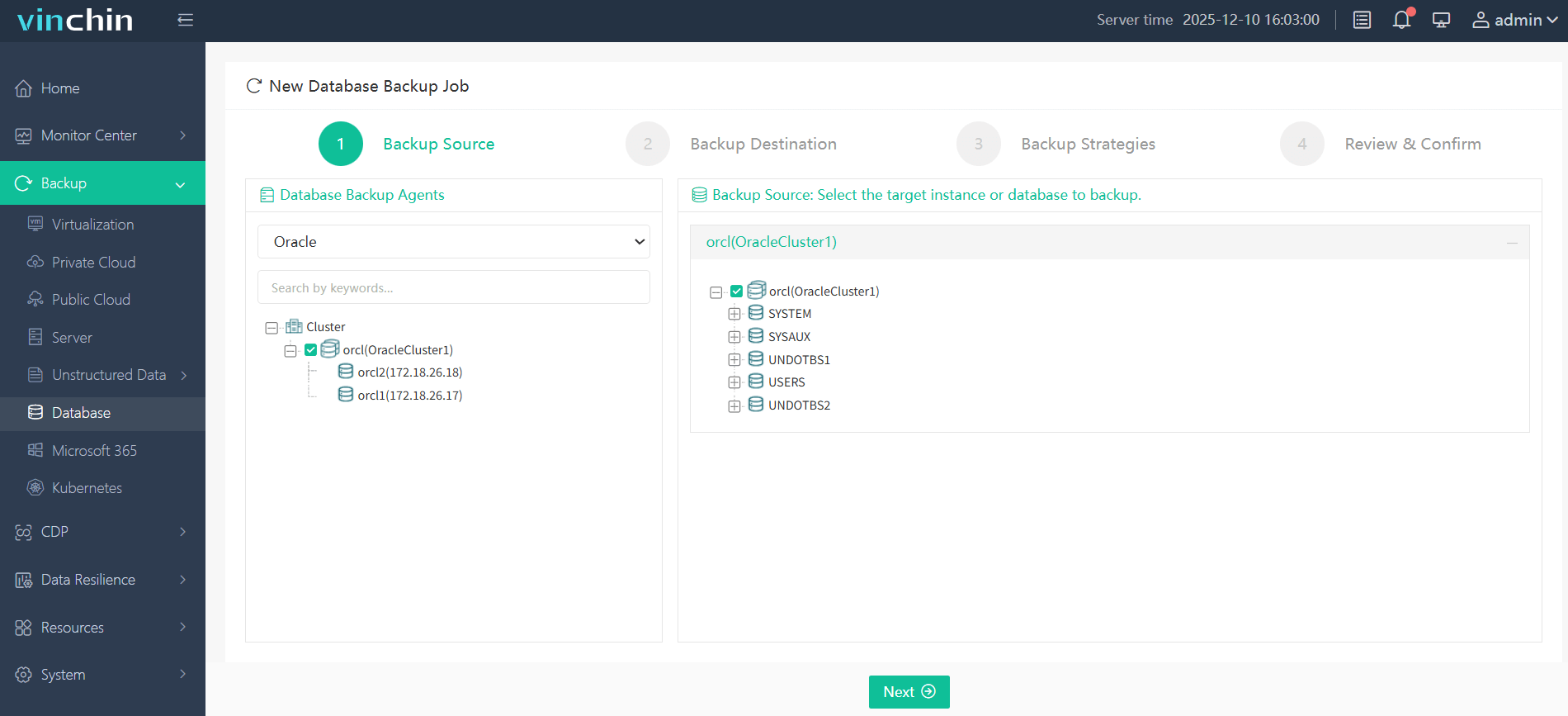
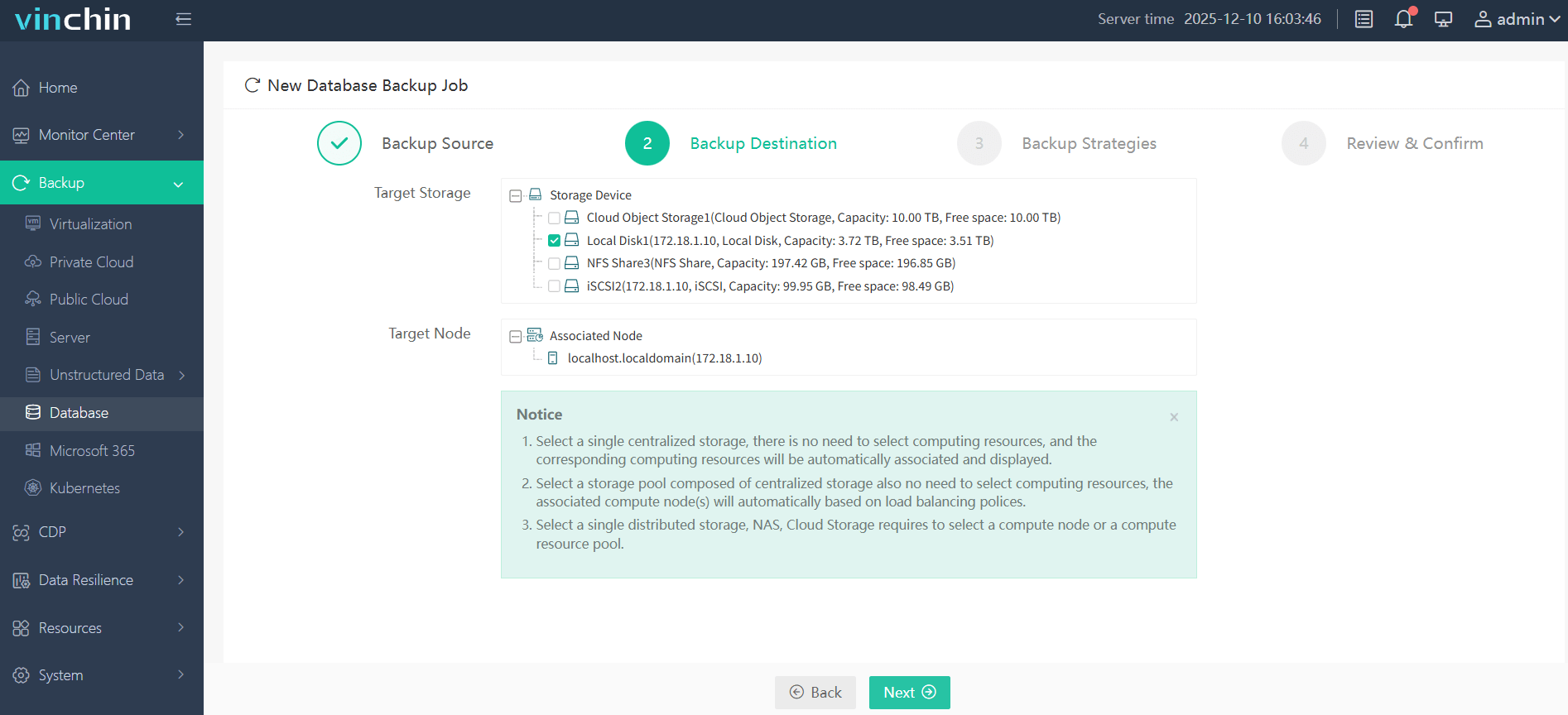
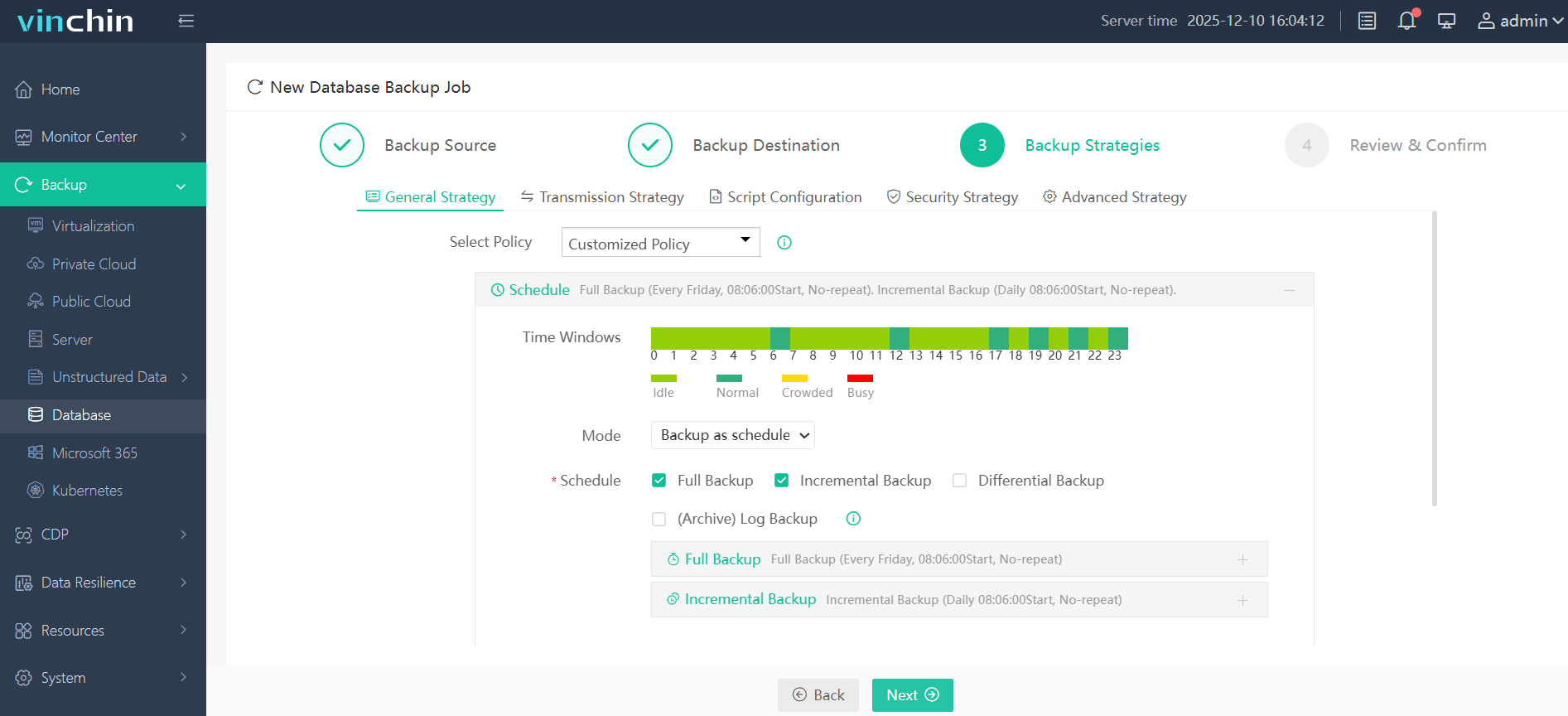
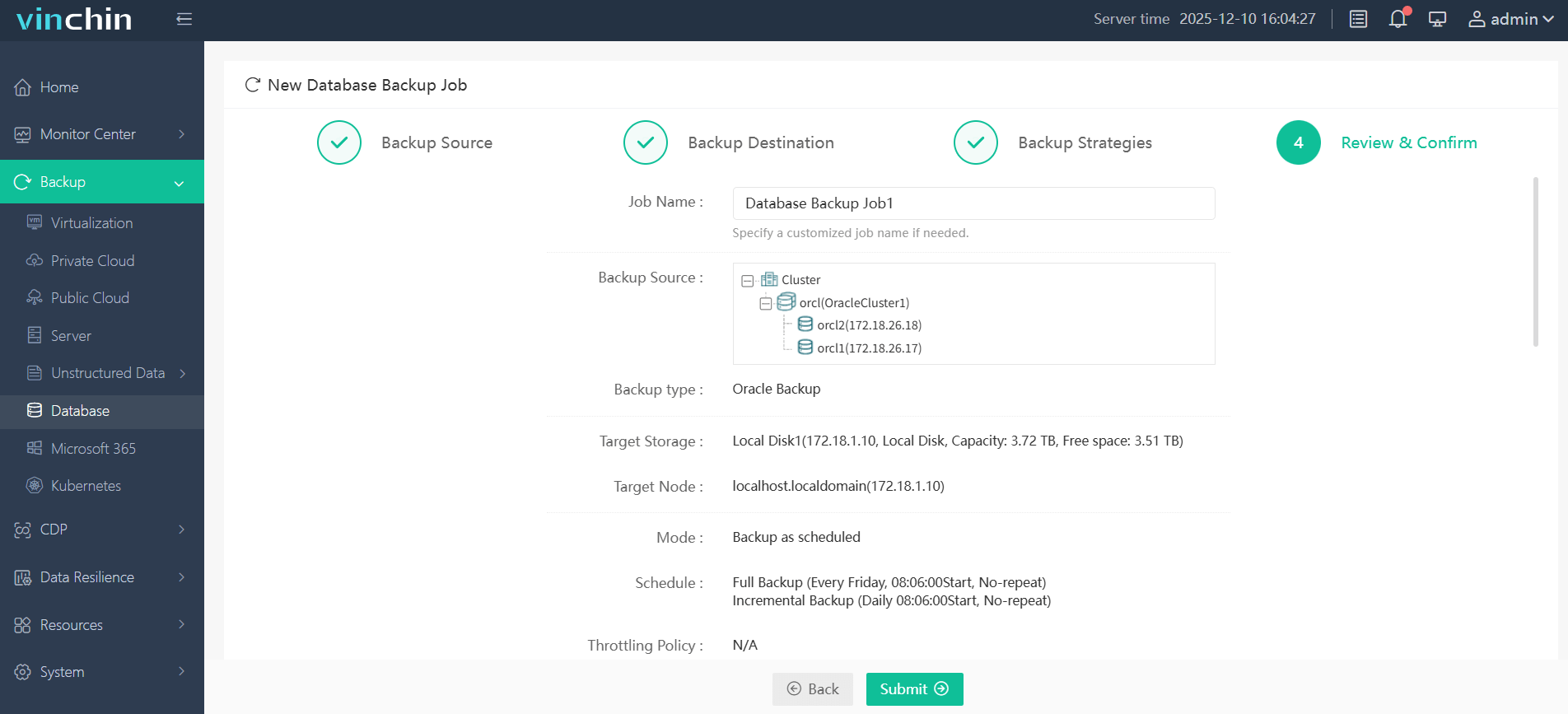
The intuitive web console makes safeguarding any supported workload straightforward—in four steps tailored here for Oracle users:
Step 1. Select the Oracle database to back up
Step 2. Choose the backup storage
Step 3. Define the backup strategy
Step 4. Submit the job
Recognized globally by thousands of organizations and consistently top-rated,Vinchin Backup & Recovery offers a fully-featured free trial valid for sixty days.Download now and experience trusted enterprise data protection firsthand!
oracle rman version FAQs
Q1: Can I use a newer RMAN client with an older target database?
A1: A newer client can connect for limited maintenance but cannot perform backups/restores—always use same-version clients for those tasks.
Q2: How do I check which ORACLE_HOME my rman command uses?
A2: On Linux run which rman, on Windows use where rman—this shows which installation path executes when typing "rman".
Q3: What should I do if my scripts call outdated rman binaries after upgrading my database?
A3: Update script paths so they point directly at each upgraded ORACLE_HOME's bin directory before running backups/restores.
Conclusion
Knowing your exact oracle rman version prevents costly mistakes during critical operations. Keep clients, catalogs, and scripts aligned across upgrades. Vinchin makes protecting every supported oracle environment easy, safe, and efficient —try it free today!