Losing the Oracle control file is one of the most stressful situations for any operations administrator. The control file holds vital information about your database’s structure, backups, and recovery status. If it’s missing or corrupted, normal recovery procedures won’t work as expected. However, if you have valid RMAN backup pieces available—either on disk or tape—you still have options to recover your data safely.
In this article, we’ll explore two main methods to restore an Oracle database from RMAN backup when the control file is unavailable: using an autobackup of the control file or recreating it manually. We’ll also discuss key preventative steps so you can avoid this scenario in the future.
What is an RMAN backup?
RMAN (Recovery Manager) is Oracle’s built-in tool for backing up and restoring databases efficiently. An RMAN backup typically includes all critical components: datafiles that store user data; archived redo logs that capture changes; the server parameter file (spfile); and often the control file itself.
Control file autobackups are special because they’re stored in a unique format separate from regular datafile backups. This design allows you to restore them independently—even if other parts of your system are damaged or missing. Backup sets may reside on local disks or external storage systems depending on your configuration.
RMAN automates much of the complexity involved in managing these files but understanding what gets backed up—and where—is essential when disaster strikes.
Why restore without a control file?
Restoring without a control file is rare but sometimes unavoidable. Normally, recovery starts by restoring the latest control file first since it tracks all other files’ locations and statuses within your database environment.
But what causes total loss of all copies? Here are some common reasons:
Storage corruption wipes out every multiplexed copy at once.
Accidental deletion removes both primary and mirrored versions.
A failed OS-level restore doesn’t include current versions.
Disasters like fire or flood destroy physical hardware holding all copies.
When this happens, you must use alternative methods to bring your database back online—often under pressure from business stakeholders who need access fast!
How to restore Oracle database from RMAN backup using autobackup of control file?
If CONTROLFILE AUTOBACKUP was enabled before disaster struck, Oracle automatically created a fresh copy after each successful backup job. This feature makes recovery much simpler because even if every original copy disappears, there’s still hope.
Before starting:
Make sure you know your DBID (Database Identifier). It appears in filenames like ctl_c-1234567890-YYYYMMDD-XX—the number after c- is your DBID.
Confirm that at least one recent autobackup piece exists on accessible storage media.
Here’s how to proceed:
1. Start RMAN and set DBID
If not connected to a recovery catalog—and no current control file exists—you must tell RMAN which database you’re working with:
RMAN> SET DBID 1234567890;
2. Start instance in NOMOUNT mode
Launch Oracle in NOMOUNT state so it can accept restored files:
RMAN> STARTUP NOMOUNT;
3. Restore the control file from autobackup
Try restoring automatically first:
RMAN> RESTORE CONTROLFILE FROM AUTOBACKUP;
If this fails (for example due to non-default paths), specify location directly:
RMAN> RESTORE CONTROLFILE FROM '/backup/rman/ctl_c-1234567890-YYYYMMDD-XX';
Troubleshooting tip: If neither works, use SET UNTIL TIME before restoring to search within a specific window:
   RMAN> SET UNTIL TIME 'SYSDATE-7';
          RESTORE CONTROLFILE FROM AUTOBACKUP;
4. Mount the database
Once restored successfully:
RMAN> ALTER DATABASE MOUNT;
5. Restore the database
Now bring back all datafiles from their last good state:
RMAN> RESTORE DATABASE;
This command reads metadata from your newly-restored control file and fetches each required datafile image or backup set.
6. Recover the database
Apply archived redo logs (and online logs if needed) so all transactions since last backup are replayed:
RMAN> RECOVER DATABASE;
7. Open with RESETLOGS
After successful recovery:
RMAN> ALTER DATABASE OPEN RESETLOGS;
This step creates a new incarnation of your database—a fresh start point tracked by Oracle going forward.
If everything completes without errors, users can reconnect as usual! But remember: this method only works if at least one valid autobackup exists somewhere safe.
How to restore Oracle database from RMAN backup by recreating the control file manually?
What if no autobackup exists—or every copy is corrupt? You aren’t out of options yet! Advanced administrators can recreate a new control file by hand based on known details about their environment.
This process requires careful attention because mistakes here could make things worse rather than better! You must know exact paths for every datafile and redo log group used by your original system configuration.
Restoring Datafiles Without a Control File
First things first—get those core datafiles back onto disk:
You may use an advanced PL/SQL package (dbms_backup_restore) inside SQL*Plus sessions—but most admins prefer sticking with familiar tools like basic shell scripts or direct commands via NOCATALOG mode in RMAN:
RUN {
  SET DBID 1234567890;
  ALLOCATE CHANNEL c1 DEVICE TYPE DISK;
  # Adjust path below as needed
  SET CONTROLFILE AUTOBACKUP FORMAT FOR DEVICE TYPE DISK TO '/backup/%F';
  RESTORE DATAFILE 1; -- Repeat for each relevant number
}
Replace numbers above with actual values matching lost files; consult documentation or previous reports if unsure which ones matter most!
Create a new parameter file (pfile)
If both spfile (server parameter) AND pfile are missing too:
1) Use any text editor to create /path/to/init_orcl_temporairely_created_by_admins_only_for_recovery_purposes_only_donotdelete_afterwards_ifneeded_later_on_incaseofemergency_scenarios_like_this_one_example_init_file_used_here_for_demonstration_purposes_only.txt
2) Add lines such as:
db_name='ORCL'
compatible='19.0'
Save changes then launch instance again:
SQL> STARTUP NOMOUNT PFILE='/path/to/init_file';
Create/recreate the control file
Now comes perhaps hardest part—writing correct CREATE CONTROLFILE statement! Best practice? Generate trace output beforehand whenever possible (ALTER DATABASE BACKUP CONTROLFILE TO TRACE;) during routine maintenance periods so you always have reference handy later!
Here’s what typical statement looks like:
CREATE CONTROLFILE REUSE DATABASE "ORCL" NORESETLOGS ARCHIVELOG
  MAXLOGFILES 16
  MAXLOGMEMBERS 3
  MAXDATAFILES 100
  MAXINSTANCES 8
  MAXLOGHISTORY 292
LOGFILE
 GROUP 1 '/u01/oradata/orcl/redo01.log' SIZE 50M,
 GROUP 2 '/u01/oradata/orcl/redo02.log' SIZE 50M,
 GROUP 3 '/u01/oradata/orcl/redo03.log' SIZE 50M
DATAFILE
 '/u01/oradata/orcl/system01.dbf',
 '/u01/oradata/orcl/sysaux01.dbf',
 '/u01/oradata/orcl/undotbs01.dbf',
 '/u01/oradata/orcl/users01.dbf'
CHARACTER SET AL32UTF8;
Double-check every filename/path matches reality—not just old documentation!
Recover using BACKUP CONTROLFILE option
With new structure defined:
SQL> RECOVER AUTOMATIC DATABASE USING BACKUP CONTROLFILE UNTIL CANCEL;
Oracle prompts for archived logs sequentially—provide each one until prompted otherwise (“cancel” ends process).
Open with RESETLOGS
Once complete:
SQL> ALTER DATABASE OPEN RESETLOGS;
This resets transaction history so future backups track new incarnation correctly going forward!
Recreate tempfiles & check other components
Temporary tablespaces usually lose tempfiles during manual rebuilds; add them back now:
SQL> ALTER TABLESPACE TEMP ADD TEMPFILE '/u01/oradata/orcl/temp01.dbf' SIZE 1G;
Review other objects such as password files or external directories too—they might require manual recreation depending on setup specifics.
Manual restoration takes patience but remains possible even under worst-case conditions—as long as underlying backups exist somewhere safe!
Professional Backup Solution for Oracle Databases – Vinchin Backup & Recovery
To further minimize risks associated with manual processes and ensure robust protection for mission-critical databases like Oracle, organizations can leverage Vinchin Backup & Recovery—a professional enterprise-level solution supporting today’s mainstream platforms including Oracle, MySQL, SQL Server, MariaDB, PostgreSQL, PostgresPro, and TiDB. For Oracle environments specifically, Vinchin Backup & Recovery delivers features such as batch database backup jobs for streamlined management across multiple instances; log backup and any-point-in-time recovery capabilities that enhance RTO/RPO objectives; storage protection mechanisms against ransomware threats; integrity checks ensuring recoverability; and scheduled cloud/tape archiving for flexible retention strategies—all designed to maximize reliability while reducing administrative burden overall.
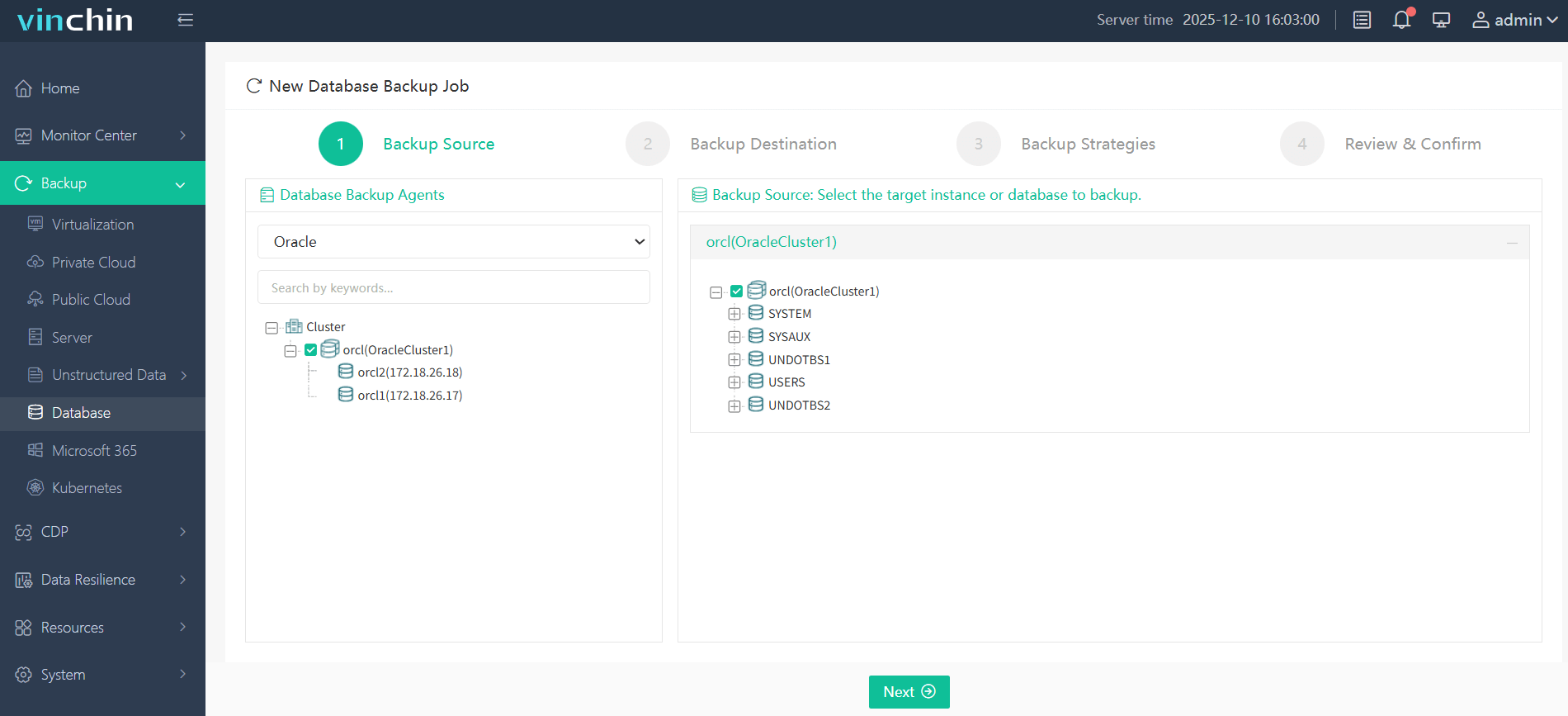
The intuitive web console makes safeguarding your Oracle databases straightforward through four simple steps: Step 1 – Select the Oracle database to back up;
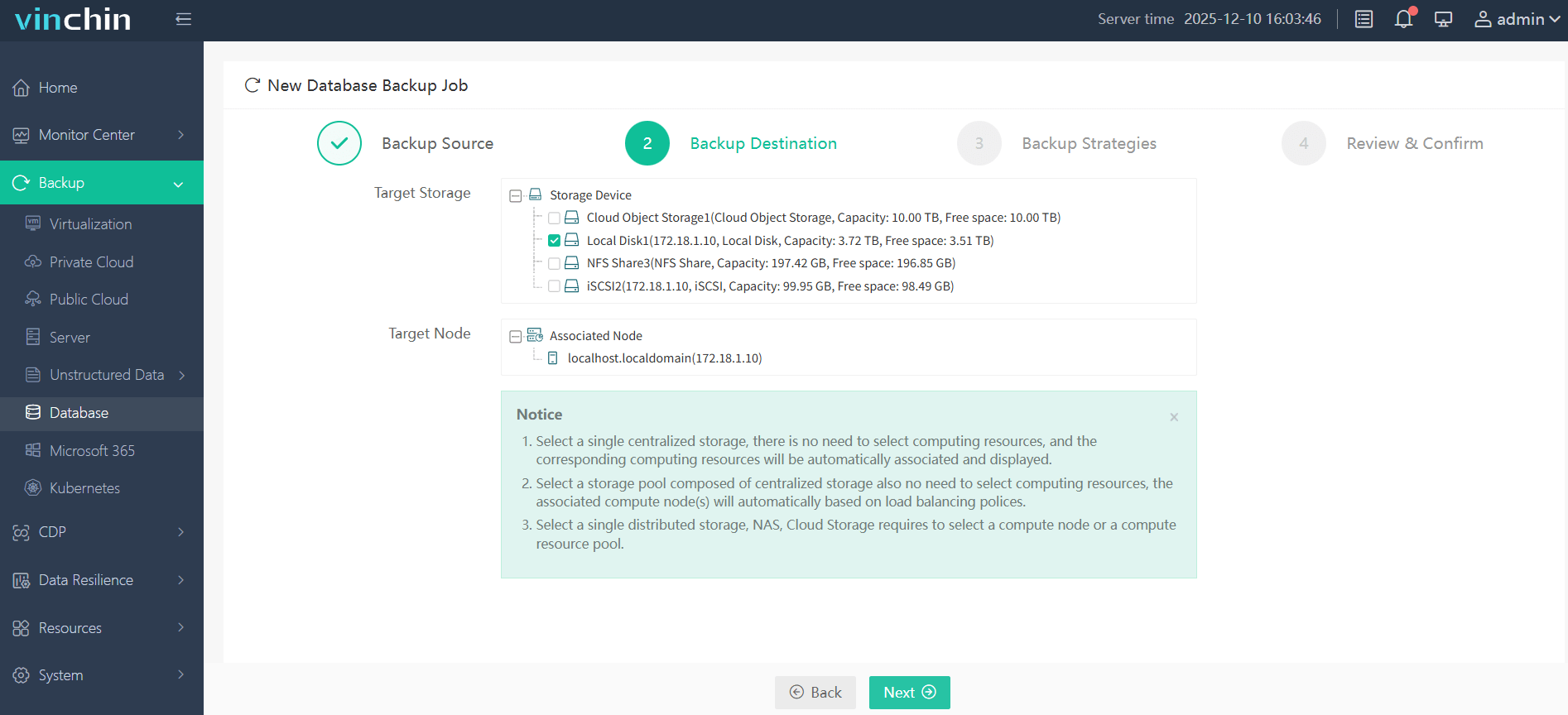
Step 2 – Choose target storage location;
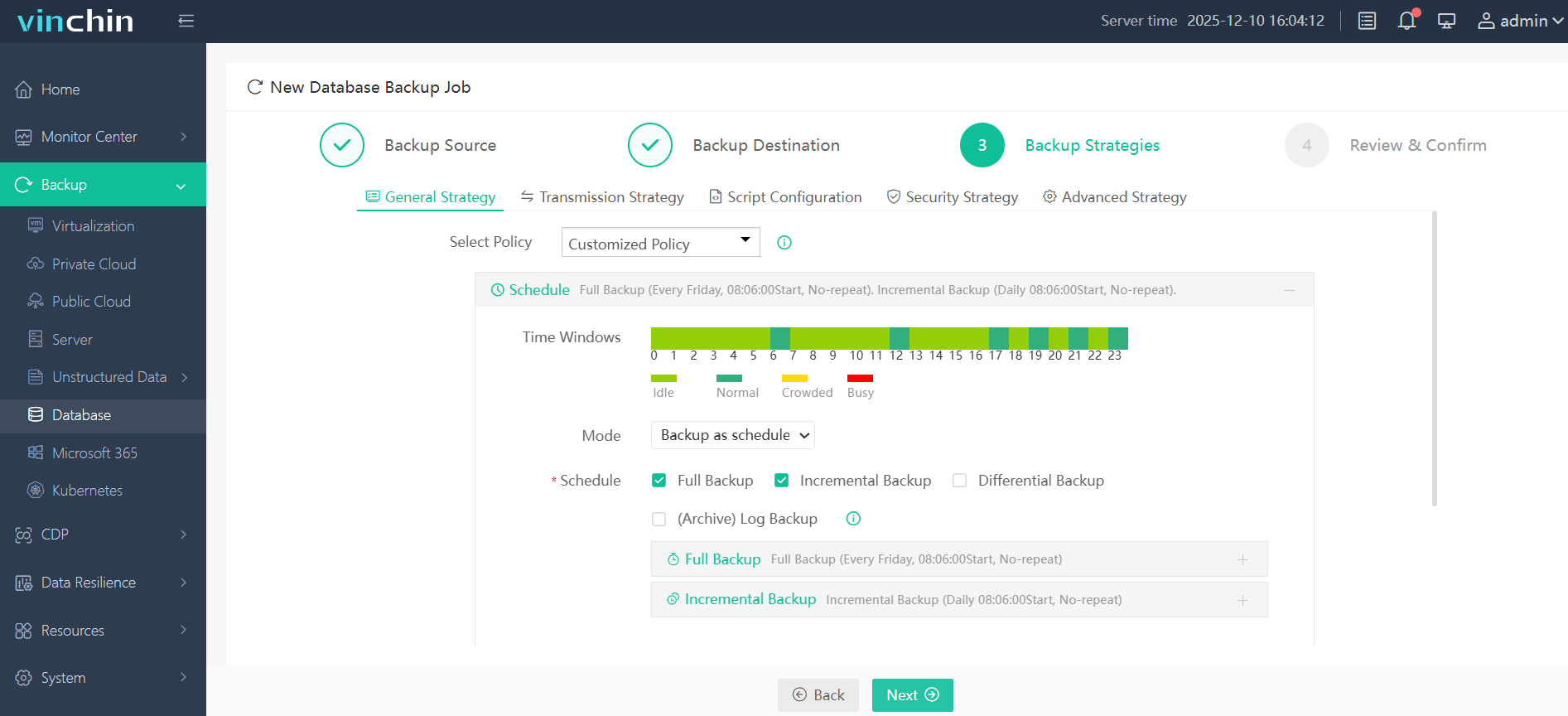
Step 3 – Define detailed backup strategy parameters;
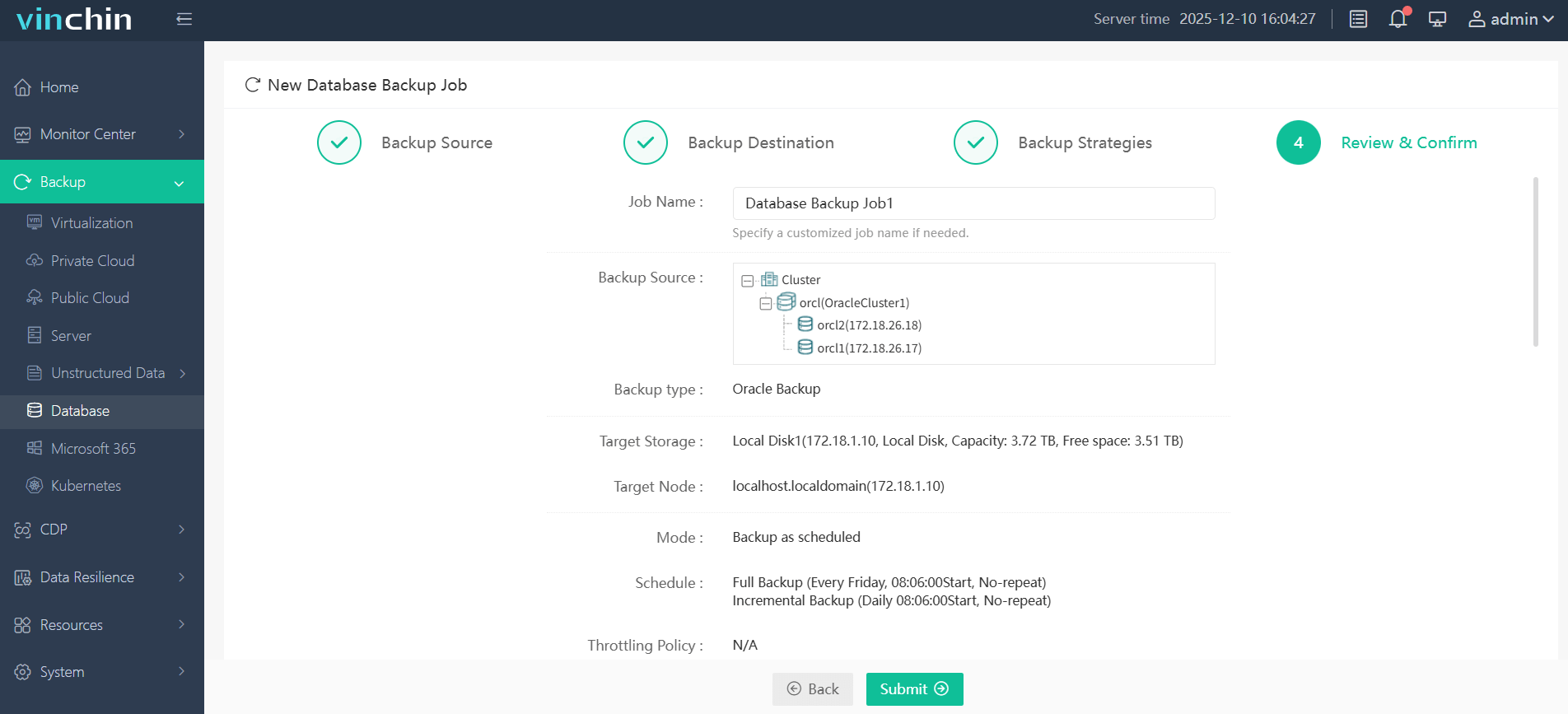
Step 4 – Submit and monitor job execution seamlessly via dashboard controls.
Recognized globally among enterprise users for reliability and support—with top industry ratings—Vinchin Backup & Recovery offers a fully featured free trial valid for sixty days so you can experience its advantages firsthand before making any commitment.
Restore Oracle Database FAQs
Q1: Can I restore my entire Oracle environment if only my datafiles survived but not my original parameter files?
A1: Yes; create a minimal pfile manually containing essential parameters like db_name before proceeding with further restoration steps.
Q2: What should I do if my autobackup isn’t found in default locations?
A2: Use SET CONTROLFILE AUTOBACKUP FORMAT in RMAN or try RESTORE CONTROLFILE FROM AUTOBACKUP MAXSEQ n MAXDAYS m commands specifying broader search criteria.
Q3: What common mistakes cause manual CREATE CONTROLFILE attempts to fail?
A3: Errors include omitting required datafiles/logs in statements or entering incorrect paths/names compared with actual disk layout.
Conclusion
Restoring an Oracle database from an RMAN backup without any available control files demands careful planning—but remains achievable through either automated autobackups or precise manual reconstruction techniques described above.
Vinchin streamlines these processes further while reducing risk through automation—helping IT teams focus more confidently on daily operations instead of emergency recoveries.