Managing Oracle database backups is a core task for any operations administrator. One critical aspect is tracking and listing the backup of archivelog sequences. If you overlook this check, you risk failing to meet your Recovery Point Objective (RPO) or even losing data after a failure. In this article, we’ll walk through what archivelog sequences are, why listing their backups matters so much, and how to do it using both RMAN and SQL queries. We’ll also cover best practices for automation and troubleshooting.
What Is Archivelog Sequence in Oracle?
An archivelog sequence is a unique number assigned to each archived redo log file generated by Oracle Database. Every time a redo log switch occurs—either automatically or manually—Oracle creates a new archived log with an incremented sequence number. These logs capture all changes made to the database since the last switch.
In clustered environments like Oracle RAC (Real Application Clusters), each instance has its own THREAD#, so sequences may overlap across threads but remain unique within one thread. Each archived log file on disk corresponds directly to its sequence number and thread number combination.
Archivelogs are essential because they let you recover your database to any point in time after your last full backup. Without them, point-in-time recovery would not be possible.
Why List Backup of Archivelog Sequence Matters?
Listing the backup of archivelog sequences is more than just routine maintenance—it’s your first line of defense against unrecoverable data loss during restore operations or compliance audits.
When you list these backups regularly:
You verify that every required log has been safely backed up.
You ensure there are no gaps in your archive log chain.
You confirm that backup policies work as intended.
You prepare accurate documentation for audits or disaster recovery drills.
If even one necessary archivelog is missing from backup sets when you need it most—for example during PITR (Point-In-Time Recovery)—you may not be able to restore all recent transactions. This can lead to failed recoveries or regulatory violations if retention requirements aren’t met.
Method 1: Using RMAN to List Backup of Archivelog Sequence
Oracle’s Recovery Manager (RMAN) is the standard tool for managing database backups—including archivelogs—and provides flexible commands for listing them by sequence number, date range, thread number, or other criteria.
Before running any command below:
1. Connect to RMAN with your target database using rman target / or similar.
2. Make sure your environment variables point at the correct ORACLE_SID if working locally.
To list all archivelog backups currently known in RMAN’s repository:
RMAN> LIST BACKUP OF ARCHIVELOG ALL;
This shows every backup piece containing archived logs regardless of sequence or date.
If you want details about a specific sequence:
RMAN> LIST BACKUP OF ARCHIVELOG SEQUENCE 120316;
This command lists all backup pieces that include sequence 120316—note that one log can appear in multiple sets if backed up more than once.
To check which backups contain a range of sequences:
RMAN> LIST BACKUP OF ARCHIVELOG SEQUENCE BETWEEN 120316 AND 120320;
For a summary view instead of detailed output:
RMAN> LIST BACKUP OF ARCHIVELOG SEQUENCE BETWEEN 120316 AND 120320 SUMMARY;
You can filter by completion time as well:
RMAN> LIST BACKUP OF ARCHIVELOG ALL SUMMARY COMPLETED BEFORE "to_date('2024-06-01 00:00:00','YYYY-MM-DD HH24:MI:SS')";In Real Application Clusters (RAC), specify THREAD n if needed:
RMAN> LIST BACKUP OF ARCHIVELOG FROM SEQUENCE 1000 UNTIL SEQUENCE 1020 THREAD 2;
After running these commands, pay attention to key columns such as BP Key (backup piece identifier), Status, Handle (file name), and Completion Time in the output table. These help you identify which files are available now versus those stored on secondary media like tape libraries.
Remember that LIST BACKUP only shows records present in RMAN's repository; if you've lost catalog synchronization due to control file loss or corruption, some actual files may not appear here until you resynchronize with CROSSCHECK.
Method 2: Listing Archivelog Backups with SQL Queries
While RMAN excels at managing backups directly, sometimes you need deeper insight into what’s actually present on disk—or want automated reporting based on custom logic. For this purpose Oracle exposes several dynamic performance views such as V$ARCHIVED_LOG, V$BACKUP_PIECE, and V$BACKUP_REDOLOG.
Start by connecting via SQL*Plus or another client as a user with DBA privileges.
To see all archived logs along with their status:
SELECT SEQUENCE#, THREAD#, APPLIED, BACKED_UP, FIRST_TIME, NEXT_TIME
FROM V$ARCHIVED_LOG
ORDER BY THREAD#, SEQUENCE#;
Here,
SEQUENCE# identifies each log uniquely within its thread.
APPLIED tells whether Data Guard has applied this log downstream.
BACKED_UP shows how many times this log was included in an RMAN backup set; note that values may differ depending on Oracle version—it could be 'YES'/'NO' or numeric counts.
Timestamps help correlate activity windows during incident reviews.
To find logs never backed up yet:
SELECT SEQUENCE#, THREAD#, NAME
FROM V$ARCHIVED_LOG
WHERE BACKED_UP = 'NO'
ORDER BY THREAD#, SEQUENCE#;
Or use numeric zero (=0) if that's how it's recorded in your version/environment.
If you're interested in which specific backup pieces contain certain sequences across threads:
SELECT bp.RECID AS BP_KEY,
       br.THREAD#,
       br.SEQUENCE#,
       bp.HANDLE AS FILE_NAME,
       bp.COMPLETION_TIME
FROM V$BACKUP_PIECE bp
JOIN V$BACKUP_REDOLOG br ON bp.SET_STAMP = br.SET_STAMP AND bp.SET_COUNT = br.SET_COUNT
WHERE br.SEQUENCE# BETWEEN 120316 AND 120320
AND bp.STATUS = 'A'
ORDER BY br.THREAD#, br.SEQUENCE#;
This query helps map out exactly where each required archive log lives among available backups—a crucial step before starting PITR procedures!
How to Protect Oracle Database with Vinchin Backup & Recovery?
Beyond native tools like RMAN and SQL scripts, organizations seeking streamlined enterprise protection should consider Vinchin Backup & Recovery—a professional solution designed specifically for robust database data safety at scale. Supporting today’s mainstream platforms including Oracle Database (as well as MySQL, SQL Server, MariaDB, PostgreSQL, PostgresPro, and TiDB), Vinchin Backup & Recovery delivers comprehensive features tailored for demanding environments handling large volumes of archivelogs and transactional data alike.
Key capabilities relevant to Oracle users include advanced source-side compression for efficient storage usage; incremental backup options reducing network load; batch database backup management; flexible multi-level data compression strategies; and granular retention policies such as GFS retention policy—all ensuring reliable protection while optimizing resources and simplifying compliance efforts overall.
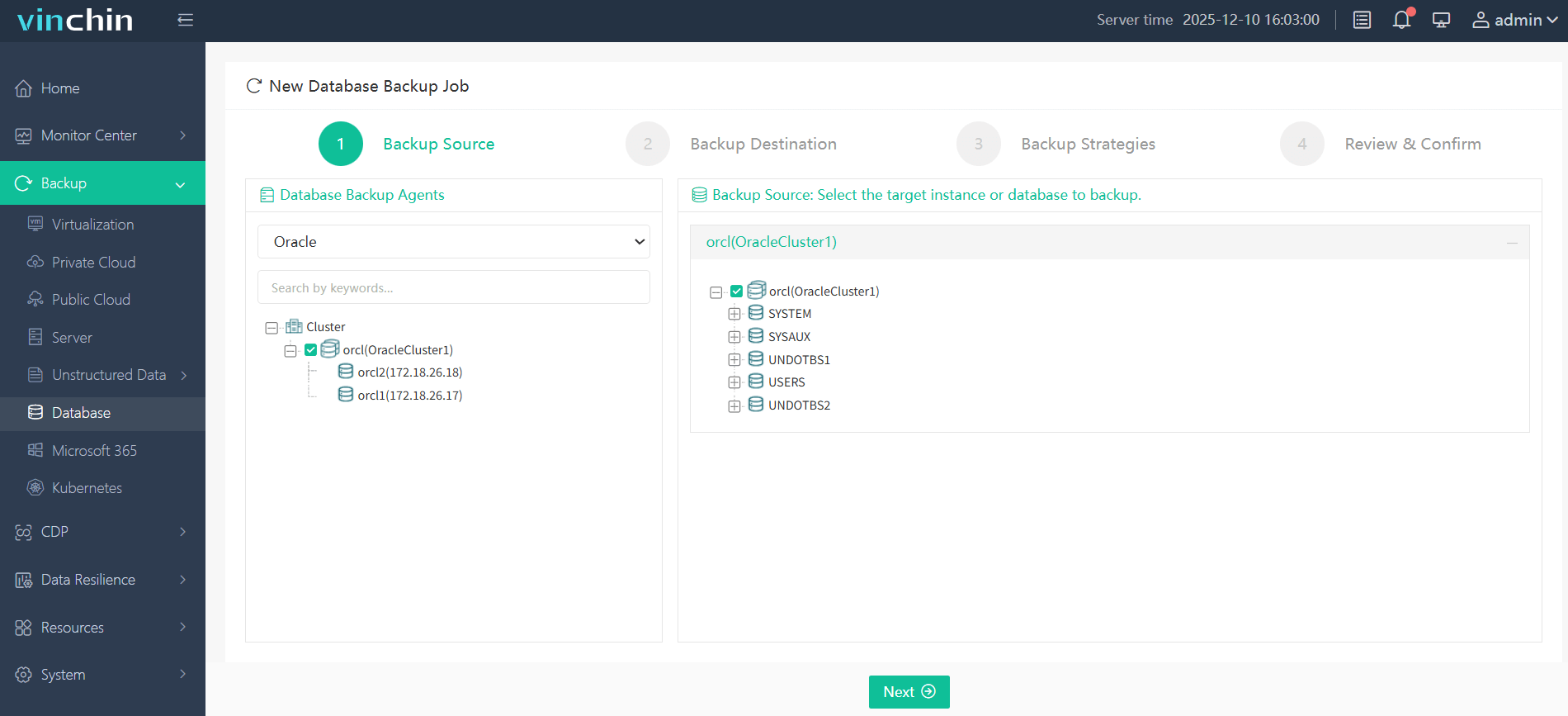
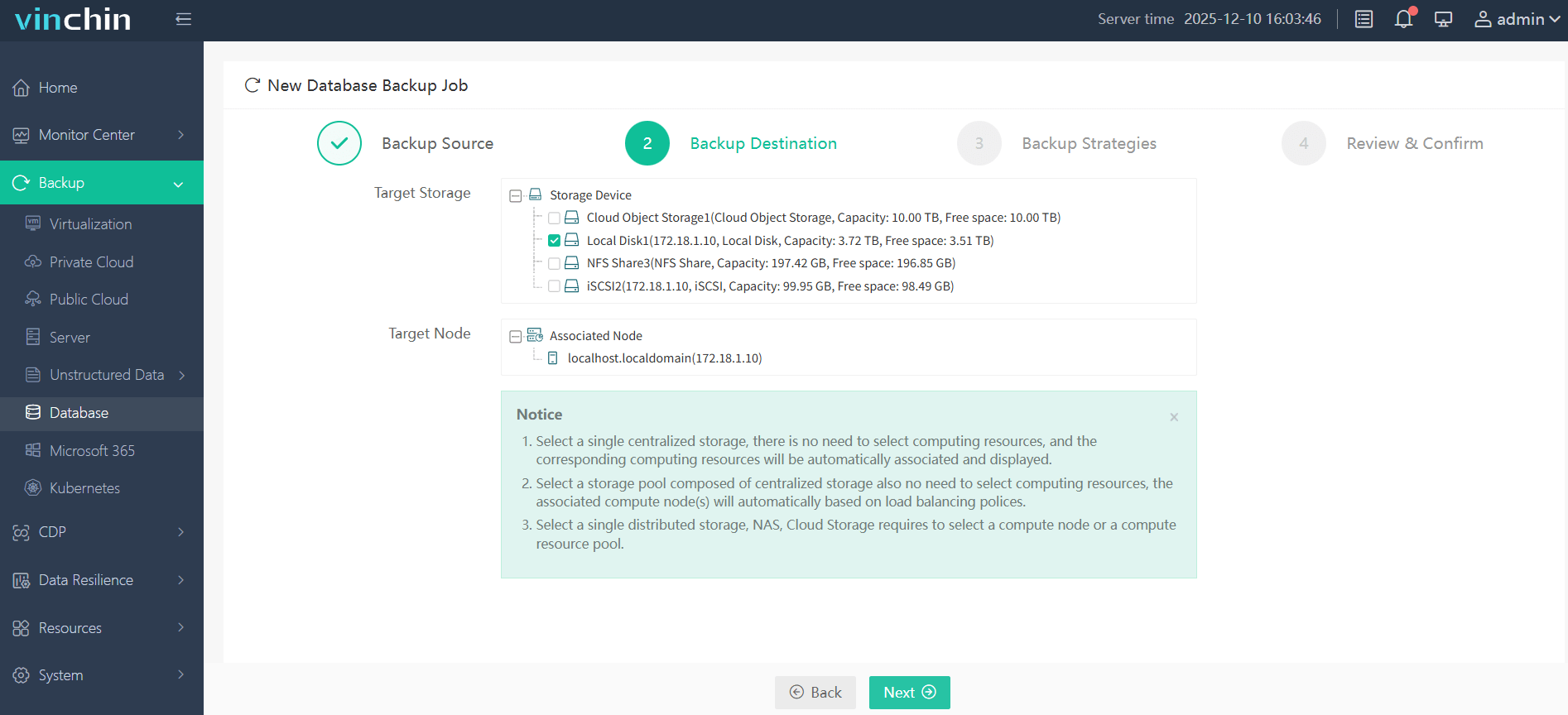
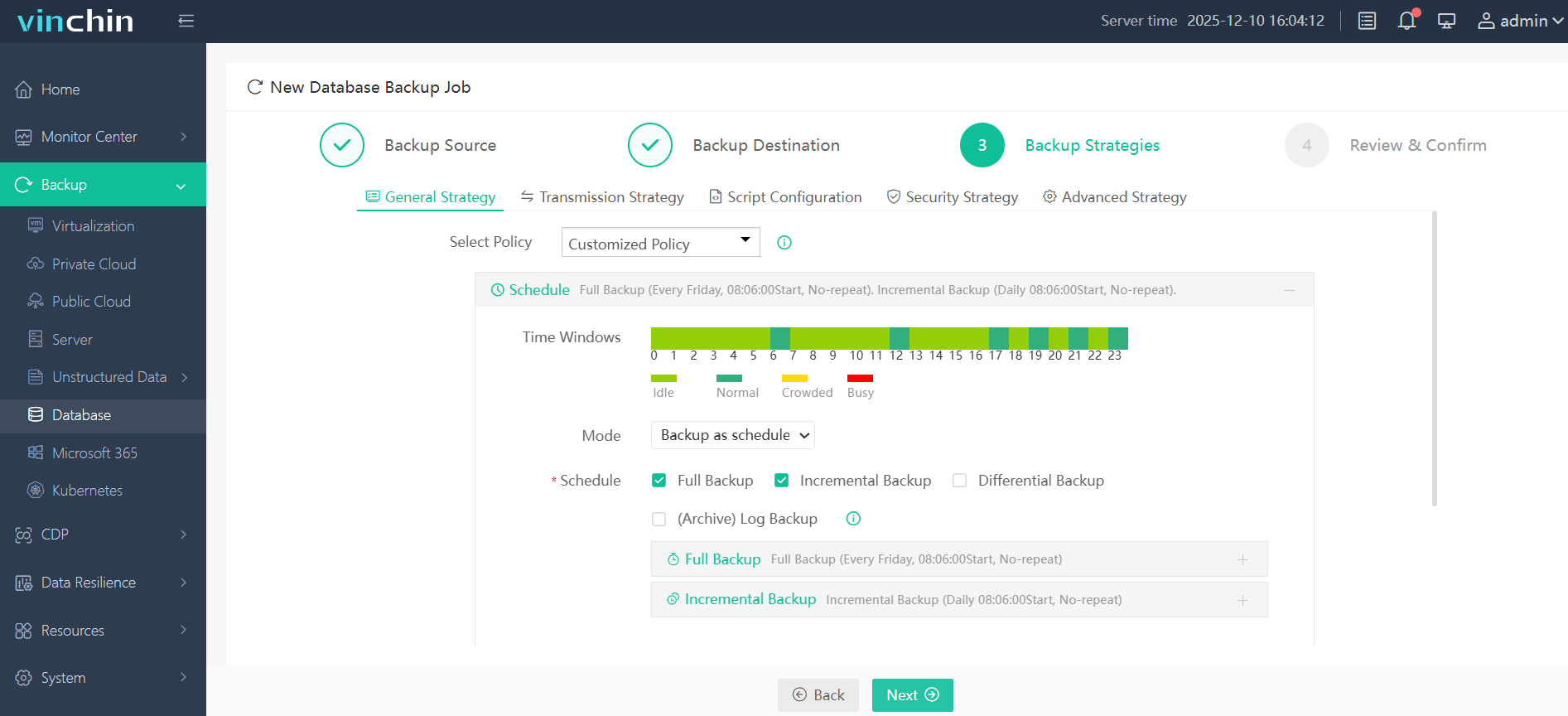
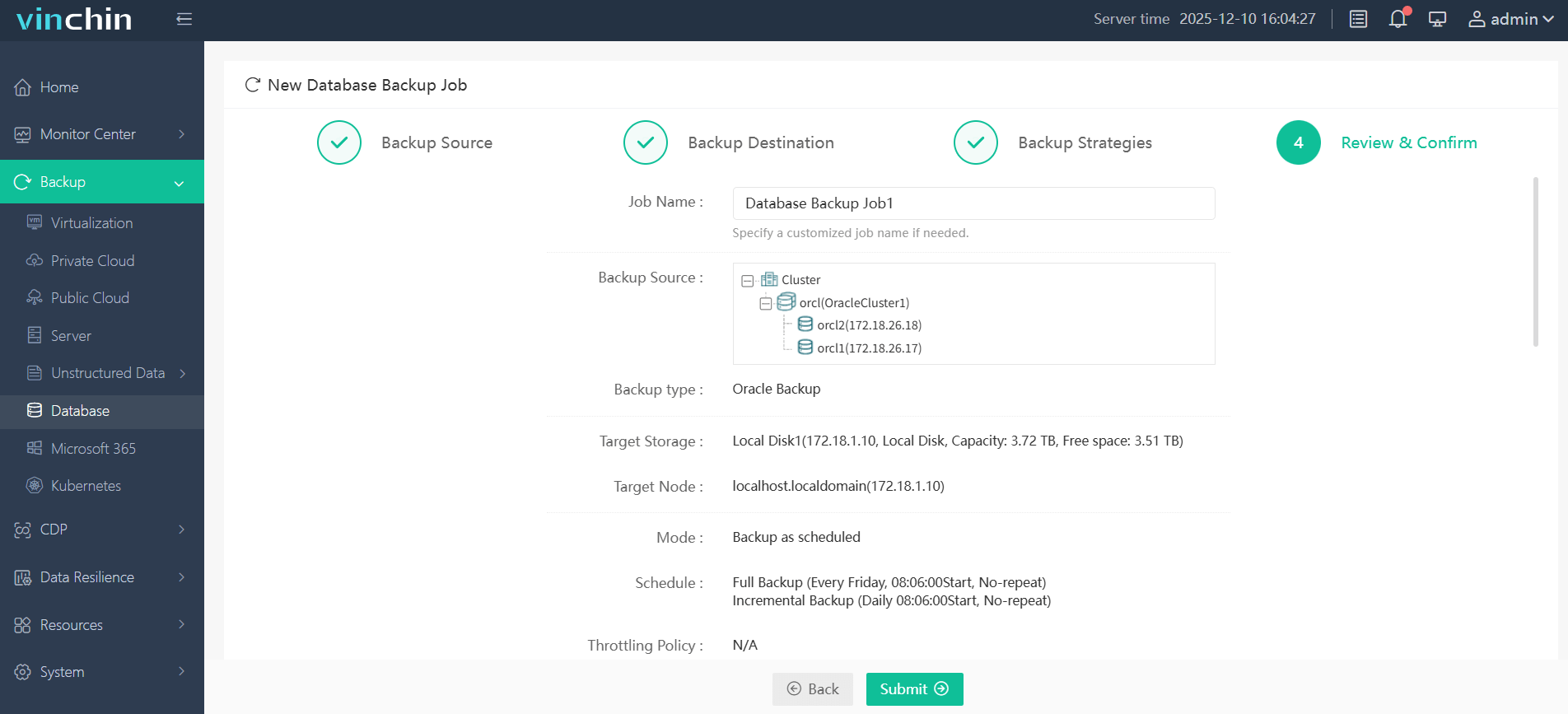
The web console offers an intuitive workflow requiring just four steps:
Step 1: Select the Oracle database to back up
Step 2: Choose the desired storage location
Step 3: Define your preferred backup strategy
Step 4: Submit the job
Recognized globally by thousands of enterprises—with top ratings from industry analysts—Vinchin Backup & Recovery offers a fully featured free trial valid for 60 days so you can experience its power firsthand before purchase—click below to download now!
List Backup of Archivelog Sequence FAQs
Q1: How do I quickly check if an archivelog sequence exists only on disk but isn’t yet backed up?
A1: Query V$ARCHIVED_LOG WHERE SEQUENCE#=n AND BACKED_UP='NO', replacing n with your desired value; result means it needs backing up soon!
Q2: What should I do if my scheduled report finds missing archive sequences?
A2: First verify existence via V$ARCHIVED_LOG, then back them up immediately using BACKUP ARCHIVELOG SEQUENCE n; inside RMAN prompt before deletion policies remove them forever!
Q3: Can I automate daily gap analysis emails showing unprotected archives?
A3: Yes—schedule either an RMAN script (LIST BACKUP...) redirected into mail output or use cron plus custom SQL querying unbacked logs piped through mailx/sendmail utilities.
Conclusion
Listing the backup of archivelog sequences protects your ability to recover data reliably while meeting business rules and audit demands alike—whether through direct use of RMAN commands or advanced automation via SQL scripting tools tailored for busy DBAs everywhere! Vinchin further streamlines these tasks thanks to powerful features built specifically around enterprise-scale protection needs—try it today!