Imagine your database crashes during peak business hours. You need to restore critical data fast—down to the last committed transaction. In these moments, knowing how to restore archivelog sequences can mean the difference between full recovery and costly data loss. This guide explains what archivelog sequences are, why they matter so much in Oracle environments, and how you can restore them using both manual steps and RMAN automation.
What Is Archivelog Sequence?
An archivelog sequence is a unique number assigned by Oracle each time it archives a redo log file. These numbers increase by one with every new archived log created. They serve as markers that track every change made within your database over time.
Archivelogs themselves store all changes since the last backup or previous log switch. By following their sequence numbers in order—from oldest to newest—you can replay every committed transaction up until any point in time.
How Sequence Gaps Impact Recovery?
If even one archivelog sequence is missing during recovery, Oracle cannot apply all changes needed for consistency. This gap stops point-in-time recovery dead in its tracks—leaving your database incomplete or stuck at an earlier state than intended. Always verify that no gaps exist when planning restores; otherwise, users may lose recent work or face application errors after failover.
Why Restore Archivelog Sequence Matters?
Restoring correct archivelog sequences is essential for reliable disaster recovery in Oracle databases. If you skip even one required sequence number during restoration—or if an archived redo log file is corrupted—the entire recovery process may halt with errors like ORA-00308 or ORA-01113.
In production systems running Data Guard or standby databases, missing sequences also break synchronization between primary and standby nodes. That means real-time replication stops until all gaps are filled.
Remember: RESTORE retrieves files from backup storage into their proper location; RECOVER then applies those logs to bring datafiles up-to-date based on user transactions. Both steps depend on having every necessary sequence present—and intact—for success.
Prerequisites
Before you begin restoring any archivelog sequence, make sure you have three things ready:
First, confirm you have valid backups of your archived redo logs—either from disk or tape. Second, check that there is enough free space at your archive log destination or alternate directory. Third, ensure you have SYSDBA privileges on your Oracle instance; without this level of access, most recovery operations will fail.
Method 1: Manual Restore Archivelog Sequence in Oracle
Manual restoration gives DBAs direct control over which files get restored—but it demands careful attention at each step. You might use this method if automated tools are unavailable or if backups were made outside of RMAN’s catalog system.
Start by identifying which archivelogs you need to restore. Query V$ARCHIVED_LOG within SQL*Plus or check backup records for exact sequence numbers required for your target point-in-time recovery window.
Once identified:
1. Copy each required archived redo log file from backup storage (local disk copy via cp, remote transfer via scp, etc.) into your active archive log destination directory—usually defined by LOG_ARCHIVE_DEST_1 in Oracle settings.
2. Set correct ownerships and permissions so that the Oracle software owner can read/write these files without restriction; mismatched permissions often cause failures later.
3. Catalog each restored file inside RMAN so Oracle recognizes them as available:
CATALOG ARCHIVELOG '/path/to/archived_log.arc';
Repeat this command for every file copied back into place.
4. Once cataloged successfully, proceed with standard database recovery commands appropriate for your scenario (e.g., RECOVER DATABASE UNTIL TIME 'YYYY-MM-DD HH24:MI:SS';).
Manual restoration offers flexibility but leaves room for mistakes—especially if filenames do not match expected patterns (%t_%s_%r.arc) or if permissions are set incorrectly.
After cataloging logs manually in RMAN, always double-check that everything registered correctly before starting actual recovery:
LIST ARCHIVELOG ALL;
This displays all known archived logs—including newly added ones—with their full pathnames and sequence numbers.
If any expected files do not appear here—or show as UNAVAILABLE—review copy locations again and re-catalog as needed.
Common errors include seeing messages like ORA-00308: cannot open archived log. When this happens:
Confirm filename matches exactly what Oracle expects
Check file ownership (ls -l) matches the oracle user
Verify read/write permissions allow access
Any mismatch here can block successful application of logs during RECOVER operations.
Method 2: Restore Archivelog Sequence with RMAN in Oracle
RMAN (Recovery Manager) automates most aspects of restoring archivelogs—and reduces human error along the way. It works directly with both disk-based backups and tape libraries when configured properly.
Begin by listing available backups using:
LIST BACKUP OF ARCHIVELOG ALL;
This command shows which sequences exist across all backup sets known to RMAN’s repository (controlfile or external catalog). For more detail about current archive status—including possible gaps—query V$ARCHIVED_LOG from SQL*Plus alongside this list.
Once you've identified which range(s) must be restored:
1. Start RMAN connected as SYSDBA:
rman target /
2. If desired, set an alternate destination directory where restored logs should go:
SET ARCHIVELOG DESTINATION TO '/your/restore/path';
Note: This setting only affects subsequent RESTORE commands within this session—it does not change permanent database parameters.
3. To restore specific sequences (for example 100 through 110):
RESTORE ARCHIVELOG FROM LOGSEQ=100 UNTIL LOGSEQ=110;
4. In Real Application Clusters (RAC), specify thread number if needed:
RESTORE ARCHIVELOG FROM LOGSEQ=100 UNTIL LOGSEQ=110 THREAD=1;
Check output carefully after execution; verify that all requested files landed in your chosen directory without error messages about missing pieces.
For advanced cases such as restoring from tape media:
RUN {
  ALLOCATE CHANNEL t1 TYPE SBT_TAPE;
  SET ARCHIVELOG DESTINATION TO '/restore/path';
  RESTORE ARCHIVELOG FROM LOGSEQ=100 UNTIL LOGSEQ=110;
  RELEASE CHANNEL t1;
}
RMAN handles channel allocation automatically when configured but always review device settings beforehand.
Protecting Your Database with Vinchin Backup & Recovery
To further streamline protection and simplify restoration tasks of Oracle databases, organizations can leverage Vinchin Backup & Recovery—a professional enterprise-level solution supporting mainstream databases including Oracle, MySQL, SQL Server, MariaDB, PostgreSQL, PostgresPro, and TiDB. Vinchin Backup & Recovery delivers features such as advanced source-side compression and incremental backup for select platforms like Oracle; batch database backup; flexible retention policies including GFS; robust storage protection against ransomware; plus cloud/tape integration—all designed to optimize efficiency while ensuring recoverability across complex environments.
With Vinchin Backup & Recovery’s intuitive web console interface backing up an Oracle database—including its vital archivelogs—is straightforward:
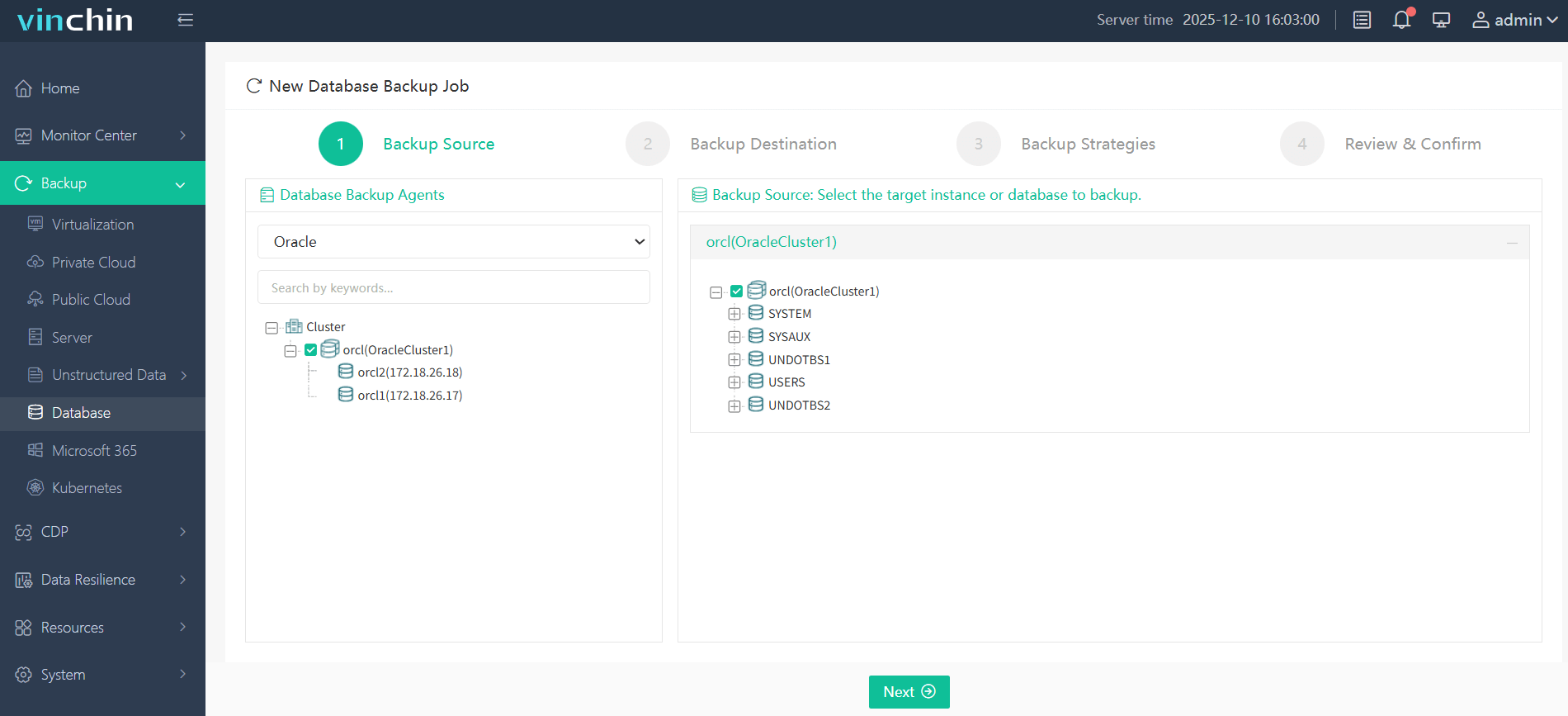
Step 1. Select the Oracle database to back up
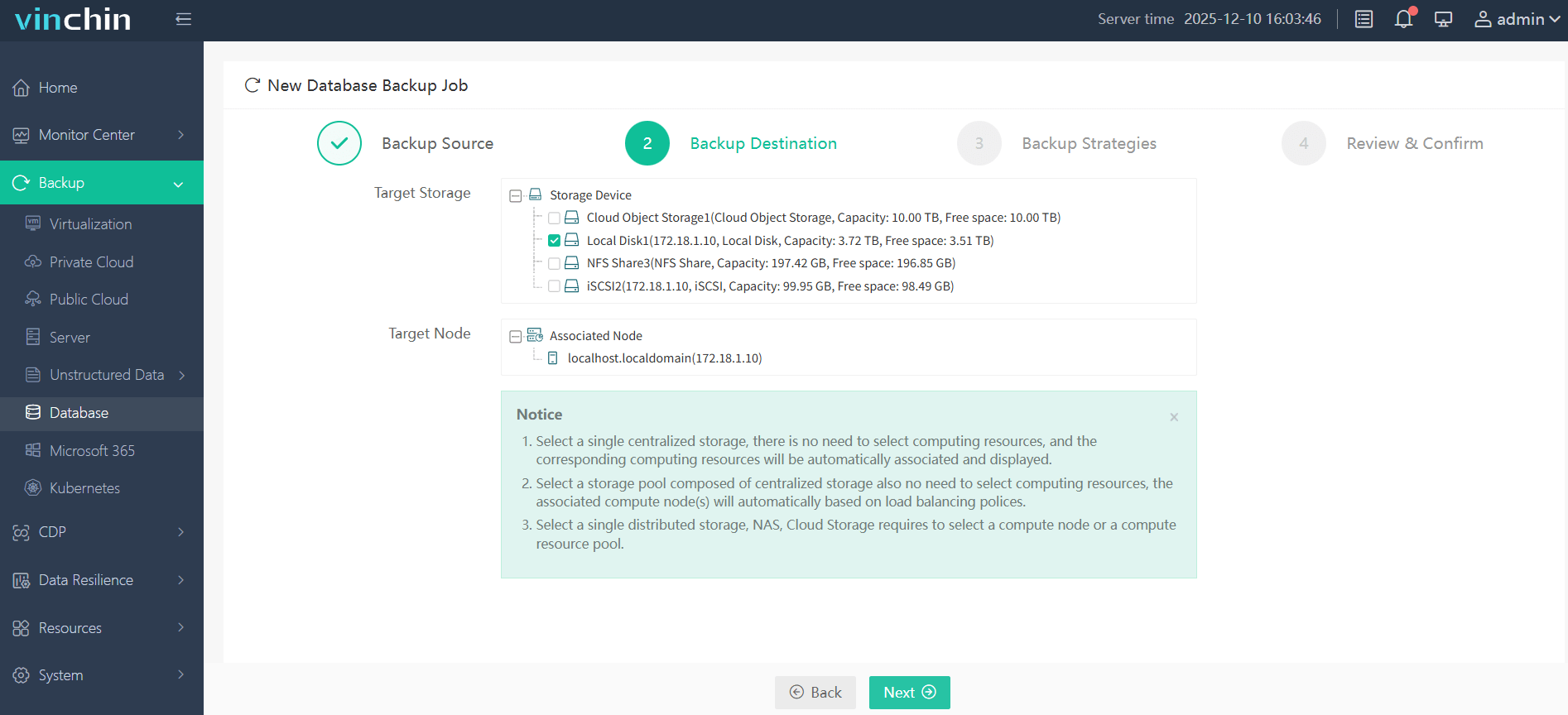
Step 2. Choose the backup storage
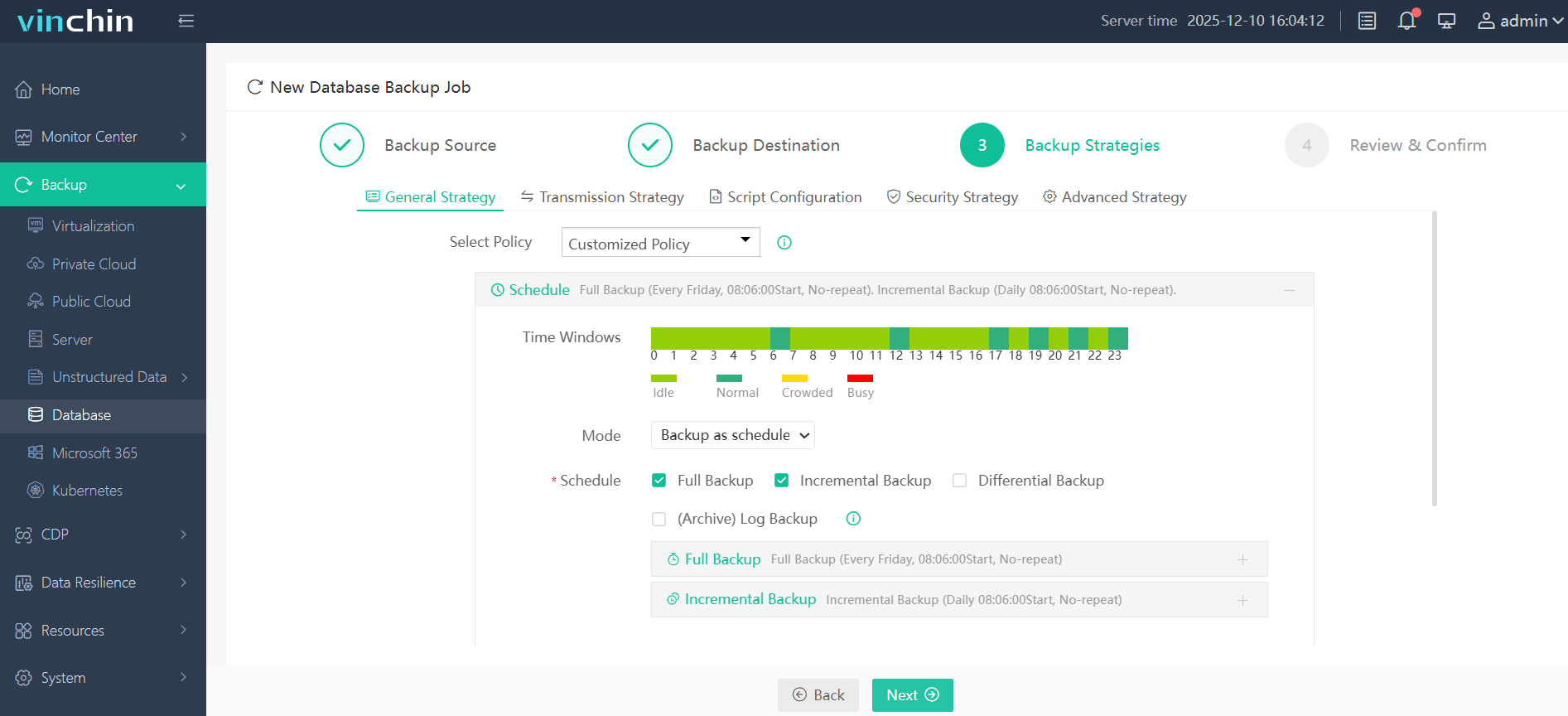
Step 3. Define the backup strategy
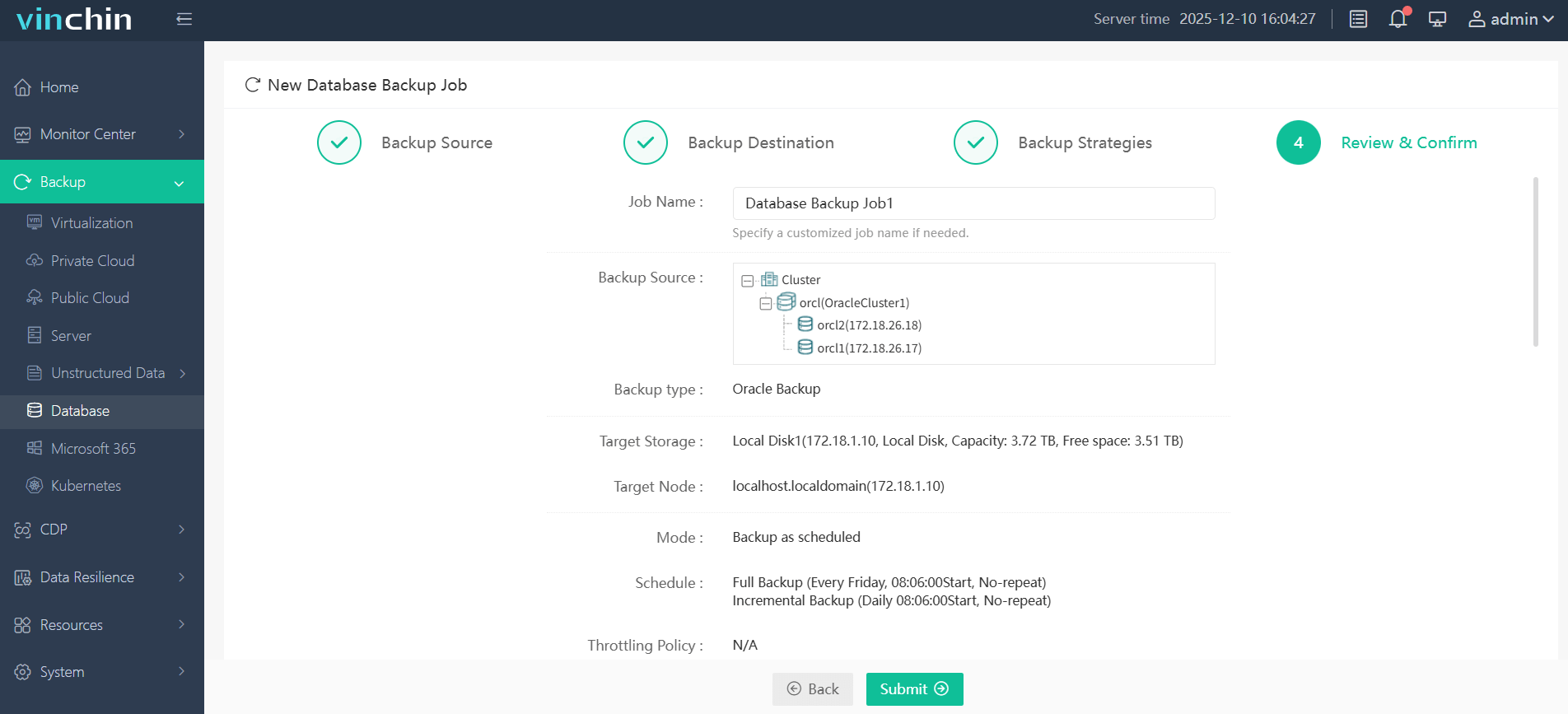
Step 4. Submit the job
Recognized globally by enterprises for reliability and ease-of-use—with top ratings among enterprise data-protection solutions—Vinchin Backup & Recovery offers a risk-free 60-day full-featured trial so you can experience its capabilities firsthand; click download below to get started!
Restore Archivelog Sequence FAQs
Q1: Can I restore specific archivelogs if my main archive destination runs out of space?
Yes; use SET ARCHIVELOG DESTINATION TO '/new/location' before running RESTORE commands in RMAN so recovered files land elsewhere safely.
Q2: What should I do if my standby Data Guard node reports missing sequences?
Copy missing archived redo logs manually then run ALTER DATABASE REGISTER PHYSICAL LOGFILE '/path/to/file.arc'; on standby; monitor sync status afterward using Data Guard views.
Q3: How do I quickly check which sequences are present versus missing?
Query V$ARCHIVED_LOG joined with V$DATABASE_RECOVERY_STATUS, or run LIST BACKUP OF ARCHIVELOG ALL; inside RMAN for an overview.
Conclusion
Restoring correct archivelog sequences ensures reliable point-in-time recoveries—even under pressure from outages or disasters—in any serious Oracle environment. While manual methods offer granular control when needed most urgently or uniquely configured setups arise, RMAN provides automation plus integrity checks ideal for daily operations at scale.
To simplify protection further across hybrid infrastructures, consider trying Vinchin's unified platform today!