Managing Oracle database backups is a daily task for many administrators. Over time, backup files can pile up, eating away at storage and making recovery more complex. Oracle’s Recovery Manager (RMAN) offers tools to help you keep your backup environment clean and efficient. One of these tools is the RMAN maintenance channel. But what exactly is it, and how do you use it? Let’s break it down step by step.
What Is an RMAN Maintenance Channel?
An RMAN maintenance channel is a special type of channel used only for maintenance tasks in Oracle RMAN. Unlike regular channels, which handle backup and restore operations, a maintenance channel is required for commands like CHANGE, DELETE, or CROSSCHECK. When you allocate a maintenance channel, you tell RMAN which storage device, such as DISK or SBT_TAPE to use for these tasks.
You cannot use a maintenance channel for backup or restore jobs. Its sole purpose is to help RMAN manage, verify, and clean up backup files. This distinction helps keep your backup and maintenance operations organized and efficient.
It’s important to note that if you have previously set up automatic channels using the CONFIGURE CHANNEL command for your target device type, RMAN may automatically allocate a suitable maintenance channel when needed. However, manual allocation with ALLOCATE CHANNEL FOR MAINTENANCE becomes necessary if no automatic configuration exists or if you need to override default parameters during specific tasks.
Why Use Maintenance Channels in RMAN?
Maintenance channels are essential for keeping your backup environment healthy. They allow you to:
Remove obsolete or expired backups, freeing up storage.
Synchronize the RMAN repository with actual backup files using CROSSCHECK.
Apply retention policies to ensure you keep only the backups you need.
Without a maintenance channel, certain RMAN commands will fail, especially when dealing with backups on specific devices such as tape libraries or external disk arrays. Allocating the right maintenance channel ensures that RMAN can access and manage all your backup files regardless of where they reside.
For example, suppose your organization uses both disk-based storage and tape archives for different types of backups. In this case, allocating separate maintenance channels allows precise control over each device type during cleanup operations.
How to Configure an RMAN Maintenance Channel
Setting up a maintenance channel is straightforward but requires attention to detail regarding syntax and context. You can allocate a maintenance channel manually at the RMAN prompt or rely on automatic configuration through CONFIGURE CHANNEL. Manual allocation gives more control, especially when targeting specific devices or running one-off tasks across both disk and tape.
Here’s the basic syntax for allocating a manual maintenance channel:
ALLOCATE CHANNEL FOR MAINTENANCE DEVICE TYPE DISK;
This command must be run directly at the RMAN prompt, not inside a RUN block, to take effect immediately in your session. After allocating the channel, issue any required maintenance commands such as DELETE OBSOLETE or CROSSCHECK BACKUP relevant to that device type.
When finished with your task, always release the allocated resources by running:
RELEASE CHANNEL;
If managing multiple storage types (for example both disk and tape), allocate one distinct maintenance channel per device type before executing cross-device cleanup routines:
ALLOCATE CHANNEL FOR MAINTENANCE DEVICE TYPE DISK;
ALLOCATE CHANNEL FOR MAINTENANCE DEVICE TYPE SBT_TAPE PARMS='SBT_LIBRARY=/path/to/library';
-- perform tasks
RELEASE CHANNEL;
Note:
If you've already configured default channels using CONFIGURE, some routine DELETE or CROSSCHECK commands may work without explicit manual allocation. Manual allocation remains best practice when troubleshooting errors related to missing channels or when overriding defaults temporarily.
Method 1. Using Command Line for Maintenance Channel
The command line provides direct control over how you allocate and use an RMAN maintenance channel, a method favored by many DBAs for its transparency during ad hoc troubleshooting sessions.
First connect to your target database using:
rman TARGET /
Then allocate the appropriate device-specific maintenance channel before performing any cleanup operation. For instance, deleting obsolete disk-based backups involves:
ALLOCATE CHANNEL FOR MAINTENANCE DEVICE TYPE DISK;
DELETE OBSOLETE;
RELEASE CHANNEL;
To ensure accuracy before deletion or if you're unsure whether all listed backups still exist, run CROSSCHECK first:
ALLOCATE CHANNEL FOR MAINTENANCE DEVICE TYPE DISK;
CROSSCHECK BACKUP;
DELETE OBSOLETE;
RELEASE CHANNEL;
For tape-based environments (often used in larger enterprises), swap out DISK with SBT_TAPE while specifying library parameters as needed:
ALLOCATE CHANNEL FOR MAINTENANCE DEVICE TYPE SBT_TAPE PARMS='SBT_LIBRARY=/path/to/library';
DELETE OBSOLETE;
RELEASE CHANNEL;
Always remember: Allocate one dedicated maintenance channel per device type involved in your operation; otherwise you'll encounter errors such as RMAN-06091: no channel allocated for maintenance (of an appropriate type). This error signals that either no suitable automatic configuration exists or that explicit manual allocation was skipped.
Method 2. Using Scripts for Maintenance Channel Tasks
Automating routine cleanup through scripting saves time while reducing human error, a must-have approach in enterprise environments where consistency matters most.
A typical script might look like this:
ALLOCATE CHANNEL FOR MAINTENANCE DEVICE TYPE DISK;
CROSSCHECK BACKUP;
DELETE NOPROMPT OBSOLETE REDUNDANCY = 2 DEVICE TYPE DISK;
RELEASE CHANNEL;
Let’s break down each part so even newcomers feel confident running these scripts:
1. The first line prepares RMAN by telling it which storage medium (in this case disk) should be targeted.
2. Next comes CROSSCHECK, which verifies whether all registered backups still physically exist on their respective media; missing ones get marked as expired.
3. The DELETE NOPROMPT OBSOLETE REDUNDANCY = 2 line enforces retention policy by removing anything beyond two recent copies from disk with NOPROMPT ensuring automation proceeds without waiting for confirmation prompts.
4. Finally RELEASE frees up system resources after completion of all actions.
You can schedule this script via operating system schedulers like cron on Linux servers or Task Scheduler on Windows hosts for daily or weekly execution depending on organizational needs.
If managing both disks AND tapes simultaneously? Just add another allocation line at the start of your script so every relevant device gets covered within one automated job:
ALLOCATE CHANNEL FOR MAINTENANCE DEVICE TYPE DISK;
ALLOCATE CHANNEL FOR MAINTENANCE DEVICE TYPE SBT_TAPE PARMS='SBT_LIBRARY=/path/to/library';
CROSSCHECK BACKUP;
DELETE NOPROMPT OBSOLETE;
RELEASE CHANNEL;
Note:
Always test new scripts in non-production environments first! To preview what would be deleted without actually removing anything yet, try adding PREVIEW after DELETE OBSOLETE.
For example:
DELETE OBSOLETE REDUNDANCY = 2 PREVIEW;
This shows exactly which files would be affected under current policy settings, helping avoid accidental data loss due to misconfiguration!
Key Considerations and Troubleshooting Tips
Before automating any cleanup process involving rman maintenance channels or rolling out changes across production systems, it pays off to review some best practices along with common pitfalls encountered by DBAs worldwide.
Start every scheduled job with CROSSCHECK before issuing DELETE commands; this keeps repository records synchronized with real-world file status so expired entries don’t linger unnecessarily nor trigger avoidable errors later on.
Be cautious about using NOPROMPT within scripts: While great for hands-free automation during off-hours windows (like overnight batch runs), there’s no undo button once deletions occur! Always validate logic against test databases prior to deployment—and consider periodic reviews of retention policies based on evolving business requirements over time.
If you encountering “RMAN-06091: no channel allocated…”, This usually means either:
No matching CONFIGURE statement exists covering requested device types,
Or explicit ALLOCATE wasn’t issued beforehand.
Fixes include configuring default channels via CONFIGURE statements OR manually allocating them just-in-time within session scripts depending upon operational context needed at that moment.
After major deletions run LIST EXPIRED followed by DELETE EXPIRED, it cleans up lingering catalog entries referencing physical files already gone from underlying media, a crucial housekeeping step especially after hardware migrations or unexpected outages affecting storage layers.
Always document changes made via scripts including date/time executed plus summary results in team logs so future audits remain straightforward should questions arise about past activity impacting critical data assets.
Vinchin Backup & Recovery: Enterprise-Level Oracle Database Protection
Beyond native tools like RMAN, organizations seeking streamlined management often turn to specialized solutions designed specifically for enterprise needs.
Vinchin Backup & Recovery stands out as a professional platform supporting today’s mainstream databases including Oracle 10g, 11g/11g R2, 12c, 18c, 19c, 21c, Oracle RAC, MySQL, SQL Server, MariaDB, PostgreSQL, PostgresPro, and TiDB.
It delivers robust features such as advanced source-side compression, incremental backup options, batch database backup capabilities, flexible data retention policies including GFS support, cloud/tape archiving, WORM protection against ransomware threats, integrity checks with recovery verification via SQL scripts.
With Vinchin Backup & Recovery's intuitive web console interface backing up an Oracle database typically takes just four steps:
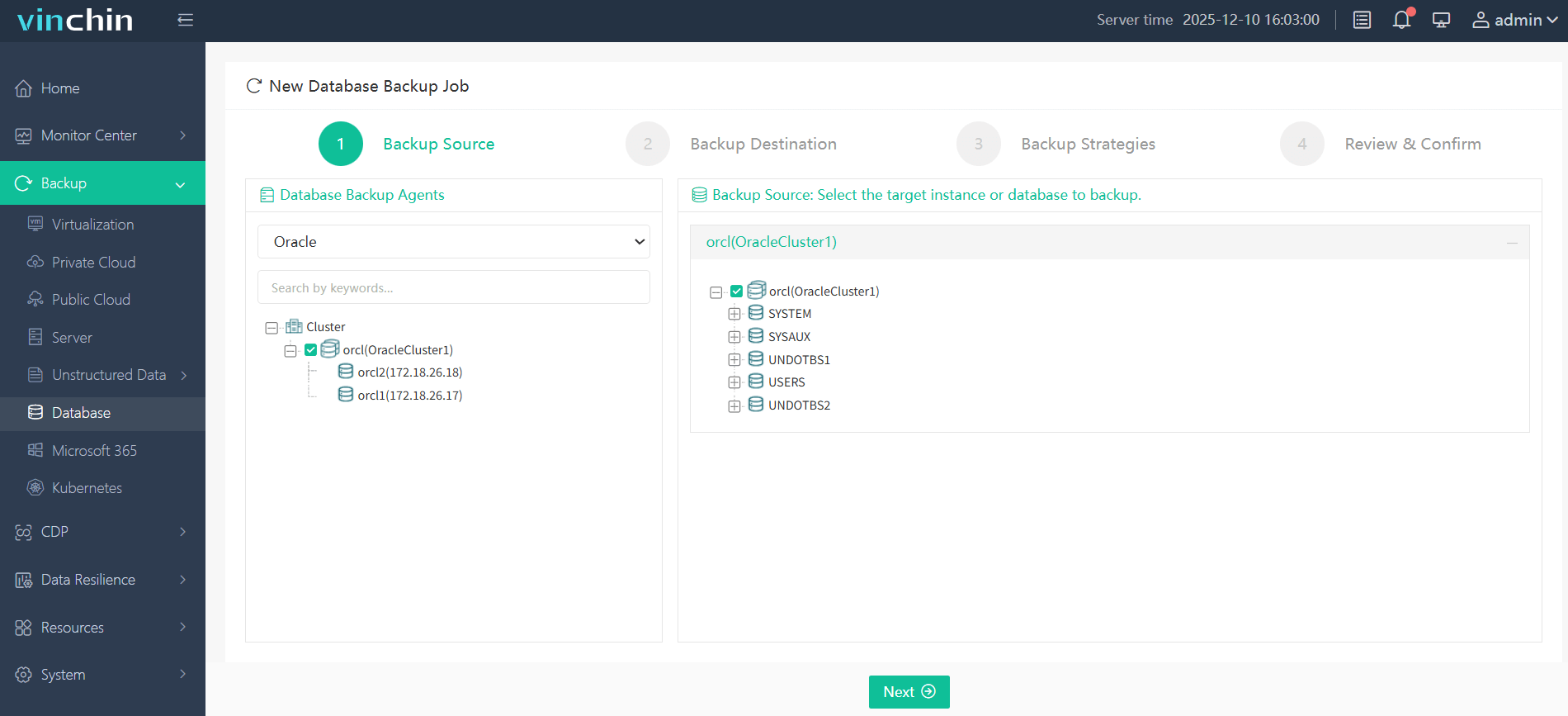
Step 1. Select the Oracle database to backup
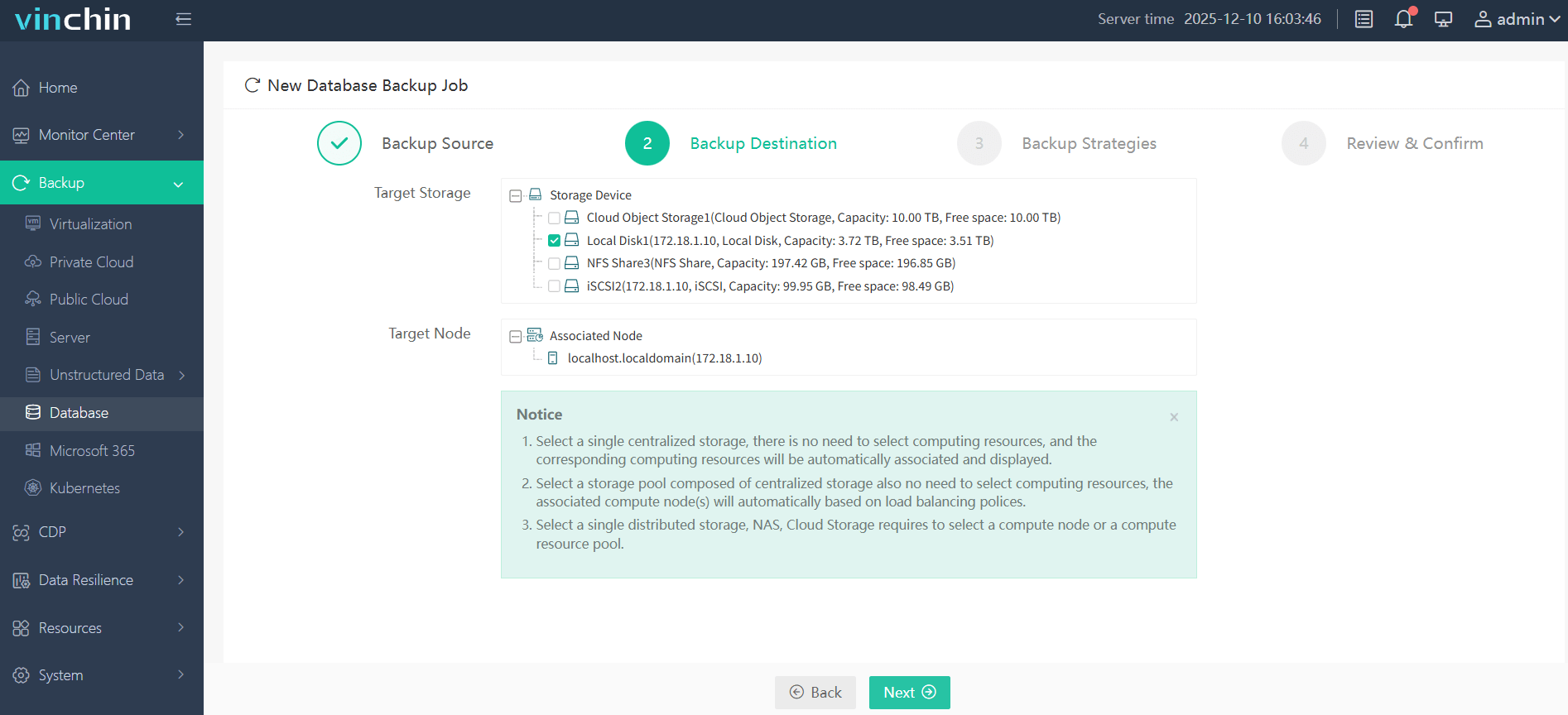
Step 2. Choose the backup storage
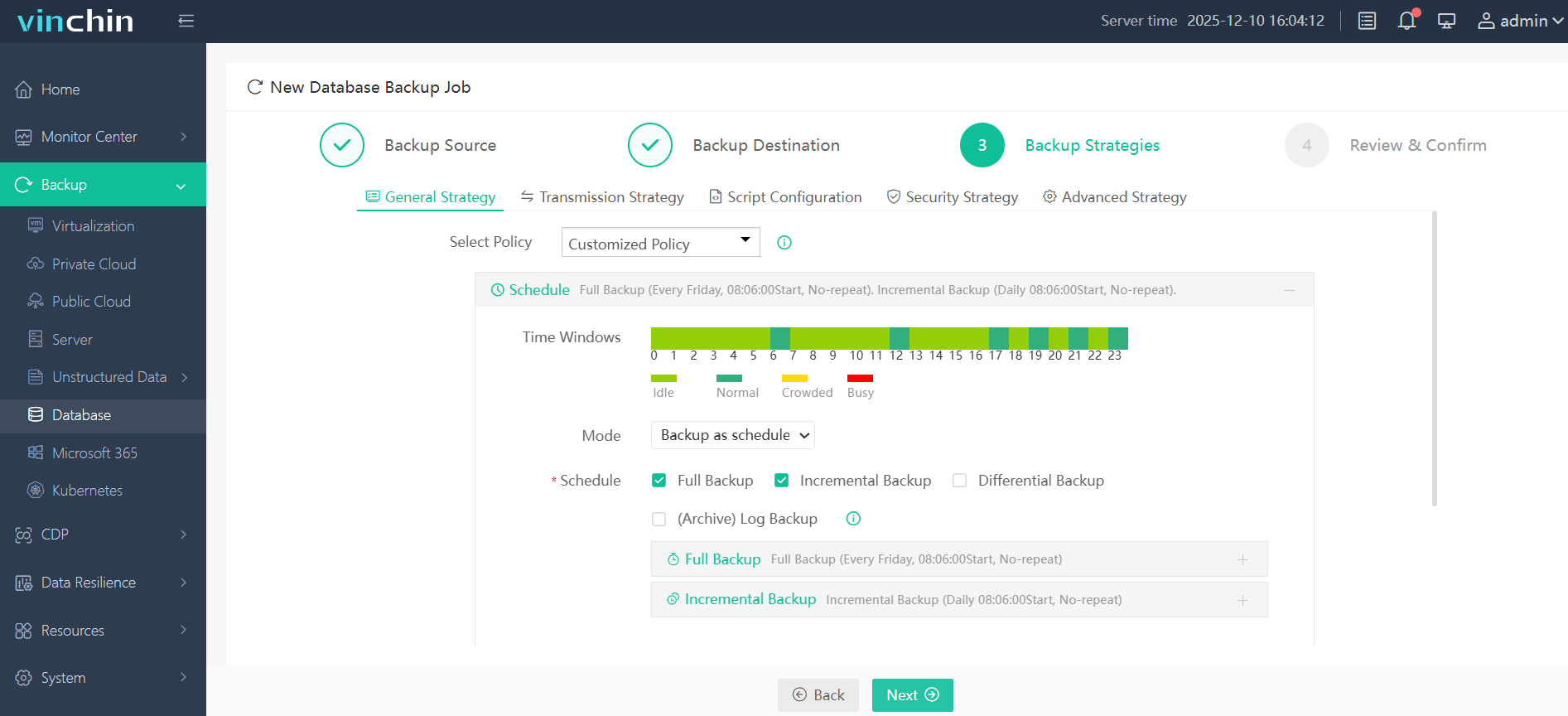
Step 3. Define the backup strategy
Step 4. Submit the job
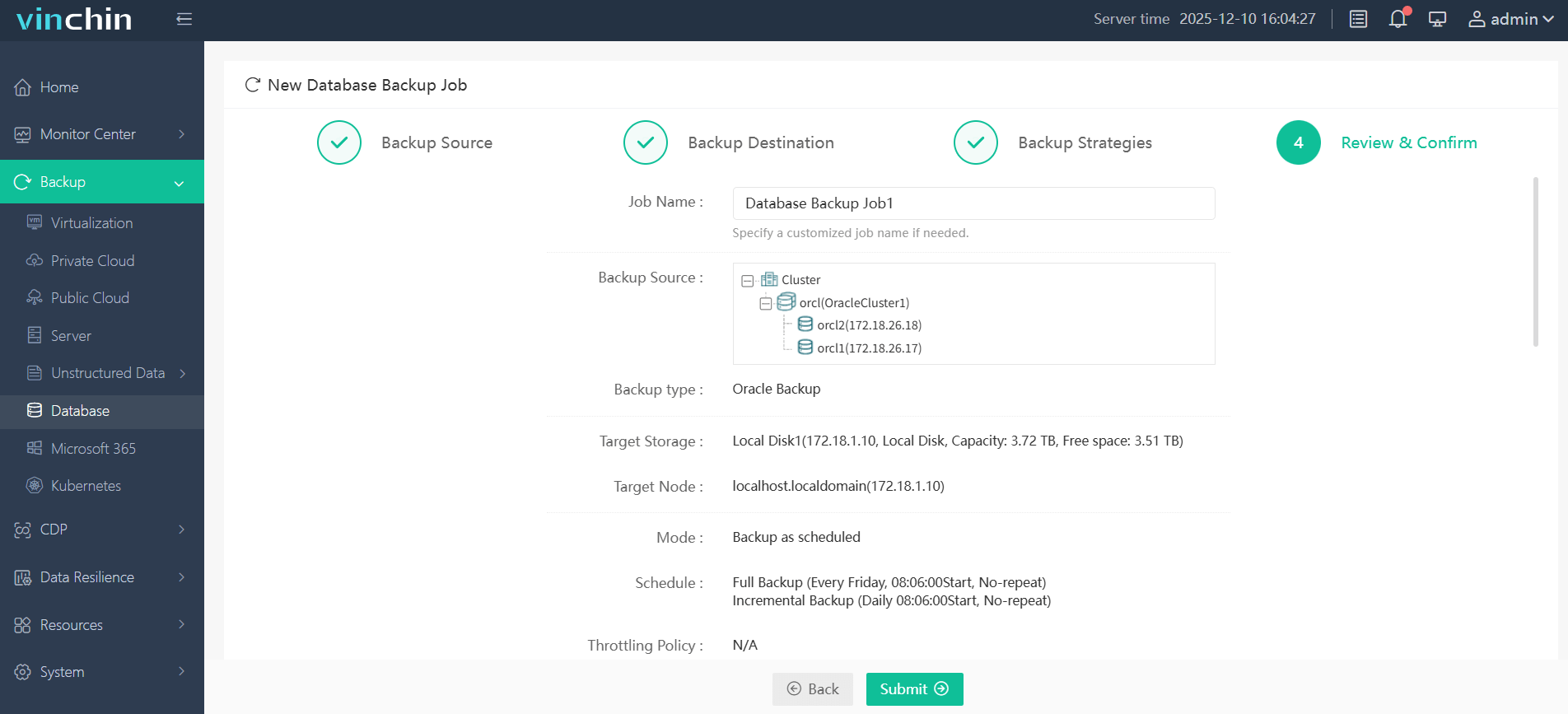
Recognized globally among enterprise users and with top ratings from customers worldwide, Vinchin Backup & Recovery offers a full-featured free trial lasting 60 days. Click below now to experience comprehensive data protection firsthand.
RMAN Maintenance Channel FAQs
Q1: Can I run DELETE EXPIRED without allocating a specific device-type maintenance channel?
A1: Yes. But if expired files are stored on multiple devices (disk/tape), allocate corresponding channels first so all entries are processed correctly.
Q2: What does "DEVICE TYPE" mean in ALLOCATE statements?
A2: It specifies which physical medium (such as DISK or SBT_TAPE) will be targeted during subsequent operations within that session's scope.
Q3: Is it safe to schedule automated deletion jobs overnight?
A3: Yes. As long as scripts are tested beforehand using PREVIEW mode first and proper notifications/logging are enabled post-execution.
Conclusion
Using an rman maintenance channel keeps Oracle backups organized while enforcing retention policies efficiently across diverse environments—from local disks through enterprise-grade tapes alike! While granular control remains vital via native tools like these channels themselves. Solutions such as Vinchin offer streamlined management atop robust automation frameworks worth exploring further today.