Backing up your Oracle database is not just smart—it is essential for business continuity. Oracle Recovery Manager (RMAN) gives you powerful tools to protect your data against loss or corruption. But what makes an "Oracle RMAN backup level 0" so important? In this article, we’ll explain what it is, why you need it, how to run it step by step, and how to automate the process for reliable protection.
What Is Oracle RMAN Backup Level 0?
A level 0 backup in Oracle RMAN forms the base layer of any incremental backup strategy. While it copies all used data blocks in your database—much like a full backup—the difference lies in its role within RMAN’s incremental system. A standard full backup simply captures everything at one point in time but cannot serve as a foundation for future incremental backups. In contrast, an incremental level 0 backup becomes the reference point for subsequent level 1 incrementals. This means that after taking a level 0 backup, you can run smaller incremental backups that only capture changes since that baseline—saving both time and storage.
If you are running your database in NOARCHIVELOG mode, keep in mind that only consistent cold backups are possible; you must shut down your database cleanly before backing up. For most production environments where continuous availability matters, ARCHIVELOG mode is required so that both online (hot) backups and point-in-time recovery are possible.
Why Choose Level 0 Backups for Oracle?
Level 0 backups are critical because they provide a complete snapshot of your entire database at one moment. Without a recent level 0 backup as your anchor point, incremental strategies fall apart—you cannot restore using only incrementals if there’s no base image to build from.
Most administrators schedule weekly level 0 backups during low-activity periods such as weekends or maintenance windows. Daily or even more frequent level 1 incrementals then capture ongoing changes efficiently throughout the week. This approach reduces storage needs compared to daily fulls while still giving you fast recovery options when disaster strikes.
By combining regular level 0s with frequent incrementals:
You minimize total backup size.
You shorten daily backup windows.
You maintain quick restore capability.
Isn’t efficiency what every IT team wants?
Prerequisites: Setting Up Your Environment
Before running any RMAN backups—especially incremental ones—you must ensure certain conditions are met:
First, confirm that your database runs in ARCHIVELOG mode by connecting through SQL*Plus and entering:
ARCHIVE LOG LIST;
If not enabled, switch modes by shutting down cleanly (SHUTDOWN IMMEDIATE), mounting the database (STARTUP MOUNT), enabling archiving (ALTER DATABASE ARCHIVELOG;), then opening it (ALTER DATABASE OPEN;). Only with ARCHIVELOG mode can you perform hot (online) backups without downtime.
Second, configure your desired backup destination using RMAN’s CONFIGURE CHANNEL command if needed:
CONFIGURE CHANNEL DEVICE TYPE DISK FORMAT '/u01/rman_backups/%U';
This ensures all future backups go to an organized location.
Finally, check available disk space at your target location—a full-level backup can be large!
Method 1: Running Level 0 Backup with RMAN Command Line
The command line remains the most direct way to control Oracle RMAN operations. Here’s how to create an incremental level 0 backup:
Start by launching rman from your terminal:
rman target /
At the RMAN prompt:
1. Enter this command to back up all datafiles at level 0:
BACKUP INCREMENTAL LEVEL 0 DATABASE TAG 'LEVEL0_BACKUP';
Tagging helps identify this set later.
2. To include archived redo logs—which enable point-in-time recovery—use:
BACKUP INCREMENTAL LEVEL 0 DATABASE PLUS ARCHIVELOG TAG 'LEVEL0_BACKUP';
3. After completion, check status with:
LIST BACKUP SUMMARY;
For extra assurance that your new backup is valid—not just present but usable—run these checks:
CROSSCHECK BACKUP;
VALIDATE BACKUPSET <backupset_key>;
Replace <backupset_key> with the actual key shown in LIST BACKUP SUMMARY output.
This process guarantees you have a restorable copy ready whenever needed.
Method 2: Scheduling Automated Level 0 Backups Using Oracle Scheduler
Manual tasks are easy to forget—but automation never sleeps! With Oracle Scheduler built into every modern Oracle Database edition, you can schedule recurring jobs directly inside your environment.
Begin by creating an executable shell script—for example /u01/scripts/rman_level0.sh—with these contents:
#!/bin/bash
source /home/oracle/.bash_profile
rman target / <<EOF
BACKUP INCREMENTAL LEVEL 0 DATABASE TAG 'LEVEL0_AUTO';
EXIT
EOF
Make sure it’s executable:
chmod +x /u01/scripts/rman_level0.sh
Now connect as a privileged user (like SYSDBA) via SQL*Plus or another tool and submit this PL/SQL block:
BEGIN
 DBMS_SCHEDULER.CREATE_JOB (
   job_name        => 'LEVEL0_BACKUP_JOB',
   job_type        => 'EXECUTABLE',
   job_action      => '/u01/scripts/rman_level0.sh',
   start_date      => SYSTIMESTAMP,
   repeat_interval => 'FREQ=WEEKLY; BYDAY=SUN; BYHOUR=2; BYMINUTE=0; BYSECOND=0',
   enabled         => TRUE
 );
END;
/
Why use Oracle Scheduler instead of OS cron? Because jobs managed here integrate tightly with database security policies and monitoring tools like DBA_SCHEDULER_JOBS, making troubleshooting easier if something goes wrong.
Remember: If environment variables such as ORACLE_HOME or ORACLE_SID aren’t set globally on your server, source them explicitly at the top of each script using source /home/oracle/.bash_profile.
Method 3: Scheduling Automated Level 0 Backups Using Cron Jobs
Prefer managing schedules outside of Oracle? Cron jobs offer simple automation on Linux/UNIX systems—and many admins find them familiar.
Here’s how:
1. Edit crontab for the oracle user by typing crontab -e.
2. Add this line so that every Sunday at exactly two o’clock AM local time,
your script runs automatically—and logs output for review later:
0 2 * * 0 /u01/scripts/rman_level0.sh > /u01/logs/rman_level_2024.log 2>&1
Best practice: Always source environment profiles inside scripts called from cron! Atop /u01/scripts/rman_level_2024.sh, insert source /home/oracle/.bash_profile. This avoids failures due to missing variables when cron executes outside normal login shells.
Check log files regularly after scheduled runs—they’re invaluable when diagnosing missed or failed jobs!
Restoring and Recovering from a Level 0 Backup
Backups matter most when disaster strikes—or someone accidentally deletes critical data! Knowing how restoration works gives peace of mind.
Restoring from an RMAN level 0 involves two main steps:
First comes RESTORE, which copies backed-up files back onto disk locations specified by current control files.
Second comes RECOVER, which applies archived redo logs plus any newer incrementals until reaching either latest consistency or a specific point-in-time if requested.
Here’s what typical commands look like inside an RMAN session:
RUN {
 RESTORE DATABASE;
 RECOVER DATABASE;
}
Want to recover only up until yesterday evening? Use UNTIL TIME syntax like so:
RUN {
 RESTORE DATABASE UNTIL TIME "TO_DATE('2024-06-10:23:59:00','YYYY-MM-DD:HH24:MI:SS')";
 RECOVER DATABASE UNTIL TIME "TO_DATE('2024-06-10:23:59:00','YYYY-MM-DD:HH24:MI:SS')";
}
Always test restores periodically—even if just on non-production servers—to verify both process knowledge and media integrity!
How to Back Up Oracle Databases Using Vinchin Backup & Recovery
Beyond native methods, organizations seeking streamlined enterprise-grade protection should consider Vinchin Backup & Recovery—a professional solution supporting mainstream databases including Oracle (as well as MySQL, SQL Server, MariaDB, PostgreSQL, PostgresPro, and TiDB). Vinchin Backup & Recovery delivers robust features such as advanced source-side compression for efficient storage use on supported platforms like Oracle; batch database backup; flexible data retention policies including GFS retention policy; cloud backup and tape archiving integration; plus comprehensive integrity checks—all designed to enhance reliability while reducing administrative overhead.
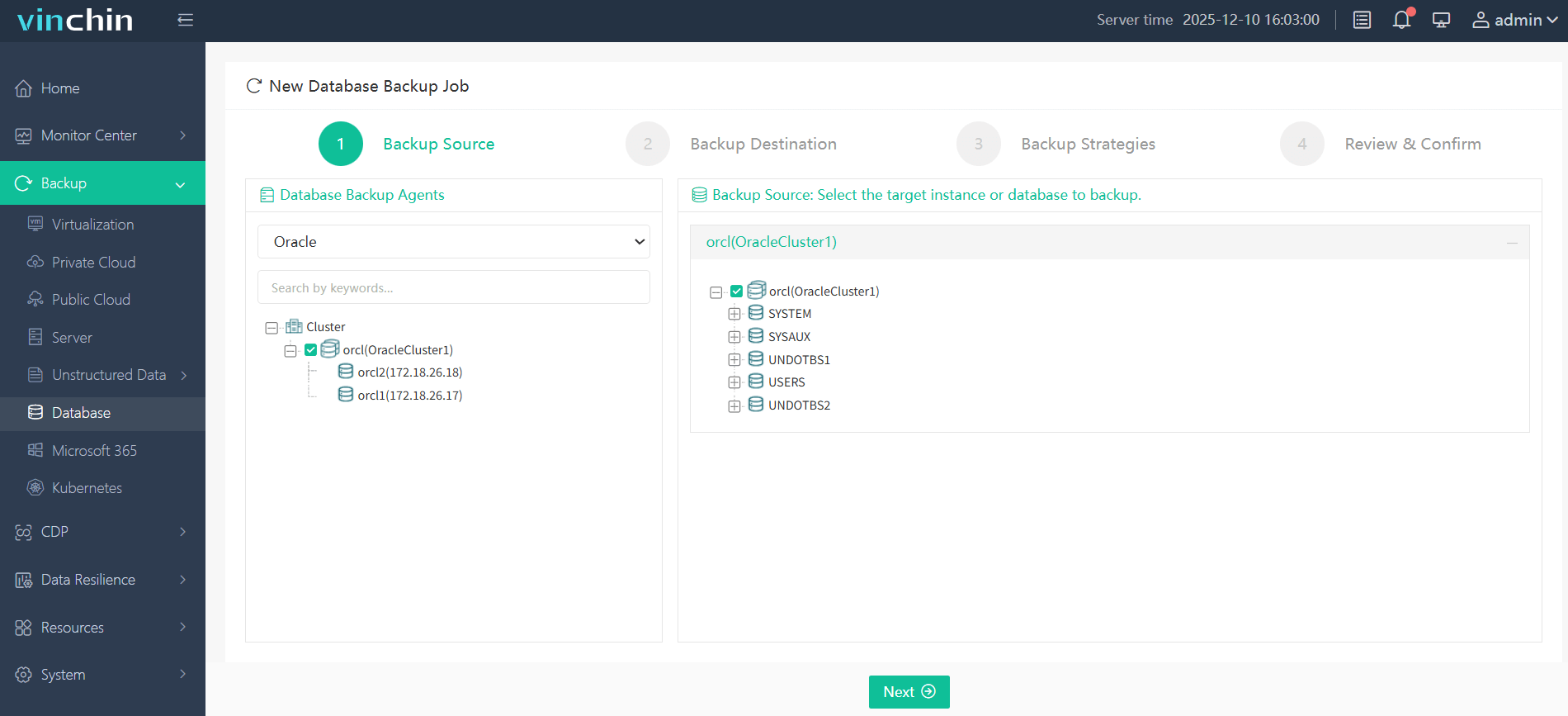
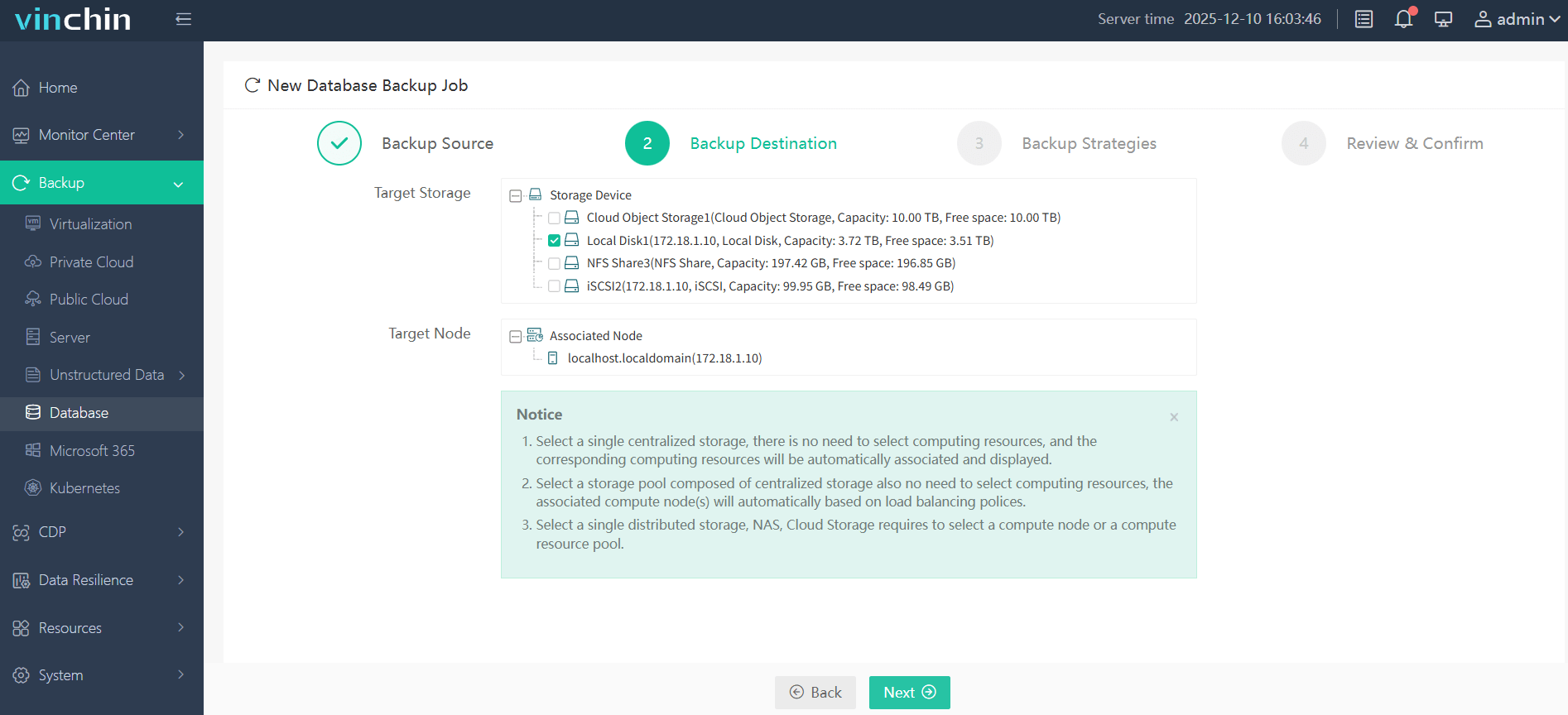
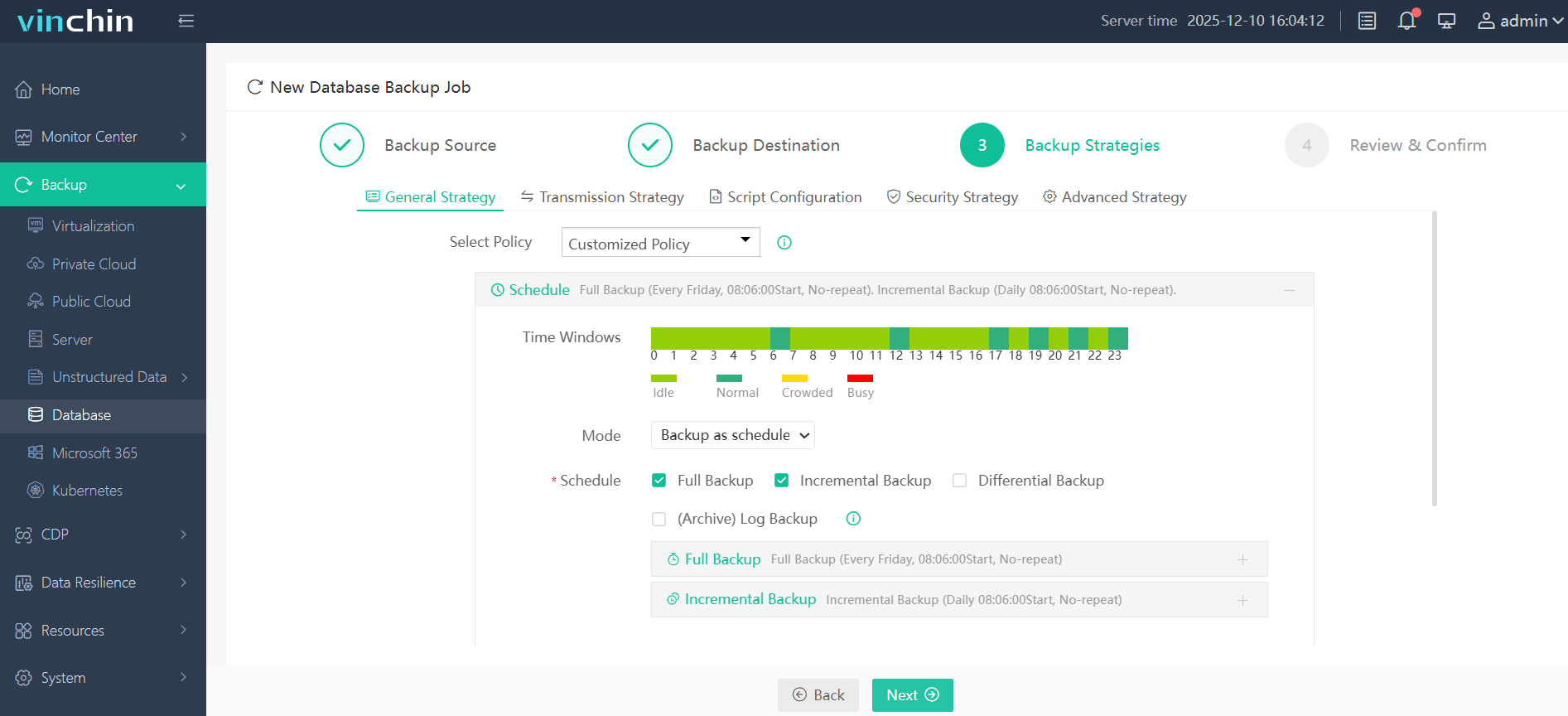
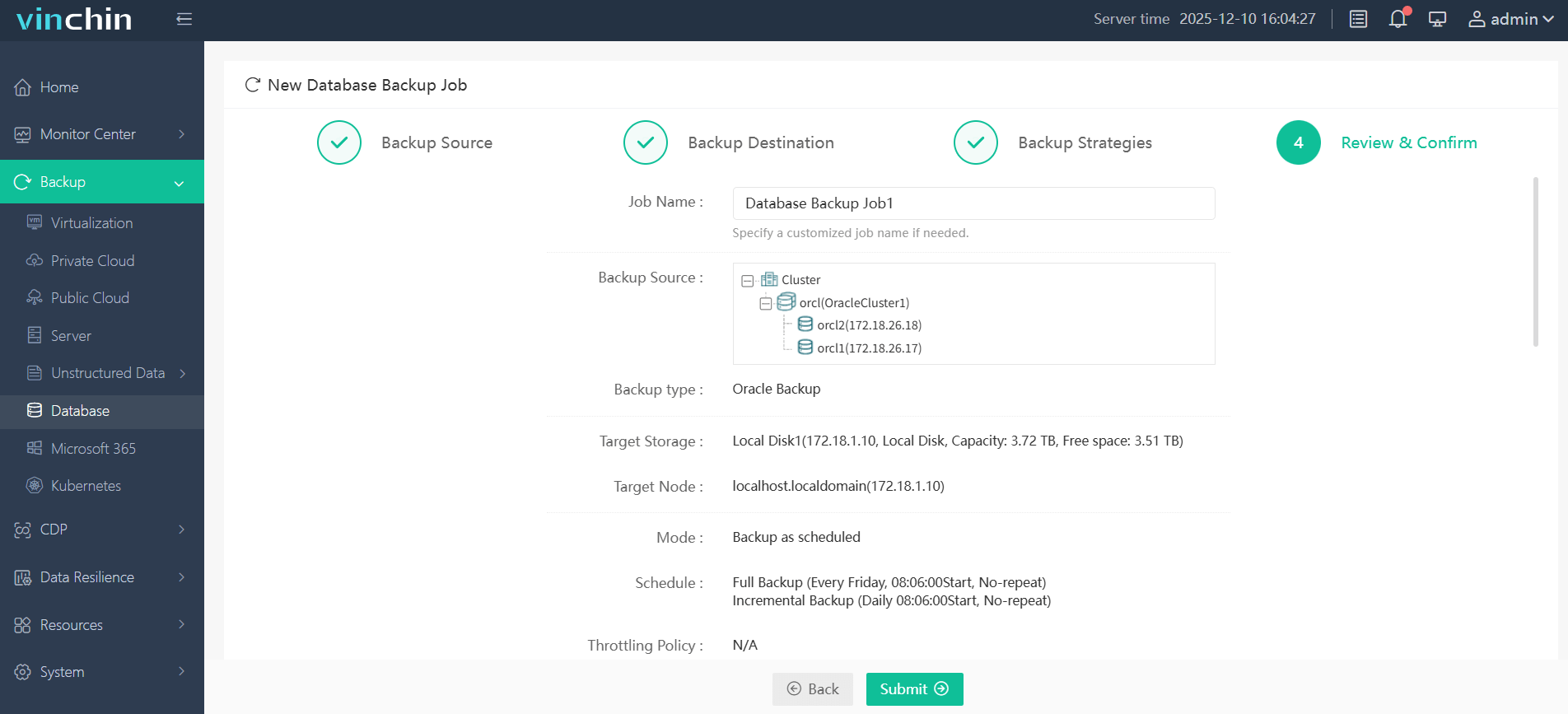
The intuitive web console simplifies operations into four clear steps tailored specifically for backing up an Oracle database:
Step 1. Select the Oracle database to back up
Step 2. Choose the backup storage
Step 3. Define the backup strategy
Step 4. Submit the job
Recognized worldwide with strong customer adoption and high ratings among enterprise users,Vinchin Backup & Recovery offers a fully featured free trial for sixty days—click below to experience effortless data protection firsthand.
Oracle RMAN Backup Level FAQs
Q1: Does my database need ARCHIVELOG mode enabled before taking online level backups?
A1: Yes; otherwise only offline cold backups are possible without archivelogs present during operation.
Q2: How do I validate whether my last scheduled automated job actually produced usable files?
A2: Run LIST BACKUP SUMMARY, then use VALIDATE BACKUPSET <key> in RMAN for confirmation beyond presence alone.
Q3:Is there performance impact when running large-level backups during peak hours?
A3:A full-level backup reads all used blocks causing higher I/O load than daily incrementals—it should be scheduled during off-hours whenever possible.
Conclusion
An oracle rman backup level is vital—it anchors efficient incremental strategies while ensuring reliable recovery points exist at all times.Whether scripted manually,scheduled via built-in tools,supported through cron jobs—or managed visually through Vinchin—regular base images keep databases safe.Try Vinchin free today!