If you manage Oracle databases, you know that backup strategies are critical. But when it comes to Oracle RMAN, the terms "incremental" and "differential" backups can be confusing. Are they the same? Which one should you use? In this article, we’ll break down the differences between Oracle RMAN incremental and differential backups, explain how each works step by step, show how they affect restore operations, and help you design a practical backup plan. Let’s get started.
What Is Oracle RMAN Incremental Backup?
Oracle Recovery Manager (RMAN) offers incremental backups to save only data blocks that have changed since a previous backup. This method reduces both backup size and time compared to always running full backups. Understanding how these work is key for efficient database protection.
Incremental backups in RMAN come in two levels: Level 0 and Level 1.
A Level 0 incremental backup copies all blocks containing data in your database. While it captures everything like a full backup using BACKUP DATABASE, it is specifically an incremental baseline—meaning future Level 1 incrementals will reference this as their starting point. The command looks like this:
BACKUP INCREMENTAL LEVEL 0 DATABASE;
A Level 1 incremental backup saves only those blocks that have changed since a previous backup—either another Level 1 or a Level 0. By default, RMAN creates differential incremental backups unless told otherwise.
There are two types of Level 1 incrementals:
We’ll explore what makes them different next.
What Is Oracle RMAN Differential Backup?
In Oracle RMAN terminology, "differential" refers to one type of Level 1 incremental backup. It focuses on capturing changes since your last incremental—whether that was another differential or cumulative—or since your most recent Level 0 baseline if no other incrementals exist yet.
This approach keeps each daily backup small because only new changes get saved every time you run it. Here’s how you create one:
BACKUP INCREMENTAL LEVEL 1 DATABASE;
If you run this command every day after an initial Level 0 baseline on Sunday night, Monday’s differential includes changes since Sunday; Tuesday’s includes changes since Monday; Wednesday’s includes changes since Tuesday—and so on throughout the week.
Differential incrementals are fast to run but require more files during restore operations because each depends on its predecessor in sequence.
Cumulative Incremental Backups Explained
Cumulative incrementals offer another way to manage change tracking in your database environment. Instead of saving just what has changed since yesterday's backup (like differentials), cumulative incrementals capture all changes made since your last Level 0 baseline—regardless of any other intervening incrementals taken during the week.
You create a cumulative incremental with this command:
BACKUP INCREMENTAL LEVEL 1 CUMULATIVE DATABASE;
For example: If Sunday is your Level 0 day,
Monday’s cumulative contains all changes since Sunday,
Tuesday’s also contains all changes since Sunday,
Wednesday’s again contains everything changed from Sunday up until Wednesday,
and so forth until you take another new baseline.
The main advantage? You need fewer files during restore—just your latest cumulative plus its associated baseline—but each cumulative grows larger as more days pass without resetting with a fresh Level 0.
Oracle RMAN Incremental vs Differential Comparison
Choosing between these methods means weighing trade-offs around speed, storage use, and recovery complexity. Here’s an overview before we dive deeper into operational impacts:
| Criteria | Differential Incremental | Cumulative Incremental |
|---|
| Backup Size | Smallest per run | Grows larger through week |
| Backup Window | Shorter | Longer as week progresses |
| Restore Complexity | Must apply every file | Only need latest + baseline |
| Storage Overhead | Lower | Higher |
Let’s clarify further:
A differential backs up only what changed since your last incremental (of any type). Each file is small but restoring requires applying every single file in order from baseline onward.
A cumulative backs up everything changed since your last baseline (Level 0). Each file gets bigger over time but simplifies restores—you just need two files: latest cumulative plus its matching baseline.
Suppose you take a Level 0 on Sunday night:
If using differentials daily (Monday–Wednesday), Monday covers Sun–Mon; Tuesday covers Mon–Tue; Wednesday covers Tue–Wed.
If using cumulatives daily instead: Every day covers Sun–that day (so Wednesday's includes Sun–Wed).
Which would suit your needs best? That depends on both operational constraints and recovery goals—which we’ll discuss next!
Impact on Recovery Operations
Understanding how these choices affect restores helps ensure business continuity when disaster strikes. The difference shows up most clearly during actual recovery efforts—not just routine backups!
With differential chains, restoring means:
1. Restore from your most recent Level 0
2. Apply every subsequent differential—in order—to bring data current
For example: If you took differentials Monday through Thursday after Sunday's full (Level 0), then lost data Friday morning—you’d need five files total: Sunday + Mon + Tue + Wed + Thu differentials applied sequentially before rolling forward with logs if needed.
With cumulative chains, restoring means:
1. Restore from most recent Level 0
2. Apply only latest cumulative—even if several were taken earlier in week
So if Friday morning disaster struck after cumulatives Mon–Thu following Sunday's full—you’d just need Sunday + Thursday's cumulative for complete restore before log roll-forward!
This difference matters when planning Recovery Time Objectives (RTOs): Fewer files mean faster restores under pressure—but may cost more storage space upfront due to larger individual increments.
Why Choose One Over the Other?
Selecting between differential or cumulative approaches depends largely on three factors: available storage space; length of acceptable nightly/weekly backup windows; desired speed of restores after failure events.
Choose differentials if minimizing daily impact matters most—they’re quick to run nightly because they back up less data each time—but remember that restores will take longer due to multiple dependencies across several days’ worth of files needing application in sequence.
Choose cumulatives if rapid disaster recovery is top priority—even though nightly jobs grow bigger through week—the payoff comes at restore time when only two pieces are required regardless of number taken previously within cycle!
Many organizations blend both styles for balance: For instance—a weekly schedule might look like this:
Take a fresh Level 0 every Sunday night
Run daily differentials Monday through Thursday
Finish out week with large Friday night cumulative covering entire period back to prior Sunday
This hybrid model keeps midweek jobs short while ensuring weekend recoveries remain simple even after major system updates or maintenance windows!
How Can Vinchin Help Back Up Oracle Databases?
To further streamline and automate complex Oracle database protection tasks discussed above, consider Vinchin Backup & Recovery—a professional enterprise-level solution supporting mainstream platforms including Oracle, MySQL, SQL Server, MariaDB, PostgreSQL, PostgresPro, and TiDB among others. For organizations managing critical Oracle environments, Vinchin Backup & Recovery delivers robust features such as advanced source-side compression for efficient storage usage, true incremental backups for reduced window times, batch database management capabilities for scale-out scenarios, flexible retention policies including GFS cycles for compliance needs, and comprehensive log/archived log handling with any-point-in-time recovery options—all designed to maximize reliability while minimizing administrative overheads.
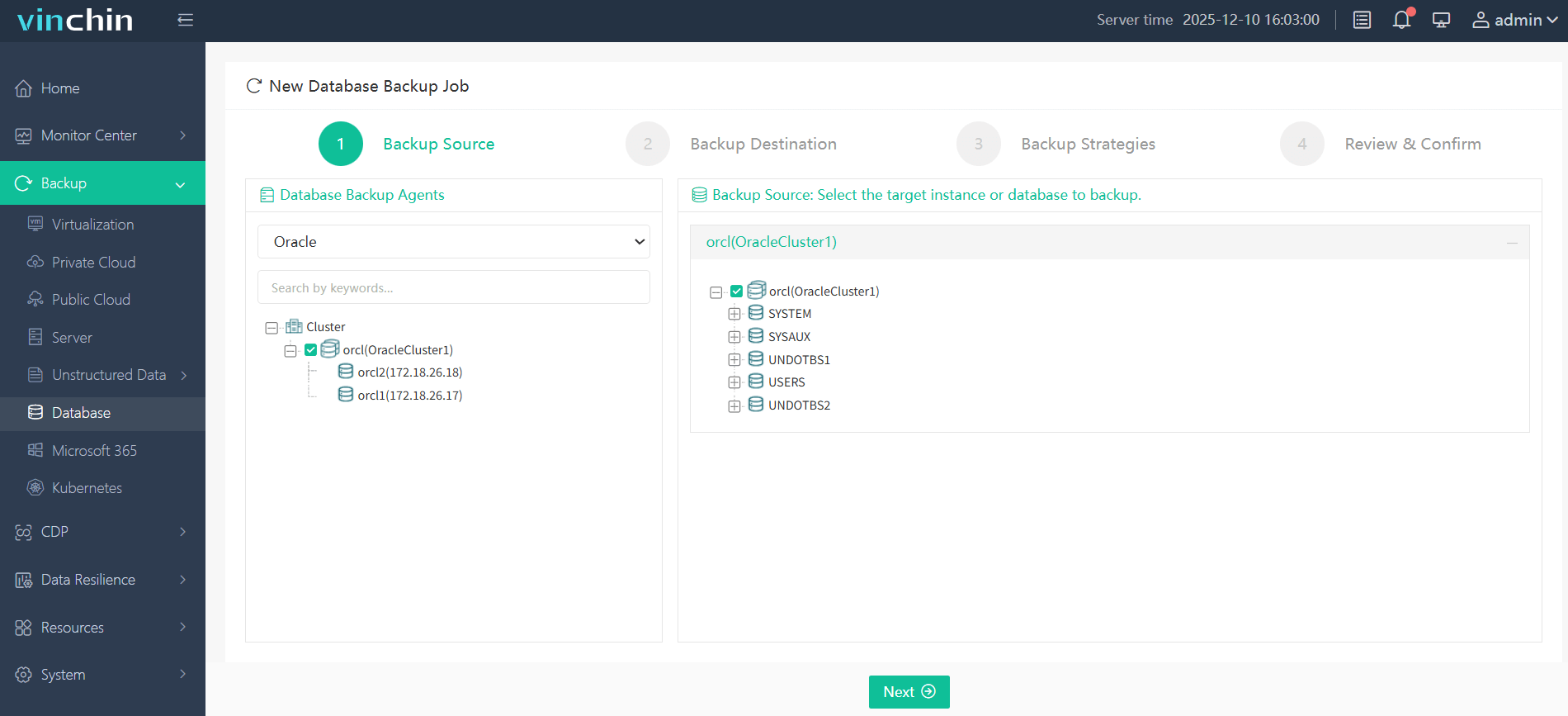
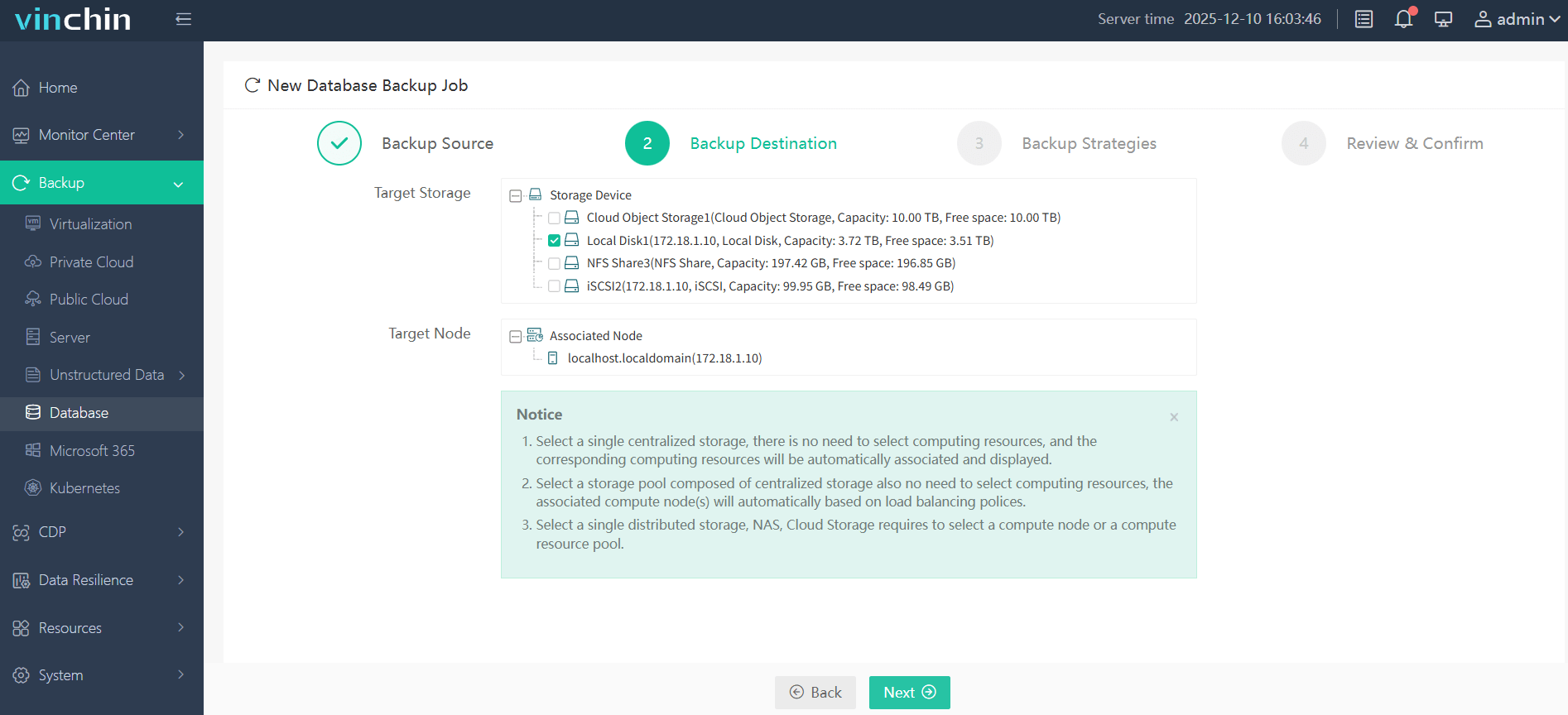
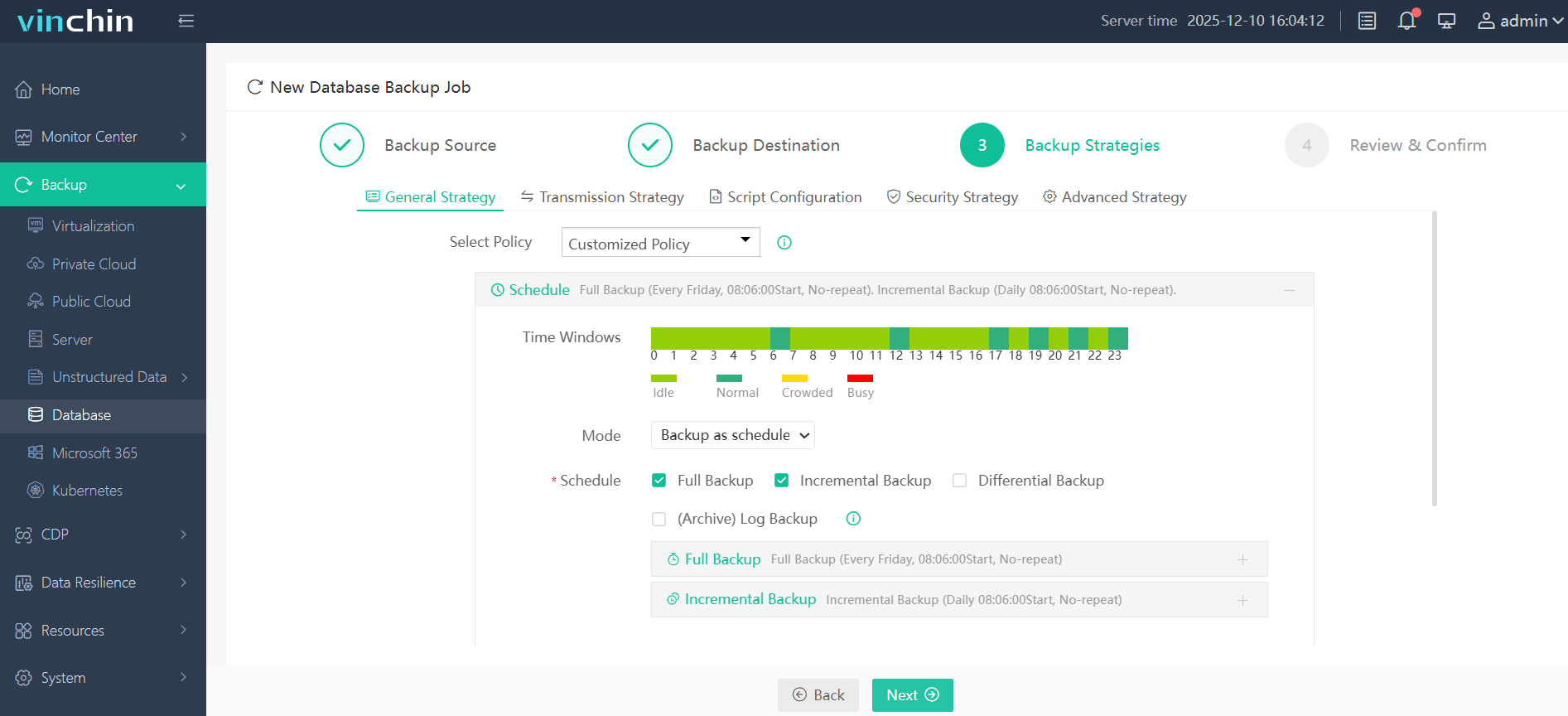
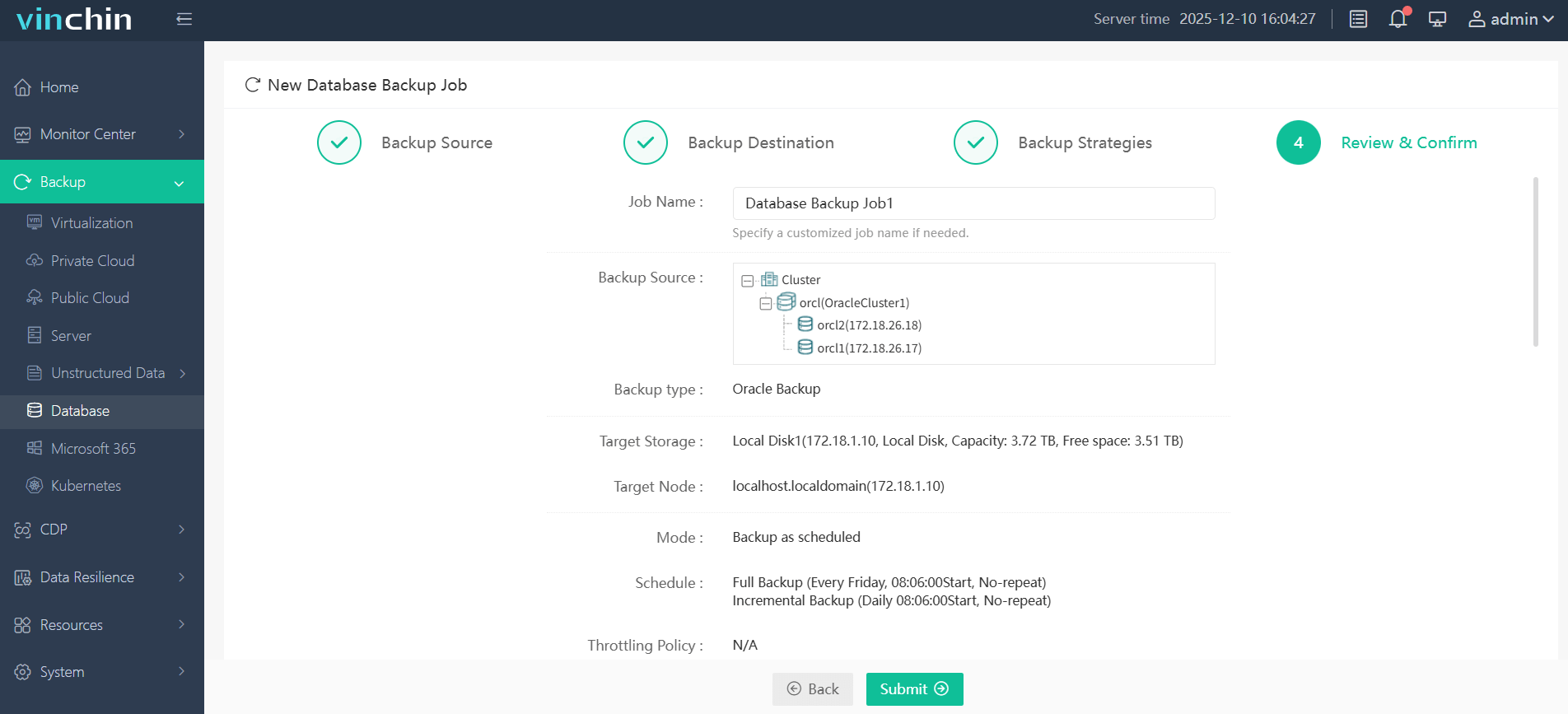
With Vinchin Backup & Recovery's intuitive web console interface backing up an Oracle database typically involves four straightforward steps:
Step 1. Select the Oracle database to back up
Step 2. Choose the backup storage
Step 3. Define the backup strategy
Step 4. Submit the job
Recognized globally with high customer satisfaction ratings across industries,Vinchin Backup & Recovery offers a fully functional free trial for sixty days—experience enterprise-grade protection firsthand by clicking download now!
Oracle RMAN Incremental vs Differential Backup FAQs
Q1: Can I switch between differential and cumulative backups without breaking my chain?
A1: Yes—you can alternate between them safely as long as restore sequences account for which type was used last; always check documentation before mixing styles mid-cycle though!
Q2: Does enabling Block Change Tracking improve performance for both types?
A2: Yes—with BCT enabled both differential AND cumulative jobs finish faster because fewer unchanged blocks are scanned unnecessarily each cycle!
Q3: How do I verify my last successful incremental type via command line?
A3: Use LIST BACKUP inside RMAN shell then review INCREMENTAL LEVEL/CUMULATIVE columns displayed onscreen output summary table accordingly!
Conclusion
Understanding “Oracle RMAN incremental vs differential” strategies helps build robust protection plans tailored precisely around business priorities—from minimal downtime requirements through efficient resource usage alike! Vinchin makes managing complex schedules simple so IT teams stay focused where it counts most!