Managing Oracle databases with RMAN (Recovery Manager) often means working in environments where several databases coexist. This is common in Data Guard setups or large enterprises running multiple instances. In these cases, the db_unique_name parameter becomes essential for distinguishing each database. But how do you configure db_unique_name for Oracle RMAN, and why does it matter? Let’s break it down step by step so you can avoid confusion—and costly mistakes.
What Is db_unique_name in Oracle?
The db_unique_name is an initialization parameter that gives every Oracle database its own unique identity within a networked environment. Even if two databases share the same db_name, their db_unique_name values must be different. This distinction is critical when using Data Guard or managing backups across several systems.
RMAN relies on this unique identifier to keep track of which backup belongs to which database. Without it, you risk overwriting backups or restoring data to the wrong system—a nightmare scenario no admin wants to face! You set db_unique_name in either your parameter file (pfile) or server parameter file (spfile), making sure each database stands out from the rest.
Why Configure db_unique_name for RMAN?
Configuring db_unique_name is not just best practice—it’s vital when working with multiple databases or using a recovery catalog. Here’s why:
First, RMAN uses this value to track backups individually per database. If two databases have identical names but different roles (such as primary and standby), only their unique names prevent mix-ups during backup or restore operations.
Second, many advanced RMAN commands depend on this setting:
The CONFIGURE DB_UNIQUE_NAME ... CONNECT IDENTIFIER command lets you register standby databases by their unique name.
The SET DB_UNIQUE_NAME command directs backup or restore jobs at a specific target within complex configurations.
When running LIST or REPORT commands inside an RMAN recovery catalog, you can filter results by unique name—making audits much easier.
Finally, Data Guard environments demand strict separation between primary and standby systems. With proper configuration, you avoid accidental overwrites and ensure reliable disaster recovery.
If you’re managing more than one Oracle instance—or planning to—you need to get comfortable with this parameter!
How to Set db_unique_name Using SQL*Plus During Database Creation?
Setting up a new Oracle database? It pays off to assign its unique name right from the start. You can do this directly in your initialization file before launching your instance or through SQL*Plus once started in NOMOUNT mode.
Add this line to your pfile or spfile:
db_unique_name = 'YOUR_UNIQUE_NAME'
If using SQL*Plus after starting up NOMOUNT:
ALTER SYSTEM SET db_unique_name='YOUR_UNIQUE_NAME' SCOPE=SPFILE;
Remember: Setting SCOPE=SPFILE means changes go into effect only after restarting the instance. Once set, continue with your usual CREATE DATABASE process.
This approach ensures that both RMAN and Data Guard recognize your new system by its distinct identity from day one—no ambiguity later!
How to Set db_unique_name Using DBCA During Database Creation?
Prefer graphical tools? The Database Configuration Assistant (DBCA) makes setting up parameters easy—even if screens change slightly between Oracle versions like 19c or 21c.
As you walk through DBCA’s wizard:
1. On the Database Identification screen, enter both Global Database Name and SID as usual.
2. Look for a field labeled db_unique_name—if not visible immediately, click into Advanced Options, then check under Initialization Parameters.
3. Enter your chosen unique name there before proceeding through remaining setup steps.
No matter which version of DBCA you use, always double-check that your entry appears correctly under initialization parameters before finishing creation. This guarantees that DBCA writes it into your spfile automatically—saving manual edits later!
How to Change db_unique_name After Database Creation?
Sometimes business needs change—a role transition happens in Data Guard; maybe someone renames a system for clarity; perhaps there was an oversight during initial setup. Changing db_unique_name after creation is possible but requires care.
Here’s how:
1. Update Initialization Parameter
Connect as a privileged user via SQL*Plus:
ALTER SYSTEM SET db_unique_name='NEW_UNIQUE_NAME' SCOPE=SPFILE;
If using a pfile instead of spfile: open it directly in an editor and update the line manually.
Warning: This change affects how other tools identify your database! Always take full backups beforehand and schedule changes during maintenance windows whenever possible.
2. Restart Your Database
For changes made via SPFILE:
3. Verify Change Inside SQL*Plus
Before updating any catalogs or scripts elsewhere:
SHOW PARAMETER db_unique_name
Confirm output matches what you expect—the new value should appear clearly here!
4. Update Recovery Catalog Metadata (if used)
If working with an RMAN recovery catalog—which is strongly recommended when managing multiple systems—you must update metadata so future jobs reference correct names:
Connect as follows:
rman CATALOG <catalog_owner>/<password>@<catalog_service>
Then connect target:
CONNECT TARGET "sys@<target_service> AS SYSBACKUP"
Now run:
CHANGE DB_UNIQUE_NAME FROM OLD_UNIQUE_NAME TO NEW_UNIQUE_NAME;
5. Confirm Catalog Update
Still inside RMAN prompt:
LIST DB_UNIQUE_NAME;
Output should show only current valid names—including yours!
Changing this parameter midstream can disrupt scripts relying on old identifiers—so always test thoroughly outside production first!
Configuring RMAN for Multiple Databases Using db_unique_name
In larger organizations—or even small teams running development plus production—you may find yourself juggling several Oracle instances at once! Here’s where careful use of db_unique_name really shines.
When registering multiple databases within one recovery catalog:
1. Each must have its own distinct value set via pfile/spfile as described above.
2. Register each separately inside catalog using their respective connect strings—for example,
rman CATALOG rcat_user/password@rcat_db
RMAN> REGISTER DATABASE;
(Repeat while connected individually to each target.)
You can also tailor persistent settings per system using commands like:
CONFIGURE RETENTION POLICY TO RECOVERY WINDOW OF 14 DAYS FOR DB_UNIQUE_NAME 'PROD_EAST';
CONFIGURE CHANNEL DEVICE TYPE DISK FORMAT '/backup/prod_east/%U' FOR DB_UNIQUE_NAME 'PROD_EAST';
CONFIGURE RETENTION POLICY TO REDUNDANCY 3 FOR DB_UNIQUE_NAME 'PROD_WEST';
This way backup strategies differ between environments without overlap—even if they share similar base names!
Need targeted restores? Use run blocks specifying which system gets restored based on its unique name—a lifesaver during audits or disaster scenarios.
By leveraging these features together with clear naming conventions across all sites (primary/standby/test/dev), administrators gain fine-grained control over every aspect of backup management—and peace of mind knowing nothing slips through cracks due to naming collisions!
Introducing Vinchin Backup & Recovery for Oracle Protection
After configuring your Oracle environment with distinct identities using db_unique_name, robust data protection becomes crucial for ongoing reliability and compliance needs across enterprise deployments. Vinchin Backup & Recovery is a professional enterprise-level solution supporting today’s leading databases—including Oracle, MySQL, SQL Server, MariaDB, PostgreSQL, PostgresPro, and TiDB—with particular strength in safeguarding complex multi-instance environments like yours.
For Oracle users specifically, Vinchin Backup & Recovery delivers batch database backup capabilities alongside flexible data retention policies; cloud/tape archiving options; seamless restore-to-new-server workflows; and built-in integrity checks—all designed for automation efficiency while ensuring regulatory compliance and rapid recoverability across diverse infrastructures.
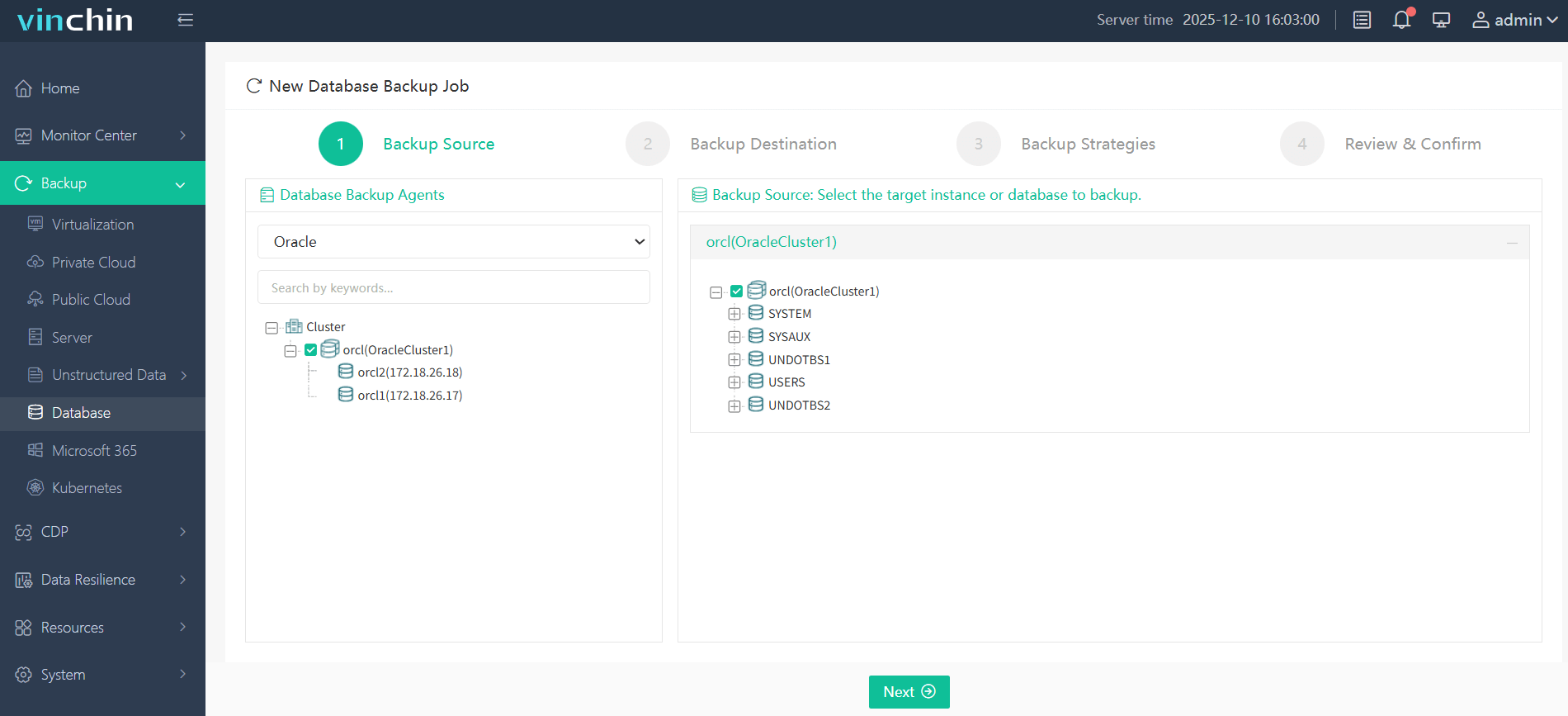
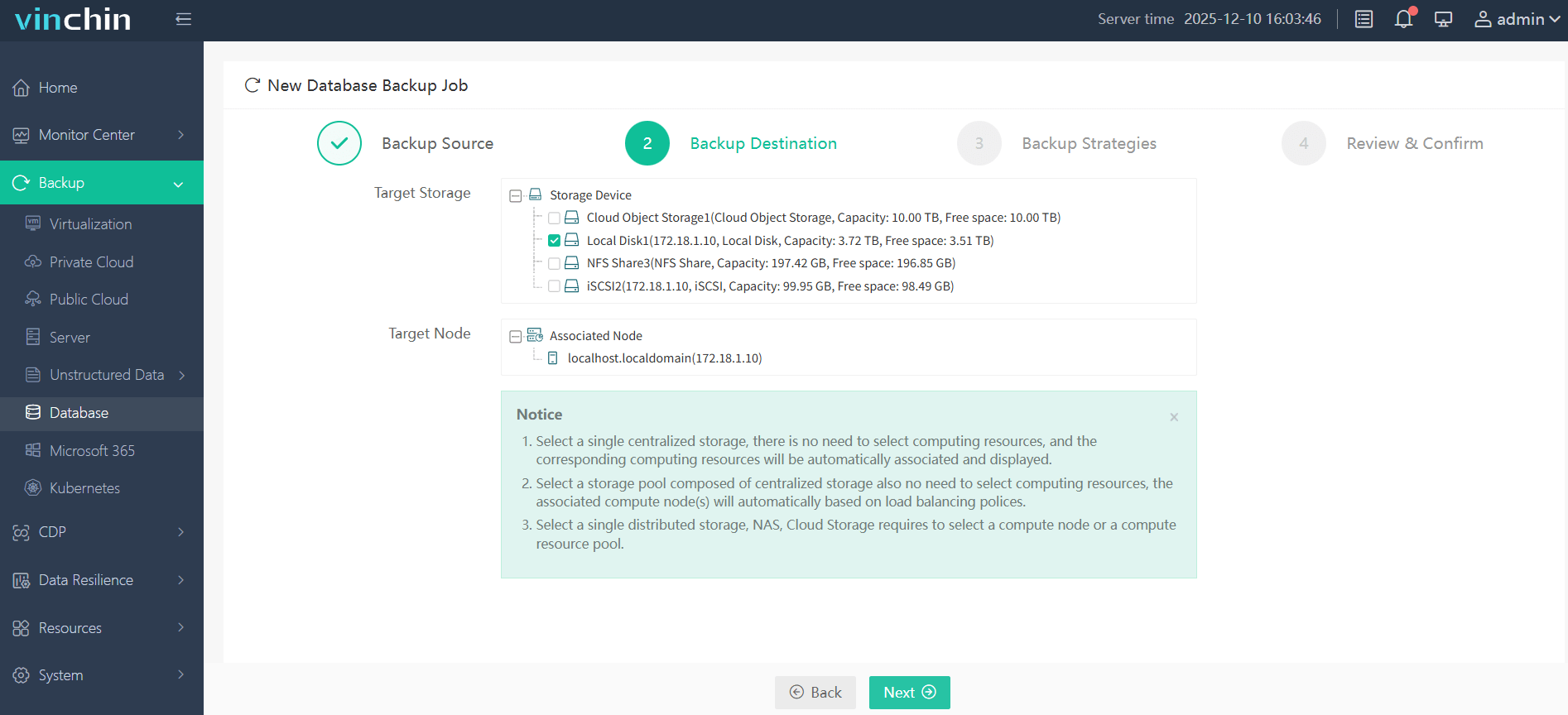
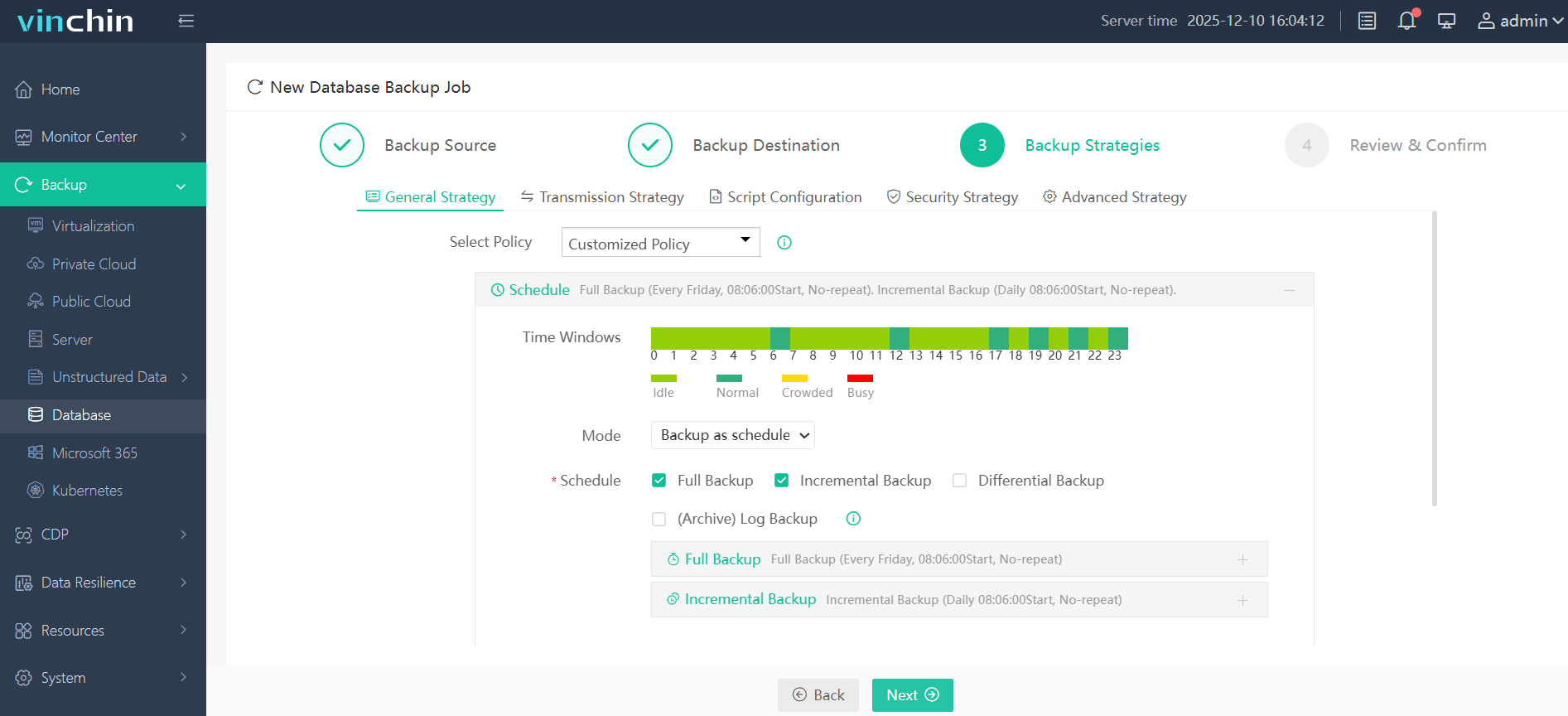
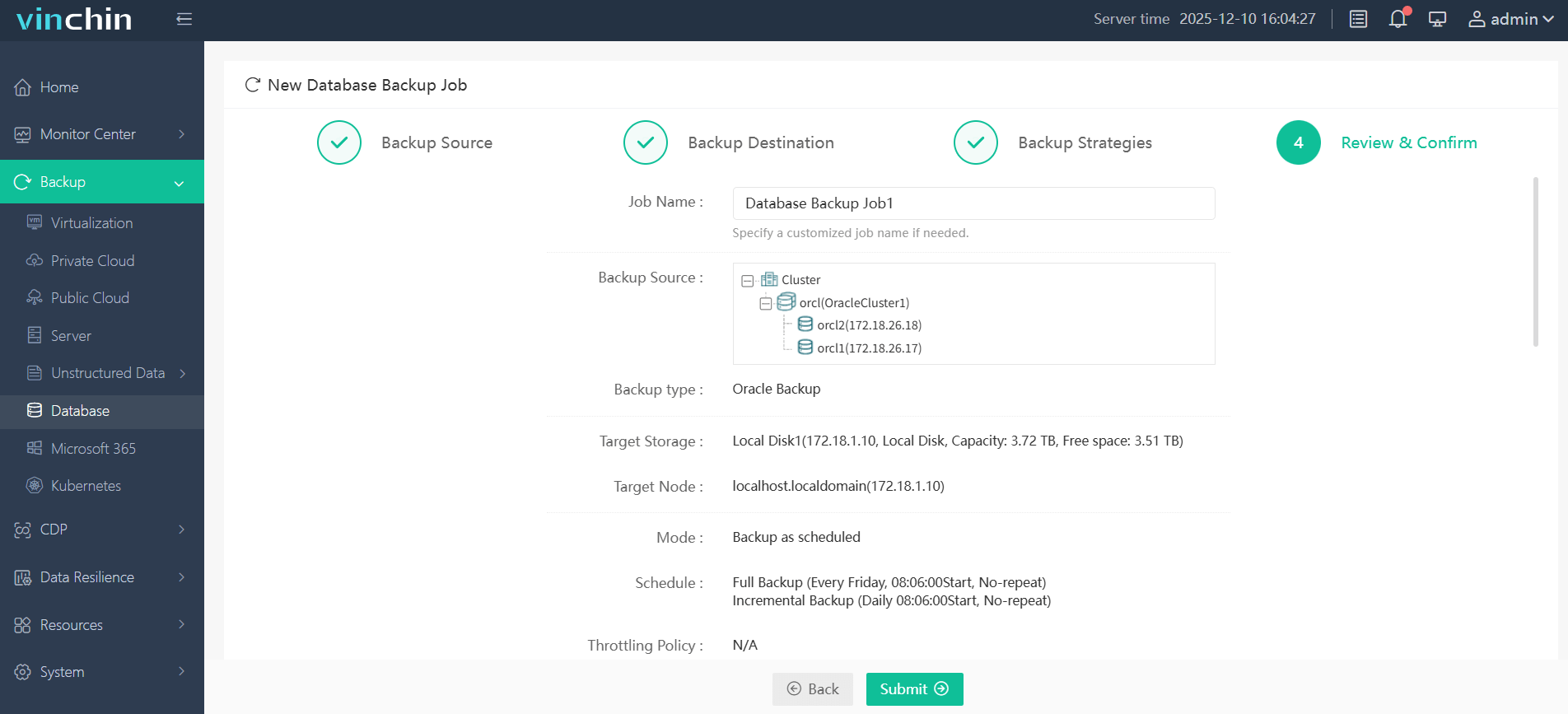
The intuitive web console streamlines every operation:
Step 1. Select the Oracle database to back up
Step 2. Choose the backup storage
Step 3. Define the backup strategy
Step 4. Submit the job
Recognized globally by thousands of organizations for secure enterprise data protection—with top industry ratings—you can experience all features free for 60 days by clicking the download button below.
Oracle RMAN Configure db_unique_name FAQs
Q1: What should I do if my primary and standby databases accidentally share the same db_unique_name?
A1: Assign each one a distinct value immediately; otherwise Data Guard/RMAN will malfunction due to conflicts tracking backups/restores per site.
Q2: How do I pre-configure an identifier so RMAN recognizes my standby by its unique name?
A2: Run CONFIGURE DB_UNIQUE_NAME 'STDBY1' CONNECT IDENTIFIER 'stdby1_svc' while connected through recovery catalog; this links service endpoints directly into reporting logic.
Q3: Can I verify my current db_unique_name without restarting anything?
A3: Yes—connect via SQL*Plus then run SHOW PARAMETER db\_unique\_name; result displays active value instantly.
Conclusion
Configuring db_unique_name keeps multi-database environments safe from confusion while enabling precise control over every operation—from routine backups through complex disaster recoveries—with tools like Vinchin making protection even easier along every step of your journey toward resilient infrastructure management!