When you back up an Oracle database with RMAN, you face a key decision: should you use an image copy or a backup set? This choice affects your backup size, speed, restore time, and storage needs. If you are an operations administrator, understanding the difference is vital for building a reliable backup strategy. Your Recovery Time Objective (RTO) and Recovery Point Objective (RPO) often guide this choice. Let’s break down both options step by step so you can build a plan that fits your environment.
What Is RMAN Image Copy?
An RMAN image copy is a bit-for-bit duplicate of a database file, control file, or archived redo log. It is not stored in a special format—just a direct copy managed by RMAN. While it acts like using the operating system’s copy command, RMAN records metadata about each image copy in its control file or recovery catalog. This tracking makes management and restores much easier.
Image copies can only be created on disk—not on tape—and are readable by both the OS and RMAN itself. They are easy to restore because you can use them directly; RMAN can switch the database to use an image copy instead of a damaged file almost instantly. This makes restores fast and simple.
To create an image copy with RMAN:
BACKUP AS COPY DATABASE;
You may also specify individual datafiles or tablespaces if needed. The output files follow naming rules set by either the FORMAT clause or default conventions—often including %U for uniqueness.
Image copies form the base for incrementally updated backups. With this method, you roll forward an image copy using incremental changes so it stays current without needing full re-copies every time. However, keep in mind that image copies always include every block—even unused space—so they tend to be larger than backup sets.
What Is RMAN Backup Set?
A backup set is an Oracle-specific format that stores one or more database files, control files, or archived logs inside compact binary files called backup pieces. Backup sets are what you get when running the BACKUP command without specifying otherwise—they’re the default output type for most jobs.
Unlike image copies, backup sets can be written to disk or tape devices. They support advanced features such as compression (to save space) and encryption (for security). When creating a backup set, RMAN skips unused blocks within datafiles; this block-level optimization means smaller backups compared to image copies—especially useful if your database has lots of empty space.
To create a standard backup set:
BACKUP DATABASE;
Or force it explicitly:
BACKUP AS BACKUPSET DATABASE;
Backup sets allow level 1 incremental backups—a feature not available with plain image copies unless used as part of incrementally updated strategies. Only backup sets support writing directly to tape devices for offsite storage or long-term retention policies.
Multiplexing combines blocks from multiple files into one backup piece; this improves performance by making better use of available bandwidth during backups. Duplexing creates multiple identical copies at once for redundancy—helpful when storing backups across different locations.
Compression reduces storage needs but increases CPU usage during both creation and restoration—a tradeoff worth considering if resources are tight.
Oracle RMAN Image Copy vs Backup Set
Now that we’ve defined each type let’s compare them side by side based on their core characteristics: format, storage options, size efficiency, speed of operation, restore process complexity, incremental support levels, advanced features like compression/multiplexing/duplexing/tape compatibility—and typical use cases seen in enterprise environments.
| Feature | Image Copy | Backup Set |
|---|
| Format | Bit-for-bit copy | Oracle binary format |
| Storage | Disk only | Disk or tape |
| Size | Larger | Smaller (compressed) |
| Restore Speed | Very fast | Slower |
| Incremental Support | Level 0 + updates | Level 0 & 1 |
| Compression | No | Yes |
| Multiplexing/Duplexing | No | Yes |
| Tape Support | No | Yes |
Multiplexing helps speed up large backups by reading from several datafiles at once and combining them into fewer output streams—reducing total job time when hardware allows parallelism. Duplexing adds resilience: if one destination fails mid-backup another remains intact.
Why Choose One Over the Other?
Let’s look closer at how operational goals shape your decision between these two formats—with concrete scenarios illustrating each path forward.
When to Use Image Copies
Choose image copies if rapid local recovery matters most—for example when minimizing downtime after hardware failure is critical to business continuity plans. Since restores involve simply switching pointers rather than extracting content from complex containers they’re ideal where simplicity trumps everything else! Small-to-medium databases benefit especially since extra disk usage isn’t usually prohibitive here.
Incrementally updated images shine when frequent changes occur but full re-backs aren’t feasible nightly; rolling forward keeps things current while limiting impact on production systems.
When to Use Backup Sets
Select backup sets whenever saving disk space takes priority—or compliance requires encrypted/tape-based archives sent offsite regularly! Large databases see dramatic reductions thanks to skipped empty blocks plus optional compression features built right into Oracle’s engine (though remember higher CPU load).
Backup sets also unlock level 1 incremental capabilities which reduce overall traffic during routine cycles—a must-have for enterprises juggling hundreds of terabytes weekly across distributed sites.
Hybrid Approach Example
Many organizations combine both methods: keeping recent local images handy for instant restores while shipping compressed encrypted sets offsite weekly/monthly per policy guidelines—a best-of-both-worlds approach balancing speed against cost/risk factors.
How Vinchin Backup & Recovery Simplifies Oracle Database Protection
For organizations seeking streamlined protection beyond native tools like RMAN alone, Vinchin Backup & Recovery delivers professional enterprise-grade database backup tailored for today’s mainstream platforms—including robust support for Oracle as well as MySQL, SQL Server, MariaDB, PostgreSQL, PostgresPro and TiDB environments.
Vinchin Backup & Recovery stands out with features such as advanced source-side compression (exclusive to Oracle), incremental backup capabilities tailored specifically for Oracle workloads, batch database protection across instances and clusters, flexible multi-level data compression options suited for diverse infrastructures, and comprehensive retention policy management including GFS schemes—all designed to optimize efficiency while ensuring regulatory compliance and operational continuity.
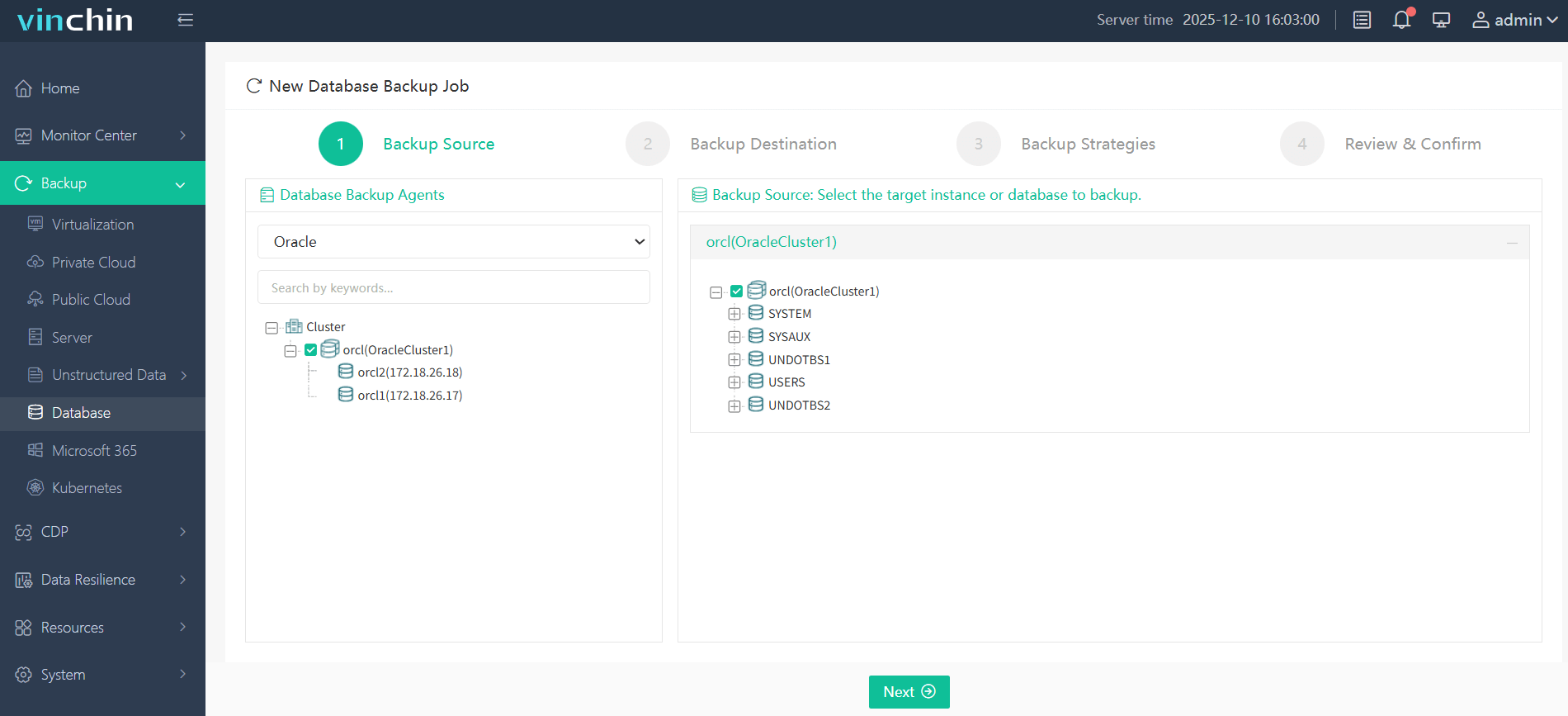
The intuitive web console makes protecting your Oracle environment straightforward:
Step 1. Select the Oracle database to back up
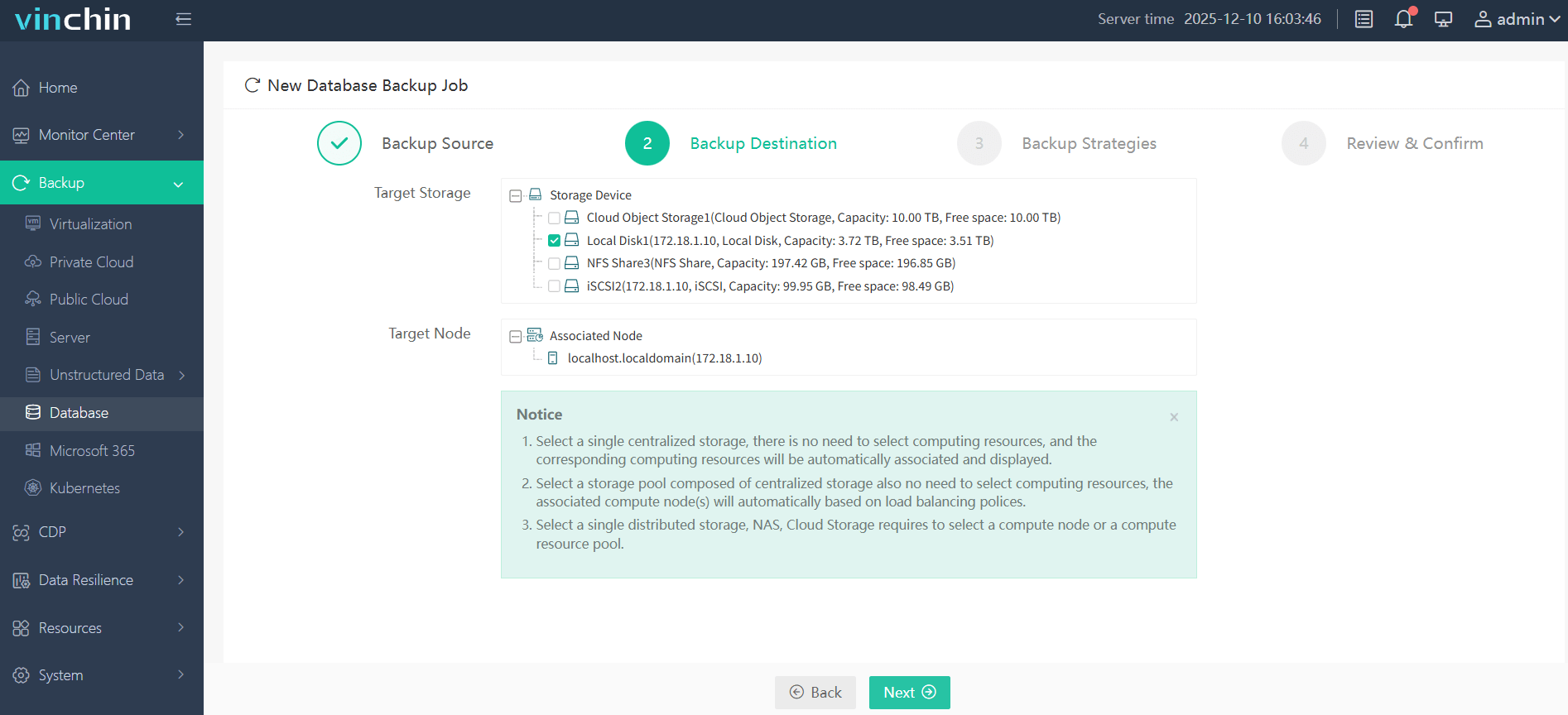
Step 2. Choose the backup storage
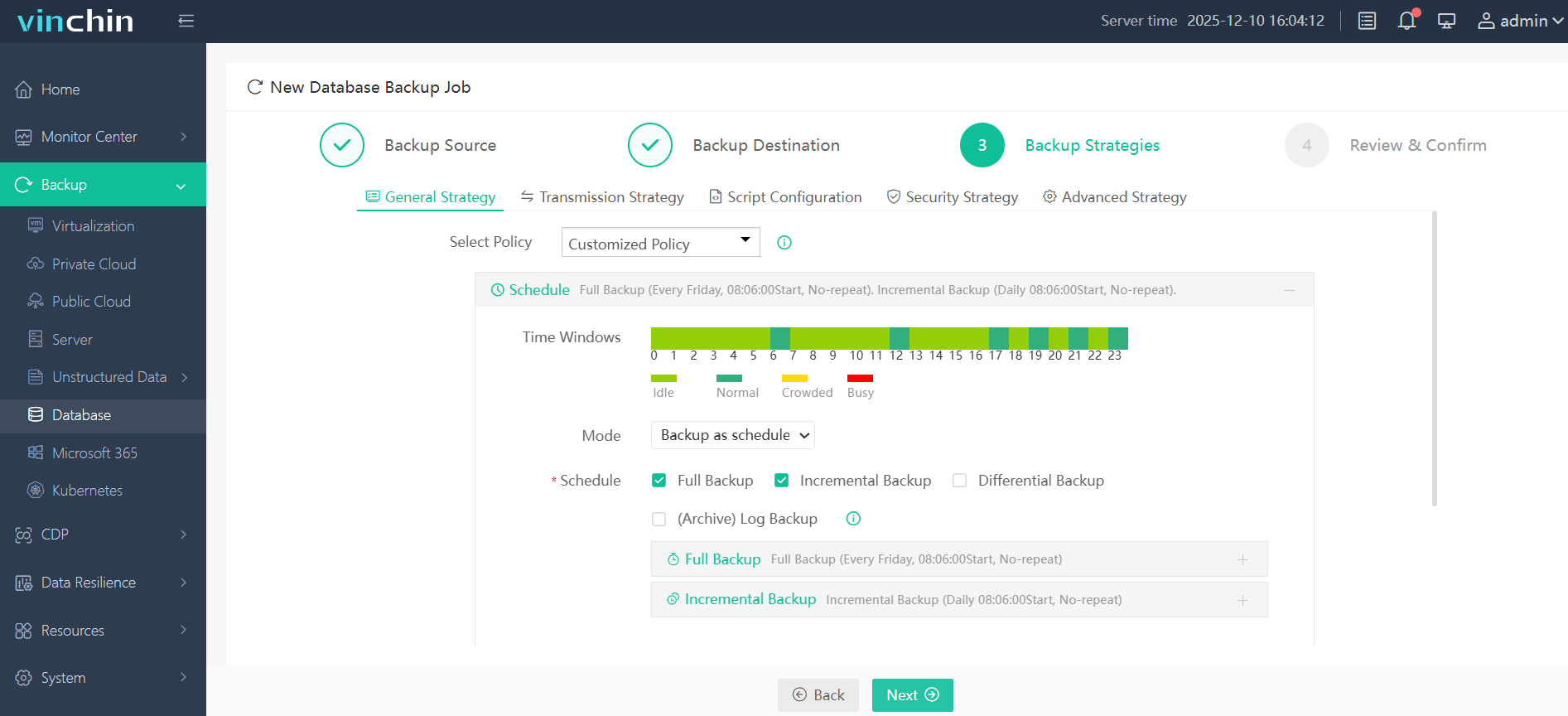
Step 3. Define the backup strategy
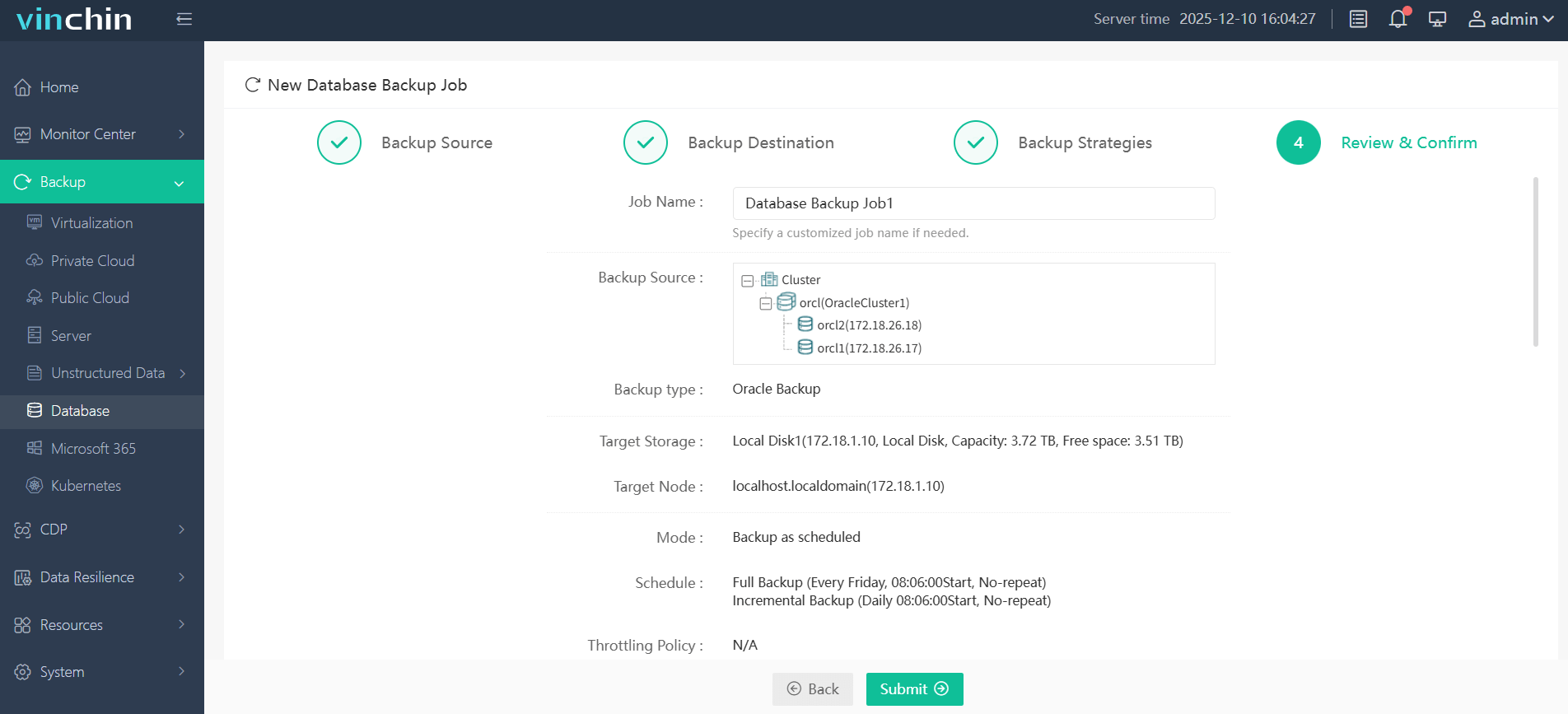
Step 4. Submit the job
Recognized globally with top ratings among enterprise users worldwide,Vinchin Backup & Recovery offers a fully-featured free trial valid for 60 days—explore its powerful capabilities risk-free by clicking download below!
Oracle RMAN Image Copy vs Backup Set FAQs
Q1: Can I mix image copies and backup sets in my recovery plan?
A1: Yes—but always run CROSSCHECK commands so RMAN tracks all pieces correctly during restore operations.
Q2: Does block change tracking help both formats?
A2: Block change tracking speeds up incremental updates on both incrementally updated images and level 1 backup sets.
Q3: How do I check if my backups are valid before disaster strikes?
A3: Run VALIDATE BACKUP within RMAN—it tests recoverability without restoring actual data.
Conclusion
Both types have strengths—image copies deliver fast local restores while backup sets offer efficient long-term storage plus advanced features like compression/tape support. Many admins blend both approaches depending on business priorities.Vinchin supports seamless Oracle protection through its powerful yet easy-to-use platform—try it today risk-free!