Have you ever needed to clone an Oracle database or recover a specific tablespace without affecting your production environment? Oracle’s Recovery Manager (RMAN) offers a powerful feature called the auxiliary instance. This tool is essential for database administrators who want to duplicate, recover, or test Oracle databases safely and efficiently. In this article, we’ll explain what an RMAN auxiliary database is, why you might use it, and how to set it up step by step.
What Is RMAN Auxiliary Database?
An RMAN auxiliary database is a separate Oracle instance that RMAN uses for special operations. It acts as a temporary or permanent copy of your main (target) database. The auxiliary instance is often used for tasks like duplicating databases, performing tablespace point-in-time recovery (TSPITR), or creating standby environments. You can run the auxiliary on the same server as your target or on a different host. Each instance operates independently but must be configured so RMAN can manage them during complex operations.
The flexibility of an RMAN auxiliary database makes it invaluable when you need to experiment with data changes or simulate disaster recovery scenarios without touching live production systems. Whether you’re working in a lab or preparing for real-world incidents, understanding this feature gives you more control over your Oracle infrastructure.
Why Use an RMAN Auxiliary Instance?
The RMAN auxiliary instance provides a safe playground for critical operations that would otherwise put your main system at risk. By using an auxiliary, you can clone your production environment quickly—ideal if developers need fresh data sets for testing purposes. It also enables point-in-time recovery of specific tablespaces or objects without rolling back the entire system.
This targeted approach saves time when only part of your data needs restoration due to accidental deletion or corruption. Testing backup and restore strategies becomes much safer since failures won’t affect users relying on live data. You can validate scripts and procedures in isolation before applying them in production environments.
Creating standby databases is also straightforward with an auxiliary instance acting as the foundation for disaster recovery plans. In short, RMAN auxiliary gives DBAs flexibility in maintenance tasks while reducing operational risks.
Prerequisites and Common Pitfalls
Before starting any operation with an RMAN auxiliary instance, make sure your environment meets several key requirements to avoid common issues later.
First, ensure that backups of your target database—including backup sets or image copies—and archived redo logs are accessible from the host where you plan to run the auxiliary instance. If both servers share storage through NFS or SAN devices, confirm permissions are correct; otherwise use a recovery catalog so both instances see all necessary files.
Next comes authentication: if running on different hosts, create a password file for the auxiliary using orapwd so SYS passwords match between source and destination; this avoids connection errors during duplication or TSPITR jobs.
Network connectivity is crucial—test connections from each host using tnsping and sqlplus commands against both TNS entries before proceeding further; mismatched listener settings cause many failed attempts at connecting target/auxiliary pairs in practice.
Finally check disk space: verify there’s enough room at both locations—the final duplicate files plus any temporary work areas used by TSPITR must fit comfortably within available storage limits; running out mid-operation leads to incomplete clones requiring cleanup before retrying.
By handling these prerequisites up front—and double-checking each one—you reduce headaches later when executing advanced tasks like duplication or point-in-time restores with confidence.
Method 1: Duplicating Databases with RMAN Auxiliary
Duplicating a database is one of the most common uses for an RMAN auxiliary instance because it creates reliable copies without disrupting production workloads.
First prepare your environment:
1. Create a password file for the new instance using orapwd if needed.
2. Set up Oracle Net connectivity between source/auxiliary hosts; test connections using SQL*Plus until both sides respond correctly.
3. Build an initialization parameter file (PFILE) tailored for this duplicate—set DB_NAME appropriately along with paths like CONTROL_FILES, adjusting others such as memory allocations based on available resources.
4. If duplicating onto another server/directory structure use conversion parameters (DB_FILE_NAME_CONVERT, LOG_FILE_NAME_CONVERT) so file locations map correctly from source-to-destination layouts.
5. Start up the new (auxiliary) instance in NOMOUNT mode:
SQL> STARTUP NOMOUNT PFILE='/path/to/initaux.ora';
6. Confirm that all required backups/archived logs are visible from this location before launching any duplication job.
Connect both databases inside RMAN:
% rman TARGET SYS/oracle@trgt AUXILIARY SYS/aux@auxdb
If using a recovery catalog add its connection string too at this stage.
If automatic channels aren’t pre-configured allocate at least one manually:
RUN {
  ALLOCATE AUXILIARY CHANNEL aux1 DEVICE TYPE DISK;
  DUPLICATE TARGET DATABASE TO dupdb NOFILENAMECHECK;
}
The NOFILENAMECHECK clause allows identical filenames across hosts—a common scenario when directories differ but logical names remain unchanged between environments.
RMAN handles everything else: restoring control/datafiles/logs then recovering transactions up through latest available archive logs before opening your new copy under RESETLOGS mode—a clean slate ready for immediate use!
Want historical snapshots? Add time-based filters:
DUPLICATE TARGET DATABASE TO dupdb UNTIL TIME 'SYSDATE-7' NOFILENAMECHECK;
This builds out last week’s state provided relevant backups exist within retention windows set by policy—a lifesaver after accidental mass deletions!
For those seeking even faster results consider “active” duplication methods which stream blocks directly over network rather than relying solely upon pre-existing backup sets—just append FROM ACTIVE DATABASE within DUPLICATE command syntax—but remember this may impact performance on busy sources during execution windows!
Method 2: Tablespace Point-in-Time Recovery Using RMAN Auxiliary
Tablespace Point-in-Time Recovery (TSPITR) lets administrators roll back just one portion of their overall dataset—perfect after accidental drops/corruptions limited only to certain business units’ tablespaces rather than global outages requiring full restores!
Begin by prepping another clean environment:
1.Create matching password file/network links/PFILE as described above
2.Start up new (auxiliary) instance in NOMOUNT mode
3.Connect via RMAN specifying both targets
% rman TARGET SYS/oracle@trgt AUXILIARY SYS/aux@auxdb
4.Launch TSPITR command targeting affected area/time window:
RECOVER TABLESPACE users UNTIL TIME '2024-06-01:12:00:00' AUXILIARY DESTINATION '/u01/aux';
RMAN orchestrates everything behind scenes—it stages necessary files into specified work area (AUXILIARY DESTINATION) applies archived logs right up until chosen moment then imports recovered content straight back into primary system—all while isolating risky operations away from live traffic!
During TSPITR sessions expect automated creation/use/removal cycles around temporary environments unless opting otherwise via advanced flags/settings—a best practice keeping things tidy post-recovery efforts every time!
Enterprise-Level Oracle Backup Made Simple With Vinchin Backup & Recovery
Beyond native tools like RMAN that require detailed manual setup, organizations often seek streamlined solutions offering centralized management and automation across large-scale deployments. Vinchin Backup & Recovery stands out as a professional enterprise-level backup solution supporting today’s mainstream databases—including Oracle, MySQL, SQL Server, MariaDB, PostgreSQL, PostgresPro, and TiDB—with robust features designed specifically for demanding IT environments.
Key capabilities include incremental backup (for Oracle), batch database backup management across multiple instances, flexible scheduling options with granular retention policies (including GFS), cloud backup integration alongside tape archiving support, and comprehensive storage protection mechanisms against ransomware threats—all contributing toward reliable data safety while simplifying compliance workflows industry-wide.
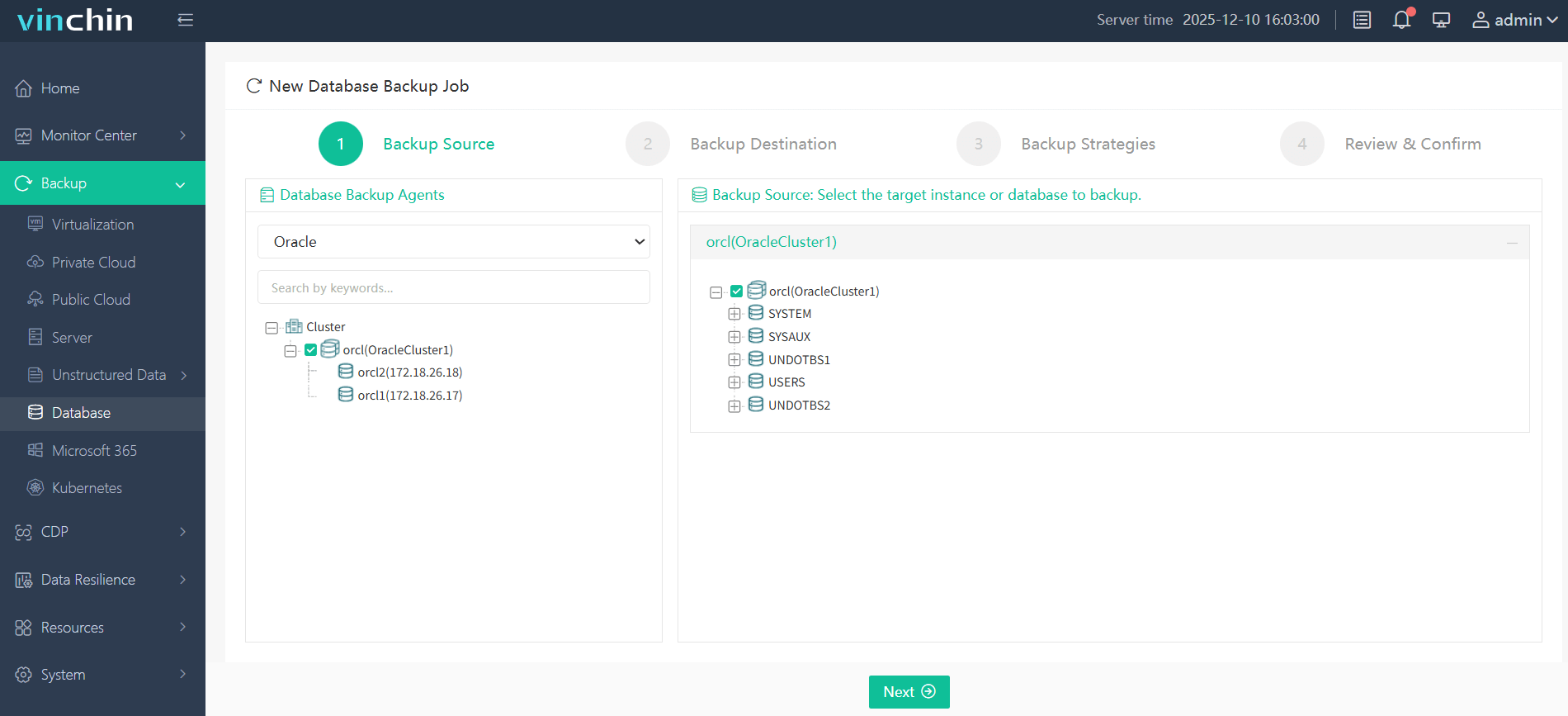
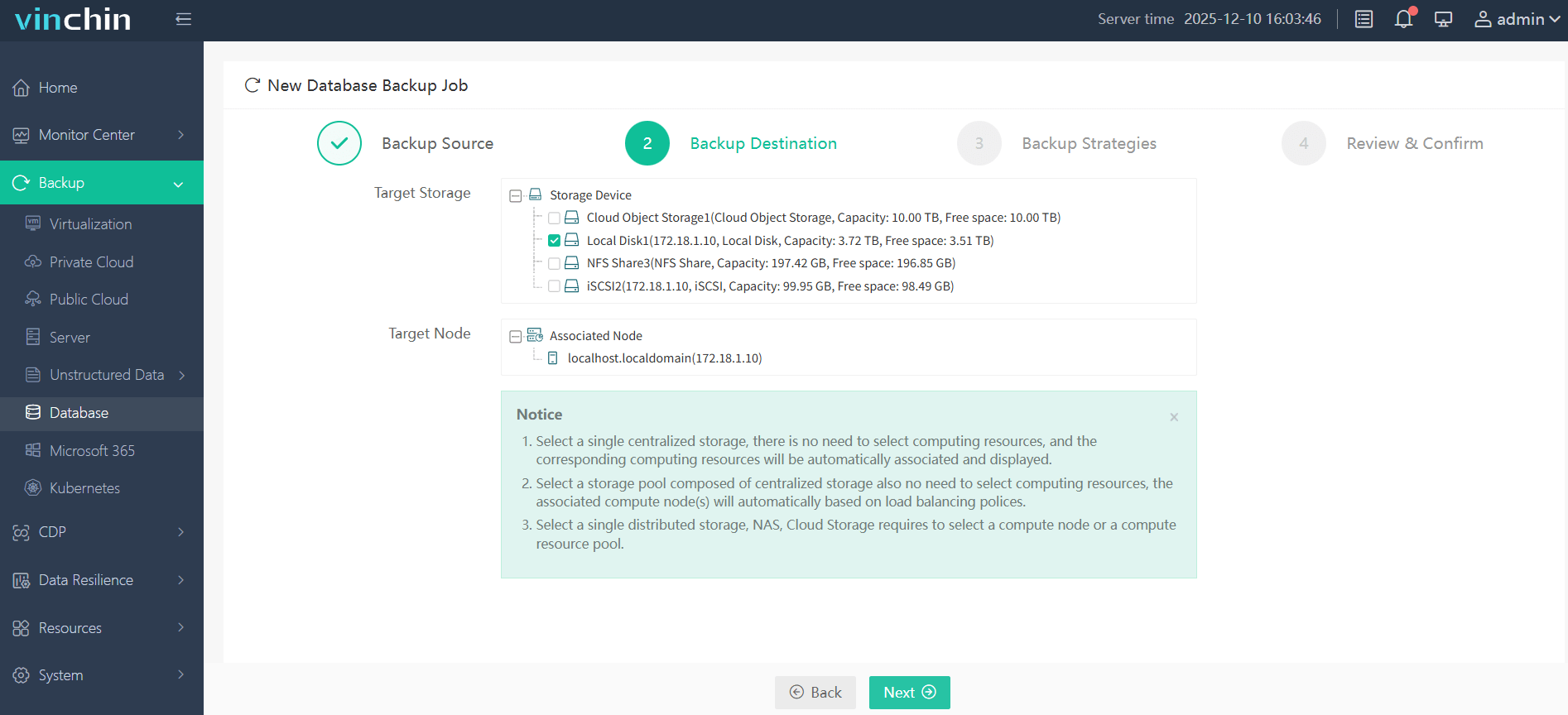
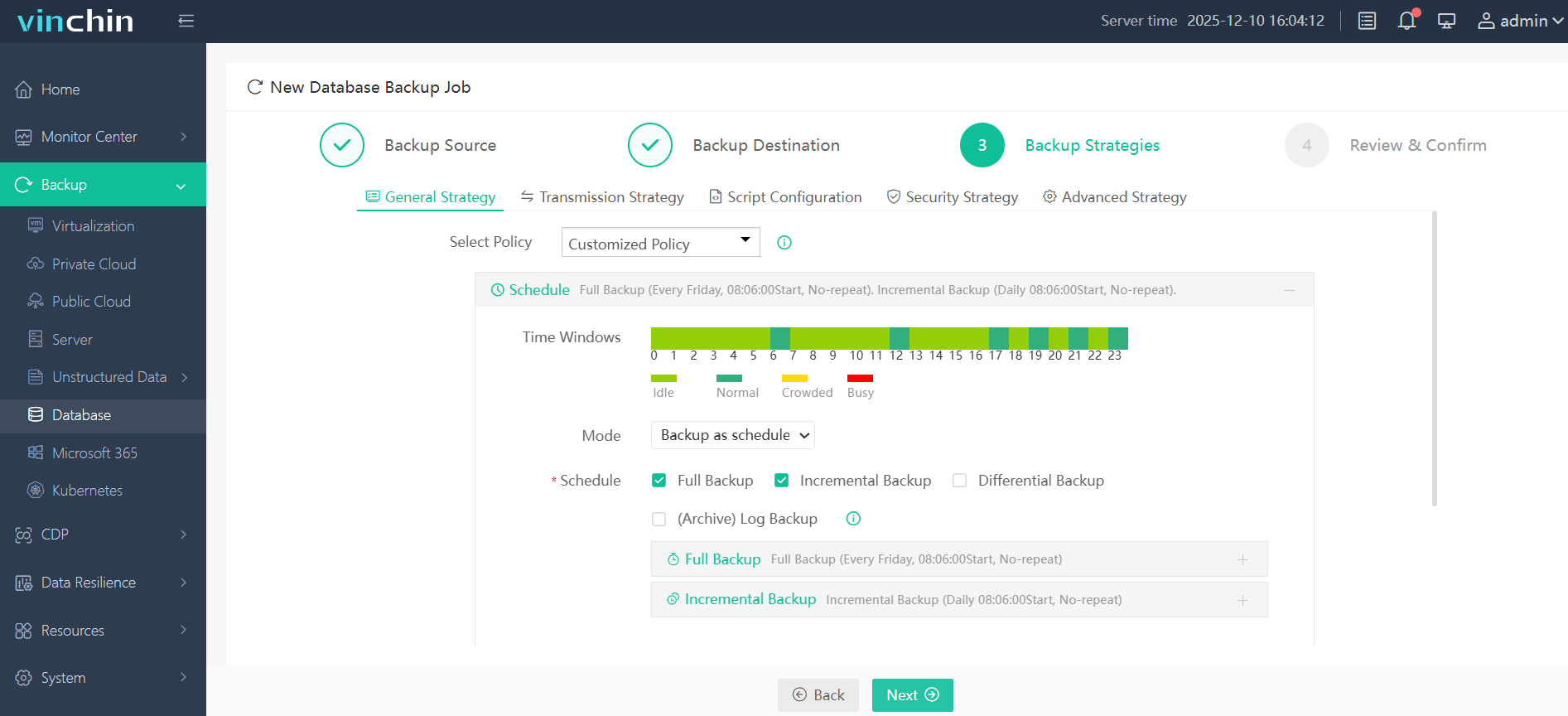
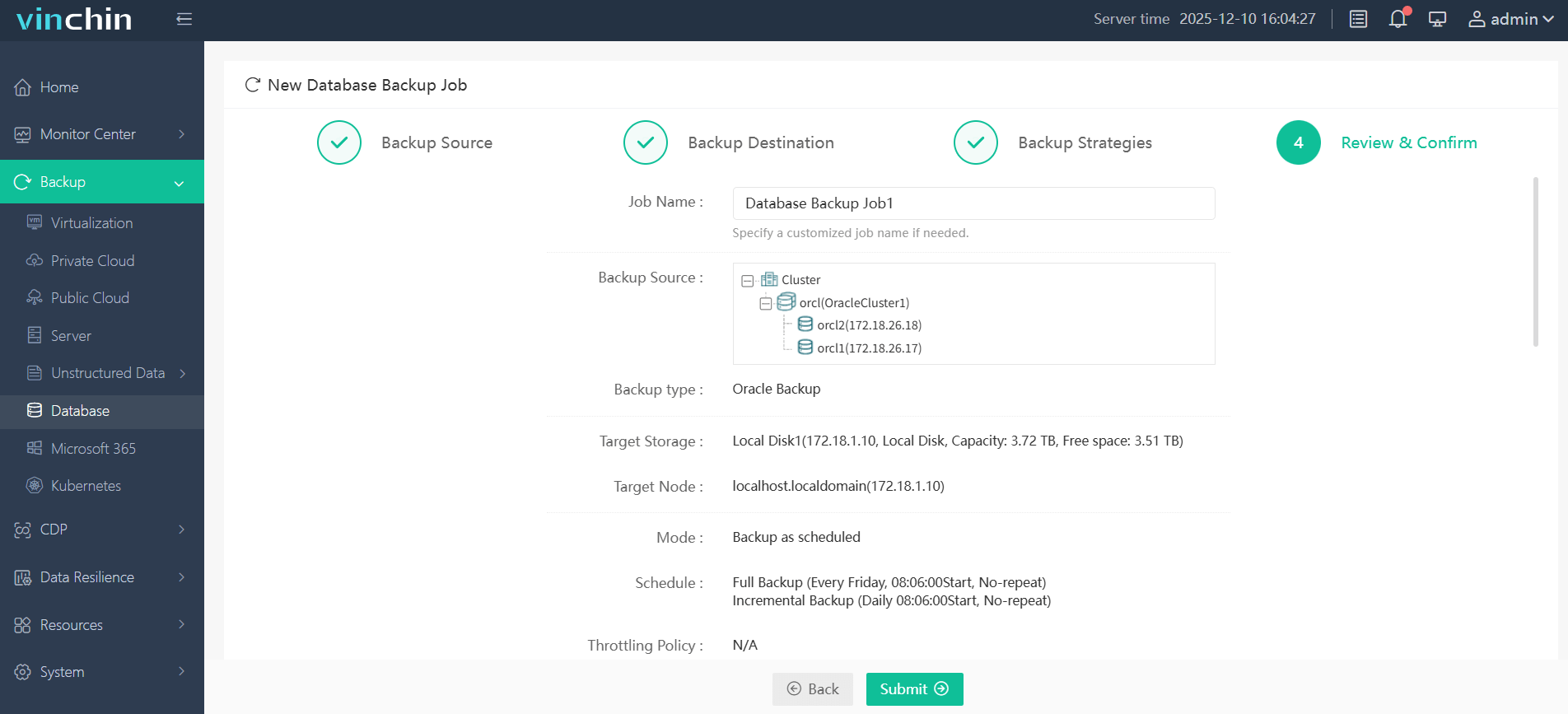
Vinchin Backup & Recovery features an intuitive web console that makes protecting Oracle databases remarkably straightforward:
Step 1. Select the Oracle database to back up
Step 2. Choose the backup storage
Step 3. Define the backup strategy
Step 4. Submit the job
Recognized globally by enterprises large and small—with top ratings from thousands of customers—Vinchin Backup & Recovery offers every premium feature free for 60 days so you can experience its power firsthand; click below to start your trial today!
RMAN Auxiliary FAQs
Q1: Can I use an RMAN auxiliary database on a different server than the target?
A1: Yes—as long as network connectivity exists and file paths are mapped correctly between hosts.
Q2: What if my duplicate uses identical filenames as original?
A2: Use NOFILENAMECHECK option within DUPLICATE command syntax avoiding conflicts automatically handled by RMAN logic internally.
Q3: How do I speed up large-scale duplications?
A3: Allocate multiple AUXILIARY CHANNELS increase parallelism leverage fast local disks schedule jobs off-hours minimizing contention impacts overall runtime efficiency gains realized immediately thereafter!
Conclusion
The RMAN auxiliary database gives administrators safe ways to clone test recover mission-critical systems without risking disruption elsewhere onsite anytime needed most urgently possible! With careful setup anyone can master advanced scenarios confidently—and solutions like Vinchin make ongoing protection even simpler try free now see difference firsthand!