Duplicating an Oracle 12c database using RMAN from a backup location is one of the most reliable ways to create a copy of your production environment without risking downtime or performance issues on the source system. This process is essential for many scenarios: testing upgrades, developing new features safely, migrating data between servers, or recovering after hardware failures.
Why use backup-based duplication? It allows you to clone databases even when you cannot connect directly to the source and it will be ideal if network access is restricted or if you want zero impact on production workloads. In this guide, we’ll cover everything from basic concepts through advanced troubleshooting so you can duplicate confidently.
What is Oracle 12c RMAN Duplicate?
Oracle Recovery Manager (RMAN) provides a powerful DUPLICATE command that lets you create an independent copy of an existing database using backups instead of connecting live to the original instance. In Oracle 12c, this feature supports “backup-based” duplication, meaning you only need access to valid backup files rather than requiring both databases online at once.
This method gives flexibility because you can assign a new name to your duplicate database, change its file structure or directory layout as needed, and even place it on another server entirely. The duplicate operates independently; changes made there do not affect your original system.
Why Use RMAN Duplicate from Backup Location?
Using backups as your duplication source offers several advantages over direct connections:
1. It eliminates any risk of impacting production performance since no resources are consumed by live data transfers during cloning operations.
2. It enables offsite recovery or migration, even across different networks, since only backup files must be accessible by the target server.
3. This approach helps organizations comply with best practices for disaster recovery planning: clones created from backups can serve as test environments for failover drills or patch validation without touching mission-critical systems. If you need to build out a test lab quickly, this method makes it possible in hours instead of days.
Prerequisites for Oracle 12c Database Duplication
Before starting any duplication project with RMAN in Oracle 12c, you should make sure you have a proper database backup.
Begin by ensuring that your source database has been running in ARCHIVELOG mode, a requirement for consistent point-in-time recovery and full backups. To check this status in SQL*Plus:
SELECT log_mode FROM v$database;
If ARCHIVELOG mode isn’t enabled yet:
1. Shut down the database using SHUTDOWN IMMEDIATE
2. Start up in mount mode (STARTUP MOUNT)
3. Enable archiving (ALTER DATABASE ARCHIVELOG;)
4. Open the database (ALTER DATABASE OPEN;)
Next comes backup creation: use RMAN to take a complete backup set, including all datafiles, archived redo logs (for transactional consistency), and control files:
rman target /
BACKUP DATABASE PLUS ARCHIVELOG;
While BACKUP DATABASE PLUS ARCHIVELOG includes control files automatically in most cases (and spfile if present), some administrators prefer running BACKUP CURRENT CONTROLFILE; separately for extra assurance.
Afterward:
CREATE PFILE='/tmp/init<SID>.ora' FROM SPFILE;
Copy the entire set of RMAN backups plus your pfile to a directory accessible by the target server’s Oracle software owner account (often called oracle). Use secure transfer tools like scp, rsync, or similar methods appropriate for your environment.
Don’t forget about password management: create a password file on the target system matching SYSDBA credentials required during duplication.
Finally, review directory structures on both sides.if they differ between source and target servers (which is common), plan ahead by setting up matching folders or preparing conversion parameters (db_file_name_convert, log_file_name_convert) within your pfile or DUPLICATE command options.
Validating Oracle 12c Backup Integrity Before Duplication
Before launching into actual duplication steps, always validate that your backups are intact and usable. It is a step often skipped but vital for success.
On the target server:
rman auxiliary /
CATALOG START WITH '/u01/app/oracle/backup';
RESTORE DATABASE VALIDATE CHECK LOGICAL FROM BACKUP LOCATION '/u01/app/oracle/backup';
This process confirms that every required piece exists and passes logical checks, catching corruption early saves time later.
If validation fails due to missing archive logs or incomplete sets, return to your source system and re-run backups before proceeding further.
Duplicating Oracle 12c Database with RMAN Using Backup Location
Once prerequisites are met and backups validated, follow these steps carefully:
1. Prepare Source Backups
Ensure all necessary files have been copied over—including datafiles (.dbf), control file copies (.ctl), archived redo logs (.arc/.log), plus parameter/pwd files as needed—for example via scp commands targeting /u01/app/oracle/backup.
2. Set Up Target Server Environment
Create directories matching those referenced in either your pfile or intended final layout:
mkdir -p /u01/app/oracle/oradata/CLONE
mkdir -p /u01/app/oracle/admin/CLONE/adump
Edit the copied pfile (initCLONE.ora) so parameters reflect new values:
Change db_name from original SID to CLONE (or chosen name)
Adjust control_files, db_file_name_convert, log_file_name_convert entries as needed
Generate a password file compatible with SYSDBA authentication:
orapwd file=$ORACLE_HOME/dbs/orapwCLONE password=yourpassword
Make sure permissions allow read/write access by Oracle processes throughout these directories.
3. Start Auxiliary Instance
Set environment variables accordingly (export ORACLE_SID=CLONE). Launch SQL*Plus as SYSDBA then start instance in NOMOUNT state referencing edited pfile:
sqlplus / as sysdba
STARTUP NOMOUNT PFILE='/u01/app/oracle/product/12.2.0/db_1/dbs/initCLONE.ora';
4. Execute RMAN DUPLICATE Command
Connect via RMAN specifying only auxiliary connection (no need for TARGET):
rman auxiliary /
Run DUPLICATE pointing explicitly at local backup location:
DUPLICATE DATABASE TO 'CLONE'
BACKUP LOCATION '/u01/app/oracle/backup'
NOFILENAMECHECK;
RMAN restores control files first, then recovers datafiles using available archive logs, and opens up CLONE ready for use.
The option NOFILENAMECHECK tells Oracle it’s safe reusing filenames if directory layouts match exactly. You can omit this flag if converting paths via conversion parameters instead.
For advanced scenarios where multiple databases share one backup folder or when DBIDs overlap, you may specify additional clauses such as DBID nnnnnnnn within DUPLICATE command lines for clarity.
Essential Post-Duplication Configuration
After successful completion of duplication tasks there are still important checks left before declaring victory.
1. Confirm open status using SQL*Plus query:
SELECT name, open_mode FROM v$database;
2. Review temporary tablespaces. They’re not always cloned perfectly depending on how originals were configured. If missing tempfiles prompt errors during queries add them manually like so:
ALTER TABLESPACE TEMP ADD TEMPFILE '/u01/app/oracle/oradata/CLONE/temp01.dbf' SIZE 100M REUSE;
Review initialization parameters now stored inside memory. If satisfied, convert back into spfile format then restart instance cleanly:
CREATE SPFILE FROM PFILE='/u01/app/oracle/product/12.2/db_1/dbs/initCLONE.ora';
SHUTDOWN IMMEDIATE;
STARTUP;
Update environment-specific settings such as service names (service_names), listeners (local_listener), job queues (job_queue_processes), etc., according to requirements unique within cloned context. Not every value should match production.
Consider resetting passwords/lifetimes per security policy especially when moving between development/test/prod boundaries.
Potential Issues and Troubleshooting Tips for Duplicating Oracle 12c
Even experienced DBAs sometimes hit snags duplicating large environments. Here’s how to avoid common pitfalls:
If there are missing backups, double-check every piece was transferred including incremental sets if used and cataloged correctly at destination site.
If parameter mismatches, review each line inside edited pfile. Mismatched db_name values can cause silent failures.
When file name conflicts, if directory layouts differ between old/new hosts, always use both db_file_name_convert AND log_file_name_convert.
If you meet ermissions problems, confirm OS-level ownership/group membership matches expectations everywhere involved.
If there are SPFILE issues, after initial startup via pfile always generate fresh spfile reflecting latest edits before restarting services fully.
If you encounter error messages like RMAN-05501: aborting duplication of target database, consult detailed output logs. They’ll pinpoint which resource couldn’t be found/read/applied successfully so corrections can be made fast.
| Error Code | Likely Cause | Recommended Action |
|---|
| RMAN-06026 | Missing archivelog | Validate/copy missing log segments |
| RMAN-05501 | Incorrect db_name/pfile mismatch | Edit parameter file & retry |
| ORA-01119 | File path does not exist | Create correct directories & adjust conversions |
Easy Deduplicate Oracle Database Backup with Vinchin Backup & Recovery
For organizations seeking robust protection beyond manual scripting, enterprise solutions offer greater automation and reliability across diverse environments.
Vinchin Backup & Recovery stands out as a professional platform supporting today’s mainstream databases including Oracle 10g, 11g/11g R2, 12c, 18c, 19c, 21c, Oracle RAC, and also MySQL, SQL Server, MariaDB, PostgreSQL, PostgresPro, and TiDB. With features such as batch database backup scheduling, cloud/tape archiving, integrity check, and storage protection and immutable storage against ransomware threats, it delivers comprehensive coverage while reducing administrative overhead and risk exposure.
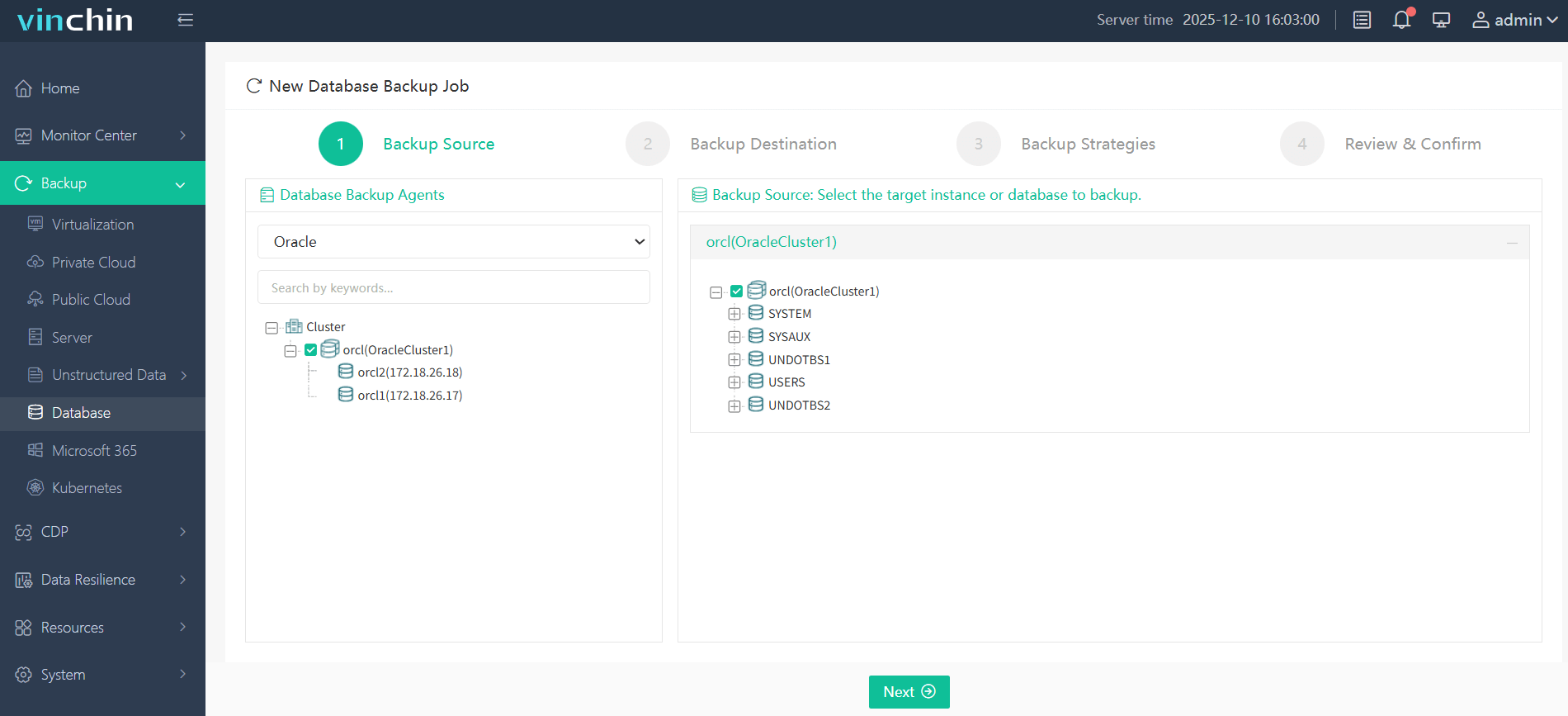
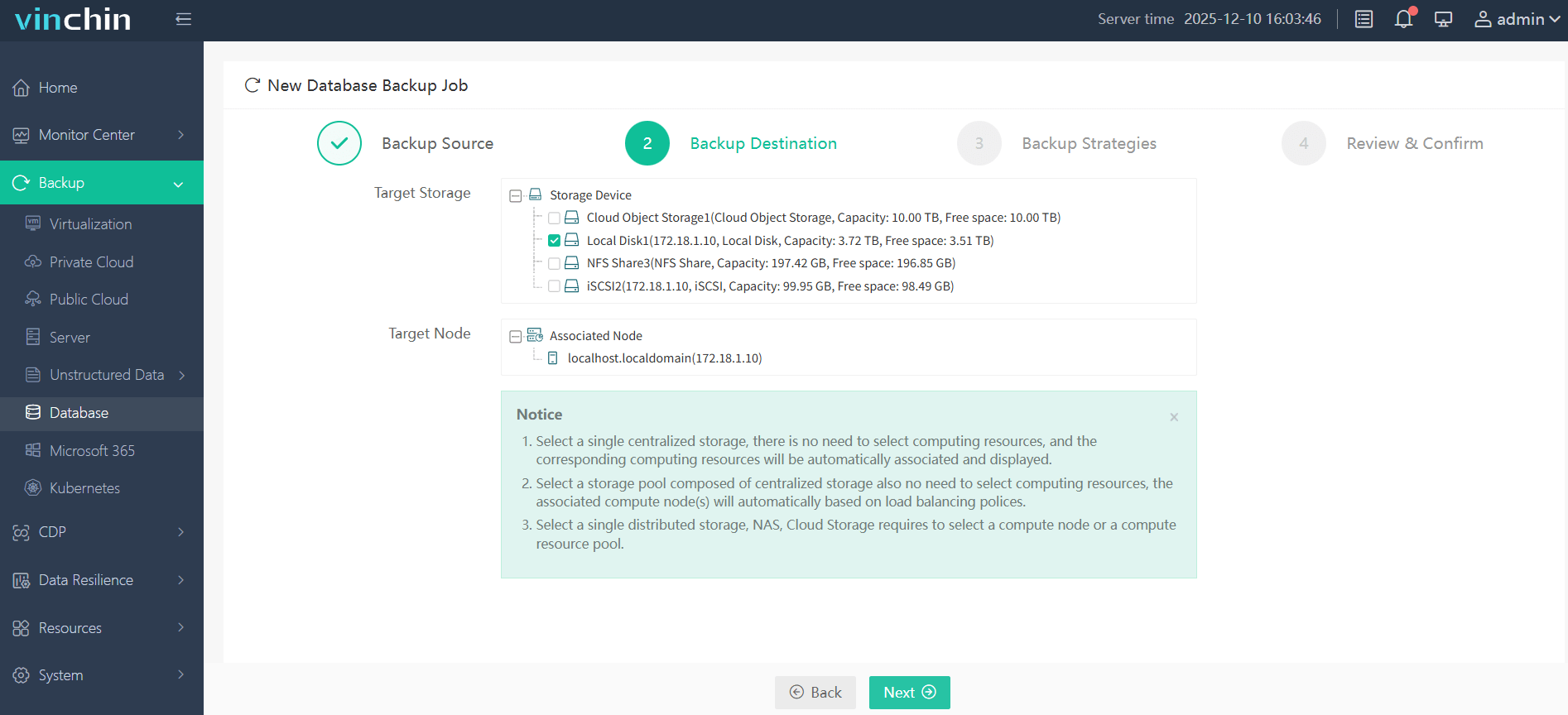
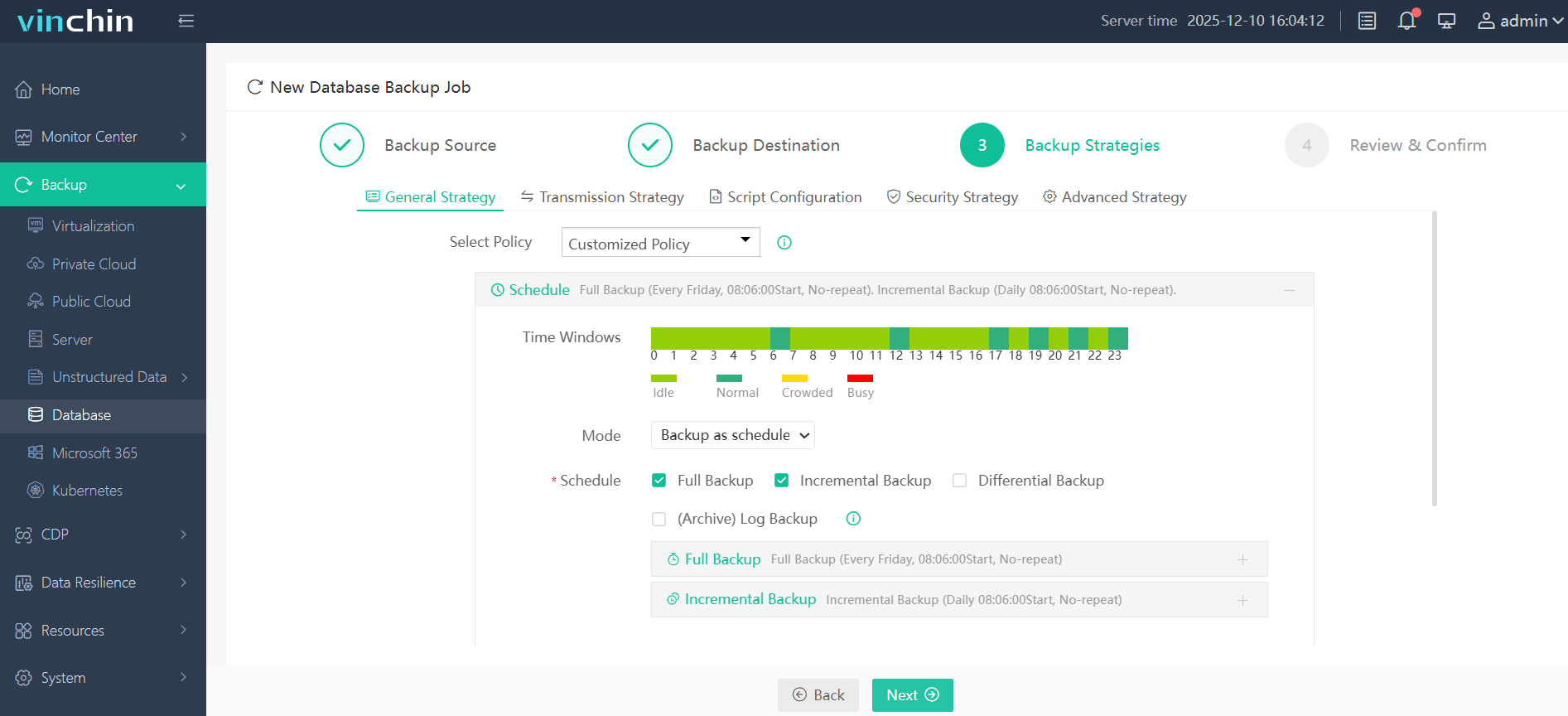
The intuitive web console streamlines the backup job creation into four clear steps:
Step 1. Select the Oracle database to backup
Step 2. Choose the backup storage
Step 3. Define the backup strategy
Step 4. Submit the job
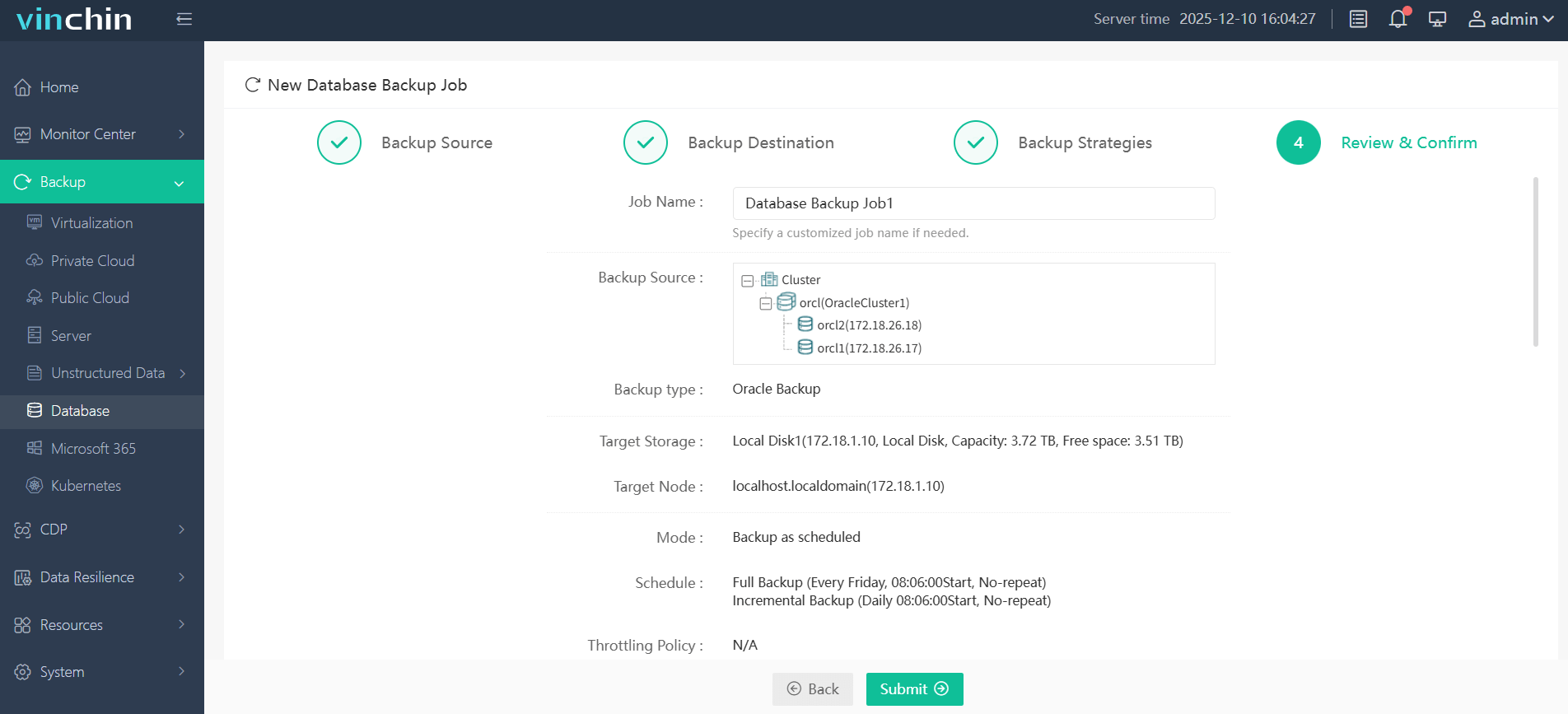
When you need to duplicate the Oracle database, just create a restore job, select the restore point, and the select the new path to duplicate it.
Vinchin Backup & Recovery enjoys global recognition among enterprises thanks to its reliability and ease-of-use. Try its full-featured solution free for 60 days by clicking below.
Oracle 12c RMAN Duplicate FAQs
Q1: Can I duplicate my production database onto another host without matching directory structures?
A1: Yes. Set db_file_name_convert and log_file_name_convert parameters in either PFILE/SPFILE or within DUPLICATE command lines so paths map correctly between servers.
Q2: How do I identify which DBID belongs with my desired set when multiple databases share one folder?
A2: Use DUPLICATE DATABASE TO 'NEWNAME' BACKUP LOCATION '/path' DBID nnnnnnnn NOFILENAMECHECK; to replacing nnnnnnnn with correct identifier found via LIST DBID command beforehand.
Q3: What should I do immediately after successful duplication completes?
A3: Check open status (SELECT name FROM v$database;) add tempfiles if needed update configuration parameters then convert PFILE back into SPFILE before restarting instance.
Conclusion
Duplicating an Oracle 12c database from a backup location using RMAN keeps production safe while enabling rapid cloning or recovery projects.Vinchin makes protecting and duplicating critical databases even easier thanks its automation,user-friendly interface,and robust feature set.Try Vinchin today and it could transform how you manage enterprise backups forever!