Managing Oracle databases means you must watch both storage use and recovery readiness. Archive logs are vital for point-in-time recovery, but if left unchecked, they can fill up disk space fast. Unmanaged archive logs may even cause database hangs or backup failures. An untidy RMAN catalog can also make troubleshooting harder by reporting missing files that no longer exist. If you have ever faced warnings about missing archive logs or struggled with a cluttered backup catalog, this guide is for you. Here, we explain what expired archive logs are, why deleting them matters, and how to use Oracle RMAN to delete expired archivelog files safely—step by step.
What Are Expired Archive Logs?
Expired archive logs are records in the RMAN repository that point to archived redo log files which no longer exist on disk. This often happens when someone deletes archive logs manually at the operating system level or through scripts outside of RMAN’s control. When RMAN cannot find these files during a crosscheck operation, it marks their entries as "expired." These expired records remain in the repository until you remove them.
The RMAN repository itself can be stored either in your database’s control file (the default) or in a separate recovery catalog database. Both store metadata about backups and archived redo logs so that RMAN knows what exists and what does not.
Why Delete Expired Archive Logs?
Leaving expired archive logs in your RMAN catalog causes confusion—and sometimes failed backup or restore jobs. When old references linger in the catalog but files are gone from disk, RMAN continues to report missing files during maintenance tasks or restores. This clutters your output with unnecessary warnings and makes it harder to spot real problems.
Regularly deleting expired archive logs keeps your backup catalog clean and accurate. It reduces noise during troubleshooting and ensures that recovery operations run smoothly without surprises from phantom log entries. In short: it is an easy maintenance task that helps keep your Oracle environment healthy.
Method 1: Oracle RMAN Delete Expired Archivelog
The most reliable way to manage expired archive logs is through Oracle Recovery Manager (RMAN). Since it tracks all backups and archived redo entries in its own repository—either control file or recovery catalog—it knows exactly what should exist on disk.
Before deleting any expired archive log entries, always crosscheck them first! The CROSSCHECK ARCHIVELOG ALL command tells RMAN to verify which archived redo entries listed in its repository actually exist on disk right now; any missing ones get marked as "expired." Running DELETE EXPIRED ARCHIVELOG ALL without crosschecking first will do nothing because only freshly marked "expired" entries are eligible for deletion.
Here’s how you can safely delete expired archive logs using Oracle RMAN:
1. Open a terminal window on your Oracle server.
2. Connect to RMAN as the target database:
rman target /
Or with explicit credentials:
rman target sys/password@ORCL
3. Crosscheck all archived redo entries:
CROSSCHECK ARCHIVELOG ALL;
4. List which archive logs have been marked as expired:
LIST EXPIRED ARCHIVELOG ALL;
5. Delete all references to those missing or expired entries from the repository:
DELETE EXPIRED ARCHIVELOG ALL;
To skip confirmation prompts (useful for scripts), run:
DELETE NOPROMPT EXPIRED ARCHIVELOG ALL;
6. Confirm cleanup by running:
LIST EXPIRED ARCHIVELOG ALL;
If this list comes back empty, you have successfully removed all expired entries from the catalog.
Remember: this process does not remove any actual files from disk—those were already deleted before! It only cleans up outdated references inside the backup metadata so everything matches reality.
Navigating RMAN Delete Options: Expired vs Obsolete
It is important not to confuse DELETE EXPIRED with other similar-sounding commands like DELETE OBSOLETE or DELETE ARCHIVELOG ALL:
DELETE EXPIRED removes only catalog records pointing to files that no longer exist on disk (already gone).
DELETE OBSOLETE removes both physical backups/archivelogs and their metadata based on retention policies set within RMAN (for example: “keep last 7 days”).
DELETE ARCHIVELOG ALL deletes actual archivelog files still present on disk along with their records—which could break recoverability if done carelessly!
Always double-check which command fits your needs before running deletion tasks in production environments.
Method 2: Automating Archivelog Deletion in Oracle RMAN
Manual cleanup works well—but automation saves time and reduces human error risk over months of routine maintenance! You can automate deleting expired archivelogs by scheduling regular runs of an RMAN script using tools like cron (Linux/Unix) or Task Scheduler (Windows).
Here’s how you might automate this process:
First create a shell script (cleanup_expired_archivelogs.sh) containing these lines:
#!/bin/bash
rman target / <<EOF
CROSSCHECK ARCHIVELOG ALL;
DELETE NOPROMPT EXPIRED ARCHIVELOG ALL;
EXIT;
EOF
This heredoc syntax feeds each line between <<EOF ... EOF directly into the running instance of rman.
Next schedule it daily using crontab—for example at 2 AM every day:
0 2 * * * /path/to/cleanup_expired_archivelogs.sh
Adjust frequency based on how quickly archivelogs accumulate given your workload patterns.
Best Practices for Automated Cleanup Scripts
For production systems where reliability matters most, enhance basic scripts with logging and error checking:
1. Capture output into timestamped log files so you can review results later:
    rman target / log=/var/log/rman_cleanup_$(date +%Y%m%d).log <<EOF
    CROSSCHECK ARCHIVELOG ALL;
    DELETE NOPROMPT EXPIRED ARCHIVELOG ALL;
    EXIT;
    EOF
2. After running rman commands, check exit status ($?) so monitoring tools know if anything failed unexpectedly:
if [ $? -ne 0 ]; then echo "RMAN cleanup failed!" | mail -s "Alert" dba@example.com; fi
3. Consider integrating script completion status into broader monitoring dashboards by sending alerts when errors occur—or when unusually large numbers of expirations happen at once.
Automated routines like these help prevent silent buildup of obsolete metadata while giving DBAs peace of mind through clear audit trails.
Enterprise Database Protection Made Simple With Vinchin Backup & Recovery
Beyond managing expiring archive logs within Oracle itself, organizations benefit from comprehensive data protection across their entire database landscape. Vinchin Backup & Recovery stands out as a professional enterprise-level solution supporting today’s mainstream databases—including Oracle, MySQL, SQL Server, MariaDB, PostgreSQL, PostgresPro, and TiDB—with robust features tailored for demanding environments like yours.
For Oracle users specifically, Vinchin Backup & Recovery delivers incremental backup capabilities alongside advanced source-side compression and flexible data retention policies such as GFS retention strategy—all designed to optimize storage efficiency while ensuring compliance requirements are met effortlessly. Additional highlights include integrity checks and automated recovery verification via SQL scripts—so administrators gain confidence that backups remain usable under real-world conditions without manual intervention.
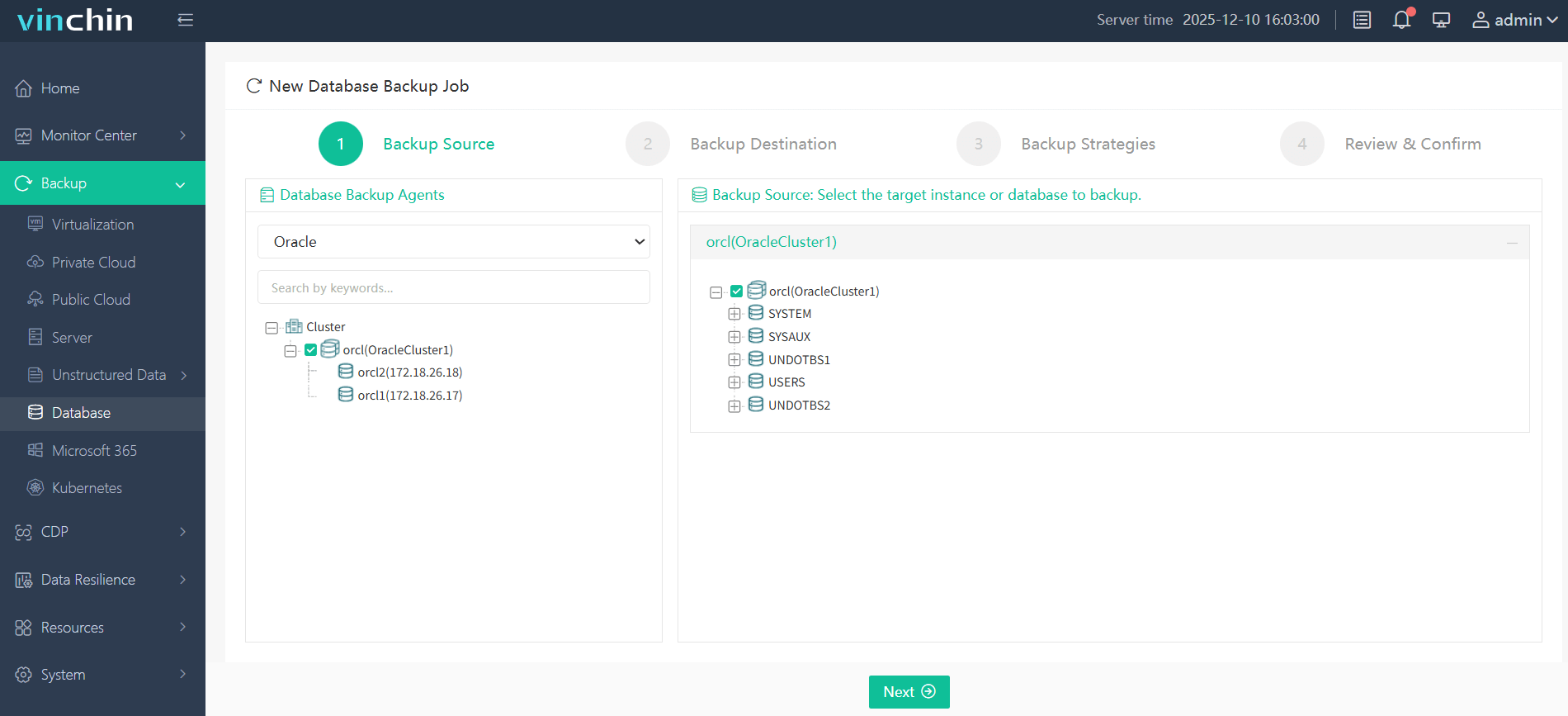
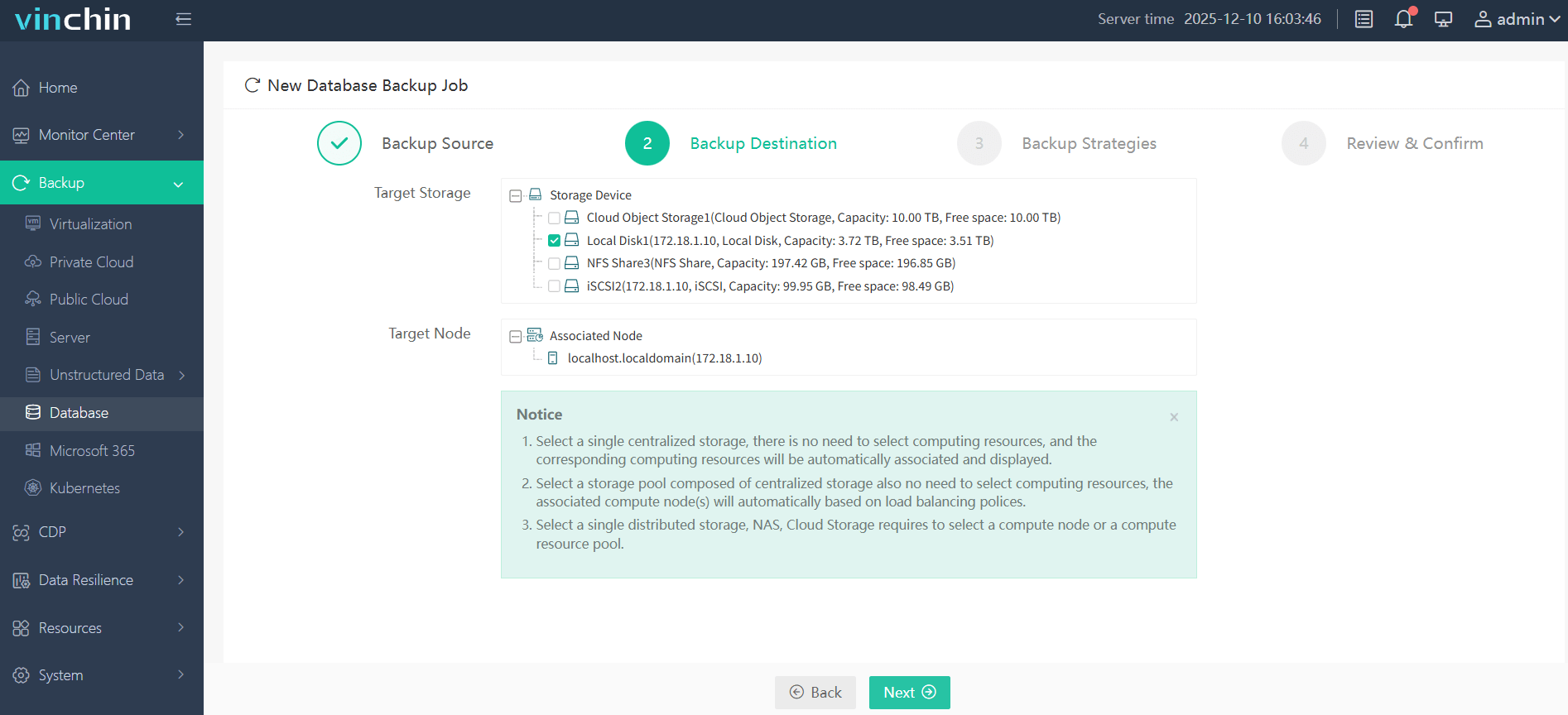
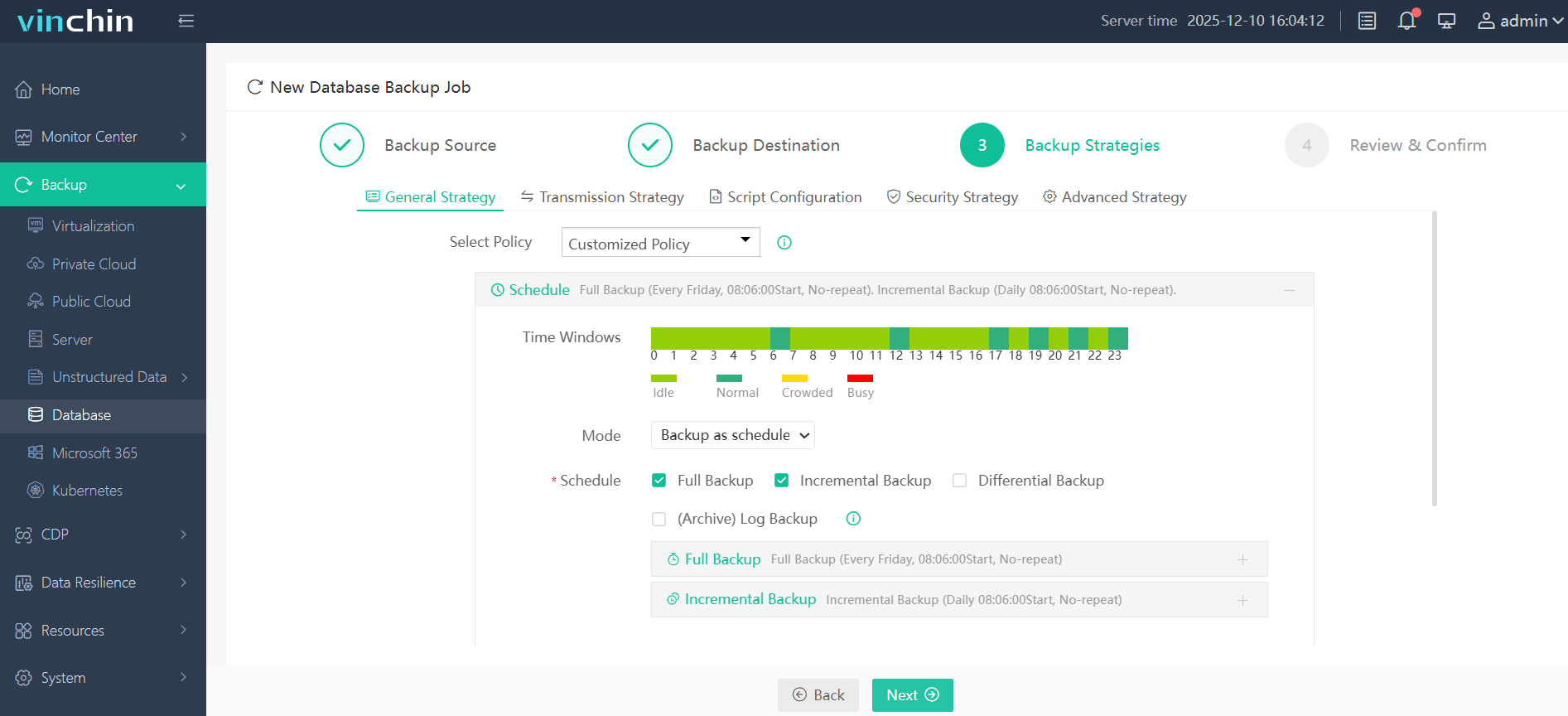
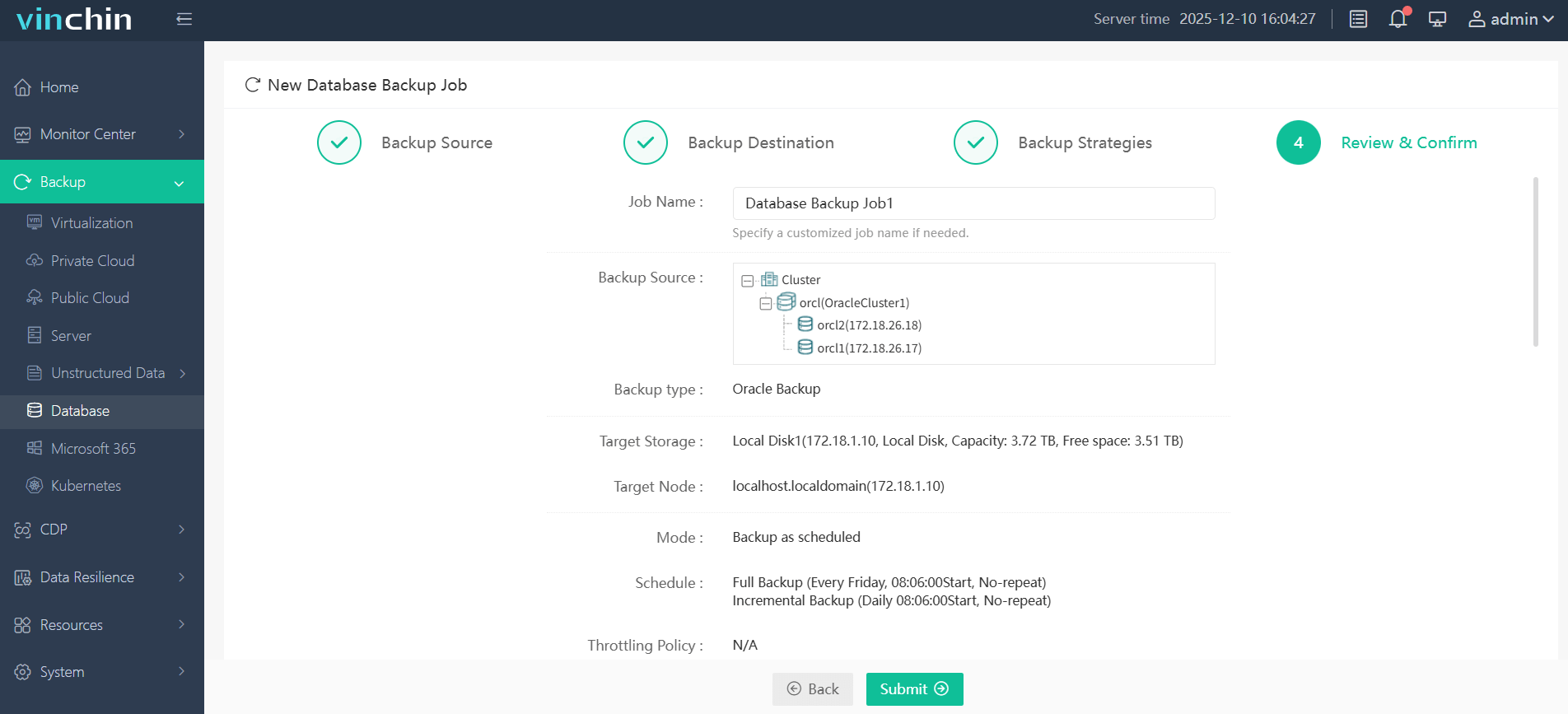
The intuitive web console streamlines operations into four straightforward steps:
Step 1. Select the Oracle database to back up
Step 2. Choose the backup storage
Step 3. Define the backup strategy
Step 4. Submit the job
Recognized globally for reliability and ease-of-use—with thousands of satisfied customers—Vinchin Backup & Recovery offers a fully featured free trial for 60 days; click below to experience why it ranks among top-rated enterprise data-protection solutions.
Oracle RMAN Delete Expired Archivelog FAQs
Q1: Will deleting expired archivelogs with RMAN remove any files from disk?
A1: No; it only removes catalog entries for files already missing from disk.
Q2: Can I automate oracle rman delete expired archivelog process?
A2: Yes; schedule a script containing CROSSCHECK ARCHIVELOG ALL > DELETE NOPROMPT EXPIRED ARCHIVELOG ALL > EXIT.
Q3: What should I do if deleted archivelogs keep showing up as expired?
A3: Stop manual OS deletions; let only properly scripted or automated RMAN processes manage both filesystem removal and catalog updates.
Conclusion
Regularly cleaning out expired archive logs using Oracle RMAN keeps catalogs tidy while ensuring smooth recoveries every time disaster strikes—or just when routine restores are needed! For complete protection across all major databases—including seamless management of archives—Vinchin delivers powerful yet easy-to-use solutions trusted worldwide by IT professionals everywhere.