Imagine your production database throws a corruption alert at 2 AM. Would you rather restore the entire system or just the affected datafile? For many administrators, targeted recovery is essential to minimize downtime and data loss. Backing up individual datafiles lets you recover quickly when only part of your Oracle database is at risk. Oracle Recovery Manager (RMAN) makes this possible with built-in tools designed for both full and incremental backups.
In this article, you'll learn what an Oracle RMAN backup datafile operation involves, why it's important in real-world scenarios, and how to perform these backups step by step—from basic commands to advanced strategies that keep your business running smoothly.
What Is Oracle RMAN Backup?
Oracle RMAN (Recovery Manager) is Oracle's native utility for database backup and recovery tasks. It allows you to back up databases, tablespaces, or individual datafiles directly from within the database environment. Unlike manual file copies—sometimes called user-managed hot or cold backups—RMAN ensures consistency even while the database is online by tracking metadata about every backup it creates.
This means you can restore exactly what you need without worrying about missing changes or corrupt files. RMAN also checks blocks for corruption during backup operations—a feature not available in simple file copy methods—and stores detailed records so you always know which backups are valid.
Why Back Up Datafiles with RMAN?
Backing up datafiles individually gives administrators flexibility that whole-database backups cannot match. If a single datafile becomes lost or corrupted due to hardware failure or logical errors, you can restore just that file instead of taking down the entire system for hours.
RMAN ensures all backups are consistent—even if users are connected and making changes during the process—by working closely with Oracle's internal mechanisms like redo logs and checkpoints. Incremental backups further optimize storage use by copying only changed blocks since your last baseline backup.
Datafile-level backups also play a key role in advanced recovery techniques such as Tablespace Point-in-Time Recovery (TSPITR). This method allows you to recover specific tablespaces without affecting others—a lifesaver when logical corruption impacts only part of your environment.
With RMAN tracking all backup activity in its catalog or control file, administrators always have clear insight into what’s available for fast recovery.
Method 1: Full Datafile Backup Using RMAN
A full datafile backup copies every used block in one or more specified datafiles. This approach provides a complete snapshot of selected files at a point in time—a reliable foundation for future incremental strategies.
Before starting any backup operation:
Make sure you have SYSDBA privileges.
Confirm your database runs in ARCHIVELOG mode if backing up online files.
Test all procedures first on non-production systems whenever possible.
Run CROSSCHECK BACKUP before starting; this command synchronizes RMAN's catalog with actual disk contents so there are no surprises from missing files:
RMAN> CROSSCHECK BACKUP;
Here’s how to perform a full datafile backup:
1. Start RMAN and connect to your target database:
rman target /
2. Identify which datafiles need protection:
Use REPORT SCHEMA to list all current datafiles along with their numbers and paths:
RMAN> REPORT SCHEMA;
3. Back up by number or path:
To back up by number (for example, file 4):
RMAN> BACKUP DATAFILE 4;
For multiple files:
RMAN> BACKUP DATAFILE 1,4;
By path:
RMAN> BACKUP DATAFILE '/u01/app/oracle/oradata/ORCL/users01.dbf';
4. Specify custom locations using FORMAT:
Add FORMAT to direct output where needed; %U generates unique filenames so there are no conflicts:
RMAN> BACKUP FORMAT '/backup/oracle/%U' DATAFILE 4;
5. Check status after completion:
List recent backups:
RMAN> LIST BACKUP OF DATAFILE 4;
You now have a complete copy of your chosen files ready for quick restoration if disaster strikes.
Method 2: Incremental Datafile Backup with RMAN
Incremental backups save time and space by copying only those blocks that changed since an earlier reference point—usually called Level 0 (full) or Level 1 (incremental).
There are two types of incremental strategies:
Level 0 creates a full baseline image—all used blocks.
Level 1 Differential backs up only blocks changed since the last Level 0 or Level 1 differential.
Level 1 Cumulative backs up all blocks changed since the most recent Level 0—making restores faster because fewer pieces must be applied.
Choosing between differential (smaller/faster daily jobs) versus cumulative (slightly larger but easier restores) depends on how often you expect failures versus how much storage/network bandwidth matters most.
Here’s how to run incremental backups:
1. Connect using rman target /
2. Create a Level 0 baseline if none exists yet:
RMAN> BACKUP INCREMENTAL LEVEL 0 DATAFILE 4;
3. Take regular Level 1 incrementals thereafter:
RMAN> BACKUP INCREMENTAL LEVEL 1 DATAFILE 4;
Cumulative:
RMAN> BACKUP INCREMENTAL LEVEL 1 CUMULATIVE DATAFILE 4;
4. Verify results after each job:
Use LIST again:
RMAN> LIST BACKUP OF DATAFILE 4;
For scheduled jobs over time, consider embedding these commands into scripts that log output automatically—a common practice among DBAs:
#!/bin/bash
rman target / log=/backup/rman_logs/datafile_bkp_$(date +%Y%m%d).log <<EOF
RUN {
    CROSSCHECK BACKUP
    BACKUP INCREMENTAL LEVEL 1 DATAFILE 4 FORMAT '/backup/oracle/df4_%U'
    DELETE OBSOLETE
}
EOF
This script crosschecks existing records before backing up then deletes obsolete copies afterward—all while saving logs for later review.
Ensuring Reliable Oracle RMAN Backup Datafile Procedures
Running commands isn’t enough—you need confidence those backups will work when needed most! Here’s how experienced admins ensure reliability:
First, validate every new backup soon after creation using either command below:
RMAN> BACKUP VALIDATE DATAFILE 4;
To confirm actual restore capability from existing pieces:
RMAN> RESTORE VALIDATE DATAFILE 4;
The second option simulates restoring from tape/disk so hidden issues surface early—not during an emergency!
Second, organize jobs using tags/format strings so finding old copies is easy later on:
RMAN> BACKUP TAG 'WEEKLY_USERS_BKP' FORMAT '/backup/oracle/%U' DATAFILE 4;
Tags help group related sets together across weeks/months of history.
Third, automate everything possible via OS schedulers like cron on Linux (crontab -e) or Task Scheduler on Windows (Create Basic Task...). This reduces human error while ensuring regular coverage—even during holidays!
Fourth—and critically—manage retention carefully so disks don’t fill unexpectedly:
Set policy first:
RMAN> CONFIGURE RETENTION POLICY TO RECOVERY WINDOW OF 7 DAYS;
Preview deletions safely before removing anything permanently:
RMAN> REPORT OBSOLETE;
Then clean house once satisfied nothing vital remains:
RMAN> DELETE OBSOLETE;
Always test these steps outside production first! Mistakes here can mean losing valuable history forever.
How to Back Up Oracle Datafiles Using Vinchin?
For organizations seeking streamlined management beyond native utilities, Vinchin Backup & Recovery stands out as an enterprise-grade solution supporting today's leading databases—including Oracle, MySQL, SQL Server, MariaDB, PostgreSQL, PostgresPro, and TiDB—with robust capabilities tailored especially for complex environments like Oracle deployments. Among its extensive features set are advanced source-side compression and incremental backup options specifically optimized for Oracle workloads; batch database backup; flexible retention policies including GFS; plus integrity check mechanisms—all designed to maximize efficiency while safeguarding critical business information against threats such as ransomware attacks and accidental deletion.
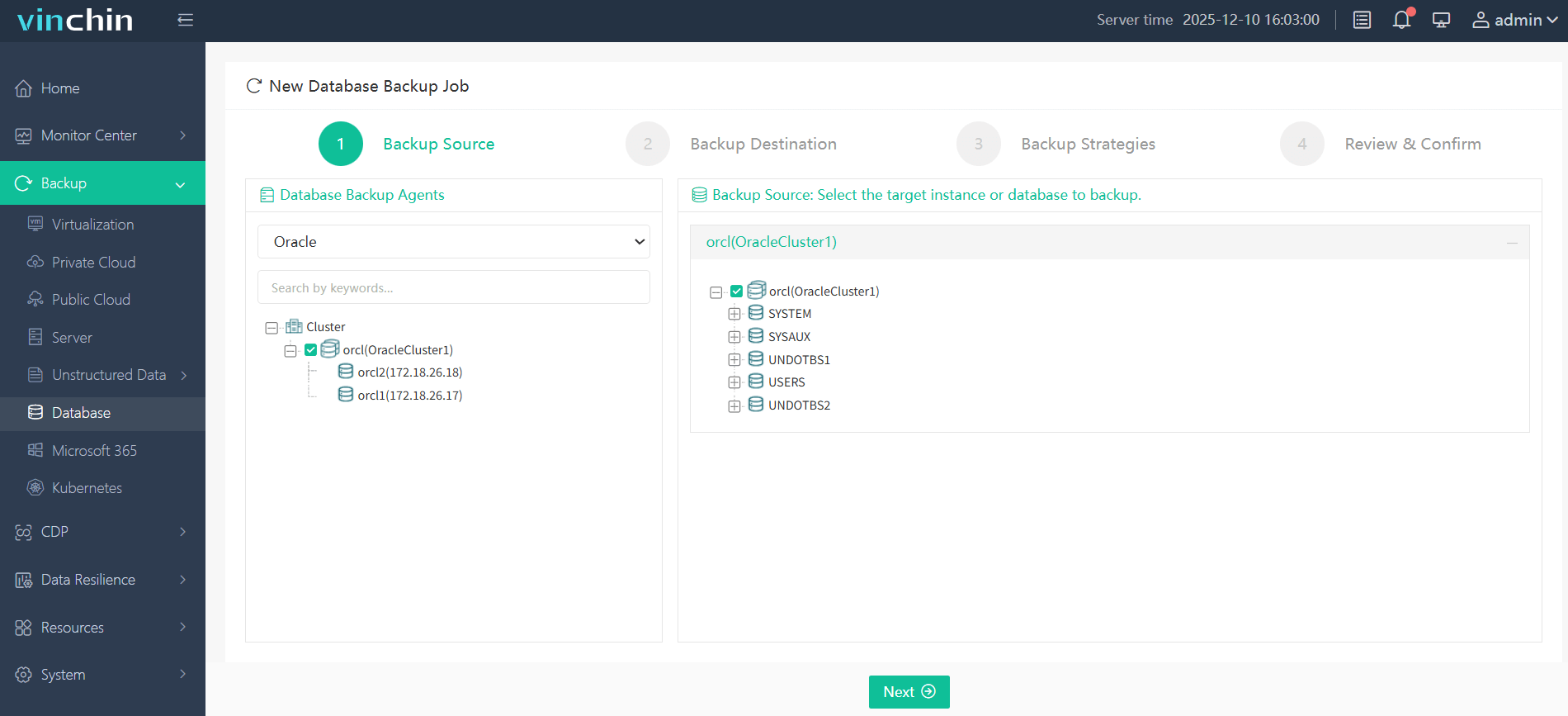
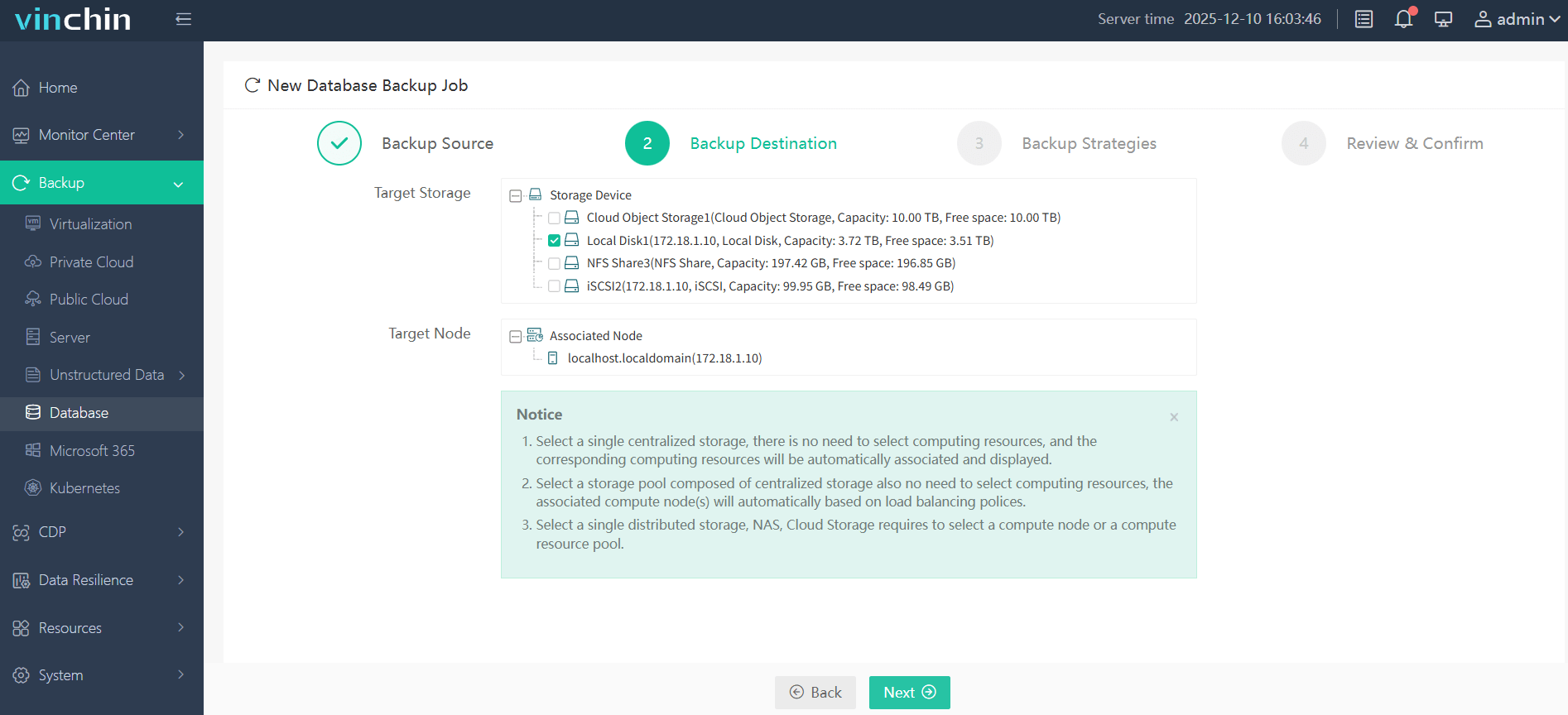
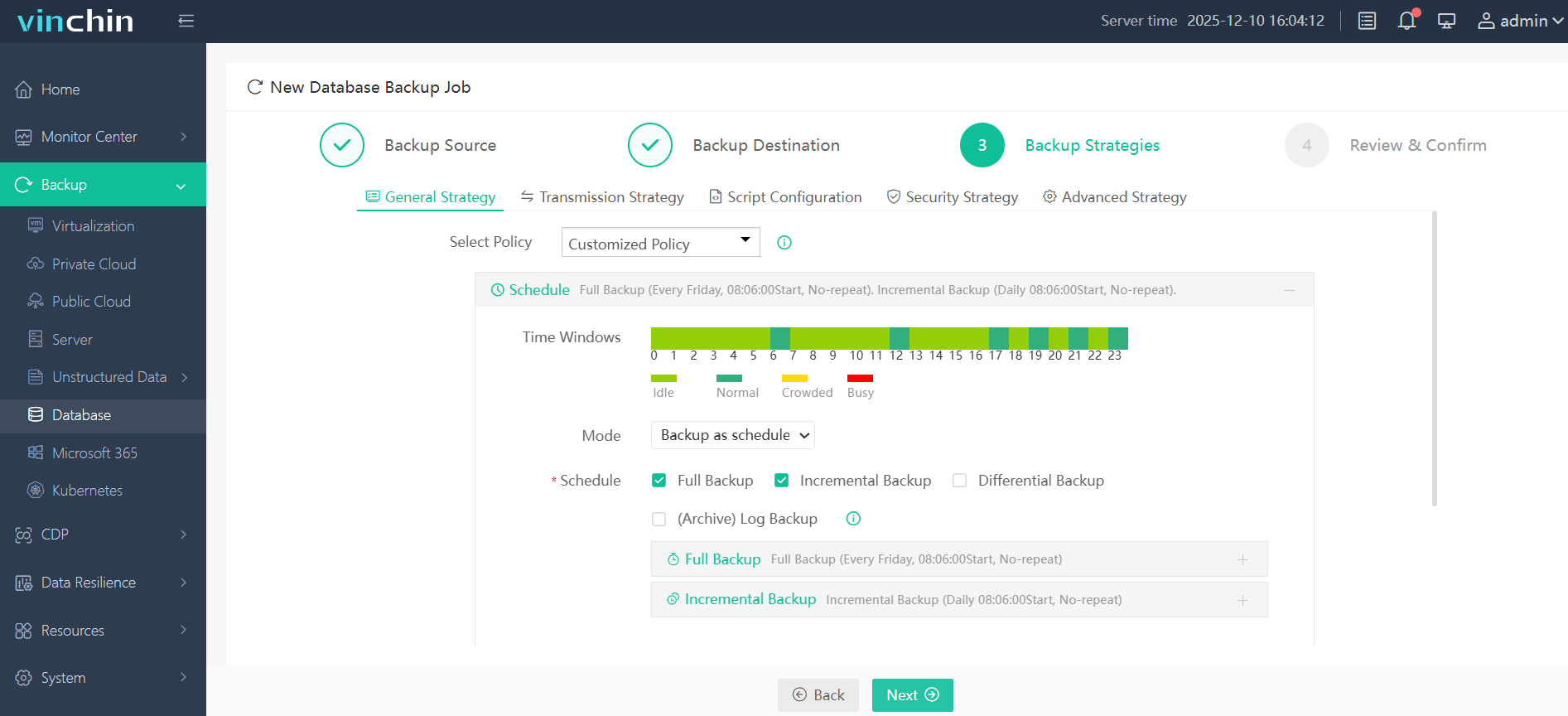
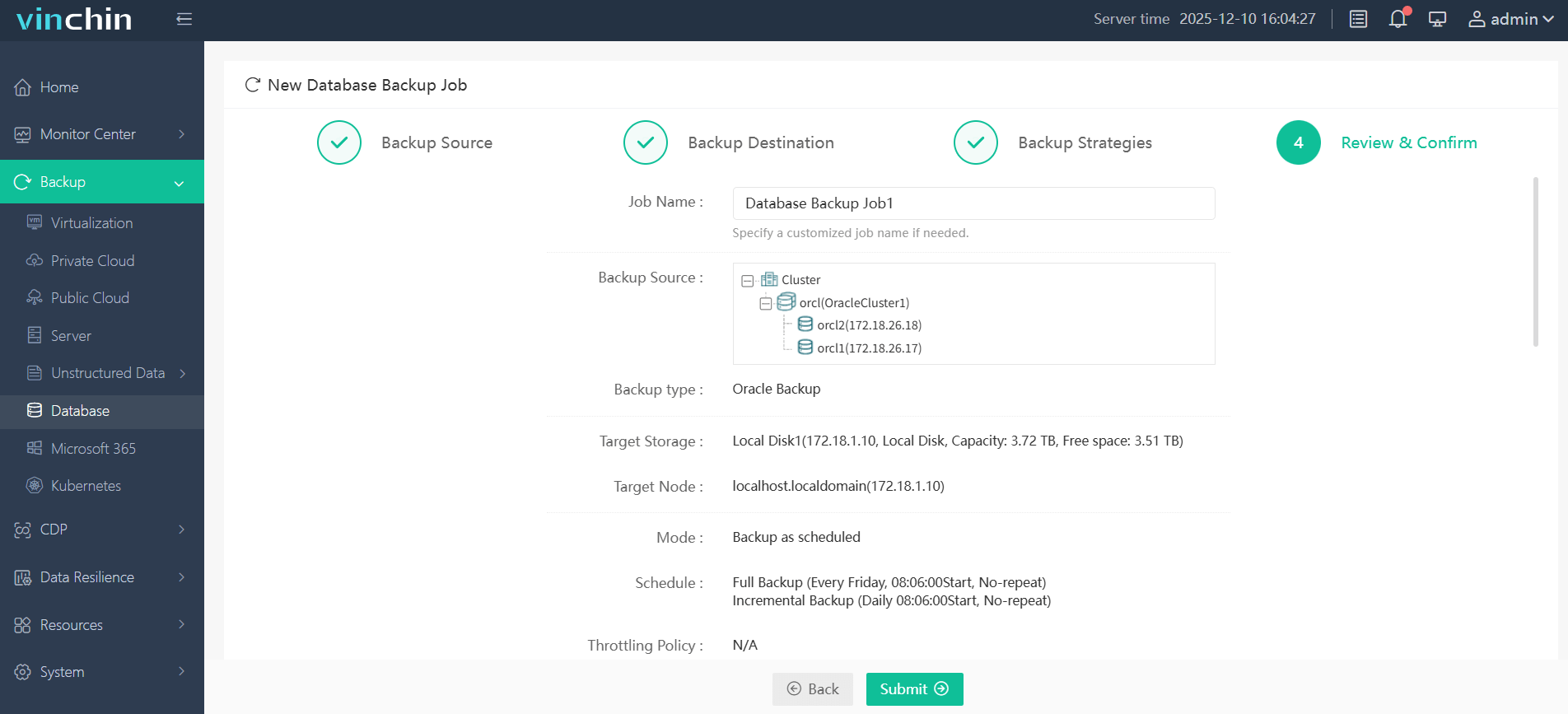
With Vinchin Backup & Recovery's intuitive web console interface, performing an Oracle database backup typically involves four straightforward steps:
Step 1. Select the Oracle database to back up
Step 2. Choose the backup storage
Step 3. Define the backup strategy
Step 4. Submit the job
Recognized globally with thousands of satisfied customers and top industry ratings for reliability and usability,Vinchin Backup & Recovery offers a fully featured free trial lasting sixty days—click below now to experience comprehensive enterprise protection firsthand!
Oracle RMAN Backup Datafile FAQs
Q1: How do I schedule daily automated datafile backups?
Use cron (crontab -e) on Linux—for example: 02*/home/oracle/scripts/backup_datafile.sh—or Task Scheduler on Windows with your script set as an action at desired times.
Q2: What does "cannot backup/restore active file in NOARCHIVELOG mode" mean?
Your database must be in ARCHIVELOG mode for online file-level backups; otherwise shut down cleanly before running offline/cold file copies instead.
Q3: How do I estimate my next datafile backup size?
Run REPORT NEED BACKUP in rman or query V$DATAFILE; remember compression/unallocated space may reduce final size compared with raw totals shown here.
Conclusion
Mastering oracle rman backup datafile operations turns stressful emergencies into routine recoveries—with less downtime every year! For even greater automation plus advanced features like integrity checks out-of-the-box try Vinchin’s trusted solution today—it could make protecting critical databases simpler than ever before!