When an alert fires for a failed backup or a storage admin asks which files are safe to archive, you need answers fast—not by sifting through RMAN log files. Oracle Recovery Manager (RMAN) is the built-in tool for backup and recovery in Oracle databases, but tracking its actions can feel like peering into a black box. That’s where Oracle RMAN backup views come in handy. These views let you see backup details, job history, progress status, and more—all with simple SQL queries.
In this article, you’ll learn what these views are, which ones matter most for daily operations, how to query them effectively at different skill levels, how to troubleshoot common issues using them, and how to integrate their insights into your monitoring routines.
What Are Oracle RMAN Backup Views?
Oracle RMAN backup views are database objects that provide visibility into backup and recovery activities.
V$ views are suitable for single-database monitoring, while RC_ views are essential for centralized management and long-term analysis across multiple databases.
Essential Oracle RMAN Backup Views
The most commonly used RMAN views include:
V$BACKUP_SET / RC_BACKUP_SET – Backup set details such as type, size, and status
V$BACKUP_PIECE / RC_BACKUP_PIECE – Physical backup file information and locations
V$BACKUP_DATAFILE / RC_BACKUP_DATAFILE – Datafile-level backup mapping and SCN details
V$RMAN_BACKUP_JOB_DETAILS / RC_RMAN_BACKUP_JOB_DETAILS – Job status, duration, and throughput
V$ARCHIVED_LOG / RC_ARCHIVED_LOG – Archived redo log tracking and backup status
These views help DBAs verify backup integrity and monitor database protection status.
How to Query RMAN Backup Views?
You don’t need fancy tools—just SQL*Plus or any SQL client where your account has sufficient privileges (SYSDBA, typically). Here’s how to tackle common tasks at increasing levels of complexity:
Checking Recent Backup Jobs
Start simple—get a summary of recent jobs:
SELECT SESSION_KEY,
       INPUT_TYPE,
       STATUS,
       TO_CHAR(START_TIME,'YYYY-MM-DD HH24:MI') AS START_TIME,
       TO_CHAR(END_TIME,'YYYY-MM-DD HH24:MI') AS END_TIME
FROM V$RMAN_BACKUP_JOB_DETAILS
ORDER BY SESSION_KEY DESC;
This shows job type (full/incremental/archive log), status (completed/running/failed), start/end times—so it’s easy to spot failures or delays right away.
Linking Backup Sets to Backup Pieces
To connect logical sets with their physical files:
SELECT BS.SET_STAMP,
       BS.SET_COUNT,
       BP.PIECE#,
       BP.HANDLE,
       BP.STATUS
FROM V$BACKUP_SET BS
JOIN V$BACKUP_PIECE BP
  ON BS.SET_STAMP = BP.SET_STAMP
 AND BS.SET_COUNT = BP.SET_COUNT
ORDER BY BS.SET_STAMP DESC;
This lets you trace exactly where each piece lives—a must when restoring specific files after hardware changes.
Reporting Across Multiple Databases with RC_ Views
If using a recovery catalog for centralized management:
First find your DBID:
SELECT DBID FROM V$DATABASE;
Then locate its key in the catalog:
SELECT DB_KEY FROM RC_DATABASE WHERE DBID = <your_dbid>;
Now run cross-database reports like this:
SELECT BS_KEY,
       BACKUP_TYPE,
       COMPLETION_TIME
FROM RC_DATABASE_INCARNATION i,
     RC_BACKUP_SET b
WHERE i.DB_KEY = <your_db_key>
  AND i.DB_KEY = b.DB_KEY
  AND i.CURRENT_INCARNATION = 'YES';
This helps during disaster planning—or when auditors ask about retention across multiple sites/databases.
Monitoring Backup Progress
Want live feedback on running jobs? Try this query:
SELECT SID,
       SERIAL#,
       CONTEXT,
       SOFAR,
       TOTALWORK,
       ROUND(SOFAR/TOTALWORK*100,2) AS "%_COMPLETE"
FROM V$SESSION_LONGOPS
WHERE OPNAME LIKE 'RMAN%' AND TOTALWORK != 0 AND SOFAR <> TOTALWORK;
It estimates percent complete based on work done versus total expected workload—but note that very short jobs may not appear here at all due to sampling intervals (Oracle Docs).
Finding Unbacked Archived Logs
To avoid accidental loss of redo logs before they’re safely stored elsewhere:
SELECT SEQUENCE#,
       APPLIED,
       BACKED_UP
FROM V$ARCHIVED_LOG
WHERE BACKED_UP = 0;
This flags any logs still pending backup—a crucial check before deleting old archive logs from disk!
Troubleshooting Common Backup Issues
While monitoring is vital day-to-day work for admins—troubleshooting failures quickly saves hours during incidents! Here’s how these same views help diagnose typical problems encountered with Oracle backups:
When a job fails unexpectedly:
1. Check detailed output messages:
SELECT * FROM V$RMAN_OUTPUT ORDER BY SESSION_RECID DESC;
Look near the end for error codes/messages indicating why it stopped.
2. Suspect corruption?
   SELECT HANDLE,
          STATUS,
          CORRUPT
   FROM V$BACKUP_PIECE
   WHERE STATUS='AVAILABLE';
If CORRUPT says YES, investigate storage/network issues immediately!
3. Is your recovery catalog out-of-sync?
SELECT * FROM RC_DATABASE WHERE DBID=(SELECT DBID FROM V$DATABASE);
Compare RESETLOGS_TIME here against V$DATABASE—mismatches mean re-registering may be needed.
4. Archive log gaps blocking restore?
    SELECT SEQUENCE#, FIRST_TIME
    FROM V$ARCHIVED_LOG
    WHERE BACKED_UP=0 ORDER BY SEQUENCE#;
Missing sequences signal incomplete coverage—check upstream archiving processes!
These targeted queries turn vague alerts into actionable diagnostics within minutes instead of hours spent combing through text logs.
Enterprise Database Protection with Vinchin Backup & Recovery
Although native Oracle RMAN backup views provide valuable visibility into your database protection posture, comprehensive enterprise-grade security demands more robust solutions. Vinchin Backup & Recovery is a professional platform designed specifically for safeguarding today’s mainstream databases—including Oracle 10g, 11g/11g R2, 12c, 18c, 19c, 21c, Oracle RAC, MySQL, SQL Server, MariaDB, PostgreSQL, PostgresPro, and TiDB
There are various useful strategies like source-side compression and incremental backups tailored to each supported system's capabilities. For organizations managing large-scale deployments or strict compliance requirements, Vinchin Backup & Recovery delivers batch database backups, flexible retention policies including GFS options, multi-level data compression strategies to optimize storage use and performance efficiency—all within an intuitive management framework that simplifies complex operations while ensuring reliability and scalability across diverse environments.
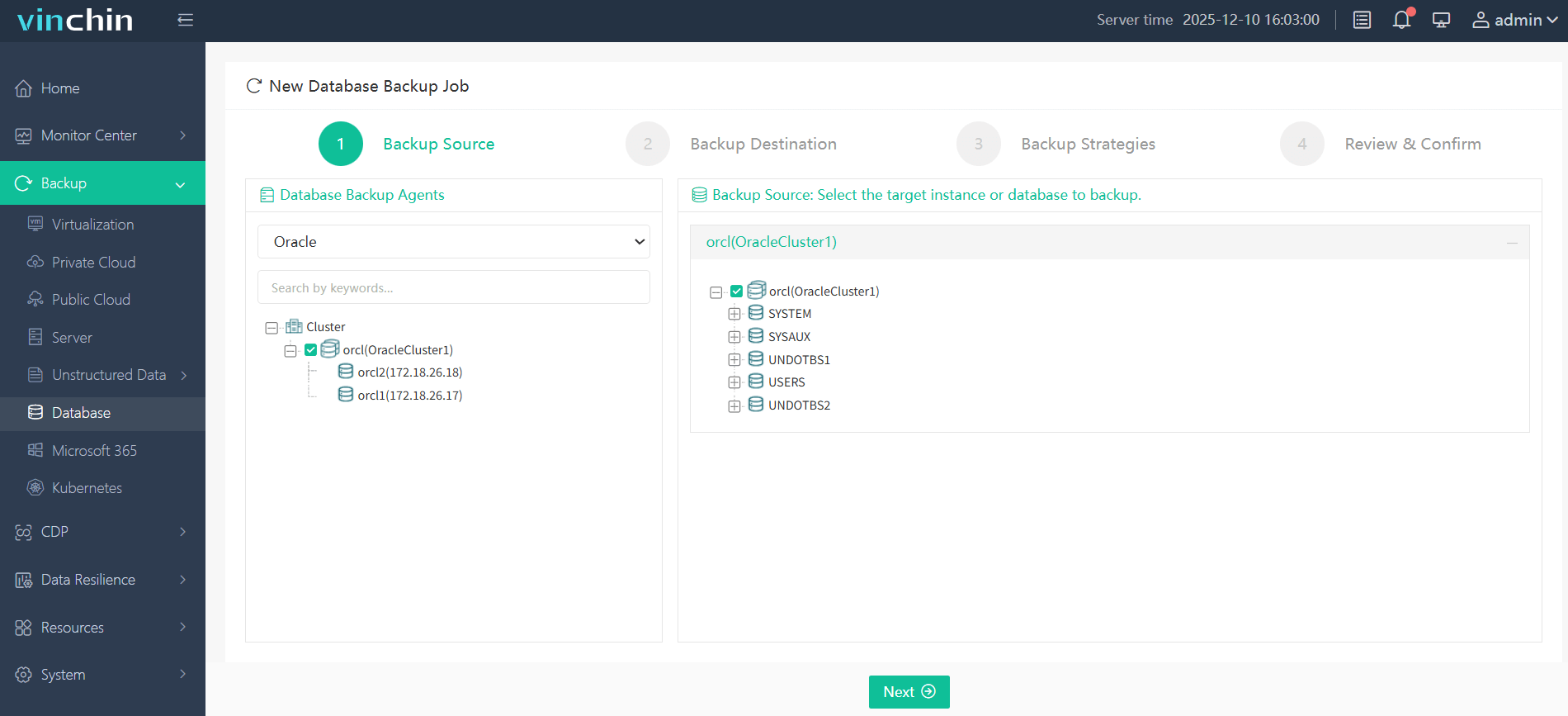
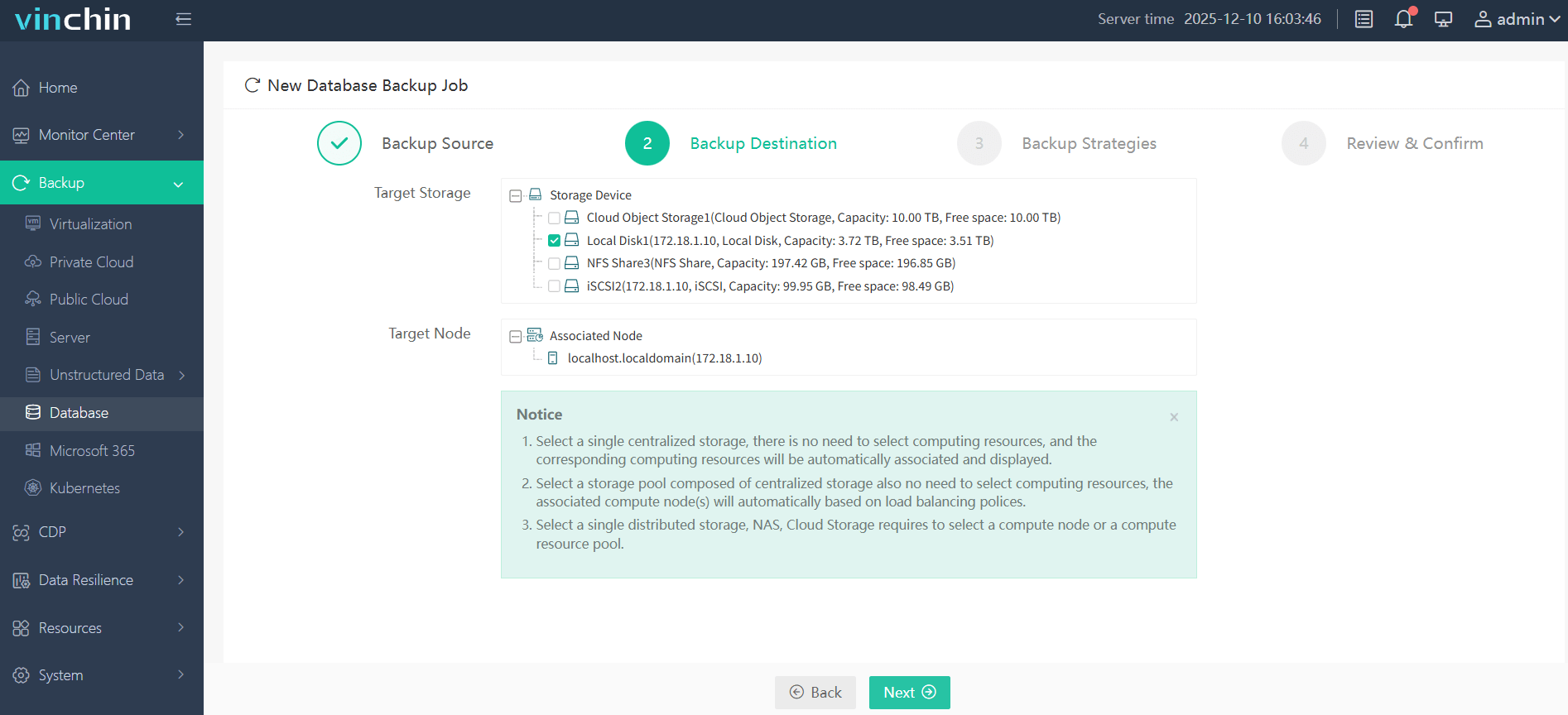
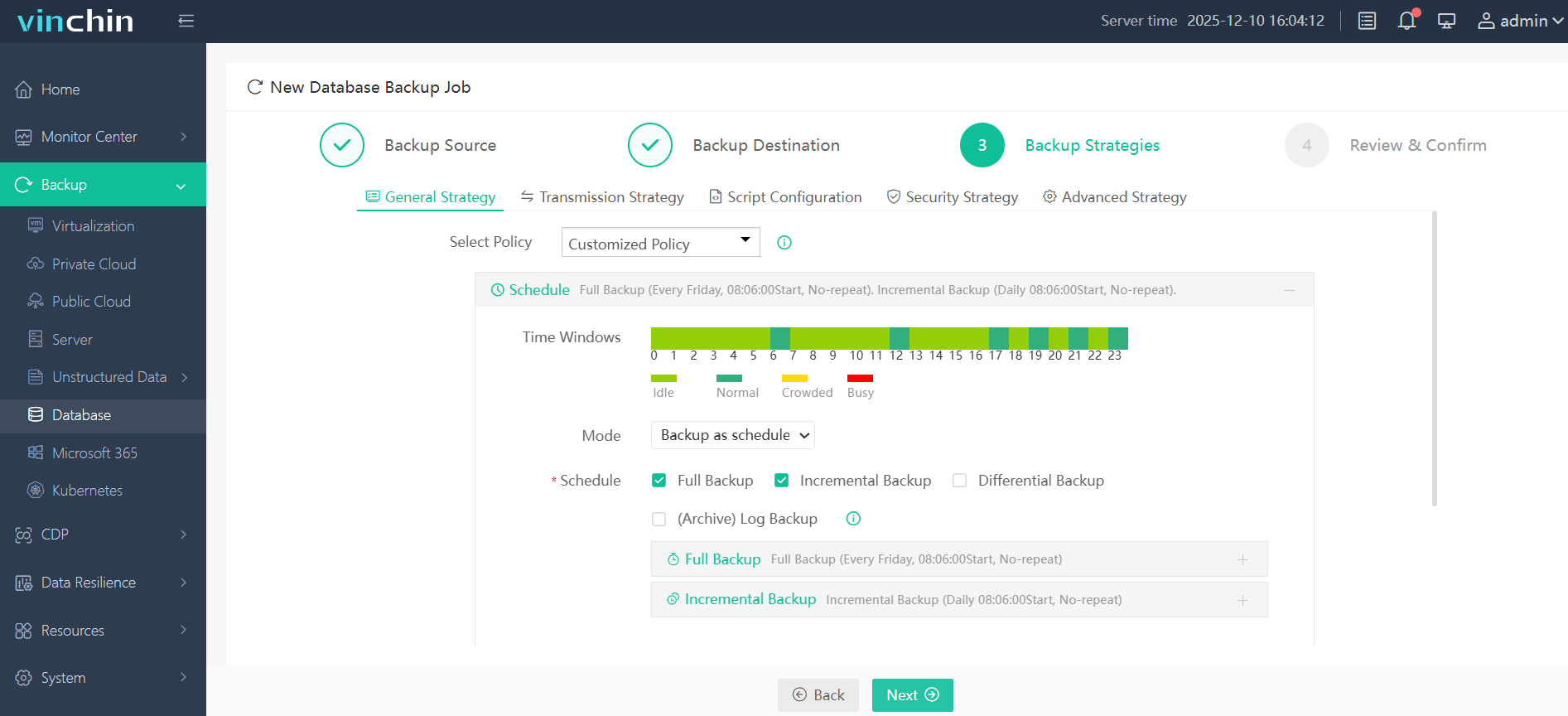
The web console makes protecting your Oracle environment straightforward:
Step 1. Select the Oracle database to backup
Step 2. Choose the desired backup storage location
Step 3. Define an appropriate strategy based on business needs
Step 4. Submit the job
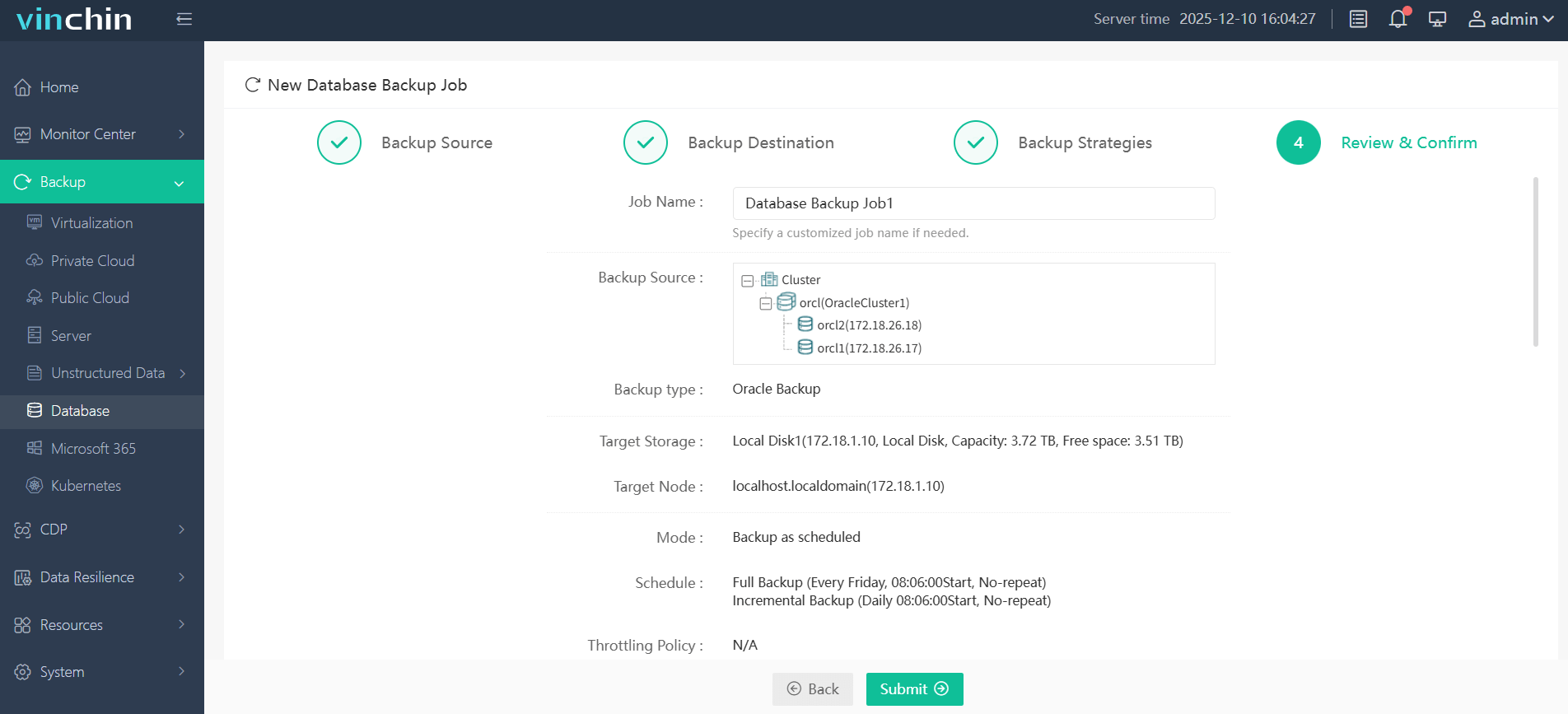
Recognized globally by thousands of enterprises and rated highly by IT professionals worldwide,Vinchin Backup & Recovery offers a fully functional free trial lasting 60 days—click below to experience industry-leading data protection firsthand!
Oracle RMAN Backup Views FAQs
Q1: What privilege do I need to query most RMAN-related V$/RC_ views?
A1: You generally need SYSDBA or SYSBACKUP privilege granted on the target database instance.
Q2: How do I automate alerts if an archived log hasn’t been backed up?
A2: Schedule a script querying V$ARCHIVED_LOG WHERE BACKED_UP=0 then trigger an alert if results exist.
Q3: Can I preview obsolete backups older than my policy before deleting them?
A3: Yes; run SELECT * FROM RC_BACKUP_SET WHERE COMPLETION_TIME < SYSDATE - retention_days_value.
Conclusion
Oracle RMAN backup views transform complex internal processes into clear operational insights that keep your environment safe and compliant.Without leaving SQL*Plus,you can monitor,troubleshoot,and optimize every aspect of your backups.For advanced protection,Vinchin delivers enterprise-grade solutions tailored for modern IT teams worldwide.