Are you tired of slow database recoveries or complex backup chains that make disaster recovery stressful? Many operations administrators face these challenges daily. When your Oracle database grows large or your business demands strict uptime, traditional backup methods can fall short. Oracle RMAN incremental merge offers a smarter way to keep backups current while reducing both backup windows and recovery times. In this article, we’ll explore what makes this method unique, why it matters for modern IT environments, and how you can implement it step by step—whether you’re just starting out or looking to optimize an enterprise deployment.
What Is Oracle RMAN Incremental Merge?
Oracle RMAN incremental merge is an advanced backup strategy that keeps a full image copy of your database up to date by merging only changed data blocks into it. Think of it like editing a master document: instead of rewriting the whole file every day, you just update the parts that have changed. This approach means you take one initial full image copy (level 0), then regularly apply only the changes (level 1 incrementals) since that last copy.
RMAN handles these merges automatically so your image copy always reflects your latest database state. This process is often called an "incrementally updated backup" in official Oracle documentation. The key advantage is that your main backup is always being "rolled forward," so it's ready for fast restores without needing to replay long chains of incremental files.
This method relies on storing image copies on disk rather than using compressed backupsets. It’s available from Oracle Database 10g onward and is especially valuable when backing up very large databases where time and storage efficiency are critical.
Why Use Incremental Merge Backups?
Incremental merge backups bring several important advantages over traditional full and incremental strategies. First, they shorten both backup windows and recovery times because only changed blocks are merged into your main image copy each cycle. You avoid restoring an old full backup plus many incrementals; instead, you restore directly from an almost-current image copy.
Second, this approach saves disk space compared to keeping multiple full backups at once. You maintain just one primary image copy along with recent incrementals—much more efficient for storage planning.
Third, incremental merge works seamlessly with Oracle’s block change tracking feature. Block change tracking lets RMAN quickly identify which blocks have changed since the last backup cycle, making each incremental run even faster.
Finally, this method fits well in environments where downtime must be minimized—such as very large databases (VLDBs) or systems with strict Recovery Time Objectives (RTOs). For example: if you manage a multi-terabyte production system where every minute counts during restore operations, having an up-to-date image copy can mean recovering in minutes instead of hours.
Performing Oracle RMAN Incremental Merge
Implementing incremental merge involves several steps—from preparing your environment through automating ongoing cycles—each building upon the last for maximum reliability.
Prerequisites and Configuration
Before starting with incremental merge backups:
Make sure your database runs in ARCHIVELOG mode so all changes are captured for possible recovery scenarios. Also enable block change tracking—a feature that helps RMAN quickly find which blocks have changed since the last cycle:
ALTER DATABASE ENABLE BLOCK CHANGE TRACKING USING FILE '/path/to/bct.dbf';
Replace /path/to/bct.dbf with your chosen location on disk where block change tracking information will be stored securely.
Check status anytime by querying:
SELECT STATUS FROM V$BLOCK_CHANGE_TRACKING;
If status returns "ENABLED," you're ready for faster incrementals!
Creating the Initial Level 0 Image Copy
The first step is taking a baseline level 0 image copy—a complete snapshot of your entire database as it exists today:
BACKUP INCREMENTAL LEVEL 0 DATABASE FORMAT '/backup/location/%U' TAG 'INCR_MERGE';
Adjust /backup/location/ as needed based on local storage paths or network shares available within your infrastructure. Tagging helps organize future increments tied specifically to this base copy.
Implementing Regular Incremental Merges
Once you have an initial level 0 image copy:
Schedule regular level 1 incrementals followed by immediate merges into that same base using two simple commands:
BACKUP INCREMENTAL LEVEL 1 FOR RECOVER OF COPY WITH TAG 'INCR_MERGE' DATABASE;
RECOVER COPY OF DATABASE WITH TAG 'INCR_MERGE';
The first command captures only new changes since the last cycle; the second command applies those changes directly onto your existing image copy—keeping it nearly current at all times without extra manual effort.
For best results:
Run these commands daily (or more frequently if required by business needs) so no single cycle accumulates too many unmerged changes at once.
Automating Backup Cycles
Manual execution works fine for testing but isn’t practical long-term! Most admins automate their cycles using shell scripts scheduled via cron jobs—or leverage built-in scheduling tools like Oracle Scheduler inside Enterprise Manager Grid Control environments:
Example shell script outline:
1. Connect as SYSDBA
2. Run BACKUP INCREMENTAL LEVEL 1 FOR RECOVER OF COPY WITH TAG 'INCR_MERGE' DATABASE
3. Run RECOVER COPY OF DATABASE WITH TAG 'INCR_MERGE'
4. Log output/results
5. Check exit codes; alert if failures occur
You might schedule this script nightly using crontab entries such as:
0 2 * * * /usr/local/bin/rman_incremental_merge.sh > /var/log/rman_merge.log 2>&1
Always test scripts interactively before relying on them unattended!
Monitoring Your Backups
Ongoing monitoring ensures both performance gains and peace of mind:
Query V$BLOCK_CHANGE_TRACKING regularly to confirm block change tracking remains enabled throughout maintenance cycles.
Monitor free space within V$RECOVERY_FILE_DEST so neither block change files nor growing images fill up unexpectedly during busy periods.
Review job logs after each automated run; look for errors indicating failed merges or skipped increments—and investigate promptly if found!
When disaster strikes—or simply when testing DR plans—you can switch instantly from live datafiles back to your most recent merged image copies using:
SWITCH DATABASE TO COPY;
RECOVER DATABASE;
ALTER DATABASE OPEN;
This sequence minimizes downtime because most changes already reside within the updated base; only final archived logs need application before reopening production services.
Introducing Vinchin Backup & Recovery for Oracle Database Protection
Beyond native tools like RMAN, organizations seeking streamlined enterprise-grade protection often turn to specialized solutions designed for modern workloads and operational simplicity. Vinchin Backup & Recovery stands out as a professional solution supporting leading databases—including Oracle, MySQL, SQL Server, MariaDB, PostgreSQL, PostgresPro, and TiDB—with robust features tailored specifically for demanding environments like yours.
With Vinchin Backup & Recovery’s support for advanced source-side compression (for Oracle), incremental backup (for Oracle), batch database backup management, WORM protection against ransomware threats, and comprehensive integrity checks across all supported platforms, businesses benefit from reduced storage costs while ensuring reliable recoverability—even under tight RTO requirements.
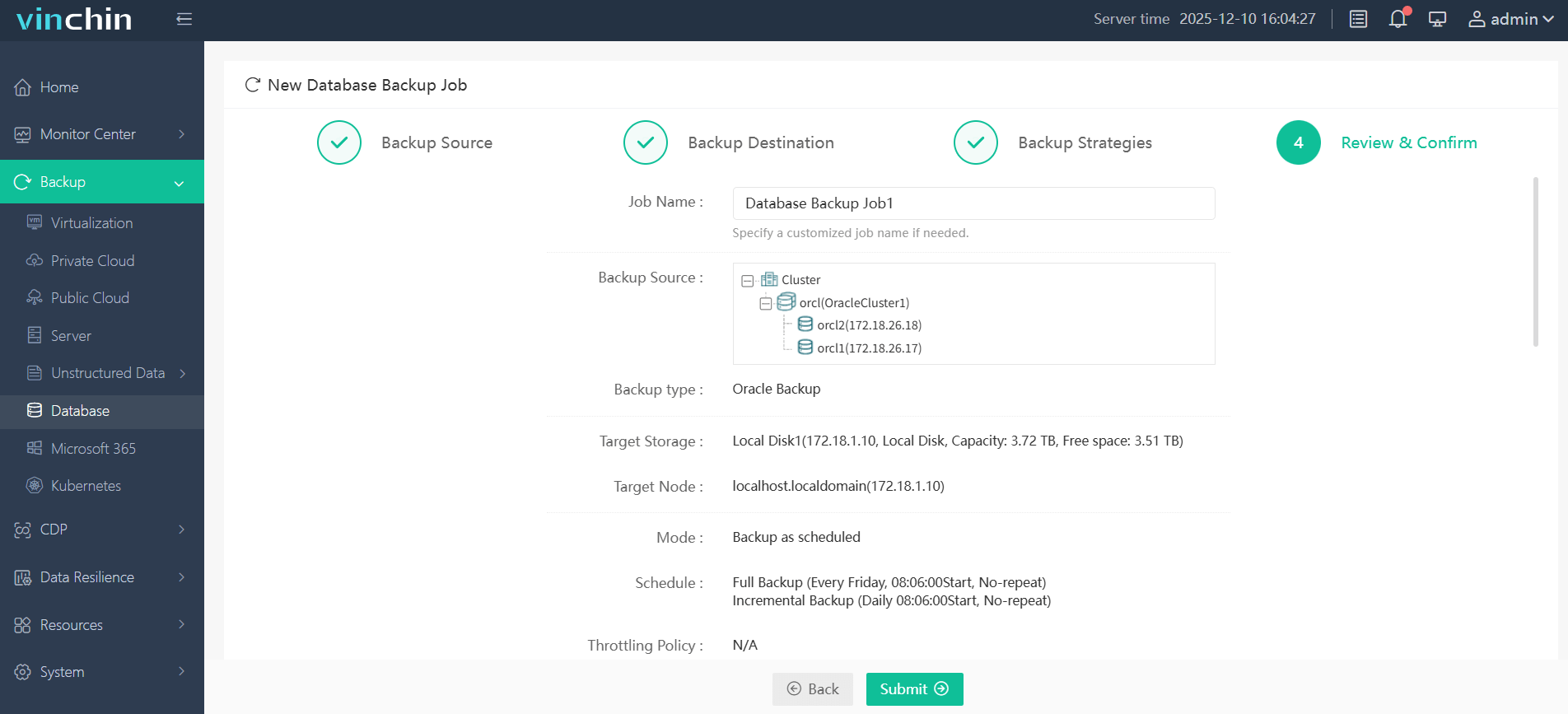
The intuitive web console makes protecting Oracle databases straightforward:
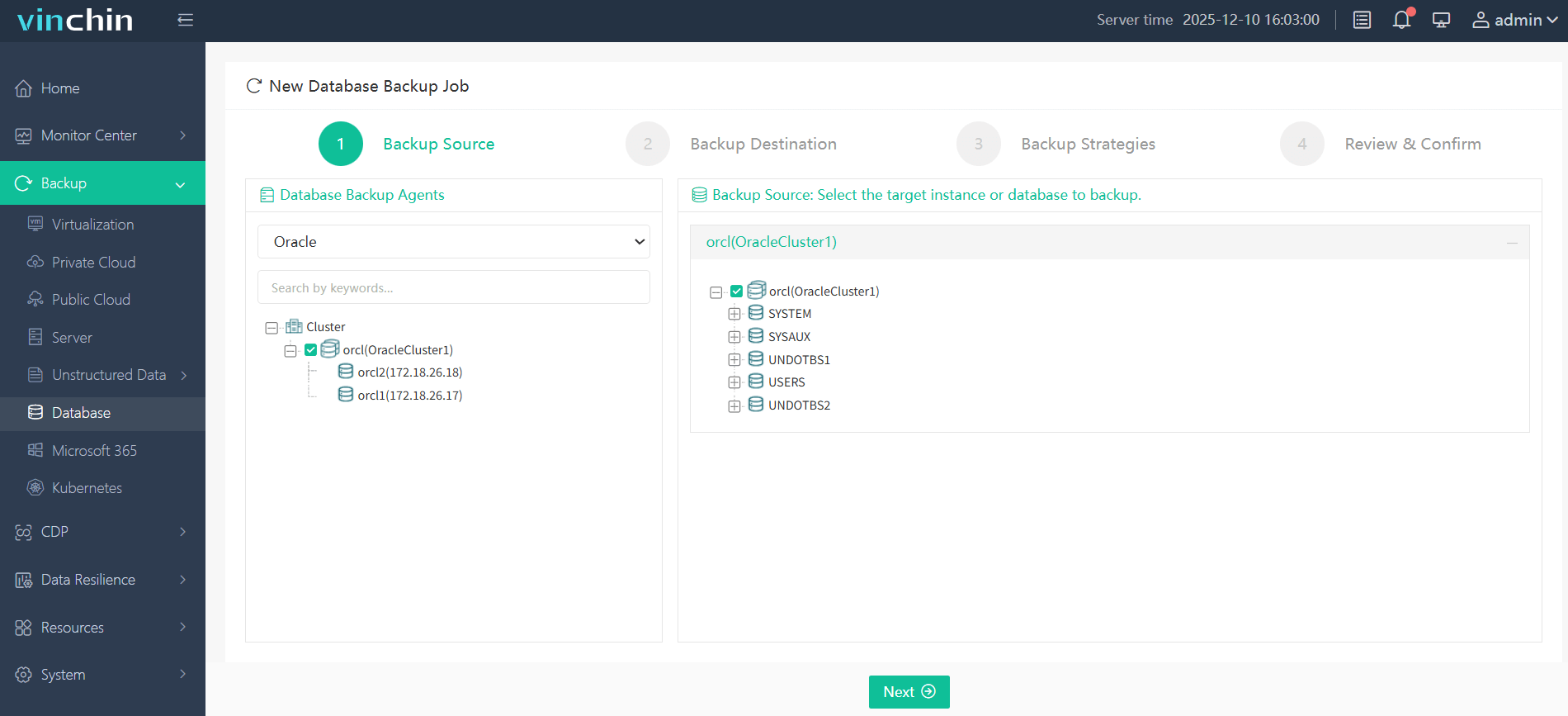
Step 1. Select the Oracle database to back up
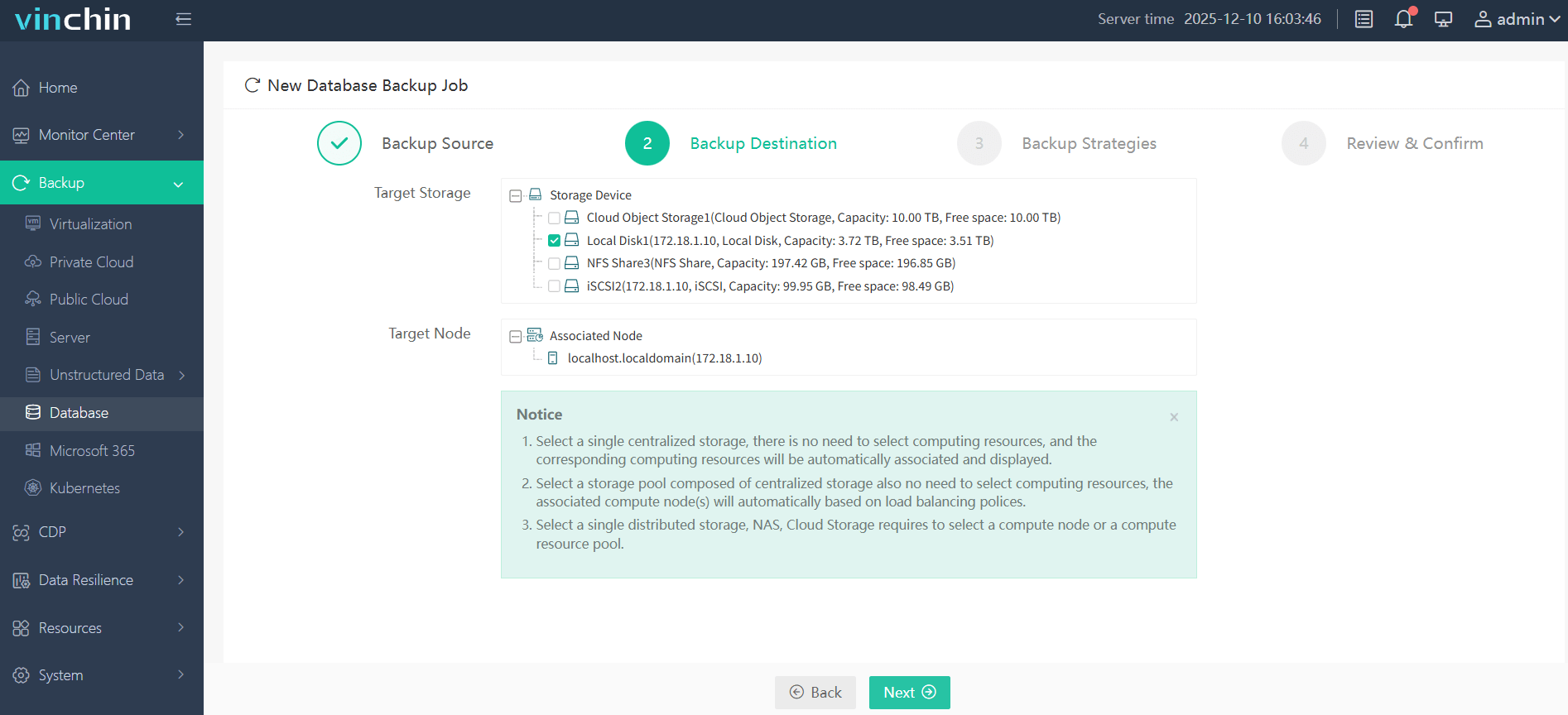
Step 2. Choose the backup storage
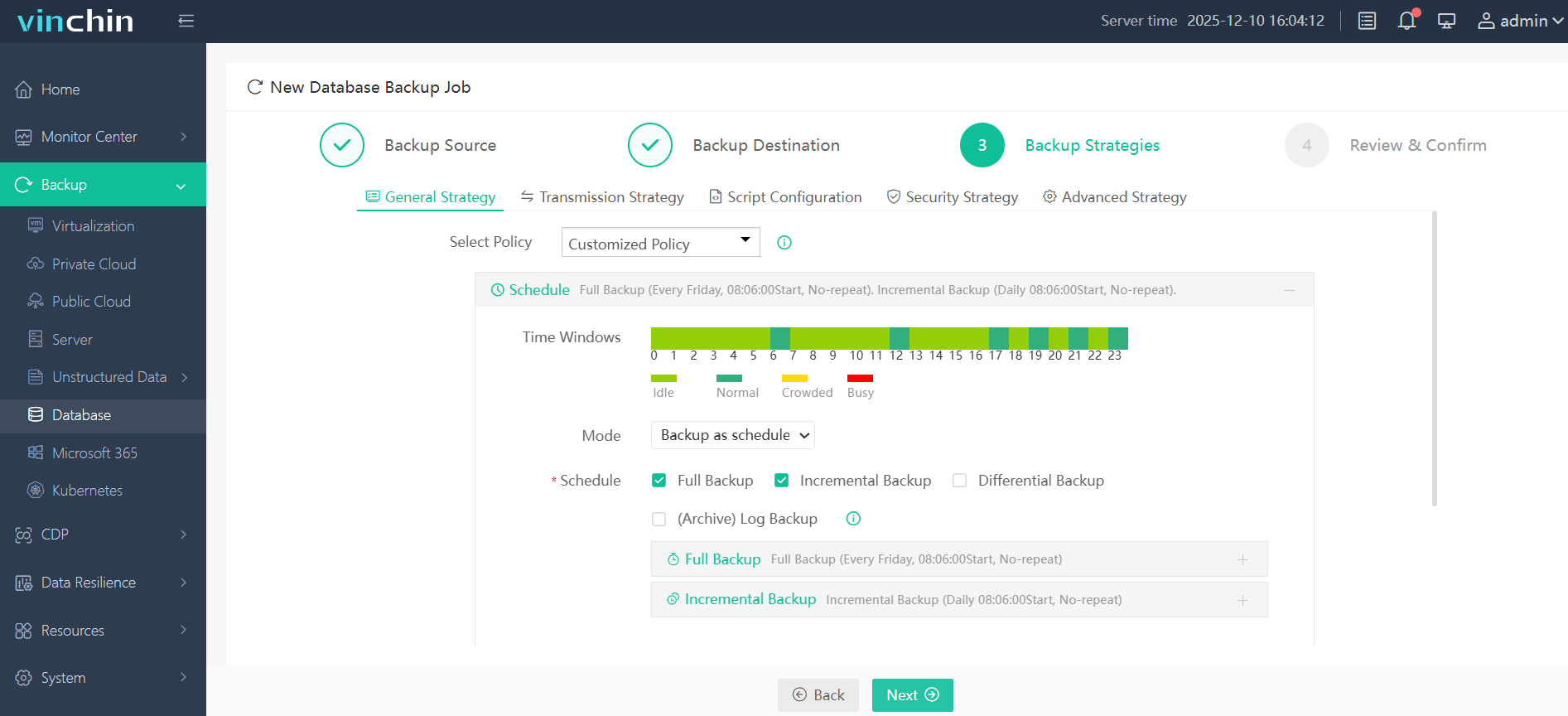
Step 3. Define the backup strategy
Step 4. Submit the job
Recognized globally among enterprise users for its reliability and top ratings—with thousands protected worldwide—Vinchin Backup & Recovery offers a risk-free 60-day trial packed with all features enabled; click below to experience industry-leading data protection firsthand!
Oracle RMAN Incremental Merge FAQs
Q1: Can I use RMAN incremental merge if my database runs in NOARCHIVELOG mode?
No; ARCHIVELOG mode must be enabled so all changes are captured safely during each cycle.
Q2: How do I switch my active instance over to use an updated image copy after failure?
Start RMAN CONNECT TARGET SYS@dbname AS SYSDBA RUN { SHUTDOWN IMMEDIATE; STARTUP MOUNT; SWITCH DATABASE TO COPY; RECOVER DATABASE; ALTER DATABASE OPEN RESETLOGS }
Q3: How do I verify my merged image copies remain valid without performing a full restore?
Use RESTORE VALIDATE command in RMAN CONNECT TARGET SYS@dbname RESTORE DATABASE VALIDATE
Conclusion
Oracle RMAN incremental merge streamlines both routine backups and urgent recoveries while reducing operational risk across large-scale deployments or high-demand environments alike—all without sacrificing speed or flexibility along the way! For even greater simplicity plus robust automation features tailored specifically toward enterprise needs consider trying Vinchin’s free trial today—it could transform how confidently you protect mission-critical data tomorrow!