Data loss or corruption can strike at any time—hardware fails unexpectedly, users make mistakes that delete important records, or malware attacks compromise your system’s integrity. That’s why regular database backups are essential for every organization running Oracle database.
For those looking to backup datafile using RMAN efficiently, it’s important to understand both basic procedures and advanced techniques that help meet recovery point objectives (RPO) and recovery time objectives (RTO). This guide assumes you have an Oracle environment set up with ARCHIVELOG mode enabled if you want online backups—and that you have SYSDBA or SYSBACKUP privileges.
Whether you’re just starting with RMAN or aiming to automate complex tasks across many servers, mastering these methods keeps your business resilient against unexpected events.
What Is RMAN in Oracle?
RMAN stands for Recovery Manager—a utility built by Oracle specifically for managing database backup and recovery operations. Unlike manual file copy commands or generic third-party tools that lack deep integration with Oracle internals, RMAN understands how databases work from within.
With RMAN at your disposal:
You can back up entire databases or focus on specific tablespaces or individual datafiles.
Incremental backups are possible; these save only changed blocks since the last backup to optimize storage use.
Validating backups before disaster strikes ensures they are usable when needed most.
Scheduling regular jobs becomes straightforward thanks to script support and integration with enterprise schedulers.
RMAN works seamlessly with all supported versions of Oracle Database from 8i onward. It supports both disk-based storage locations as well as tape libraries configured via Media Management Layer (MML).
By leveraging its features fully when you backup datafile using RMAN rather than relying on manual processes alone—you gain reliability plus peace of mind during critical restores.
Why Backup Datafile Using RMAN?
Why should you choose to backup datafile using RMAN instead of other methods? There are several compelling reasons rooted in consistency, efficiency, automation—and above all—recovery capability.
First comes consistency: When backing up open databases in ARCHIVELOG mode with RMAN, all blocks are captured in a transactionally consistent state—even if users continue working during the process. This means no missing transactions after restore.
Second is efficiency: With block-level incremental backups available through RMAN (and optional compression), only changed portions of files get saved after initial full backup—saving space while reducing network load during transfers.
Third is automation: Regular jobs can be scheduled easily via scripts or integrated into larger enterprise scheduling systems so nothing gets missed due to human error or oversight.
Most importantly comes targeted recovery: If disaster strikes—such as losing just one crucial datafile—you don’t need to restore everything; simply recover what was lost quickly without affecting unaffected parts of your database.
These benefits make it clear why organizations trust their mission-critical workloads to backup datafile using RMAN rather than less robust alternatives.
How to Back Up Datafile Using RMAN Command Line?
The command-line interface offers speed and flexibility when performing ad-hoc tasks or testing procedures before automating them further. Here’s how you can backup datafile using RMAN step by step:
Start by opening a terminal session on your server where Oracle Database runs:
1. Start Recovery Manager
Type:
rman TARGET /
This connects directly as the target database owner using operating system authentication—a secure way favored by administrators.
2. Identify Your Datafiles
You need either file numbers or full paths for each target file:
SELECT FILE#, NAME FROM V$DATAFILE;
This lists all current datafiles along with their identifiers so there’s no confusion about which file needs protection today.
3. Run the Backup Command
To back up a specific file by number:
BACKUP DATAFILE 4;
Or multiple files at once:
BACKUP DATAFILE 1,2;
If specifying by path:
BACKUP DATAFILE '/u01/oradata/ORCL/users01.dbf';
4. Use Advanced Options for More Control
Need more flexibility? Try options like FORMAT (to set output location), TAG (to label your job), AS COPY (for image copies), or SECTION SIZE—for parallelizing large files:
BACKUP AS BACKUPSET FORMAT '/backup/rman/datafile4_%U.bkp' TAG 'DAILY_BKP' DATAFILE 4;
BACKUP DATAFILE 4 SECTION SIZE 10G;
SECTION SIZE splits very large files into manageable chunks processed in parallel channels—speeding up big jobs significantly.
5. Check Backup Status
After completion:
LIST BACKUP OF DATAFILE 4;
This shows details about newly created sets—including timestamps so you know exactly what was protected when.
If skipping offline/inaccessible files during full DB backup is needed:
BACKUP DATABASE SKIP OFFLINE SKIP INACCESSIBLE;
To validate physical health before actual backup:
BACKUP VALIDATE DATAFILE 4;
This checks for corruption such as missing blocks—not logical consistency—but helps catch issues early before they become disasters later on!
Following these steps ensures every operation aligns with official guidance while giving administrators confidence their assets remain safe day after day.
How to Back Up Datafile Using RMAN Scripts?
For routine tasks—or when integrating into automated schedules—it makes sense not to type commands manually each time but instead rely on scripts designed for repeatable execution across environments large or small.
Here’s how experienced admins typically approach scripting when they want to reliably backup datafile using RMAN:
1. Create an RMAN Script File
Write out commands inside a plain text document like backup_datafile.rmn:
RUN {
    ALLOCATE CHANNEL d1 TYPE DISK FORMAT '/backup/rman/datafile4_%U.bkp';
    BACKUP DATAFILE 4 TAG 'WEEKLY_BKP';
    RELEASE CHANNEL d1;
}
Allocating channels lets you control resource usage explicitly; setting FORMAT determines where output lands; tagging helps track jobs later during audits; releasing channels cleans up resources promptly after work completes.
2. Execute Your Script Automatically
From shell prompt run:
rman TARGET / @backup_datafile.rmn
3. Automate Execution via OS Scheduler
On Linux/Unix systems use cron; Windows admins turn to Task Scheduler instead.
Example crontab entry running daily at midnight might look like this:
0 0 * * * /u01/app/oracle/scripts/run_rman_backup.sh > /u01/app/oracle/logs/rman_backup.log 2>&1
Where run_rman_backup.sh contains something similar to:
#!/bin/bash
export ORACLE_SID=ORCL
export ORACLE_HOME=/u01/app/oracle/product/19c/dbhome_1
$ORACLE_HOME/bin/rman TARGET / @/u01/app/oracle/scripts/backup_datafile.rmn
if [ $? -ne 0 ]; then echo "Backup failed" | mail -s "RMAN Failure" admin@example.com; fi
echo "$(date): Completed" >> /u01/app/oracle/logs/rman_status.log
Vinchin: A Flexible Solution for Modern Backup Needs
As organizations look beyond traditional tools for greater agility and ease-of-use, Vinchin Backup & Recovery stands out as an adaptable solution tailored for diverse IT environments. Vinchin supports over nineteen virtualization platforms—including VMware, Hyper-V, Proxmox—as well as physical servers, databases, and both cloud/on-premises file storage, making it ideal for businesses with varied infrastructure needs.
When migrations are required, Vinchin delivers flexible full-system migration capabilities, allowing seamless movement of workloads between virtual machines, physical hosts, or cloud platforms—all within its unified platform. For mission-critical workloads on virtual or physical machines, real-time backup and replication offer frequent recovery points and automated failover, minimizing RPO/RTO effectively.
Reliability is ensured through automatic integrity checks of backups, along with isolated environment validation tests that guarantee successful restoration when needed most.
Building robust disaster-recovery strategies is simple thanks to automated retention policies, cloud archiving options, remote replicas, and DR center creation—all managed through an intuitive browser-based console featuring wizard-driven workflows.
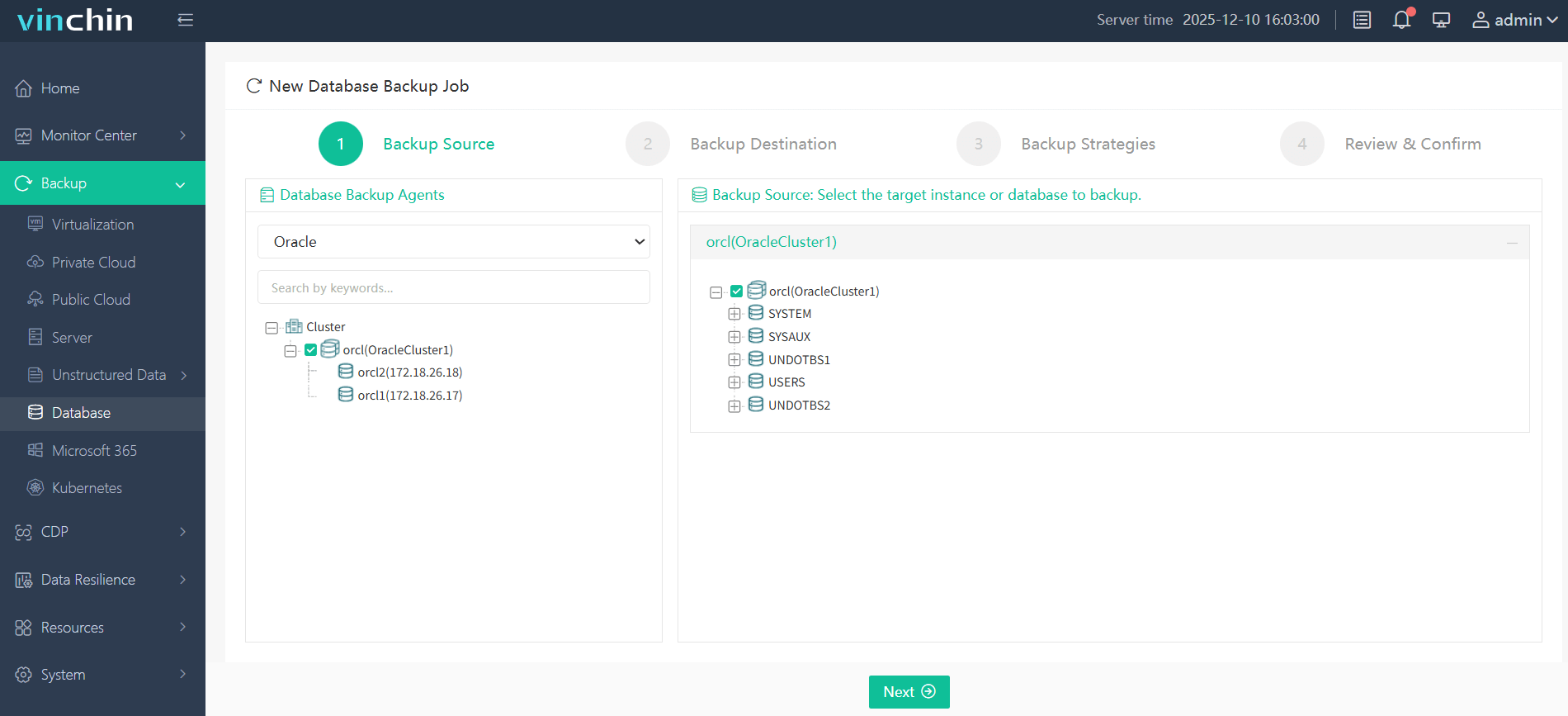
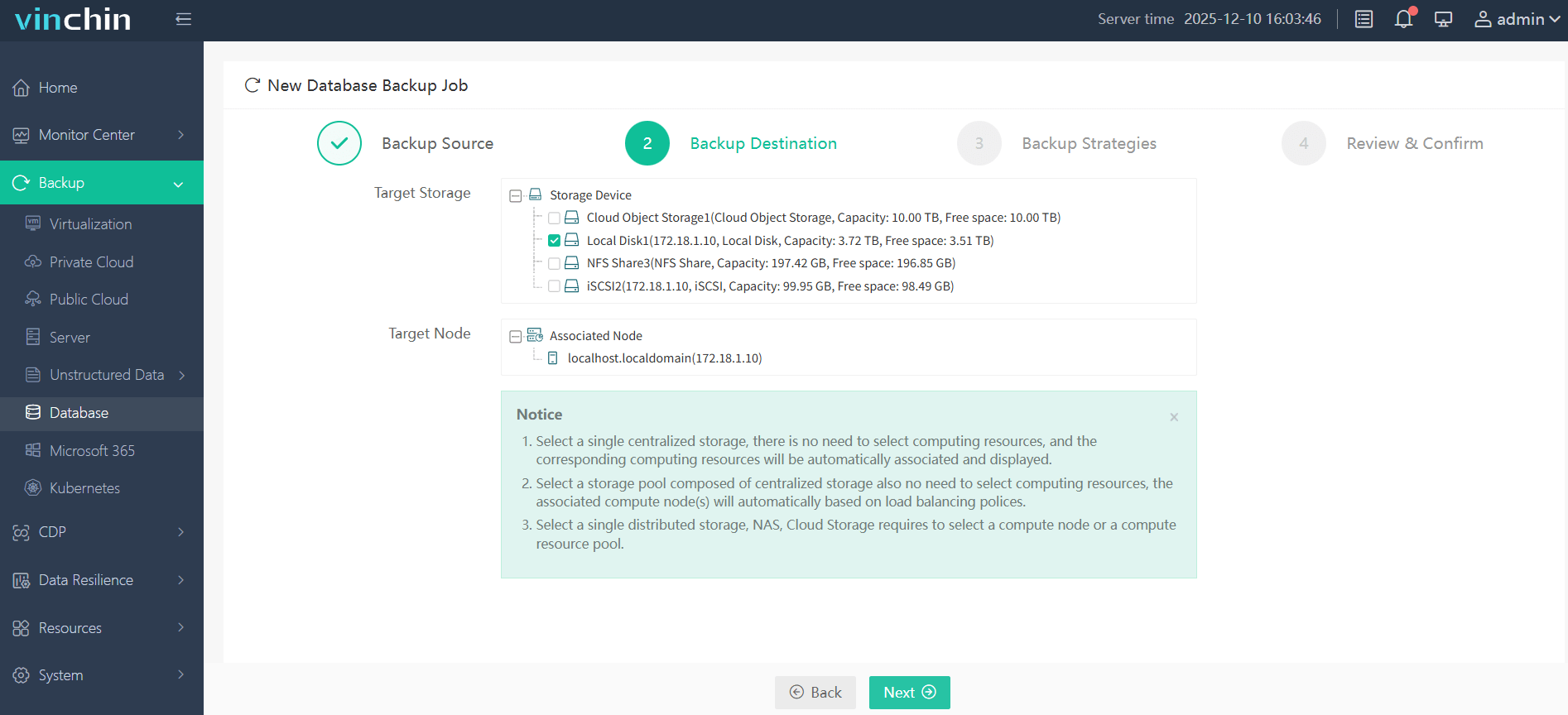
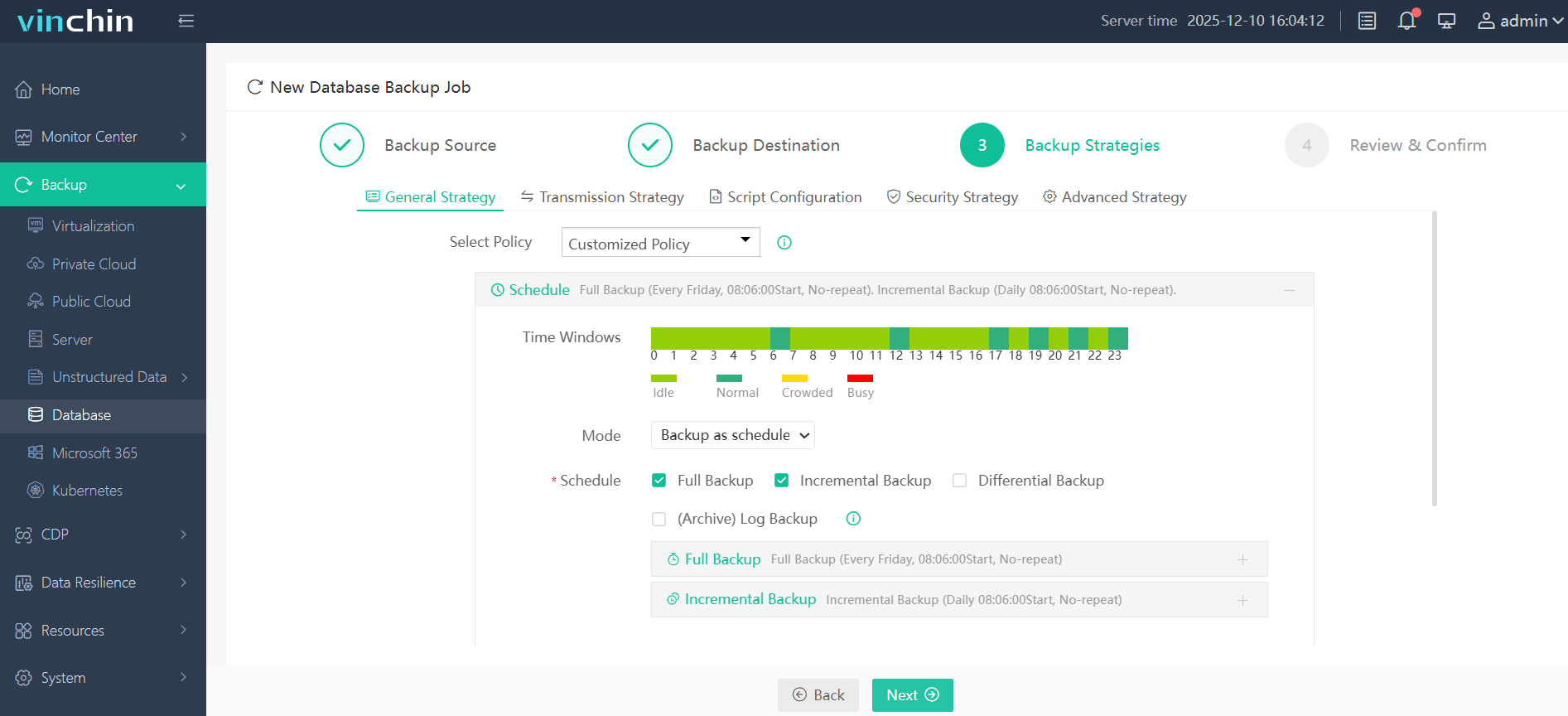
The intuitive web console makes management straightforward:
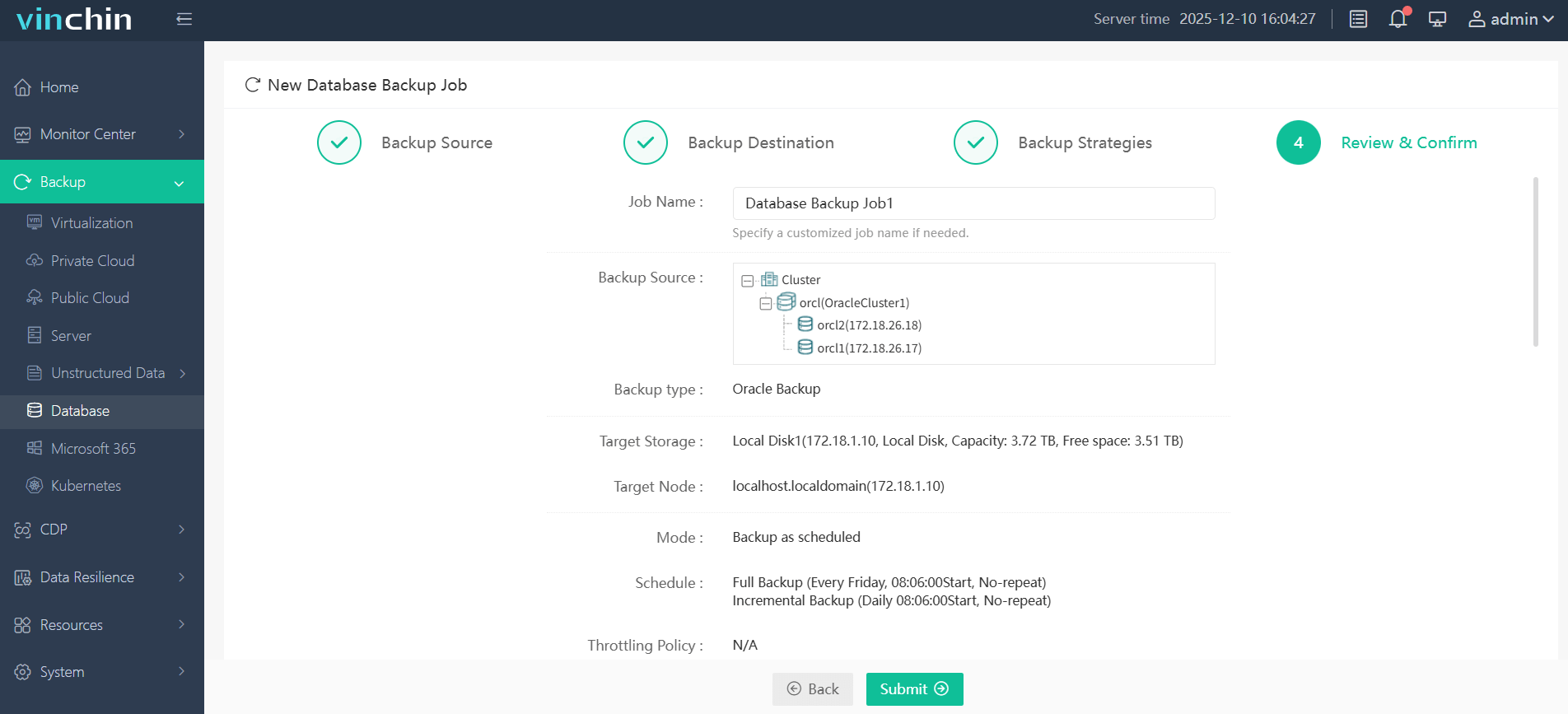
Step 1. Select the Oracle database to back up
Step 2. Choose the backup storage
Step 3. Define the backup strategy
Step 4. Submit the job
A free 60-day trial, comprehensive documentation, and responsive support engineers make deploying Vinchin easy—ensuring efficient protection of your valuable business data from day one.
Backup Datafile Using RMAN FAQs
Q1: How do I schedule automatic daily backups?
Set up a cron job on Linux or Task Scheduler on Windows calling an appropriate shell script containing your RMAN BACKUP DATAFILE command each day at your chosen time slot.
Q2: What should I do if my scheduled script fails overnight?
Check log files generated by your script first then review error messages shown in V$RMAN_OUTPUT, correct underlying issues such as permissions/storage space/network connectivity before rerunning manually if needed.
Q3: How do I configure automatic deletion of old backups?
Use CONFIGURE RETENTION POLICY TO RECOVERY WINDOW OF N DAYS, then add DELETE OBSOLETE after each successful run within your script so outdated sets get purged automatically according policy rules set earlier.
Conclusion
Backing up individual Oracle datafiles using rman gives operations administrators precise control—from quick CLI jobs through robust scripted automation integrated company-wide. For mixed environments needing simplicity plus advanced security features out-of-the-box consider Vinchin—a proven solution trusted worldwide for comprehensive protection without complexity getting in your way!