Managing Oracle database backups is a critical responsibility for any DBA or IT administrator. Over time, backup files can accumulate—some may even disappear if deleted outside of Oracle Recovery Manager (RMAN). When this happens, your backup catalog fills up with entries pointing to missing files. This clutter can lead to confusion or even failed restore operations during emergencies. If you ignore expired backups in your RMAN catalog, you risk running into errors like "RMAN-06059: expected archived log not found" when you need them most. So how do you keep your environment clean? Let’s break down how to delete expired backups in Oracle RMAN step by step.
What Are Expired Backups in RMAN?
Expired backups in RMAN are records that still exist in the repository but whose physical files are missing from disk or tape storage. This situation often arises when someone deletes backup files directly at the operating system level instead of using proper RMAN commands. When RMAN checks for these files and cannot find them during a crosscheck operation, it marks their status as EXPIRED.
It’s important not to confuse expired with obsolete. An obsolete backup is one that exceeds your defined retention policy but still exists physically; an expired backup points to a file that no longer exists at all. These expired entries serve no purpose for recovery—they only clutter your catalog and could cause issues during restores or compliance audits.
Why Do Oracle RMAN Backups Expire?
Backups expire when there’s a mismatch between what RMAN expects and what actually exists on storage media. This usually happens if someone deletes or moves files manually or if there’s an unexpected storage failure. Since RMAN keeps metadata about all backups either in the control file or an external recovery catalog database, it relies on periodic checks—called crosschecks—to verify that each listed file is still present.
When you run a CROSSCHECK BACKUP command, RMAN inspects each entry by checking both its presence and header information where possible. If it cannot locate the file at its recorded location, it updates its status to EXPIRED within the repository. This process helps DBAs spot gaps in their backup strategy early so they can avoid surprises during disaster recovery planning.
Method 1: Delete Expired Backups with RMAN Command
Before removing expired backups from your catalog, always start by running a crosscheck operation. This ensures that all missing files are accurately marked as expired based on their current state—not just outdated assumptions.
Here’s how you proceed:
First, open an RMAN prompt and connect to your target database using appropriate credentials.
1. Run the crosscheck command:
RMAN> CROSSCHECK BACKUP;
This scans every backup entry in your repository—whether stored in the control file or recovery catalog—and flags any missing ones as EXPIRED.
2. For greater precision (especially in large environments), you can target specific object types:
RMAN> CROSSCHECK BACKUPSET;
Or limit scope further:
RMAN> CROSSCHECK BACKUP OF DATABASE;
3. After crosschecking, review which items have been marked as expired:
RMAN> LIST EXPIRED BACKUP;
This displays all expired entries so you know exactly what will be removed next.
4. To delete these records from the repository:
RMAN> DELETE EXPIRED BACKUP;
By default, this prompts for confirmation before deleting each record.
5. To skip confirmation prompts (useful for scripts):
RMAN> DELETE NOPROMPT EXPIRED BACKUP;
6. If you also want to clean up expired archived logs:
RMAN> DELETE EXPIRED ARCHIVELOG ALL;
These commands only remove metadata from the repository—they don’t attempt to delete physical files since those are already gone ([Oracle Docs][1]). Always check output messages carefully; cleaning up regularly keeps your environment tidy and reduces errors during future restores.
For advanced users managing multiple databases through a central recovery catalog: remember that these actions update whichever repository (control file or catalog) you're connected to via your current session.
Method 2: Automate Oracle RMAN Delete Expired Backup Removal
Manually running crosscheck and delete commands works well but can become tedious over time—especially across many databases or environments prone to frequent changes. Automating this process saves time while reducing human error risk.
You can schedule regular cleanup tasks using shell scripts combined with cron jobs on Linux systems—or Task Scheduler on Windows servers.
Here’s how you might automate expired backup deletion safely:
1. Create a shell script named delete_expired_backups.sh containing:
    #!/bin/bash
    export ORACLE_SID=your_db_sid
    export ORACLE_HOME=/path/to/oracle_home
    LOGFILE=/path/to/log/rman_cleanup_$(date +%Y%m%d).log
    $ORACLE_HOME/bin/rman target / log $LOGFILE <<EOF
      CROSSCHECK BACKUP;
      DELETE NOPROMPT EXPIRED BACKUP;
      CROSSCHECK ARCHIVELOG ALL;
      DELETE NOPROMPT EXPIRED ARCHIVELOG ALL;
      EXIT;
    EOF
    # Check exit status; alert DBA team if something fails
    if [ $? -ne 0 ]; then
        echo "RMAN cleanup job failed! See $LOGFILE" | mail -s "RMAN Cleanup Alert" dba-team@yourcompany.com
    fi
2. Make sure only authorized users have access since OS authentication may be used (target /). Secure permissions accordingly:
chmod 700 delete_expired_backups.sh
3. Schedule this script via cron—for example:
0 2 * * * /path/to/delete_expired_backups.sh
This runs daily at 2 AM server time; adjust timing per maintenance windows as needed.
On Windows platforms, use similar logic inside batch scripts scheduled through Task Scheduler—with logging enabled where possible for audit trails.
Automating cleanup ensures consistency across environments while freeing up valuable DBA hours—but always monitor logs after execution so any failures get addressed promptly!
Simplify Oracle Database Backup Management with Vinchin Backup & Recovery
For organizations seeking streamlined management of Oracle database protection alongside other mainstream platforms such as MySQL, SQL Server, MariaDB, PostgreSQL, PostgresPro, and TiDB, Vinchin Backup & Recovery delivers enterprise-grade reliability and flexibility. As a professional solution supporting advanced features—including source-side compression for optimized storage usage, incremental backup strategies tailored for efficiency, batch database protection workflows, multi-level data compression options, and robust data retention policies—it empowers teams to safeguard business-critical data while minimizing operational overheads and maximizing performance across diverse environments.
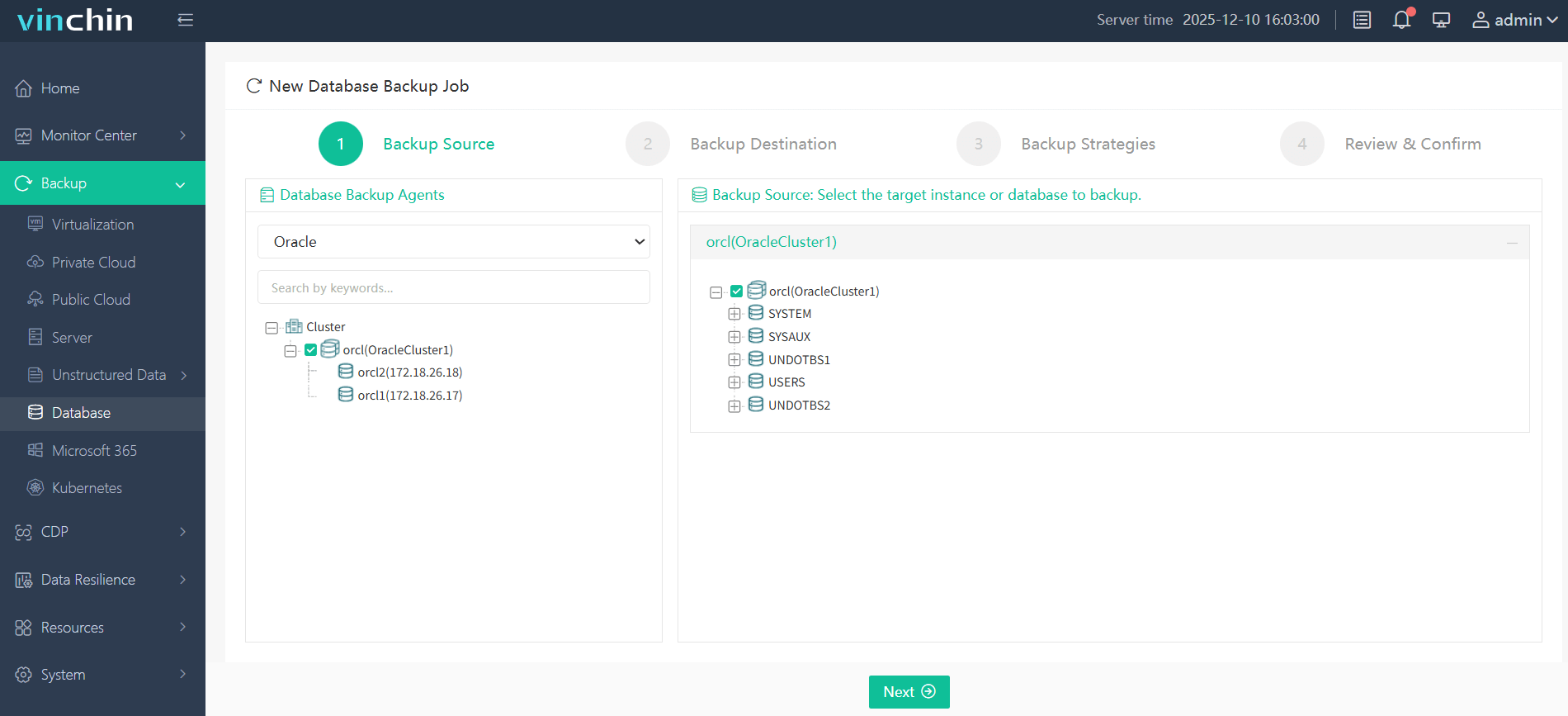
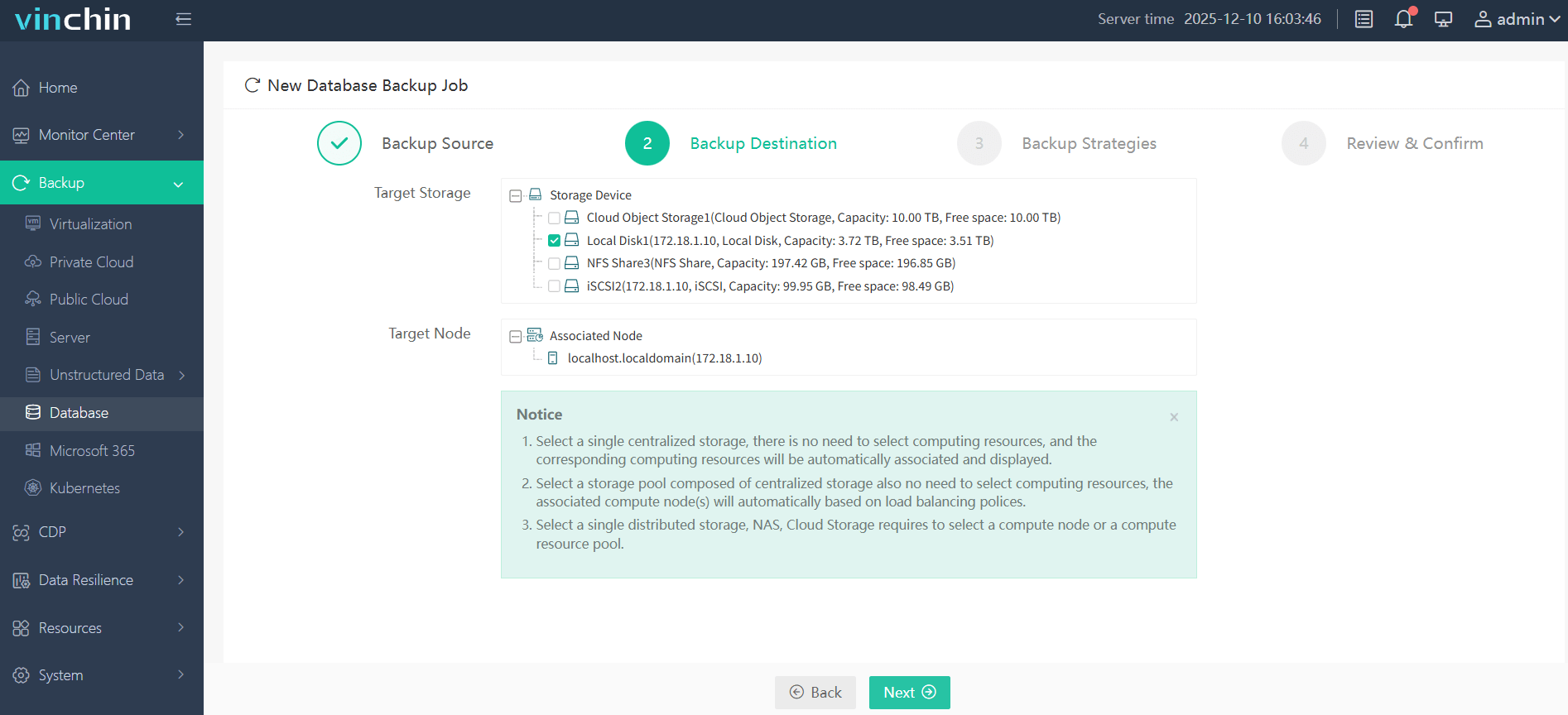
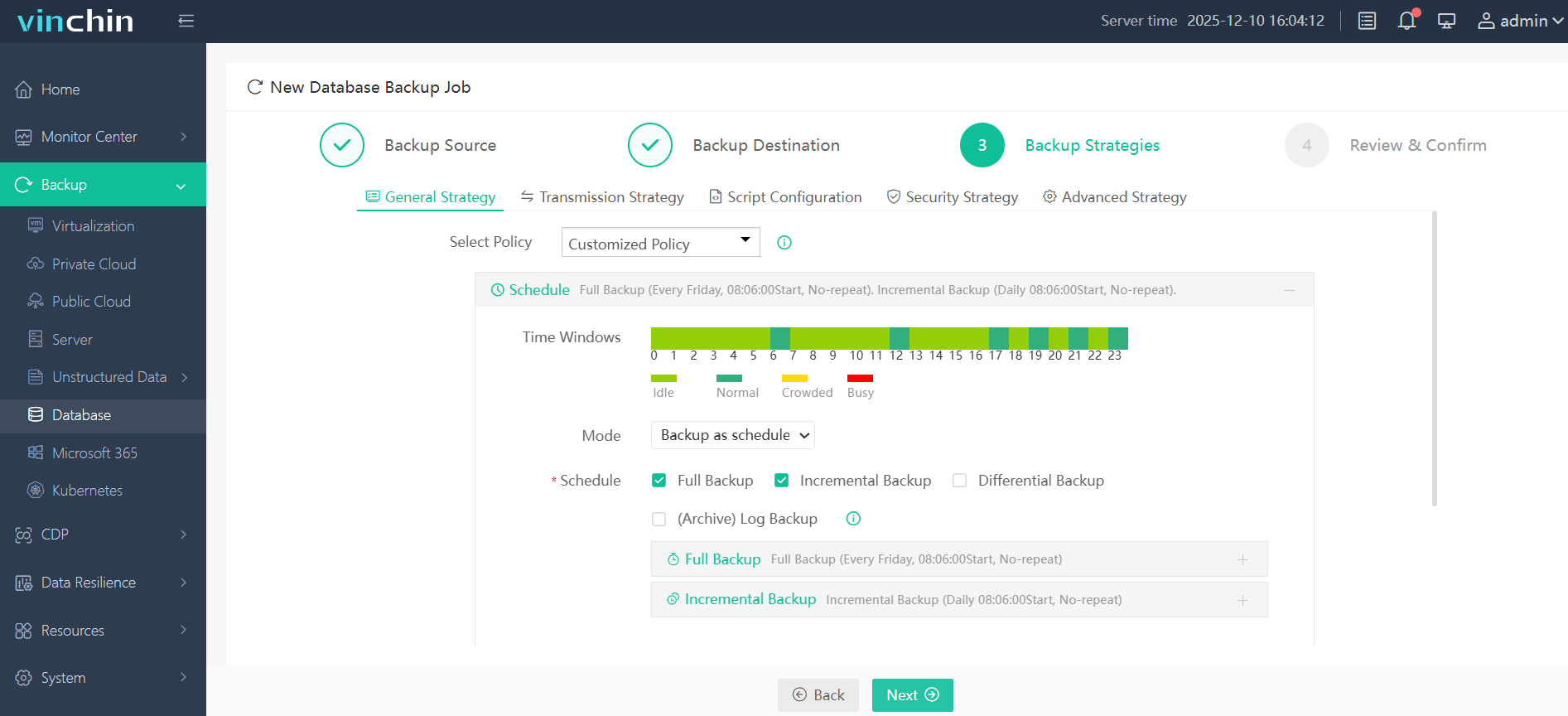
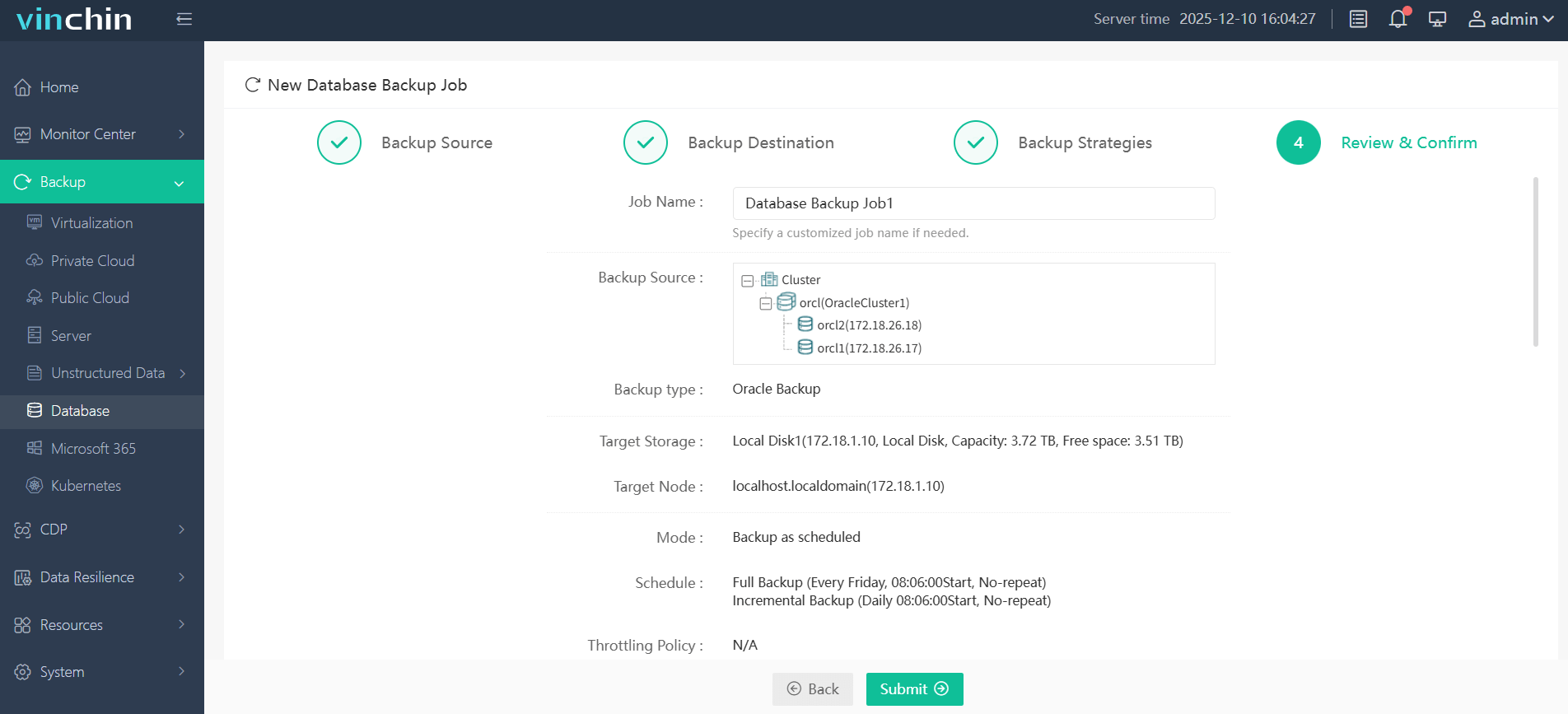
With Vinchin Backup & Recovery's intuitive web console interface, backing up an Oracle database typically involves four straightforward steps:
Step 1: Select the Oracle database instance
Step 2: Choose the desired backup storage
Step 3: Define custom backup strategies
Step 4: Submit the job
Recognized globally for excellence among enterprise customers—with top ratings worldwide—Vinchin Backup & Recovery offers a fully featured 60-day free trial so you can experience comprehensive data protection firsthand; click download now to get started!
Oracle RMAN Delete Expired FAQs
Q1: Can I skip running crosscheck before deleting expired backups?
No—you must run CROSSCHECK BACKUP first so missing files are properly flagged as expired prior to deletion commands being effective.
Q2: Does deleting expired backups reclaim disk space?
No—it only removes metadata from catalogs since those physical files were already deleted outside of normal processes; use DELETE OBSOLETE instead if freeing space is required after meeting retention goals!
Q3: What should I do if some expired records won’t delete?
Use LIST EXPIRED BACKUP, note key numbers then run CHANGE BACKUPPIECE <key_number> UNCATALOG followed by another delete attempt.
Conclusion
Regularly cleaning out expired backups keeps your Oracle environment healthy while preventing restore headaches later on! Use native tools like CROSSCHECK/LIST/DELETE wisely—or streamline everything further using Vinchin's modern platform designed specifically for busy IT teams needing peace-of-mind around-the-clock protection!