If you manage Oracle databases, you know how vital archivelog backups are for recovery and compliance. But how do you check which archivelog sequences have been backed up? This article explains what archivelog backups are, why listing their backup status matters, and how to use Oracle RMAN commands or SQL queries to get exactly the details you need. We’ll walk through both beginner-friendly steps and advanced techniques. By the end, you'll know how to verify your backup chain is complete—so you can recover from any failure with confidence.
What Is Oracle RMAN Archivelog Backup?
Oracle’s Recovery Manager (RMAN) is the built-in tool for backing up and restoring databases. When your database runs in ARCHIVELOG mode, Oracle writes all changes to redo log files. After each log switch, these files become “archivelogs.” They capture every transaction since the last switch. RMAN can back up these archivelogs so you can recover your database to any point in time—even after hardware or software failures. Without regular archivelog backups, point-in-time recovery is impossible.
Understanding the Recovery Chain and Sequence Gaps
Archivelog sequences form an unbroken chain that records every change made in your database. Each sequence number represents a unique archived redo log file created after a log switch event. For full recovery—especially point-in-time restores—you must have every sequence in this chain backed up without gaps.
A gap occurs when one or more required sequences are missing from your backup sets. Even if only one sequence is absent, it breaks your ability to restore recent transactions or roll forward past that point. This risk makes it essential not just to perform backups but also to regularly list which sequences have been protected.
Why List Backup of Archivelog Sequence
Listing the backup status of archivelog sequences is more than a routine check—it’s your safety net against data loss or failed audits. By reviewing which sequences are backed up:
You confirm that all required logs are protected for disaster recovery.
You detect gaps that could break your recovery chain before they cause problems.
You prove compliance during audits by showing complete coverage of transaction history.
You prepare confidently for disaster recovery drills or real incidents.
A single missing sequence can break recovery continuity and lead to unrecoverable data loss or audit failures. Regularly listing archivelog backup status helps ensure no critical logs slip through unnoticed.
Method 1. Using Oracle RMAN List Command
The most direct way to check archivelog backup status is with RMAN’s LIST command. This command shows which archivelog sequences are included in your backup sets—making it easy to spot missing pieces.
First, connect to RMAN with your target database:
rman target /
To list all archived log backups known to RMAN:
LIST BACKUP OF ARCHIVELOG ALL;
This displays every backup piece containing archived logs regardless of sequence or date.
To focus on a specific sequence:
LIST BACKUP OF ARCHIVELOG SEQUENCE n;
Replace n with the desired sequence number—for example:
LIST BACKUP OF ARCHIVELOG SEQUENCE 120316;
For a range of sequences:
LIST BACKUP OF ARCHIVELOG SEQUENCE BETWEEN n1 AND n2;
Example:
LIST BACKUP OF ARCHIVELOG SEQUENCE BETWEEN 1000 AND 1010;
If you want summary output instead of detailed listings:
LIST BACKUP OF ARCHIVELOG SEQUENCE BETWEEN 1000 AND 1010 SUMMARY;
In Oracle RAC environments where multiple threads exist:
LIST BACKUP OF ARCHIVELOG SEQUENCE 1000 THREAD 2;
You can also filter by completion time—for example:
LIST BACKUP OF ARCHIVELOG ALL COMPLETED BEFORE 'SYSDATE-1';
After running these commands, review columns like BP Key (backup piece identifier), Status, Handle (file name), and Completion Time.
If you suspect that RMAN's catalog might be out of sync with actual storage files due to manual deletions or other issues, run this command first:
CROSSCHECK BACKUP;
This updates RMAN’s records so they match what actually exists on disk or tape storage.
Method 2. Querying RMAN Catalog for Archivelogs
Sometimes you need more detail than what RMAN’s LIST command provides—or want results formatted differently for automation purposes. That’s where querying dynamic views comes in handy: views like V$ARCHIVED_LOG, V$BACKUP_PIECE, and V$BACKUP_REDOLOG expose granular information about archived logs’ presence on disk versus their inclusion in backups.
Connect using SQL*Plus as a DBA user before running queries below.
To see all archived logs along with their backup status:
SELECT SEQUENCE#, APPLIED, BACKED_UP, FIRST_TIME, NEXT_TIME
FROM V$ARCHIVED_LOG
ORDER BY SEQUENCE#;
Here:
SEQUENCE# uniquely identifies each log file,
APPLIED indicates whether Data Guard has applied this log,
BACKED_UP shows if/how many times this log was included in an RMAN set,
Timestamps (FIRST_TIME, NEXT_TIME) help correlate activity windows.
To find logs never included in any backup set yet (potential risk):
SELECT SEQUENCE#, NAME
FROM V$ARCHIVED_LOG
WHERE BACKED_UP = 'NO';
-- Or WHERE BACKED_UP = 0; depending on version
Mapping which physical backup pieces contain specific sequences requires joining tables like so:
SELECT b.SEQUENCE#, p.HANDLE, p.COMPLETION_TIME
FROM V$BACKUP_REDOLOG b
JOIN V$BACKUP_PIECE p ON b.SET_STAMP = p.SET_STAMP AND b.SET_COUNT = p.SET_COUNT
WHERE b.SEQUENCE# BETWEEN 1000 AND 1010;
This lets you pinpoint exactly where required archive logs reside—a must before starting complex restores or point-in-time recoveries across large environments.
Vinchin Backup & Recovery: Enterprise-Level Protection for Oracle Databases
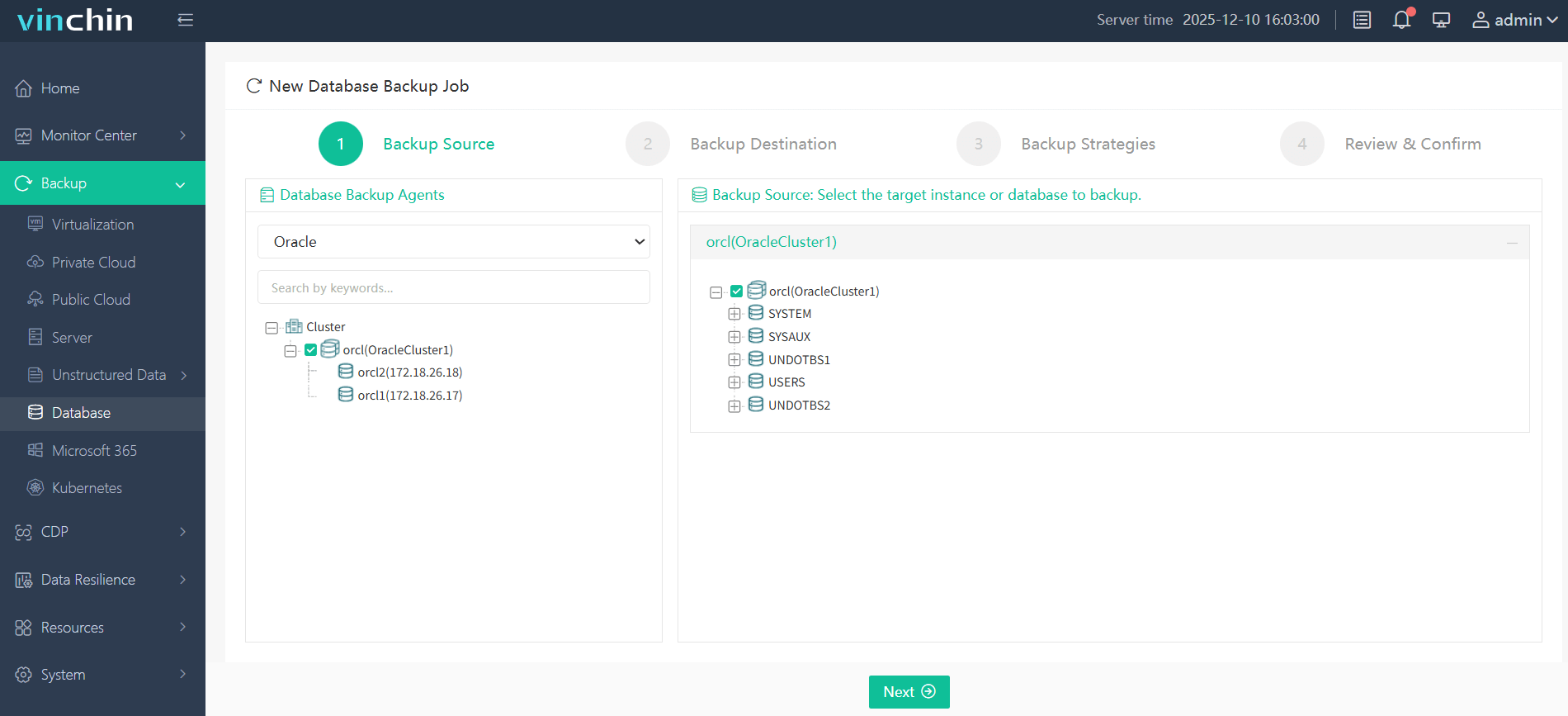
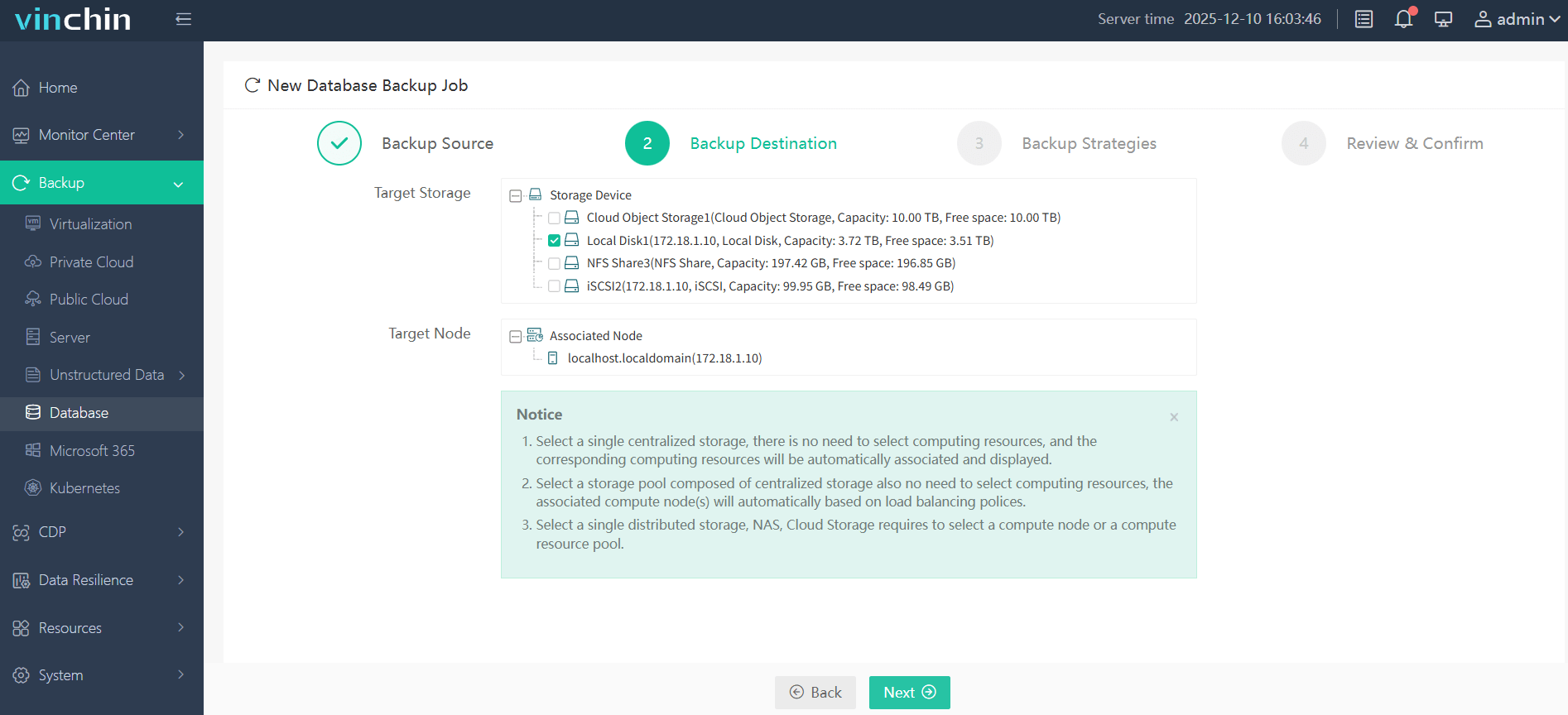
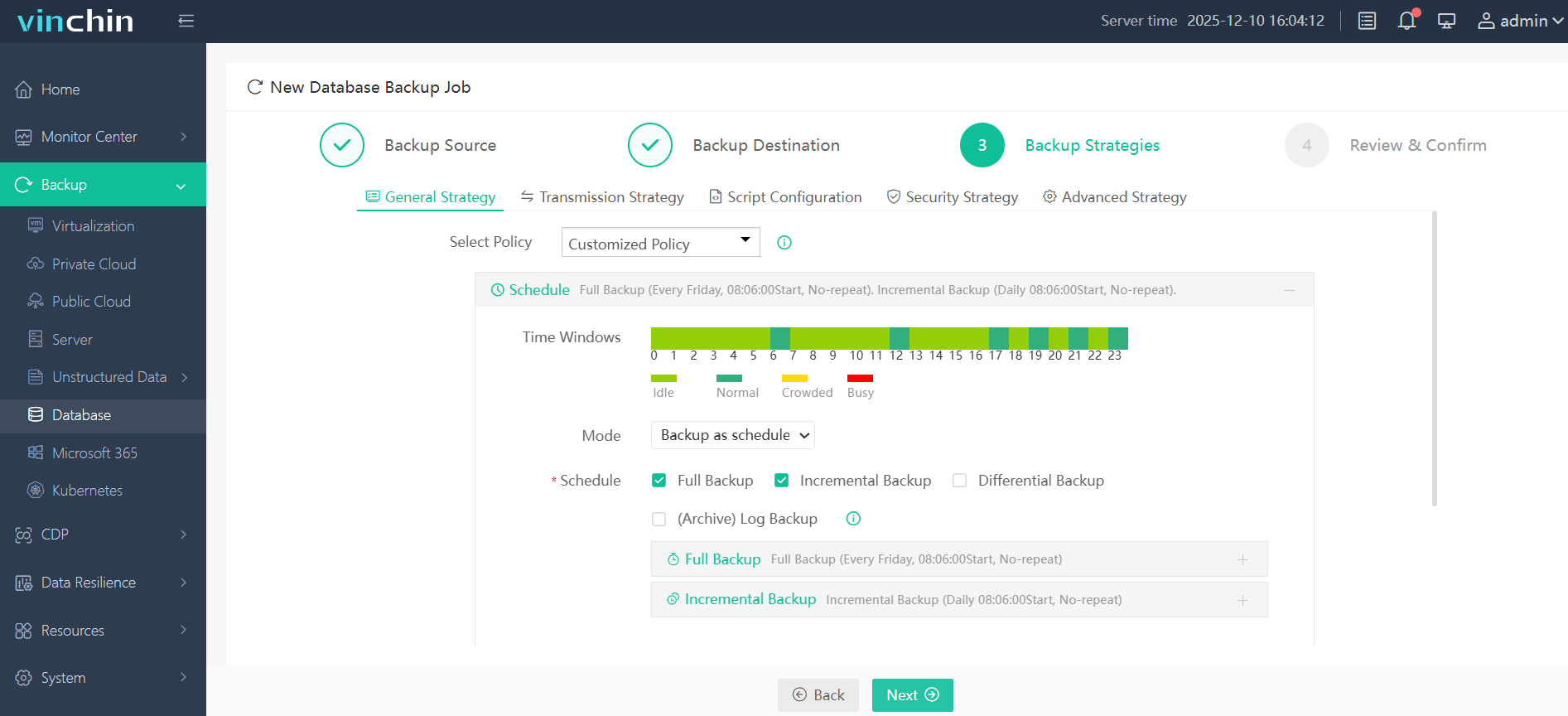
Beyond native tools like RMAN and custom scripting, organizations seeking streamlined enterprise protection should consider Vinchin Backup & Recovery—a professional solution supporting today’s mainstream databases including Oracle (as well as MySQL, SQL Server, MariaDB, PostgreSQL, PostgresPro, and TiDB). For Oracle users specifically, Vinchin Backup & Recovery delivers advanced source-side compression, incremental backup, batch database backup, multi-level data compression, and flexible retention policies such as GFS retention policy. These capabilities optimize storage usage, speed up operations,and simplify compliance management—all within one platform. The intuitive web console makes protecting Oracle simple:
Step 1. Select the Oracle database to back up;
Step 2. Choose the backup storage;
Step 3. Define the backup strategy;
Step 4. Submit the job.
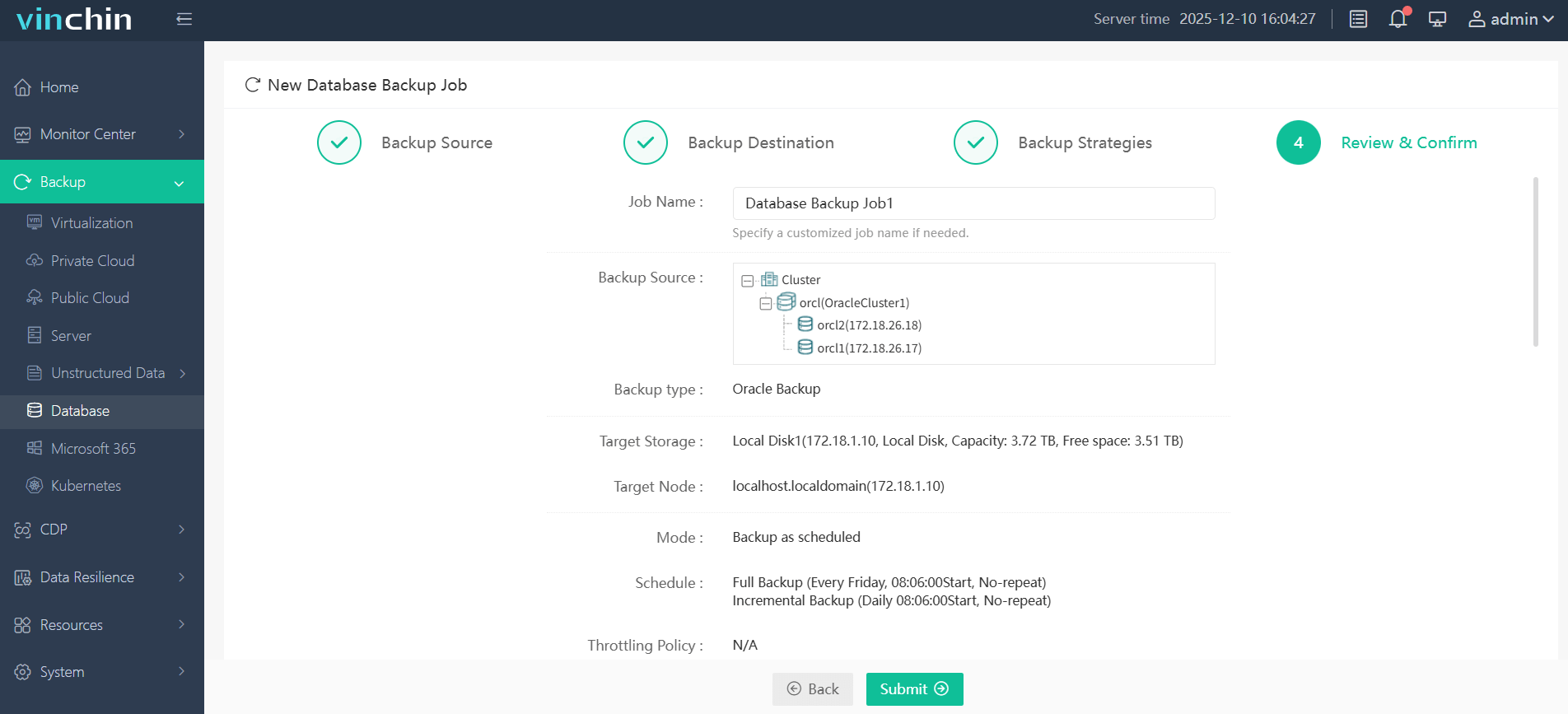
Vinchin Backup & Recovery enjoys global recognition among enterprises—with top ratings worldwide. Try its full-featured free trial for 60 days by clicking download below.
Oracle RMAN List Backup of Archivelog Sequence FAQs
Q1: How do I quickly find out if an archive log exists but hasn’t been backed up?
A1: Run SELECT SEQUENCE#, NAME FROM V$ARCHIVED_LOG WHERE SEQUENCE#=n AND BACKED_UP='NO' ORDER BY SEQUENCE#;
Q2: What should I do if my report shows missing archive log sequences?
A2: Identify missing ranges then run BACKUP ARCHIVELOG FROM SEQUENCE <start> UNTIL SEQUENCE <end>; inside RMAN prompt;
Q3: Can I automate daily alerts about unprotected archive logs?
A3: Yes—schedule shell scripts querying V$ARCHIVED_LOG via cron jobs or use DBMS_SCHEDULER tasks emailing results automatically;
Conclusion
Listing oracle rman list backup of archivelog sequence ensures reliable disaster recovery readiness at every level—from daily operations through audit season. Regular reviews using both commands & queries keep risks low. Vinchin makes protecting critical databases even easier. Try its full-featured trial today!