Backing up your Oracle control file is a critical part of any database protection plan. The control file holds the keys to your database’s structure and recovery. If you lose it, restoring your database becomes much harder—sometimes impossible. For every operations administrator or DBA, knowing how to back up this file is foundational. In this article, I’ll show you how to use Oracle RMAN to back up the control file to disk—both manually and automatically—and explain why this step is so important at every level of expertise.
What Is an Oracle Control File?
An Oracle control file is a small binary file that stores essential metadata about your database. It tracks the database name, datafile and redo log locations, checkpoint information, backup history, and most importantly—the System Change Number (SCN). The SCN acts as a timestamp for changes in your database; it ensures recovery consistency by mapping out exactly what happened when.
Without a valid control file containing accurate SCN data, Oracle cannot mount or open the database. Recovery operations will fail because there’s no definitive map of your current state. Most production systems use multiple (multiplexed) control files in different locations to reduce risk from hardware failure or accidental deletion. Still, regular backups remain vital since even multiplexing cannot protect against logical corruption or simultaneous loss.
Why Backup Control File with RMAN?
Losing a control file can mean losing access to your entire database—even if all other files are intact. While some administrators might consider copying the control file at the operating system level using standard OS tools, this approach has risks: OS copies may not be consistent if taken while the instance is running.
RMAN (Recovery Manager) is Oracle’s built-in tool for managing backups and recovery tasks. When you use RMAN to back up the control file, you ensure that you have a recent copy that matches your current database state—including all structural changes like added tablespaces or datafiles.
RMAN integrates these backups into its catalog (if used), making them easy to track and restore during disaster recovery scenarios such as hardware failures or accidental deletions. Unlike manual OS copies, RMAN validates backup integrity during creation and automates many error-prone steps—reducing human error significantly.
How to Perform Oracle RMAN Backup Controlfile to Disk?
Backing up your control file with RMAN can be done in several ways depending on your needs—from simple manual commands suitable for beginners to more advanced options favored by experienced DBAs.
Start by connecting to RMAN as a user with SYSDBA privileges:
rman target /
This command uses operating system authentication on Unix/Linux systems where you’re logged in as an authorized user. For remote databases or Windows environments—or when using password files—you might connect like this:
rman target sys@your_service_name
To create a manual backup of the current control file:
BACKUP CURRENT CONTROLFILE;
By default, this writes the backup piece(s) to whatever disk location is configured via CONFIGURE CHANNEL DEVICE TYPE DISK settings within RMAN.
If you want more control over where backups go—or need unique filenames for automation—use the FORMAT clause:
BACKUP CURRENT CONTROLFILE FORMAT '/u01/app/oracle/backup/controlfile_%U.bkp';
Here %U generates a unique filename each time—a best practice in scripts or scheduled jobs so older backups aren’t overwritten accidentally.
You can also create an image copy instead of a backup set:
BACKUP AS COPY CURRENT CONTROLFILE FORMAT '/u01/app/oracle/backup/controlfile_copy.ctl';
Image copies are exact byte-for-byte replicas of your current control file on disk; they can be switched into place quickly during certain types of recovery operations—a useful trick for advanced users who need rapid failover capabilities.
After running any backup command above, check status using:
LIST BACKUP OF CONTROLFILE;
This displays all known backups tracked by RMAN—including their completion times and storage paths—helping you verify success at-a-glance.
Want only recent results? Try filtering by date:
LIST BACKUP OF CONTROLFILE COMPLETED AFTER 'SYSDATE-1';
If including the latest control file inside broader data protection routines (like full database or tablespace-level backups), add INCLUDE CURRENT CONTROLFILE:
BACKUP DATABASE INCLUDE CURRENT CONTROLFILE;
This ensures both datafiles and their matching structural metadata are protected together—a must-have for reliable point-in-time recovery after major changes.
Validating and Managing Control File Backups
Once you've created backups with RMAN, it's important not just to trust but also verify their presence—and manage them over time so old files don't fill up storage unnecessarily.
First step: validate existence versus reality on disk using crosscheck commands:
CROSSCHECK BACKUP OF CONTROLFILE;
This tells RMAN to compare its internal records against actual files found on disk; missing pieces get flagged so you're aware before disaster strikes.
Next: keep storage tidy by removing obsolete entries based on retention policy settings:
DELETE OBSOLETE;
Obsolete means "no longer needed" according to rules you've set—for example keeping only seven days’ worth of recoverable history—which helps prevent wasted space without risking recoverability.
Regularly running these checks keeps both performance high and surprises low when emergencies arise!
How to Automate Oracle RMAN Control File Backups?
Manual backups work—but automation works better! With busy production databases changing daily (or hourly), relying solely on memory invites trouble down the road. That’s why enabling automatic autobackup features within RMAN should be standard practice at any skill level.
Turn on automatic autobackup like this:
CONFIGURE CONTROLFILE AUTOBACKUP ON;
Now every time you run BACKUP, COPY, or make structural changes such as adding tablespaces/datafiles/logs—the latest version gets saved automatically without extra effort from you!
By default these autobackups land in platform-specific folders: $ORACLE_HOME/dbs on Unix/Linux systems; %ORACLE_HOME%\database under Windows installations unless otherwise specified via configuration commands below:
Customize location/naming pattern using format variables such as %F (which encodes DBID plus timestamp):
CONFIGURE CONTROLFILE AUTOBACKUP FORMAT FOR DEVICE TYPE DISK TO '/u01/app/oracle/backup/cf_%F.bkp';
Why bother? Unique names prevent overwrites during repeated runs—and storing outside default directories makes cleanup easier later if space runs tight elsewhere!
For truly hands-off operation integrate these tasks into existing job schedulers:
On Linux/Unix add lines like below into crontab (crontab -e):
0 2 * * * /u01/app/oracle/scripts/rman_controlfile_backup.sh
Make sure rman_controlfile_backup.sh sets environment variables (ORACLE_SID, ORACLE_HOME) explicitly before calling rman, logs output somewhere safe for troubleshooting later—and includes error handling logic if possible!
On Windows platforms use Task Scheduler instead; point it at batch scripts containing similar logic adapted for local paths/environment setup requirements there too.
Enterprise-Grade Oracle Database Protection with Vinchin Backup & Recovery
For organizations seeking streamlined enterprise-level protection beyond native tools alone, Vinchin Backup & Recovery delivers robust solutions tailored for modern databases—including comprehensive support for Oracle alongside MySQL, SQL Server, MariaDB, PostgreSQL, PostgresPro, and TiDB environments. As an advanced platform designed specifically for business-critical workloads, Vinchin Backup & Recovery offers key features such as incremental backup, advanced source-side compression, batch database backup management across multiple instances, granular data retention policies including GFS retention strategies, and secure cloud/tape archiving integration—all working together for efficient operations and resilient disaster recovery readiness.
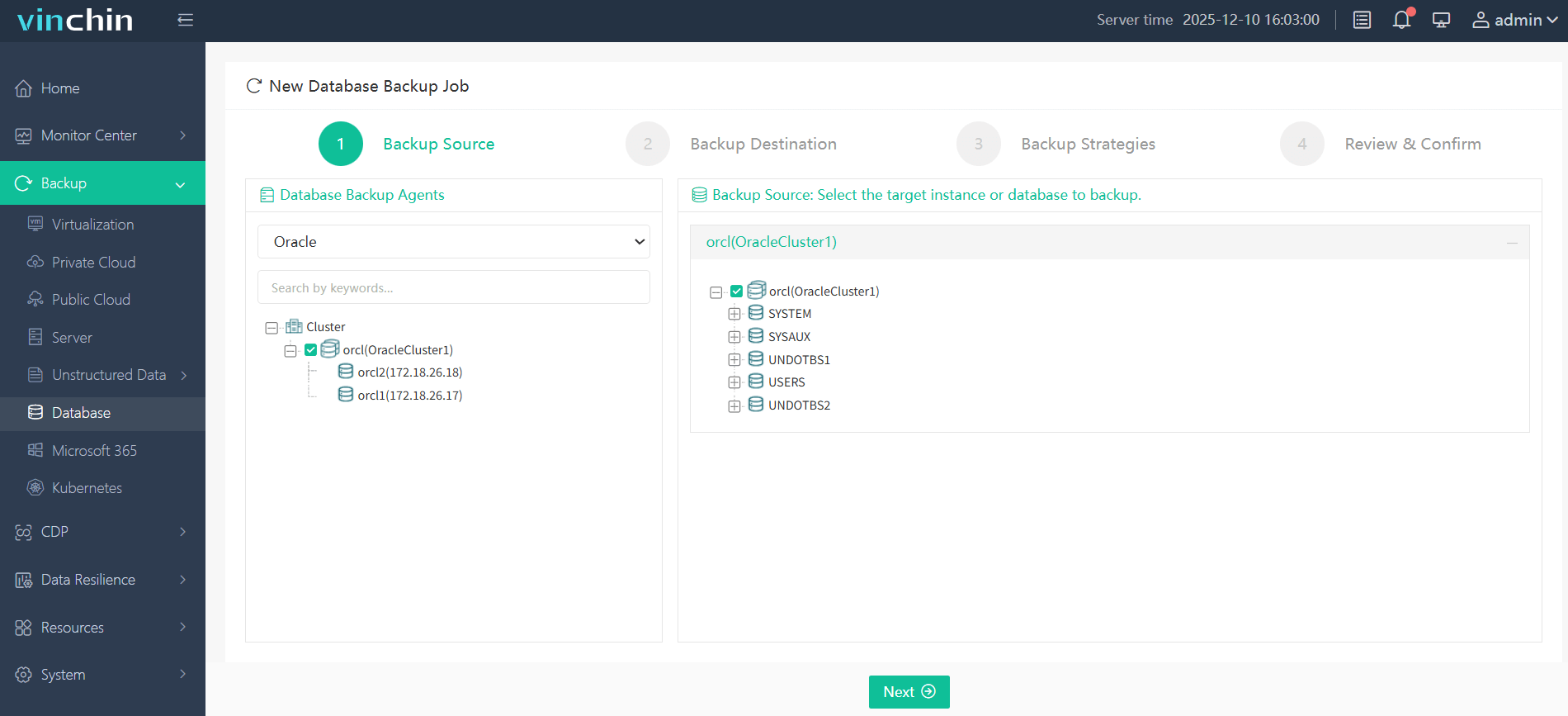
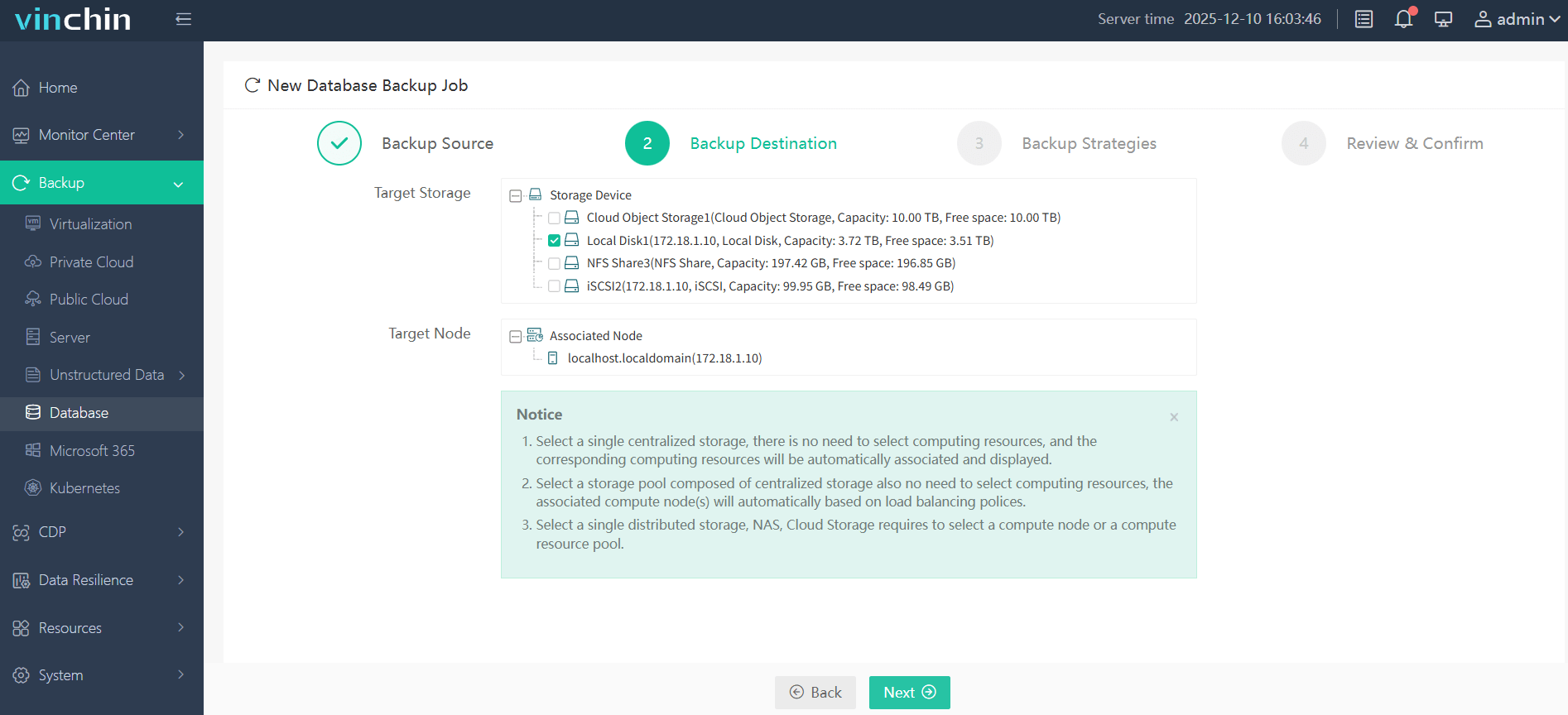
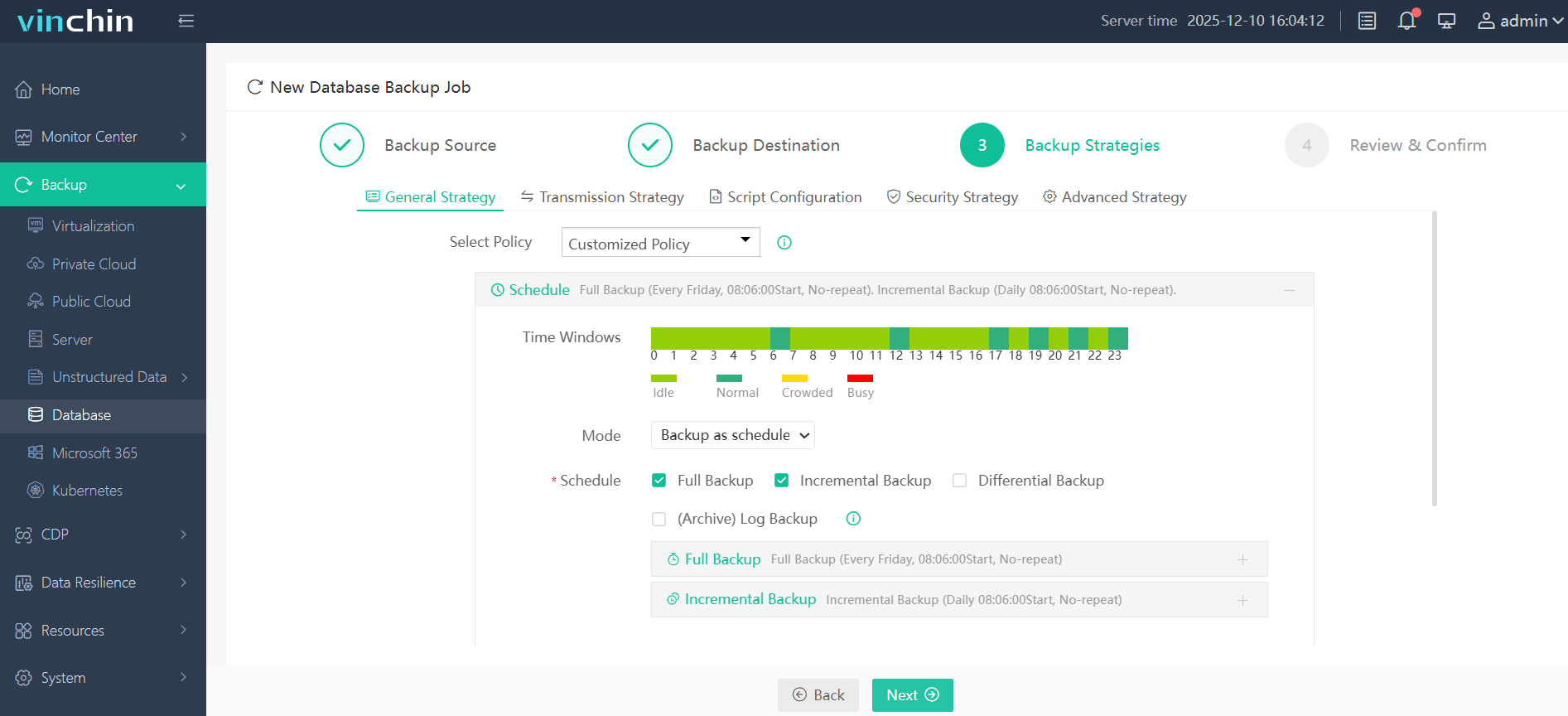
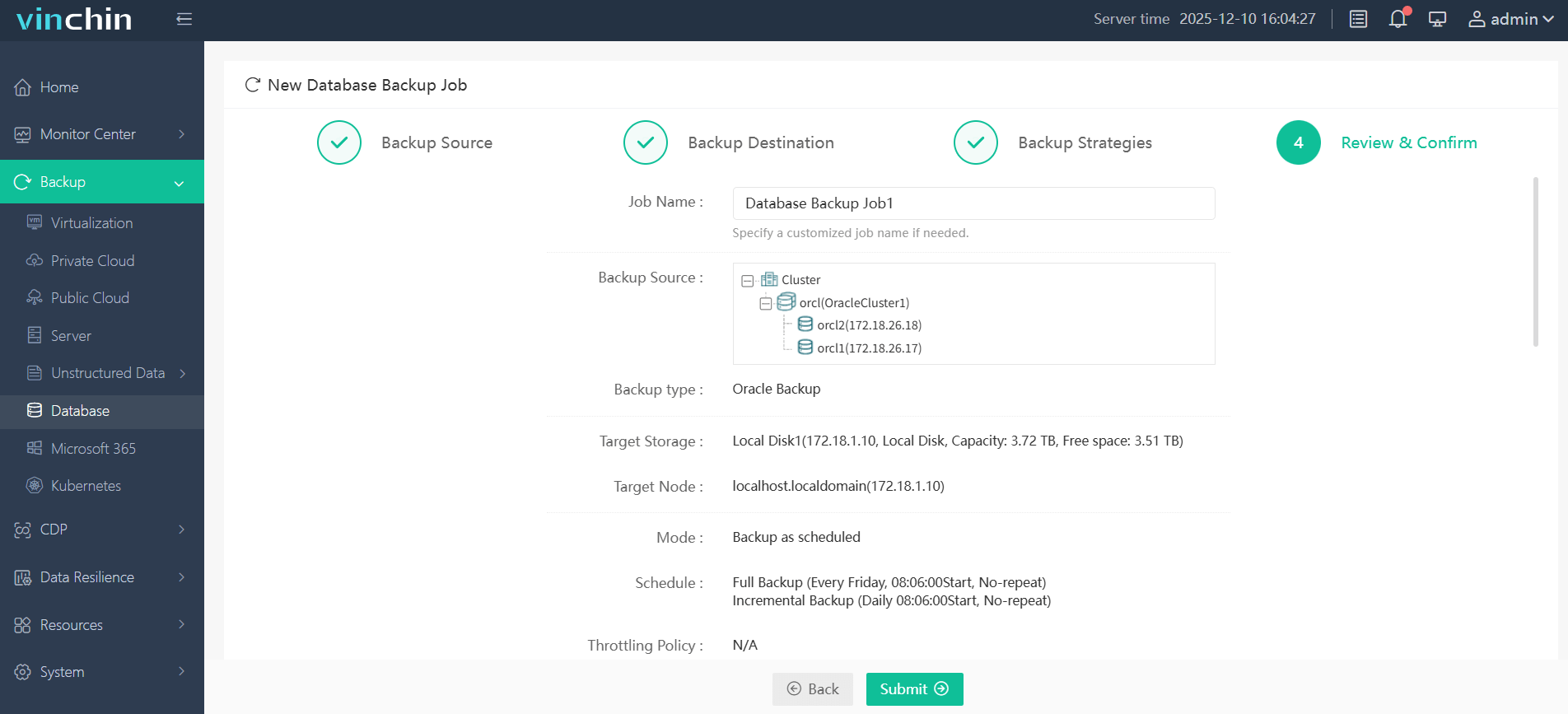
With Vinchin Backup & Recovery’s intuitive web console interface backing up an Oracle environment typically involves four straightforward steps:
Step 1. Select the Oracle database to back up
Step 2. Choose the backup storage
Step 3. Define the backup strategy
Step 4. Submit the job
Recognized globally among enterprise IT teams—with thousands of satisfied customers—Vinchin Backup & Recovery consistently earns top ratings for reliability and innovation. Experience its full feature set free for 60 days; click download now and see why leading organizations trust Vinchin worldwide.
Oracle RMAN Backup Controlfile to Disk FAQs
Q1: How do I confirm my last automated control file backup worked?
A1: Run LIST BACKUP OF CONTROLFILE in RMAN; check timestamps match expected schedules; review logs if issues appear.
Q2: Can I restore my backed-up control file onto another server running a different version?
A2: No; restore requires matching major/minor release numbers between source/destination servers due compatibility limits enforced by Oracle Database itself.
Q3: What actions should I take if every known copy of my backed-up control files disappears?
A3: Use CREATE CONTROLFILE along with archived logs/datafiles per documented procedures—but expect complex manual intervention/recovery steps ahead!
Q4: How often does automatic autobackup save my latest changes?
A4: With autobackup enabled it happens after every successful BACKUP/COPY operation plus whenever structural modifications occur—no extra scheduling required.
Conclusion
Backing up your Oracle control file with RMAN protects against costly downtime caused by accidental loss or corruption—whether through manual routines or fully automated workflows integrated into larger strategies involving catalogs/policies/testing cycles alike! For those seeking even simpler solutions packed full enterprise-grade features consider trying Vinchin today—it could transform how confidently YOU sleep at night!