Are your Oracle RMAN backups taking too long or using too much storage? Many database administrators face these challenges as data grows and backup windows shrink. Nightly full backups may no longer be feasible, or you might see storage costs rise faster than expected. Optimizing RMAN backups is not just about speed—it’s about reliability, efficiency, and making sure you can recover when it matters most. Let’s break down the key concepts and practical steps to get the most from your Oracle RMAN backup strategy.
What Is Oracle RMAN Backup Optimization?
Oracle RMAN (Recovery Manager) backup optimization is a set of features and techniques that help you avoid unnecessary backups, speed up backup jobs, and reduce storage usage. When enabled with the CONFIGURE BACKUP OPTIMIZATION ON command in RMAN, this feature tells Oracle to skip files that have not changed since their last valid backup—if certain conditions are met.
RMAN checks if a datafile or archived log already exists in a previous backup set on the same device type before deciding whether to back it up again. For example, if an archived redo log has already been backed up to disk or tape according to your retention policy—and that copy is still accessible—RMAN will skip it during subsequent runs.
Backup optimization works best with commands like BACKUP DATABASE, BACKUP ARCHIVELOG ALL, or when backing up read-only tablespaces after their initial backup. However, there are limits: for full database backups using image copies or if older backups have expired or been deleted from storage/RMAN catalog, optimization may not skip unchanged files.
It’s important to know that enabling optimization does not mean every unchanged file is always skipped; files must meet strict criteria based on checkpoint SCNs (system change numbers), availability of prior backups in the repository/catalog, and device type matching. Understanding these details helps prevent surprises during maintenance windows.
Why Optimize Your RMAN Backups?
Optimizing RMAN backups offers benefits beyond saving time:
You can reduce your backup window so jobs finish during off-peak hours.
Storage costs drop because duplicate data isn’t stored repeatedly.
Production systems experience less load during critical business periods.
Recovery objectives become easier to meet since only necessary files are retained.
System stability improves thanks to more efficient use of resources.
If you’ve ever had a slow-running job spill into business hours or struggled with limited disk space for new backups—or worried about missing recovery point objectives—you know how crucial oracle rman backup optimization can be.
How to Improve Backup Performance Using Oracle RMAN Parallelism?
Improving backup speed often comes down to how many channels RMAN uses in parallel. Each channel acts as a separate stream of data from your database server to the target storage device—whether disk or tape.
By increasing channel count through parallelism settings in RMAN, you enable multiple parts of your database to be read and written at once. This can dramatically cut total elapsed time for large databases where single-threaded jobs would take hours longer.
To configure default parallelism for all automated jobs:
RMAN> CONFIGURE DEVICE TYPE DISK PARALLELISM 4;
This sets four channels as standard whenever you run a disk-based job unless overridden manually later.
For more control over specific tasks—or when scripting complex workflows—you can allocate channels directly inside a RUN block:
RUN {
  ALLOCATE CHANNEL ch1 DEVICE TYPE DISK;
  ALLOCATE CHANNEL ch2 DEVICE TYPE DISK;
  ALLOCATE CHANNEL ch3 DEVICE TYPE DISK;
  ALLOCATE CHANNEL ch4 DEVICE TYPE DISK;
  BACKUP DATABASE;
}
Each channel can write its output file independently; directing them onto different disks boosts throughput even further:
CONFIGURE CHANNEL 1 DEVICE TYPE DISK FORMAT '/disk1/%U';
CONFIGURE CHANNEL 2 DEVICE TYPE DISK FORMAT '/disk2/%U';
CONFIGURE CHANNEL 3 DEVICE TYPE DISK FORMAT '/disk3/%U';
CONFIGURE CHANNEL 4 DEVICE TYPE DISK FORMAT '/disk4/%U';
This approach works best if your underlying physical disks aren’t bottlenecked by shared controllers or network links.
But don’t overdo it! Allocating more channels than your hardware supports may actually slow things down due to contention for CPU cycles or disk bandwidth. Always monitor system metrics such as CPU utilization (using tools like top/vmstat), memory consumption (free/sar), and disk I/O rates (iostat). Adjust channel count until you find an optimal balance.
Parallelism also applies when restoring data: multiple channels can speed up recovery just as they do during backup creation—a useful tip when planning disaster recovery drills!
How to Reduce Storage Usage With Oracle RMAN Compression?
Storage costs add up quickly with frequent full database backups—especially if retention policies require keeping weeks’ worth of history online at all times. That’s where built-in compression comes into play within oracle rman backup optimization strategies.
You enable compression by adding the clause:
RMAN> BACKUP AS COMPRESSED BACKUPSET DATABASE;
Or make this setting permanent for all future disk-based jobs:
RMAN> CONFIGURE DEVICE TYPE DISK BACKUP TYPE TO COMPRESSED BACKUPSET;
Compression algorithms vary depending on your Oracle edition:
RMAN> CONFIGURE COMPRESSION ALGORITHM 'BASIC';
The BASIC algorithm is included with all supported editions; MEDIUM/HIGH/LOW require an Advanced Compression license option—so check licensing before switching algorithms in production environments!
Compression reduces file size but increases CPU load during both writing (backup) and reading (restore). If servers have spare CPU capacity during off-hours—or if running on modern multi-core processors—the trade-off usually pays off handsomely in reduced storage bills without impacting other workloads.
Want proof? Compare compressed vs uncompressed sets using OS-level tools like du/ls -lh after each run—or query V$BACKUP_SET view inside SQL*Plus/RMAN itself for detailed statistics per job run.
Combining compression with parallelism multiplies benefits: smaller files move faster across networks/disks while multiple streams keep hardware busy throughout the process—a win-win scenario!
Strategic Considerations for Recovery—not Just Backup
Speedy backups save money—but only reliable restores save businesses! Every change made under “optimization” banners should be tested against real-world disaster scenarios outside production first wherever possible:
After adjusting parallelism/compression/retention policies:
1. Restore test copies onto non-production hosts using latest available sets
2. Time how long full/incremental recoveries take versus old baseline
3. Confirm application consistency post-recovery—not just database open status!
4. Document lessons learned so future staff inherit proven playbooks
Archivelog management deserves special attention here: pairing commands like
BACKUP ARCHIVELOG ALL DELETE INPUT;
with well-tuned retention policies (RECOVERY WINDOW OF n DAYS/REDUNDANCY n) keeps space usage predictable while ensuring enough logs survive between scheduled runs—even if unexpected outages occur mid-cycle!
Finally: consider registering databases within an external Recovery Catalog rather than relying solely on local controlfiles/repositories; catalogs scale better across fleets of servers/databases while making cross-site restores simpler via centralized metadata tracking—a big win for larger enterprises managing hundreds/thousands of instances worldwide!
Enhance Your Oracle Database Protection With Vinchin Backup & Recovery
For organizations seeking streamlined enterprise-level protection specifically tailored for Oracle environments—as well as MySQL, SQL Server, MariaDB, PostgreSQL, PostgresPro, and TiDB—Vinchin Backup & Recovery delivers comprehensive coverage across today’s mainstream databases. The solution stands out by offering advanced source-side compression, incremental backup capabilities, batch database processing options, flexible data retention policies including GFS support, and robust any-point-in-time recovery—all designed to maximize efficiency while minimizing risk and resource consumption overall.
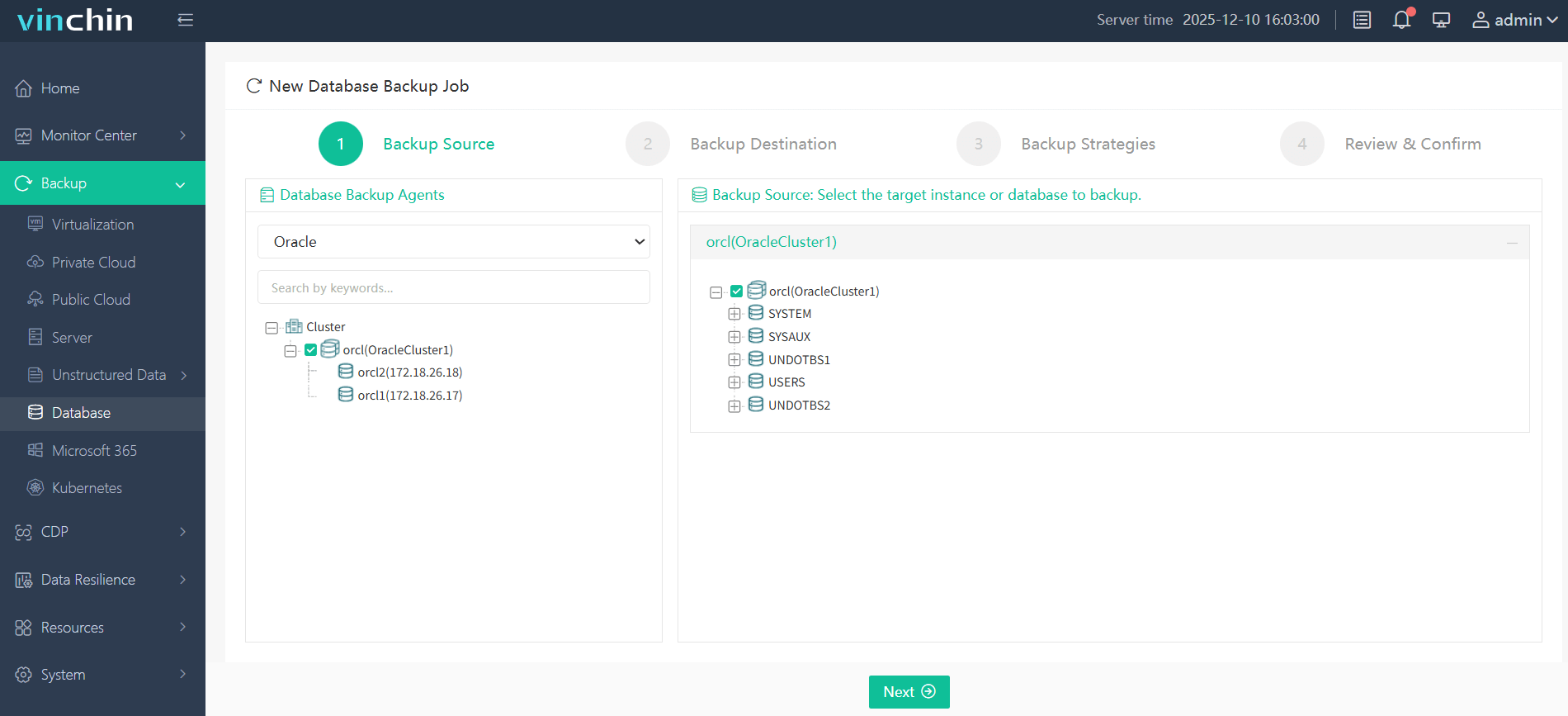
With its intuitive web console interface, safeguarding your Oracle environment takes just four steps:
Step 1. Select the Oracle database to back up;
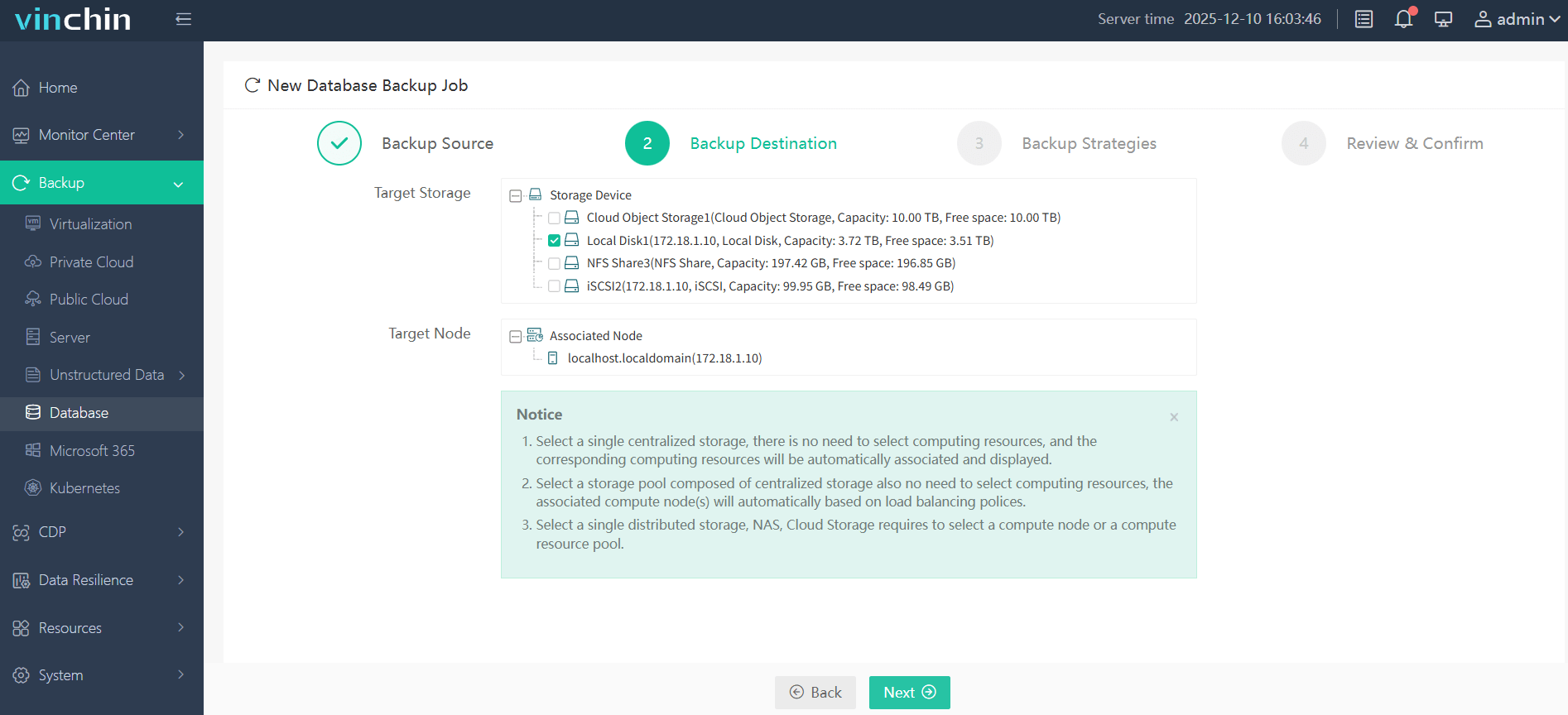
Step 2. Choose the desired backup storage location;
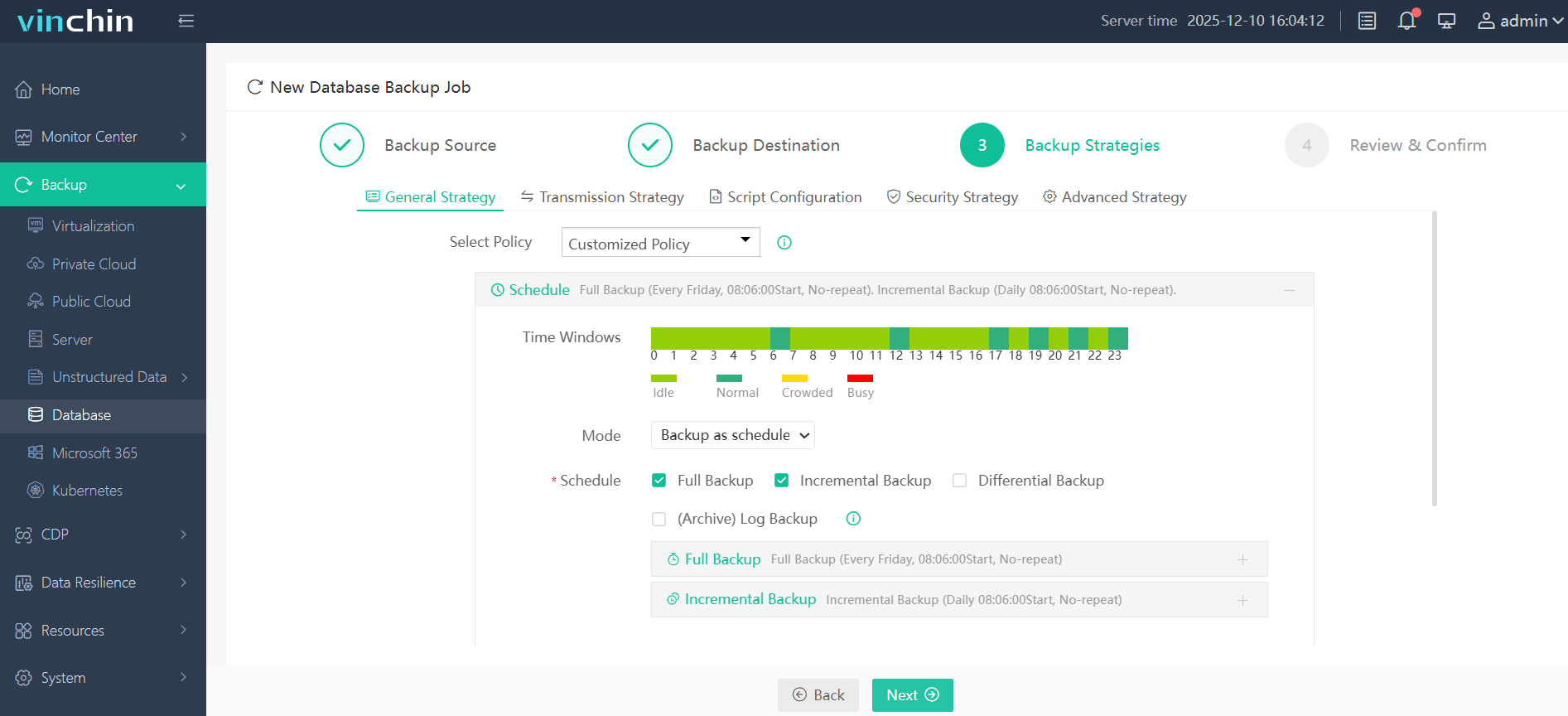
Step 3. Define a custom-fit strategy based on business needs;
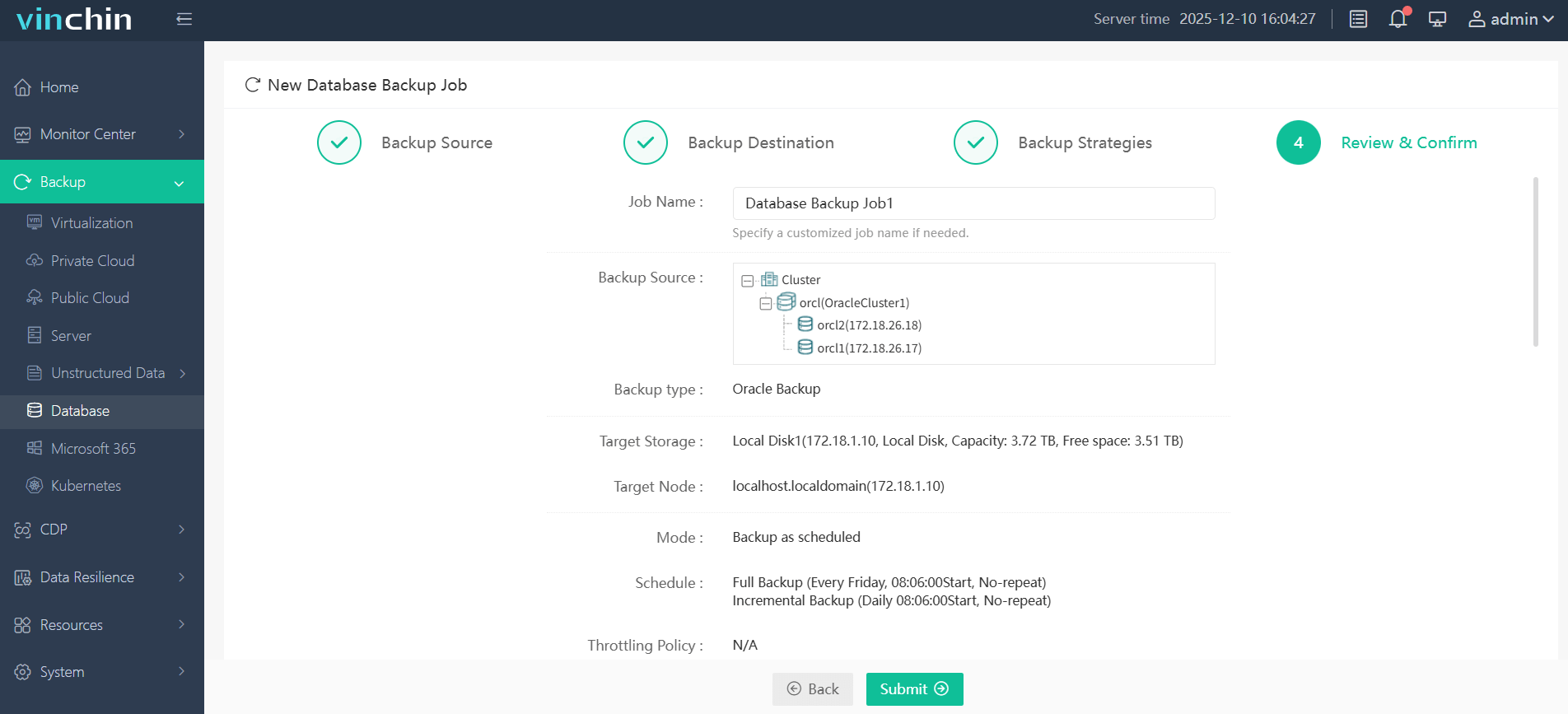
Step 4. Submit the job—all within minutes regardless of deployment scale or complexity.
Recognized globally by thousands of enterprises for reliability and ease-of-use—with top customer ratings—Vinchin Backup & Recovery offers a fully functional free trial lasting 60 days so you can experience its power firsthand; click below to get started today.
Oracle RMAN Backup Optimization FAQs
Q1: How do I check if my last archive log was backed up successfully?
A1: Query V$ARCHIVED_LOG where STATUS equals "A" (available) then review completion time columns after each job run.
Q2: What should I do if my optimized full database backups still include unchanged files?
A2: Ensure previous valid copies exist within retention policy limits—and confirm those sets remain accessible via configured device paths/catalog entries before rerunning jobs with optimization enabled.
Q3: Can changing compression algorithms impact my ability to restore older sets?
A3: Yes; always test restores after switching algorithms since older sets may require matching decompression options/licensing at restore time.
Conclusion
Optimizing oracle rman backups boosts performance while reducing costs—but never sacrifice recoverability along the way! Use parallelism wisely; compress where possible; monitor results closely; validate regularly—and let Vinchin help centralize protection across all platforms with ease through its powerful suite of tools!