Managing Oracle database backups is one of the most important jobs for operations administrators. Over time, backup files can fill up your storage and make recovery more complex. If you do not clean up old or unneeded backups in a careful way, you risk wasting space or even losing critical restore points. Oracle Recovery Manager (RMAN) offers flexible ways to organize and remove backups—including using tags for precise control. But how do you safely delete backups by tag without risking your recovery plan? Let’s break down the process step by step.
What Is an RMAN Backup Tag?
An RMAN backup tag is a user-defined label that you assign when creating a backup or backup set in Oracle RMAN. Tags help you identify, group, and manage backups for specific purposes—such as before a major upgrade or after a full export. When you create a backup in RMAN, you can add a tag using the TAG keyword right in your command line or script.
For example:
BACKUP DATABASE TAG = 'WEEKLY_FULL_20240601';
This makes it easy to find related backups later—even if your environment has hundreds of files across many days or weeks. With tags, you can quickly locate all files tied to an event or project milestone.
Tags are especially useful when managing retention policies or cleaning up after test restores. They reduce confusion about which files are safe to delete because each tag links directly back to its purpose.
Why Delete Backups by Tag?
Deleting backups by tag gives you precise control over storage management while keeping your backup catalog organized. Instead of removing all old backups based on age alone—or risking accidental deletion—you can target only those created for specific events.
Imagine finishing a system upgrade where special pre-upgrade backups were made with their own tag. Once everything is stable and tested, those tagged backups may no longer be needed but others must stay for compliance reasons. By deleting only these tagged sets, you avoid touching unrelated data.
This approach also helps during audits or when following strict data retention rules since every deleted file is clearly linked to its original purpose through its tag.
Best Practices for Tag Naming and Lifecycle
Before diving into deletion commands, it pays to plan how you name tags—and how long they should live in your system.
A good tagging convention uses clear patterns that reflect both purpose and date—for example: FULL_PROD_20240601, INCR_PRE_UPGRADE, or ARCHIVE_MIGRATION_JUNE. Consistency makes searching easier later on.
Linking tags with documented retention policies helps automate cleanup tasks safely. For instance:
Use unique tags per project phase (PRE_MIGRATION_Q2)
Include dates in YYYYMMDD format
Avoid generic names like “test” unless truly temporary
Review existing tags regularly so that expired ones are removed promptly but necessary ones remain until their job is done.
By setting these standards early—and sticking with them—you make future maintenance much simpler while reducing risk during deletions.
How to Use the Oracle RMAN Delete Backup Tag Command?
Deleting old Oracle database backups by tag requires care but follows clear steps within RMAN’s command-line interface.
First connect to your target database:
rman target /
Next list all current backups along with their tags:
LIST BACKUP;
This lets you confirm which files have which tags before making changes—a crucial safety step!
To delete all backups associated with a specific tag:
DELETE BACKUP TAG = 'your_tag';
Replace 'your_tag' with the actual label used during backup creation (for example: 'WEEKLY_FULL_20240601'). RMAN displays matching items and asks for confirmation before deleting anything—giving one last chance to review what will be removed.
If you want this process fully automated (no prompts), add NOPROMPT:
DELETE NOPROMPT BACKUP TAG = 'your_tag';
Sometimes errors appear if physical files were deleted outside of RMAN—leaving catalog entries behind but no actual data on disk. In such cases:
1. Run CROSSCHECK BACKUP;
This updates each entry’s status based on whether its file still exists.
2. Then run DELETE EXPIRED BACKUP TAG = 'your_tag';
This removes catalog records marked as expired (missing from disk).
If issues persist due to I/O errors or catalog inconsistencies—not just missing files—you may need:
DELETE FORCE NOPROMPT BACKUP TAG = 'your_tag';
The FORCE option tells RMAN to ignore certain errors during deletion attempts; use it only when standard methods fail since it removes both physical files (if present) and catalog entries regardless of status.
Remember: Deleting by tag affects both datafile backup sets and archive log pieces created under that label unless further filtered (e.g., DELETE BACKUPSET TAG ...).
Scripting and Automation Example
Automating cleanup tasks saves time—and reduces human error—in large environments where regular pruning is required.
Here’s an annotated script showing best practice workflow:
RUN {
    -- Step 1: Update status of tagged items
    CROSSCHECK BACKUP TAG = 'WEEKLY_FULL_20240601';
    -- Step 2: Remove expired records from catalog
    DELETE NOPROMPT EXPIRED BACKUP TAG = 'WEEKLY_FULL_20240601';
    -- Step 3 (optional): Remove remaining valid physical files too
    DELETE NOPROMPT BACKUP TAG = 'WEEKLY_FULL_20240601';
}
Schedule this script after key milestones—like monthly fulls—to keep storage tidy without manual intervention. Always document scripts thoroughly so other team members understand exactly what gets deleted!
How to Delete Backups With SQL*Plus?
While RMAN remains the recommended tool for managing Oracle database backups—including deletions—you might sometimes need extra insight into what exists at the database level itself using SQL*Plus.
Connect via SQL*Plus then query views like V$BACKUP_SET or V$BACKUP_PIECE:
SELECT * FROM V$BACKUP_SET WHERE TAG = 'YOUR_TAG';
SELECT * FROM V$BACKUP_PIECE WHERE TAG = 'YOUR_TAG';
These queries help diagnose orphaned records—such as after accidental file removal outside normal procedures—but should never be used directly for deleting records! Direct modification risks corrupting your recovery catalog; always return to RMAN commands (CROSSCHECK, then DELETE EXPIRED) for any actual cleanup work involving catalogs or physical media.
If orphaned entries persist even after crosschecking within RMAN:
1. Run CROSSCHECK BACKUP TAG = 'your_tag';
2. Follow up with DELETE EXPIRED BACKUP TAG = 'your_tag';
Never attempt direct deletes from these views via SQL statements; doing so breaks supportability guarantees.
Enterprise-Grade Oracle Database Protection With Vinchin Backup & Recovery
For organizations seeking streamlined management beyond native tools, Vinchin Backup & Recovery delivers professional enterprise-level protection across today’s mainstream databases—including Oracle, MySQL, SQL Server, MariaDB, PostgreSQL, PostgresPro, and TiDB—with particular strength in mixed environments requiring robust features for Oracle workloads first and foremost. Five standout capabilities include incremental backup, advanced source-side compression, batch database backup operations, granular data retention policy controls including GFS retention policy support, and comprehensive integrity checks—all designed to optimize storage usage while ensuring reliable recoverability at scale.
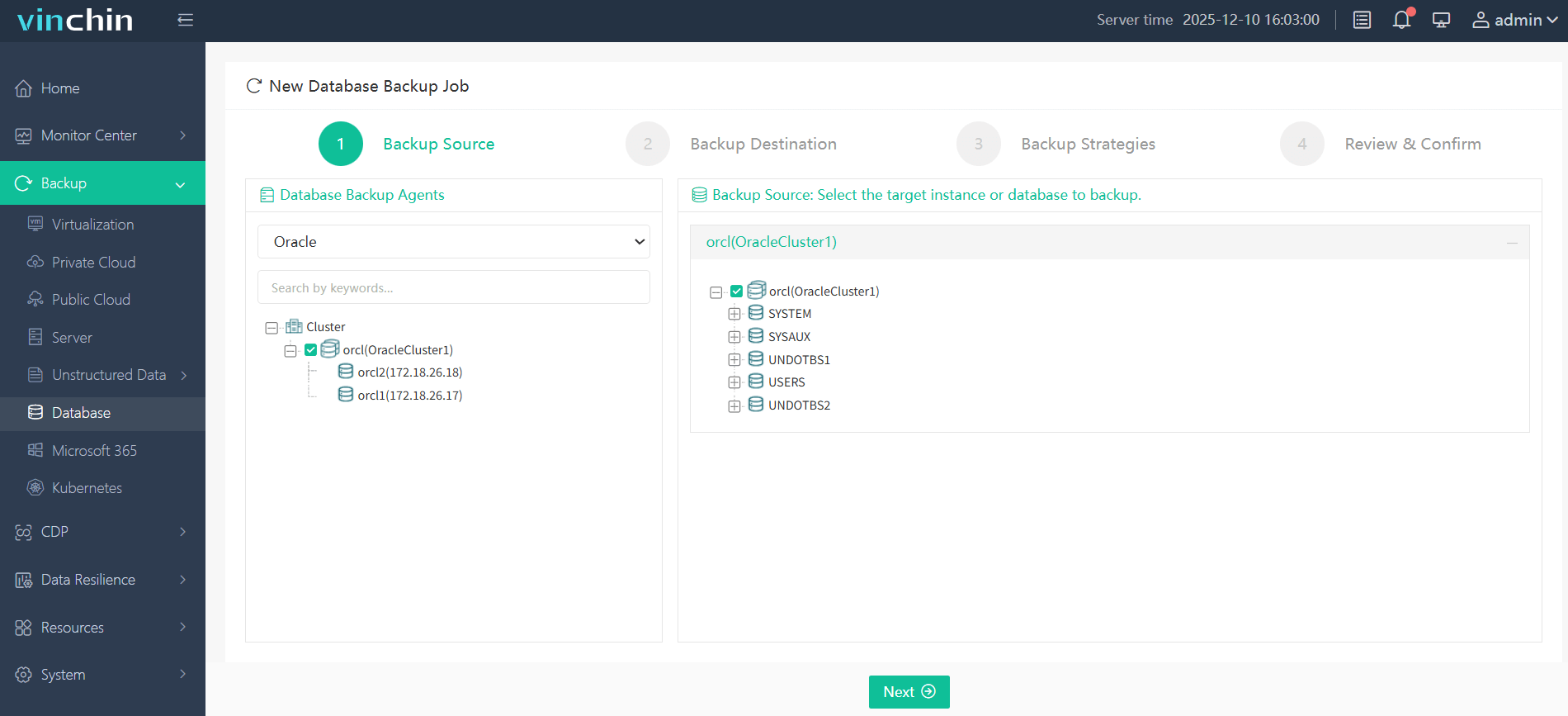
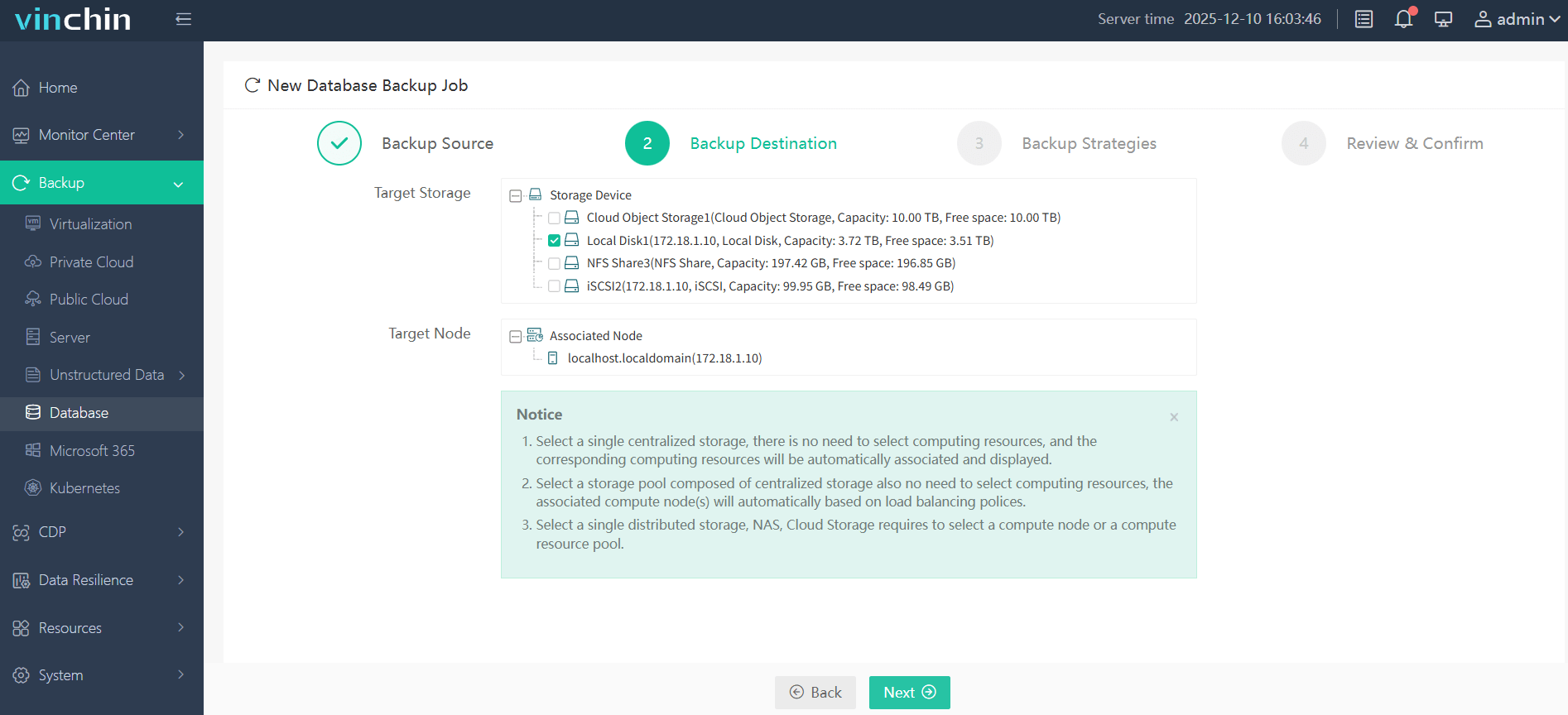
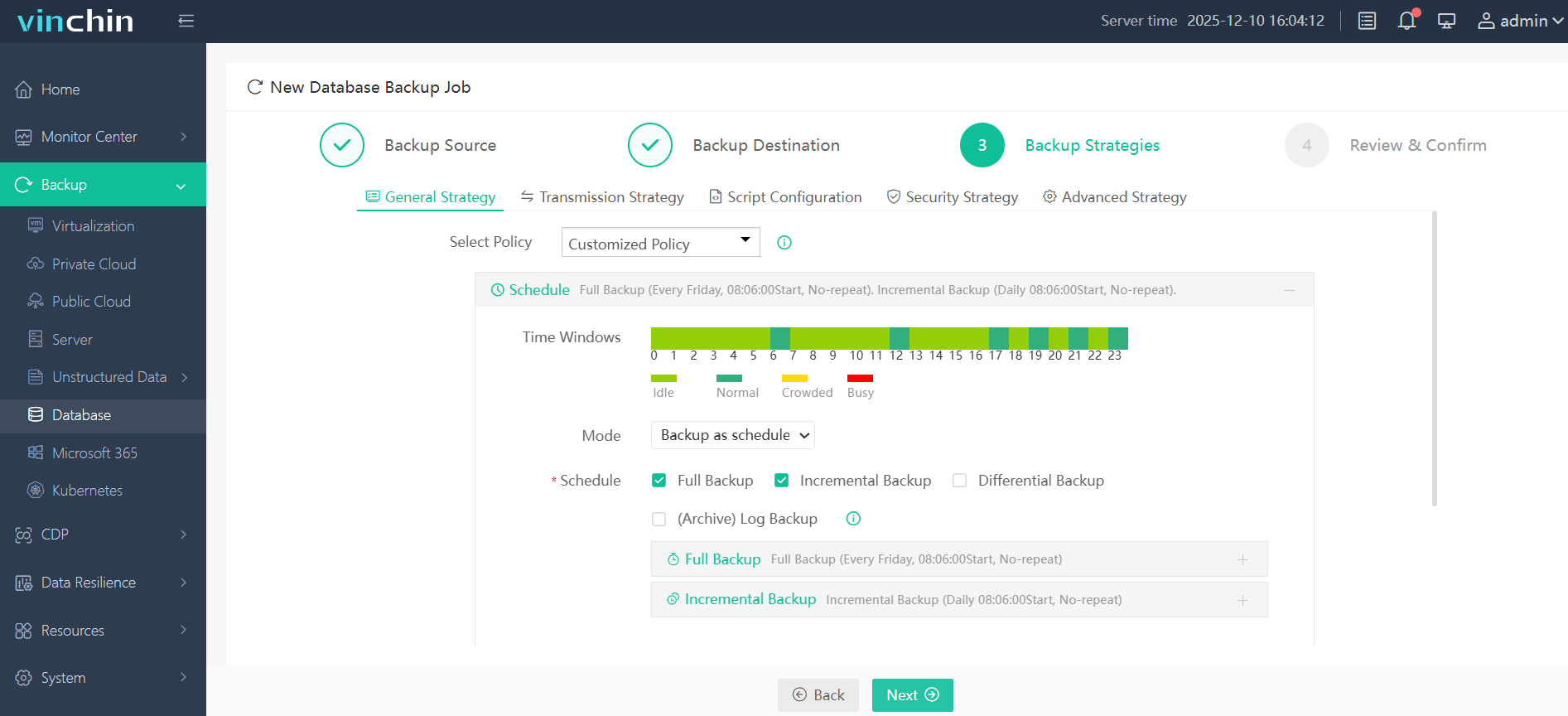
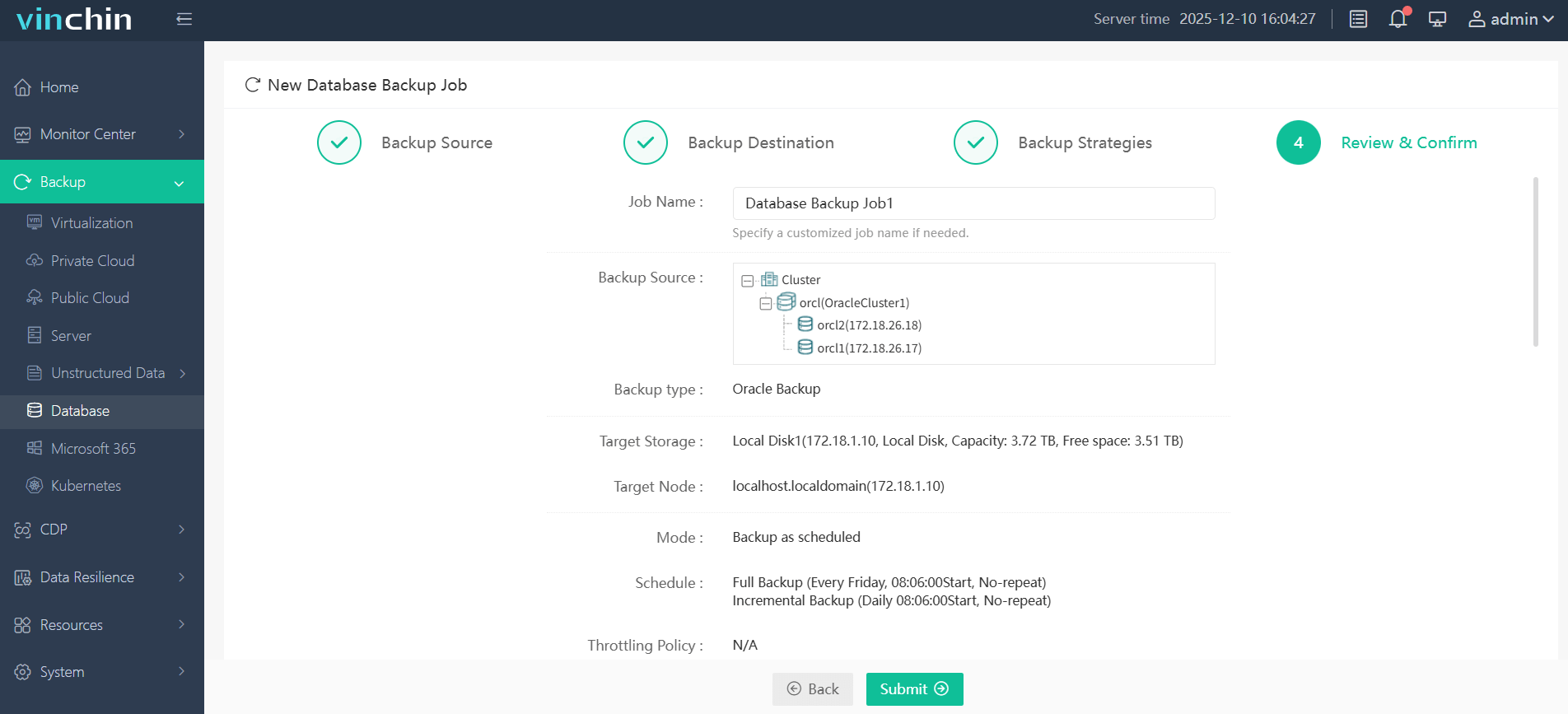
The intuitive Vinchin Backup & Recovery web console simplifies every operation:
Step 1. Select the Oracle database to back up
Step 2. Choose the backup storage
Step 3. Define the backup strategy
Step 4. Submit the job
Recognized globally among enterprise users for reliability and top customer satisfaction ratings—try Vinchin Backup & Recovery free for 60 days now by clicking the download button below.
Oracle RMAN Delete Backup Tag FAQs
Q1: Can I delete only archive log backups using their tag?
A1: Yes; specify DELETE ARCHIVELOG ALL TAG = 'tag_name' in RMAN if targeting only archive logs rather than full sets.
Q2: What does "EXPIRED" mean after running CROSSCHECK?
A2: It means that RMAN could not find the physical file on disk—the record stays until removed by DELETE EXPIRED commands.
Q3: Will deleting tagged backups affect my ability to restore if scripts reference those tags?
A3: Yes; if restore scripts rely on deleted tags they will fail—always check dependencies before removing any tagged set.
Conclusion
Deleting Oracle database backups by tag allows safe storage management without disrupting critical recovery points when done carefully through proper workflows like CROSSCHECK followed by targeted deletes in RMAN scripts—for streamlined multi-platform protection consider trying Vinchin’s enterprise-grade solution today!