Backing up your Oracle database is not just smart—it’s essential for business continuity and disaster recovery. On Windows systems, many administrators rely on Oracle RMAN (Recovery Manager) scripts to automate backups safely and consistently. But how do you set up these scripts? What should you check before starting? And how can you be sure your backups actually work when needed?
Before diving in, make sure your Oracle database runs in ARCHIVELOG mode so you can recover to any point in time. The Windows account running backups must have read/write access to all backup locations and permission to run Oracle tools like rman.exe. Set environment variables such as ORACLE_HOME and ORACLE_SID correctly—either system-wide or within each script.
In this guide, we’ll walk through everything from basic concepts to advanced automation techniques for creating an effective oracle rman backup script windows solution.
What is Oracle RMAN?
Oracle RMAN is a built-in utility for backing up, restoring, and recovering Oracle databases on any supported platform—including Windows servers. It works directly with the database engine so it creates consistent backups at any moment—even while users are connected.
RMAN supports both full database backups and incremental jobs that only save changed data blocks since the last run. It manages archived redo logs automatically so you don’t lose recent transactions during recovery scenarios.
You can also back up control files (which track database structure) and server parameter files (which store configuration). Because RMAN understands internal Oracle structures, it tracks which blocks have changed—making incremental jobs fast and reliable. This deep integration makes RMAN the standard tool for protecting critical data in enterprise environments.
Why use RMAN backup scripts on Windows?
Using scripts with RMAN brings several advantages over manual methods or graphical interfaces—especially on Windows servers where automation matters most.
First: scripting standardizes your process across teams or sites so everyone follows best practices every time—no missed steps or forgotten options.
Second: combining scripts with Task Scheduler lets you automate regular protection without someone present at odd hours—a must if you want reliable Recovery Point Objective (RPO) or Recovery Time Objective (RTO).
Third: text-based scripts let you customize details like backup paths, retention periods, logging locations—all tailored for your needs.
Finally: when something goes wrong, reviewing exactly what was run helps troubleshoot issues quickly instead of guessing what happened behind a GUI screen.
Method 1: How to create a basic oracle rman backup script on Windows?
Let’s start by building a simple yet robust oracle rman backup script windows administrators can trust daily. This involves two main files—a command file containing your actual RMAN logic plus a batch file that sets up the environment before calling RMAN itself.
Creating Your RMAN Command File
Save this example as backup.rman (adjust paths as needed):
run {
  allocate channel c1 device type disk;
  allocate channel c2 device type disk;
  crosscheck backup;
  crosscheck archivelog all;
  delete noprompt expired backup;
  delete noprompt expired archivelog all;
  backup as compressed backupset database format 'D:\RMAN_BACKUP\HOT_bkp_%U.bak';
  backup as compressed backupset archivelog all format 'D:\RMAN_BACKUP\AL_bkp_%U.bak';
  backup current controlfile format 'D:\RMAN_BACKUP\CTL_%d_%s_%t_%U.bak';
  delete noprompt backup completed before 'sysdate-7';
  delete noprompt archivelog all completed before 'sysdate-7';
  release channel c1;
  release channel c2;
}
Here’s why each part matters:
allocate channel: Opens two channels (c1, c2) for parallelism; adjust based on CPU/I/O resources available.
crosscheck: Tells RMAN to verify its records match physical files; finds missing or moved backups/logs.
delete ... expired: Cleans out references to missing files from metadata so reports stay accurate.
backup ... compressed: Runs full database plus archive log backups using compression; saves space but uses more CPU during runs.
backup current controlfile: Protects vital metadata about your DB structure—always include this!
delete ... before 'sysdate-7': Removes old backups/logs older than seven days; acts as a simple retention policy without configuring global settings.
release channel: Frees resources at job end; always close what you open!
Building Your Batch File
Next create a batch file named run_rman_backup.bat:
@echo off
set ORACLE_HOME=C:\app\oracle\product\12.2.0\dbhome_1
set ORACLE_SID=ORCL
set PATH=%ORACLE_HOME%\bin;%PATH%
rman target / cmdfile='D:\scripts\backup.rman' log='D:\RMAN_BACKUP\logs\backup_%DATE:~10,4%-%DATE:~4,2%-%DATE:~7,2%_%TIME:~0,2%%TIME:~3,2%.log'
IF %ERRORLEVEL% NEQ 0 echo Backup failed! Check the log file!
Replace paths/SIDs with those matching your setup—and ensure directories exist with proper permissions first! The last line highlights failures if run interactively; during debugging add @echo on at top for extra detail.
Double-click this batch file or launch it from Command Prompt under an account with necessary privileges—the resulting log shows progress/errors step-by-step.
Validating Your Backup and Performing Test Restores
Creating regular backups is only half the story—you must confirm they’re usable too! After each job finishes:
Use LIST BACKUP; inside an interactive rman session to see what was saved recently
Run RESTORE DATABASE VALIDATE; periodically against non-production systems or test instances—this checks integrity without overwriting anything live
Always keep logs handy—they’re invaluable when troubleshooting issues later
Testing restores ensures peace of mind that data really can be recovered if disaster strikes!
Method 2: How to schedule an oracle rman backup script on Windows?
Once manual tests succeed reliably it’s time for hands-off automation using Task Scheduler—the standard tool built into every modern version of Windows Server/Desktop OSes.
Here’s how:
1. Open Task Scheduler via Start menu or Control Panel
2. Click Create Task
3. On General, enter something clear like “Nightly Oracle Backup”
4. Under Security options, select “Run whether user is logged on or not” then pick an account with both local admin rights AND required Oracle DB privileges (avoid SYSTEM)
5. Switch to Triggers, click New, set schedule—for example daily at “02:00 AM”
6. Go to Actions, click New, choose “Start a program”, browse/select your batch file (D:\scripts\run_rman_backup.bat)
7. Adjust settings under Conditions/Settings tabs if needed—for instance enable “Run task as soon as possible after missed start”
8. Click OK then supply credentials if prompted
After first scheduled run completes check generated logs carefully—look near end for “Recovery Manager complete”. If task fails review permissions/environment variables/user context closely!
Managing Log Files Over Time
Backup logs grow quickly! To avoid filling disks consider adding another scheduled task—a PowerShell/batch job—to compress/archive/delete old logs past their useful life (for example older than one month). This keeps things tidy without manual cleanup chores piling up unexpectedly.
Implementing Basic Monitoring for Scheduled Backups
Automation isn’t enough unless failures get noticed right away! Simple monitoring ideas include:
Parsing each log after completion looking for success/failure keywords (“Recovery Manager complete” means good news)
Sending email alerts if errors appear—or even writing custom entries into Event Viewer using built-in tools like eventcreate.exe inside error-handling sections of your batch file
For larger setups consider integrating notifications into existing IT alerting platforms—but even basic checks help catch problems early!
Vinchin Backup & Recovery for Enterprise Database Protection
For organizations seeking streamlined management beyond scripting complexity, Vinchin Backup & Recovery offers an enterprise-level solution supporting today’s mainstream databases—including Oracle, MySQL, SQL Server, MariaDB, PostgreSQL, PostgresPro, and TiDB—with comprehensive features tailored specifically for Oracle environments on Windows platforms. Among its capabilities are incremental backup support, advanced source-side compression technology that reduces storage usage at the source level before transfer begins, GFS retention policies enabling flexible long-term data lifecycle management, WORM protection against unauthorized changes or ransomware attacks, and automated integrity checks ensuring recoverability of every copy made—all designed to maximize efficiency while minimizing risk across large-scale deployments.
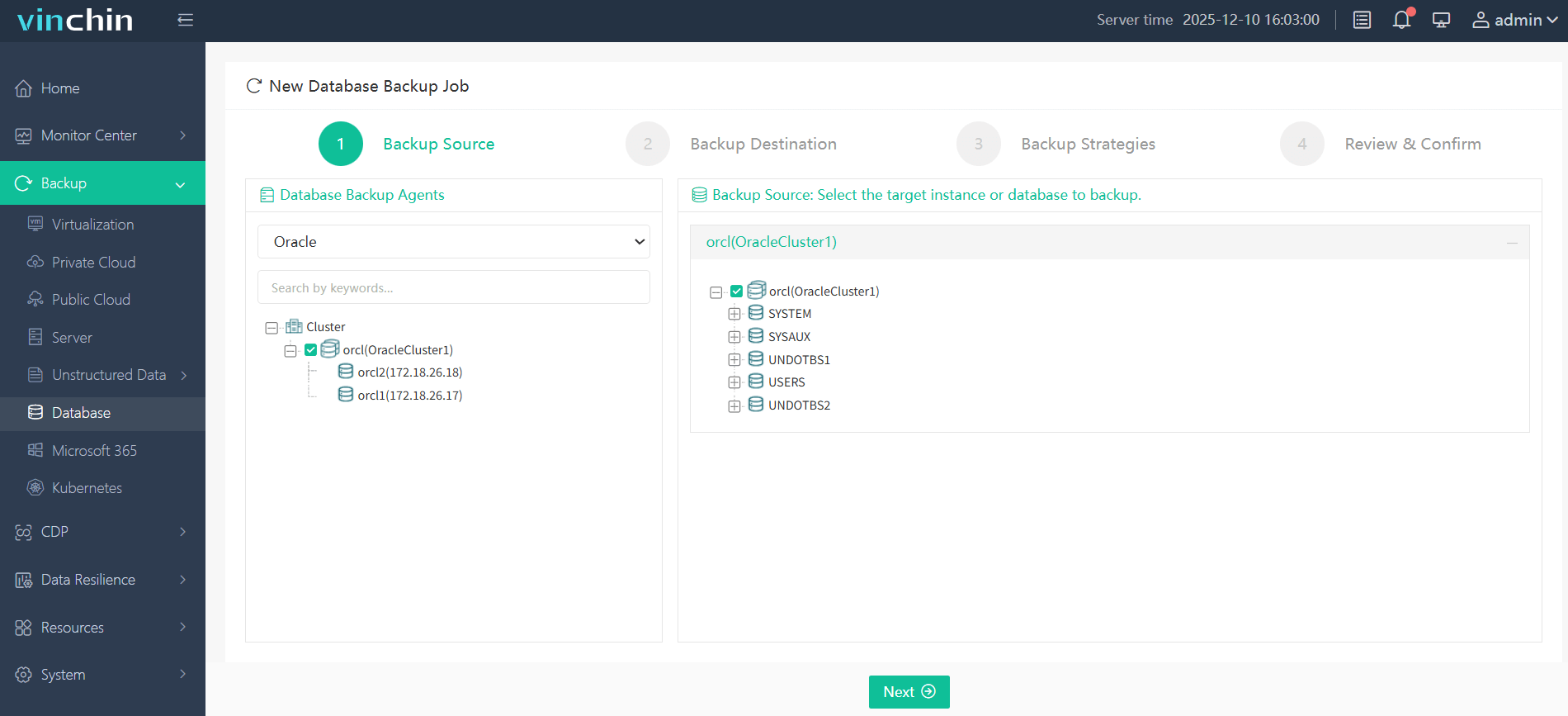
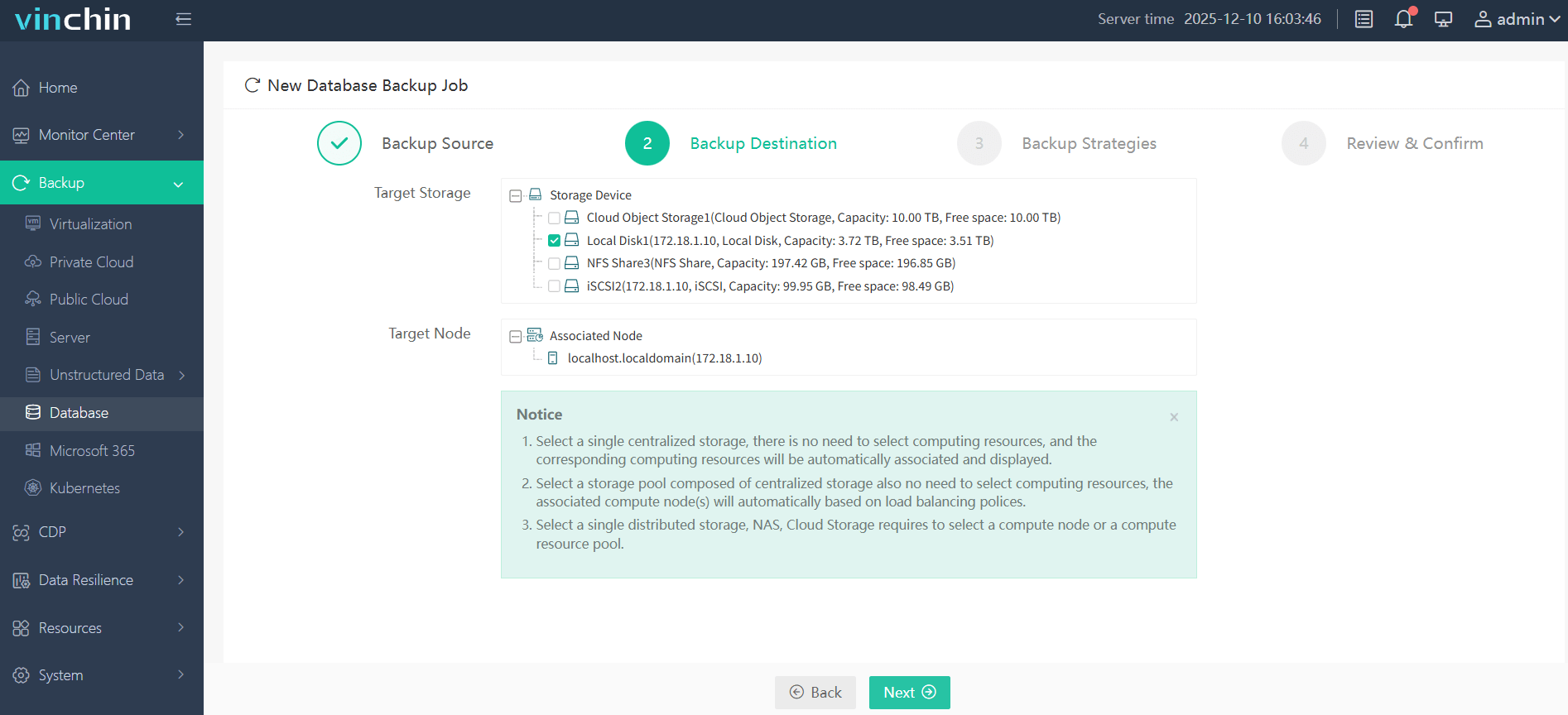
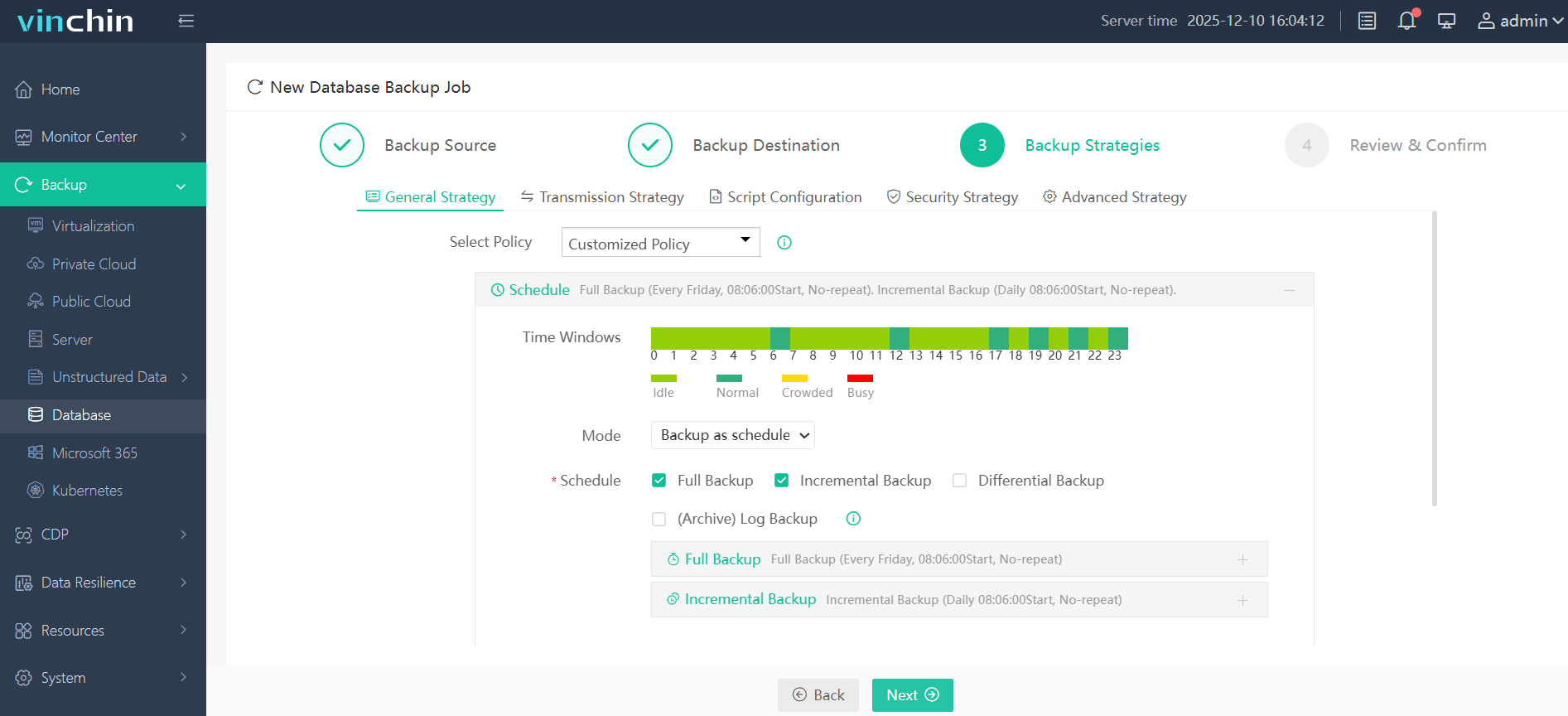
The intuitive web console simplifies operations into four straightforward steps:
Step 1. Select the Oracle database to back up
Step 2. Choose the desired storage location
Step 3. Define detailed strategies such as scheduling and retention
Step 4. Submit the job
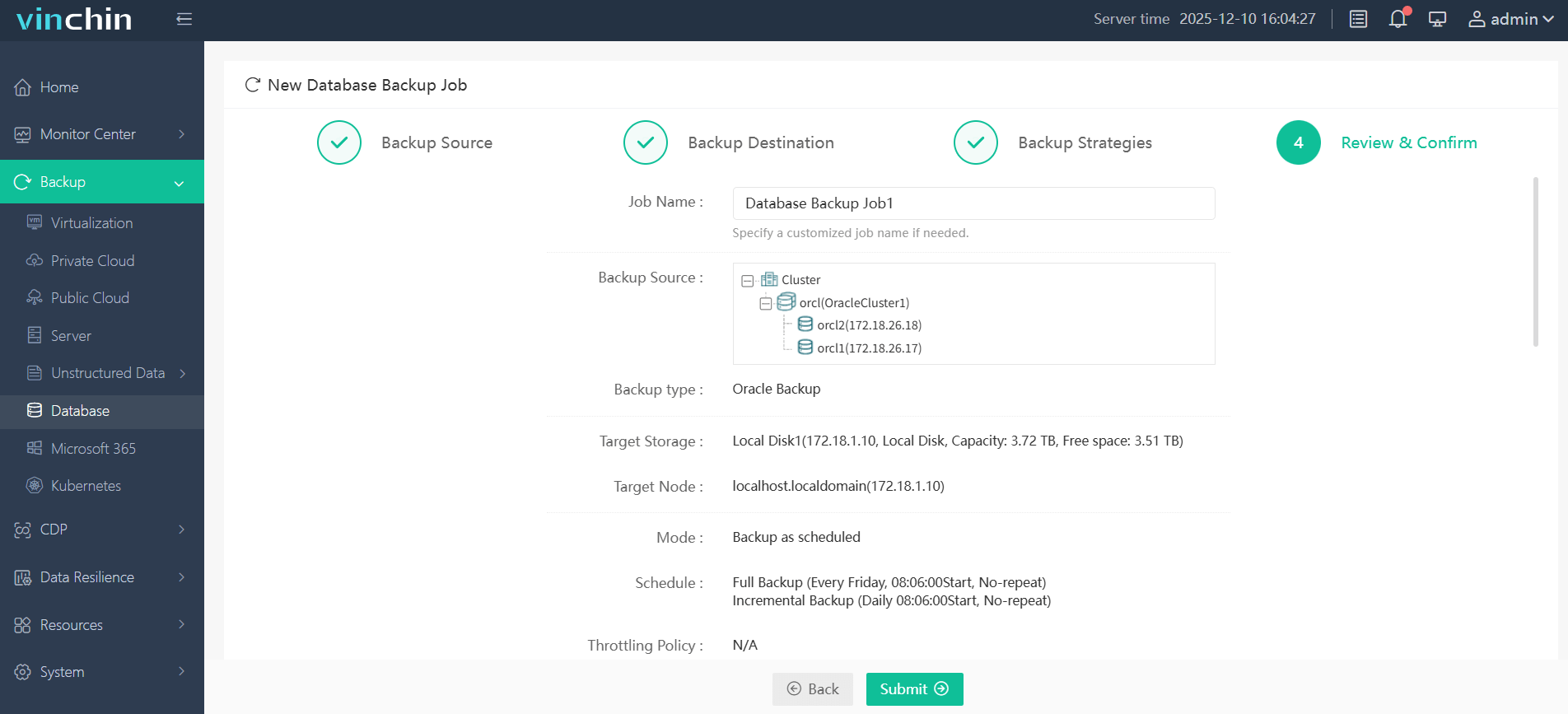
Vinchin Backup & Recovery enjoys global recognition among enterprises thanks to its reliability and high customer satisfaction ratings worldwide—try every feature free for sixty days by clicking the download button below!
Oracle rman backup script windows FAQs
Q1: Can I change my retention period from seven days?
Yes—edit 'sysdate-7' in both DELETE lines within your .rman script to match any number of days required by policy.
Q2: What should I do if my disk fills during nightly backups?
Free space immediately by deleting unneeded old files outside retention scope; then review schedules/retention settings so future jobs don’t fail due to lack of space again.
Q3: How do I copy my completed backups offsite automatically?
Add commands after successful local completion in your batch file—for example use XCOPY/ROBOCOPY for network shares—or configure cloud sync utilities separately once local jobs finish cleanly.
Conclusion
Automating oracle rman backup script windows tasks boosts reliability but requires careful planning—from scripting through validation/testing/scheduling/monitoring routines. For ultimate simplicity, Vinchin delivers robust protection across platforms. Try our free trial today—and safeguard critical data confidently!