Imagine this: a sudden storage failure wipes out every copy of your Oracle control file. Your database grinds to a halt. What do you do next? For any operations administrator, this is a nightmare scenario. The control file is at the heart of your Oracle database. It tracks datafiles, redo logs, checkpoints, backup history—everything needed to keep your system running smoothly. If you lose it without a backup, recovery can be impossible.
That’s why using Oracle RMAN (Recovery Manager) for “oracle rman backup controlfile” tasks is essential—not optional. RMAN makes backing up and restoring your control file reliable and repeatable. In this guide, we’ll walk through what an Oracle control file does, how RMAN interacts with it, best practices for backups (manual and automatic), restoration techniques—including advanced scenarios—and common troubleshooting tips.
What Is an Oracle Control File?
The Oracle control file is a small but vital binary file that stores metadata about your entire database environment. This includes the database name, locations of all datafiles and redo logs, checkpoint details, archive log history, tablespace information, and records of previous backups. Without it, your database cannot start or recover from failure.
Most production environments use multiplexed control files—multiple identical copies stored on separate disks—to reduce risk if one becomes corrupted or lost. However, even with multiplexing in place, regular backups remain critical because storage failures or human error can wipe out all copies at once.
It’s important to note that RMAN itself relies on information stored in the control file—the so-called “RMAN repository”—to track which backups exist and where they are located. If you lose both your catalog (if used) and every copy of the control file without a recent backup available via RMAN’s BACKUP CONTROLFILE feature or autobackup mechanism, you may not be able to recover at all.
Why Back Up the Control File with RMAN?
Losing a control file means losing access not just to physical data but also to crucial structural metadata about your entire Oracle environment—even if every other component remains intact. Using RMAN’s BACKUP CONTROLFILE command ensures you always have an up-to-date copy ready for disaster recovery situations.
When you enable CONFIGURE CONTROLFILE AUTOBACKUP ON, RMAN automatically creates a new autobackup after every successful backup operation or whenever there is any structural change—such as adding or dropping tablespaces or datafiles. This reduces manual effort while lowering risk significantly.
Best practice dictates storing these autobackups in a dedicated location outside default directories like $ORACLE_HOME/dbs. For example:
RMAN> CONFIGURE CONTROLFILE AUTOBACKUP FORMAT FOR DEVICE TYPE DISK TO '/secure/location/cf_%F';
This approach avoids single points of failure by keeping critical metadata safe from accidental deletion or hardware issues affecting standard paths.
Remember: The autobackup contains both the current control file and server parameter file (SPFILE), making it self-contained for full recovery—even when no external catalog exists.
How to Manually Back Up the Oracle RMAN Controlfile?
Manual backups give administrators precise timing and location choices—ideal before risky maintenance tasks or major changes.
First connect to RMAN as SYSDBA:
rman TARGET /
To create a basic manual backup using default settings:
RMAN> BACKUP CURRENT CONTROLFILE;
If you want more control over destination or naming conventions:
RMAN> BACKUP CURRENT CONTROLFILE FORMAT '/your/backup/path/controlfile_%U.bkp';
Here %U generates unique filenames automatically—a good habit that prevents accidental overwrites during repeated runs.
For those who prefer image copies instead of logical backup sets:
RMAN> BACKUP AS COPY CURRENT CONTROLFILE FORMAT '/tmp/controlfile_copy.ctl';
You can also include the current control file within another object’s backup—for example:
RMAN> BACKUP TABLESPACE users INCLUDE CURRENT CONTROLFILE;
This method ensures that any restore operation involving this tablespace will have access to matching metadata via its included snapshot—a valuable safeguard during point-in-time recovery scenarios.
Creating a Standby Control File
Sometimes you need a special version of the control file tailored for standby databases—often used in Data Guard configurations or offsite disaster recovery setups. To generate one manually:
RMAN> BACKUP CURRENT CONTROLFILE FOR STANDBY FORMAT '/path/to/standby_controlfile_%U.bkp';
The FOR STANDBY clause strips out certain local details unnecessary on secondary systems while preserving everything required for replication setup elsewhere.
How to Automatically Back Up the Oracle RMAN Controlfile?
Automatic backups are ideal for busy environments—they ensure every structural change triggers an immediate save without relying on memory or manual intervention.
Enable automatic autobackups by connecting to RMAN then running:
RMAN> CONFIGURE CONTROLFILE AUTOBACKUP ON;
With this setting active:
After each BACKUP command—or any DDL action altering database structure—RMAN writes an autobackup containing both current metadata files (control file plus SPFILE). By default these go into $ORACLE_HOME/dbs on Unix/Linux unless otherwise specified; however best practice recommends customizing location using:
RMAN> CONFIGURE CONTROLFILE AUTOBACKUP FORMAT FOR DEVICE TYPE DISK TO '/backup/location/cf_%F';
The %F variable inserts DBID plus timestamp into filenames so each piece remains unique across time—a key advantage during complex restores when multiple generations might exist side-by-side.
Autobackups are designed as self-contained units: they hold everything needed for full instance reconstruction even if no external catalog survives—a lifesaver after catastrophic loss events like site-wide outages or ransomware attacks targeting primary infrastructure components.
How to Restore an Oracle Control File from Backup?
Restoring after loss requires careful sequencing—but with preparation it’s fast enough to minimize downtime even under pressure.
Begin by starting your instance without mounting since no valid control files remain yet available:
1. Start instance nomount
SQL> STARTUP NOMOUNT;
2. Connect via RMAN
rman TARGET /
3. Restore latest autobackup
RMAN> RESTORE CONTROLFILE FROM AUTOBACKUP;
Or specify exact path if using manual copy:
RMAN> RESTORE CONTROLFILE FROM '/path/to/manual_backup.bkp';
4. Mount restored instance
SQL> ALTER DATABASE MOUNT;
5. Continue media recovery as needed
RMAN> RECOVER DATABASE;
Note: When issuing RESTORE CONTROLFILE FROM AUTOBACKUP, remember that RMAN searches first in locations defined by CONFIGURE ... FORMAT, then checks Fast Recovery Area (FRA) if configured; finally defaults back to $ORACLE_HOME/dbs. Always know where your latest pieces reside!
If only some multiplexed copies were lost but others survive intact—you can simply replace damaged files manually then restart; Oracle validates remaining good ones automatically upon startup.
Restoring When Instance Is Not Available (Using DBID)
In severe disasters where neither instance nor spfile survives—and thus no easy way exists even to start NOMOUNT—you must supply extra context so that RMAN knows which set of backups belong together:
1. Launch rman prompt
2. Set target connection
3. Provide known DBID value
4. Attempt restore sequence
Example flow:
Connect at OS level then enter commands below—
rman TARGET /
STARTUP NOMOUNT
SET DBID <your_dbid>
RESTORE CONTROLFILE FROM AUTOBACKUP
ALTER DATABASE MOUNT
RECOVER DATABASE
ALTER DATABASE OPEN RESETLOGS
Your DBID appears in old alert logs (alert.log) or prior output from SELECT dbid FROM v$database;. Keeping this number handy offsite is wise—it unlocks last-resort restores when everything else fails.
Enterprise-Grade Database Protection with Vinchin Backup & Recovery
Beyond native tools like RMAN, organizations seeking streamlined protection for their databases—including comprehensive coverage for Oracle environments—can benefit from enterprise-level solutions such as Vinchin Backup & Recovery. As a professional platform supporting today’s mainstream databases including Oracle (as well as MySQL, SQL Server, MariaDB, PostgreSQL, PostgresPro, and TiDB), Vinchin Backup & Recovery delivers robust features tailored for business-critical workloads.
Key capabilities include incremental backup support specifically optimized for Oracle databases; batch database backup management; flexible retention policies including GFS options; storage protection against ransomware threats; along with cloud backup integration and tape archiving—all designed to simplify administration while maximizing resilience across diverse IT landscapes.
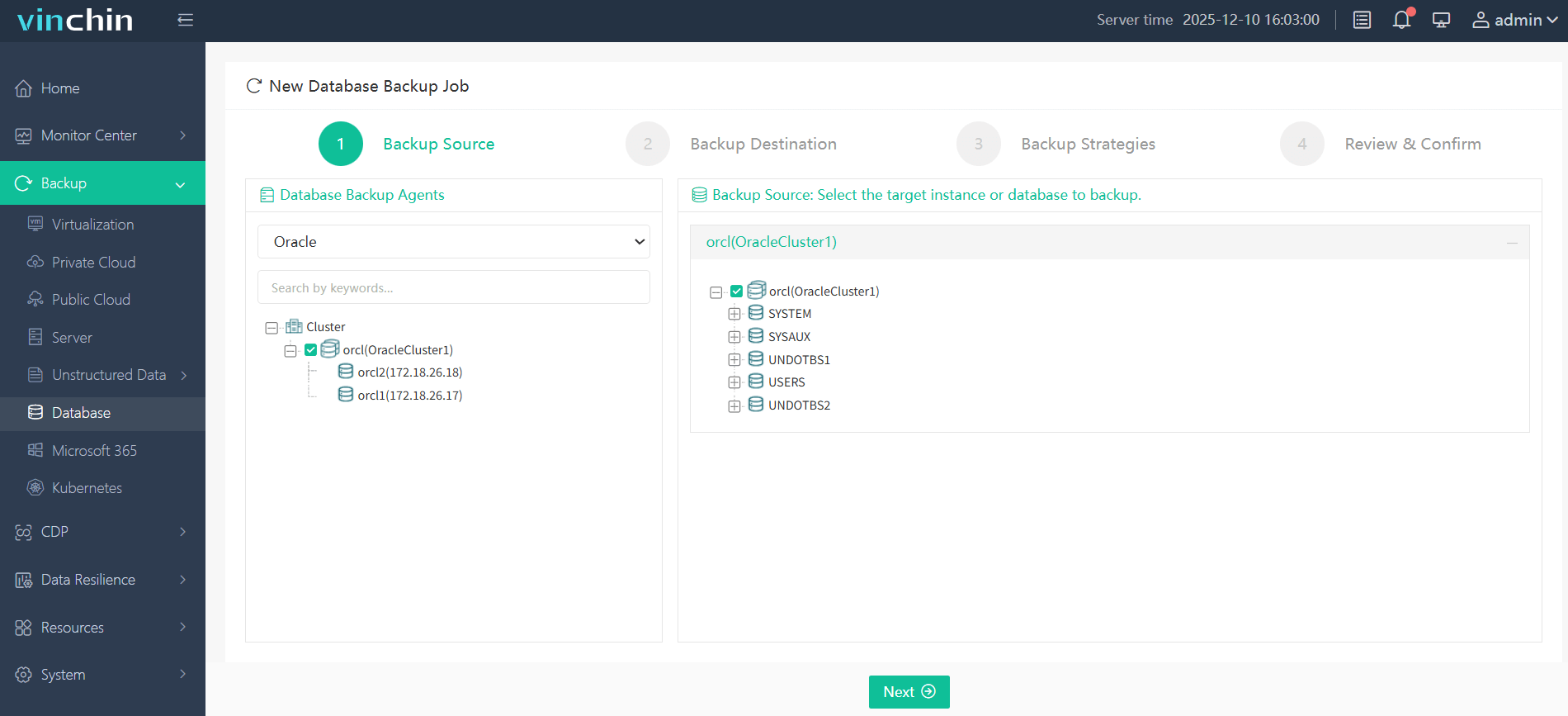
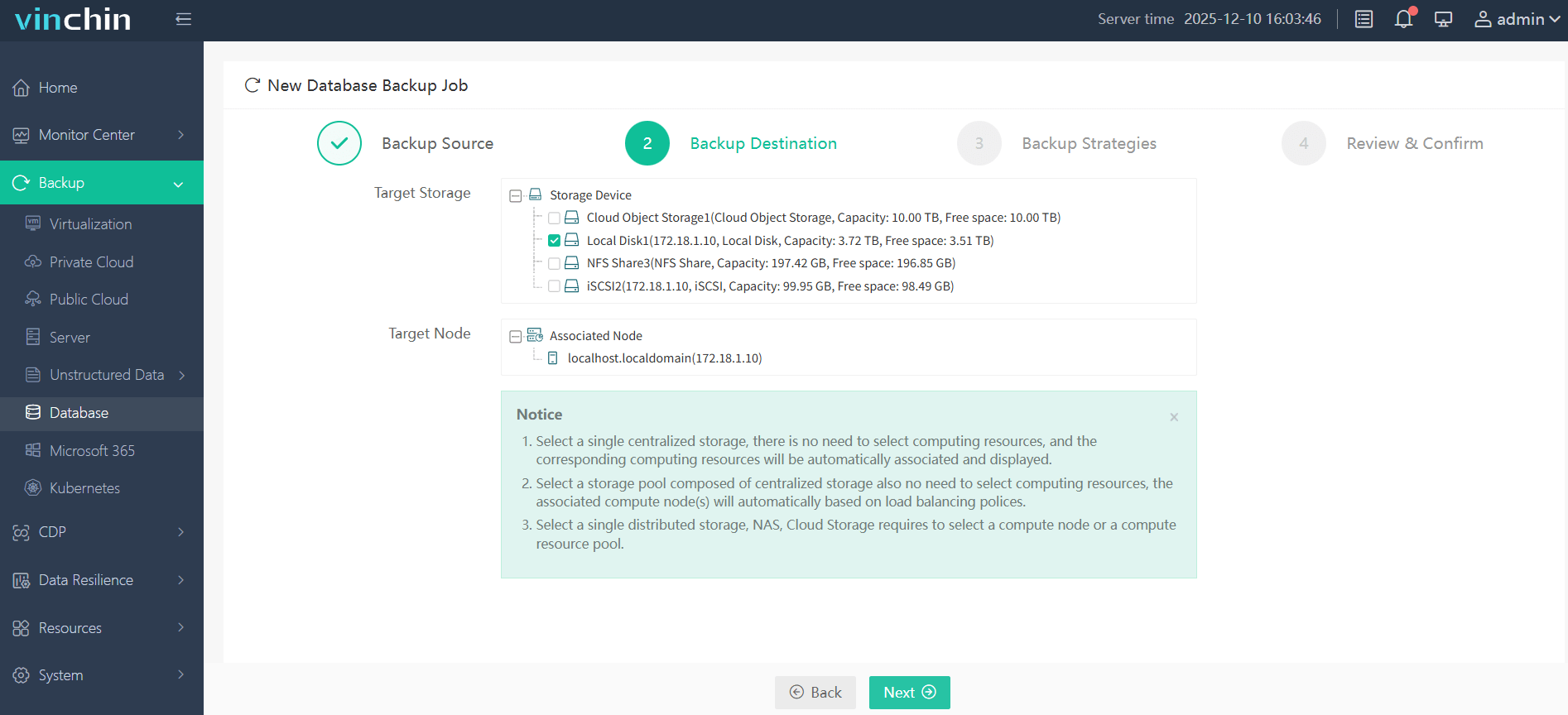
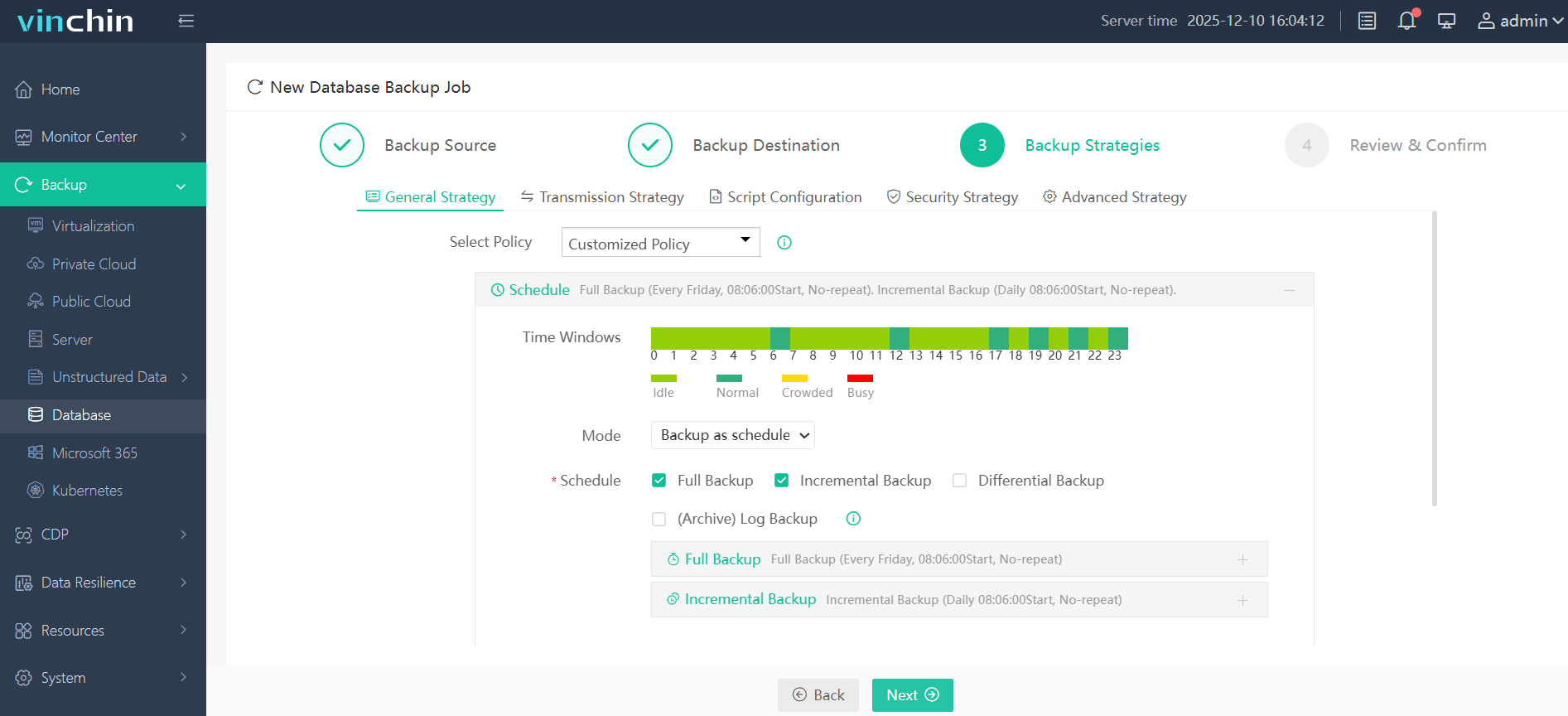
Vinchin Backup & Recovery offers an intuitive web console where protecting your Oracle database typically involves four straightforward steps:
Step 1 – Select the Oracle database to back up;
Step 2 – Choose desired storage;
Step 3 – Define strategy parameters;
Step 4 – Submit the job.
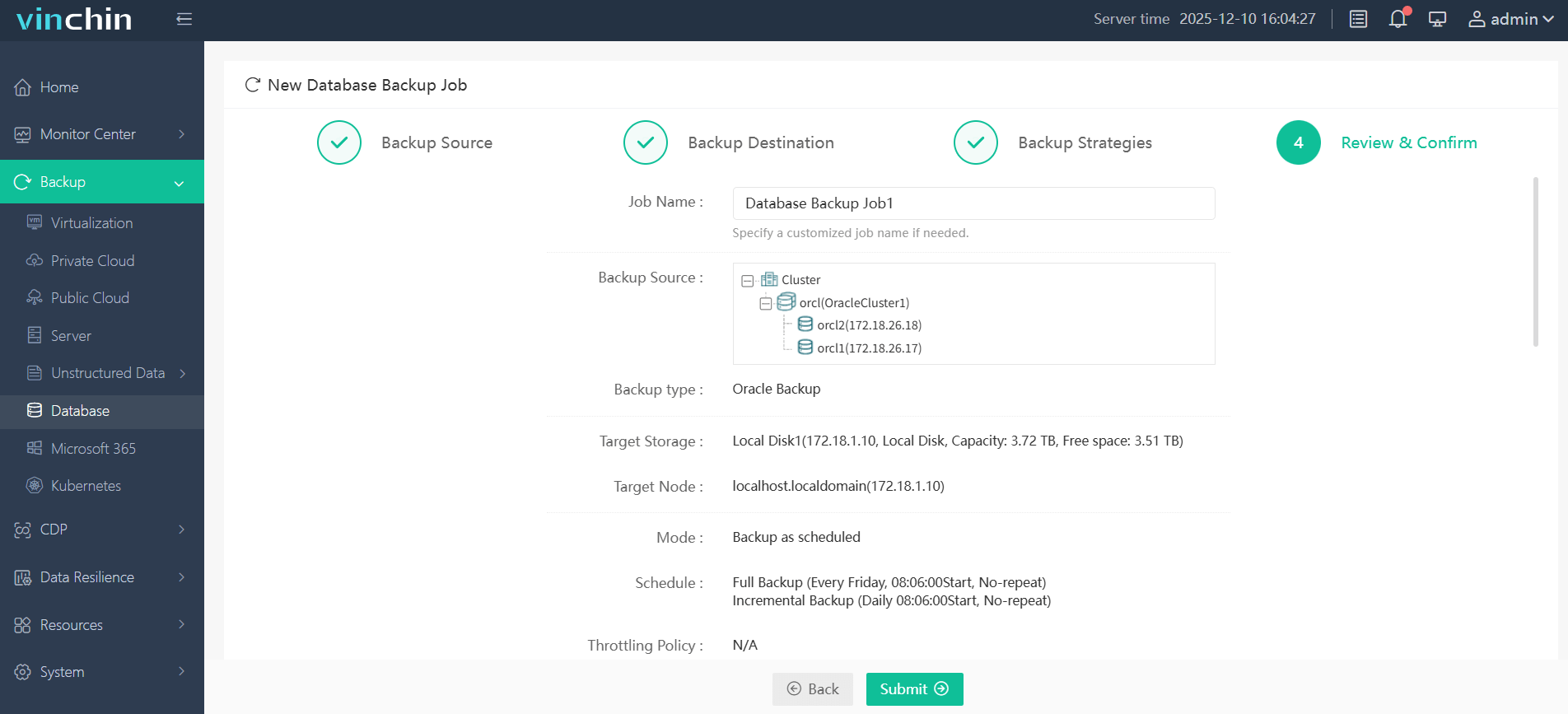
Recognized globally among enterprise users—with top ratings and thousands protected worldwide—you can experience all features free for 60 days by clicking download now.
Oracle RMAN Backup Controlfile FAQs
Q1: How do I quickly check my most recent successful control file autobackup?
A1: Run LIST BACKUP OF CONTROLFILE in RMAN—the newest entry shows completion time instantly.
Q2: Can I restore my backed-up control file onto another operating system platform?
A2: No; source and target OS architectures must match exactly when restoring an Oracle control file.
Q3: Does enabling automatic control file autobackup slow down my scheduled jobs?
A3: No significant impact occurs—the process adds minimal overhead compared with overall job duration.
Conclusion
Backing up your Oracle control file with RMAN protects against worst-case failures while ensuring fast recovery under pressure—especially when tested regularly outside production hours! Let Vinchin simplify these routines further through its intuitive enterprise-grade solution built specifically for modern IT teams worldwide.