Have you ever tried to run RMAN on your Oracle database only to see an error like “RMAN not available” or “ORA-01034: ORACLE not available”? If so, you’re not alone. Many Oracle administrators face this issue when setting up backups or restoring databases. This guide explains why these errors happen, and how you can resolve them step by step from basic checks to advanced troubleshooting.
Why “RMAN Not Available” Happens?
When you see messages such as “RMAN not available,” “ORA-01034: ORACLE not available,” or “ORA-27101: shared memory realm does not exist,” it means that the RMAN client cannot connect to the target database instance or start properly.
The most common causes fall into three categories:
1. Database/Instance State:
The Oracle instance is down (not started), not mounted/opened yet, running in restricted mode, or crashed unexpectedly.
2. Environment/Configuration Issues:
Environment variables like ORACLE_HOME or ORACLE_SID are missing or incorrect.
The system PATH does not include the directory where RMAN resides.
There’s confusion between using an SID (for local connections) versus a service name (for remote/TNS connections).
TNS configuration files (tnsnames.ora, listener.ora) have errors if connecting remotely.
3. Permissions:
These problems prevent RMAN from starting correctly or connecting to your database instance. Even small mistakes like a typo in an environment variable can trigger these errors.
How to Check Environment Variables for RMAN Availability?
Before diving into complex diagnostics, always check your environment variables first. They tell both Oracle and RMAN where to find key files.
Start by logging in as the correct OS user (often called oracle). Then check:
On Linux/UNIX systems:
echo $ORACLE_HOME
echo $ORACLE_SID
On Windows:
echo %ORACLE_HOME%
echo %ORACLE_SID%
If either value is empty or wrong:
export ORACLE_SID=your_sid
export ORACLE_HOME=/u01/app/oracle/product/19.0.0/dbhome_1
Or on Windows:
set ORACLE_SID=your_sid
set ORACLE_HOME=C:\app\oracle\product\19.0.0\dbhome_1
After setting these variables correctly (replace placeholders with real values), try launching RMAN again:
$ORACLE_HOME/bin/rman target /
This uses operating system authentication if your user has DBA rights.
If you want to connect using username/password instead—or need remote access—use:
rman target sys/password@service_name
Here’s a tip: Use / only if logged in as an OS user with DBA privileges; otherwise specify credentials explicitly.
For quick checks of all related settings at once:
env | grep ORA # On UNIX/Linux systems shows all variables starting with "ORA"
Even minor typos matter like a trailing slash at the end of ORACLE_HOME, extra spaces, or case mismatches can cause big headaches.
How to Diagnose Database Connectivity for RMAN?
Sometimes everything looks right with environment variables but you still get connection errors when starting RMAN? Let’s dig deeper into connectivity diagnostics before assuming something is broken elsewhere.
First test local connectivity using SQL*Plus:
sqlplus / as sysdba
If this fails with similar errors (“ORA-01034”), then your problem isn’t specific to RMAN. It’s broader database access trouble. In that case:
1. Make sure your OS user belongs to the correct privileged group (dba on UNIX/Linux).
2. Confirm that no other processes are locking required files (sometimes antivirus software interferes).
For remote connections or when using TNS aliases, check network status:
1. Ensure that Oracle Net Listener is running:
lsnrctl status
2. Test TNS connectivity:
tnsping <TNS_ALIAS>
3. If tnsping fails but listener runs fine locally, double-check entries in tnsnames.ora.
Note:
For RAC clusters or PDBs (pluggable databases), use service names rather than SIDs when connecting remotely (rman target sys/password@service_name). Mixing up SIDs and service names leads straight to connection failures.
How to Verify Your Oracle Installation for RMAN Support?
Once you’ve confirmed environment settings and basic connectivity work, but still face issues, it’s time to verify your actual Oracle installation supports everything needed by RMAN.
First confirm whether your database instance is running:
On UNIX/Linux systems:
ps -ef | grep pmon # Look for ora_pmon_<SID>
Alternatively inside SQL*Plus:
SELECT instance_name,status FROM v$instance;
If nothing appears or status isn’t OPEN/MOUNTED, you need to start up:
Launch SQL*Plus as SYSDBA,
sqlplus / as sysdba
SQL> startup
If parameter files are missing (init<SID>.ora or spfile<SID>.ora) look under $ORACLE_HOME/dbs (Linux) or %ORACLE_HOME%\database (Windows). If they’re gone due to accidental deletion/corruption—you’ll need backups!
To check if the actual rman binary exists,
ls $ORACLE_HOME/bin/rman # Should show rman executable present!
Missing? Your install may be incomplete/corrupted. Consider reinstalling/recovering missing components via installer tools provided by Oracle support documentation.
Finally ensure version compatibility between client/server components matters. A mismatch often causes silent failures! Compare versions via:
$ rman --version              # Shows client version
SQL> SELECT * FROM v$version; # Inside SQL*Plus shows server version info
Both should match major release numbers closely; otherwise upgrade/downgrade accordingly per Oracle Support guidelines.
How To Update System PATH When RMAN Is Not Available?
Sometimes everything above checks out but typing rman gives “command not found.” That usually means $ORACLE_HOME/bin isn’t included in your system PATH variable so shells don’t know where executables live.
Check current PATH value:
echo $PATH                   # On UNIX/Linux
echo %PATH%                  # On Windows CMD prompt
If $ORACLE_HOME/bin isn’t listed add it temporarily like this,
export PATH=$ORACLE_HOME/bin:$PATH       # UNIX/Linux session only
set PATH=%ORACLE_HOME%\bin;%PATH%        # Windows session only
To make changes permanent across reboots/new sessions,
Edit .bash_profile, .profile, .zshrc, etc., adding this line near bottom,
export PATH=$ORACLE_HOME/bin:$PATH # Save & reload shell config!
Or on multi-user systems edit /etc/profile.d/oracle.sh.
On Windows update System Properties > Advanced > Environment Variables > Edit PATH then restart Command Prompt window before retrying commands!
After updating open new terminal window & type,
rman target /
You should now see familiar “Recovery Manager” prompt appear and problem solved!
Protecting Your Oracle Databases When RMAN Is Not Available: Vinchin Backup & Recovery
When native tools like RMAN remain unavailable despite troubleshooting efforts or if you're seeking a more streamlined approach, enterprise solutions become essential for safeguarding critical data assets across diverse environments.
Vinchin Backup & Recovery stands out as a professional enterprise-level backup solution supporting all these mainstream databases including Oracle 10g, 11g/11g R2, 12c, 18c, 19c, 21c, Oracle RAC, MySQL, SQL Server, MariaDB, PostgreSQL, PostgresPro, and TiDB.
Among its many features are incremental backup capabilities, batch database backup management, multiple level data compression options, flexible retention policies including GFS retention policy support, and integrity checking.
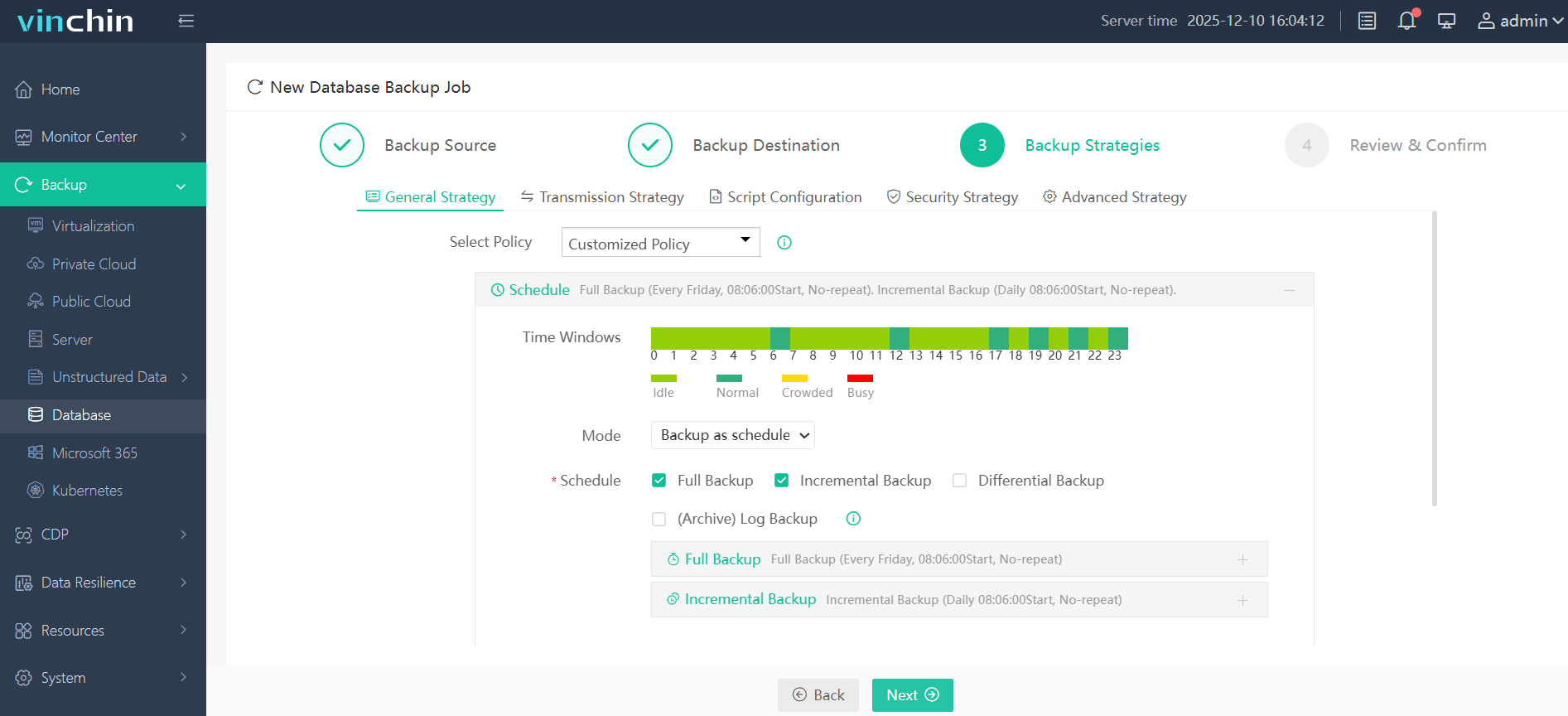
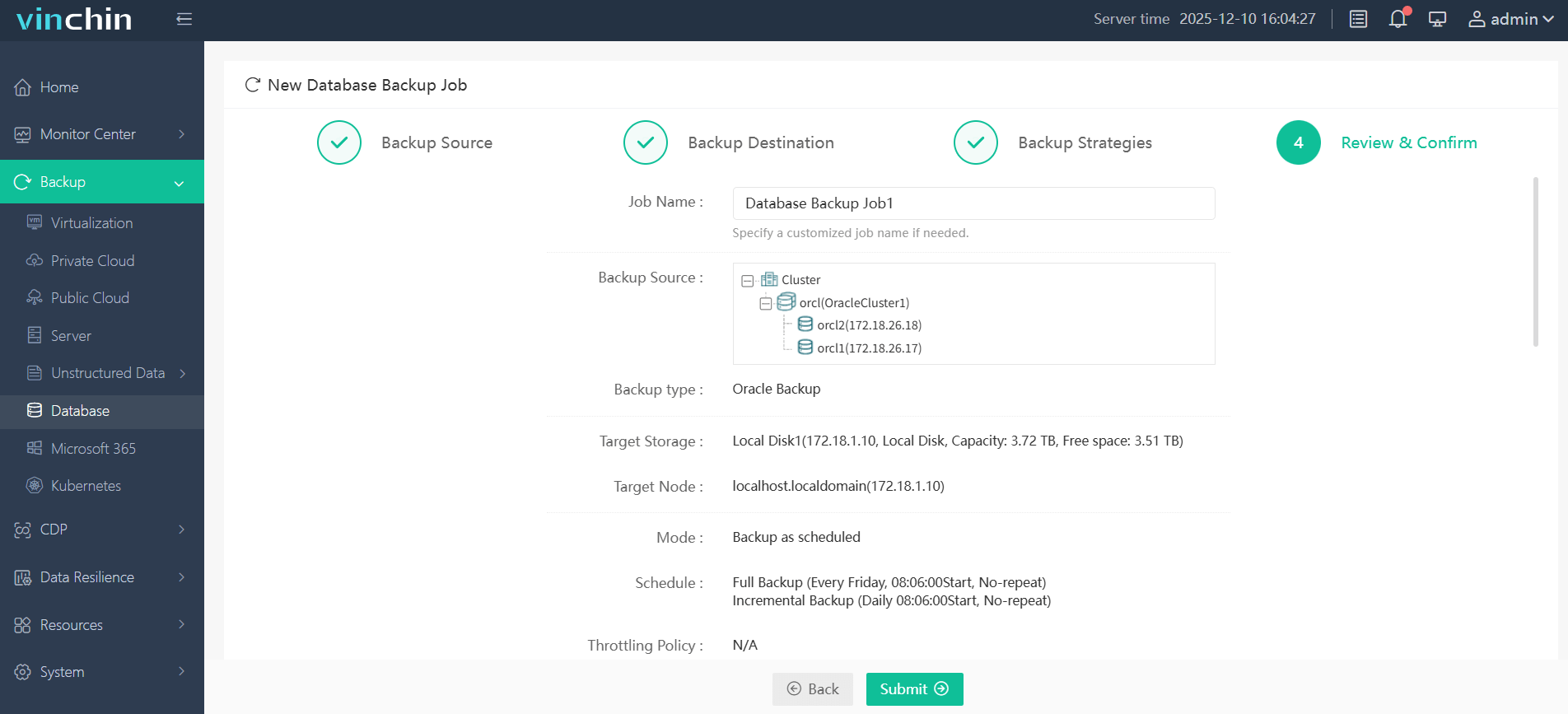
Vinchin Backup & Recovery offers a simple web console interface so even complex operations become intuitive:
Step 1: Select the Oracle database to backup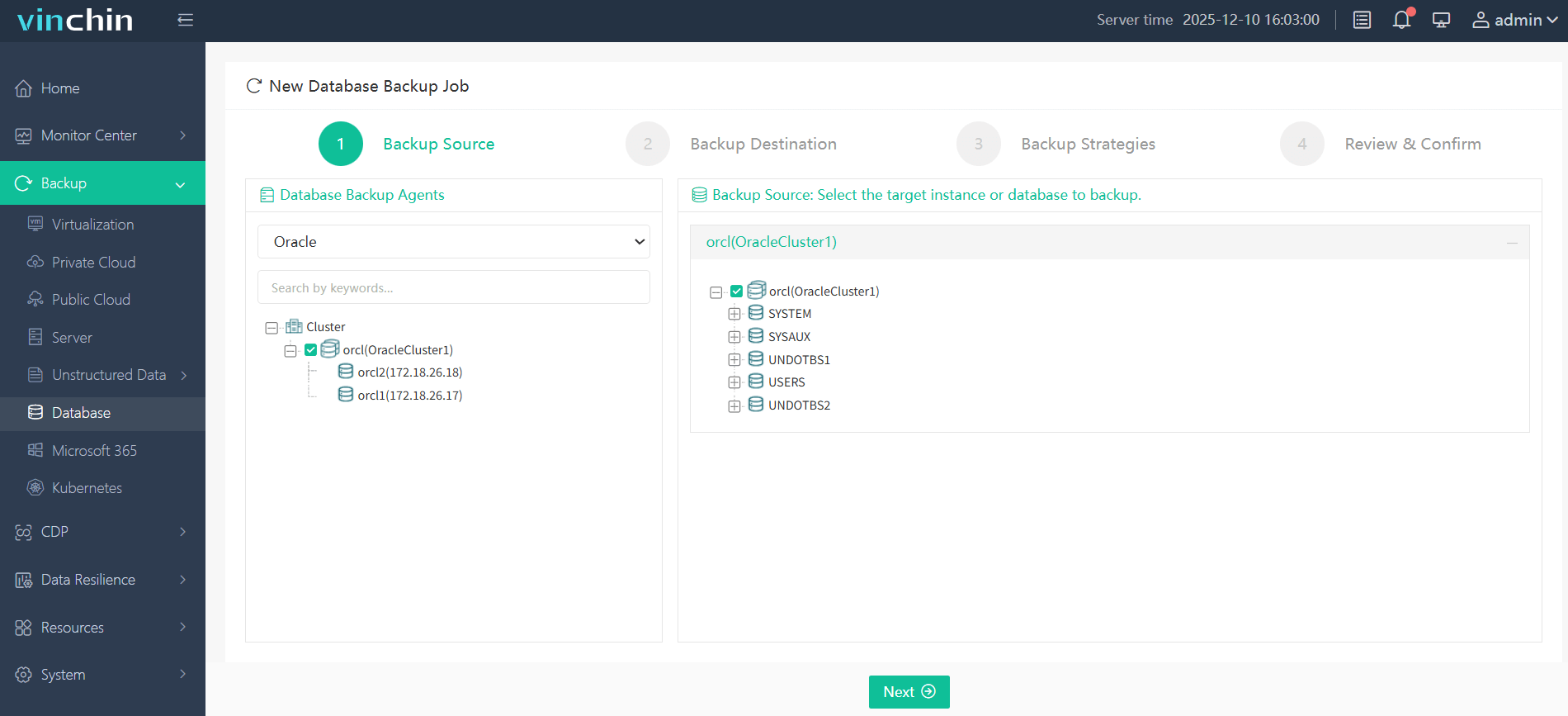
Step 2: Choose backup storage
Step 3: Define backup strategy
Step 4: Submit job
Recognized globally among enterprises with top ratings and a strong customer base worldwide, Vinchin Backup & Recovery provides a full-featured 60-day free trial. click below now and experience leading-edge enterprise data protection firsthand!
Rman Oracle Not Available FAQs
Q1: What does "ORA-01034: ORACLE not available" mean?
A1: It means your database instance isn't started. Start it with SQL*Plus and check environment variables match active instances.
Q2: I get "ORA-01031: insufficient privileges" when connecting with rman target /. What's wrong?
A2: Your OS account likely lacks DBA group membership. Add user appropriately then retry connection using SYSDBA/SYSBACKUP rights if needed.
Q3: Can I back up my entire production-grade Oracle DB without ever touching native tools like rman?
A3: Yes. With third-party solutions such as Vinchin or via manual file-level copying but only native tools guarantee full consistency/catalog integration across all scenarios.
Conclusion
When faced with "RMAN oracle not available," begin by checking environment variables, verifying connectivity through SQL*Plus tests, confirming installation integrity, including matching versions, and ensuring system paths include necessary directories before moving onto advanced fixes. For reliable automated backups regardless of native tool availability consider trying Vinchin's comprehensive solution trusted globally by IT professionals everywhere.