Imagine running a critical Oracle backup job—only to find out later that you have no record of what happened. Without logs, troubleshooting failures or proving compliance becomes nearly impossible. That’s why capturing Oracle RMAN (Recovery Manager) output to a file is essential. In this guide, we’ll explore several methods to save your RMAN results, explain their importance at every skill level, and share practical tips for managing your backup logs efficiently.
What Is Oracle RMAN?
Oracle RMAN is the built-in tool for backing up and recovering Oracle databases. It automates complex tasks like full or incremental backups, restores, recoveries, and even checks backup integrity. With support for features such as archived log management and block-level recovery, RMAN has become the daily workhorse for most database administrators. Whether you’re just starting out or managing enterprise-scale systems, understanding how to handle its output is key.
Why Output RMAN Results to File
Keeping a written record of your backup jobs isn’t just good practice—it’s often required by company policy or industry regulations. When you save RMAN output to a file, you create an audit trail that helps with troubleshooting errors after failed jobs. These logs also prove compliance with standards like GDPR or SOX by showing exactly when backups occurred and whether they succeeded. Would you want to face an auditor—or your boss—without clear records of your database protection efforts?
Method 1: Saving Oracle RMAN Output Using the LOG Parameter
The most direct way to capture everything from an RMAN session is by using the LOG parameter at startup on the command line. This approach works across all supported platforms.
When launching RMAN from your terminal or script environment, add LOG followed by your chosen log file path. All session output—including status messages and errors—will be written directly into this file instead of appearing on screen.
For example:
rman target / LOG='/u01/app/oracle/logs/rman_backup.log'
If you run this command, every message generated during that session goes into /u01/app/oracle/logs/rman_backup.log. If this file already exists in that location, it will be overwritten unless you specify otherwise.
To append new results without erasing previous ones:
rman target / LOG='/u01/app/oracle/logs/rman_backup.log' APPEND
This method is ideal when scheduling regular backups through automated scripts because it keeps logs organized in one place per job run. Remember: if the directory does not exist or if permissions are missing for writing files there (for example if /u01/app/oracle/logs/ hasn’t been created), then logging will fail silently—so always check directory paths first.
One important note: when using LOG, nothing appears on screen during execution; everything goes straight into your specified file until completion.
Method 2: Redirecting Oracle RMAN Output in Command Line
Another flexible way to capture output is through standard shell redirection operators available in Unix/Linux environments—and similar tools in Windows shells.
You can redirect all visible output from an interactive session into a text file using > (to overwrite) or >> (to append):
rman target / > /u01/app/oracle/logs/rman_output.txt
This saves both commands entered and responses received during that session into /u01/app/oracle/logs/rman_output.txt. If you want ongoing logs added rather than replaced each time:
rman target / >> /u01/app/oracle/logs/rman_output.txt
A useful twist here involves watching progress live while still saving everything—a common need during manual troubleshooting sessions. On Unix/Linux systems with tee, try:
rman target / | tee /u01/app/oracle/logs/rman_output.txt
Now you see real-time feedback on screen while also keeping a permanent copy in your chosen log location.
On Windows platforms where tee may not be available natively, consider PowerShell alternatives like:
rman target / | Out-File -FilePath "C:\oracle\logs\rman_output.txt"
Keep in mind that shell redirection captures both input commands typed by users as well as system responses—which can make these logs longer but more complete for auditing purposes.
Method 3: Capturing Oracle RMAN Output with SPOOL LOG TO Command
Sometimes you want finer control over what gets logged—perhaps only part of an interactive session needs recording. For these cases within an active RMAN prompt—not SQL*Plus—you can use SPOOL LOG TO.
Start logging at any point by entering:
RMAN> SPOOL LOG TO '/u01/app/oracle/logs/rman_spool.log';
RMAN> BACKUP DATABASE;
RMAN> REPORT OBSOLETE;
RMAN> SPOOL LOG OFF;
Everything between those two commands writes directly into /u01/app/oracle/logs/rman_spool.log—including detailed status updates about each operation performed inside that block.
Want to keep adding new information without overwriting? Just include APPEND:
RMAN> SPOOL LOG TO '/u01/app/oracle/logs/rman_spool.log' APPEND;
This approach shines when running multiple related commands interactively—for instance during maintenance windows—or when capturing only specific steps rather than entire sessions start-to-finish.
Remember: unlike shell redirection which grabs everything including user input lines themselves, SPOOL LOG TO focuses solely on system-generated messages within its active window.
Best Practices for RMAN Log Management & Automation
Managing dozens—or hundreds—of log files quickly becomes overwhelming without structure. Here are some proven strategies used by experienced DBAs:
First off: adopt consistent naming conventions such as embedding timestamps (rman_full_20240615.log) so old files are easy to identify later on. Next up: automate cleanup using scheduled tasks like cron jobs (Linux) or Task Scheduler (Windows). For example:
1. Create a script that deletes logs older than 90 days:
find /u01/app/oracle/logs/ -name "*.log" -mtime +90 -exec rm {} \;2. Schedule this script daily via cron:
   crontab -e    # Add line below:
   0 2 * * * /home/oracle/scripts/cleanup_rman_logs.sh
For organizations needing long-term retention due to regulatory requirements (such as HIPAA), consider archiving old logs onto secure storage before deletion—or moving them offsite entirely using secure copy tools (scp, rsync) or cloud-based solutions.
Finally: centralize monitoring by collecting all relevant log files from multiple servers into one repository so trends can be spotted early—even across distributed environments.
Automation not only saves time but reduces human error risk associated with manual cleanup routines!
Vinchin Backup & Recovery: Enterprise-Level Solution for Oracle Database Protection
Beyond manual scripting and native tools, organizations seeking robust automation and advanced data protection often turn to specialized solutions designed for enterprise needs. Vinchin Backup & Recovery stands out as a professional database backup platform supporting today’s mainstream databases—including Oracle, MySQL, SQL Server, MariaDB, PostgreSQL, PostgresPro, and TiDB—with comprehensive coverage tailored especially for demanding environments like yours working with Oracle databases.
Key features include batch database backup operations for streamlined management at scale; data retention policies ensuring compliance; cloud backup and tape archiving options; storage protection against ransomware threats; and integrity checks verifying recoverability—all combining powerful automation with strong security controls.
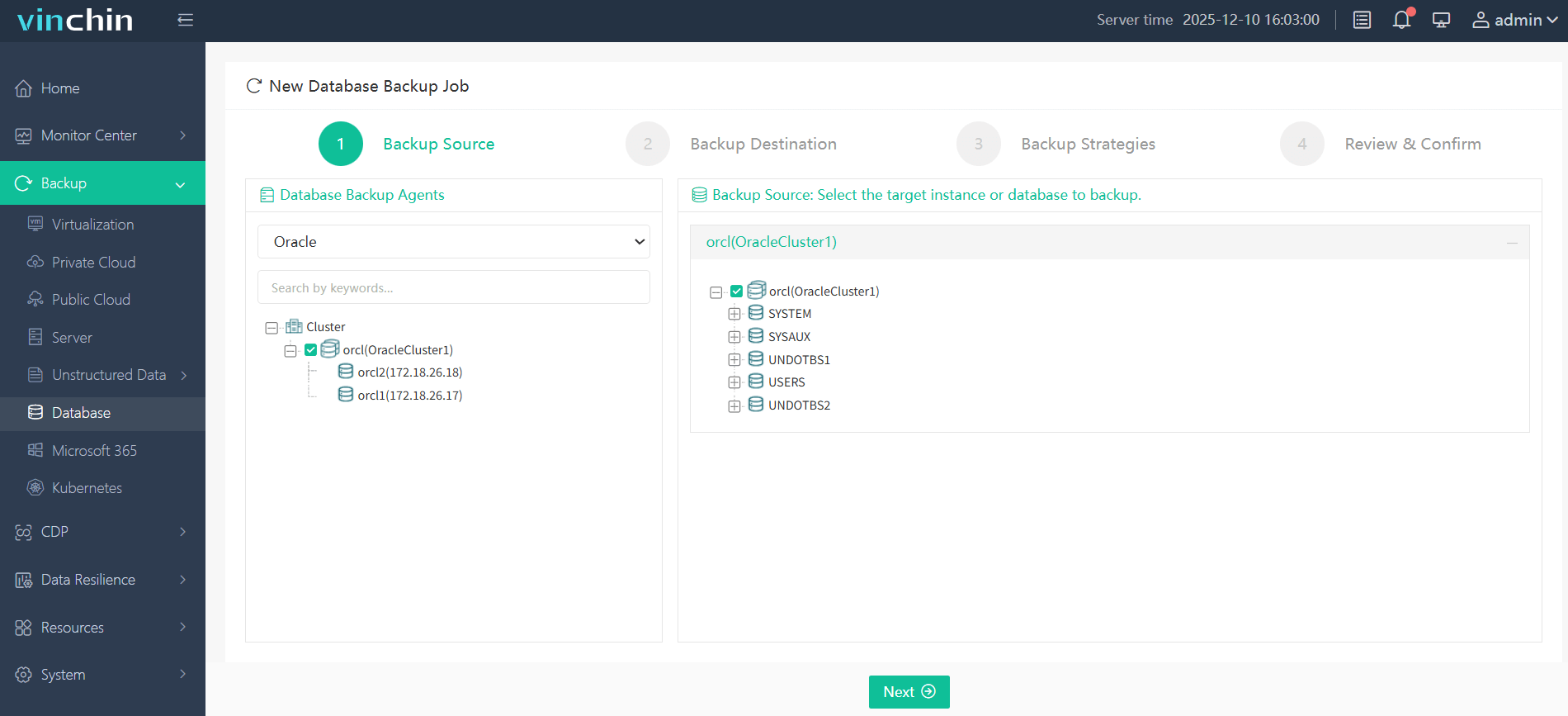
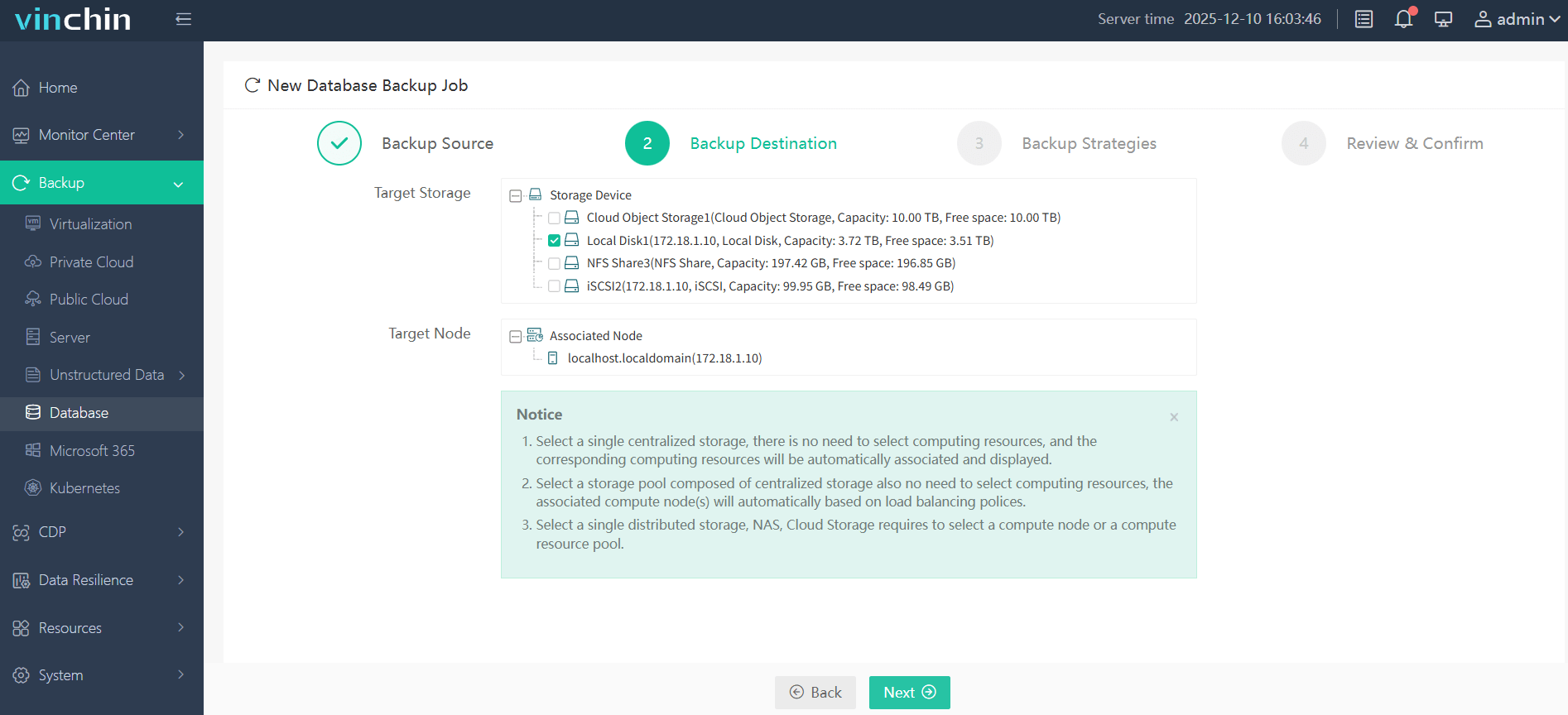
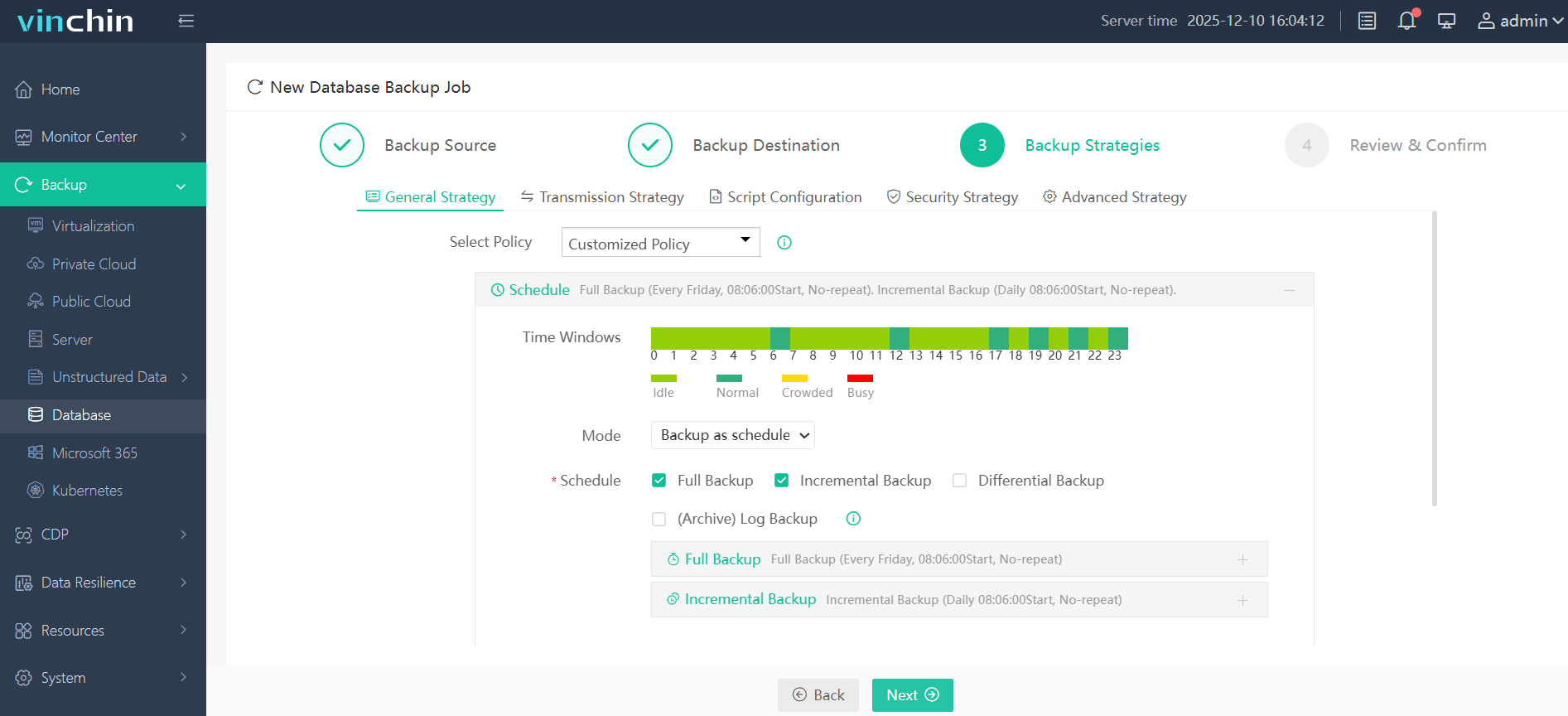
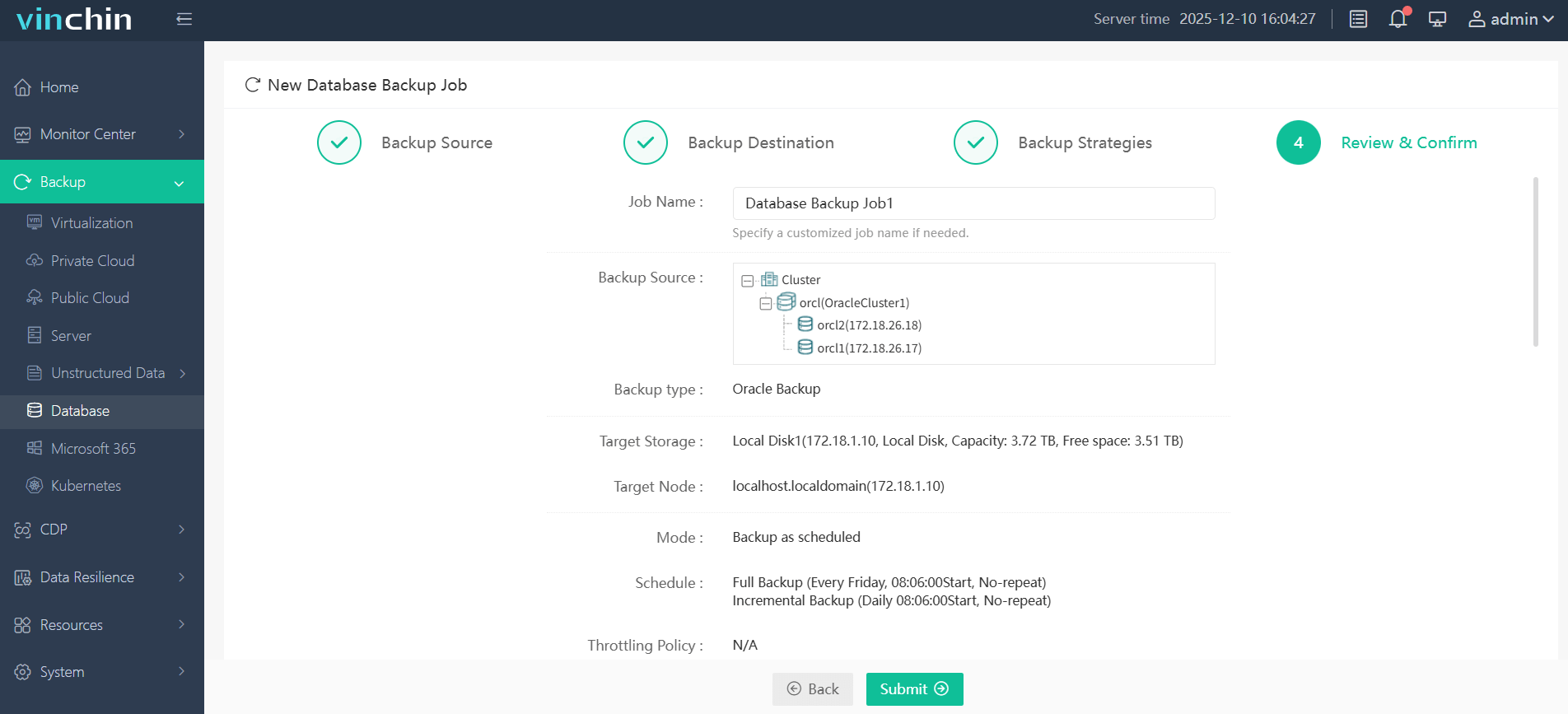
The intuitive web console makes safeguarding your Oracle environment straightforward:
Step 1. Select the Oracle database to back up
Step 2. Choose the backup storage
Step 3. Define the backup strategy
Step 4. Submit the job
Recognized globally among enterprise IT teams for reliability and ease-of-use—with top customer ratings—you can experience every feature free for 60 days by clicking download below!
Oracle RMAN Output to File FAQs
Q1: How do I change where my log files are saved?
A1: Specify any desired path after LOG=, making sure directories exist before starting backups.
Q2: Can I limit how much detail appears in my output file?
A2: Use SET ECHO OFF inside scripts or adjust verbosity settings within individual commands if needed.
Q3: What should I do if my organization wants centralized monitoring?
A3: Collect log files regularly onto one server using secure transfer methods then integrate them with monitoring tools.
Conclusion
Saving Oracle RMAN output ensures reliable audits and smooth troubleshooting whether you're scripting routine jobs or investigating issues live onscreen versus offline later on paperless trails alike! Try Vinchin’s solution today if you'd like even easier management—all backed by robust automation options designed specifically around enterprise needs everywhere!