Every Oracle database administrator faces routine maintenance tasks—deleting old backups, crosschecking files, or cleaning up storage space. Sometimes these simple jobs throw unexpected errors like RMAN-06091: no channel allocated for maintenance (of an appropriate type) right when you need things to run smoothly. Why does this happen? The answer often lies in how you allocate a channel for maintenance type disk in Oracle RMAN.
Understanding this process is essential for keeping your backup catalog clean and your storage under control. In this guide, we’ll break down what it means to allocate a channel for maintenance type disk, why it matters at every skill level, and how you can do it step by step—plus some troubleshooting tips that even seasoned DBAs find useful.
What Is Allocate Channel for Maintenance Type Disk?
In Oracle RMAN (Recovery Manager), a channel is simply a link between RMAN and your storage device—either disk or tape. Think of it as a dedicated path that lets RMAN talk directly to where your backups live.
When you allocate a channel specifically for maintenance type disk, you’re telling RMAN: “Use this connection only for managing backup files on disk—not for creating new backups or restoring data.” Maintenance tasks include deleting obsolete backups, crosschecking backup pieces to see if they still exist on disk, or changing their status in the catalog.
Unlike regular channels used during backup or restore operations—which are usually set inside RUN blocks—a maintenance channel must be allocated at the main RMAN prompt before running any standalone maintenance commands. Once allocated, it stays active until released manually or automatically at session end.
This distinction matters because without an explicit maintenance channel of the right type (disk), certain commands won’t work—and you’ll get errors like RMAN-06091.
Why Use Allocate Channel for Maintenance Tasks
Allocating a maintenance channel isn’t just good practice—it’s often required when working with complex environments where backups might be spread across disks and tapes.
Let’s say you want to delete obsolete backups stored on disk using:
RMAN> DELETE OBSOLETE DEVICE TYPE DISK;
If there’s no suitable maintenance channel allocated first, you’ll hit:
RMAN-06091: no channel allocated for maintenance (of an appropriate type)
But if you start by allocating one:
RMAN> ALLOCATE CHANNEL FOR MAINTENANCE TYPE DISK;
RMAN> DELETE OBSOLETE DEVICE TYPE DISK;
The command runs smoothly because now RMAN knows exactly how to access those files.
Why does this matter? Without proper allocation:
Your cleanup commands may fail
Old backup files remain on disk
Storage fills up unnecessarily
The backup catalog becomes inaccurate
By allocating the correct maintenance channel(s), you ensure that every file gets checked and managed properly—no matter where it lives or how many devices are involved.
This approach is especially important after system changes such as Oracle patches or upgrades that might alter default behaviors around automatic channels.
Allocating Channel with RMAN Commands
Allocating a channel for maintenance type disk is straightforward but must be done correctly to avoid errors.
First connect to your target database using RMAN:
rman TARGET /
At the main prompt—not inside any RUN block—allocate your desired maintenance channel:
RMAN> ALLOCATE CHANNEL FOR MAINTENANCE TYPE DISK;
Now run your chosen task—for example:
RMAN> DELETE OBSOLETE DEVICE TYPE DISK;
Once finished, release the channel if needed:
RMAN> RELEASE CHANNEL;
If managing both disks and tapes together—for example during large-scale cleanup—you should allocate one separate maintenance channel per device type before issuing commands like DELETE OBSOLETE:
RMAN> ALLOCATE CHANNEL FOR MAINTENANCE TYPE DISK;
RMAN> ALLOCATE CHANNEL FOR MAINTENANCE DEVICE TYPE SBT_TAPE PARMS '...';
RMAN> DELETE OBSOLETE;
-- Afterward
RMAN> RELEASE CHANNEL; -- Repeat as needed per device
Tips
Before allocating manually, check which channels are already configured by running:
SHOW ALL;
This helps diagnose whether manual allocation is necessary—or if automatic settings already cover your needs.
For clarity in logs during complex sessions or scripts involving multiple channels/devices, consider naming each one explicitly:
ALLOCATE CHANNEL FOR MAINTENANCE TYPE DISK NAME 'MAINT_DISK';
ALLOCATE CHANNEL FOR MAINTENANCE DEVICE TYPE SBT_TAPE NAME 'MAINT_TAPE' PARMS '...';
Remember: If you exit from RMAN entirely after running these commands, all channels release automatically; use RELEASE CHANNEL only if staying within the same session but switching tasks midstream.
Manual allocation gives more control over which devices get used—especially helpful when troubleshooting mixed-media environments or resolving persistent catalog issues after upgrades or configuration changes.
Vinchin Backup & Recovery: Enterprise-Level Protection for Oracle Databases
While mastering manual management with native tools is valuable, organizations increasingly seek streamlined solutions that simplify enterprise data protection at scale. Vinchin Backup & Recovery stands out as a professional-grade platform supporting today’s mainstream databases—including Oracle, MySQL, SQL Server, MariaDB, PostgreSQL, PostgresPro, and TiDB—with particular strength in safeguarding Oracle environments through advanced features tailored to modern business needs. Among its most relevant capabilities are incremental backup support, advanced source-side compression, batch database backup management, robust data retention policies including GFS options, and built-in integrity checks—all designed to maximize efficiency while minimizing risk and administrative overhead.
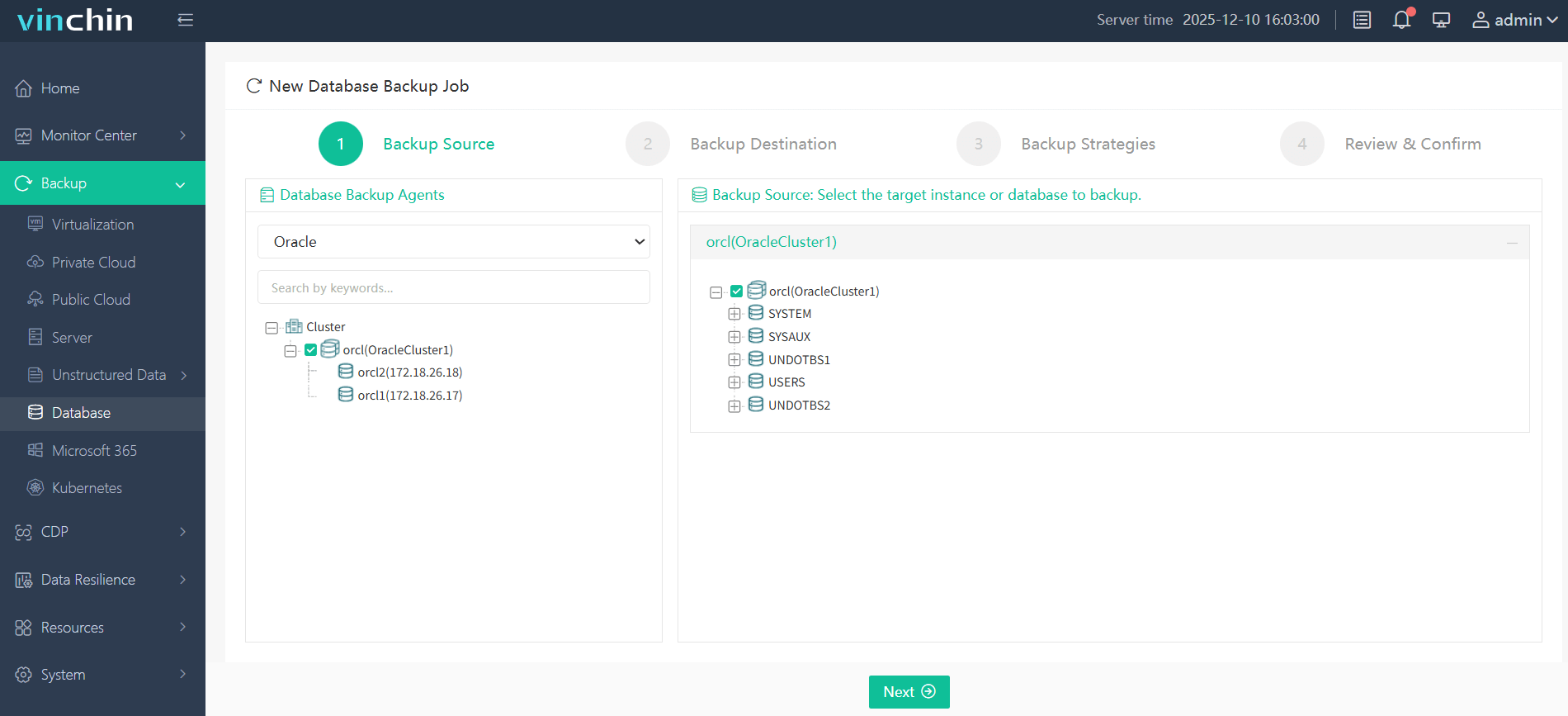
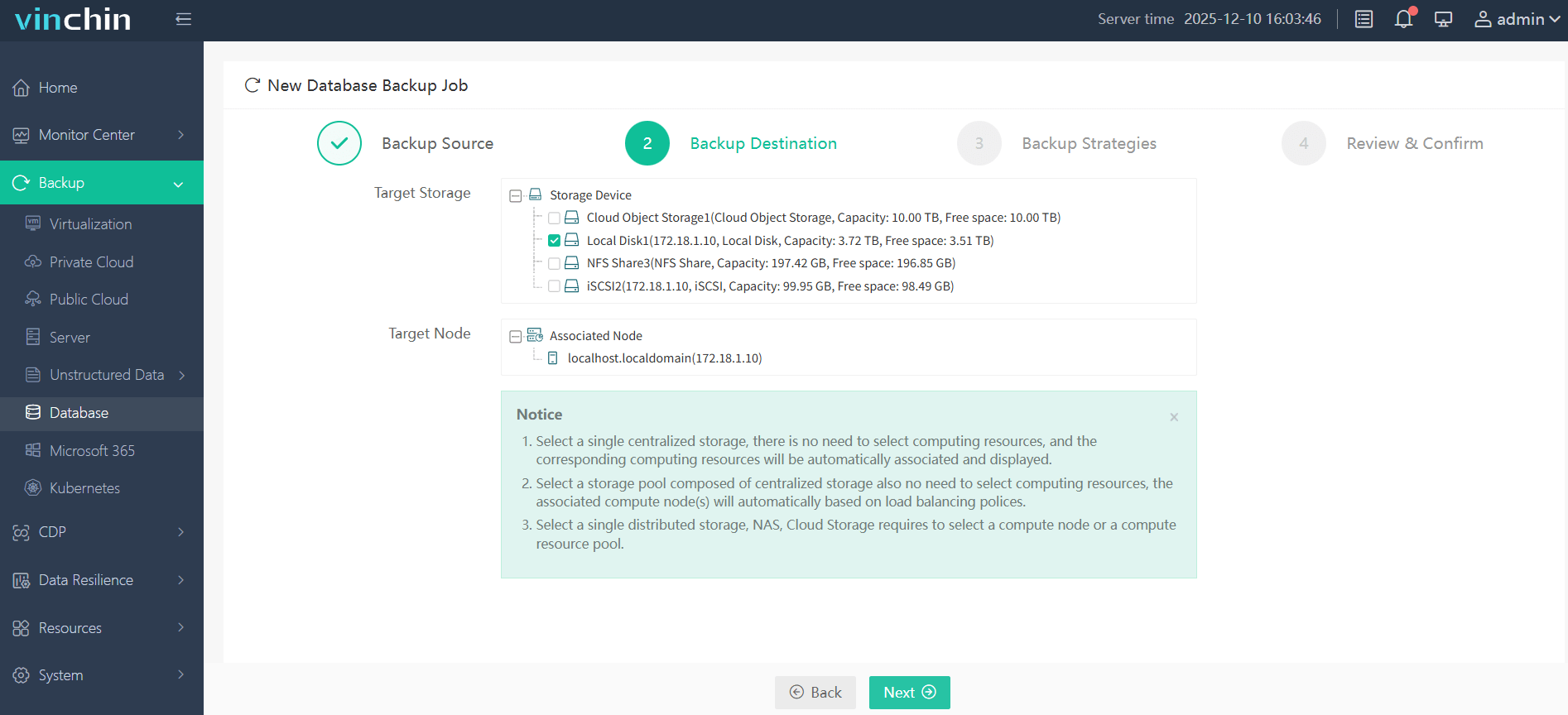
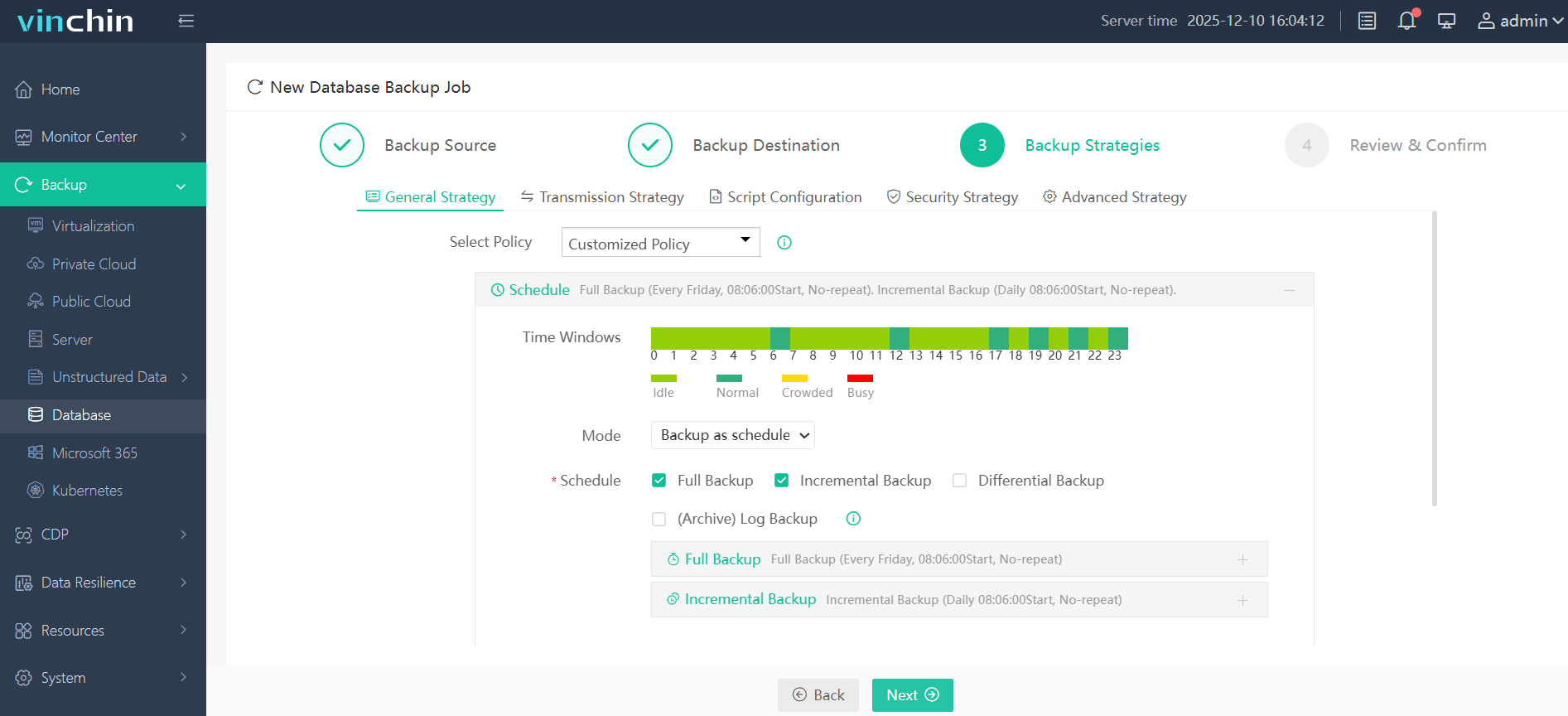
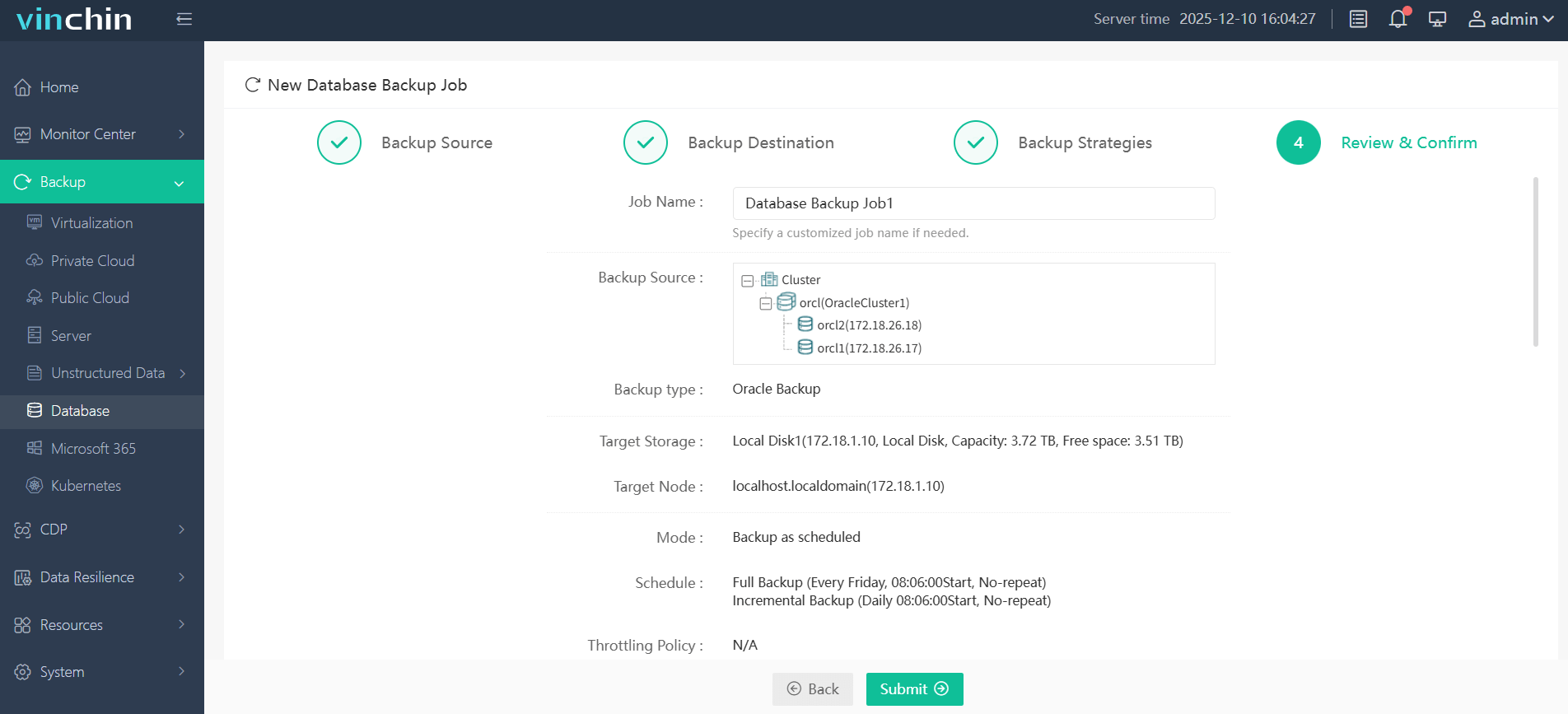
Vinchin Backup & Recovery offers an intuitive web console so even complex tasks become simple:
Step 1. Select the Oracle database to back up
Step 2. Choose the backup storage
Step 3. Define the backup strategy
Step 4. Submit the job
Recognized globally with top ratings from thousands of customers across industries, Vinchin Backup & Recovery delivers trusted enterprise data protection—with a full-featured free trial available for 60 days so you can experience its benefits firsthand.
Allocate Channel for Maintenance Type Disk FAQs
Q1: What should I do if I get “RMAN-06091: no channel allocated for maintenance (of an appropriate type)”?
A1: Manually allocate the required maintenance channel at the main RMAN prompt before running any standalone command needing access to those files.
Q2: Can I allocate both disk and tape maintenance channels together?
A2: Yes—allocate one separate maintenance channel per device type needed before issuing multi-device commands like DELETE OBSOLETE then release each afterward.
Q3: How do I release a specific named maintenance channel?
A3: Use RELEASE CHANNEL followed by its name at the main prompt once finished with related tasks within same session.
Q4: Do automated scripts always require explicit allocation?
A4: Only if they include standalone cleanup/catalog commands outside RUN blocks; otherwise automatic configuration may suffice.
Conclusion
Allocating proper maintenance channels keeps Oracle RMAN tasks efficient and error-free—from basic cleanups through advanced troubleshooting scenarios. Manual control prevents surprises after upgrades or configuration shifts. For teams seeking even simpler enterprise-grade protection across databases—including Oracle—Vinchin delivers powerful automation plus peace of mind in one solution.