If you manage Oracle database, you have likely seen "obsolete" and "expired" in RMAN backup reports. These terms may sound similar but have very different meanings for your backup strategy. Mistaking one for the other can lead to failed recoveries or wasted storage space—both serious issues for any IT operation. Understanding this difference helps you avoid costly mistakes and keeps your database safe.
What Is Obsolete in RMAN?
In RMAN, a backup becomes "obsolete" when it is no longer needed to meet your recovery goals. This status depends on your configured retention policy. For example, if you set a policy to keep backups for seven days, any backup older than that becomes obsolete after day eight.
Obsolete backups still exist on disk or tape; they are not deleted automatically. RMAN simply marks them as unnecessary based on your current recovery window or redundancy settings. You can find these using REPORT OBSOLETE in RMAN.
Deleting obsolete backups frees up storage while keeping enough data for recovery within your defined window. Always use DELETE OBSOLETE from within RMAN so it updates its records correctly.
How Retention Policy Affects Obsolete Status?
Retention policies control when a backup becomes obsolete. There are two main types: time-based (recovery window) and redundancy-based.
With a time-based policy like CONFIGURE RETENTION POLICY TO RECOVERY WINDOW OF 7 DAYS, any backup older than seven days is marked obsolete once newer backups cover that period.
A redundancy-based policy such as CONFIGURE RETENTION POLICY TO REDUNDANCY 2 means only the two most recent backups are kept; older ones become obsolete even if they’re not yet seven days old.
Choosing the right retention policy ensures you balance storage costs against recovery needs. If you change policies often or run frequent full backups, review which files become obsolete more regularly.
What Is Expired in RMAN?
An "expired" backup means something different entirely. Here, RMAN expects a file to be present at a specific location but cannot find it during checks. This usually happens if someone deletes or moves a file outside of RMAN—using operating system commands instead of proper tools.
RMAN tracks all known backups in its repository (either control file or catalog). When you run CROSSCHECK BACKUP, it compares what should exist against what actually does exist on disk or tape. If files are missing, their status changes from available to expired.
Expired backups cannot be used for restores because they do not physically exist anymore—even though their records remain until cleaned up with DELETE EXPIRED BACKUP.
Common Scenarios Leading to Expired Backups
Several situations can cause expired statuses:
Sometimes administrators delete old files directly from disk without using DELETE OBSOLETE inside RMAN first. Other times automated scripts remove files before running crosschecks—leaving orphaned entries behind in the catalog.
Storage failures also play a role: if disks fail or tapes get damaged before crosschecking occurs, those missing pieces show up as expired next time you check inventory.
Network-attached storage migrations may break links between catalog entries and actual files if paths change unexpectedly without updating configurations in both places.
Understanding these scenarios helps prevent confusion during audits or disaster recovery drills when every valid backup counts.
RMAN Obsolete vs Expired Differences
The distinction between obsolete vs expired is fundamental—and critical—for reliable database protection:
Obsolete means “old but present.” These files still sit safely where expected but aren’t required anymore under current retention rules; deleting them saves space without risk since newer copies already cover necessary restore points within chosen window/redundancy limits set earlier via configuration commands mentioned above!
Expired means “missing yet listed.” Here records remain inside catalogs/control files even though physical objects vanished due either accidental removal/intentional deletion/hardware loss/etc.; trying restore using such entries leads nowhere fast since nothing exists behind scenes support requested action anymore…
To manage these states effectively:
Use REPORT OBSOLETE regularly so outdated items don’t pile up unnoticed over months/years;
Run CROSSCHECK BACKUP before major maintenance events/migrations ensure everything matches reality;
Follow-up immediately afterward by issuing DELETE EXPIRED BACKUP then finally wrap things up neat/tidy fashion via periodic scheduled runs of DELETE OBSOLETE NOPROMPT DEVICE TYPE DISK/TAPE/etc., depending media involved!
This order avoids errors where attempts made removing objects already gone—or worse yet—skipping over truly unneeded ones because status never updated properly beforehand.
Why Backup Status Matters for Database Safety?
Backup status isn’t just technical trivia—it directly affects whether restores succeed when disaster strikes! Relying unknowingly upon expired sets risks catastrophic failure mid-recovery since underlying bits simply aren’t there anymore despite appearances otherwise inside GUI/report outputs/catalog listings/etc.
Obsolete sets pose subtler threat: while harmless themselves (since covered by newer versions elsewhere), letting too many accumulate wastes precious capacity slows down searches/increases complexity managing ever-growing inventories long-term, Worse yet? Confusion over which copies safe delete sometimes leads admins err side caution keeping everything forever “just case”—defeating purpose having smart policies begin with!
For example: imagine DBA removes archive logs manually free space ahead big migration—but skips running crosscheck afterward. Next restore attempt fails halfway through because required log marked available inside catalog actually disappeared weeks ago! Regularly running both crosscheck/delete cycles prevents such surprises ensuring only viable candidates offered whenever urgent need arises unexpectedly middle night/weekend/public holiday alike…
Simplifying Oracle Backup Management with Vinchin Backup & Recovery
While understanding and managing Oracle database backup statuses is crucial, leveraging an advanced solution streamlines the process significantly. Vinchin Backup & Recovery is an enterprise-level database backup solution supporting today’s mainstream platforms—including Oracle, MySQL, SQL Server, MariaDB, PostgreSQL, PostgresPro, and TiDB—to meet diverse business needs efficiently and securely.
Key features such as batch database backup, incremental backup (for Oracle), cloud backup and tape archiving, integrity check, and WORM protection work together to automate complex tasks, optimize storage usage, enhance data security against ransomware threats, and ensure reliable recoverability at any point-in-time—all essential benefits for modern operations teams seeking robust data protection strategies.
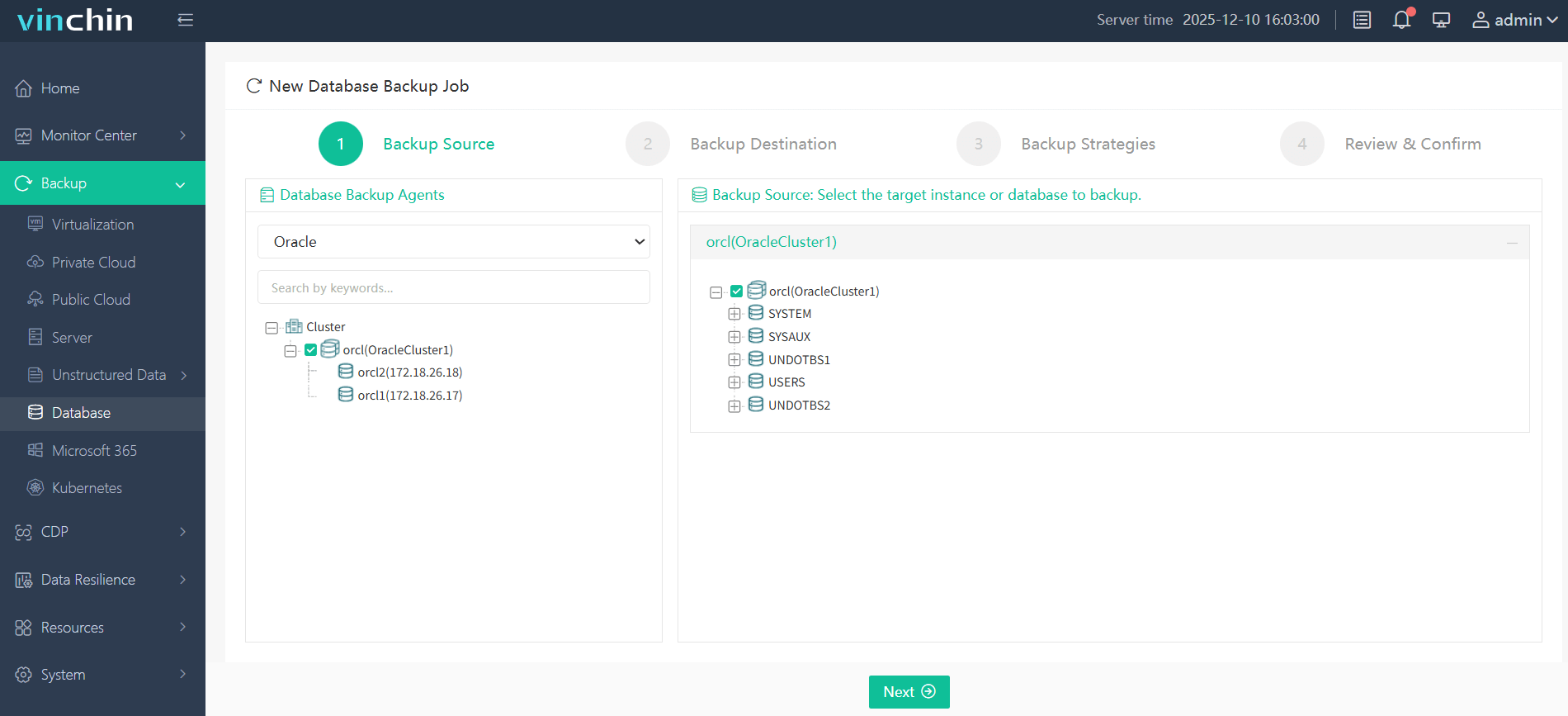
The intuitive web console makes management straightforward:
Step 1. Select the Oracle database to back up
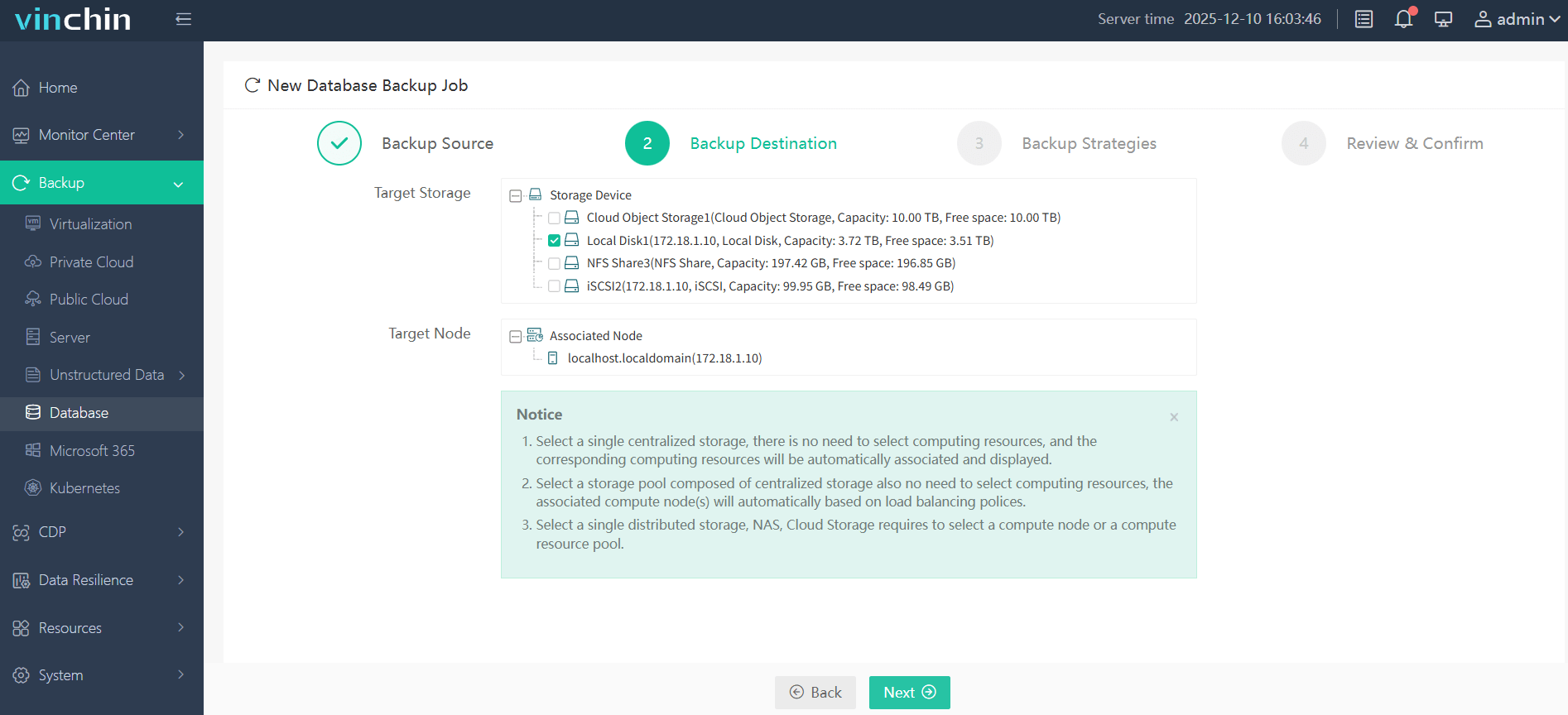
Step 2. Choose the backup storage
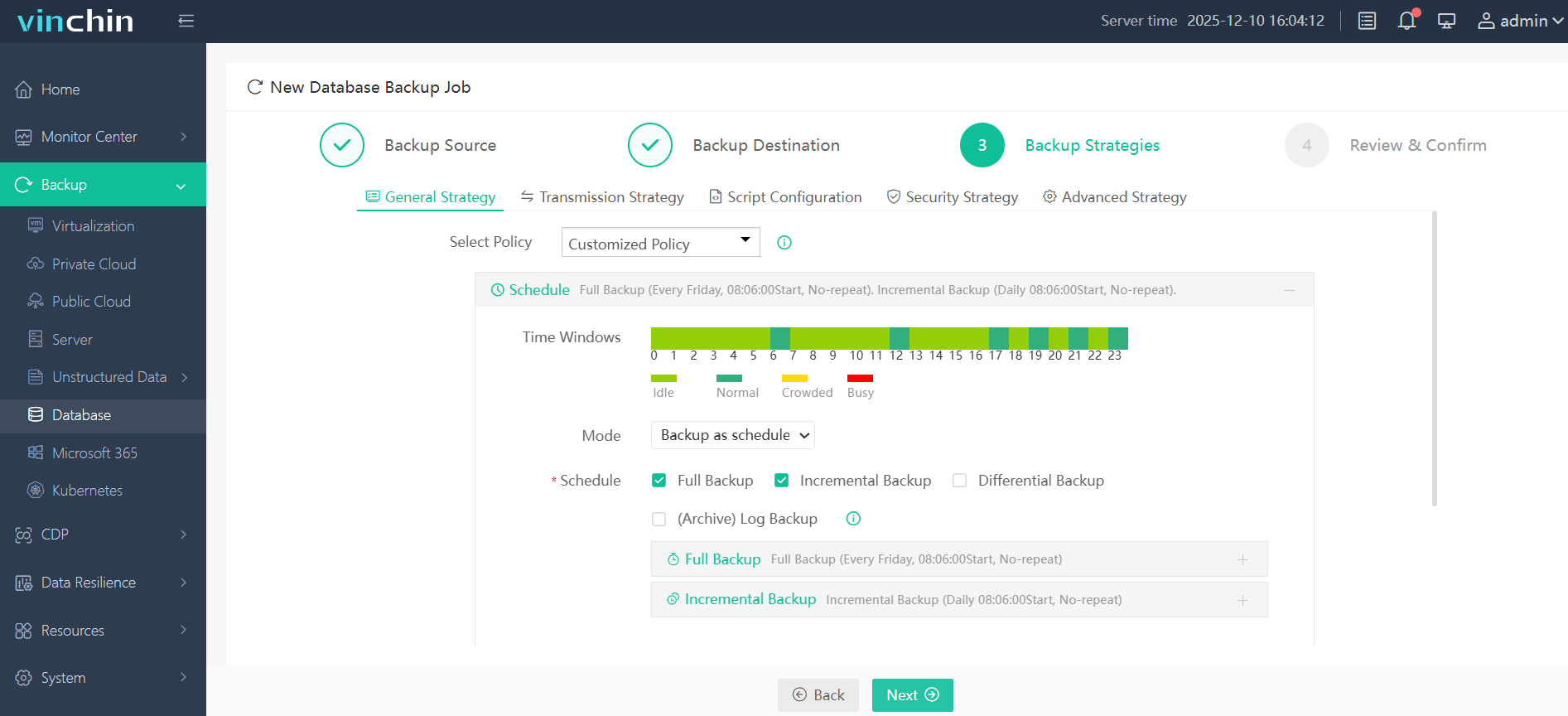
Step 3. Define the backup strategy
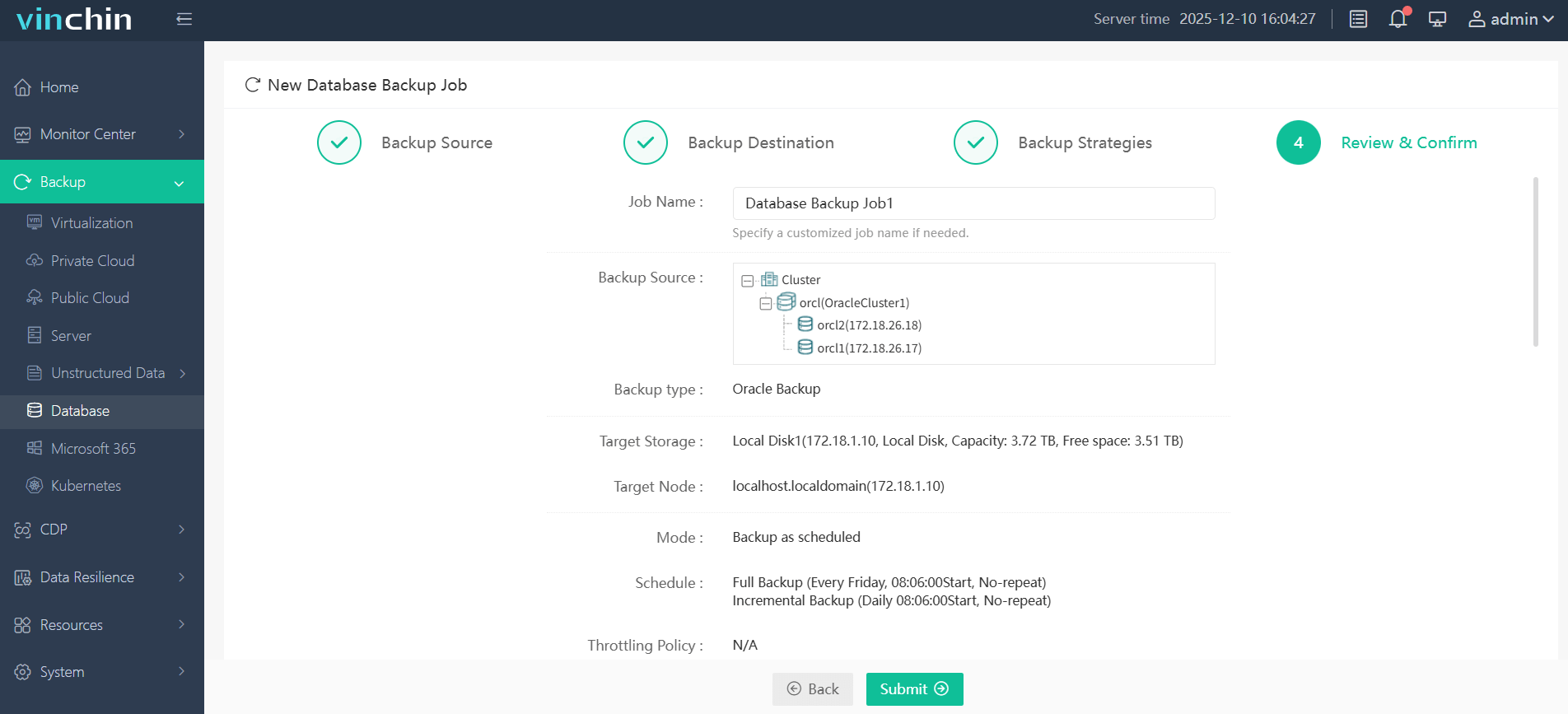
Step 4. Submit the job
Vinchin Backup & Recovery enjoys global recognition among enterprises for reliability and ease of use—try its fully featured 60-day free trial today by clicking the download button below!
RMAN Obsolete vs Expired FAQs
Q1: How do I remove expired backup records from RMAN?
A1: Run CROSSCHECK BACKUP, then use DELETE EXPIRED BACKUP in sequence.
Q2: Can I recover my database using an expired backup?
A2: No; an expired backup cannot be used because its file no longer exists where expected by RMAN.
Q3: What happens if I delete backup files at OS level instead of using RMAN?
A3: Those entries become marked as expired after next crosscheck—you must then run DELETE EXPIRED BACKUP inside RMAN console/UI/script accordingly!
Q4: How can I prevent creating lots of expired backups?
A4: Always delete unwanted files through official DELETE commands within RMAN—not via direct OS-level removal—to keep repository accurate/synchronized at all times!
Conclusion
Knowing whether an Oracle database backup is obsolete versus expired protects both uptime targets AND bottom-line budgets alike! Use regular crosschecks/deletes plus clear policies maintain healthy inventories year-round—and consider Vinchin’s solutions streamline process further today!