Are you looking for a reliable way to back up your Oracle databases on Windows? Many database administrators face this challenge every day. Oracle Recovery Manager (RMAN) is a built-in tool that helps you protect your data and ensure business continuity. In this article, we will explain what RMAN is, why it is important for Windows environments, and how you can use it—step by step. We will also show you how to automate backups and use Oracle Enterprise Manager for a more visual approach. Finally, we will introduce a modern alternative for enterprise backup: Vinchin.
What Is Oracle RMAN?
Oracle Recovery Manager (RMAN) is Oracle’s official utility for database backup and recovery. It comes included with every Oracle Database installation on Windows or other platforms; there’s no need to purchase or install extra software.
RMAN works directly with the Oracle database engine so it understands the internal structure of your data files. This allows it to perform advanced operations such as block-level recovery or incremental backups that only capture changes since the last backup. You can use RMAN through its command-line interface or via graphical tools like Oracle Enterprise Manager.
With RMAN you can back up an entire database or just specific tablespaces or data files as needed. It supports both full (complete) backups and incremental ones that save storage space by only backing up changed blocks since the last run. RMAN also manages archived redo logs automatically if configured properly—these are essential for point-in-time recovery.
For IT administrators running mission-critical systems on Windows servers, using RMAN means you get native integration with Oracle’s architecture plus automation features designed to reduce human error.
Why Use Oracle RMAN on Windows?
Windows remains one of the most popular operating systems in enterprise environments running Oracle databases. Using RMAN in these settings brings several advantages tailored specifically for Windows users.
First, RMAN automates many complex backup tasks that would otherwise require manual scripting or third-party tools. This reduces mistakes caused by human error—a leading cause of data loss incidents according to industry studies. Second, RMAN supports both full and incremental backups natively within Windows environments so you can optimize storage usage without sacrificing protection.
Third, validation features let you check whether your backups are usable before disaster strikes—a critical safeguard against silent corruption or misconfiguration issues that sometimes go unnoticed until recovery time arrives.
Fourth, integration with Windows Task Scheduler makes it easy to automate regular backup jobs without needing extra software layers; this fits well into existing IT workflows where scheduled tasks are standard practice.
Finally—and perhaps most importantly—RMAN provides consistent cross-platform support: whether your organization runs Linux servers alongside Windows machines or plans future migrations between them, learning one toolset prepares you for both worlds.
Method 1: Backup Oracle Databases on Windows Using RMAN Command Line
The command-line interface gives direct access to all of RMAN’s capabilities in any supported environment—including Windows Server editions commonly used in enterprises today.
Before starting any backup operation:
Make sure your database runs in ARCHIVELOG mode if online (hot) backups are required.
Confirm that your user account belongs to the ORA_DBA group (or has SYSDBA privileges). This ensures proper access rights when connecting locally.
Check available disk space at both source (database) and destination (backup location).
To perform a basic full database backup using RMAN on Windows:
1. Open Command Prompt as an administrator.
2. Set the ORACLE_SID environment variable so commands target the correct instance:
set ORACLE_SID=your_db_sid
3. Start RMAN by entering:
rman target /
4. At the RMAN> prompt enter:
BACKUP DATABASE PLUS ARCHIVELOG;
This command creates a full backup of all data files plus archived redo logs needed for complete recovery—even if transactions were still active during backup time.
5. To specify custom locations/formats:
BACKUP DATABASE FORMAT 'D:\OracleBackups\%d_%U.bkp';
Here %d inserts the database name; %U generates a unique identifier per file.
6. To back up only certain tablespaces/data files:
    BACKUP TABLESPACE users;
    BACKUP DATAFILE 4;
7. After completion always validate your new backup set:
VALIDATE BACKUP OF DATABASE;
8. Review status/history with:
LIST BACKUP;
9. Exit when finished:
EXIT
Note: Running BACKUP DATABASE PLUS ARCHIVELOG; triggers an automatic log switch—this is normal behavior but may briefly increase load during execution.
This method offers maximum control over what gets backed up—and when—which suits ad-hoc maintenance windows or troubleshooting scenarios where flexibility matters most.
Method 2: Automate Oracle RMAN Backups on Windows with Batch Scripts
Manual backups work well occasionally but automation ensures consistency over time—a must-have feature in production environments handling large volumes of transactional data daily.
On Windows servers you can combine batch scripts with Task Scheduler:
1. Create an RMAN script file (backup_db.rman) containing desired commands such as:
   RUN {
     BACKUP AS COMPRESSED BACKUPSET DATABASE;
     BACKUP AS COMPRESSED BACKUPSET ARCHIVELOG ALL;
     BACKUP CURRENT CONTROLFILE;
     DELETE NOPROMPT OBSOLETE;
   }
2. Write a batch file (run_rman_backup.bat) referencing environment variables rather than hardcoded paths whenever possible—for example,
   set ORACLE_SID=your_db_sid
   "%ORACLE_HOME%\BIN\rman.exe" target / cmdfile="D:\scripts\backup_db.rman" log="D:\logs\rman_backup_%date:~10,4%%date:~4,2%%date:~7,2%.log"

   IF %ERRORLEVEL% NEQ 0 (
       echo [%date% %time%] RMAN backup failed with error %ERRORLEVEL%. Check log >> "D:\logs\backup_errors.log"
       exit /b %ERRORLEVEL%
   )
3. Open Windows Task Scheduler from Start menu.
4. Create a new task:
On General, name task clearly; select Run with highest privileges
Under Triggers, click New then define schedule (daily/weekly)
In Actions, click New, browse/select batch file above
Adjust options under Conditions/Settings
5. Save task; provide admin credentials if prompted
By using %ORACLE_HOME%, scripts stay portable across upgrades/patches without editing hardcoded paths each time server configurations change.
Always review generated log files after scheduled runs—not just success/failure codes but actual content—to catch warnings about skipped files or retention policy mismatches early before they become problems later during restores!
Automating deletion of obsolete backups (DELETE NOPROMPT OBSOLETE) keeps disk usage under control based on retention policies defined elsewhere in configuration—review these regularly as business needs evolve over time.
Method 3: Backup Oracle Databases on Windows Using Oracle Enterprise Manager
Not everyone prefers typing commands at a prompt—especially when managing multiple instances across different hosts from one central console! That’s where graphical tools like OEM come into play.
Before proceeding make sure your environment includes either Oracle Enterprise Manager Cloud Control installed centrally—or at least Database Control enabled locally—with appropriate Management Agent deployed/configured against each monitored host/database instance.
To back up an Oracle database using OEM:
1. Log into OEM web console as DBA-privileged user.
2. Navigate from dashboard to target system/database instance.
3.Click Availability, then select Backup & Recovery
4.Select option labeled Schedule Backup
5.Follow wizard prompts choosing type (full/incremental/tablespace etc.), destination path(s), retention/compression settings matching organizational standards
6.Review summary screen carefully before clicking final confirmation button (Submit) which schedules job accordingly
OEM handles underlying calls transparently via integrated agents—it tracks progress/status visually so admins see alerts/warnings/errors right away instead of parsing raw text logs manually afterward!
You can monitor job history under same menus—or drill down into detailed logs if troubleshooting becomes necessary after unexpected failures occur overnight/weekends/etc.—all from browser-based interface accessible anywhere inside corporate network perimeter.
Restore & Recovery Fundamentals Using RMAN
Backing up data is only half the story—the real test comes when something goes wrong! Knowing how to restore/recover quickly minimizes downtime during outages caused by hardware failure/user mistakes/corruption events/etc., which is why every good administrator practices these steps regularly even outside crisis situations (“fire drills”).
Here’s how basic restore/recovery works using command line:
1.Open elevated Command Prompt
2.Set ORACLE_SID appropriately
3.Launch rman target /
4.To restore entire DB after catastrophic loss run sequentially—
SHUTDOWN IMMEDIATE;
STARTUP MOUNT;
RESTORE DATABASE;
RECOVER DATABASE;
ALTER DATABASE OPEN RESETLOGS;
Each step serves distinct purpose—from mounting physical structures through applying archived redo logs until consistent state achieved again before reopening DB live (“resetlogs” resets transaction counters).
For partial recoveries—such as single tablespace/file loss—the process involves specifying targets within RESTORE/RECOVER statements accordingly instead of whole DB scope above.
Always test restores periodically—not just initial setup—to verify procedures match current infrastructure layout/security policies/software versions/etc.
How to Back Up Oracle Databases on Windows with Vinchin Backup & Recovery?
Beyond traditional methods, organizations seeking streamlined enterprise-grade protection should consider Vinchin Backup & Recovery—a professional solution designed specifically for robust database protection across major platforms including Oracle, MySQL, SQL Server, MariaDB, PostgreSQL, PostgresPro, and TiDB databases (with particular focus here on comprehensive support for Oracle). Key features relevant for safeguarding critical workloads include batch database backup operations, granular data retention policies including GFS rotation schemes, cloud/tape archiving capabilities for offsite resilience, integrity checks ensuring recoverability of stored copies, and WORM protection against unauthorized modifications—all working together to deliver secure automation while minimizing administrative overhead and risk exposure.
Vinchin Backup & Recovery stands out thanks to its intuitive web console interface which simplifies workflow management even further:
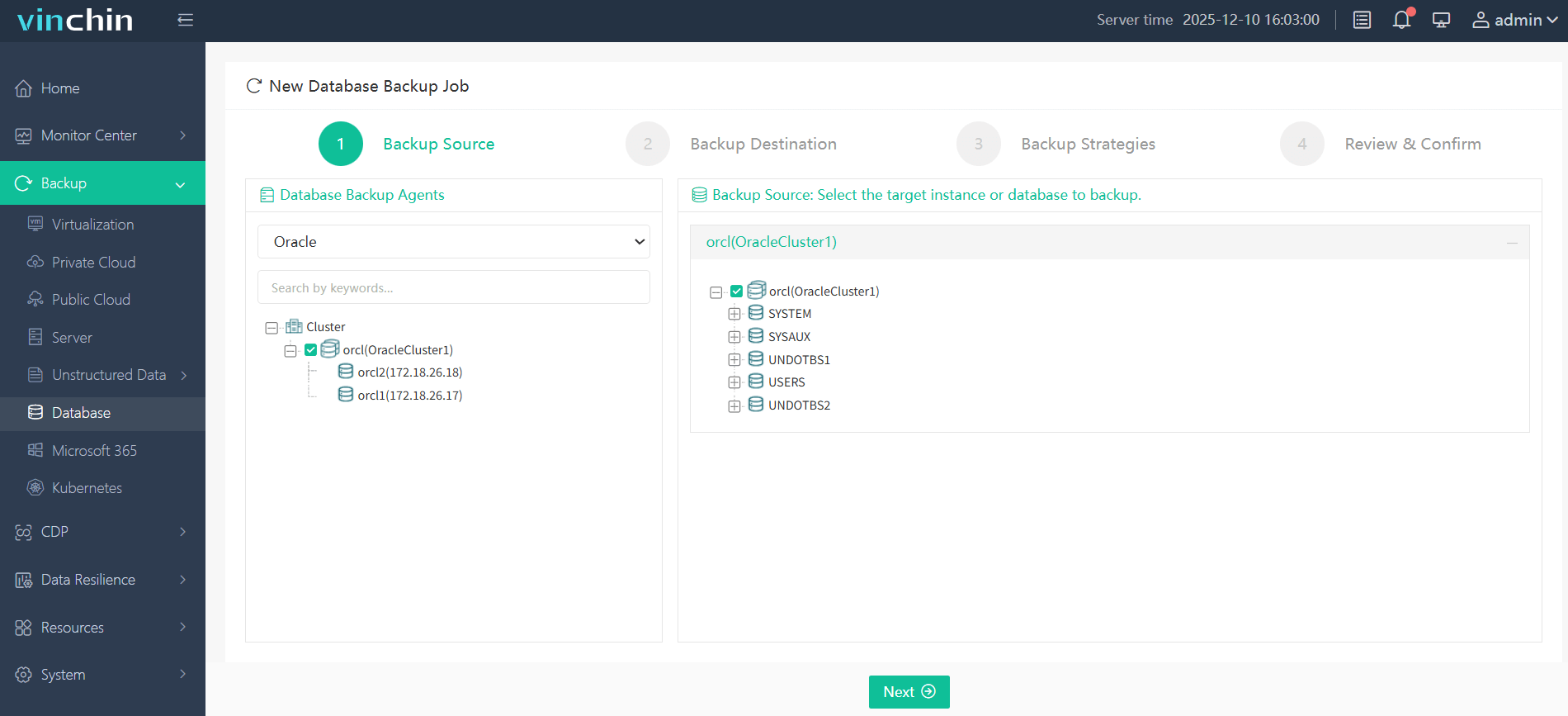
Step 1. Select the Oracle database to back up
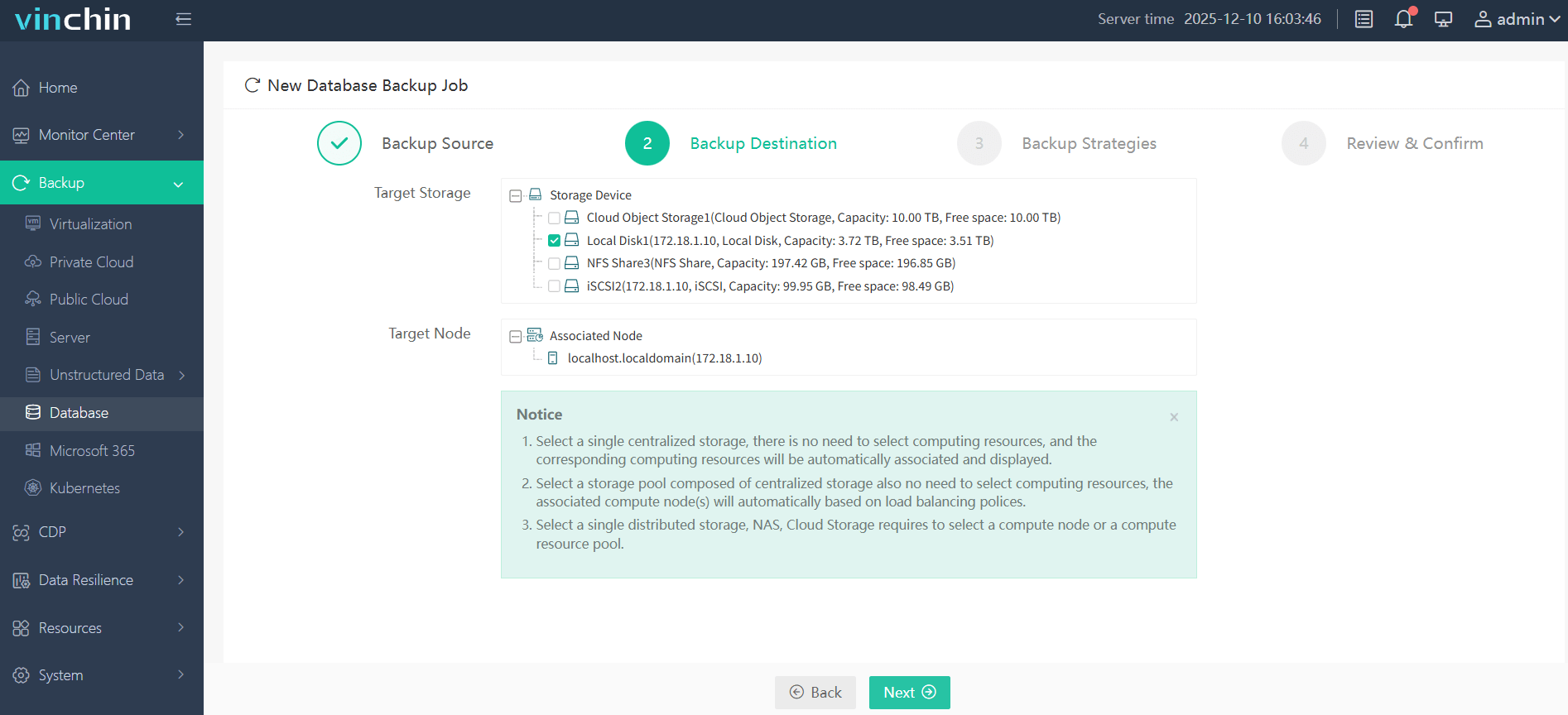
Step 2. Choose the backup storage
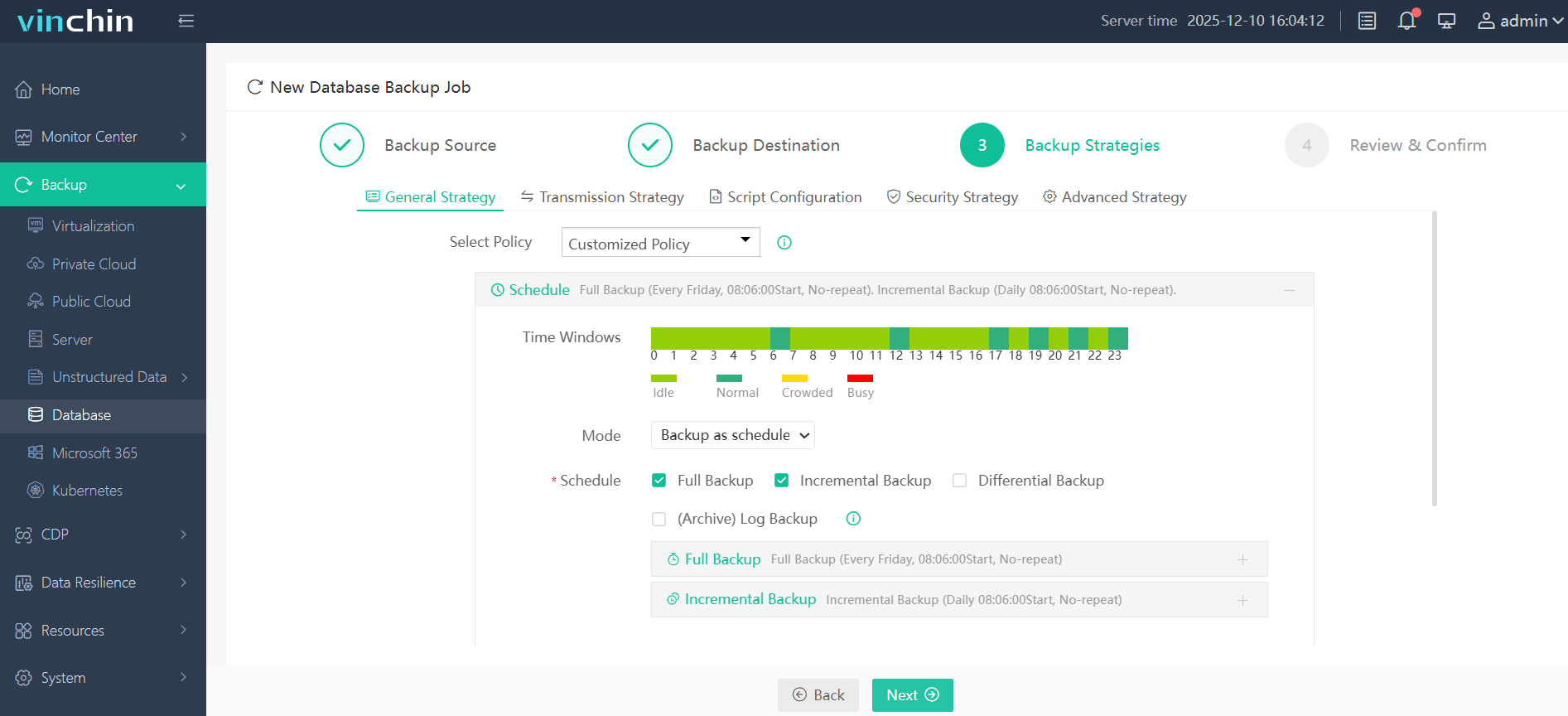
Step 3. Define the backup strategy
Step 4. Submit the job
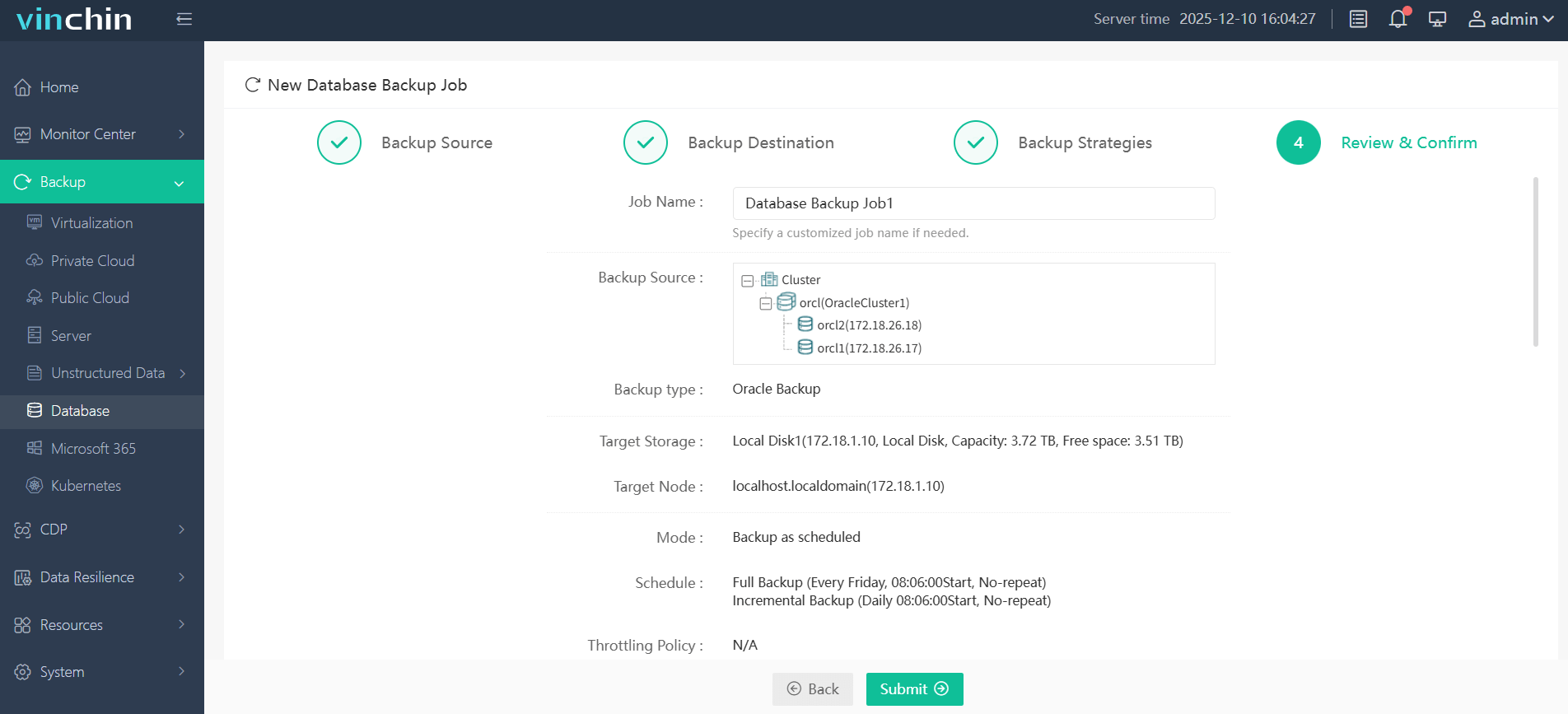
Recognized globally among top-rated enterprise data-protection solutions—with thousands of satisfied customers worldwide—you can experience every feature free for 60 days by clicking below and discovering why Vinchin Backup & Recovery leads in reliability and ease-of-use!
Oracle RMAN Windows FAQs
Q1: Can I migrate my entire production database from one physical server running Windows to another using only an RMAN backup?
A1: Yes—as long as both servers have compatible hardware/software versions—but always test migration procedures first before switching production workloads over permanently!
Q2: How do I reclaim disk space taken by old/unneeded backups created via automated scripts?
A2: Use DELETE OBSOLETE within an appropriate retention policy context inside either interactive session/scripted routine alike!
Q3: What should I do if my scheduled automated job fails unexpectedly overnight?
A3: Check generated log file immediately then review event/system/application logs around same timestamp looking clues/root causes behind failure event(s).
Conclusion
Oracle RMAN delivers robust protection for databases running on Microsoft Windows through flexible command-line tools,scripting automation,and visual management interfaces.For streamlined enterprise-grade solutions,Vinchin offers powerful features plus ease-of-use.Try their free trial today—you’ll see why many trust Vinchin for critical data protection needs!