Duplicating an Oracle database is a routine task for many DBAs. You may need to create a copy of production for testing, migrate workloads to new hardware, or set up disaster recovery. Oracle Recovery Manager (RMAN) 12c makes this process reliable and flexible. But what exactly does duplication mean? In Oracle terms, duplication creates a consistent copy of your database that runs independently—often on a different server or environment. This is not just cloning files; it ensures transactional consistency at a chosen point in time. Let’s break down how you can duplicate Oracle database with RMAN 12c step by step.
What Is RMAN Database Duplication?
RMAN database duplication means creating an independent copy of an existing Oracle database. The duplicate can run on the same host or another server entirely. With RMAN 12c, you have two main ways to do this: active database duplication (copying directly from the source over the network) or backup-based duplication (using pre-existing backups). Both approaches automate complex steps like file restoration and recovery so you avoid manual errors. The result is a ready-to-use duplicate that matches your original at a specific point in time.
Prerequisites for Duplicating Oracle Database with RMAN 12c
Before starting any duplication job, preparation is key. Let’s look at what you need on both sides.
Source Database Requirements
First, make sure your source database runs in ARCHIVELOG mode so all changes are captured. Enable forced logging if possible—this helps ensure redo data covers every change made during duplication. If you plan future replication using tools like GoldenGate, enable supplemental logging now to save effort later.
Confirm that your backups are healthy by running VALIDATE BACKUP in RMAN before starting any operation. Also check that there’s enough free space in your DB_RECOVERY_FILE_DEST location; otherwise, you might hit errors during backup creation.
Target Server Requirements
On the target server where you’ll build your duplicate:
Install matching Oracle software (same version as source).
Set kernel parameters according to Oracle documentation for best performance.
Make sure there’s enough disk space for all datafiles, control files, redo logs, and archived logs.
Copy over the password file from source (orapwd utility helps here) so SYS authentication works smoothly.
Transfer an initialization parameter file (pfile) from source to target; edit it as needed for directory paths or instance names.
If directory structures differ between servers, plan ahead using db_file_name_convert and log_file_name_convert parameters in your pfile or DUPLICATE command.
Finally, confirm network connectivity between both hosts—each should resolve the other’s hostname via DNS or /etc/hosts. Test this with simple ping commands before proceeding.
How to Duplicate Oracle Database Using Active Database Duplication in RMAN 12c?
Active database duplication copies data directly from source to target over the network—no need for pre-existing backups on disk. This method is fast but requires good bandwidth between servers.
Start by configuring Oracle Net Services on both machines:
1. Edit listener.ora so each listener accepts remote connections.
2. Update tnsnames.ora entries like:
   SOURCE_DB =
     (DESCRIPTION =
       (ADDRESS = (PROTOCOL = TCP)(HOST = source_host)(PORT = 1521))
       (CONNECT_DATA = (SERVICE_NAME = sourcedb))
     )
   TARGET_DB =
     (DESCRIPTION =
       (ADDRESS = (PROTOCOL = TCP)(HOST = target_host)(PORT = 1521))
       (CONNECT_DATA = (SERVICE_NAME = targetdb))
     )
Copy the password file from source $ORACLE_HOME/dbs/orapw<SID> to target with correct naming (orapw<target_sid>). On source machine create a pfile:
SQL> CREATE PFILE='/tmp/init_targetdb.ora' FROM SPFILE;
Transfer this pfile to target server and edit these lines if needed:
db_name='TARGETDB'
db_file_name_convert='/u01/oradata/SOURCEDB','/u02/oradata/TARGETDB'
log_file_name_convert='/u01/oradata/SOURCEDB','/u02/oradata/TARGETDB'
Create necessary directories on target (mkdir -p /u02/oradata/TARGETDB). Start auxiliary instance:
SQL> STARTUP NOMOUNT PFILE='/path/to/init_targetdb.ora';
Connect via RMAN using SYSDBA role:
$ rman TARGET sys@SOURCE_DB AUXILIARY sys@TARGET_DB
Run this command:
RMAN> DUPLICATE TARGET DATABASE TO TARGETDB FROM ACTIVE DATABASE NOFILENAMECHECK;
Use NOFILENAMECHECK only if duplicating across different hosts but keeping identical file structures; omit it when duplicating on same host to avoid overwriting files.
During execution RMAN will:
1. Connect both databases
2. Copy datafiles block-by-block over network
3. Apply archived logs up to current SCN
4. Open new instance once complete
If anything fails mid-way—for example due to lost connection—you can fix issues then rerun DUPLICATE; already copied files won’t be overwritten unless changed since last attempt.
How to Duplicate Oracle Database Using Backup-Based Duplication in RMAN 12c
Backup-based duplication uses existing backups instead of live copying from production—ideal when minimizing load on busy systems or when direct access isn’t possible.
Here’s how it works:
1. On source system create fresh full backup plus archived logs:
   RMAN> BACKUP DATABASE PLUS ARCHIVELOG;
   RMAN> BACKUP CURRENT CONTROLFILE;
2. Copy all resulting backup pieces—including control file backup—and password file plus edited pfile over to corresponding directories on target server.
3. Adjust pfile settings as needed for db name conversions or path changes using db_file_name_convert/log_file_name_convert parameters.
4. On target machine create required directories then start auxiliary instance:
SQL> STARTUP NOMOUNT PFILE='/path/to/init_targetdb_backupdup.ora';
5. Connect locally via RMAN as AUXILIARY only:
$ rman AUXILIARY /
6. Run duplicate command specifying backup location:
RMAN> DUPLICATE DATABASE TO TARGETDB BACKUP LOCATION '/backup_dir' NOFILENAMECHECK;
RMAN will restore control file first then recover datafiles using available backups and archived logs found under /backup_dir. Once done it opens new instance automatically.
If something goes wrong—for example missing archive log—you can use individual RESTORE/RECOVER commands within RMAN prompt after correcting path issues until everything completes cleanly.
Validating the Duplicate Database Post-Creation
After successful duplication don’t assume everything is perfect—always validate!
First connect as SYS user then check open mode:
SQL> SELECT OPEN_MODE FROM V$DATABASE;
-- Should return 'READ WRITE'
Next verify tablespaces/datafiles match expected layout:
SQL> SELECT TABLESPACE_NAME FROM DBA_TABLESPACES;
SQL> SELECT NAME FROM V$DATAFILE;
Check archive log mode status:
SQL> ARCHIVE LOG LIST;
-- Confirm it's enabled if required
For deeper validation use DBVERIFY utility against key datafiles:
$ dbv FILE=/u02/oradata/TARGETDB/system01.dbf LOGFILE=dbv_system.log
Finally test application connectivity if relevant—can users connect? Are permissions intact? These checks help catch subtle problems early before moving forward with development or DR plans.
Enterprise-Level Backup & Migration: Introducing Vinchin Backup & Recovery
For organizations seeking streamlined protection and migration capabilities beyond native tools, Vinchin Backup & Recovery delivers robust enterprise-level support across leading databases—including comprehensive coverage for Oracle alongside MySQL, SQL Server, MariaDB, PostgreSQL, PostgresPro, and TiDB environments alike.
With features such as batch database backup management, cloud/tape archiving integration, integrity checking routines, storage protection against ransomware threats, and automated recovery verification through SQL scripts—all accessible within one solution—you gain reliable automation while ensuring critical data remains secure and recoverable at all times.
The intuitive web console simplifies operations:
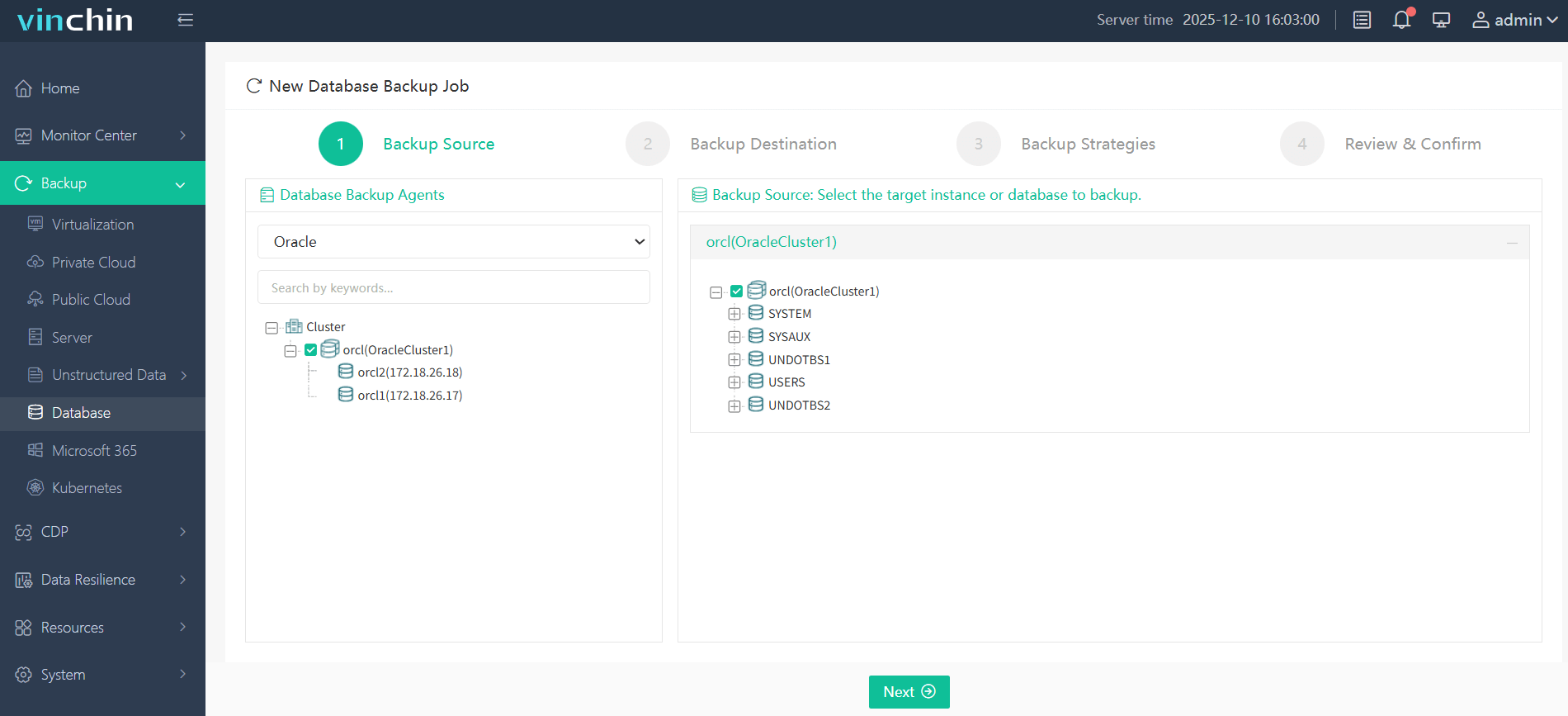
Step 1. Select the Oracle database to back up
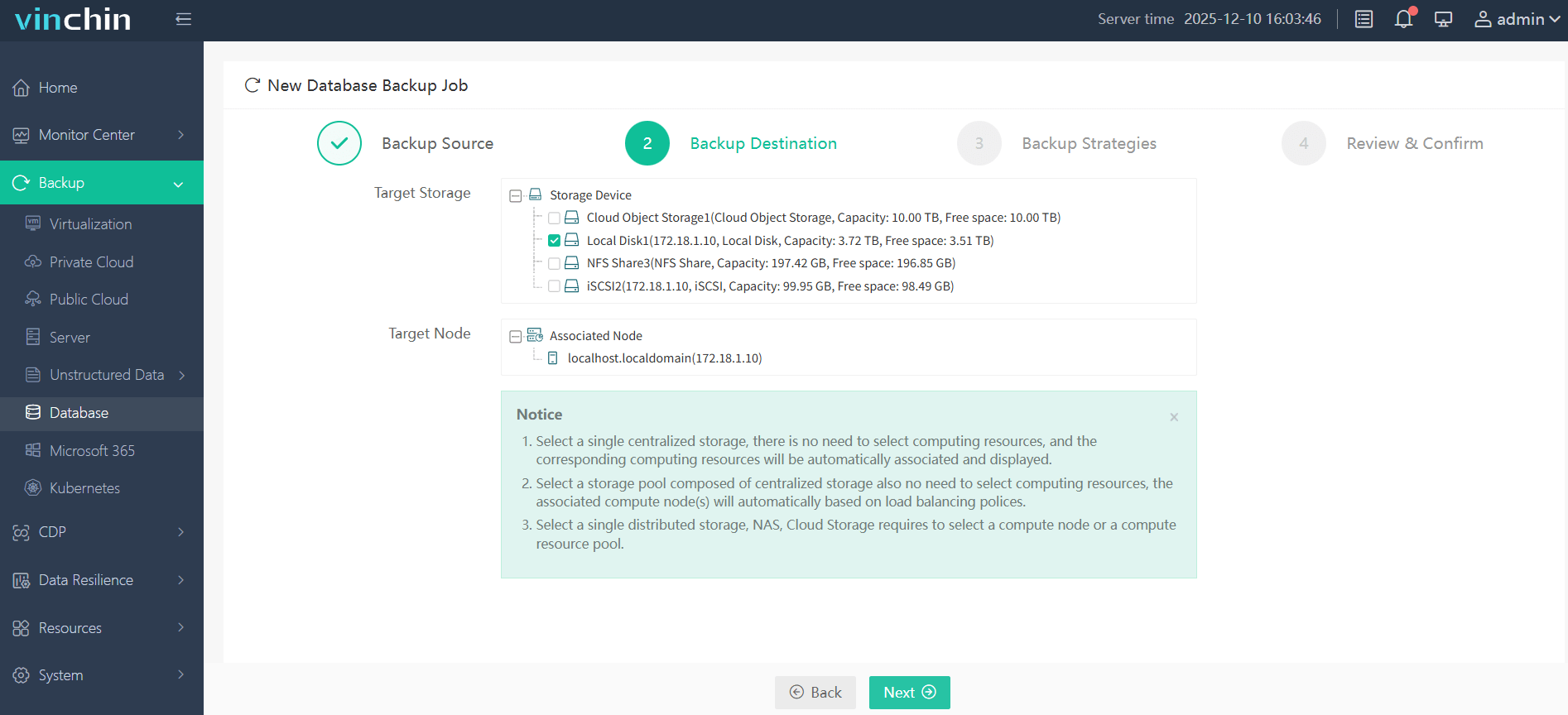
Step 2. Choose the backup storage
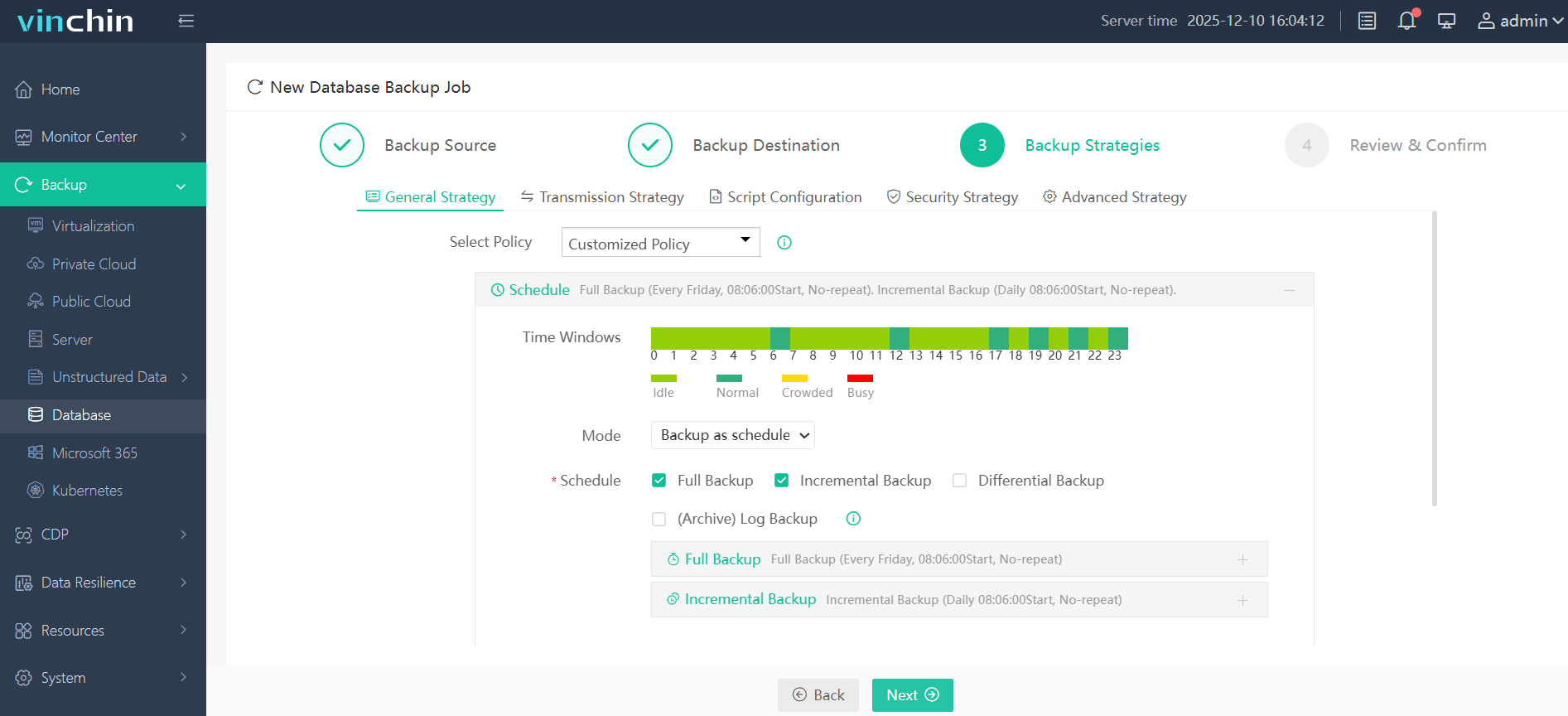
Step 3. Define the backup strategy
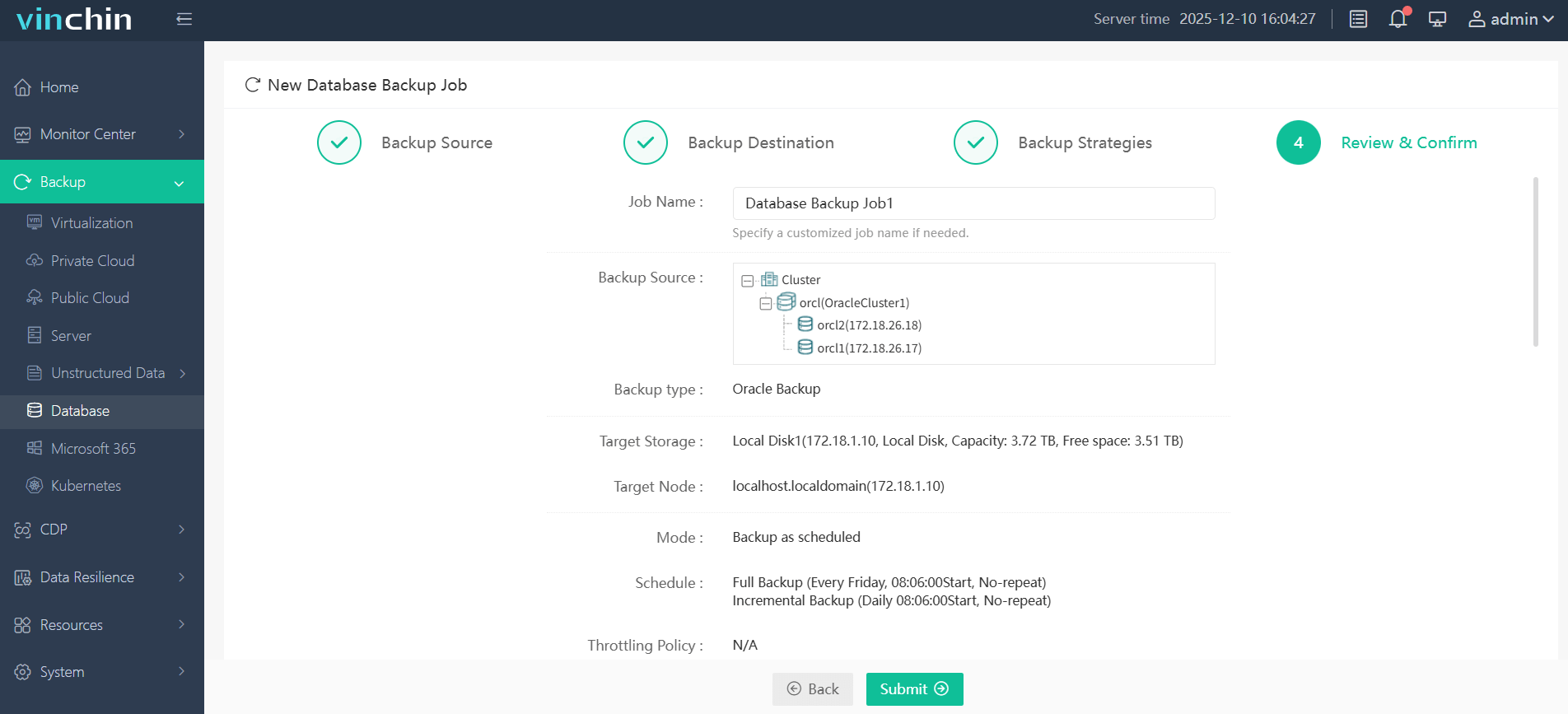
Step 4. Submit the job
Recognized globally by thousands of enterprises for its reliability and top-rated customer satisfaction,Vinchin Backup & Recovery offers a fully featured free trial valid for 60 days.Download now and experience professional-grade data protection firsthand!
Duplicate Oracle Database with RMAN 12c FAQs
Q1: Can I duplicate while users are connected to my production system?
A1: Yes; active duplication applies archived logs so transactions remain consistent at a chosen SCN without downtime.
Q2: What happens if my duplicate fails halfway through?
A2: Fix underlying issue then rerun DUPLICATE—the process resumes without repeating completed steps unless changes occurred since last attempt.
Q3: Do I need identical ORACLE_HOME versions on both servers?
A3: Yes; mismatched versions may cause compatibility problems during restore/recovery phases.
Conclusion
Duplicating an Oracle database with RMAN 12c becomes straightforward once the prerequisites are met and the steps are followed carefully. Whether you choose active database duplication or duplication from backups, RMAN ensures consistency and minimizes manual effort.
For even easier management, Vinchin offers a streamlined Oracle backup and migration solution trusted by enterprises worldwide. Try it free for 60 days and see how it fits your needs!