Backing up large Oracle databases can be complex. Disk storage fills up quickly, while compliance or disaster recovery often requires offsite backups. Tape backup remains popular because it offers low cost per terabyte and long-term retention. But how do you use Oracle RMAN to back up directly to tape? The answer involves integrating RMAN with a media management layer that connects your database to physical tape devices. Let’s explore this process from basic concepts through advanced configurations.
What Is Oracle RMAN Backup?
Oracle Recovery Manager (RMAN) is Oracle’s built-in tool for backing up and restoring databases. It automates many backup tasks, tracks metadata about backups, and supports both full and incremental strategies. With RMAN, you can protect data files, control files, archived redo logs—even entire databases—using consistent methods.
RMAN creates two main types of backups: backup sets (a proprietary format optimized for storage efficiency) and image copies (exact file replicas). Only backup sets can be written directly to tape using media management software; image copies are limited to disk-based storage.
What Is Tape Backup in Oracle?
Tape backup means saving your database backups onto magnetic tapes instead of just disks. Tapes are portable, durable, and cost-effective for archiving large amounts of data over long periods. Many organizations use tape as a secondary or tertiary backup layer—especially when regulations require offsite retention or air-gapped protection.
To write directly from RMAN to tape, you need a media management layer (MML). This software acts as a bridge between Oracle RMAN and your tape hardware by providing an interface library—often named libobk.so on Linux/UNIX systems—that allows RMAN to send data streams straight to the tape device through the standardized SBT_TAPE API.
The MML handles communication with your physical tape drives or libraries. Without it, RMAN cannot interact with tapes at all.
Architectural Overview: How RMAN Connects with Tape Devices
Before diving into procedures, it helps to understand how these components work together. When you run an RMAN command targeting tape:
1. RMAN issues backup commands using its own syntax.
2. The SBT_TAPE channel acts as an interface between RMAN and external media managers.
3. The media management library (libobk.so) translates SBT_TAPE calls into actions understood by your specific media manager software.
4. The media manager controls actual writing or reading operations on physical tapes.
This layered approach lets administrators use different hardware or vendors without changing their core backup scripts—only the MML configuration changes.
How to Perform Oracle RMAN Backup to Tape Using SBT_TAPE Channel?
Backing up directly from RMAN to tape uses the SBT_TAPE channel type provided by your media manager software. Setting this up requires careful preparation so that all components communicate smoothly.
First, make sure these prerequisites are met:
Your chosen media management software is installed according to vendor documentation.
Physical tape drives or libraries are connected and recognized by both operating system and media manager tools.
The shared library file (libobk.so on Linux/UNIX) supplied by your media manager exists in $ORACLE_HOME/lib with correct permissions (typically 755).
Once ready:
1. Configure Your Media Management Library:
Sometimes you must create a symbolic link so that Oracle finds the right library file:
ln -s /path/to/media_manager/libobk.so $ORACLE_HOME/lib/libobk.so
Double-check ownership matches your database user account.
2. Allocate an SBT_TAPE Channel in RMAN:
Use ALLOCATE CHANNEL with TYPE 'SBT_TAPE'. If needed by your MML vendor, add parameters using PARMS. For example:
   RUN {
     ALLOCATE CHANNEL ch1 TYPE 'SBT_TAPE';
     BACKUP DATABASE FORMAT 'db_%d_%T_%s_%p';
     RELEASE CHANNEL ch1;
   }
If special options are required—for instance specifying a particular pool or family—use:
   RUN {
     ALLOCATE CHANNEL ch01 DEVICE TYPE SBT_TAPE PARMS 'ENV=(ob_media_family=rman-testenv)';
     BACKUP DATABASE;
     RELEASE CHANNEL ch01;
   }
3. Run Your Backup Command:
Execute standard commands like BACKUP DATABASE, BACKUP AS COMPRESSED BACKUPSET, or include archived logs as needed for point-in-time recovery capability.
4. Monitor Your Job:
Always check both the output from your RMAN session and any log files generated by your media manager software for errors or completion status messages.
5. Restore from Tape When Needed:
To restore data from a tape backup:
   RUN {
     ALLOCATE CHANNEL ch1 TYPE 'SBT_TAPE';
     RESTORE DATABASE;
     RECOVER DATABASE;
     RELEASE CHANNEL ch1;
   }
This method works whether performing full database backups or more targeted jobs such as incremental/differential backups or archivelog-only runs.
How to Perform Oracle RMAN Backup to Tape Using IBM Tivoli Storage Manager?
IBM Tivoli Storage Manager (TSM) is widely used as an enterprise-grade solution supported natively via its own version of libobk.so for direct-to-tape operations within Oracle environments.
Here’s how setup typically works:
1. Install TSM Client Software:
Follow IBM’s official instructions closely when installing TSM client packages on each host running an Oracle instance requiring direct-to-tape access.
2. Link TSM Library with Oracle:
Either copy/link IBM’s libobk.so into $ORACLE_HOME/lib, or specify its location explicitly during channel allocation using PARMS:
ln -s /usr/tivoli/tsm/client/api/bin64/libobk.so $ORACLE_HOME/lib/libobk.so
3. Configure Environment Variables:
Set required variables such as DSMI_CONFIG (points at config file), DSMI_DIR (installation directory), DSMI_LOG (log directory). These must be exported in every shell/environment where you start either listener processes or database instances needing access:
    export DSMI_CONFIG=/opt/tivoli/tsm/client/oracle/bin64/dsm.opt
    export DSMI_DIR=/opt/tivoli/tsm/client/oracle/bin64
    export DSMI_LOG=/var/log/tsm
4. Validate Configuration Before Running Backups:
Run simple test commands like dsmc q sess under oracle user account; ensure no errors appear regarding connectivity/configuration before attempting integration via RMAN itself!
5. Allocate Channel With PARMS Clause in RMAN:
Specify exact path if not linked globally:
    RUN {
      ALLOCATE CHANNEL t1 TYPE 'SBT_TAPE'
        PARMS="SBT_LIBRARY=/usr/tivoli/tsm/client/api/bin64/libobk.so";
      BACKUP DATABASE PLUS ARCHIVELOG FORMAT='db_%d_%T_%s_%p';
      RELEASE CHANNEL t1;
    }
6. Monitor Backups Via Both Tools:
Review output from both sides: look at dsmerror.log under specified log directory plus standard rman.log output captured during job execution sessions!
7. Restore Using Same Channel Type When Needed:
For restores simply allocate same type/channel/path again then issue RESTORE followed by RECOVER commands inside same run block structure shown above.
This approach lets organizations leverage powerful features offered natively within IBM TSM—including deduplication support across multiple hosts/sites plus encryption-at-rest—all while maintaining familiar workflows inside standard Oracle tools.
How Can Vinchin Back Up Oracle Databases Compared With Traditional Tape Solutions?
With traditional approaches covered above, let’s see how modern solutions address today’s IT challenges more efficiently:
Vinchin Backup & Recovery delivers comprehensive protection across diverse IT architectures thanks to its broad compatibility—with support for over 19 virtualization platforms including VMware, Hyper-V, Proxmox—as well as physical servers, major databases like Oracle, and both local/cloud storage targets (AWS, Azure). If migration flexibility matters most, Vinchin offers seamless full-system migration between any supported virtual machines, physical hosts, or cloud platforms—a feature designed for dynamic business needs.
For critical workloads running on virtual or physical machines, Vinchin provides robust real-time backup and replication capabilities that deliver extra recovery points alongside automated failover mechanisms—helping minimize RPO/RTO significantly during outages or disasters.
To guarantee reliability of every backup job performed across environments large and small,Vinchin supports automatic integrity checks plus isolated recoverability validation tests ensuring successful restoration whenever needed. Vinchin also enables highly resilient disaster-recovery strategies through automated retention policies, data archiving/cloud offloading, and remote DR center creation—all managed centrally via its intuitive browser-based console featuring wizard-driven workflows.
Let’s take VMware VM backup as an example:
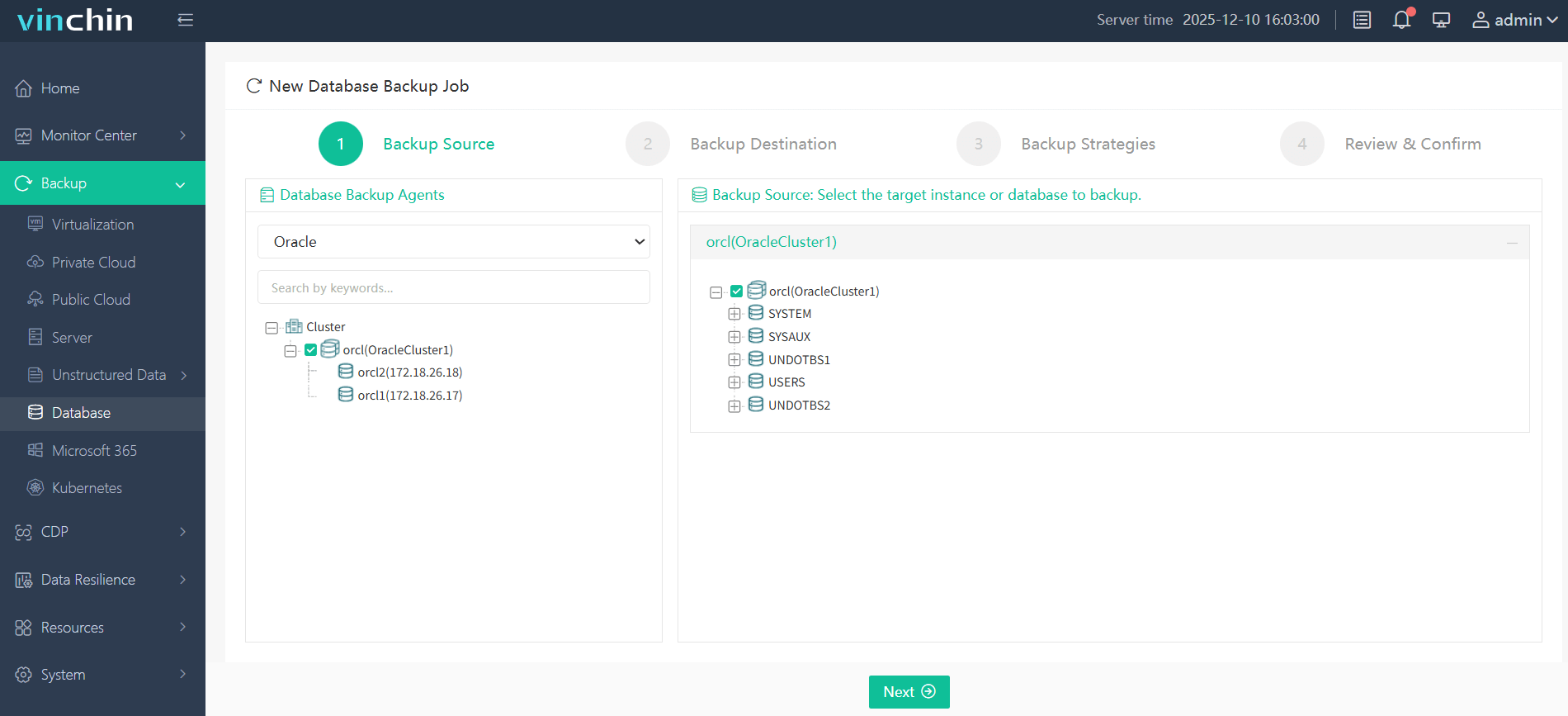
Step 1. Select the Oracle database to back up
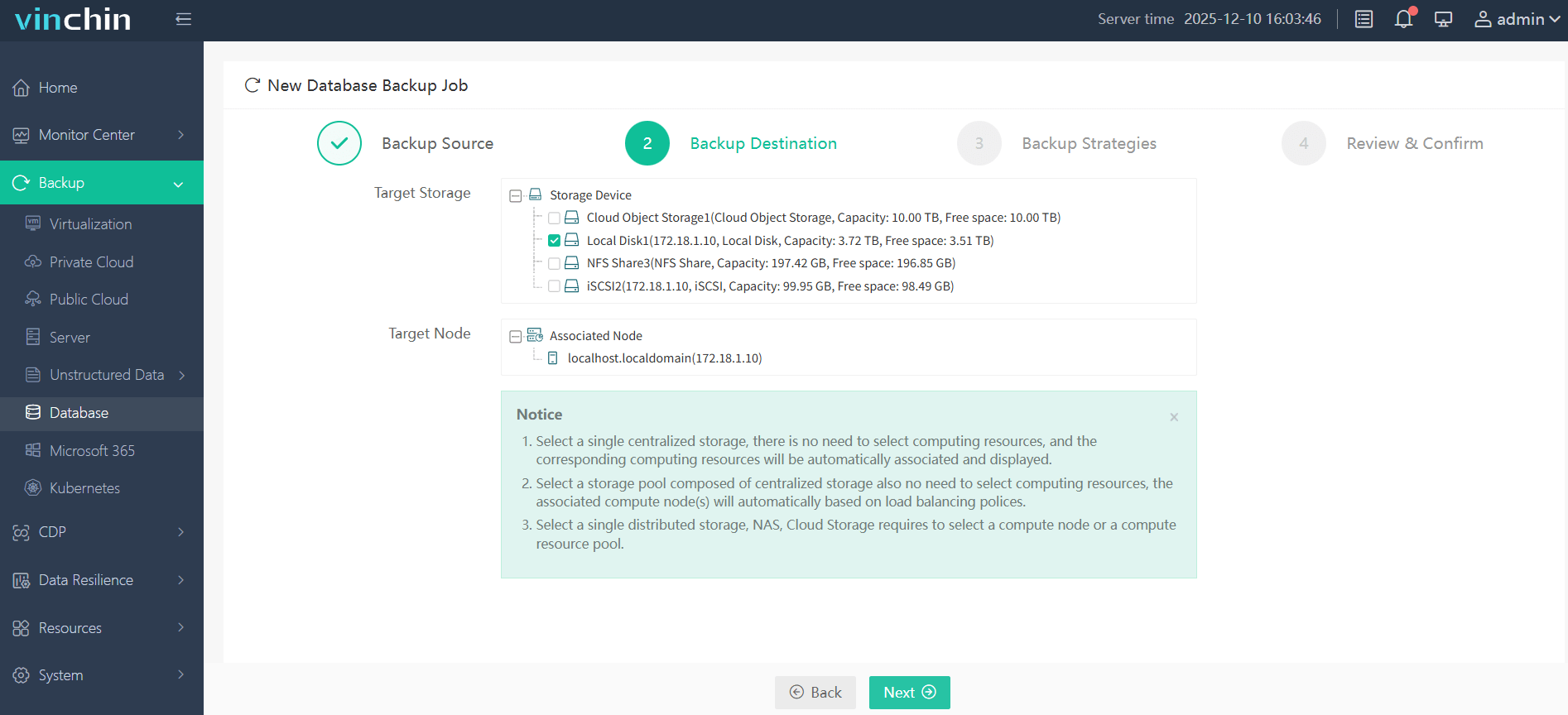
Step 2. Choose the backup storage
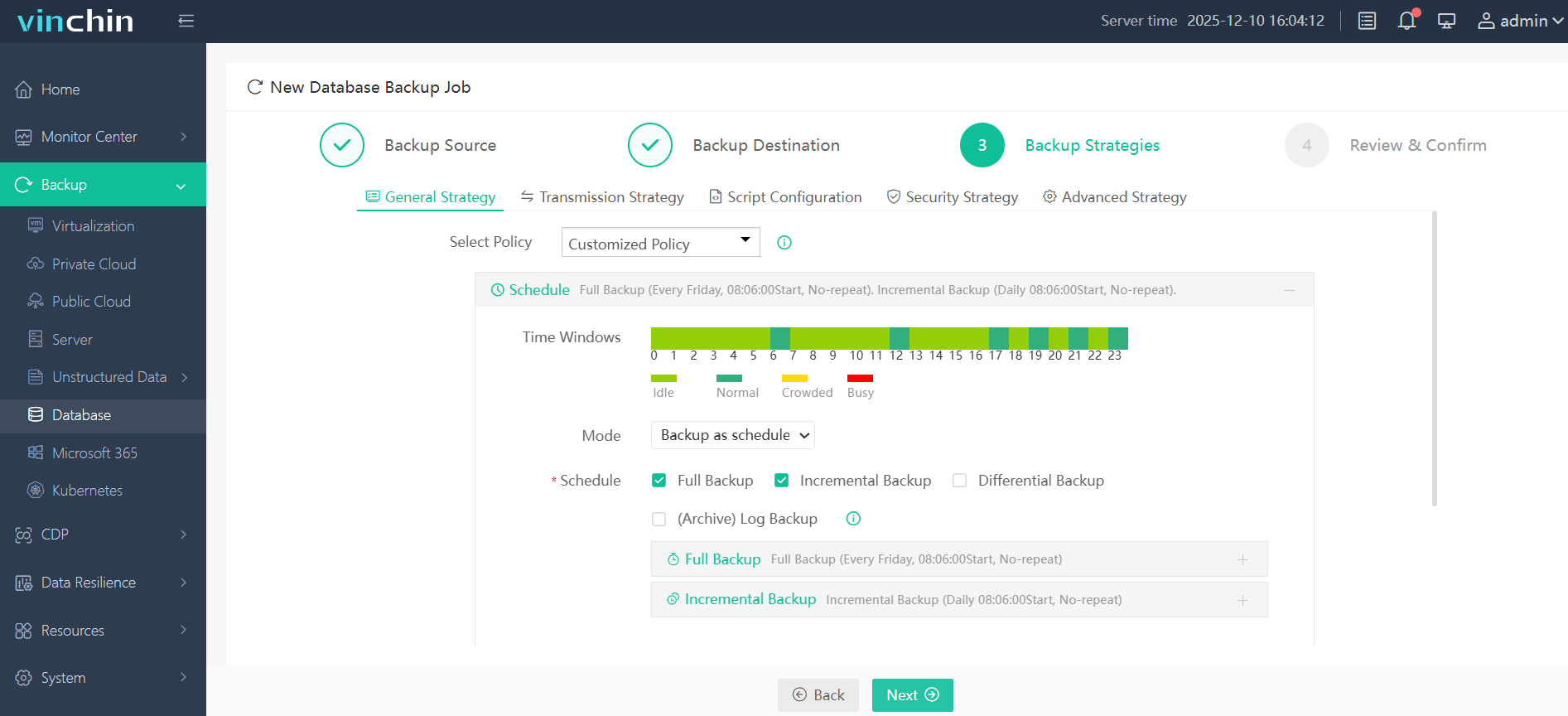
Step 3. Define the backup strategy
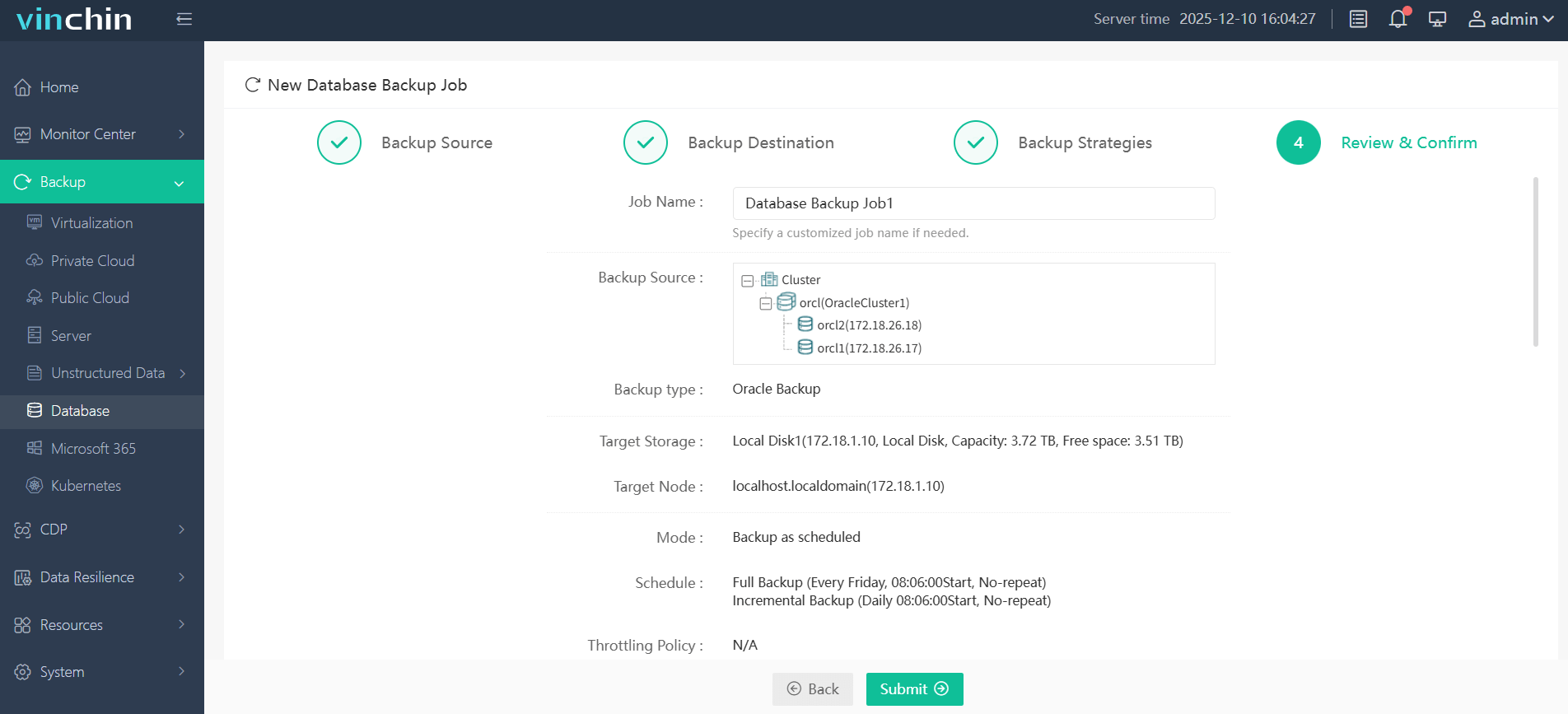
Step 4. Submit the job
Oracle RMAN Backup to Tape FAQs
Q1: Can I write image copies directly from RMAN onto tape?
A1: No; only backup sets created through SBT channels can be sent directly from RMAN onto tape devices—not image copies.
Q2: My SBT_TAPE channel fails during allocation—what should I check?
A2: Confirm libobk.so exists in $ORACLE_HOME/lib has correct permissions matches platform architecture environment variables set properly service daemon running check related logs.
Q3: How do I estimate space needed before sending large backups onto limited-capacity tapes?
A3: Use BACKUP ... VALIDATE CHECK LOGICAL command view estimated size in output compare against available capacity plan accordingly.
Conclusion
Direct-to-tape backups offer strong protection but require careful integration between database tools hardware libraries specialized middleware layers—with extra complexity versus disk-only solutions! Modern options like Vinchin simplify management deliver faster recovery across diverse platforms while helping defend against evolving threats including ransomware attacks!