Database administrators often want to optimize Oracle RMAN recovery catalog resynchronization by updating only records after a specific timestamp. This helps reduce unnecessary data processing and keeps operations efficient. However, Oracle RMAN manages this process internally—there is no direct way to specify a custom timestamp for resync. In this article, we’ll explain what Oracle RMAN resync is, why you might want to limit it by timestamp, how the process works step by step, and what practical strategies you can use. We’ll also show how Vinchin makes Oracle database backup easier.
What Is Oracle RMAN Resync?
Oracle Recovery Manager (RMAN) is the built-in tool for backup and recovery in Oracle databases. It uses a recovery catalog—a separate schema—to store metadata about backups, archived logs, datafile copies, and database structure. The catalog acts as a central record of your backup history.
Resynchronizing (or “resync”) means updating this recovery catalog with new or changed information from your target database’s control file. During each resync operation, RMAN compares the current state of the control file or a backup control file against what’s stored in the catalog. It then updates any missing or changed records so that your catalog always reflects recent activity—such as completed backups or changes in database structure.
Most common RMAN commands like BACKUP, DELETE, or CROSSCHECK trigger an automatic partial resync behind the scenes. You can also run a manual full update using RESYNC CATALOG when you need to ensure everything is up-to-date at once. This process is essential for disaster recovery planning because it ensures your backup metadata stays accurate.
Why Limit Resync by Timestamp?
Limiting which records get updated during an RMAN resync can save significant time and system resources—especially if your environment has years of backup history or thousands of archived logs. By default, a full resync checks all records since the last update; this can be slow if there’s been a long gap between syncs.
Why would you want to focus on only recent changes? Here are some common reasons:
1. If you have not updated your recovery catalog in weeks or months but only care about recent activity—for example after maintenance—you do not want to reprocess old data unnecessarily.
2. When troubleshooting issues related to recent failures or events, focusing on just those changes speeds up analysis.
3. During scheduled maintenance windows where minimizing load on production systems matters most.
By targeting only necessary records—those created after your last successful sync—you keep your recovery catalog current without wasting time on outdated information.
Using Timestamp in RMAN Resync
Let’s look closer at how timestamps factor into RMAN’s internal logic—and what steps you should take as an administrator.
RMAN does not offer any command-line switch that lets you set a custom cutoff date for RESYNC CATALOG operations. Instead:
Each time you run RESYNC CATALOG, Oracle tracks which records have already been processed using internal timestamps stored in both the control file and recovery catalog tables.
When you see messages like “resync only records later than timestamp X,” it means that RMAN is automatically skipping older entries based on its last successful sync point—the value of X comes from previous operations’ completion times.
You cannot manually set this marker; however, understanding how it works helps you plan effective maintenance routines:
1. Check Last Resync Time:
Connect to your recovery catalog using SQL*Plus or another client tool. To see when each database was last synced:
   SELECT TO_CHAR(MAX(resync_time), 'YYYY-MM-DD HH24:MI:SS') AS last_resync,
          db_name,
          dbinc_key
     FROM rc_resync
 GROUP BY db_name, dbinc_key
 ORDER BY last_resync DESC;
This query shows when each registered database had its most recent successful sync event recorded in RC_RESYNC view.
2. Run Manual Resynchronization:
Start RMAN with connections to both target (production) and catalog databases:
RESYNC CATALOG;
Only new or changed records since the previous sync will be processed automatically—older ones are ignored unless they were missed due to retention settings lapses.
3. Monitor Output Messages:
Watch for lines such as “resync only records later than timestamp X” during execution; these confirm that older entries are being skipped according to internal logic—not user input.
4. Adjust Control File Retention:
The parameter CONTROL_FILE_RECORD_KEEP_TIME controls how long historical metadata remains available inside each database’s control file before being purged (default: 7 days). If too short—and if there are gaps between syncs—important information may be lost forever before reaching your central catalog! For best results:
Set CONTROL_FILE_RECORD_KEEP_TIME longer than your longest expected interval between manual/full syncs (for example: 35 days if backups must be retained 30 days).
Schedule regular automated sync jobs so nothing ages out prematurely.
5. Repeat Regularly:
Frequent incremental updates keep catalogs small and fast while reducing risk of missing critical metadata during disaster scenarios.
Note: There is no supported way within standard Oracle tools to specify “from this exact date/time forward” when running RESYNC CATALOG—it always uses its own tracked markers based on prior runs.
How Vinchin Backup & Recovery Simplifies Oracle Database Protection
While managing Oracle RMAN resynchronization requires careful planning and monitoring, organizations seeking streamlined protection can benefit from dedicated solutions like Vinchin Backup & Recovery—a professional enterprise-level platform supporting today’s leading databases including Oracle, MySQL, SQL Server, MariaDB, PostgreSQL, PostgresPro, and TiDB (with special focus here on robust support for Oracle environments).
Vinchin Backup & Recovery delivers features such as batch database backup management, flexible data retention policies including GFS options for compliance needs, cloud backup integration with tape archiving for offsite safety, restore-to-new-server capability for rapid disaster response, and comprehensive integrity checks—all designed to maximize reliability while minimizing administrative overhead through automation and smart scheduling strategies tailored specifically for enterprise workloads.
The intuitive web console makes protecting an Oracle database straightforward:
Vinchin Backup & Recovery stands out as a professional solution supporting today’s leading databases—including robust coverage for Oracle alongside MySQL, SQL Server, MariaDB, PostgreSQL, PostgresPro, and TiDB platforms commonly found in hybrid cloud environments like AWS RDS deployments. Key features such as batch database backup scheduling, flexible data retention policies including GFS support, integrity check routines ensuring recoverability assurance, restore-to-new-server capability for rapid disaster recovery scenarios, and comprehensive cloud/tape archiving empower IT teams with reliable automation while maintaining compliance standards across diverse infrastructures—all accessible through one unified platform.
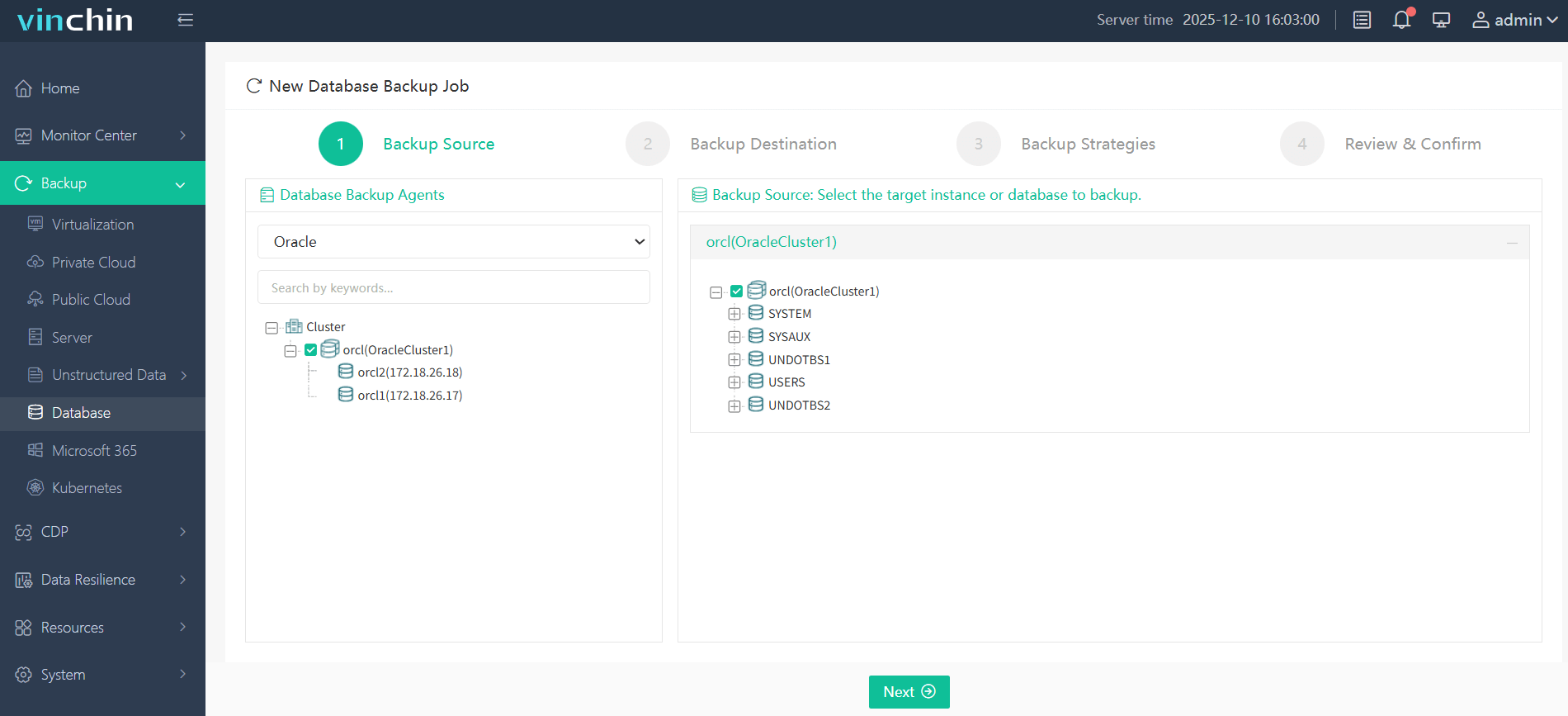
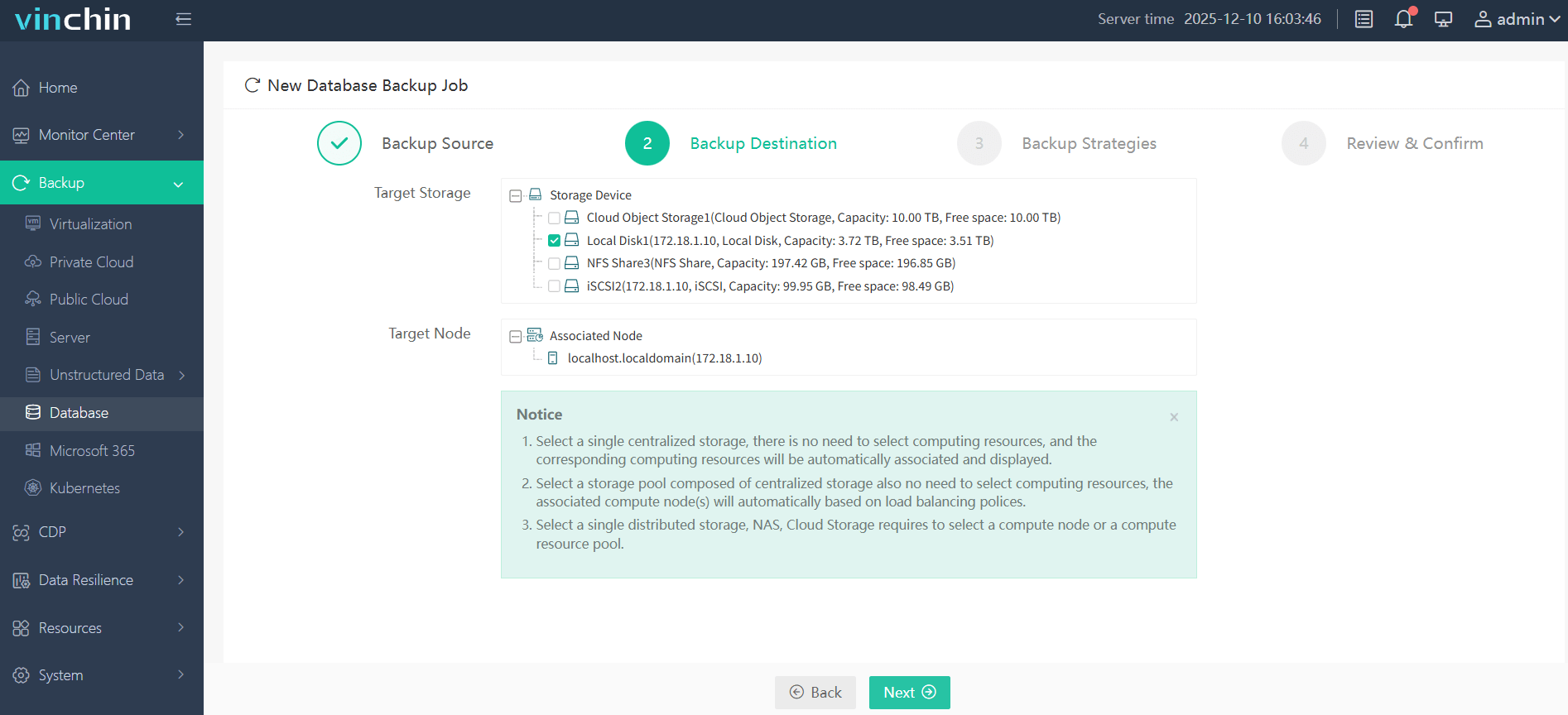
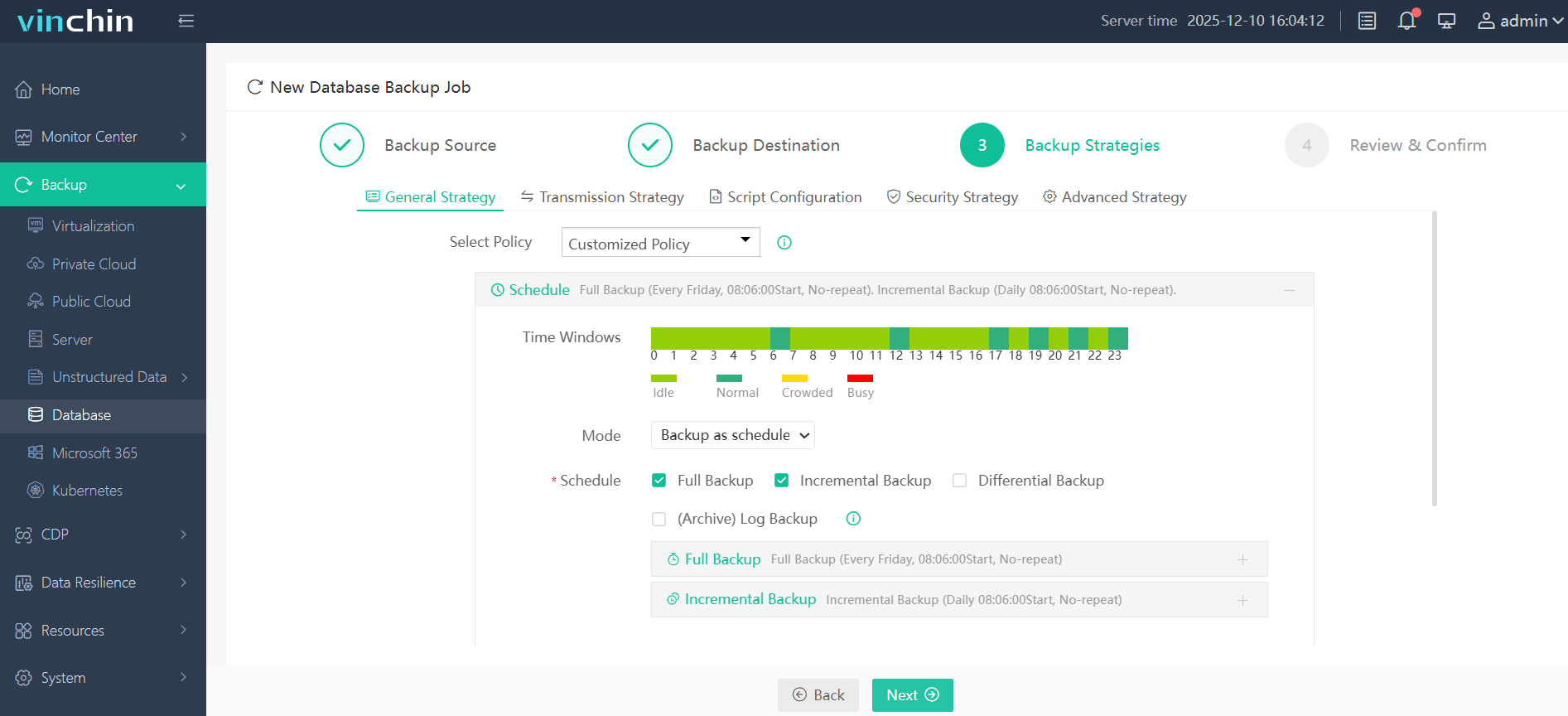
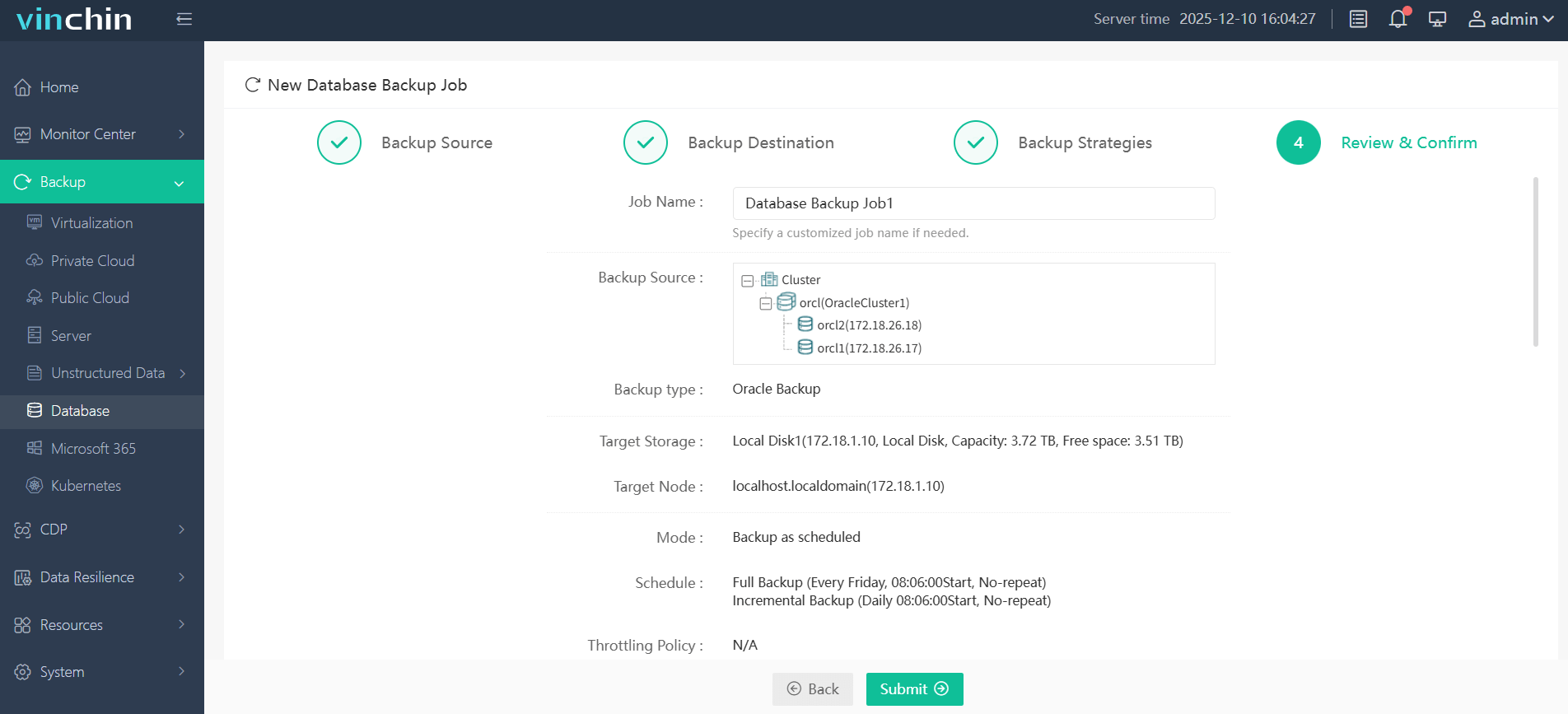
The intuitive web console makes protecting an AWS Oracle RDS database straightforward in just four steps:
Step 1. Select the Oracle database to back up
Step 2. Choose the backup storage
Step 3. Define the backup strategy
Step 4. Submit the job
Recognized globally with top ratings among enterprise users across industries—and backed by strong customer satisfaction—Vinchin Backup & Recovery offers a fully featured 60-day free trial so IT teams can evaluate its capabilities firsthand; click below to start protecting your critical data now!
Oracle RMAN Resync Only Records Later Than Timestamp FAQs
Q1: Can I force RMAN resynchronization from a specific date onward?
No; there is no supported command allowing users to set custom timestamps—RMAN manages cutoff points internally based on prior runs’ completion times.
Q2: How do I find out when my last successful synchronization occurred?
Query RC_RESYNC view in your recovery catalog schema using SQL tools—the latest entry shows most recent completion date/time per registered instance/incarnation combination.
Q3: What should I do if my synchronization takes too long due excessive backlog?
Increase frequency of scheduled synchronizations; verify CONTROL_FILE_RECORD_KEEP_TIME covers entire period since previous run; clean up expired/obsolete objects beforehand via DELETE EXPIRED commands.
Conclusion
Limiting Oracle RMAN resynchronization strictly by user-specified timestamps isn’t possible—but understanding internal mechanisms lets administrators optimize performance safely through smart scheduling/pruning practices instead! For streamlined enterprise-grade protection—including automated scheduling/integrity verification features—consider trying Vinchin today with our free trial offer!