Keeping your Oracle database safe is a top priority. But what if your business runs 24/7 and you can’t afford downtime? That’s where Oracle RMAN online backup comes in. This guide will walk you through what it is, why it matters, and how to do it—both manually and with automation. We’ll also cover advanced scripting, troubleshooting, and backup validation so you can protect your data without stopping your database.
What Is Oracle RMAN Online Backup?
Oracle RMAN online backup is a process that lets you back up your Oracle database while it’s still running and available to users. RMAN stands for Recovery Manager, a built-in Oracle tool designed for backup and recovery tasks. With online backup, you don’t need to shut down your database, so your business keeps moving. However, your database must be in ARCHIVELOG mode to use this feature. This mode ensures that all changes are saved and can be recovered if needed.
Prerequisite: Configuring ARCHIVELOG Mode
Before using Oracle RMAN online backup, the database must run in ARCHIVELOG mode. This setting allows the system to archive redo logs as they fill up, making point-in-time recovery possible even during active operations.
To enable ARCHIVELOG mode, plan for a brief maintenance window since the change requires restarting the database. Here’s how you do it:
1. Connect to SQL*Plus as a user with DBA privileges.
2. Enter the following commands:
   SHUTDOWN IMMEDIATE;
   STARTUP MOUNT;
   ALTER DATABASE ARCHIVELOG;
   ALTER DATABASE OPEN;
3. After enabling ARCHIVELOG mode, confirm the status by running:
ARCHIVE LOG LIST;
4. Check that the archive log destination (set by LOG_ARCHIVE_DEST) has enough free space for ongoing operations.
Enabling this mode is usually a one-time task but is essential before any online backups can occur.
Why Choose Online Backup for Oracle?
Online backup is essential for businesses that can’t afford downtime or interruptions in service. It allows you to back up data while users continue their work without disruption. By using RMAN online backup, organizations meet strict service-level agreements and avoid costly outages.
Frequent backups become practical because there’s no need to stop applications or disconnect users. The risk of data loss drops since backups capture all committed transactions up until the moment of execution—even those occurring during the process itself.
RMAN also manages block-level consistency automatically during online backups, so administrators don’t have to worry about partial or corrupted files being included in their backups.
How to Perform an Oracle RMAN Online Backup Using Command Line?
Once ARCHIVELOG mode is enabled and confirmed, you’re ready for an online backup using RMAN from the command line.
First, open a terminal on your server hosting the Oracle instance:
1. Set environment variables as needed:
export ORACLE_SID=yourdb
2. Start RMAN with secure authentication:
rman target /
This uses OS authentication (/ as sysdba), which avoids exposing passwords.
rman target sys/password
3. At the RMAN> prompt, start a full online backup:
BACKUP DATABASE TAG 'MyOnlineFullDBBackup';
4. To include all archived redo logs generated during or before this operation (ensuring complete recoverability), use:
BACKUP DATABASE PLUS ARCHIVELOG;
This command first backs up all datafiles while keeping them accessible; then it backs up every archived log file—including those created during this very operation—to guarantee nothing gets missed.
5. After completion, check which backups exist with:
LIST BACKUP;
6. For extra assurance that these backups are usable—not just present—run:
RESTORE DATABASE VALIDATE;
This step checks whether each backed-up file could be restored successfully without actually overwriting anything on disk—a crucial safeguard against silent corruption.
7. Always direct output logs somewhere safe for later review or troubleshooting by starting your session with:
SPOOL LOG TO '/path/to/rman_backup.log';
By default, RMAN stores its output at locations defined by parameters like DB_RECOVERY_FILE_DEST. It uses efficient “backup sets” unless configured otherwise; these skip empty blocks and save storage space.
How to Automate Oracle RMAN Online Backups with Scripts?
Manual backups are fine for one-off jobs or testing purposes—but most administrators prefer automation for reliability and peace of mind over time.
RMAN supports scripting so regular jobs run unattended at scheduled intervals:
1. Create a shell script called rman_backup.sh containing something like this:
   #!/bin/bash
   export ORACLE_SID=yourdb
   TIMESTAMP=$(date +%Y%m%d_%H%M%S)
   LOGFILE="/var/log/rman_backup_$TIMESTAMP.log"

   rman target / <<EOF > $LOGFILE 2>&1
     RUN {
       BACKUP DATABASE PLUS ARCHIVELOG TAG 'AutoNightlyBackup';
       DELETE NOPROMPT OBSOLETE;
     }
     EXIT
EOF

   STATUS=$?

   if [ $STATUS -ne 0 ]; then
     echo "RMAN backup failed at $(date)" >> /var/log/rman_errors.log
     exit 1
   fi
   exit 0
This script does several things:
Uses OS authentication (target /) when possible
Creates timestamped log files
Runs both full DB plus archived log backup
Deletes obsolete backups based on retention policy after success
Checks exit status so failures get logged separately
2. Make sure only authorized users can read scripts containing credentials (if used).
3. Make it executable with:
chmod +x rman_backup.sh
4. Schedule regular execution via cron—for example,
0 2 * * * /path/to/rman_backup.sh
5. Review /var/log/rman_backup_*.log after each run—or set up monitoring tools that alert when errors appear in /var/log/rman_errors.log.
Automated scripts reduce human error risk while ensuring recent recoverable copies always exist—even if someone forgets manual steps one day!
Introducing Vinchin: Enterprise-Level Database Protection Made Simple
For organizations seeking an easier yet robust approach beyond manual scripting or native tools alone, Vinchin Backup & Recovery delivers professional enterprise-grade protection across mainstream platforms—including comprehensive support for Oracle databases alongside MySQL, SQL Server, MariaDB, PostgreSQL, PostgresPro, and TiDB environments alike.
Vinchin Backup & Recovery empowers IT teams with features such as advanced source-side compression (exclusive for Oracle), incremental backup options tailored specifically for Oracle workloads, batch database protection capabilities across multiple instances simultaneously, flexible GFS/data retention policies supporting regulatory needs, plus integrity check mechanisms—all designed to maximize efficiency while minimizing risks of data loss or ransomware threats within dynamic infrastructures.
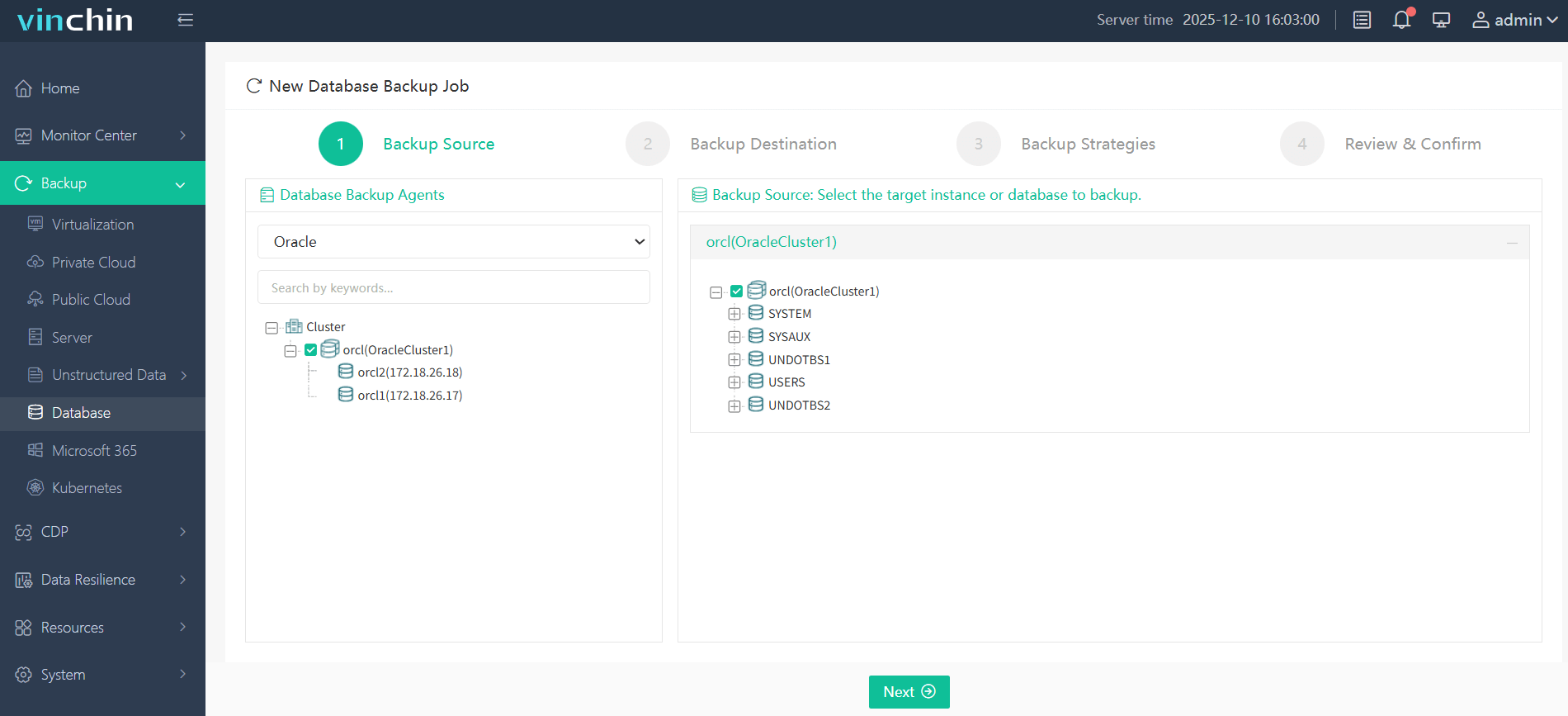
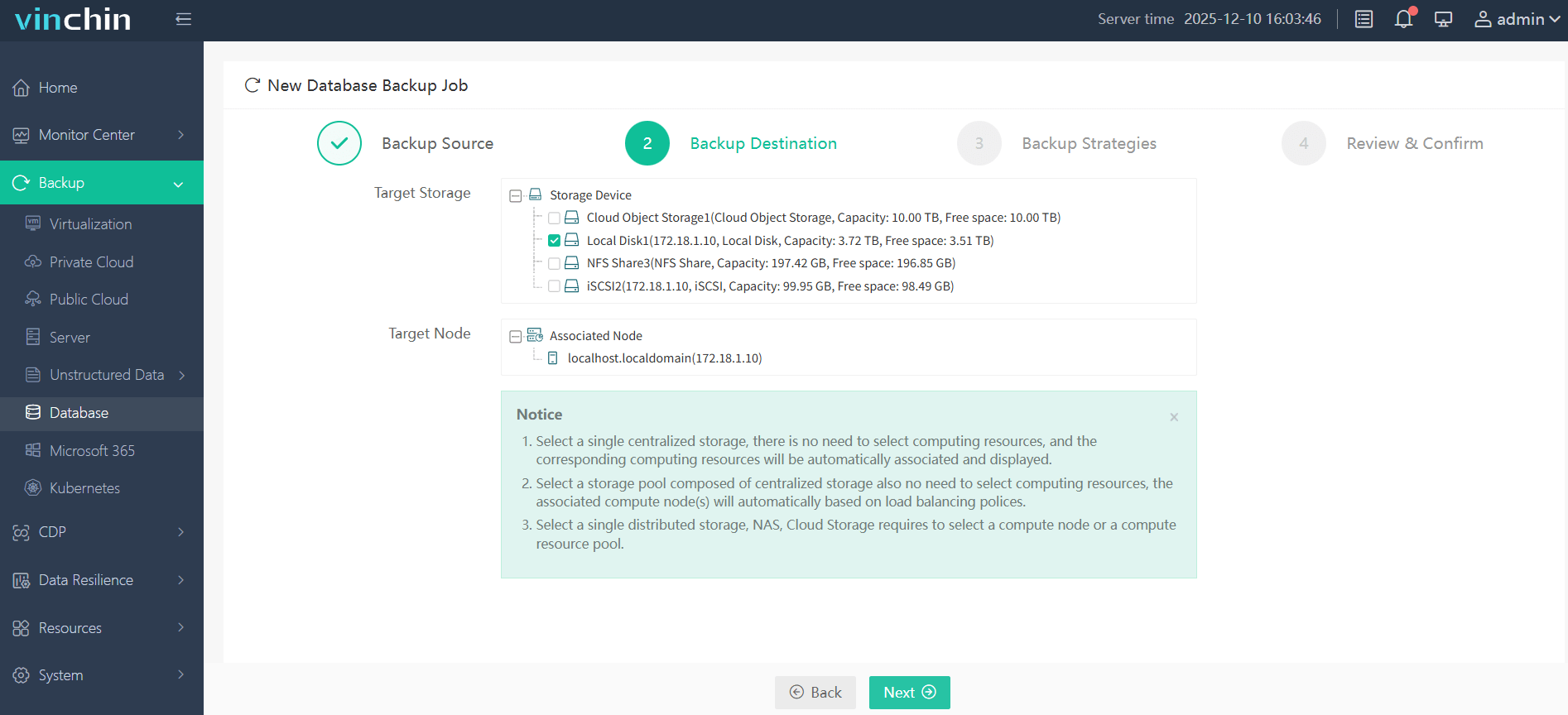
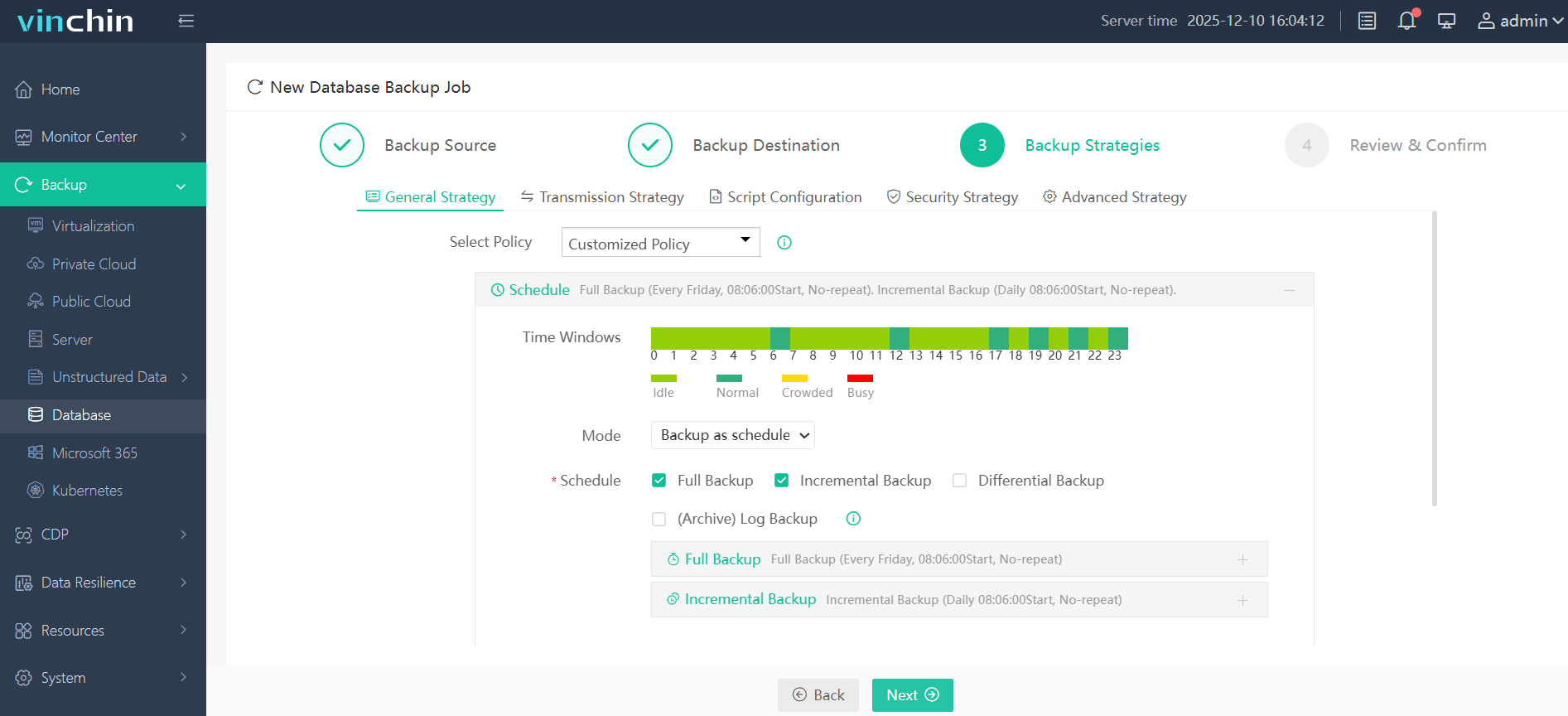
The intuitive web console streamlines complex tasks into four straightforward steps:
Step 1. Select the Oracle database to back up
Step 2. Choose the backup storage
Step 3. Define the backup strategy
Step 4. Submit the job
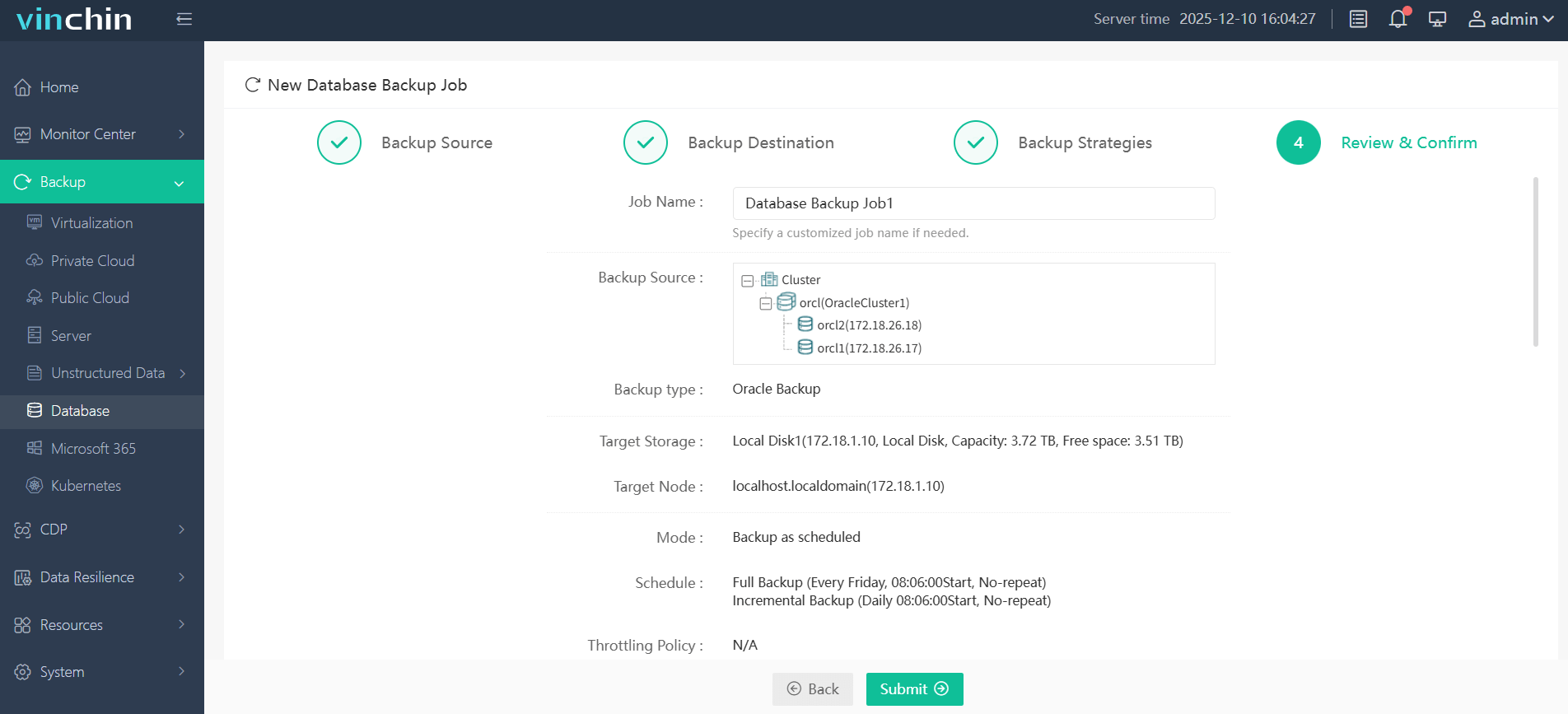
Recognized globally among enterprise customers—with top ratings from industry analysts—Vinchin Backup & Recovery offers a fully featured free trial valid for 60 days; click download now to experience trusted next-generation data protection firsthand!
Oracle RMAN Online Backup FAQs
Q1: Can I perform an Oracle RMAN online backup if my database is not yet in ARCHIVELOG mode?
No; enable ARCHIVELOG mode first since NOARCHIVELOG only supports offline cold backups without user access during operation.
Q2: What command verifies my latest full database plus archived log backups are valid?
Use RESTORE DATABASE VALIDATE within an active RMAN session after completing each job cycle—it checks logical integrity without restoring actual files over production data.
Q3: How do I automate cleanup of old obsolete backups after each successful run?
Add DELETE NOPROMPT OBSOLETE inside your automated shell script right after main BACKUP commands—this follows whatever retention policy was previously configured via CONFIGURE RETENTION POLICY TO...
Conclusion
Oracle RMAN online backup protects critical databases around-the-clock—with no downtime required—using either manual commands or robust automated scripts tailored for enterprise needs! For streamlined management across multiple platforms consider Vinchin’s powerful solution trusted worldwide by IT professionals seeking simplicity alongside advanced features.