Managing Oracle database backups is a core task for any operations administrator. Over time, backup files can pile up, using valuable storage and making recovery more complex. But how do you know which backups are safe to remove? Oracle RMAN (Recovery Manager) provides built-in tools to help you identify and manage obsolete backups. In this article, we’ll walk through what obsolete backups are, why they matter, and how to list them using RMAN’s command line and scripting features.
What Are Obsolete Backups in Oracle RMAN?
Obsolete backups are backup files that RMAN determines are no longer needed to meet your database recovery requirements. This decision is based on your configured retention policy, which can be set by redundancy (number of backup copies to keep) or by a recovery window (number of days to retain backups). For example, if your policy is to keep backups for seven days, any backup older than that becomes obsolete.
RMAN automatically identifies these backups according to your current settings. Obsolete does not mean the backup is missing or corrupt—it simply means it is no longer required for recovery and can be safely deleted. However, before deleting any reported obsolete backup files, always confirm they are not needed for other purposes such as regulatory compliance or long-term archival.
How to List Obsolete Backups via Command Line in Oracle RMAN?
The most direct way to list obsolete backups is by using the RMAN command line interface. This approach works well whether you manage a single database or many environments.
First, connect to your target database using RMAN. If you’re working locally with SYSDBA privileges, use:
rman target /
For remote connections or when connecting as a specific user over the network:
rman target sys/password@net_service_name
Once connected, synchronize the RMAN repository with actual backup files on disk by running:
CROSSCHECK BACKUP;
This step updates the status of all known backup pieces so that your reports reflect reality.
Now you can list all obsolete backups according to your current retention policy:
REPORT OBSOLETE;
RMAN displays a report showing which backup sets, pieces, image copies—even archived redo logs—are considered obsolete under current rules. The output includes details like type of file (backup set or copy), completion time, device type used during creation (such as DISK), and file location.
If you want insight into how different policies would affect obsolescence without changing configuration permanently:
REPORT OBSOLETE RECOVERY WINDOW OF 10 DAYS;
or
REPORT OBSOLETE REDUNDANCY 2;
This flexibility lets you test various strategies before committing changes system-wide.
Interpreting the REPORT OBSOLETE Output
When you run REPORT OBSOLETE, RMAN returns detailed lines about each file it considers unnecessary for future recoveries based on your retention policy.
Each entry typically lists:
BS Key: Backup Set Key—a unique identifier.
Type: Shows if it’s a full or incremental backup.
LV: Level—usually “Full” or “0” for full; “1” for incremental.
Device Type: Where it was stored (for example DISK).
Completion Time: When this particular piece finished backing up.
Name: Full path of the file on disk or tape.
Understanding these columns helps you quickly see what kind of data would be removed if you proceed with deletion commands later. For instance: A high BS Key often means newer data; check completion times carefully before acting if there’s any doubt about recent changes in business requirements.
It’s wise practice not just to trust automation blindly—always review this output before taking further steps!
How to List Obsolete Backups Using RMAN Scripts?
For larger environments or regular maintenance tasks where manual checks become tedious—or even risky—scripting makes life easier while reducing human error risk.
A basic script might look like this:
run {
  CROSSCHECK BACKUP;
  REPORT OBSOLETE;
}
Save this script as list_obsolete.rman. To execute from command line:
rman target / @list_obsolete.rman
This script first crosschecks all known files then generates an up-to-date report of what’s now considered obsolete under current policies.
If your environment uses an external recovery catalog—which centralizes metadata across multiple databases—you should connect both target and catalog databases within scripts:
rman target / catalog rman_user@catalogdb @list_obsolete.rman
Make sure catalogdb is defined either in tnsnames.ora or as an Easy Connect string so that connections work smoothly across networks.
You can schedule these scripts using cron jobs (on Linux/Unix) or Task Scheduler (on Windows). That way administrators receive regular updates about storage usage trends—and avoid surprises when space runs low!
Automated reporting also supports compliance audits since historical records show exactly when old data was marked safe for removal but not yet deleted—a key point in regulated industries like finance or healthcare.
Automating Cleanup: From Reporting to Deletion
After listing obsolete backups comes cleanup—the next logical step toward efficient storage management! But don’t rush; careful planning prevents accidental loss of critical restore points.
To delete all files currently marked as obsolete per active retention policy:
DELETE OBSOLETE;
This command removes only those items shown earlier by REPORT OBSOLETE—nothing else gets touched unless flagged by policy logic itself.
Want extra safety? Use NOPROMPT so scripts run unattended but still log every action taken:
DELETE NOPROMPT OBSOLETE;
There’s an important distinction between “obsolete” and “expired.” An expired file means its physical copy has vanished from disk but remains listed in metadata until cleaned up; use this sequence if manual deletions occurred outside RMAN control:
1. Run CROSSCHECK BACKUP
2. Then run DELETE EXPIRED BACKUP
Always test deletion scripts first on non-production systems! Mistakes here could leave gaps in restore chains—or worse yet make point-in-time recoveries impossible if business needs change unexpectedly after cleanup runs overnight!
Automating both reporting (REPORT OBSOLETE) and cleanup (DELETE OBSOLETE) ensures ongoing health checks happen without fail—even during holidays when staff may be away from consoles entirely!
Why Manage Obsolete Backups in Oracle RMAN?
Regularly identifying—and removing—obsolete backups isn’t just good housekeeping; it protects against wasted resources while ensuring fast restores during emergencies too!
Letting old data accumulate eats up valuable disk space fast enough that new jobs might fail due simply lack room left behind by forgotten legacy snapshots nobody needs anymore! Worse still? Confusion during disaster recovery drills where too many choices slow down urgent restores at crunch time…
By enforcing clear retention policies—and reviewing outputs from tools like REPORT OBSOLETE—you maintain tight control over what stays versus what goes forever offsite (or into tape archives).
Remember: No item gets marked “obsolete” unless truly unneeded per rules YOU define upfront! That means peace-of-mind knowing nothing vital disappears accidentally…unless someone bypasses best practices altogether!
Testing different policies beforehand lets teams balance cost savings against risk tolerance easily—with zero impact until ready commit changes live across production clusters worldwide!
How Can Vinchin Help Protect Oracle Databases from Data Loss?
Beyond native tools like RMAN, organizations often require more comprehensive solutions for enterprise-level protection and streamlined workflows. Vinchin Backup & Recovery stands out as a professional solution supporting today’s mainstream databases—including Oracle 10g, 11g/11g R2, 12c, 18c, 19c, 21c, Oracle RAC, MySQL, SQL Server, MariaDB, PostgreSQL, PostgresPro, and TiDB—with robust capabilities tailored for demanding environments.
It provides features like advanced source-side compression, incremental backup support, batch database backup operations, flexible data retention policies including GFS options, and secure cloud/tape archiving—all designed to maximize efficiency while safeguarding critical assets through automation and granular control over every stage of the process.
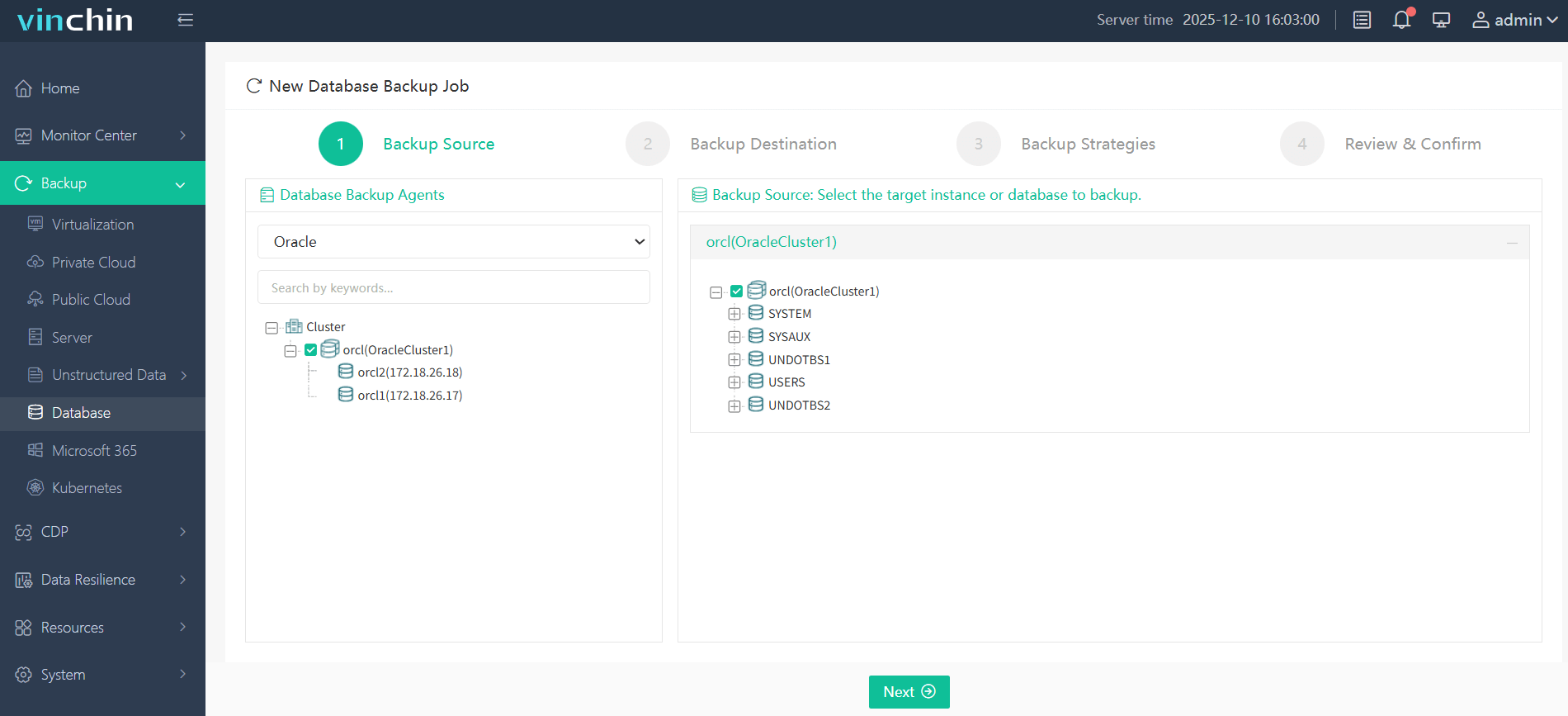
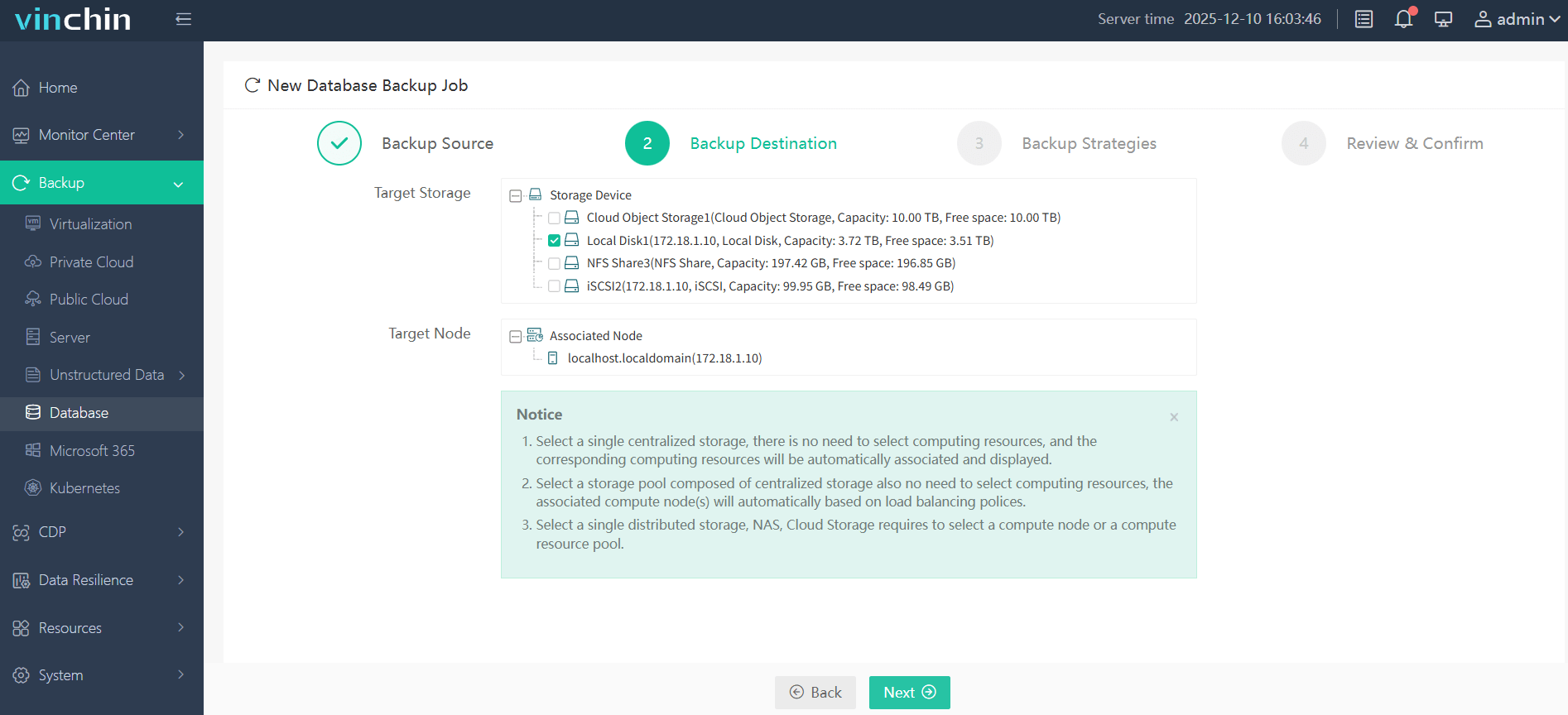
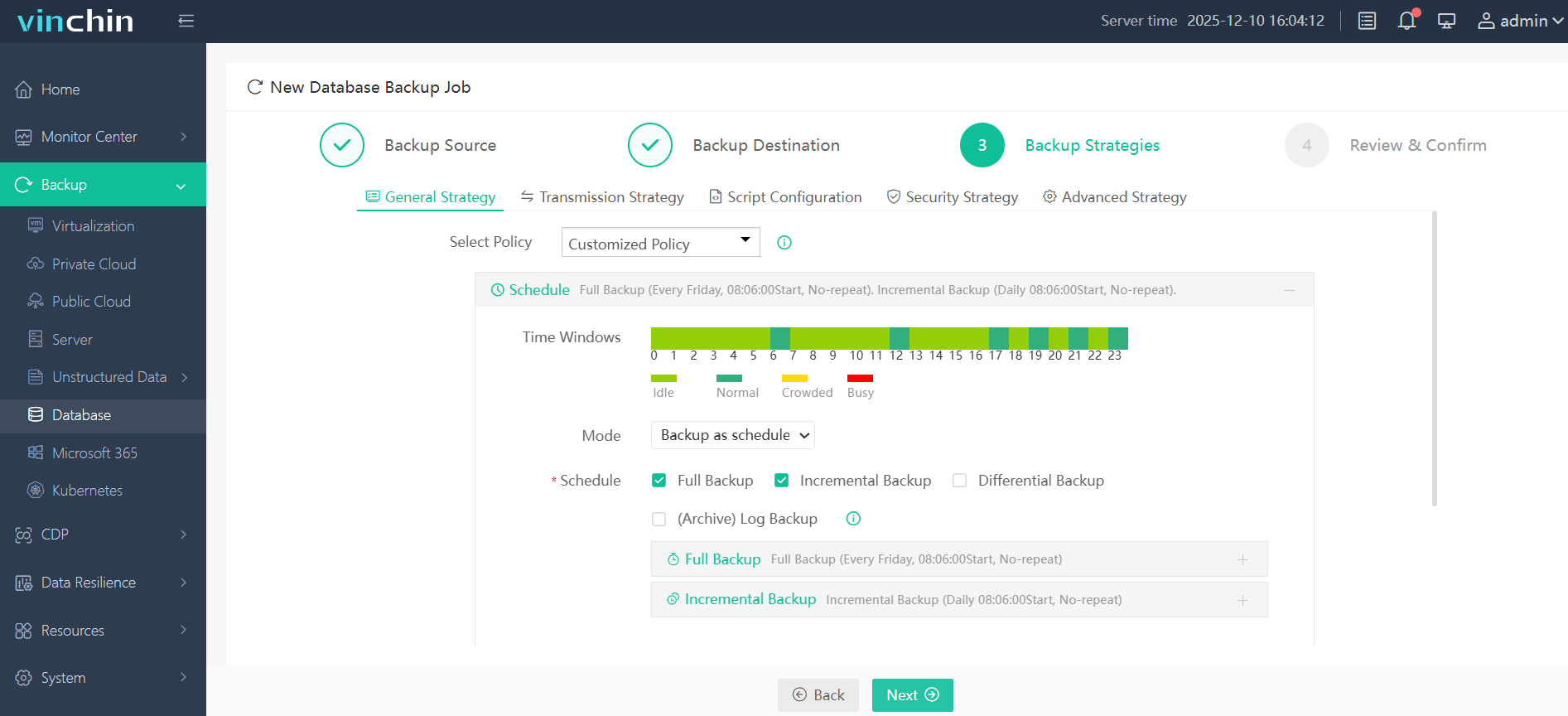
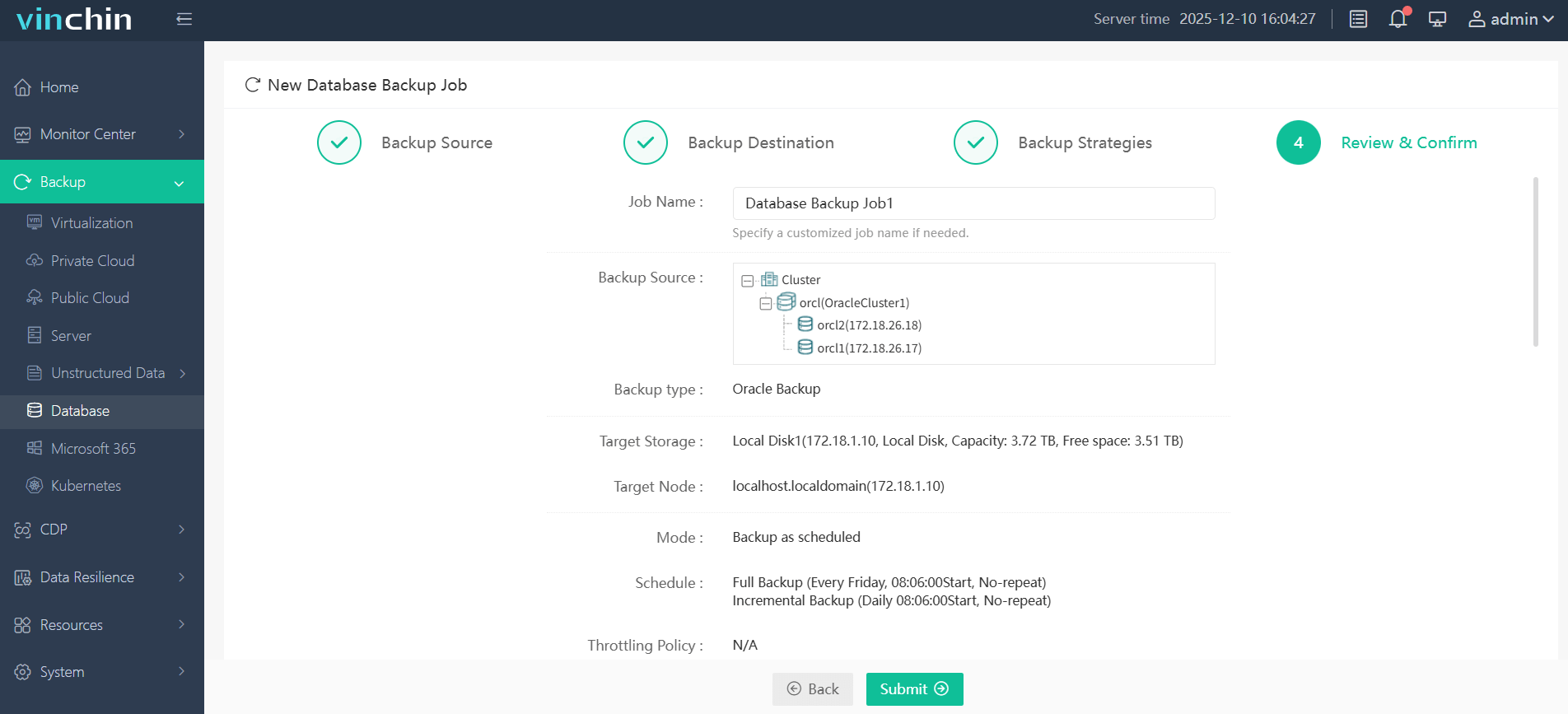
Vinchin Backup & Recovery offers a simple web console that makes managing Oracle database protection intuitive even for newcomers:
Step 1. Select the Oracle database to backup
Step 2. Choose the desired storage destination
Step 3. Define custom strategies such as scheduling and retention
Step 4. Submit the job
Recognized globally with top ratings among enterprise customers across industries,Vinchin Backup & Recovery delivers proven reliability at scale. Try every feature free for 60 days—click below to download now and experience leading-edge data protection firsthand.
Oracle RMAN List Obsolete Backups FAQs
Q1: Can I generate a report showing only full database backups marked as obsolete?
Yes; after connecting with RMAN use REPORT OBSOLETE DATAFILECOPY or filter results manually based on output details shown under Type/Level columns.
Q2: Does changing my retention policy affect existing reports immediately?
Yes; once changed via CONFIGURE RETENTION POLICY TO REDUNDANCY n or CONFIGURE RETENTION POLICY TO RECOVERY WINDOW OF n DAYS all future REPORT OBSOLETE commands reflect new settings right away—they persist until reconfigured again later.
Q3: What should I do if some "obsolete" files must stay due legal reasons?
Exclude them from automated deletes by moving those specific files out-of-scope directories before running DELETE commands—or adjust retention windows accordingly so nothing critical ever gets flagged prematurely during routine cleanups!
Conclusion
Listing obsolete backups in Oracle RMAN keeps storage lean while supporting reliable disaster recovery plans at every skill level—from beginner admins learning basics through experts automating entire fleets! For streamlined enterprise-grade protection beyond native tools alone consider trying Vinchin today—it brings powerful simplicity plus peace-of-mind together under one roof!