Are you responsible for keeping your Oracle databases safe? If so, you know that backup and recovery are not optional—they are essential. Oracle Recovery Manager (RMAN) is the built-in tool for this job. But how do you use it with confidence? This oracle rman guide will walk you through the basics, from setup to backup and restore, using clear steps and real examples. Whether you're new to RMAN or looking to sharpen your skills, you'll find practical advice here.
Before we dive in, it's important to understand that your database's operating mode—ARCHIVELOG or NOARCHIVELOG—shapes your backup strategy. Most production environments use ARCHIVELOG mode because it allows point-in-time recovery and online backups. This guide assumes your database is running in ARCHIVELOG mode for maximum protection.
What Is Oracle RMAN?
Oracle RMAN (Recovery Manager) is Oracle’s native utility for backing up, restoring, and recovering databases. It automates many tasks that used to require manual scripts, making your job easier and your backups more reliable. RMAN works directly with the Oracle database engine, so it can check for corruption, manage backup retention policies, and even compress backups to save space. You can use RMAN from the command line or through Oracle Enterprise Manager; both disk and tape storage are supported. Because RMAN is included with every Oracle Database installation, there’s no need to purchase extra tools.
RMAN also tracks all backups in its catalog or control file repository. This means you always have a record of what has been backed up—and when—which helps during audits or disaster recovery planning.
Method 1. Using Oracle RMAN for Backup
Before you can restore a database after an incident, you need a solid backup plan in place. RMAN makes this process straightforward once you understand its workflow and configuration options. Let’s break down how to create reliable backups using RMAN.
Start by launching a terminal session on your database server:
1. Start RMAN and Connect to the Database
Type rman target / at the command prompt if connecting locally as a privileged user. For remote connections or specific credentials, use rman target sys@yourdb. Always ensure you're connected as a user with sufficient privileges—usually SYSDBA—for full access.
2. Check and Configure RMAN Settings
RMAN uses persistent configuration settings that define how backups behave by default. To review current settings quickly, run:
SHOW ALL;
One critical setting is enabling control file autobackup:
CONFIGURE CONTROLFILE AUTOBACKUP ON;
This ensures that after every backup operation—even structural changes—the control file gets backed up automatically.
To set where backups are stored on disk:
CONFIGURE CHANNEL DEVICE TYPE DISK FORMAT '/backups/ORCL/%U';
The %U variable generates unique filenames each time so files never overwrite each other—a small detail that prevents accidental data loss.
Another key setting is retention policy management:
CONFIGURE RETENTION POLICY TO REDUNDANCY 2;
or
CONFIGURE RETENTION POLICY TO RECOVERY WINDOW OF 7 DAYS;
These commands tell RMAN how many copies of each backup should be kept or how long they should be retained before being marked obsolete.
3. Create a Full Database Backup
For most environments running in ARCHIVELOG mode (recommended), back up both datafiles and archived logs together:
BACKUP DATABASE PLUS ARCHIVELOG;
If only a basic full backup is needed without archived logs:
BACKUP DATABASE;
Backing up archived logs ensures all recent transactions are protected—even those not yet written into datafiles.
4. Use Compression and Tags
Saving storage space matters when dealing with large databases or limited disk resources:
BACKUP AS COMPRESSED BACKUPSET DATABASE;
You can also tag backups for easy identification later:
BACKUP DATABASE TAG = 'WEEKLY_FULL';
Tags help distinguish between different types of jobs—such as weekly fulls versus daily incrementals—in larger environments where multiple schedules run side by side.
5. List and Check Backups
To see all existing backups tracked by RMAN:
LIST BACKUP SUMMARY;
LIST BACKUP;
REPORT OBSOLETE;
REPORT NEED BACKUP;
Use these commands regularly so you know which files exist—and which might need attention due to age or redundancy rules.
Validating your backups ensures they’re usable when disaster strikes:
BACKUP VALIDATE DATABASE ARCHIVELOG ALL;
VALIDATE BACKUPSET <backupset_number>;
VALIDATE DATAFILE <file_number>;
Testing validation now saves headaches later if corruption sneaks into storage media unnoticed.
6. Schedule Backups
Automate regular jobs using OS-level schedulers like cron (Linux) or Task Scheduler (Windows). Save commands in a script file such as backup.rman, then schedule execution like this:
rman target / @backup.rman
Automation reduces human error risk while ensuring consistent protection over time.
Remember: Always test restores periodically using non-production systems!
Method 2. Restoring Data with Oracle RMAN
When disaster strikes—or even just routine maintenance—you need fast reliable restores without guesswork under pressure! Here’s how professionals approach restoration step by step using proven techniques…
Restores start by preparing both environment and operator mindset: double-check which files failed before taking action!
1. Prepare for Restore
If possible identify required files first:
Run
LIST FAILURE; REPORT SCHEMA; LIST BACKUP OF DATABASE;
to see exactly what's missing/corrupted before shutting down services unnecessarily!
Then gracefully stop active sessions:
SHUTDOWN IMMEDIATE;
STARTUP MOUNT;
Mounting opens control structures but leaves datafiles closed until ready—a safer state than open/read-write during repairs!
2. Restore the Control File
Lost control files halt everything—but autobackup simplifies rescue!
Restore latest copy automatically:
RESTORE CONTROLFILE FROM AUTOBACKUP;
ALTER DATABASE MOUNT;
If restoring from an older date specify time explicitly:
RESTORE CONTROLFILE FROM AUTOBACKUP UNTIL TIME 'SYSDATE-1';
ALTER DATABASE MOUNT;
Direct path restores work too if exact filename known:
RESTORE CONTROLFILE FROM '/backups/ORCL/your_controlfile.bkp';
ALTER DATABASE MOUNT;
3. Restore the Database
Bring back all datafiles from last good snapshot:
RESTORE DATABASE;
If moving files elsewhere—for example onto new disks after hardware failure—
use SET NEWNAME directives before starting actual copy process:
SET NEWNAME FOR DATAFILE 1 TO '/newpath/datafile1.dbf';
...
RESTORE DATABASE;
SWITCH DATAFILE ALL;
RECOVER DATABASE;
This remaps physical locations inside catalog/controlfile metadata so future operations work seamlessly post-recovery!
4. Recover the Database
Apply archived redo logs automatically until latest transaction captured:
RECOVER DATABASE;
No need to specify individual log names—RMAN finds/apply them based on internal tracking tables!
For point-in-time recoveries add UNTIL clause first:
RUN {
   SET UNTIL TIME "TO_DATE('2024-05-01 10:00:00','YYYY-MM-DD HH24:MI:SS')";
   RESTORE DATABASE;
   RECOVER DATABASE;
}
ALTER DATABASE OPEN RESETLOGS;
5. Open the Database
Once satisfied everything restored/recovered correctly,
open instance fully again:
ALTER DATABASE OPEN;
-- Or after PITR/incomplete recovery --
ALTER DATABASE OPEN RESETLOGS;
Always verify application connectivity/test queries immediately afterward before declaring success!
6. Restore Specific Tablespaces or Datafiles
Partial failures happen often enough! Don’t panic—just isolate affected objects instead of whole DB downtime!
Example workflow restoring USERS tablespace only:
SQL 'ALTER TABLESPACE users OFFLINE';
RESTORE TABLESPACE users;
RECOVER TABLESPACE users;
SQL 'ALTER TABLESPACE users ONLINE';
Same logic applies per-datafile granularity too—with appropriate ALTER/DROP statements as needed pre/post repair phase…
7. Recover Individual Blocks
Block-level corruption doesn’t mean losing entire datasets anymore!
Pinpoint/fix single blocks efficiently via targeted calls such as:
BLOCKRECOVER DATAFILE 7 BLOCK 233,235 ;
-- Or range syntax --
BLOCKRECOVER CORRUPTION LIST ; -- Uses previously detected list --
Enterprise-Level Protection for Your Oracle Environment
Beyond native tools like RMAN, organizations often seek greater flexibility and advanced automation in their database protection strategies—especially when managing mission-critical platforms such as Oracle alongside other mainstream systems like MySQL, SQL Server, MariaDB, PostgreSQL, PostgresPro, and TiDB. Vinchin Backup & Recovery stands out as an enterprise-grade solution supporting all these major databases while delivering robust features tailored specifically for demanding environments.
For Oracle users in particular, Vinchin Backup & Recovery offers incremental backup capabilities along with batch database backup operations, granular data retention policies including GFS retention policy support, cloud backup plus tape archiving integration options, as well as comprehensive integrity checks—all designed to streamline management while maximizing reliability across hybrid infrastructures.
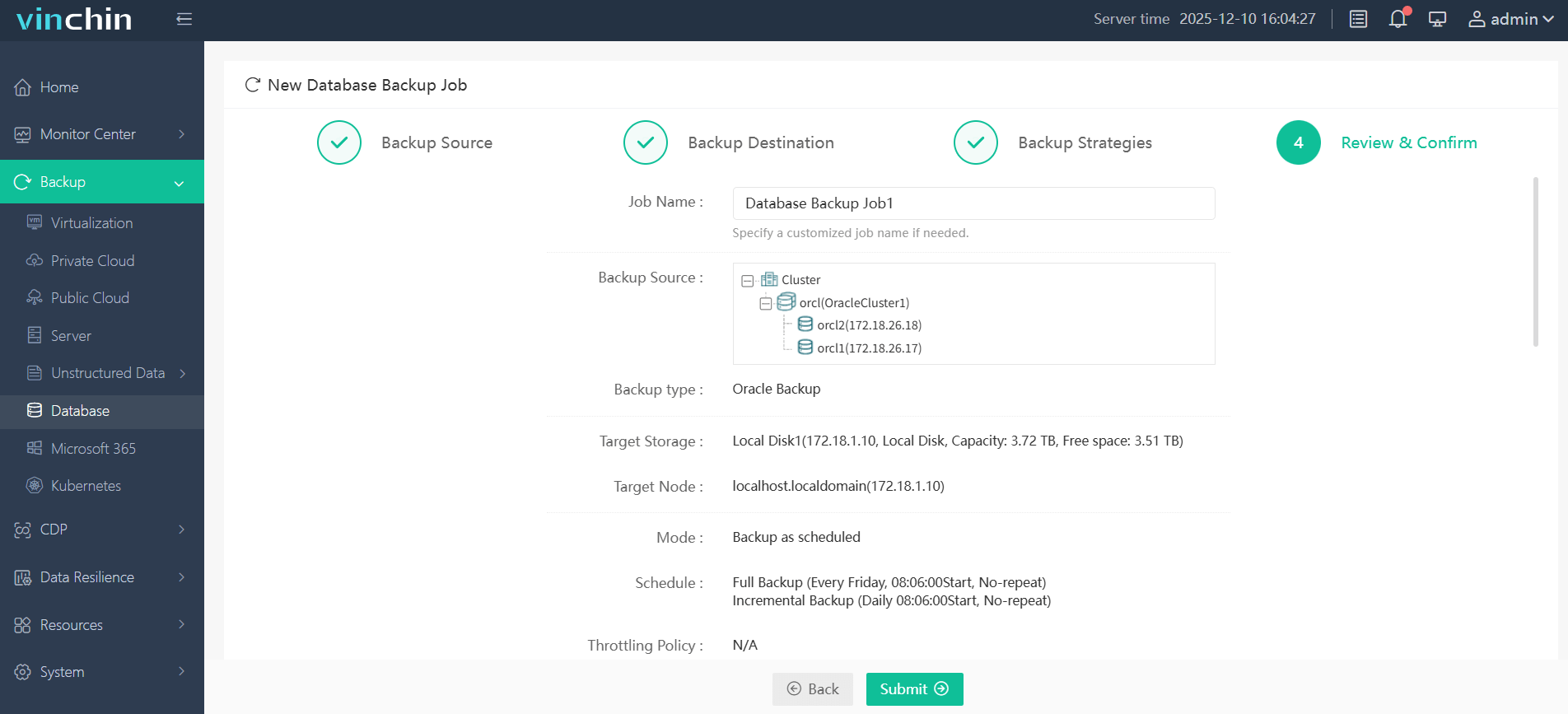
The intuitive web console makes safeguarding your environment remarkably simple:
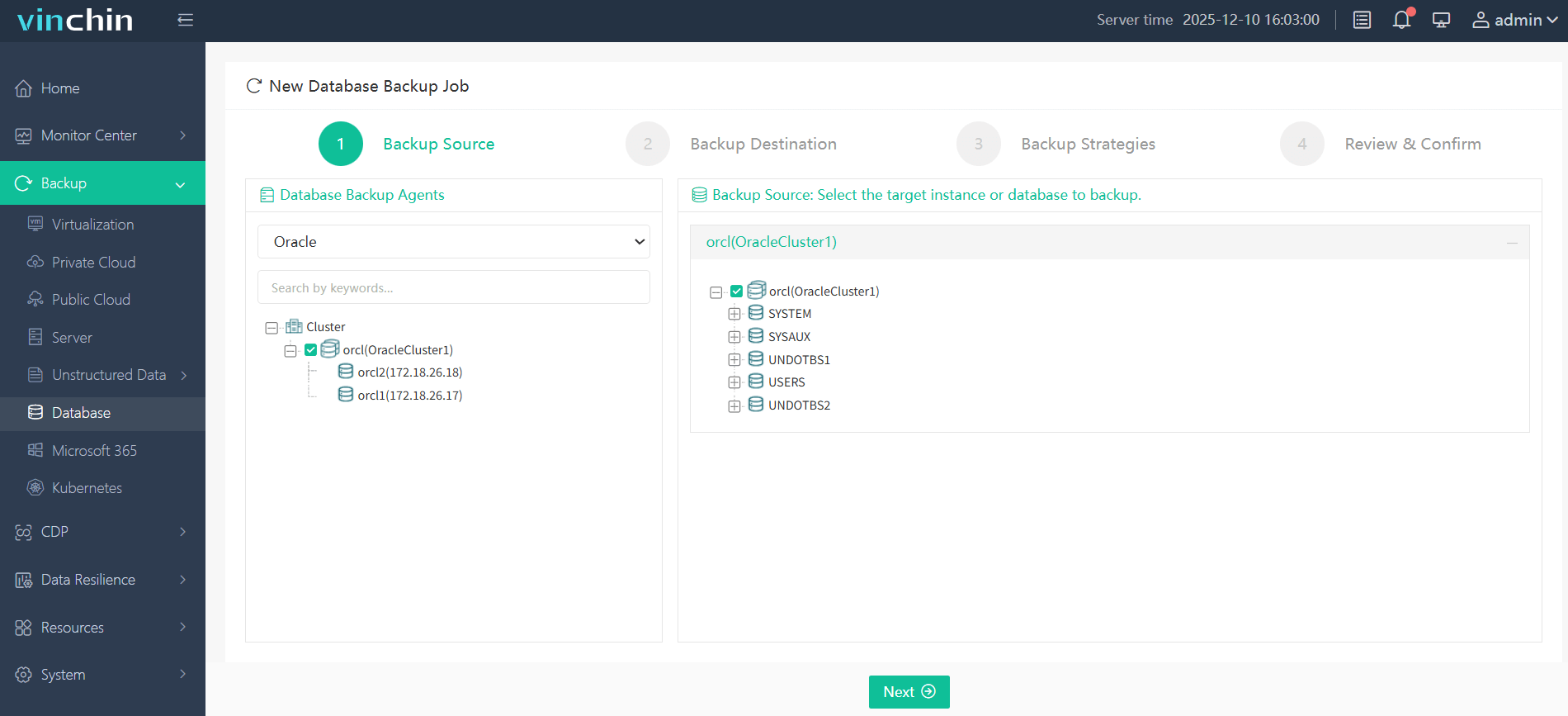
Step 1. Selecting the Oracle database to back up;
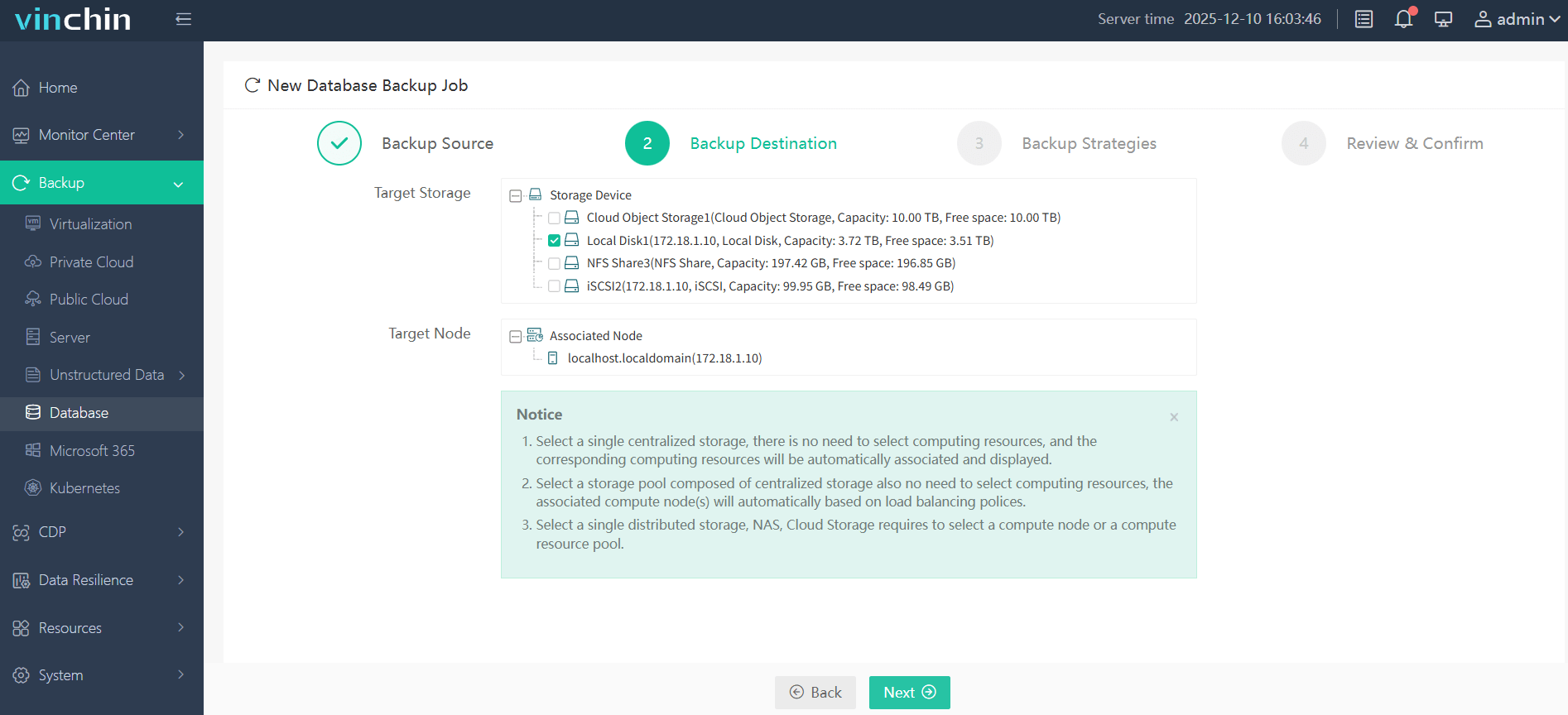
Step 2. Choose preferred storage targets including cloud repositories or local/tape devices;
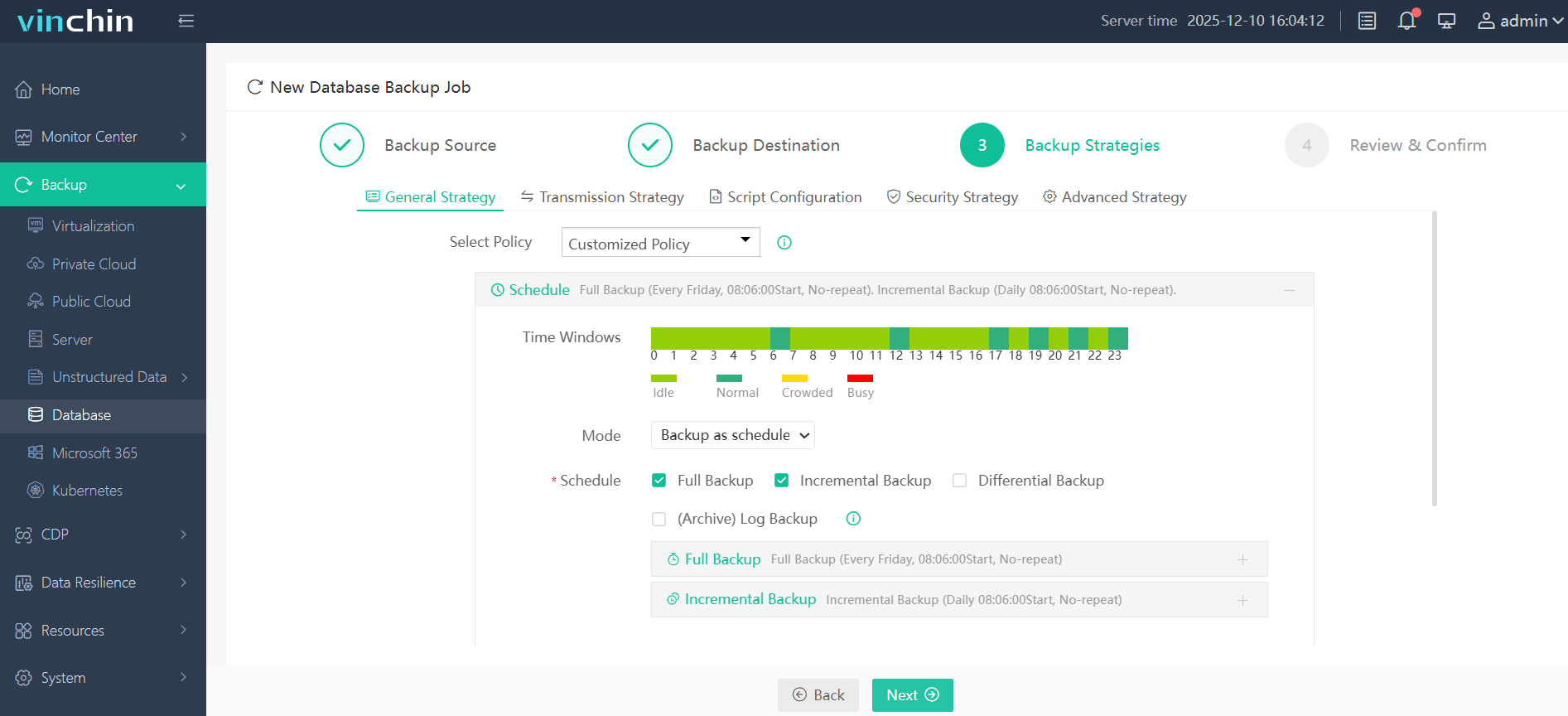
Step 3. Defines scheduling parameters plus advanced strategies such as incremental cycles or custom retention windows;
Step 4. Submits the job—all within minutes via an uncluttered interface requiring no scripting expertise whatsoever.
Recognized globally among enterprise IT teams—with thousands of satisfied customers worldwide—Vinchin Backup & Recovery consistently earns top marks for reliability and ease-of-use standards alike. Try every feature free for 60 days by clicking below—the fastest way to experience modern enterprise data protection firsthand.
Oracle RMAN Guide FAQs
Q1: How do I monitor progress of an ongoing long-running RMAN job?
A1: Query V$SESSION_LONGOPS, filtering rows where OPNAME LIKE 'RMAN%', to view percent complete details live during execution.
Q2: What should I do if my restore fails due to missing archive logs?
A2: Identify missing log sequence numbers using LIST ARCHIVELOG ALL, then locate valid copies on alternate media before retrying restore operation.
Q3: Can I perform an out-of-place clone of my production database using only native tools?
A3: Yes—use DUPLICATE TARGET DATABASE TO newdb FROM ACTIVE DATABASE NOFILENAMECHECK, adjusting auxiliary instance parameters beforehand.
Conclusion
Mastering this oracle rman guide takes practice—but pays off every time disaster strikes unexpectedly! Regular testing ensures confidence under pressure while protecting business-critical assets reliably day after day… And remember—with Vinchin handling automation behind-the-scenes—you gain peace of mind plus modern efficiency at scale!