Manual database backups are risky—they can fail silently or miss critical data if you make a mistake. For Oracle 10g administrators, automating backups with RMAN (Recovery Manager) is essential for peace of mind and business continuity. But how do you craft an effective Oracle 10g RMAN backup script?
What Is RMAN in Oracle 10g?
RMAN stands for Recovery Manager—Oracle’s built-in tool for managing database backups and restores since version 10g. It handles full and incremental backups of data files, control files, and archived redo logs while checking for corruption along the way. Unlike manual file copies, RMAN ensures consistency across all components so you can recover your database reliably after any failure.
With features like automated retention management and easy integration into scripts or schedulers, RMAN is trusted by DBAs worldwide to protect mission-critical systems.
Why Use RMAN Backup Scripts?
Relying on scripts makes your backup process repeatable and hands-off—a must in busy IT environments where mistakes can be costly. With scripting, you schedule regular jobs instead of typing commands manually each time; this reduces human error while ensuring consistent results even when you're away from your desk.
Scripts also let you standardize where backups go, how long they’re kept, what gets logged—and make it easier to comply with company policies or audits later on.
How to Create a Basic Oracle 10g RMAN Backup Script?
Before writing any script, confirm these prerequisites:
Your database runs in ARCHIVELOG mode (check with ARCHIVE LOG LIST in SQL*Plus).
There’s enough free disk space at your chosen backup destination.
The OS user running the script has write permissions to that location.
Testing new scripts in a non-production environment first is always wise—never risk live data until you're sure everything works as expected!
Let’s build a simple shell script (rman_full_backup.sh) that backs up your entire database plus all archived redo logs:
#!/bin/bash
export ORACLE_SID=yourdb
export ORACLE_HOME=/u01/app/oracle/product/10.2.0/db_1
export PATH=$ORACLE_HOME/bin:$PATH

BACKUP_LOG="/backup/logs/rman_full_$(date +%Y%m%d).log"

rman target / log=$BACKUP_LOG <<EOF
RUN {
  BACKUP DATABASE PLUS ARCHIVELOG;
}
EXIT
EOF

if [ $? -eq 0 ]; then
  echo "RMAN backup completed successfully at $(date)" >> $BACKUP_LOG
else
  echo "RMAN backup failed at $(date). Check $BACKUP_LOG." >> $BACKUP_LOG
fi
This script sets up environment variables so rman knows which instance to connect to; it then runs a full backup (including archived logs), saving output to a dated log file for easy tracking later.
To automate this process nightly at 2 AM using Linux cron:
0 2 * * * /path/to/rman_full_backup.sh >> /backup/logs/script_cron.log 2>&1
This captures both standard output and errors into one place—handy when troubleshooting failures.
How to Use Advanced Options in an Oracle 10g RMAN Backup Script?
Once comfortable with basic full backups, consider more sophisticated strategies that save storage space or reduce daily impact on production systems.
A common approach combines weekly Level 0 incrementals (full baseline) with daily Level 1 incrementals (only changed blocks since last Level 0 or Level 1). Regularly pruning obsolete files keeps storage tidy without manual cleanup chores.
Here’s an example of an advanced shell script:
#!/bin/bash
export ORACLE_SID=yourdb
export ORACLE_HOME=/u01/app/oracle/product/10.2.0/db_1
export PATH=$ORACLE_HOME/bin:$PATH

BACKUP_LOG="/backup/logs/rman_adv_$(date +%Y%m%d).log"

rman target / log=$BACKUP_LOG <<EOF
RUN {
  CROSSCHECK BACKUP;
  BACKUP INCREMENTAL LEVEL 0 DATABASE TAG 'WEEKLY_L0';
  BACKUP ARCHIVELOG ALL DELETE INPUT;
  DELETE NOPROMPT OBSOLETE;
}
EXIT
EOF

if [ $? -eq 0 ]; then
   echo "Advanced RMAN backup completed successfully at $(date)" >> $BACKUP_LOG
else
   echo "Advanced RMAN backup failed at $(date). Check $BACKUP_LOG." >> $BACKUP_LOG
fi
Enterprise-Level Database Protection with Vinchin Backup & Recovery
For organizations seeking robust protection beyond native tools like RMAN, Vinchin Backup & Recovery delivers comprehensive enterprise-level database backup capabilities. Supporting today’s mainstream platforms—including Oracle, MySQL, SQL Server, MariaDB, PostgreSQL, PostgresPro, and TiDB—it offers broad compatibility tailored for diverse IT environments. Key features such as batch database backup, data retention policies management, cloud/tape archiving options, restore-to-new-server functionality, and integrity check empower teams to automate processes while ensuring reliable recoverability across large-scale deployments—all from a unified platform designed for efficiency and security.
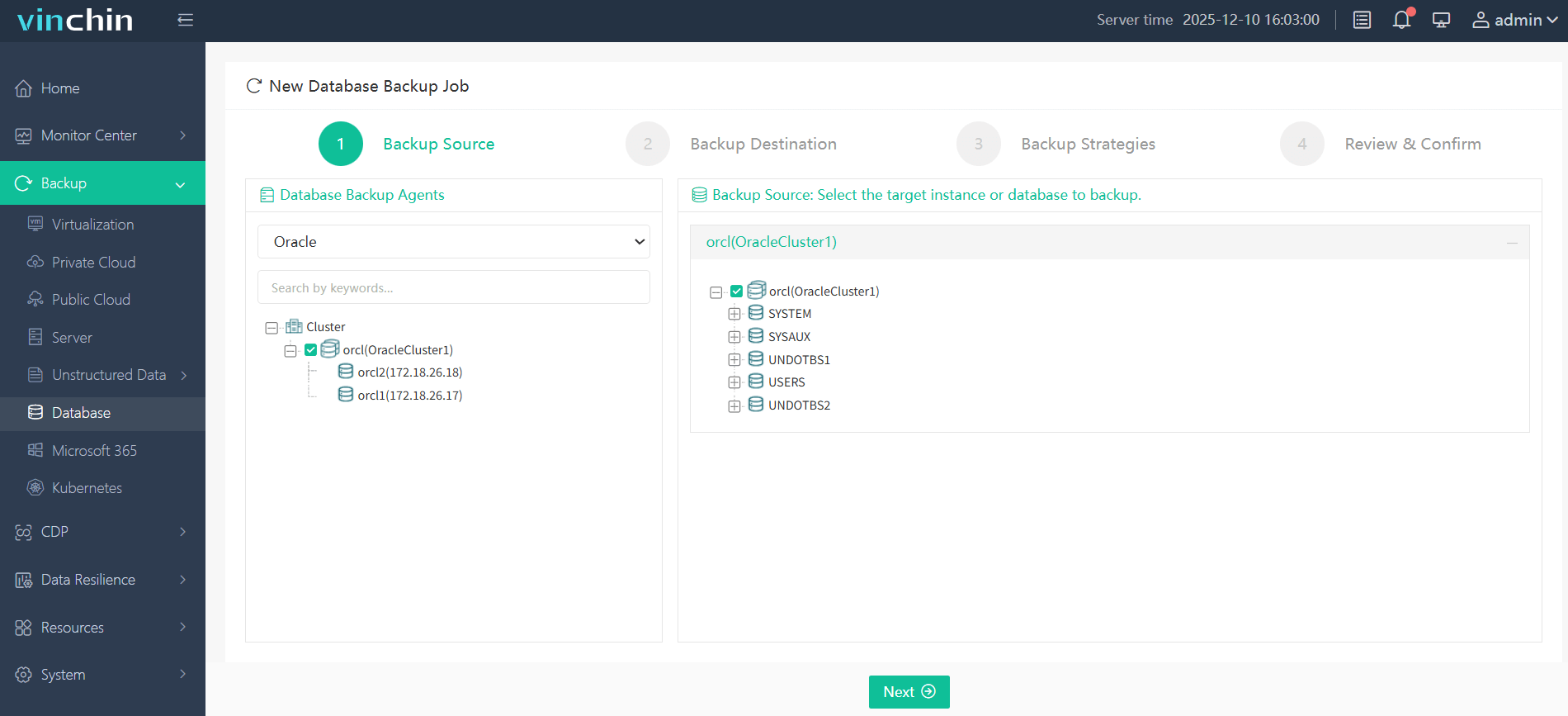
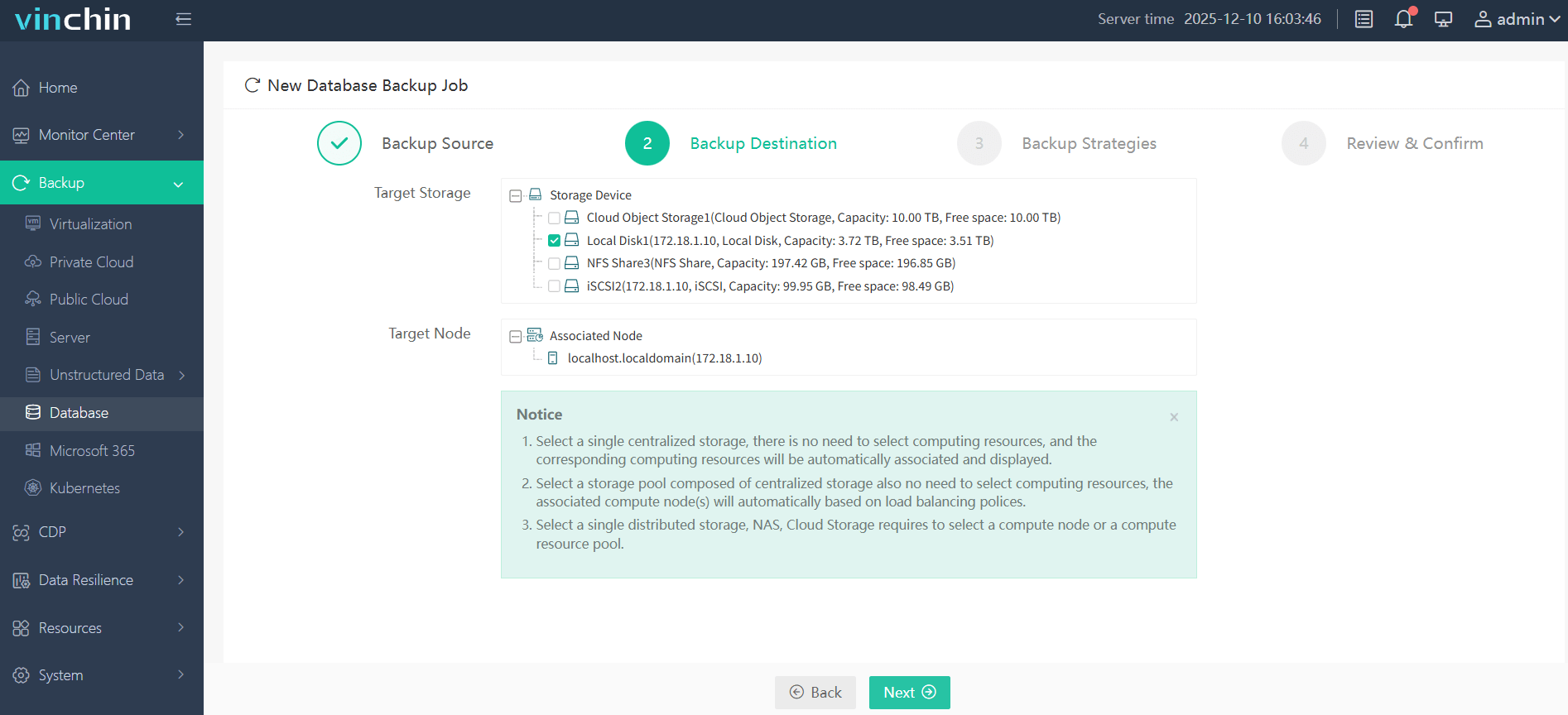
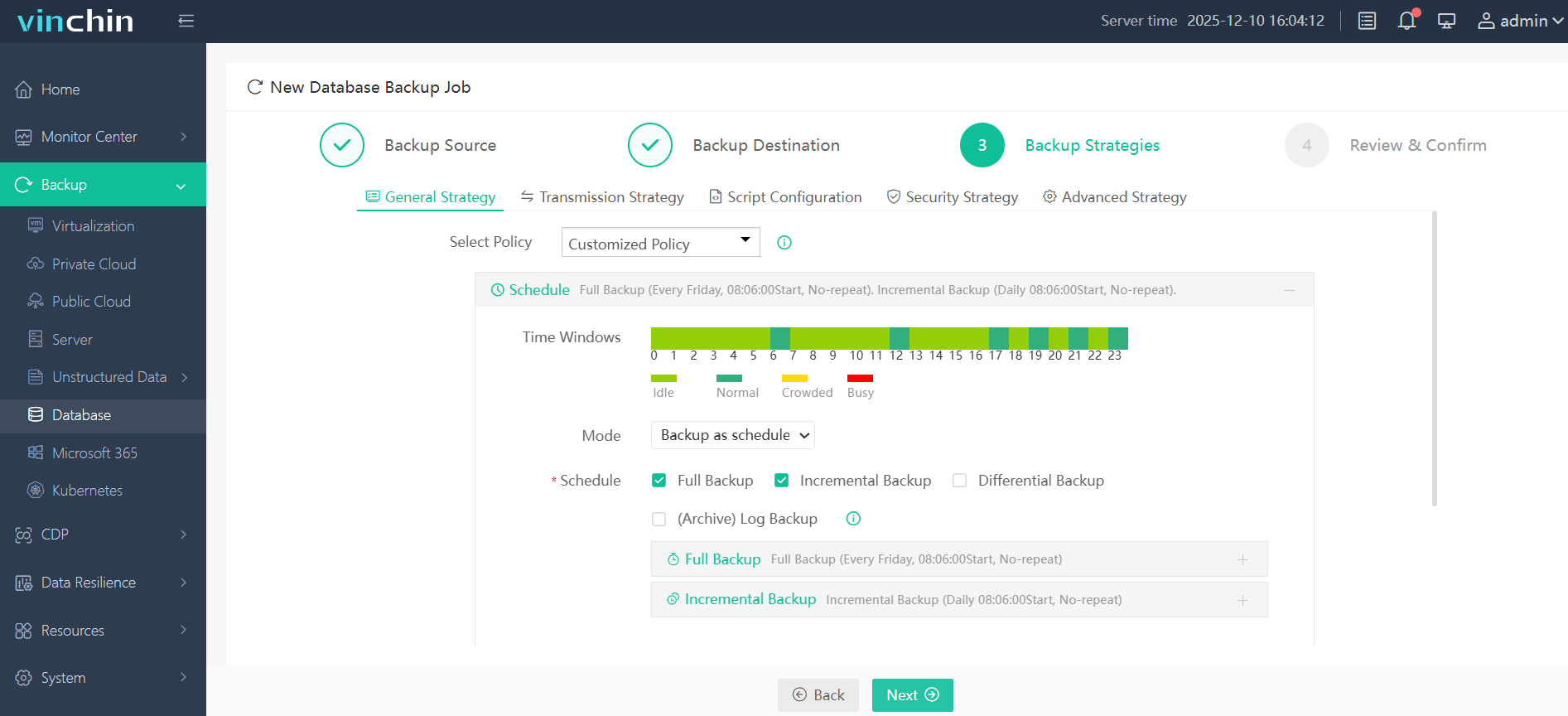
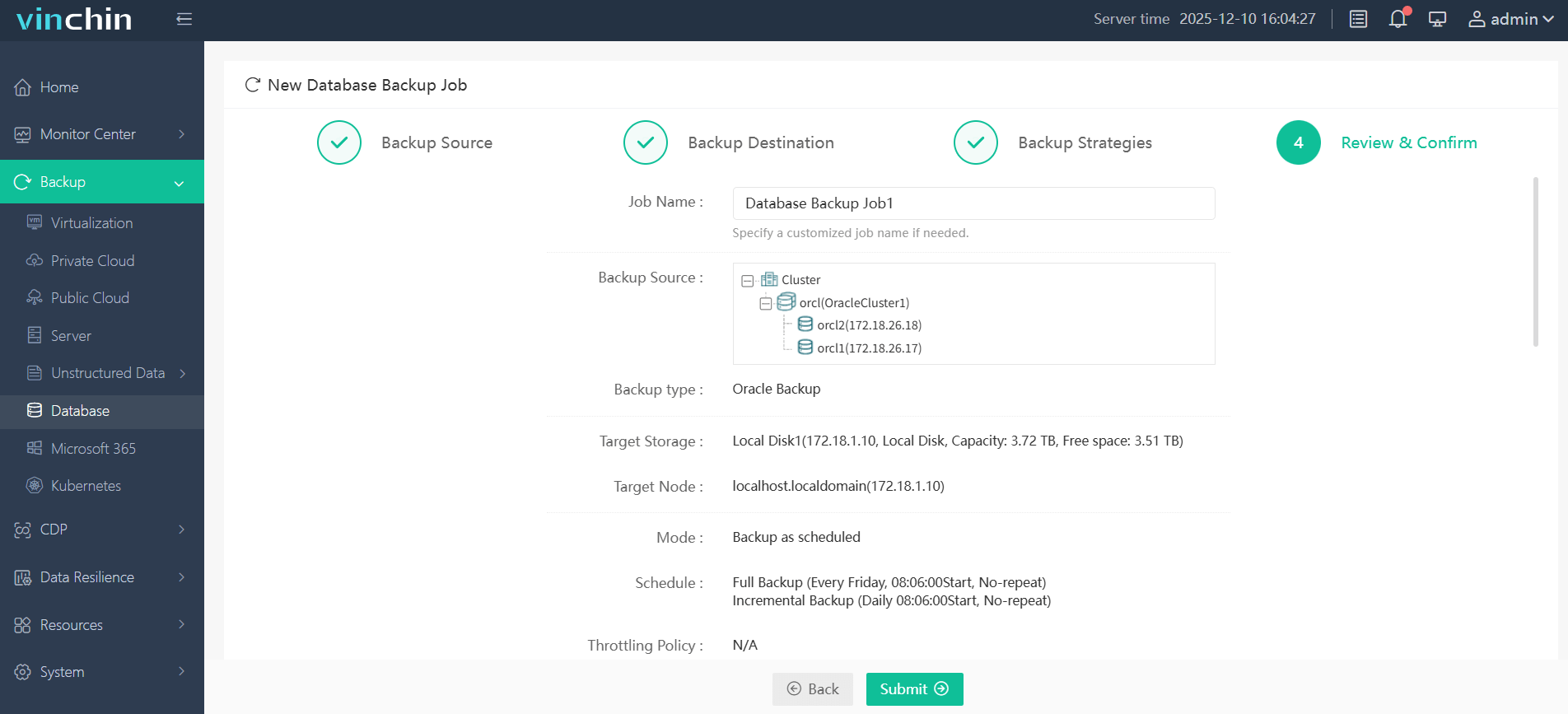
The web console of Vinchin Backup & Recovery is intuitive:
Step 1. Select the Oracle database to back up
Step 2. Choose the backup storage
Step 3. Define the backup strategy
Step 4. Submit the job
Recognized globally by enterprises for its reliability and ease of use—with top ratings from thousands of customers—you can experience every feature free for 60 days by clicking the download button below.
Oracle 10g RMAN Backup Script FAQs
Q1: Can I run an RMAN backup script while users are connected?
A1: Yes—as long as you're using ARCHIVELOG mode online users remain unaffected during most types of backups.
Q2: What should I do if my scheduled script fails overnight?
A2: Check both shell log files generated by your script plus detailed entries in ALERT.LOG under $ORACLE_BASE/diag; fix any reported errors before rerunning manually during low usage hours if possible.
Q3: How do I check my existing backups aren’t corrupt?
A3: Run VALIDATE BACKUPSET ALL; within an interactive rman session—it scans stored sets for physical corruption quickly without restoring actual data.
Conclusion
Creating robust Oracle 10g RMAN backup scripts protects vital business information day after day—with less stress over missed jobs or silent failures lurking unseen until disaster strikes! Scripting brings automation while tools like Vinchin offer even greater flexibility through centralized management consoles designed specifically around modern enterprise needs—try their free trial today!