Have you ever tried to recover an Oracle database and stumbled over the term “incarnation”? If you use Oracle RMAN for backup and recovery, understanding database incarnations is essential. Incarnations can affect which backups you can use and how you restore your data. Let’s break down what an Oracle RMAN incarnation is, why it matters, and how you can manage it step by step.
What Is Oracle RMAN Incarnation?
An Oracle RMAN incarnation is a unique version of your database’s history. Each time you open your database with the RESETLOGS option—usually after a point-in-time recovery or restoring with a backup control file—Oracle creates a new incarnation. This new incarnation marks a new branch in your database’s timeline, with its own stream of redo logs and System Change Numbers (SCNs).
Why does this matter? Imagine your database as a tree. Each time you perform a recovery that requires RESETLOGS, you create a new branch. Each branch (incarnation) has its own backups and redo logs. RMAN uses the incarnation number to categorize and logically isolate all backup metadata—including backups, copies, archivelogs—belonging to that timeline. This isolation helps prevent confusion between different branches of your data history.
RMAN tracks these incarnations so that when you restore or recover data, it applies only the correct redo logs from the right timeline. Without this safeguard, applying redo logs from another branch could corrupt your data irreversibly.
Why Database Incarnations Occur?
Incarnations happen when you need to reset your database’s redo log sequence. This most often occurs after incomplete recovery or point-in-time recovery (PITR), or when restoring using a backup control file. When you open the database successfully with RESETLOGS, Oracle archives current redo logs, resets their sequence back to 1, then stamps all data files and logs with a fresh incarnation number plus timestamp.
This process prevents confusion between redo logs from different recovery paths. For example: if you restore your database to an earlier point in time due to user error or corruption—and then start generating new transactions—Oracle must distinguish between old transactions on one path versus new ones on another. That’s why each successful OPEN RESETLOGS creates a separate incarnation.
It is important to note that simply running OPEN RESETLOGS does not always create an incarnation; only successful completion triggers this change. If opening fails because further recovery is needed, no new incarnation appears until success.
Without this mechanism in place, there would be nothing stopping accidental application of incompatible redo streams—a recipe for disaster in any production environment.
How to Manage Oracle RMAN Incarnations?
Managing incarnations in RMAN becomes straightforward once you know which commands do what at each stage of administration or troubleshooting.
First off: if you're unsure about past recoveries or want insight into historical changes made via RESETLOGS, check all known incarnations by connecting to RMAN:
RMAN> LIST INCARNATION;
This command displays every recorded incarnation along with its number (INCARNATION#), status (CURRENT, PARENT, or ORPHAN), reset SCN (RESET SCN), reset time (RESET TIME), and sometimes additional details like ancestor relationships.
Suppose now that business requirements force you to recover back into an older timeline—for instance after discovering silent corruption days later—or perhaps testing PITR scenarios in QA environments. In such cases:
1. Identify which previous branch (incarnation) contains your target point-in-time using LIST INCARNATION.
2. Reset the working context so future commands operate within that chosen branch:
RMAN> RESET DATABASE TO INCARNATION <number>;
Replace <number> with the desired INCARNATION# found earlier.
3. Restore required files as usual; typically you'll specify either SET UNTIL SCN or SET UNTIL TIME before issuing:
RMAN> RESTORE DATABASE;
4. Recover up through necessary archived logs:
RMAN> RECOVER DATABASE;
5. Finally open freshly recovered files using:
RMAN> ALTER DATABASE OPEN RESETLOGS;
Here’s how this might look in practice: imagine three total incarnations exist due to multiple PITRs over several years; today’s goal is rolling back into events captured during "incarnation 2." After listing all branches via LIST INCARNATION, note down "2" as target ID; issue RESET DATABASE TO INCARNATION 2;, then proceed through restore/recover/open steps above.
If skipping step two (RESET DATABASE TO INCARNATION), attempts at restoring prior points will fail—often producing errors referencing mismatched SCNs or invalid log sequences—which protects against accidental cross-timeline restores.
You may also wish to view detailed history directly inside SQL*Plus for auditing purposes:
SELECT INCARNATION#, RESETLOGS_CHANGE#, RESETLOGS_TIME, STATUS FROM V$DATABASE_INCARNATION;
This query returns every known branch alongside key metadata like creation timestamp (RESETLOGS_TIME) so administrators can correlate changes against operational runbooks or incident tickets.
Understanding Status Codes
Each entry shown by either method includes one of several statuses:
CURRENT: The active timeline used by default for all operations unless overridden
PARENT: An ancestor branch leading up toward CURRENT
ORPHAN: A disconnected line created but never followed further (often safe for cleanup)
Knowing these distinctions helps clarify which backups remain relevant versus those eligible for deletion under retention policies.
Example: Recovering Using Previous Incarnation
Let’s walk through an expanded scenario where recovering from an older timeline becomes necessary due to late discovery of logical corruption:
1. Run LIST INCARNATION in RMAN; identify both CURRENT (most recent) plus PARENT entries.
2. Suppose PARENT has INCARNATION# = 2; issue RESET DATABASE TO INCARNATION 2;.
3. Use SET UNTIL TIME 'YYYY-MM-DD HH24:MI:SS' if targeting specific event windows before issuing restores.
4. Execute RESTORE CONTROLFILE FROM AUTOBACKUP; if needed—this ensures metadata matches selected branch.
5. Continue standard restore/recover workflow as described above until ready for final open/resetlogs operation.
Troubleshooting Common Incarnation Issues
Even experienced DBAs encounter challenges managing incarnations during complex recoveries or audits across long-lived databases.
When things go wrong—or seem confusing—it pays off knowing common pitfalls plus their solutions:
Scenario: Error "RMAN-20207: UNTIL TIME or RECOVERY WINDOW is before RESETLOGS time"
This error means you're trying to recover further back than allowed within current context—the requested point predates latest successful OPEN RESETLOGS event on record.
To resolve:
1. Run LIST INCARNATION first
2. Issue RESET DATABASE TO INCARNATION <target> where <target> matches intended historical branch
3. Proceed with normal SET UNTIL/RESTORE/RECOVER steps described previously
Scenario: Orphaned Backups Appear During Maintenance
Backups tied exclusively to non-current timelines show up as ORPHANS—they’re not part of any active lineage but still consume storage space until deleted manually via retention jobs (DELETE OBSOLETE). Before deleting such files outright though consider whether future audits might require returning temporarily into those branches—a rare but possible compliance scenario!
Scenario: Confusion After Failed Recovery Attempts
Sometimes PITR goes awry mid-process—for example after realizing initial rollback didn’t fix root cause—or perhaps needing yet another rewind even further back in time than originally planned! In these cases always remember resetting again (RESET DATABASE TO INCARNATION <original>) re-aligns context so subsequent restores don’t cross wires between unrelated timelines.
Best Practices for Managing Incarnations
Managing multiple incarnations doesn’t have to be daunting if best practices are followed consistently throughout lifecycle operations:
Document Every Change
Whenever performing actions likely resulting in new branches—such as incomplete recoveries requiring OPEN RESETLOGS—log details including reason (“user error correction,” “corruption repair”), associated SCNs/timestamps/incarnation numbers inside team runbooks or ticketing systems for future reference during audits/troubleshooting sessions.
Proactively List All Known Branches Before Major Restores
Before attempting any significant PITR operation always run LIST INCARNATION. This gives clear visibility into available timelines ensuring no surprises mid-recovery.
Take Fresh Full Backups Immediately After Each Successful OPEN RESETLOGS Event
A full level 0 backup right after creating any new incarnation provides clean baseline coverage going forward while minimizing risk associated with missing incremental chains spanning multiple branches.
Validate Availability Of Required Files Across Timelines Before Committing To Actual Recovery Steps
Use commands like:
RMAN> RESTORE DATABASE VALIDATE;
or
RMAN> RECOVER DATABASE TEST;
to confirm presence/accessibility of necessary archived logs/backups ahead-of-time rather than discovering gaps halfway through critical restores!
How to Protect Oracle Databases with Vinchin Backup & Recovery?
In light of these complexities surrounding Oracle incarnations and multi-branch histories, robust backup management becomes crucial for business continuity and compliance needs alike.
Vinchin Backup & Recovery stands out as an enterprise-level solution supporting mainstream databases such as Oracle 10g, 11g/11g R2, 12c, 18c, 19c, 21c, Oracle RAC, MySQL, SQL Server, MariaDB, PostgreSQL, PostgresPro, and TiDB—with particular strength in protecting intricate Oracle environments like yours.
Key features include batch database backup scheduling across instances, granular data retention policy enforcement (including GFS support), cloud backup/tape archiving options for offsite safety, integrity checks ensuring reliable restorability across timelines—even when dealing with multiple incarnations—and seamless restore-to-new-server workflows.
The intuitive web console makes safeguarding your Oracle environment simple:
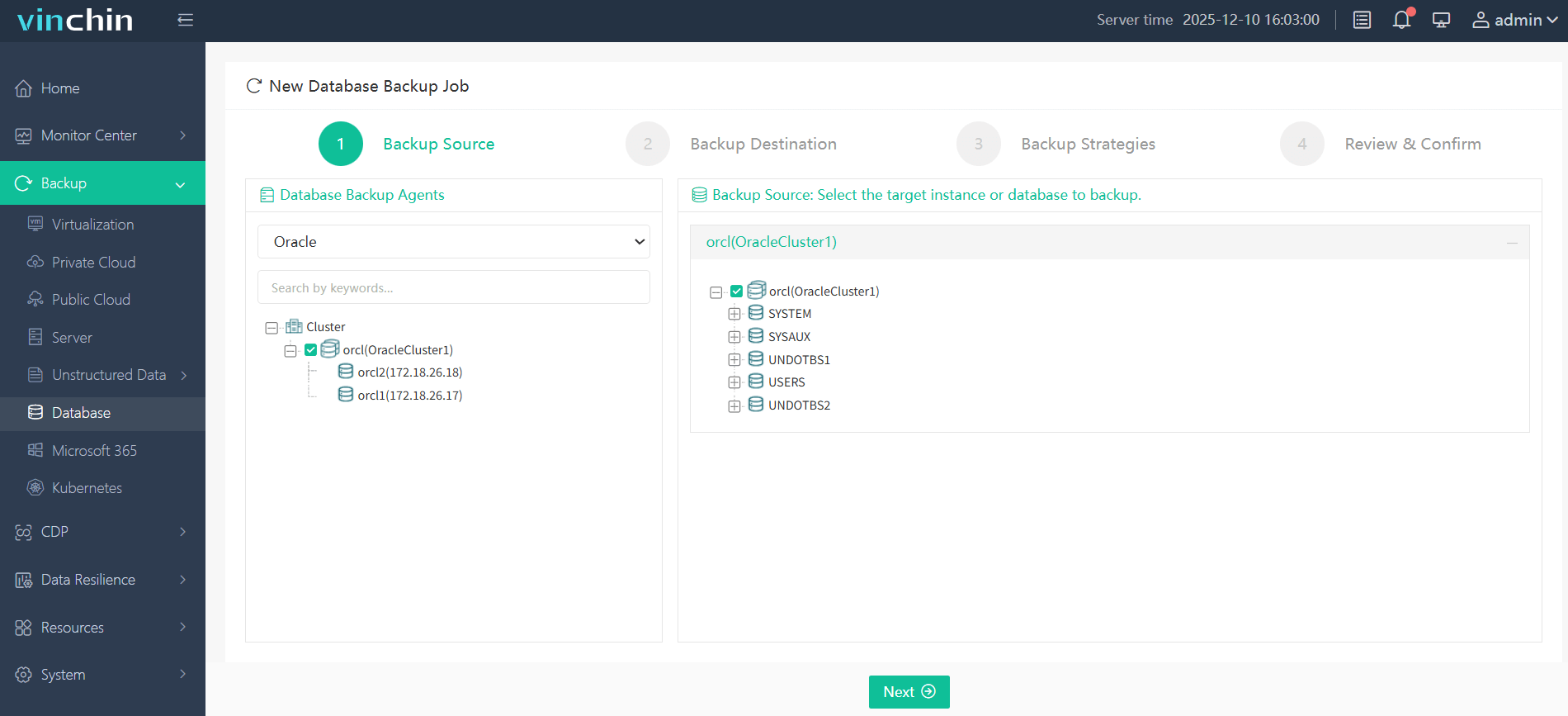
Step 1.Select the Oracle database to backup
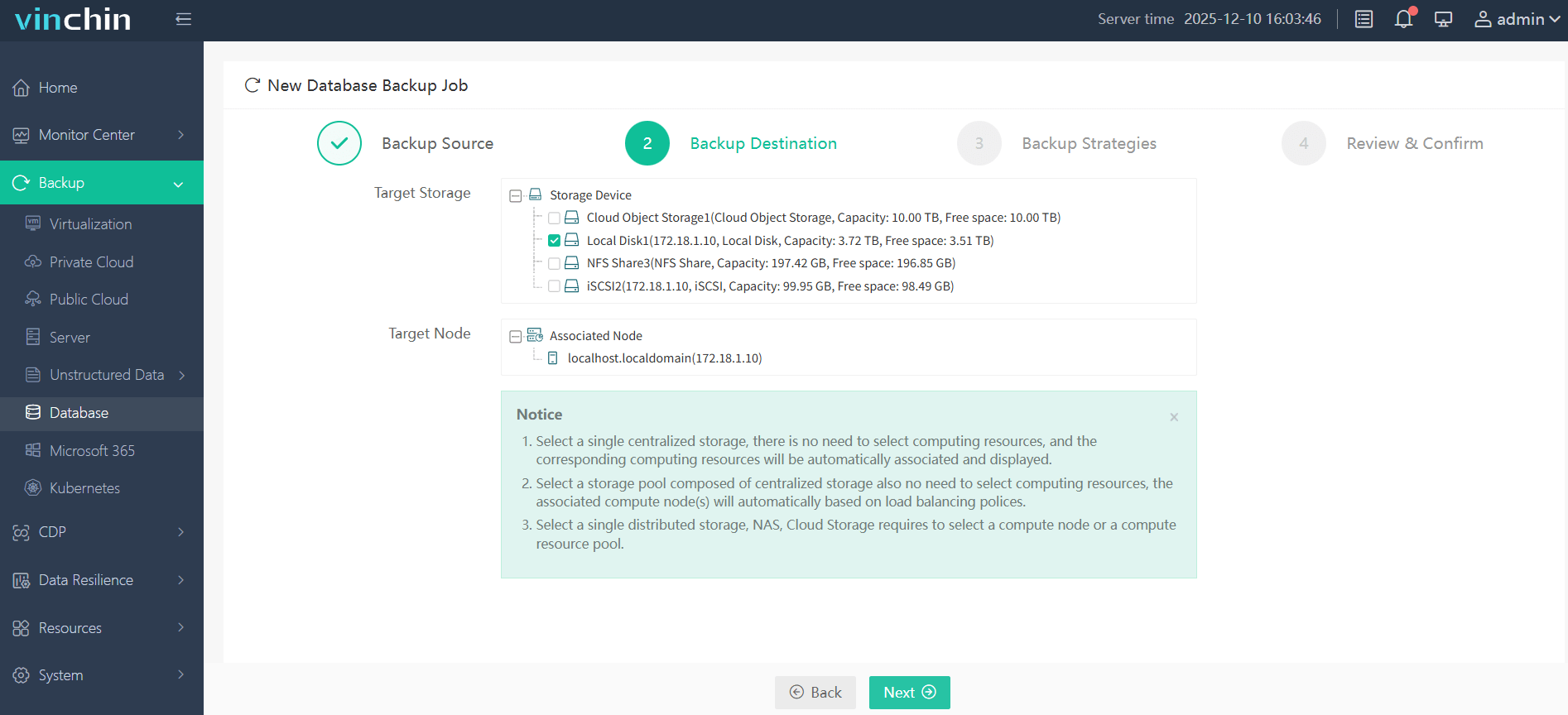
Step 2.choose backup storage
Step 3.define strategy parameters
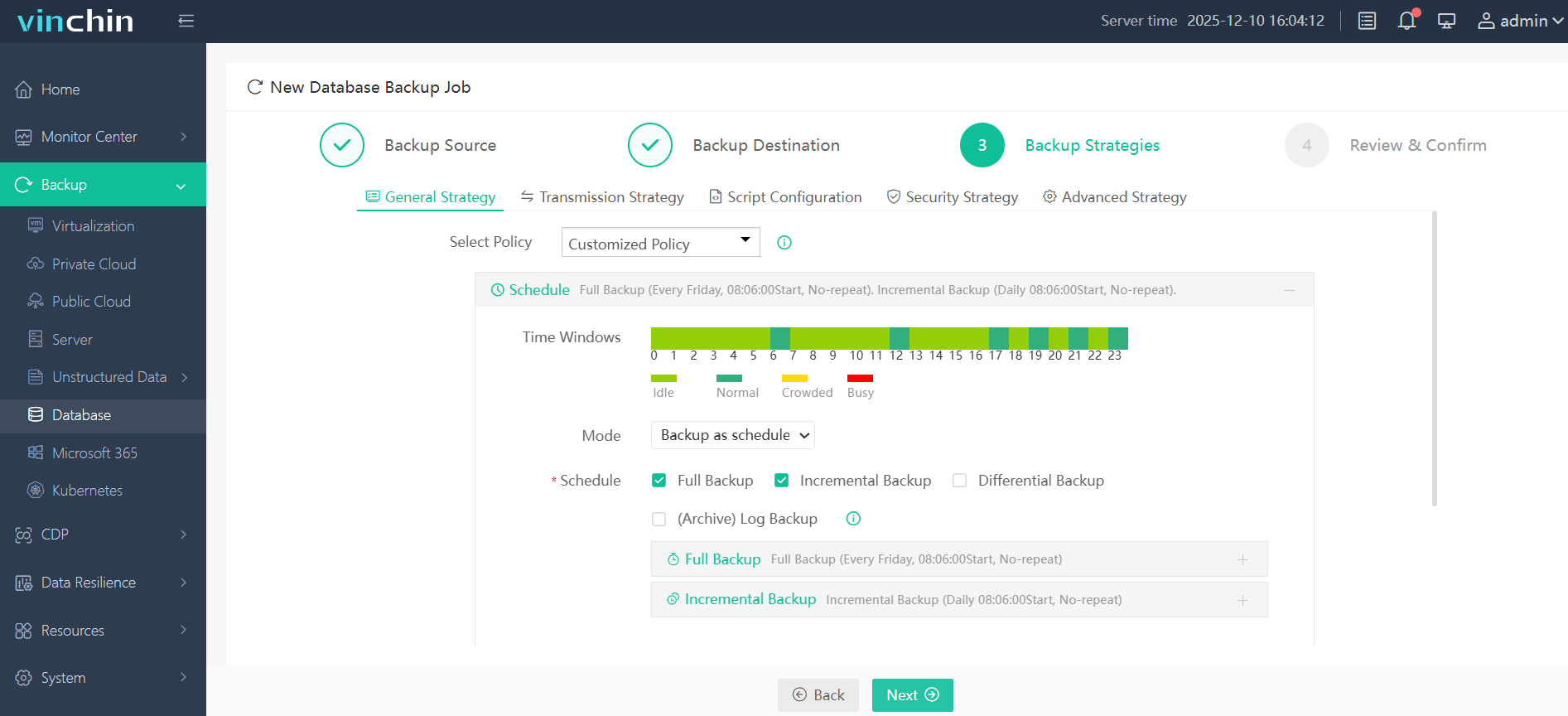
Step 4.submit the job
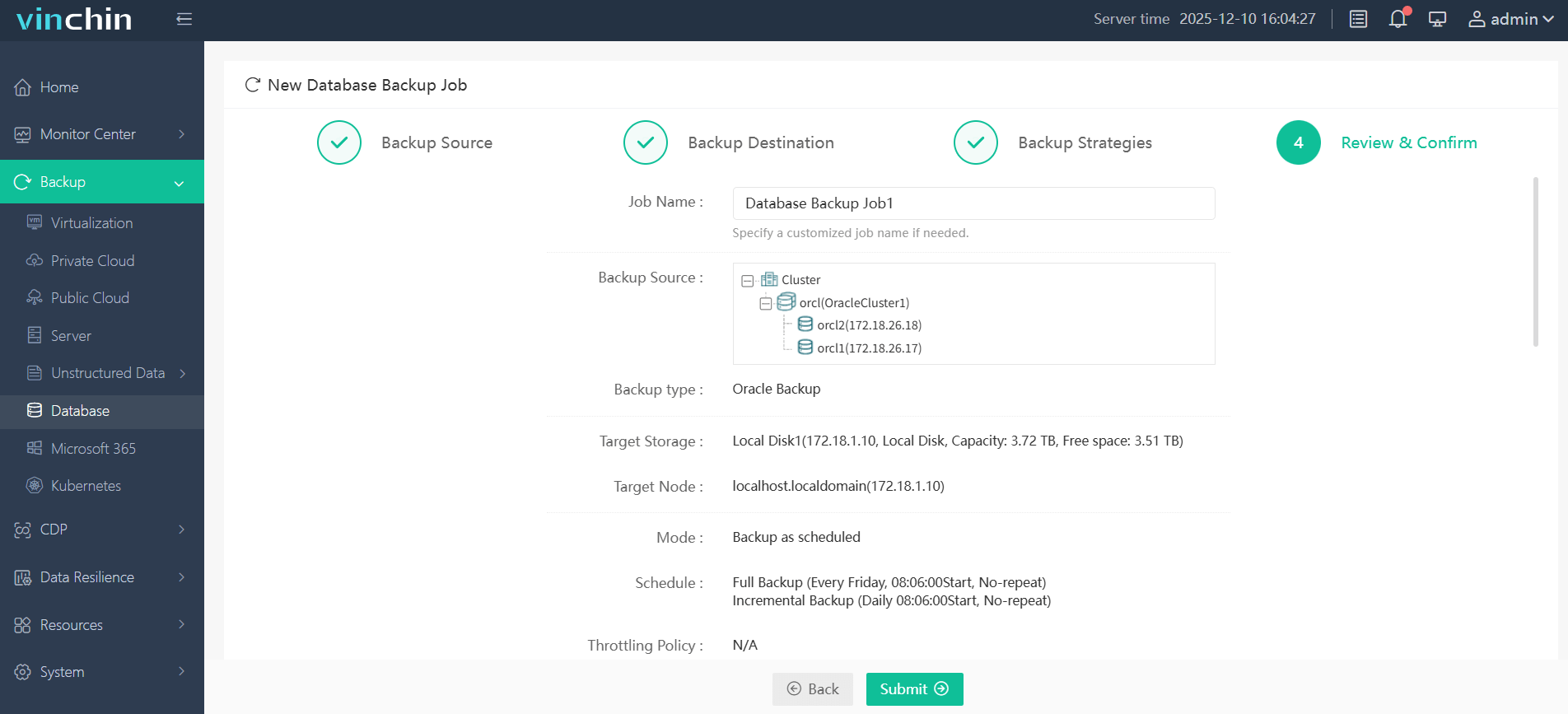
Recognized globally by thousands of organizations for secure enterprise data protection,Vinchin Backup & Recovery offers a fully featured free trial lasting 60 days.Download now and experience top-rated reliability firsthand!
Oracle RMAN Incarnation FAQs
Q1: Can I delete old orphaned backups linked only to previous incarnations?
A1: Yes—you can safely remove them using DELETE OBSOLETE once they’re no longer needed for compliance or audit purposes.
Q2: What should I do if my restore fails due to missing archived logs from another incarnation?
A2: Reset context using RESET DATABASE TO INCARNATION <number>, then retry RESTORE/RECOVER steps targeting available files within that timeline only.
Q3: Will switching between incarnations affect my current production workload?
A3: No—as long as changes are performed on test/dev clones rather than live systems; always validate plans before touching production environments.
Conclusion
Understanding Oracle RMAN incarnations keeps complex recoveries safe while preventing costly mistakes across evolving timelines.Vinchin makes managing multi-incarnation backups simple,reliable,and secure.Try Vinchin's free trial today—and see why enterprises trust us worldwide!