Losing an Oracle control file can render your database unmountable and inoperable. The control file is essential for every startup, recovery action, or backup job you run on Oracle databases. If you ever face this situation—whether from hardware failure or accidental deletion—you need a reliable process to restore the control file using Oracle RMAN (Recovery Manager). In this article, we explain what a control file is, why restoring it is critical, and how to use two proven methods with RMAN to recover quickly. We also cover troubleshooting tips so you can handle even complex scenarios with confidence.
What Is an Oracle Control File?
The Oracle control file is a small binary metadata repository that tracks your entire database structure. It contains information such as the database name and identifier (DBID), datafile locations, redo log files’ paths and statuses, tablespace details, checkpoint data, archive log history, and backup records. Without at least one valid copy of the control file available at startup time, Oracle cannot mount or open your database. For this reason alone, best practice dictates keeping multiple copies of the control file on separate disks.
Why Restore Control File with RMAN?
Restoring a lost or corrupted control file becomes necessary when all redundant copies are unavailable due to disk failure or logical corruption—or even accidental deletion during maintenance tasks. Without any working copy of the control file present in its expected location(s), you cannot mount your database instance or perform any recovery operations—not even listing backups through RMAN.
RMAN is Oracle’s built-in tool for backup and disaster recovery management. It provides several ways to restore a missing or damaged control file—even if you lack access to a recovery catalog or flash recovery area (FRA). Mastering these techniques ensures business continuity when disaster strikes.
Method 1 Restoring Control File from Backup
Restoring from an RMAN backup is usually the fastest way back online after losing all copies of your control file. This method works whether you have explicit backup pieces saved somewhere safe or rely on automatic backups configured by RMAN.
Before starting:
Make sure you know where your backup pieces reside.
If not using a recovery catalog—and if no instance can be mounted—you must know your database identifier (DBID). The DBID uniquely identifies each Oracle database; it’s often embedded in backup filenames or found in old logs.
Here’s how to restore the control file step by step:
1. Start RMAN and connect to the target database
Open your terminal session as oracle user (or equivalent) then enter:
$ rman target /
This connects directly without needing credentials if running locally as oracle OS user.
2. Set the DBID if required
If there’s no mounted instance—and especially if not using a recovery catalog—set the correct DBID before proceeding:
RMAN> SET DBID <your_dbid>;
Setting DBID tells RMAN which specific set of autobackups belong to this exact database; otherwise it may fail to locate them.
3. Start up the instance in NOMOUNT mode
With no valid control files present yet:
RMAN> STARTUP NOMOUNT;
NOMOUNT mode allows memory structures but does not require reading any existing control files—a prerequisite for restoring them.
4. Restore the control file
RMAN> RESTORE CONTROLFILE FROM '/path/to/your/backup_piece';
Use this when you know exactly which physical backup contains your latest good copy.
RMAN> RESTORE CONTROLFILE FROM AUTOBACKUP;
By default, this command searches for autobackups created within the last seven days using current DBID settings.
If needed—for example if backups are older than seven days—use:
RMAN> SET UNTIL TIME "TO_DATE('YYYY-MM-DD HH24:MI:SS','YYYY-MM-DD HH24:MI:SS')";5. Mount the database
RMAN> ALTER DATABASE MOUNT;
Mounting reads metadata from your newly restored control file so that further restores can proceed safely.
6. Catalog external backup pieces if needed
If you see errors like “backup piece not found,” register their location first:
RMAN> CATALOG START WITH '/path/to/backup_directory/';
7. Continue with full restoration/recovery
After mounting successfully with your restored control file,
proceed as usual with RESTORE DATABASE followed by RECOVER DATABASE commands until all datafiles are consistent again.
If errors appear such as “cannot create datafile,” double-check that referenced directories exist on disk; unlike some tools,
RMAN will not create missing folders automatically. Also verify that all paths listed inside
the restored control file match actual storage locations on your system—especially after hardware changes or migrations.
Method 2 Restoring Control File Using Trace File
Sometimes there’s no usable binary backup available—perhaps due to total storage loss,
or because automated jobs failed before disaster struck.
In these cases,
you can recreate a new binary version of your lost control files using SQL statements generated by Oracle itself—a process called “controlfile recreation via trace.”
This method should only be used as an absolute last resort since it requires careful manual editing
and deep knowledge of both physical layout and logical structure.
Any mistake here could make further recovery impossible!
Here’s how:
1. Locate or generate a recent trace-based script
If another instance remains accessible,
generate fresh SQL code like so:
SQL> ALTER DATABASE BACKUP CONTROLFILE TO TRACE;
This writes human-readable DDL statements into
a text trace under USER_DUMP_DEST directory (check SHOW PARAMETER USER_DUMP_DEST).
If no live instance exists but archived traces remain,
search those directories for recent CREATE CONTROLFILE scripts referencing correct incarnation/timestamp info.
2. Edit/Create SQL script carefully
Open up that trace text in any editor.
Find lines beginning with CREATE CONTROLFILE.
Check every path listed under DATAFILE,
LOGFILE,
and TEMPFILE clauses against what actually exists on disk now—not just what was true at time of last export!
Also confirm CHARACTER SET matches original environment settings;
otherwise character corruption may occur later during application use.
3. Start up new instance in NOMOUNT mode
As before:
SQL> STARTUP NOMOUNT;
4. Run CREATE CONTROLFILE statement
Copy/paste edited CREATE CONTROLFILE block into SQL*Plus prompt while connected as SYSDBA user.
If successful,
Oracle builds new binary versions wherever specified under initialization parameters (CONTROL_FILES).
5. Recover remaining datafiles
After recreating metadata layer,
mount new structure then apply archived redo logs until caught up:
SQL> RECOVER DATABASE USING BACKUP CONTROLFILE UNTIL CANCEL;
When prompted for next log sequence number,
provide full path—or type CANCEL once finished supplying available logs.
6. Open resetlogs
Once complete:
SQL> ALTER DATABASE OPEN RESETLOGS;
This resets internal SCN counters so normal operation resumes—but beware! All previous incremental backups become invalid after RESETLOGS event; plan future protection accordingly.
How Does Vinchin Back Up Oracle Databases?
For organizations seeking more automation and flexibility beyond native tools like RMAN, Vinchin Backup & Recovery delivers enterprise-grade protection across mainstream databases—including Oracle, MySQL, SQL Server, MariaDB, PostgreSQL, PostgresPro, and TiDB—with robust support for complex environments such as Oracle deployments featured here. Key features include batch database backup management, log backup with any-point-in-time recovery capabilities, cloud/tape archiving integration for offsite safety, advanced storage protection against ransomware threats through immutability controls like WORM protection and integrity checks—all designed to streamline operations while ensuring regulatory compliance and rapid disaster response.
Vinchin Backup & Recovery offers an intuitive web console that makes safeguarding your Oracle environment straightforward:
The intuitive web console makes safeguarding your data straightforward:
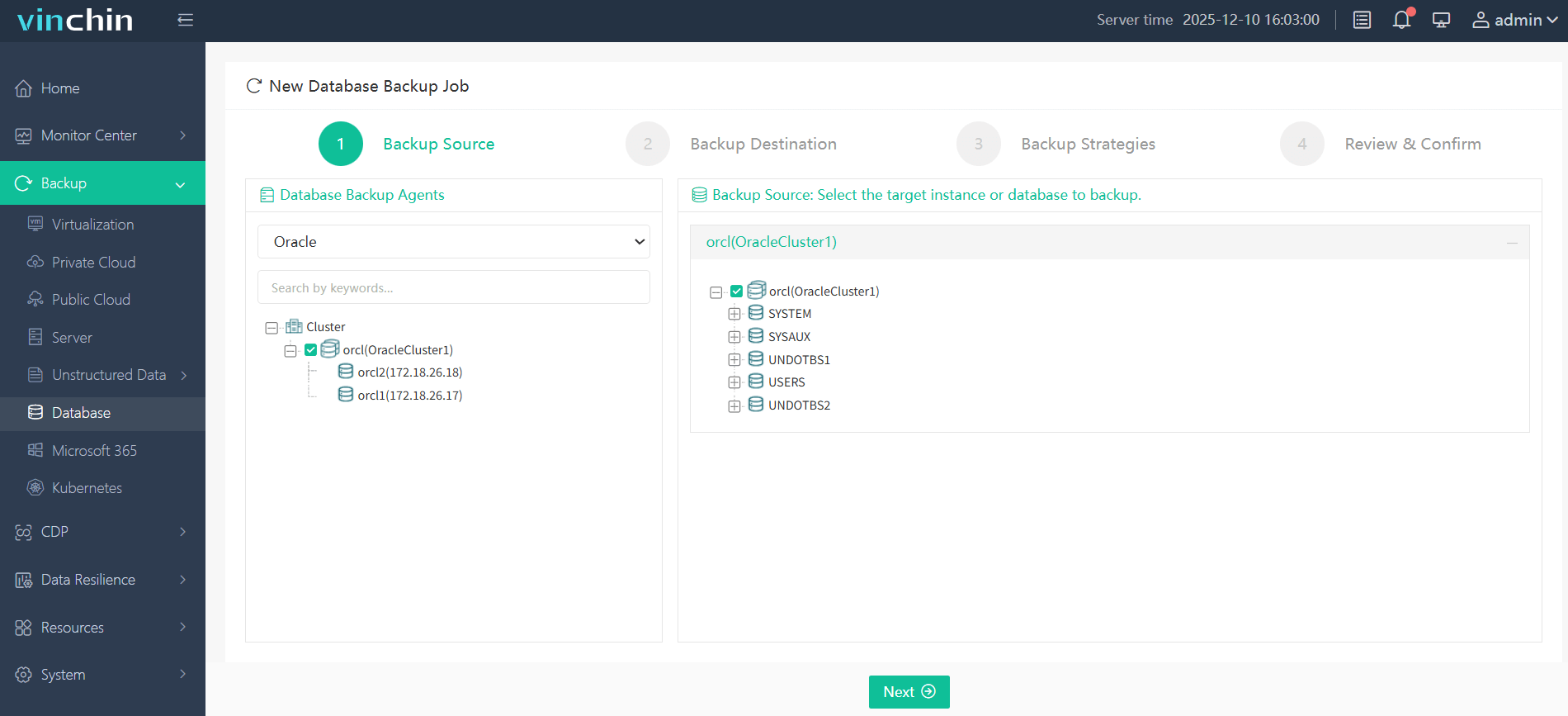
Step 1. Select the Oracle database to back up
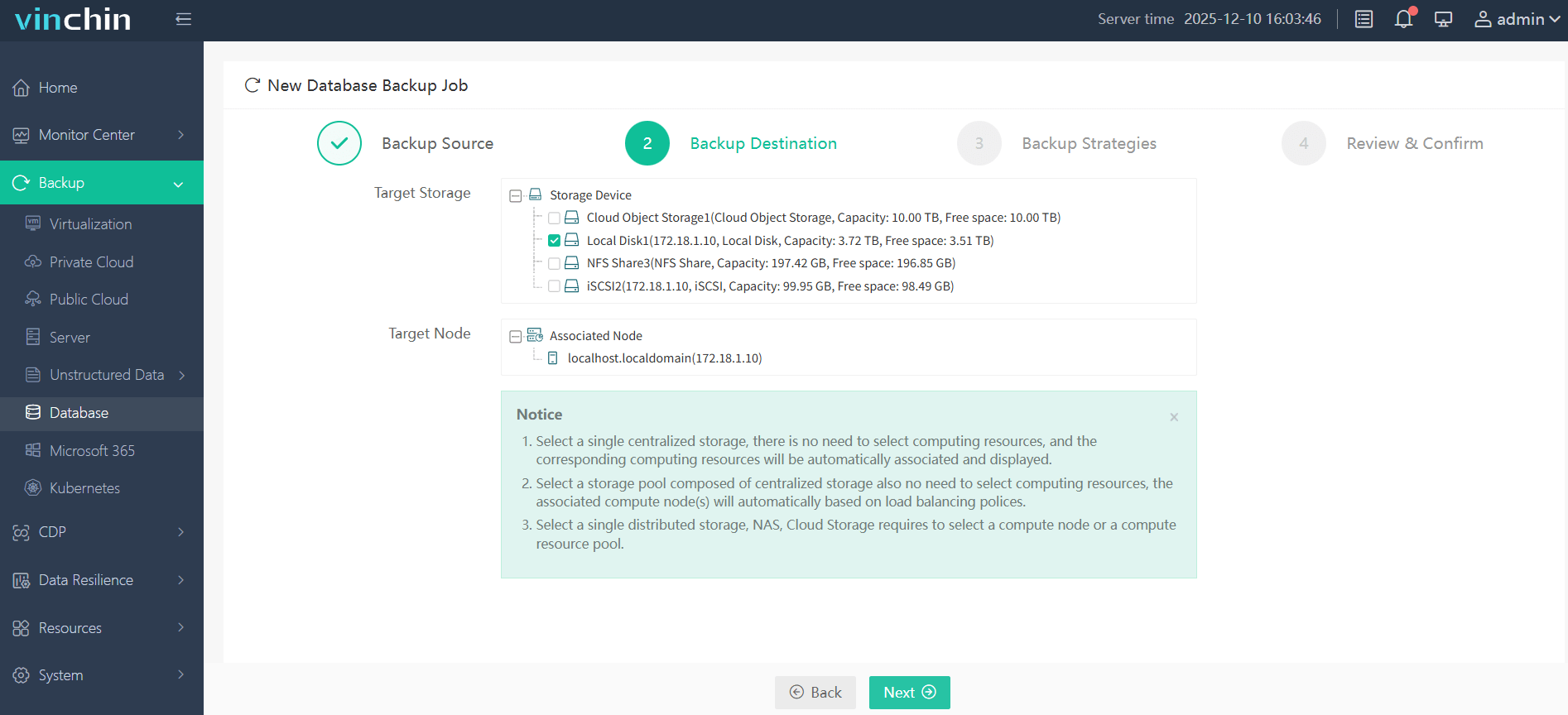
Step 2. Choose the backup storage
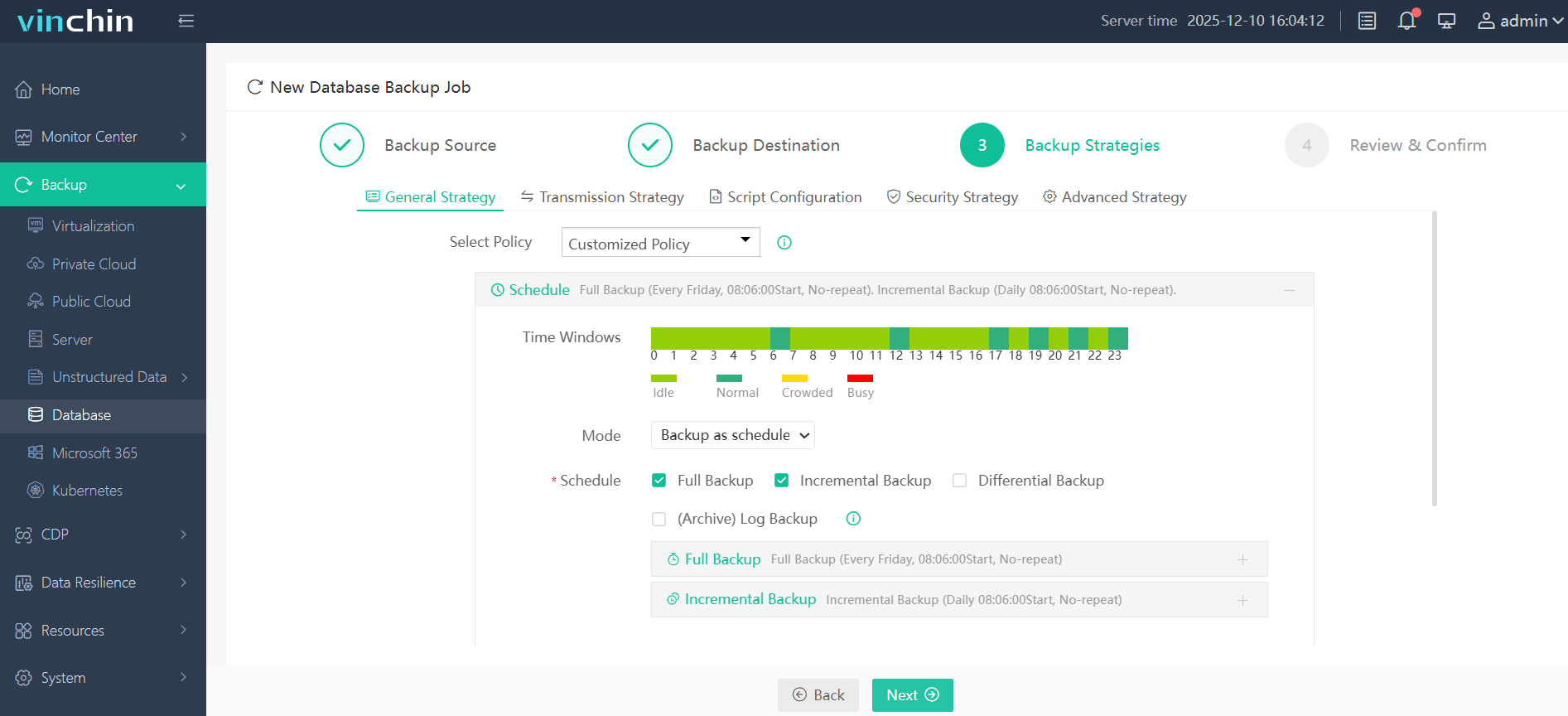
Step 3. Define the backup strategy
Step 4. Submit the job
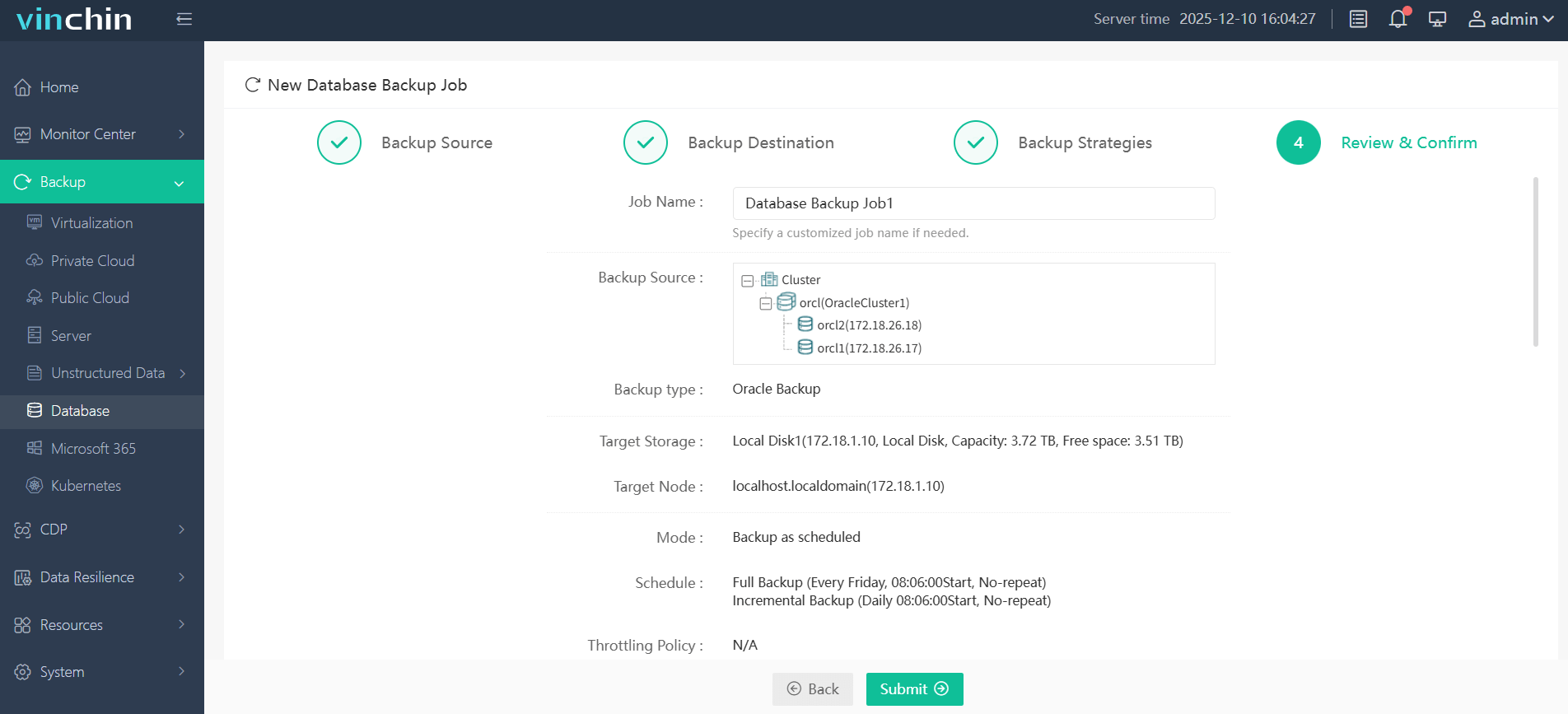
Recognized globally by thousands of enterprises for reliability and ease-of-use—with top customer ratings—you can experience every feature free for sixty days by clicking download below.
FAQ – Real World Scenarios About Restoring Control Files
Q1: What do I do if my restored controlfile references non-existent datafiles?
A1: Edit initialization parameters so paths match actual files; move/copy files as needed before mounting again.
Q2: Can I recover my entire environment if only one multiplexed copy survives?
A2: Yes—as long as one intact copy remains at startup time—the rest can be recreated automatically upon successful mount/open events.
Q3: How do I avoid losing my only good autobackup?
A3: Regularly test restores onto alternate hosts/disks—and always keep multiple copies across different physical devices.
Conclusion
Restoring an Oracle control file with RMAN demands precision but pays off in rapid disaster response capability—from simple restores through advanced troubleshooting scenarios alike! Whether recovering from backups or rebuilding via trace scripts—you’re prepared now for almost anything fate throws at production systems today! Vinchin makes protecting those vital assets easier still—with robust automation tailored specifically toward modern enterprise needs!