Every Oracle database administrator faces the challenge of protecting data and ensuring fast recovery when things go wrong. Oracle Recovery Manager (RMAN) is the built-in tool for backup and recovery, but real-world scenarios can be complex. What are the most common Oracle RMAN backup and recovery scenarios, and how do you handle them step by step? This article will walk you through essential cases using clear examples, practical guidance, and expert tips.
What Is Oracle RMAN?
Oracle RMAN is Oracle’s native utility for backing up, restoring, and recovering databases. It automates many tasks that would otherwise require manual scripts. With RMAN, you manage backup metadata directly in your database or an external recovery catalog. You can back up datafiles, control files, archived redo logs, and even the server parameter file (SPFILE).
RMAN supports both full backups—capturing everything—and incremental backups that save only changes since your last backup. Advanced features include compression to save space and encryption for security. Whether you run a small test system or a large production environment with strict compliance needs, RMAN is recommended by Oracle as your primary protection tool.
Why Use RMAN for Backup and Recovery?
RMAN integrates tightly with Oracle Database software. This means it understands internal structures better than generic tools. It tracks all backups automatically so you always know what’s available for restore operations. When disaster strikes—whether from hardware failure or human error—RMAN automates much of the recovery process.
With point-in-time restore options, you can roll back to any moment before a problem occurred if you have all required archived redo logs. Incremental backups help reduce storage costs while keeping your data safe between full backups. By using RMAN instead of manual methods like OS-level copies or user-managed scripts, you lower risk from human mistakes.
Typical Backup Scenarios with Oracle RMAN
Let’s look at common backup scenarios every DBA should master with Oracle RMAN. Each scenario has its own best practices to ensure reliable restores later.
Full Database Backup
A full database backup forms the backbone of any disaster recovery plan. It captures all datafiles plus critical files like control files—and optionally includes archived redo logs for complete recoverability.
You can perform this operation while users are connected (hot backup) or when the database is shut down (cold backup). For most production systems running in ARCHIVELOG mode—a best practice—you want to include archived logs so no committed transaction gets lost during restore.
To create a full hot backup including archived logs:
RMAN> BACKUP DATABASE PLUS ARCHIVELOG;
This command ensures everything needed for a complete restore—even after major failures—is captured in one job.
Validating Backups
Backing up isn’t enough; verifying those backups matters just as much! After creating any important backup set—or on a regular schedule—you should validate its integrity using:
RMAN> VALIDATE BACKUPSET <backupset_number>;
Or check if your latest full database copy is restorable:
RMAN> RESTORE DATABASE VALIDATE;
Validation helps catch issues early—before they become disasters during an actual restore event.
Incremental Backup
Incremental backups capture only what has changed since your last level 0 (full) or level 1 (incremental) job. This saves time during busy periods or when working with large databases that don’t change much day-to-day.
For a new baseline (level 0):
RMAN> BACKUP INCREMENTAL LEVEL 0 DATABASE;
For daily changes after that:
RMAN> BACKUP INCREMENTAL LEVEL 1 DATABASE;
Using incremental strategies lets you balance performance against storage costs over time—especially useful in environments where downtime must be minimized.
Tablespace and Datafile Backup
Sometimes problems affect only part of your system—a single tablespace or even just one datafile may need restoration due to corruption or accidental deletion.
To back up an entire tablespace:
RMAN> BACKUP TABLESPACE users;
To target just one datafile:
RMAN> BACKUP DATAFILE '/u01/oracle/oradata/ORCL/users01.dbf';
These focused jobs let you minimize downtime by restoring only what’s broken—not everything else!
Control File and SPFILE Backup
The control file tracks physical structure information about your database; losing it makes restores difficult unless backed up regularly! The SPFILE holds configuration settings needed at startup.
Enable automatic control file autobackup so every job protects these vital files:
RMAN> CONFIGURE CONTROLFILE AUTOBACKUP ON;
You can also manually back up just the SPFILE if making configuration changes:
RMAN> BACKUP SPFILE;
Always confirm recent copies exist before performing risky maintenance tasks!
Typical Recovery Scenarios with Oracle RMAN
Recovery situations range from minor hiccups to major outages requiring careful planning—and sometimes nerves of steel! Here are key scenarios every DBA should know how to handle confidently:
Pre-Recovery Checks and Preparation
Before starting any recovery operation:
First: Identify exactly what went wrong—was it accidental deletion? Hardware failure? Use alert logs (alert.log) or query V$DATABASE views to pinpoint timing or SCN numbers involved.
Second: Check disk space on destination volumes; restores may require more room than expected!
Third: Confirm which backups are available using
RMAN> LIST BACKUP;
or see which objects need fresh protection via
RMAN> REPORT NEED BACKUP;
Preparation reduces surprises mid-recovery—a lesson learned by many DBAs over years of experience!
Complete Database Recovery
If all datafiles are lost—but all necessary backups plus archived redo logs remain—you can bring everything back online quickly:
1. Shutdown any running instance
2. Start RMAN session connected as target user
3. Mount database using
RMAN> STARTUP MOUNT;
4. Restore entire system
RMAN> RESTORE DATABASE;
5. Recover transactions
RMAN> RECOVER DATABASE;
6. Open live access again
RMAN> ALTER DATABASE OPEN;
If RESTORE fails due to missing pieces (“backup piece not found”), double-check locations shown by LIST BACKUP. Always verify that all required archived redo logs since last good backup exist before starting this process—or risk incomplete recovery!
Tablespace or Datafile Recovery
When only part of your environment fails—a single tablespace goes offline due to corruption—you don’t need full downtime:
For tablespaces:
1. Take offline
RMAN> SQL 'ALTER TABLESPACE users OFFLINE IMMEDIATE';
2. Restore then recover
    RMAN> RESTORE TABLESPACE users;
    RMAN> RECOVER TABLESPACE users;
3. Bring online again
RMAN> SQL 'ALTER TABLESPACE users ONLINE';
For individual datafiles:
1. Take offline
RMAN> SQL "ALTER DATABASE DATAFILE '/u01/oracle/oradata/ORCL/users01.dbf' OFFLINE";
2. Restore then recover
    RMAN> RESTORE DATAFILE '/u01/oracle/oradata/ORCL/users01.dbf';
    RMAN> RECOVER DATAFILE '/u01/oracle/oradata/ORCL/users01.dbf';
3. Bring online again
RMAN> SQL "ALTER DATABASE DATAFILE '/u01/oracle/oradata/ORCL/users01.dbf' ONLINE";
This targeted approach keeps unaffected parts running smoothly while fixing only what broke!
Control File Recovery
Losing control files stops almost everything—but if autobackup was enabled earlier (see above), restoration is straightforward:
1. Shutdown instance
2. Start NOMOUNT mode
RMAN> STARTUP NOMOUNT;
3a.If autobackup enabled:
RMAN> RESTORE CONTROLFILE FROM AUTOBACKUP;
3b.If not: Specify exact location:
RMAMN > RESTORE CONTROLFILE FROM '/backup/location/c-xxx.bkp';
4.Mount restored system
RAMN > ALTER DATABASE MOUNT;
5.Restore/recover remaining objects as needed
6.Open live access—with RESETLOGS if prompted:
RAMN > ALTER DATABASE OPEN RESETLOGS;
After opening with RESETLOGS always take new full backups immediately because previous ones become invalid!
Tip: If using a separate recovery catalog rather than relying solely on local control file metadata—the process becomes easier especially across multiple servers/disaster sites.
Incomplete Recovery (Point-in-Time Recovery)
What happens after someone drops an important table—or corrupts critical business records? Sometimes rolling forward isn’t enough; instead roll back to right before trouble started!
Here’s how point-in-time (“incomplete”) recovery works:
1.Shutdown/mount affected instance
2.Restore until desired moment—for example,
RAMN > RESTORE DATABASE UNTIL TIME "TO_DATE('2024-06-01 10:00:00','YYYY-MM-DD HH24:MI:SS')";3.Recover until same timestamp,
RAMN > RECOVER DATABASE UNTIL TIME "TO_DATE('2024-06-01 10:00:00','YYYY-MM-DD HH24:MI:SS')";4.Open live access—with RESETLOGS,
RAMN > ALTER DATABASE OPEN RESETLOGS;
Alternatively advanced admins may use SCNs (SET UNTIL SCN) for finer granularity—helpful when precise timing matters more than wall-clock values. Always document why PITR was used—it helps future audits!
Disaster Recovery & Restoring To A New Host
Total server loss—from fire/flood/theft/hardware meltdown? As long as offsite copies exist—including all relevant archive logs—you’re still covered! Here’s how DR works step-by-step:
Method 1.Restore Using Same Directory Structure
1.Install matching version of Oracle software/configure environment variables (ORACLE_HOME, ORACLE_SID)
2.Copy all relevant backup sets/archive log files onto new host
3.Start RAMN session/set correct DBID if prompted,
4.Restore SPFILE/control file first,
5.Mount restored instance,
6.Restore/recover rest of system/datafiles/tablespaces,
7.Open live access—with RESETLOGS,
Method 2.Restore With Different Directory Structure
If paths differ between old/new hosts use SET NEWNAME commands before restoring each file—for example,
RAMN > SET NEWNAME FOR DATAFILE 1 TO '/newpath/system01.dbf';
RAMN > RESTORE DATABASE; ...
Registering new host in central recovery catalog simplifies multi-site DR workflows greatly!
Don’t forget post-migration steps like updating listener/network configs so applications reconnect smoothly afterward!
Block Media Recovery
Not every corruption requires big restores—in fact sometimes just a few blocks go bad due to disk errors/power loss/etc.:
First identify affected blocks via view V$DATABASE_BLOCK_CORRUPTION then fix surgically:
RAMN > BLOCKRECOVER DATAFILE 4 BLOCK 147;
Block media recovery minimizes downtime/data loss compared to larger-scale operations—and often resolves issues invisible at application layer until checked proactively!
Introducing Vinchin Backup & Recovery for Enterprise Database Protection
Beyond native tools like Oracle's own utilities, organizations often seek robust enterprise solutions that streamline management across diverse environments while delivering advanced features tailored for mission-critical workloads such as Oracle databases.
Vinchin Backup & Recovery stands out as a professional enterprise-level solution supporting leading platforms including Oracle, MySQL, SQL Server, MariaDB, PostgreSQL, PostgresPro, and TiDB.
It offers essential capabilities such as batch database backup scheduling, granular retention policies including GFS retention policy support, cloud/tape archiving integration for offsite safety, integrity checks ensuring reliable restorations, and secure storage protection against ransomware threats—all designed to simplify compliance efforts while maximizing operational resilience.
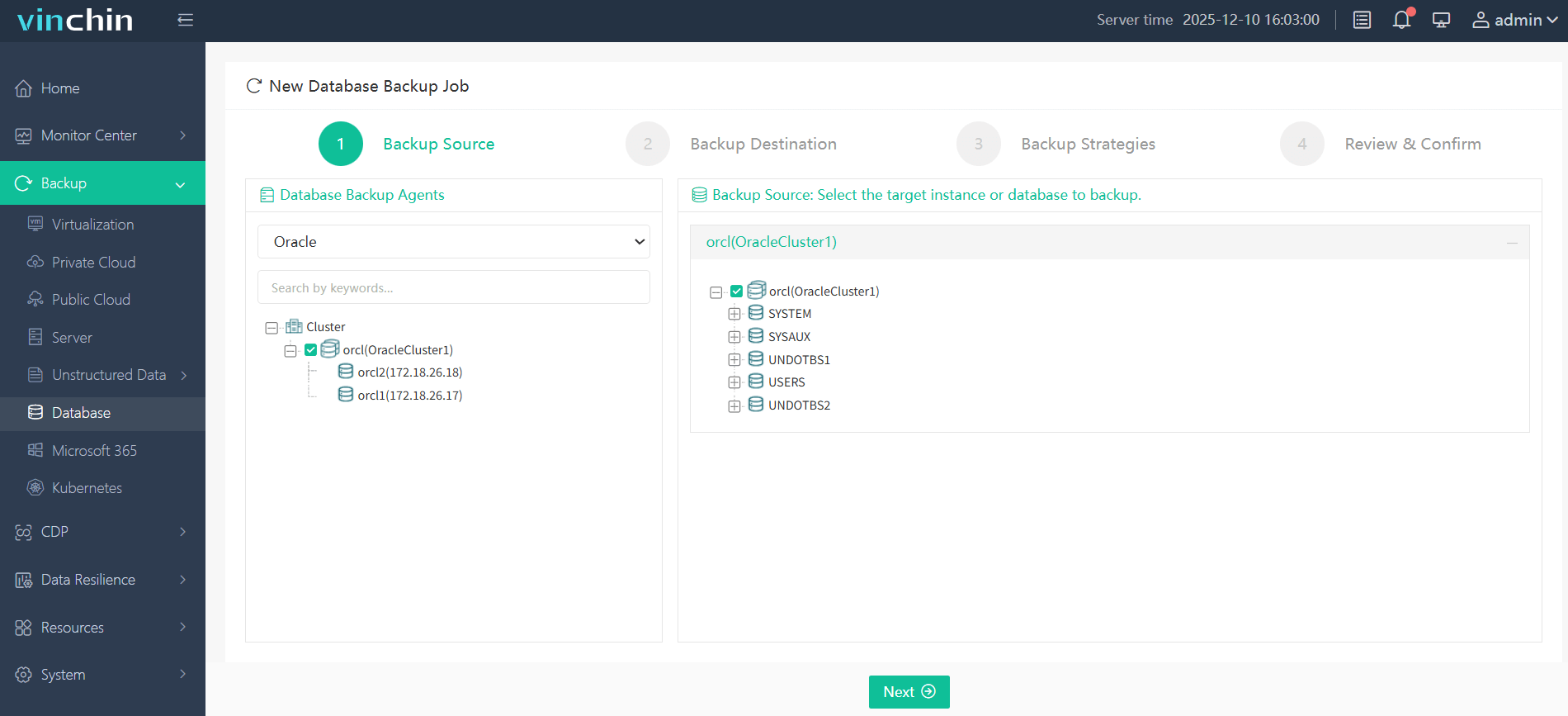
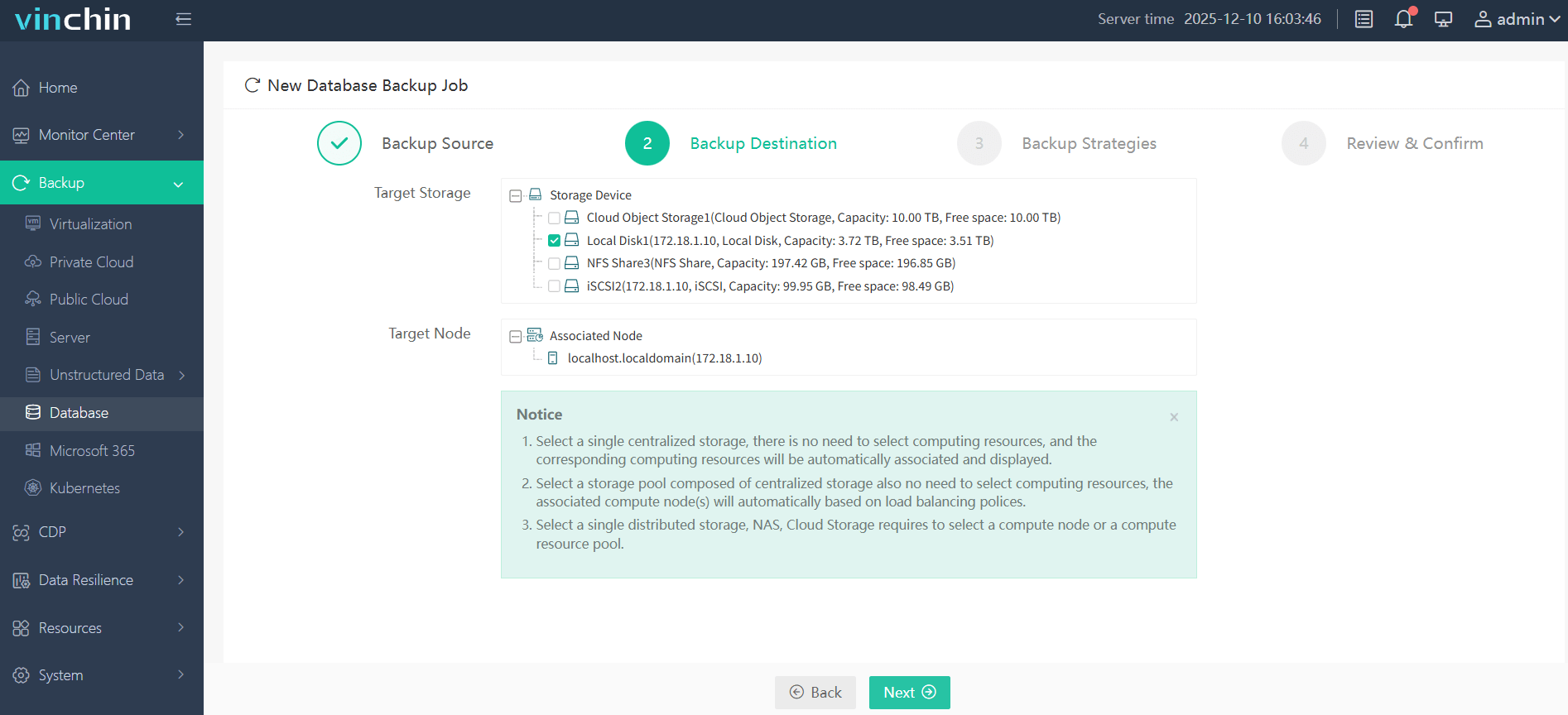
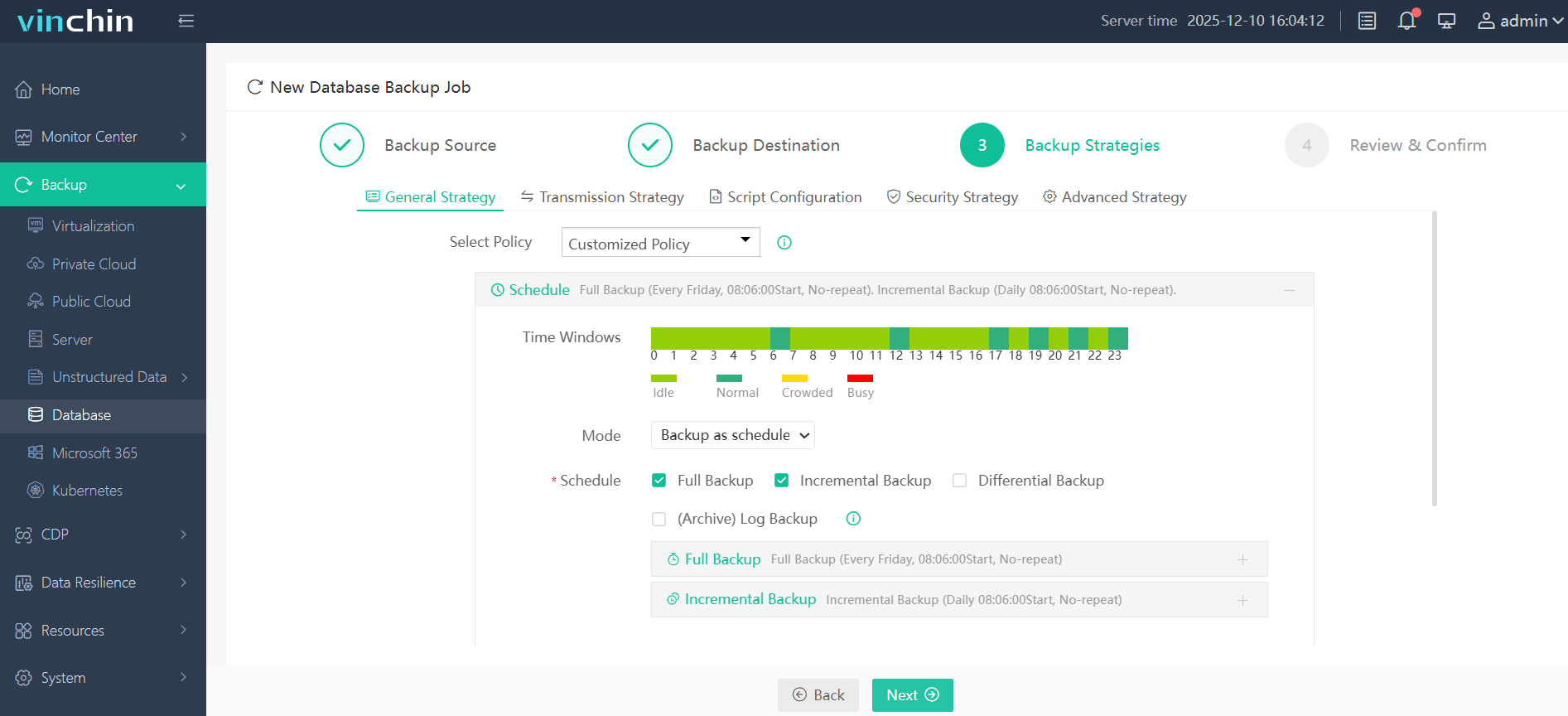
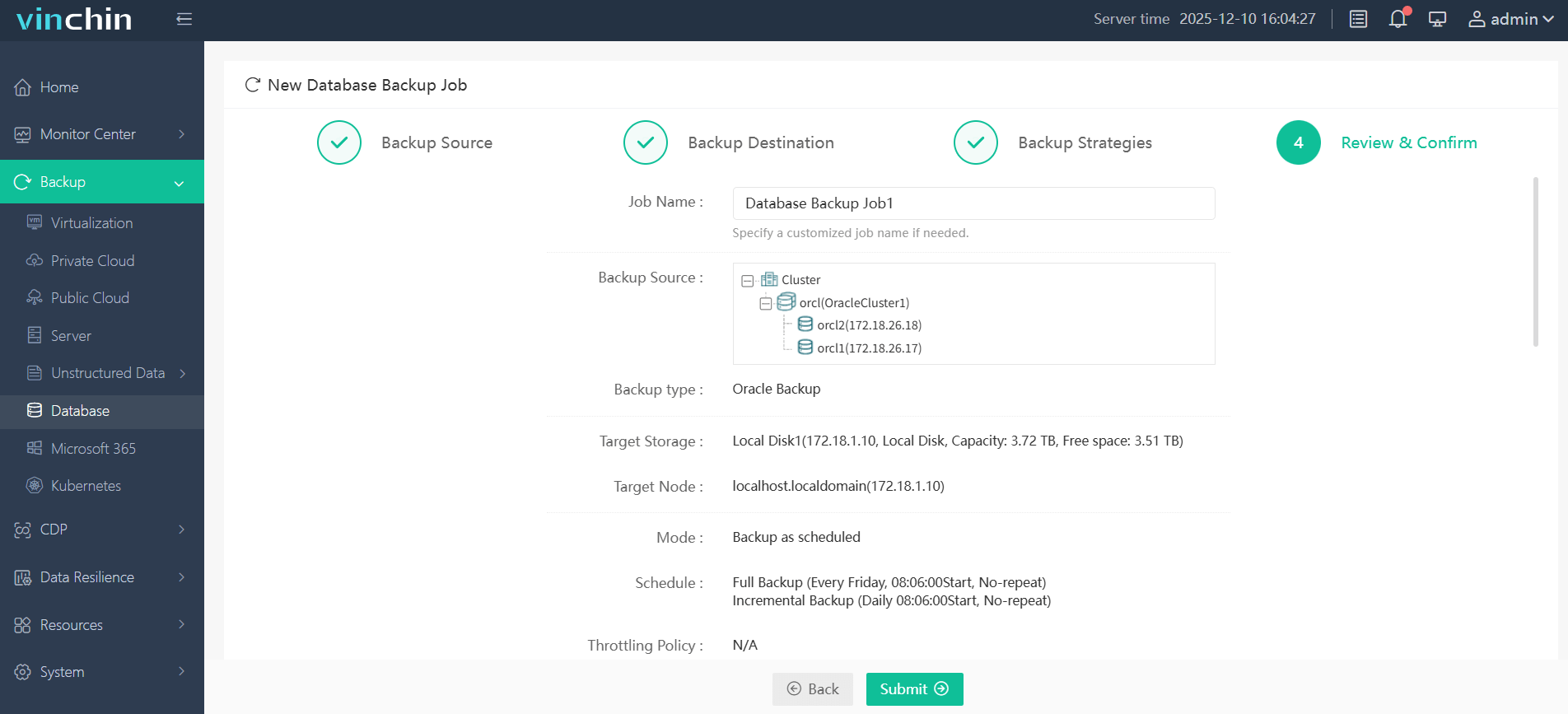
The intuitive web console makes safeguarding your Oracle databases remarkably straightforward in four steps:
Step 1. Select the Oracle database to back up
Step 2. Choose the backup storage
Step 3. Define the backup strategy
Step 4. Submit the job
Recognized globally among enterprise customers for reliability and ease-of-use—with top ratings worldwide—Vinchin Backup & Recovery offers a fully featured free trial valid for 60 days; click below now to experience industry-leading protection firsthand.
Oracle RMAn Backup and Recovery Scenarios FAQs
Q1: How do I automate daily incremental backups with minimal manual intervention?
A1: Schedule recurring jobs in an OS-level cron task calling an automated script containing desired BACKUP INCREMENTAL LEVEL 1 commands via rman cmdfile=script.rmn syntax.
Q2: Can I validate my existing backups without actually restoring them?
A2: Yes; run VALIDATE BACKUPSET <backupset_number>; or RESTORE DATABASE VALIDATE; within an active rman session connected as target user.
Q3: What should I check before starting point-in-time recovery?
A3: Confirm availability of required archived redo logs/backups covering period between last good state & intended PITR timestamp using LIST BACKUP OF ARCHIVELOG ALL;.
Conclusion
Mastering common oracle rman backup & recovery scenarios—from basic restores through disaster events—keeps business-critical systems resilient against threats large & small.Vinchin offers powerful yet easy-to-use solutions tailored specifically toward enterprise-grade oracle protection.Try it free today!