Oracle RMAN is a powerful tool for database backup and recovery, but sometimes it throws cryptic errors that disrupt your workflow. One such error is RMAN-03002, which can halt your backup or restore jobs without warning. This error not only interrupts daily operations but can also threaten your Recovery Time Objectives (RTO) if not resolved quickly. In this article, we’ll break down what RMAN-03002 means, why it happens, how to diagnose it efficiently, and step-by-step solutions from basic to advanced levels. Whether you’re just starting out or have years of DBA experience under your belt, you’ll find actionable advice here.
What Is Oracle RMAN?
Oracle Recovery Manager (RMAN) is Oracle’s built-in utility for backing up, restoring, and recovering databases. It automates many tasks that would otherwise require manual scripting—like managing backup sets or archived logs—and verifies data integrity along the way. RMAN works seamlessly with both disk and tape storage options. For metadata management, it can use either a dedicated recovery catalog or rely solely on the control file.
Most organizations depend on RMAN as their primary line of defense against data loss because it integrates tightly with Oracle Database architecture. Its automation reduces human error while ensuring compliance with internal policies or regulatory requirements.
What Does RMAN 03002 Mean?
The RMAN-03002 error signals that an RMAN command has failed during execution. Think of it as an alert flag—it tells you something went wrong but doesn’t explain why by itself. This message always appears alongside one or more additional errors that point toward the root cause.
For example:
RMAN-03002: failure of backup command at 06/10/2024 14:12:34
ORA-19563: header validation failed for file /backup/datafile01.bak
Here, RMAN-03002 acts as a headline; the following ORA-error provides details about what actually failed. Always read these accompanying messages carefully—they are essential clues in resolving the issue.
Why Does RMAN 03002 Occur?
There are many reasons why you might see RMAN-03002 during backup or recovery operations. Sometimes it's due to something simple like a typo in your command syntax; other times it's caused by deeper issues such as missing files or misconfigured environment variables.
Common triggers include:
1. Typographical errors in object names (e.g., tablespace misspelled)
2. Missing backup pieces referenced by control files
3. Environment variables like ORACLE_HOME or ORACLE_SID set incorrectly
4. Mismatches between recovery catalog metadata and actual database state
The key to solving this problem lies in reading the full error stack provided by Oracle—start from the bottom-most message upward. Each layer gives more context about where things broke down.
Initial Diagnostic Checklist for RMAN-03002
Before diving into specific fixes, take time to gather information about your environment when you encounter RMAN-03002. A systematic approach saves time later on.
First, capture all output from your failed RMAN session—including timestamps and every line of error text—as well as relevant entries from your Oracle alert log (alert_<SID>.log) around the same period.
Next, check your database status using SQL*Plus:
sqlplus / as sysdba
SELECT status FROM v$instance;
Make sure your instance is in an appropriate state (OPEN, MOUNT, etc.) for whatever operation you attempted.
Then verify listener availability:
lsnrctl status
If connectivity fails here, address network issues before retrying any backups or restores.
Finally, confirm there’s enough free disk space where backups are written—and that permissions allow write access—for both ORACLE_HOME directories and designated backup locations:
df -h /backup
ls -ld /backup
These quick checks often reveal overlooked problems that trigger generic errors like RMAN-03002 before you even start troubleshooting commands themselves.
Method 1: Fixing RMAN-03002 Error by Checking Command Syntax and Environment Variables
Many occurrences of RMAN-03002 stem from simple mistakes in commands or misconfigured environments—a good place to start troubleshooting.
Begin by reviewing your last executed command closely for typos or incorrect options:
Always double-check object names against those listed in DBA_TABLESPACES if unsure:
SELECT tablespace_name FROM dba_tablespaces;
Next up are environment variables—these must be set correctly before launching any RMAN session:
echo $ORACLE_SID $ORACLE_HOME $TNS_ADMIN
If using a recovery catalog connection string via TNSNAMES configuration,
Ensure $TNS_ADMIN points to a valid directory containing tnsnames.ora.
If running scripts through cron jobs or non-interactive shells,
Confirm user permissions match those needed by Oracle processes,
And validate paths aren’t overridden by local profiles (.bash_profile/.profile).
When working with catalogs specifically,
1. Start an interactive session connecting both target & catalog:
      rman target /
      connect catalog catalog_usr/catalog_usr_pass@CATALOG
2. Unregister database:
UNREGISTER DATABASE;
3. Register again freshly:
REGISTER DATABASE;
This process helps realign catalog records with actual database state after significant changes.
Method 2: Troubleshooting Underlying Errors Using Oracle Logs and Restart Procedures
If syntax checks don’t resolve things—or if additional errors follow RMAN-03002—it’s time to dig deeper into logs and system state analysis.
Start by reading every line beneath RMAN-03002 in your output window; look especially for ORA-codes (like ORA‑19563) or further RMAN codes (such as RMAN‑06054). These secondary messages pinpoint what went wrong technically—for instance:
“ORA‑19563: header validation failed for file …” suggests corruption/mismatch between expected vs actual file headers.
“RMAN‑06054: media recovery requesting unknown log …” indicates missing archive logs needed during restore/recovery phases.
When faced with missing/mismatched files after moving/restoring databases across servers,
SWITCH DATAFILE ALL;
Or update individual datafiles explicitly if only some have changed location/names:
SWITCH DATAFILE n TO COPY;
Replace n above with each affected datafile number found via queries like
SELECT FILE#, NAME FROM V$DATAFILE;
If encountering errors related to incomplete restores (“RMAN‑06094: datafile x must be restored”), make sure all necessary datafiles exist at their expected locations before issuing RECOVER DATABASE.
Sometimes operational issues require restarting services—
1. Connect via SQL*Plus (sqlplus / as sysdba)
2. Issue shutdown/startup sequence (SHUTDOWN IMMEDIATE; STARTUP MOUNT;)
3. Retry original operation within mounted mode
For persistent resync failures involving catalogs,
RESYNC CATALOG;
Don’t forget diagnostic logs! Review entries inside $ORACLE_BASE/diag/rdbms/<dbname>/<sid>/trace plus main alert log—the root cause often appears there even when surface-level messages remain vague.
Remember also that searching My Oracle Support (MOS) using exact ORA/RMAN codes yields authoritative explanations tailored to each scenario—a best practice when standard documentation falls short.
Handling Specific RMAN‑03002 Scenarios: Archive Log Gaps and Catalog Divergence
Some situations behind RMAN‑03002 are especially common yet tricky—let’s cover two advanced cases seen frequently in production environments.
Scenario A – Missing Archive Logs During Recovery
When restoring databases requiring archived redo logs not present locally,
you’ll see follow-up messages like
“RMAN‑06054: media recovery requesting unknown log thread [n] seq [m].”
To resolve this gap:
1) Identify which sequence(s) are missing based on error text
2) Restore them from older backups if available
3) If operating a Data Guard standby setup elsewhere—copy required logs over
4) As last resort—with full awareness of risk—you may consider opening database using RESETLOGS option after incomplete recovery (note this breaks continuity/history)
Always document such actions thoroughly since they impact future recoverability.
Scenario B – Recovery Catalog Corruption/Divergence
Catalogs sometimes become unsynchronized due either to network interruptions during resyncs or major topology changes post-clone/restoration events.
Beyond simply running RESYNC CATALOG, try connecting directly without referencing catalog (NOCATALOG) so immediate work can proceed while investigating underlying sync issues separately later on.
Unregister/register should be reserved only when absolutely necessary since doing so erases historical job metadata tied specifically within that repository.
How to Protect Oracle Database with Vinchin Backup & Recovery
Given these challenges associated with manual troubleshooting and complex configurations in Oracle environments, leveraging automated enterprise solutions becomes increasingly valuable for administrators seeking reliability and efficiency at scale. Vinchin Backup & Recovery stands out as a professional-grade solution supporting most mainstream databases—including Oracle first among them—as well as MySQL, SQL Server, MariaDB, PostgreSQL, PostgresPro, and TiDB.
For Oracle users facing frequent operational risks such as those signaled by rman 03002 errors, Vinchin Backup & Recovery delivers robust features including batch database backup capabilities, any-point-in-time recovery options for precise restoration needs, scheduled backups aligned with business cycles, comprehensive integrity checks ensuring restorable copies every time, and secure storage protection mechanisms against ransomware threats—all designed to maximize uptime while minimizing administrative overhead through automation and policy-driven workflows.
The intuitive web console makes safeguarding critical data straightforward—in just four steps you can protect vital assets without deep scripting knowledge:
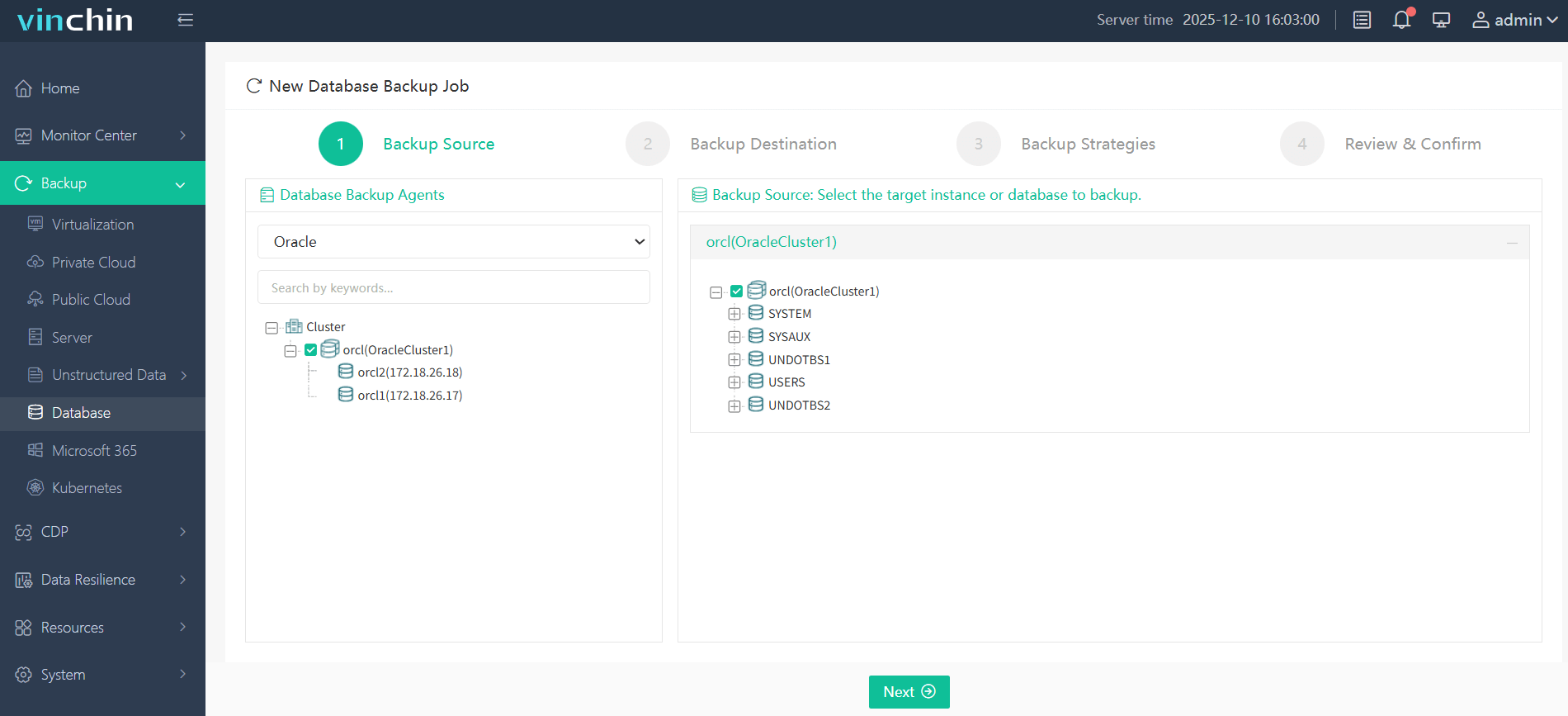
Step 1. Select the Oracle database to back up
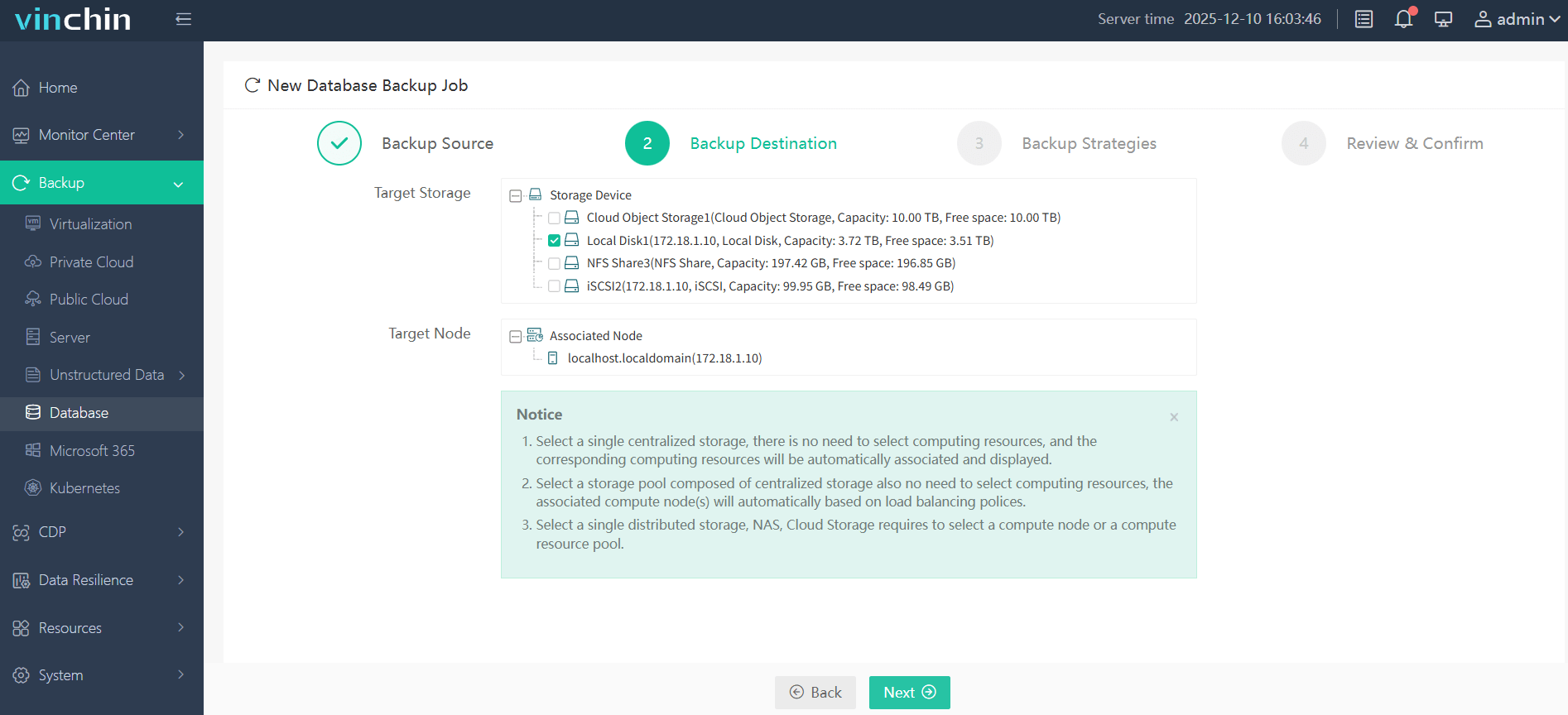
Step 2. Choose backup storage
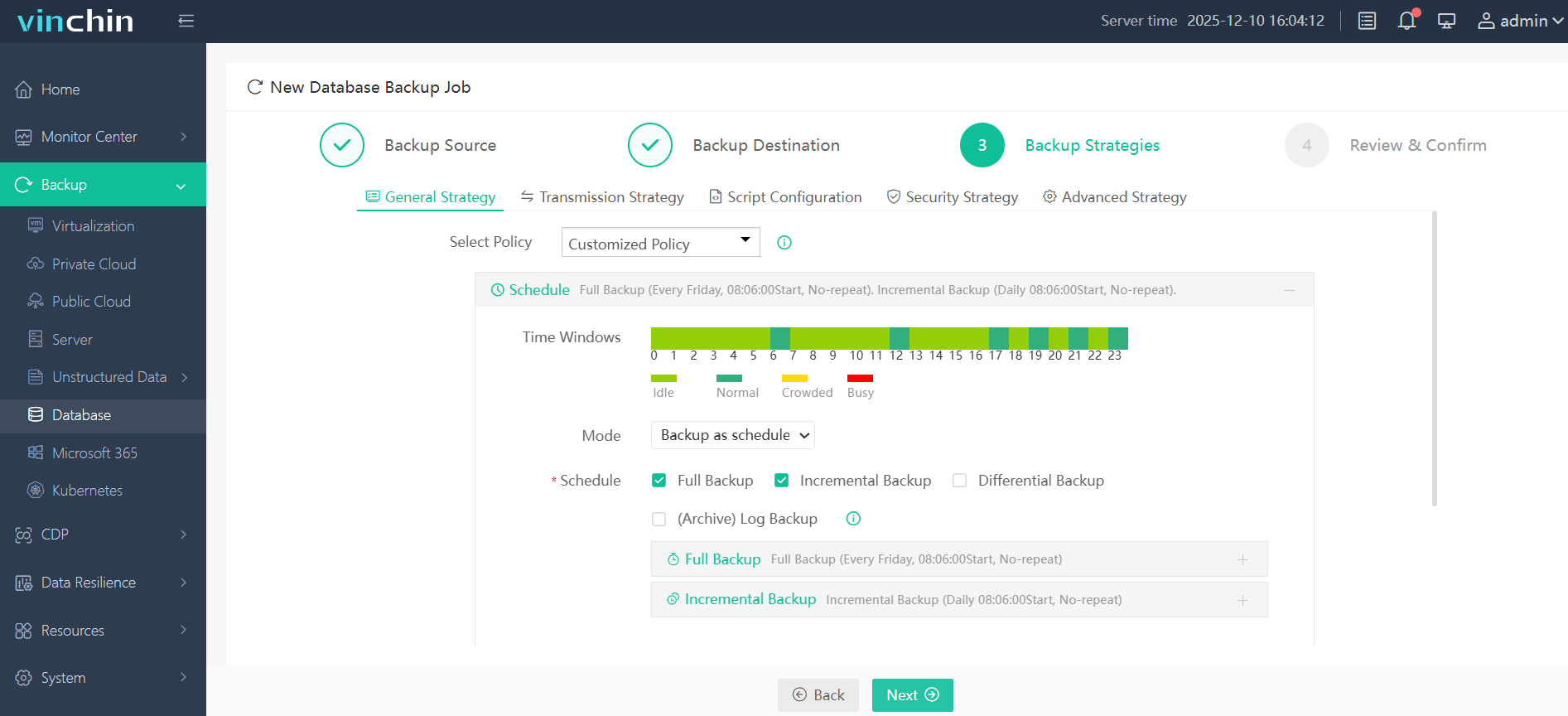
Step 3. Define your backup strategy
Step 4. Submit the job
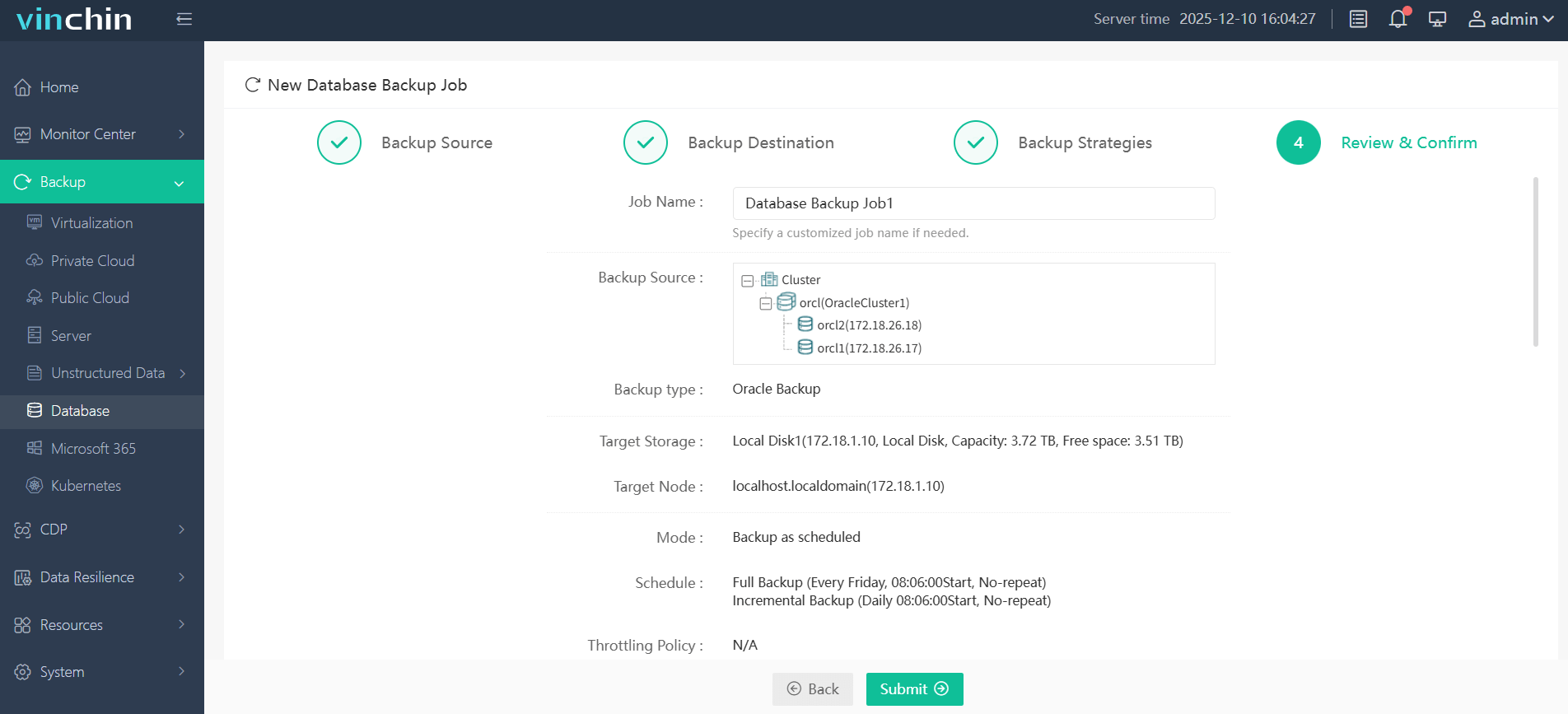
Recognized globally across industries for its reliability and ease-of-use—with thousands of satisfied customers—Vinchin Backup & Recovery offers a fully featured free trial lasting 60 days so you can evaluate its strengths firsthand; click below to download now!
RMAN‑03002 FAQs
Q1: Can missing archive logs trigger rman 03002?
Yes—the error will usually show "media recovery requesting unknown log" followed by thread number; locate those archive sequences before retrying restore/recovery jobs.
Q2: How do I fix rman 03002 after switching datafiles post-migration?
Connect via rman > mount target DB > run SWITCH DATAFILE ALL > confirm updated paths > rerun intended operation—all within same session prompt window.
Q3: What should I check first if rman 03002 appears right after restoring from external media?
Review entire returned error stack > verify all referenced files exist > ensure control file matches current environment layout > consult alert.log/traces next.
Conclusion
The rman 03002 message signals deeper problems needing careful review of subsequent errors plus methodical validation across commands/environment/logs. Vinchin streamlines these processes so teams spend less time firefighting manual issues—try it today risk-free!